
.svg)


Here's what caught my attention first: Circuit Stream's Product Management bootcamp costs $10,500. That's roughly 2-3 times more expensive than BrainStation ($3,250), Product School ($4,499), or Co.Lab ($2,000-3,000). The question is obvious. Does it deliver 2-3 times the value?
I spent weeks digging into this. I analyzed 42+ sources, from official university partnership pages to Trustpilot reviews. I read student testimonials from people who landed PM jobs before even finishing the bootcamp. I compared Circuit Stream's 21-week curriculum against every major competitor. I looked at instructor credentials (spoiler: they're from Amazon, Microsoft, and Grammarly). And I found something interesting.
The program has genuine strengths. University partnerships with Toronto, McGill, UW, and UCI add real academic credibility. The instructors aren't just industry veterans, they're currently working at companies you've heard of. The 21-week curriculum is the most comprehensive I've seen, covering everything from product strategy to SQL for PMs.
But here's the catch. Students consistently report that the pace is "intense" and they "barely had enough time to meet minimum requirements." The career support, which should justify some of that premium price, "promised more than it delivered," according to one detailed Trustpilot review. And Circuit Stream doesn't publish employment statistics, placement rates, or salary data, so you're investing $10,500 with limited visibility into outcomes.
This review cuts through the marketing. I'll show you exactly what you get for $10,500, who this bootcamp works for (and who should skip it), what students think about the intense pace, and whether the university partnership and instructor credentials justify the premium. By the end, you'll know if Circuit Stream is worth it for your specific situation, or if one of the alternatives makes more sense.
Let's start with the basics.
Essential information upfront
Here’s what you need to know:
Cost and payment:
- Full price: $10,500
- Early payment discount: $8,925 (15% off when paid in full)
- Payment plans: As low as $875/month (3, 6, or 12-month options available)
Time commitment:
- Duration: 21 weeks
- Schedule: Tuesday & Thursday 6:30-9:00 PM ET (5 hours/week live sessions)
- Labs: Bi-monthly Wednesday evenings 6:30-9:00 PM ET
- Format: Part-time online with live instruction
What you get:
- Structured certificate program with live classes led by instructors from Amazon, Microsoft, and Grammarly
- 1-on-1 career coaching throughout the program
- Capstone project based on real companies (Amazon, Uber, Apple, Disney)
- Co-branded management certificate and project management certificate with University of Toronto, McGill, UW, or UCI
- Discord community access
- Premium support from qualified experts
Earning a project management certificate can help professionals stay competitive in the job market.
Prerequisites: None required. Circuit Stream markets this as beginner-friendly, though student reviews suggest the pace is intense.
University partnerships: The program is offered in collaboration with University of Toronto School of Continuing Studies, McGill Continuing Education, University of Washington Continuum College, and UCI Division of Continuing Education. You receive a co-branded certificate upon completion.
Refund policy: Full refund available up to 7 days before course start date (minus admin fees). Option to defer to a later cohort.
What is Circuit Stream?

Circuit Stream is a Canadian tech education company founded in 2014, originally focused on VR and AR development training. The company is headquartered in Calgary, Alberta, and has since expanded into game development, software engineering, and product management bootcamps. Circuit Stream is a global educational provider specializing in extended reality (XR) education and offers various bootcamps and courses for professional and youth development in high-demand technology fields. What makes them different is their focus on university partnerships and career-oriented education.
The Product Management bootcamp launched more recently as part of their expansion beyond immersive tech. Unlike their VR/AR programs, the PM bootcamp is designed for people looking to break into product management or transition from adjacent roles. The 21-week, part-time format targets working professionals who can’t commit to full-time study. Circuit Stream collaborates with major organizations, companies, and universities, including the University of British Columbia and University of Melbourne, to offer co-branded programs and certifications.
The university partnership model
Circuit Stream’s standout feature is its partnerships with established universities. You can take the same bootcamp through four different university partnerships:
- University of Toronto School of Continuing Studies
- McGill Continuing Education
- University of Washington Continuum College
- UCI Division of Continuing Education
This means you get a co-branded management certificate through a structured certificate program. Not just a Circuit Stream badge, but a management certificate that includes the university logo, recognized for its credibility and value in professional development. For traditional employers or industries that value academic credentials, this carries more weight than a standalone bootcamp certificate.
The partnership model is becoming more common in tech education. Universities partner with specialized training providers to offer professional programs without building the curriculum themselves. Circuit Stream handles instruction, curriculum development, and student support. The university provides the brand, oversight, and credential.
Who teaches the bootcamp?
Instructors are working product managers from recognizable companies. The current roster includes:
- Upendra Poranki: Principal Product Advisor at UP Product Strategy Consulting
- Hristijan Vasileski: Senior Product Manager at Apply Digital
- Terry McLean: Product Management Lead at Apply Digital
- Denys Kuylk: Product Manager at Grammarly
Instructors have experience at leading tech companies such as Amazon, Microsoft, Google, and Grammarly, highlighting their industry expertise.
The instructor lineup rotates based on cohort dates, but the model stays consistent: working PMs teaching current practices. This differs from bootcamps where instructors are full-time educators. The tradeoff is relevance versus teaching experience. Working PMs bring current insights. Full-time instructors often have more refined teaching methods.
Circuit Stream's market positioning
Circuit Stream emphasizes three things: university backing, industry instructors, and career support. Their marketing focuses on the co-branded certificate, the Discord community, and the 1-on-1 coaching. They target professionals who value structure, credentials, and direct career guidance.
In addition to serving individual professionals, Circuit Stream provides tailored enterprise training solutions for organizations such as Lockheed Martin and Deloitte, and offers customized upskilling solutions to large organizations like BMW and the US Navy to help implement XR solutions internally.
What they don’t emphasize: job placement statistics. Most bootcamps trumpet their employment rates. Circuit Stream publishes student success stories but no aggregate data on what percentage of graduates get PM jobs, how long it takes, or average salary increases. This gap is notable given the $10,500 price point.
The complete curriculum breakdown
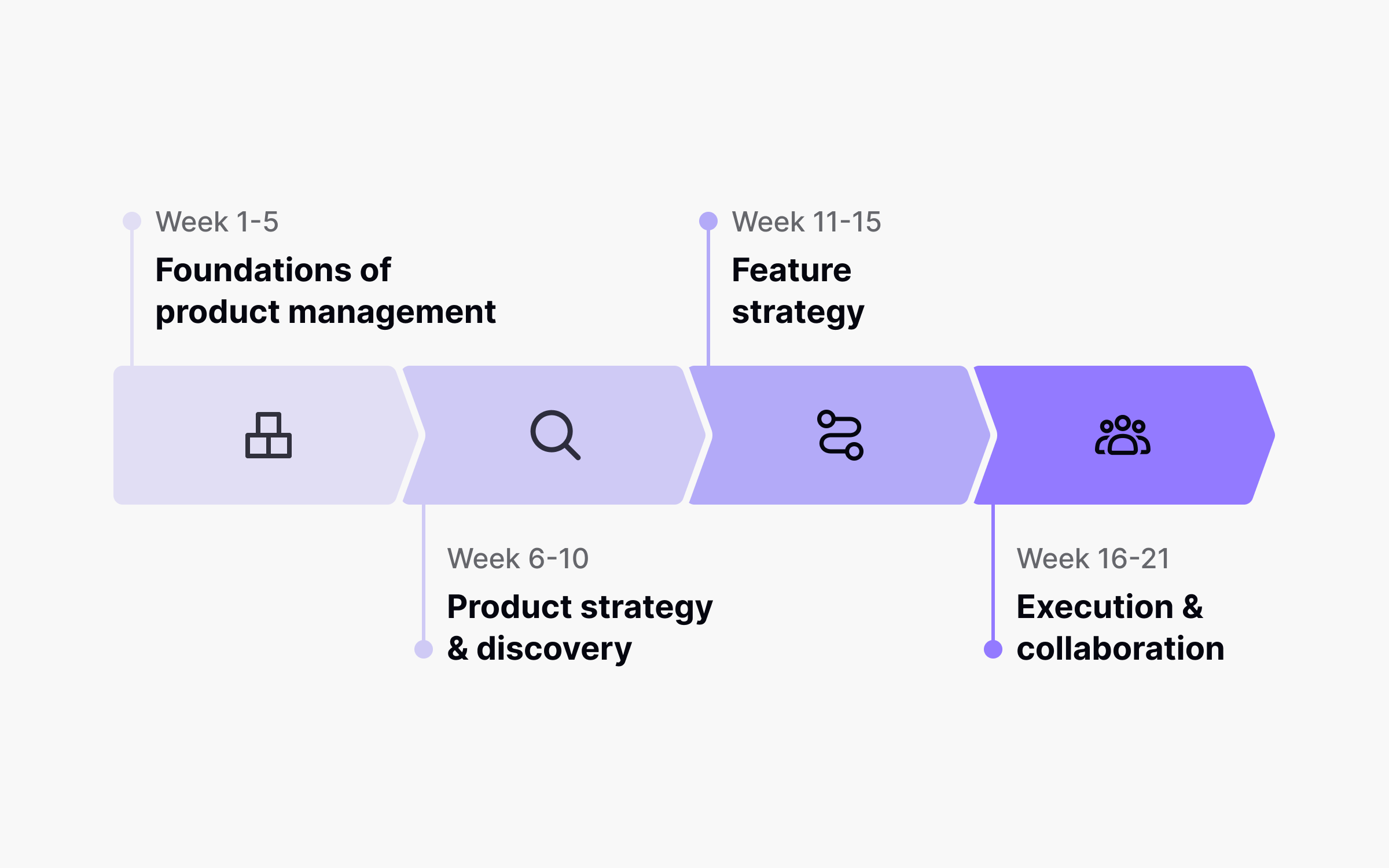
The 21-week curriculum is divided into four main modules. Each module builds on the previous one, taking you from PM fundamentals through execution. Project management training programs often cover both Predictive and Agile methodologies, offer flexible learning options, and typically include a mix of theoretical knowledge and practical application. Hands-on training led by industry experts is a common feature of project management certification programs. Here’s what each module covers.
Module 1: foundations of product management
This module covers the basics:
- Product lifecycle fundamentals from ideation to sunset
- Different PM methodologies (Agile, Scrum, Lean)
- Aligning product strategy with business goals
- Data-driven decision-making basics
- Understanding the PM role and responsibilities
Developing core skills, including business analysis, is essential for becoming a modern product manager. These skills, combined with the right mindset and tools, are fundamental for confidently building products and advancing in your role.
Think of this as your orientation. You learn what product managers do, how products move through their lifecycle, and how to think strategically about product decisions. If you’re coming from a non-PM role, this module establishes the foundation.
The data-driven component introduces you to basic analytics. You won’t become a data scientist, but you’ll learn how to interpret metrics, understand what matters, and make decisions based on data rather than gut feeling.
The Product Management Bootcamp is a 21-week program that teaches the fundamentals of product management.
Module 2: product strategy and discovery
This is where you learn to identify opportunities:
- Market trend analysis and competitive research
- Customer needs identification through user research
- Creating detailed customer personas based on target customer and potential customers
- Applying discovery frameworks
- Conceptualizing product opportunities
Strategy and discovery is about figuring out what to build before you build it. You learn frameworks for understanding markets, validating assumptions, and ensuring you’re solving real problems. Customer persona creation goes beyond demographics. You learn to map out motivations, pain points, and behavioral patterns by conducting user research and engaging with both customers and potential customers to better understand your target customer.
A successful product manager must understand their target customers and their specific needs.
The discovery frameworks cover approaches like Jobs to Be Done, outcome-driven innovation, and opportunity solution trees. These aren’t just theoretical. You apply them to real scenarios.
Module 3: feature strategy
Once you know what to build, this module teaches prioritization and planning:
- Product Led Growth principles
- Feature prioritization using value mapping
- Defining product features clearly
- Prototyping essentials
- Data modeling for product management
- Creating a product roadmap to connect features to overall strategy and drive measurable outcomes
Feature prioritization is where PMs earn their salary. You can’t build everything. This module teaches frameworks like RICE (Reach, Impact, Confidence, Effort), value vs effort matrices, and Kano analysis. You learn to say no strategically. Tracking progress and focusing on the product's success are key responsibilities, especially when developing and launching new products.
The prototyping section introduces tools like Figma. You won’t become a designer, but you’ll learn enough to communicate ideas visually and work effectively with design teams. Data modeling covers how to structure data requirements and work with engineering teams on database design.
Module 4: execution and collaboration
The final module focuses on shipping products:
- Applying Agile methodologies to product development
- Feature prioritization in sprint planning
- Cross-functional team collaboration
- Influencing teams without authority
- Decision-making strategies under pressure
- Managing complex projects with multiple stakeholders
- Leadership skills for guiding cross-functional teams
Execution is where theory meets reality. You learn to run sprint planning meetings, write user stories that engineering teams can use, and navigate the politics of cross-functional collaboration. Effective product managers must be able to make data-informed decisions and lead cross-functional teams, especially when managing complex projects that require coordination across departments. The “influencing without authority” section addresses a core PM challenge. You don’t manage the engineering or design teams. You need to influence without formal power, demonstrating leadership to build trust and align stakeholders.
This module also covers stakeholder management, saying no to executives (diplomatically), and making trade-off decisions when you have incomplete information. A product manager is responsible for the product's success, which begins with setting a vision for the future and ensuring all stakeholders are engaged throughout the process.
Tools you'll use
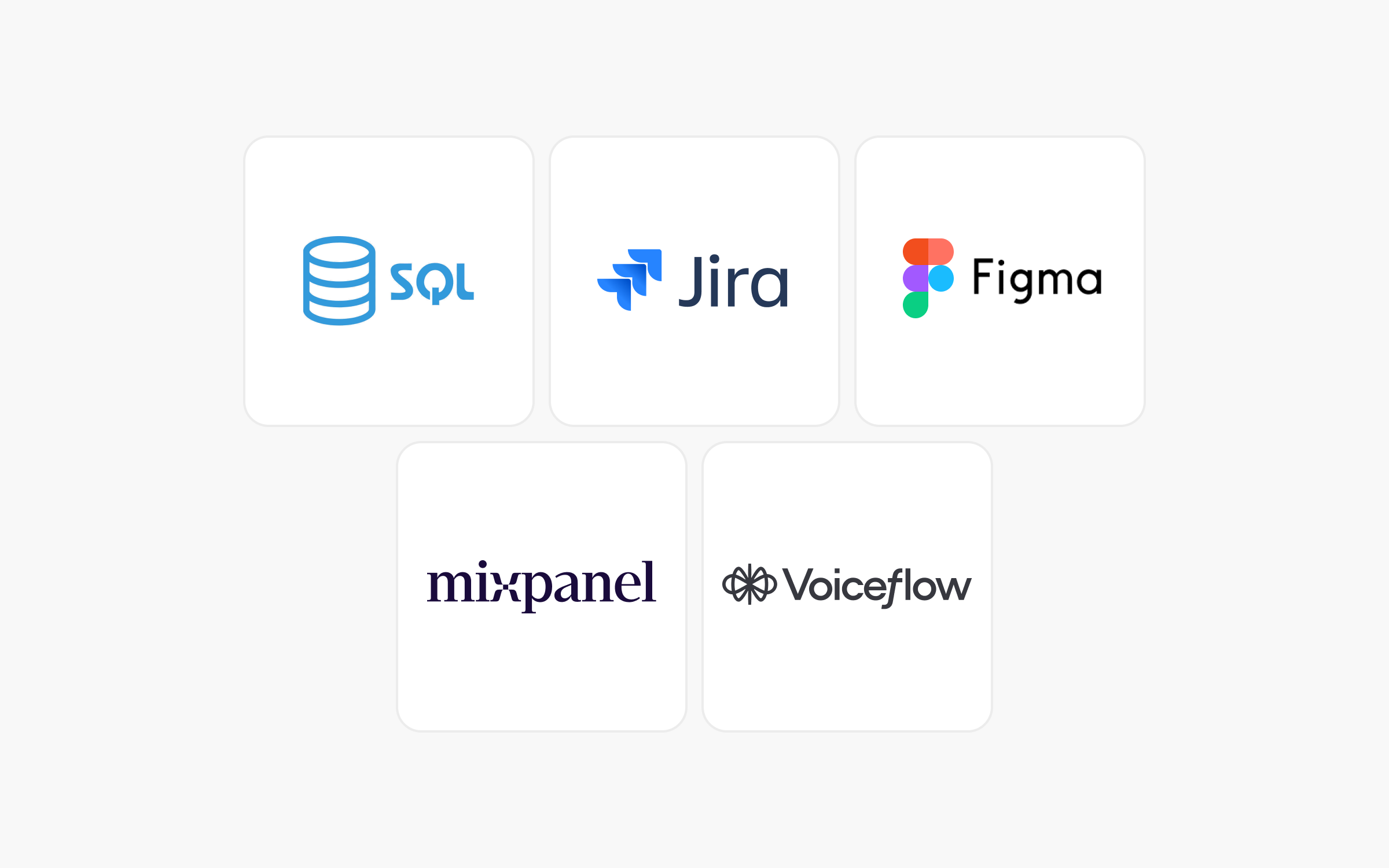
Circuit Stream teaches these specific tools:
- SQL: For querying databases and analyzing data
- Jira: For project management and sprint planning
- Figma: For prototyping and collaborating with designers
- VoiceFlow: For building conversational interfaces
- Mixpanel: For product analytics
- ChatGPT: For AI-assisted product work
SQL is notable. Many PM bootcamps skip technical skills entirely. Circuit Stream teaches enough SQL for you to pull your own data, run basic queries, and understand what's possible with databases. This makes you more self-sufficient and helps you communicate better with engineering teams.
The capstone project
The program culminates in a capstone project. You tackle a real-world product challenge based on companies like Amazon, Uber, Apple, or Disney. This isn't a made-up scenario. You work through the full product development process: discovery, strategy, feature definition, and execution planning.
The capstone becomes your portfolio piece. When interviewing for PM roles, you can walk through how you approached a complex product challenge, what frameworks you used, and how you made trade-off decisions. One student, Gianluigi Santosuosso, achieved the maximum grade on his capstone and said it was his proudest moment in the bootcamp.
Pricing and cost analysis
Circuit Stream costs $10,500. Full stop. That makes it the most expensive product management bootcamp I've reviewed. Let me break down what that means in context.
The full pricing breakdown
Full tuition: $10,500
Pay in full before the course starts and you get 15% off, bringing the price down to $8,925. That's a $1,575 discount. Circuit Stream accepts wire transfers and credit cards for upfront payment.
Payment plans:
If $8,925 upfront isn't realistic, Circuit Stream offers three payment plan options:
- 3-month plan
- 6-month plan
- 12-month plan (as low as $875/month)
Each payment plan includes a one-time administrative fee on top of the $10,500 base tuition. Circuit Stream doesn't publish the exact fee amounts on their website, so you'll need to contact them directly for specifics. This is frustrating. Transparent pricing should include all fees.
Price comparison with competitors
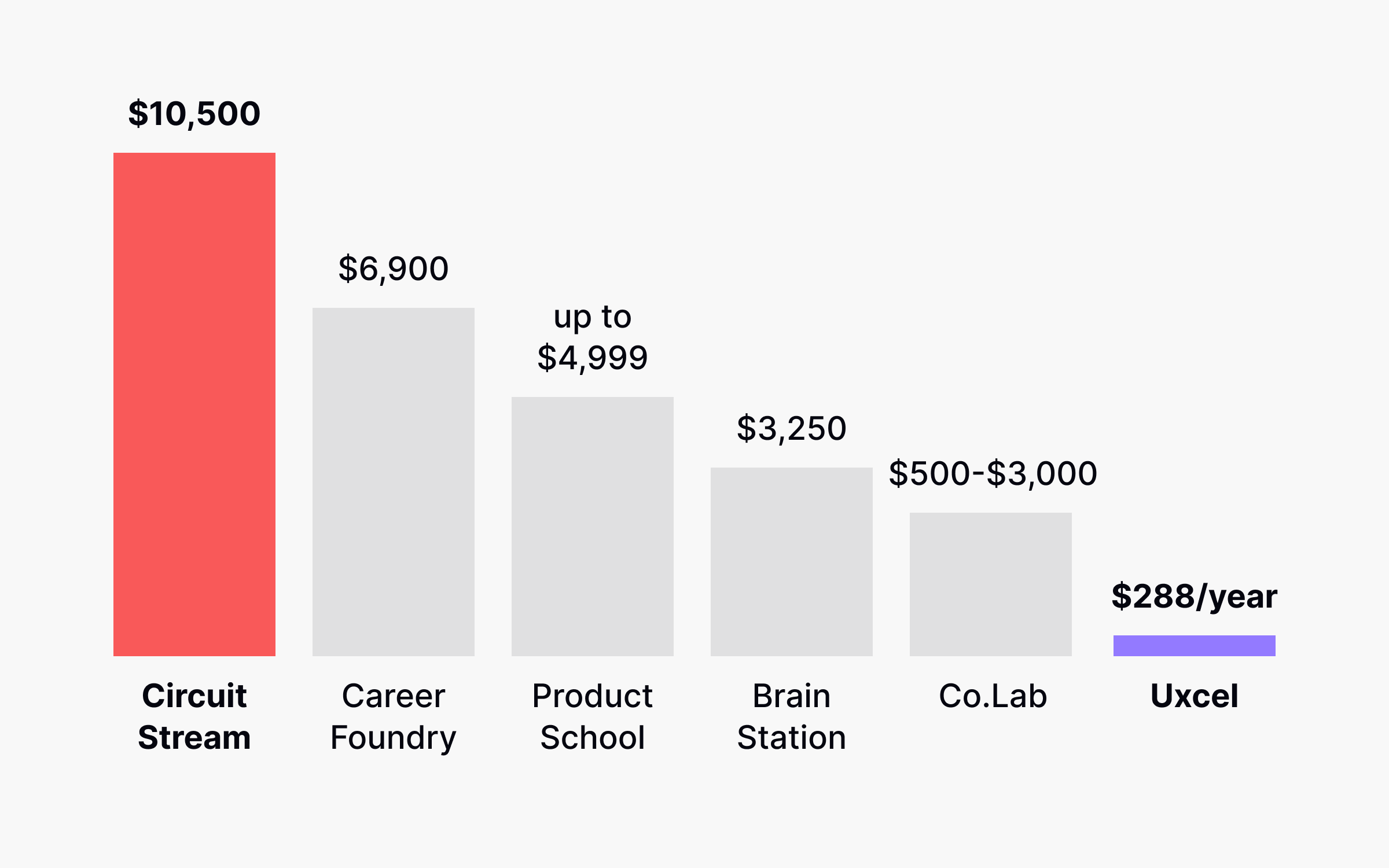
Here's where the price becomes stark:
- Circuit Stream: $10,500 (21 weeks)
- CareerFoundry: $6,900 (3-6 months)
- Product School: $4,499 (5 days full-time or 8 weeks part-time)
- BrainStation: $3,250 (8 weeks)
- Co.Lab: Around $2,000-3,000 (8 weeks)
- Uxcel: $24/month ($288 annually)
Circuit Stream is 52% more expensive than CareerFoundry, which offers a job guarantee. It's 2.3x more than Product School, 3.2x more than BrainStation, and roughly 3-5x more than Co.Lab. Compared to Uxcel's $24/month subscription, Circuit Stream costs 36x more annually (or 437x more than a single month of Uxcel).
The question becomes: what justifies that premium? Circuit Stream would point to university partnerships, longer curriculum depth, and instructor quality. Those are real advantages. Whether they're worth 2-3x the cost depends on your specific situation.
Canadian funding options
If you're in Canada, Circuit Stream lists several funding opportunities that could help offset the cost:
- WorkBC Loans and Grants
- Better Jobs Ontario
- Windmill Microlending
- Achēv Accelerating Career Advancement
- Immigrant Services Society of BC (Global Talent Loans)
These programs have different eligibility requirements. Some are province-specific. Some focus on unemployed workers or new immigrants. None are guaranteed, but they're worth researching if you qualify. Circuit Stream's enrollment advisors can guide you through the application process.
ROI expectations
Here's the challenge: Circuit Stream doesn't publish employment statistics or salary data. I can't tell you what percentage of graduates land PM jobs, how long it takes them, or what their average salary increase is. This makes ROI calculations speculative at best.
I found two detailed student success stories. Amandeep S. Sodhi landed a PM role before finishing the bootcamp. Gianluigi Santosuosso used the skills to build his own product. Both stories are positive, but they're anecdotes, not data.
Compare this to programs like CareerFoundry, which publishes outcome reports. Or Uxcel, which has an Impact Report showing 68.5% promotion rates and $8,143 average salary increases. Circuit Stream has the testimonials. They don't have the aggregate data.
At $10,500, you need a significant outcome to justify the investment. If you land a PM role paying $90,000-110,000 (typical entry-level PM salaries), you'll recoup the cost quickly. If the career transition takes 12+ months or doesn't happen, you're out $10,500 with limited recourse.
Refund policy details
Circuit Stream offers a full refund if you withdraw in writing at least seven days before the course start date. You'll pay admin fees, but you get your tuition back. After that window closes, you're committed.
You can also defer to a later cohort if your situation changes. This flexibility is reasonable. Just make sure you're certain before that seven-day window closes.
Is Circuit Stream right for you?
Not everyone should spend $10,500 on this bootcamp. Let me break down who this works for and who should look elsewhere.
This program is ideal for professionals looking to apply product management frameworks and best practices within their current role to enhance their skills and stay competitive. While the bootcamp is comprehensive, some students may prefer to take individual courses to build specific skills at their own pace. Defining a clear path forward is crucial for career advancement, and this program helps you prepare for new opportunities by equipping you with the necessary knowledge and strategies. Additionally, some programs offer professional development units (PDUs) for ongoing credentialing, which are valuable for maintaining certifications and supporting your professional growth.
You're a strong fit if you:
1. You value university credentials
If you're targeting traditional employers or industries that respect academic credentials, the co-branded certificate with University of Toronto, McGill, UW, or UCI carries weight. This matters more in finance, healthcare, or established corporations than at startups or tech companies.
2. You thrive under structure and pressure
The program is intense by design. Fixed Tuesday/Thursday evening schedule. Weekly assignments. Labs every other Wednesday. Regular deadlines. If this kind of structure pushes you to perform better, Circuit Stream could work. If you need flexibility or a gentler pace, it won't.
3. You want comprehensive, deep coverage
21 weeks is longer than most bootcamps. BrainStation runs 8 weeks. Co.Lab is 8 weeks. Circuit Stream gives you more time with each topic, more practice with frameworks, and a more thorough curriculum. If you want depth over speed, that's an advantage.
4. You have access to funding or employer sponsorship
If you're in Canada with access to government funding programs, or if your employer will pay, the price becomes less painful. Same if you can use the payment plan without financial stress. At $875/month on the 12-month plan, it's more manageable.
5. You prefer learning from working PMs
Instructors from Amazon, Microsoft, and Grammarly bring current industry practices. If you want to learn from people doing PM work at recognizable companies, Circuit Stream delivers that.
Skip Circuit Stream if:
1. The price is a major financial strain
At $10,500, this is an expensive bet on your career transition. If paying means going into debt, draining savings, or causing real financial stress, consider cheaper alternatives first. BrainStation at $3,250 or Uxcel at $24/month provide learning options without the financial risk.
2. You need schedule flexibility
Tuesday and Thursday evenings at 6:30-9:00 PM ET are non-negotiable. If you have irregular work hours, childcare responsibilities, or time zone conflicts, this won't work. Self-paced options like CareerFoundry or Uxcel give you more control.
3. You're a true beginner concerned about pace
Circuit Stream markets itself as "beginner-friendly," but student reviews tell a different story. "The pace was intense." "Barely enough time to meet minimum requirements." If you're brand new to product management concepts and worried about keeping up, start with a gentler option like Uxcel. You can always level up later.
4. Job guarantees matter to you
CareerFoundry offers a job guarantee. Circuit Stream doesn't. If having that safety net is important to your decision, Circuit Stream isn't it. They provide career support, but no guarantee you'll land a PM role.
5. You want transparent outcome data
Circuit Stream doesn't publish employment statistics, placement rates, average time to employment, or salary increases. If you need to see aggregate data before investing $10,500, that data doesn't exist publicly. You're relying on testimonials and trust in the program.
The honest middle ground
Most people reading this probably fall somewhere in between. You value credentials but hate the price. You want structure but need some flexibility. You like the instructor quality but worry about the pace.
If that's you, here's my suggestion: reach out to Circuit Stream for an info session. Talk to current students or recent grads in their Discord community. Ask specifically about the pace, the career support, and what happened after graduation. Get specific answers before committing $10,500.
And seriously consider whether a cheaper alternative would serve you just as well. The university partnership is nice. But is it worth an extra $7,250 compared to BrainStation? That's a decision only you can make based on your specific situation, career goals, and financial position.
Student reviews and feedback
Circuit Stream has 75 reviews on Trustpilot with a 4.0/5 rating. That's decent, not exceptional. For context, Uxcel sits at 4.6-4.8/5. What matters more than the number is what students say. Let me walk through the patterns.
The consistent praise
1. Exceptional instructors
This comes up repeatedly. "Our professor was exceptional." "The lessons were engaging, the content was relevant." Students appreciate that instructors are working PMs from recognizable companies. One review specifically mentioned that instructors from Amazon and Microsoft brought real-world insights that you wouldn't get from full-time educators.
The teaching quality varies by instructor (since it rotates), but the overall pattern is positive. When students praise Circuit Stream, instructor quality is usually the first thing mentioned.
2. Hands-on, practical learning
"We had the opportunity to apply what we learned in practice." This differentiates Circuit Stream from video-based courses. You're not just watching lectures. You're working through exercises, collaborating in breakout sessions, and applying frameworks to real scenarios. The capstone project was repeatedly mentioned as valuable.
3. University credential adds weight
Students value the co-branded certificate. "University-backed digital badge boosts LinkedIn." "Partnership with University of Toronto adds legitimacy." For people targeting traditional employers or trying to stand out in a crowded market, the university association matters.
The recurring complaints
1. The pace is intense (most common issue)
This is the biggest pattern in negative reviews. Here's a direct quote from a detailed Trustpilot review: "The pace was intense. With weekly lessons, career and course labs, assignments, and projects, we barely had enough time to meet the minimum requirements."
Multiple students echo this. The program is marketed as "beginner-friendly," but the experience is demanding. You're juggling live sessions Tuesday and Thursday evenings, bi-monthly labs on Wednesday, weekly assignments, ongoing projects, and career workshops. That's a lot while working full-time.
If you're considering Circuit Stream, take this seriously. "Barely enough time to meet minimum requirements" is not a minor complaint. It suggests the workload is at or beyond what's sustainable for most working professionals.
2. Career program effectiveness is mixed
This is where things get concerning. Same detailed review: "The career program promised more than it delivered. I wouldn't rely on it to help secure a new job."
Career support is supposed to be a core value proposition. Circuit Stream emphasizes 1-on-1 coaching, resume reviews, and networking. But at least some students feel it didn't live up to expectations. The challenge is that Circuit Stream doesn't publish job placement data, so we can't verify how many students land PM roles with or without the career support.
Other reviews mention career support more positively, so experiences vary. But the fact that anyone paying $10,500 says they "wouldn't rely on it" for job placement is a red flag worth noting.
3. High cost creates expectations
Several reviews mention the price, even when they're otherwise positive. "$10,500 is the most expensive bootcamp on the market." "Price tag makes it less accessible." When you're paying premium prices, your expectations rise proportionally. Any gap between promise and delivery feels larger.
Student success stories
Circuit Stream publishes two detailed success stories on their website. These provide more context than typical reviews.
Amandeep S. Sodhi (September 2024)
Background: Business process improvement professional with data analytics experience. Goal: Transition into product management.
Outcome: He got laid off midway through the bootcamp. Instead of seeing it as a setback, he used the skills he'd learned to land a PM role in a completely new industry BEFORE finishing the program.
His quote: "Even before the bootcamp ended, I found a job through a culmination of various factors, one of which was the learnings through the bootcamp. I was more confident in answering situational questions in interviews. All the business theories and concepts covered in the bootcamp helped me craft my answers during the interviews."
This is the success story Circuit Stream wants to showcase. Someone who leveraged the curriculum immediately, landed a role quickly, and transitioned industries. It happened. But it's one person.
Gianluigi Santosuosso
Background: Event producer building a ticketing app. Goal: Gain structured PM knowledge to launch his own product.
Outcome: Achieved maximum grade on capstone project. Used the bootcamp to create a roadmap for his entrepreneurial product. His quote: "I feel like I can follow a roadmap for my life now."
Different path than Amandeep. He wasn't trying to get hired as a PM. He was building his own product and needed PM frameworks to structure his approach. Circuit Stream gave him that.
Third-party review perspective
IGotAnOffer published a bootcamp comparison in April 2025. Here's what they said about Circuit Stream:
Pros: "Taught by top industry pros, university-backed, Discord community." Cons: "High cost, fast-paced, mixed reviews on job support."
Their summary: "While the program is labeled 'beginner-friendly', the $10,500 price tag makes it the most expensive bootcamp on our list."
This aligns with what I found. The curriculum is solid, instructors are strong, university partnerships add credibility. But the price is steep, the pace is challenging, and career outcomes aren't guaranteed or even clearly documented.
Job prospects after graduation
This is the most important question. And it’s where Circuit Stream becomes frustrating. They don’t publish employment statistics. No placement rates. No average time to employment. No salary increase data. For a $10,500 bootcamp, this lack of transparency is concerning.
Qualified project managers and management professionals are in high demand across industries, and obtaining credentials such as Project Management Professional (PMP)® or Certified Associate in Project Management (CAPM)® can significantly enhance job prospects. Becoming a project management professional or certified associate demonstrates a commitment to professional development and can open doors to advanced roles. Project management certifications often require candidates to complete specific coursework and pass an exam, underscoring the importance of comprehensive training and preparation for aspiring project managers.
Circuit Stream's career support claims
Circuit Stream emphasizes career support throughout the program:
- 1-on-1 career coaching sessions
- Resume reviews and feedback
- Career workshops integrated into curriculum
- Interview preparation
- Access to hiring partners
- Discord alumni network for networking
- Group career sessions and guest lectures
These components exist. Students confirm they're part of the program. What we don't know is how effective they are at getting people hired.
Student outcomes we found
I found two documented success stories. Amandeep landed a PM role before finishing. Gianluigi used the skills for his own product. Both positive. Both outliers by definition (Circuit Stream chose them as showcases).
The Trustpilot review that concerns me: "The career program promised more than it delivered. I wouldn't rely on it to help secure a new job." This is from someone who completed the program, paid $10,500, and came away feeling the career support wasn't adequate.
Without aggregate data, I can't tell you if that student is representative or an exception. Maybe 80% of graduates land PM roles. Maybe 40% do. Circuit Stream knows. They're choosing not to publish it.
The job market context
Circuit Stream's website cites industry data:
- Product operations, technical product managers, and growth managers are among Canada's top 20 fastest growing jobs in 2023 (LinkedIn report)
- 43% of companies worldwide are looking to expand their Product Management teams (Career Karma data)
This is true. PM roles are in demand. But that doesn't automatically translate to bootcamp graduates getting hired. The market wants PMs with experience. Breaking in without prior PM experience is still challenging, bootcamp or not.
The university credential helps. Having Amazon or Microsoft instructors on your resume (through the bootcamp) creates talking points. The capstone project gives you something to showcase. But none of this guarantees employment.
Comparing career support options
CareerFoundry: Job guarantee
If you don't land a job within six months of completing their program, CareerFoundry refunds your tuition. That's accountability. They publish outcome reports. They stand behind their career support with money.
Uxcel: Published outcomes data
Uxcel's 2024 Impact Report shows 68.5% of users got promoted and average salary increases of $8,143. Not placement rates (Uxcel isn't a bootcamp), but documented career impact. Users know what outcomes to expect.
Circuit Stream: Testimonials only
Two success stories. No aggregate data. No job guarantee. Career support included but effectiveness questioned by at least some students.
Realistic expectations
If you complete Circuit Stream, you'll have:
- A co-branded certificate from a recognized university
- A capstone project demonstrating PM skills
- Frameworks and tools used by working PMs
- Some career coaching and resume help
- A network of fellow graduates
Will that be enough to land a PM job? For some people, yes. Amandeep proves it's possible to transition before even finishing. For others, it might not be enough. Breaking into PM often requires multiple attempts, networking beyond the bootcamp, and time.
What I can't tell you is your odds. At $10,500, you deserve better transparency. CareerFoundry charges $6,900 and backs it with a guarantee. Circuit Stream charges $10,500 and provides testimonials. That gap bothers me.
My honest take on job prospects
Circuit Stream will help you develop real PM skills. The curriculum is solid. The instructors are credible. The certificate carries weight. If you put in the effort, you'll come out more knowledgeable and better positioned for PM roles.
But I can't say "yes, you'll get a job" without seeing data. The career support has mixed reviews. The program doesn't publish placement rates. The student who said they "wouldn't rely on it" for job placement paid the same $10,500 you would.
If job outcomes are your primary concern, ask Circuit Stream directly for data before enrolling. Request to speak with recent graduates. Join their Discord and ask honest questions. Don't commit $10,500 based on two success stories and vague promises of career support.
Common questions answered
What is the duration and time commitment?
21 weeks. That's about 5 months. You'll attend live sessions on Tuesday and Thursday evenings (6:30-9:00 PM ET) plus bi-monthly labs on Wednesday evenings. The part-time format lets you keep working, but expect 10-15 hours per week minimum when you factor in assignments, projects, and studying.
Do i need any prior experience?
Circuit Stream says no. They market it as beginner-friendly. But student reviews consistently mention the "intense pace" and "barely enough time." If you have zero PM exposure, you might struggle. Consider starting with Uxcel ($24/month) to build foundational knowledge first, then deciding if you want the full bootcamp experience.
Which certificate will you receive?
A co-branded certificate with either University of Toronto School of Continuing Studies, McGill Continuing Education, University of Washington Continuum College, or UCI Division of Continuing Education (depending on which partnership you enroll through). You also get a digital badge you can add to LinkedIn. The university association adds credibility compared to standalone bootcamp certificates.
Are there any concerns regarding the schedule flexibility?
No. Live sessions are Tuesday and Thursday evenings at 6:30-9:00 PM Eastern Time. Labs are bi-monthly on Wednesdays, same time slot. You need to be available at these times for 21 weeks straight. If you have irregular work hours, childcare at night, or you're in a conflicting time zone, this won't work. Consider self-paced alternatives like CareerFoundry or Uxcel instead.
Can I get a refund if I change my mind?
Yes, but timing matters. Circuit Stream offers a full refund (minus admin fees) if you withdraw in writing at least 7 days before the course starts. After that window, you're committed. You can also defer to a later cohort if your situation changes, which gives you some flexibility.
If I'm falling. behind, what should I expect?
The pace is fast and the deadlines are real. Student reviews mention "barely enough time to meet minimum requirements." Circuit Stream offers premium support from qualified experts, so you can get help when stuck. But if you consistently fall behind, catching up becomes difficult with new material coming every week. The structure doesn't accommodate extended delays.
Does Circuit Stream help with job placement?
They provide career support (1-on-1 coaching, resume reviews, career workshops, access to hiring partners). But there's no job guarantee, and they don't publish placement statistics. One Trustpilot review explicitly said the career program "promised more than it delivered" and they "wouldn't rely on it" for job placement. Other students had better experiences. Results vary.
How is Circuit Stream different to university programs?
Circuit Stream is shorter and cheaper than a full university program. A traditional university PM certificate might take 9-12 months and cost $15,000-25,000. Circuit Stream is 21 weeks for $10,500 (or $8,925 with early payment). You get university branding through the partnership, but it's not equivalent to a university-taught program. The tradeoff: less time and money, but also less depth and fewer university resources.
Can I pay for it via company reimbursement or government funding?
If you're in Canada, several funding options exist (WorkBC, Better Jobs Ontario, Windmill Microlending, etc.). Circuit Stream lists these on their website. Eligibility varies by program and location. For employer reimbursement, check your company's professional development policies. The university partnership and certificate might make approval easier than standalone bootcamps.
Can I join the bootcamp if I'm not based in Canada?
Circuit Stream is fully online, so location doesn't matter for access. But the schedule is locked to Eastern Time. If you're in Europe, Asia, or Australia, those Tuesday/Thursday 6:30-9:00 PM ET slots might fall in the middle of your night or workday. Check the time conversion before enrolling. Payment plans might also have geographic restrictions (the 12-month plan says "currently available to Canadian citizens only").
Why is Circuit Stream unique?
Three main differences: (1) University partnerships add academic credibility, (2) 21 weeks is longer than most competitors (more depth, slower pace... theoretically), and (3) $10,500 is the highest price point I've seen. BrainStation charges $3,250, Product School is $4,499, CareerFoundry is $6,900. Circuit Stream is betting the university brand and instructor quality justify the premium.
What is instructor-to-student ratio?
Circuit Stream doesn't publish this information. You'll have live classes with the main instructor, plus access to teaching assistants and premium support. The Discord community connects you with other students. But I can't tell you if you're in a cohort of 15 people or 50. Ask during your info session if class size matters to you.
What can should I expect to learn about SQL?
You'll get an introduction to SQL for product managers. Think: writing basic queries, pulling data, understanding joins and aggregations. You won't become a database expert. But you'll learn enough to pull your own data rather than always relying on data teams. For PMs, that level of SQL knowledge is genuinely useful and somewhat rare among bootcamp graduates.
Alternative bootcamp options
If Circuit Stream doesn’t fit your budget, schedule, or learning style, here are three alternatives worth considering: Uxcel (the most affordable option with documented outcomes), BrainStation (if you want a shorter, cheaper bootcamp), and CareerFoundry (if you need a job guarantee and flexible pacing).
Circuit Stream also offers a Software Development Bootcamp (a 36-week program covering foundational web basics, front-end and back-end development, system design, and mobile development), a Game Design Bootcamp (a 30-week program covering the principles of game design), a Game Development Bootcamp (a 30-week program focused on using the Unity game engine and C# programming), an XR Development with Unity bootcamp (teaching students to design and develop AR and VR applications using Unity and C#), and the XR Project Accelerator (a program for building AR/VR applications with expert guidance). Youth programs at Circuit Stream target ages 13-18 in fields like AI, coding, game design, and finance. Circuit Stream continues to expand its offerings with upcoming cohorts starting in September and November 2025.
Is Uxcel a better fit?
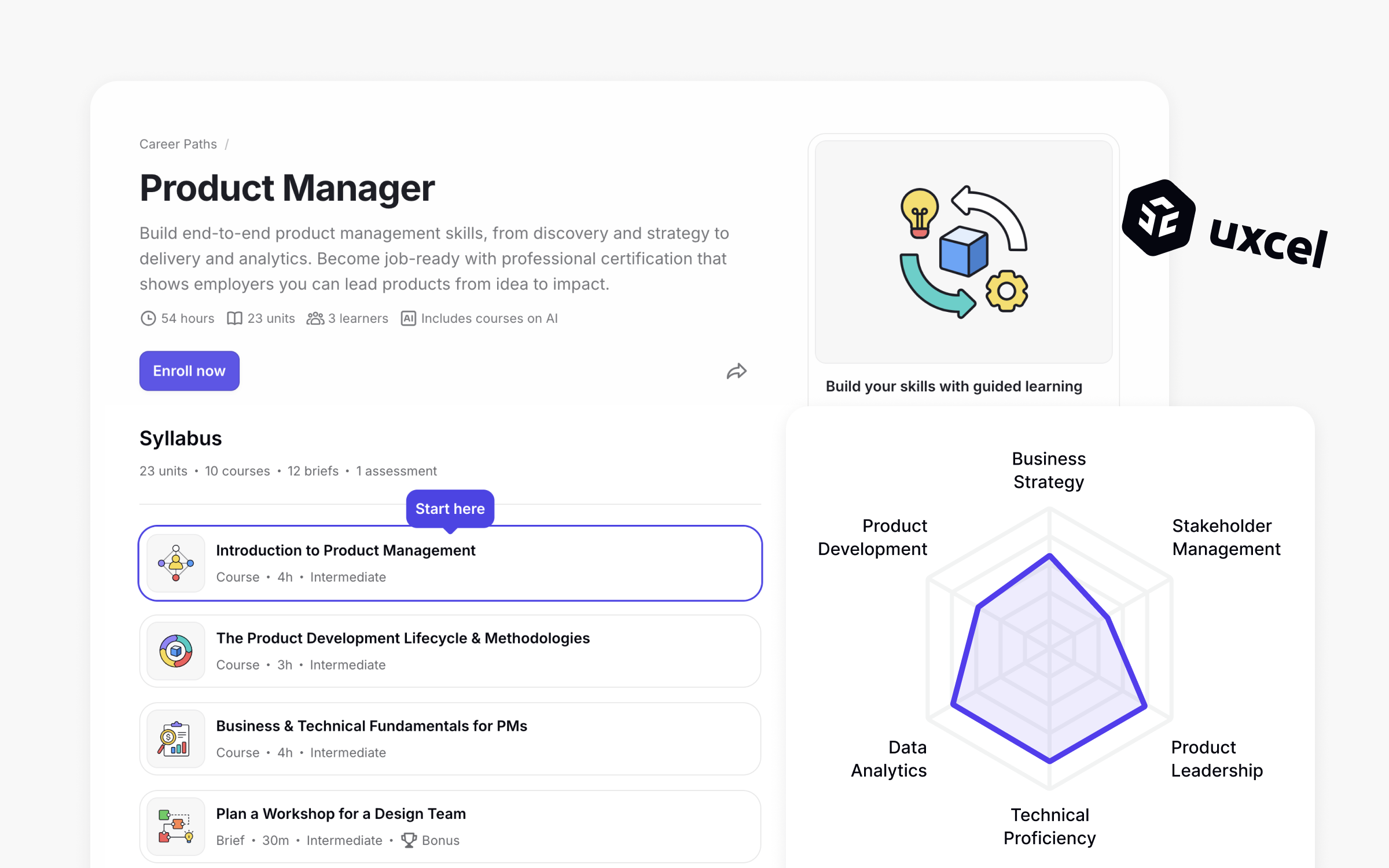
Uxcel is a skill-building platform launched in 2020 to solve a specific problem: professionals need to advance without expensive bootcamps or passive video courses. The platform provides interactive, bite-sized learning for both UX design and product management, with a unique skill mapping feature that tracks competencies across both disciplines simultaneously.
It differs from Circuit Stream in basically every way. Uxcel costs $24/month (annual billing). Circuit Stream costs $10,500. Uxcel is self-paced. Circuit Stream has fixed Tuesday/Thursday sessions. Uxcel offers 5-minute daily lessons. Circuit Stream requires multiple hours weekly. The approach is completely different.
Uxcel's key differentiators
The platform has three core differentiators that set it apart from traditional bootcamps:
1. Cross-functional skill mapping: Uxcel automatically tracks your competencies across BOTH design and product management. Senior designers can take PM courses to build complementary skills. Product managers can learn design fundamentals. The system maps your skills across both disciplines, showing you exactly where to focus next. None of the competing platforms offer this.
2. Completion rates that work: Uxcel reports 48-50% completion rates compared to 5-15% industry standard. That's 10x better. Why? Bite-sized lessons (5 minutes), gamification that doesn't feel childish, and multi-platform experience (web-first with native iOS and Android apps). You can learn during your commute, practice during lunch, and everything syncs automatically.
3. Documented career impact: According to Uxcel's 2024 Impact Report, 68.5% of users got promoted and users saw an average salary increase of $8,143. For context, that salary boost alone covers 28 years of Uxcel at $24/month, or nearly covers the full Circuit Stream tuition. The 500,000+ users across 140 countries suggest the model works at scale.
Outcomes and pricing
Uxcel costs $24/month with annual billing ($288 annually). Regional pricing is available for select countries. Enterprise plans exist for teams. Compare that to Circuit Stream's $10,500: Uxcel is 36x cheaper annually, or 437x cheaper than one year of monthly subscription versus Circuit Stream's full price.
The documented outcomes are notable. 68.5% promotion rate means roughly 7 out of 10 users who engage with Uxcel advance their careers. $8,143 average salary boost provides clear ROI. These aren't testimonials, they're aggregate data from Uxcel's impact reporting.
Honest limitations
Uxcel is not a substitute for intensive portfolio building. The platform has project briefs and mentor feedback on submitted work, but if you're a complete beginner trying to build 8-10 portfolio pieces from scratch, you'll need to supplement with additional projects. Circuit Stream's capstone provides one polished portfolio piece. Uxcel gives you the skills but expects you to create projects independently.
The learning format is interactive, not video-based. If you strongly prefer watching video lectures over doing interactive exercises, Uxcel might not match your learning style. And while mentor feedback is available on projects, it's not the same as weekly 1-on-1 coaching calls with a dedicated mentor.
Best for
Uxcel works best for:
- Budget-conscious learners who can't justify $10,500
- Busy professionals who need maximum flexibility (5-minute lessons, any device)
- Senior professionals seeking cross-functional skills (designers learning PM, PMs learning design)
- People who want documented outcomes before investing
- Anyone who needs to learn at their own pace without fixed schedules
That flexibility and affordability come at a cost, though. You don't get the university credential, the live instruction from Amazon PMs, or the structured curriculum with firm deadlines. Which brings us to the next alternative.
Shorter bootcamp option: BrainStation
BrainStation's Product Management bootcamp runs 8 weeks and costs $3,250. That's 62% shorter and 69% cheaper than Circuit Stream. The curriculum covers product strategy, Agile, prototyping, and go-to-market planning. Classes are live online or in-person at their campuses (London, New York, Seattle, Vancouver, Toronto, and others).
BrainStation is an established player. Founded in 2012, they've trained thousands of students across multiple tech disciplines. Instructors come from the tech industry (not unlike Circuit Stream). You build a real-world project for your portfolio. You get a product management certification upon completion.
The key difference from Circuit Stream: condensed timeline. 8 weeks versus 21 weeks means faster completion but less depth per topic. You cover the fundamentals quickly. Circuit Stream gives you more time to absorb concepts and practice frameworks. BrainStation gets you through faster and charges less for it.
Downsides of BrainStation
No university partnership. Your certificate comes from BrainStation, not a recognized university. For some employers, that matters. No job guarantee. Like Circuit Stream, career support is included but no placement promises. And the shorter timeline might feel rushed if you're juggling full-time work. 8 weeks is intense.
BrainStation also doesn't publish detailed placement statistics. You get testimonials and general claims, but no hard data on what percentage of graduates land PM roles or salary increases.
Best for
BrainStation works if:
- You want a traditional bootcamp experience without the Circuit Stream price tag
- 8 weeks works better than 21 weeks for your timeline
- You prefer in-person learning options (if near a campus)
- University credentials don't matter for your target employers
Need a safety net? CareerFoundry offers guarantees
CareerFoundry Product Management Program costs $6,900 and comes with something Circuit Stream doesn't offer: a job guarantee. If you don't land a job within six months of completing their program, they refund your tuition. That's accountability backed by money.
The program is self-paced but milestone-driven. You can complete it in 3 months full-time (30-40 hours/week) or stretch it to 6 months part-time (15-20 hours/week). You work with a mentor (senior PM) and a tutor, plus a career specialist who helps with resume, interviews, and portfolio. The dual mentorship model gives you both project guidance and career strategy.
CareerFoundry also publishes outcome reports. They're not hiding their placement data. You can see what percentage of graduates land jobs, how long it takes, and what kinds of roles they get. That transparency helps you make an informed decision.
Downsides of CareerFoundry
Self-paced means self-motivated. If you need the structure of fixed class times and firm deadlines to stay on track, CareerFoundry's flexibility might work against you. The mentorship is capped at 10 calls (Reddit users flagged this). If you expect unlimited access to your mentor, that's not what you're getting.
No university credential. No live classes with cohorts. You're working more independently with periodic mentor check-ins. For some people, that's perfect. For others, it's isolating.
Best for
CareerFoundry makes sense if:
- You want job placement accountability (the guarantee matters)
- You need flexible pacing without fixed weekly schedules
- You're okay investing $6,900 with outcome transparency
- Self-directed learning works for you
Comparing alternatives side-by-side
Circuit Stream ($10,500, 21 weeks) sits above all three on price but offers university credentials and the longest curriculum. Whether that justifies 2-3x the cost depends on your priorities. If budget is tight, Uxcel at $24/month is impossible to beat on affordability. If you want a traditional bootcamp faster and cheaper, BrainStation delivers. If job placement accountability matters, CareerFoundry's guarantee provides peace of mind.
Which alternative makes the most sense?
For most people reading this, roughly 6 out of 10, Uxcel makes the most sense because it removes the financial barrier ($24/month versus $10,500), provides maximum flexibility (learn anytime, anywhere), and delivers documented outcomes (68.5% promotion rate). The skill mapping across design and product is unique. The completion rate is 10x industry standard. The price allows you to try it risk-free.
The other 40% have specific needs:
- Need university credentials for traditional employers → Circuit Stream
- Want fastest bootcamp completion at lower cost → BrainStation
- Need job guarantee and flexible self-paced learning → CareerFoundry
If you're still unsure, start with Uxcel for a month ($24). See if the learning style works. Build some foundational skills. If you need more structure after that, you can always upgrade to a bootcamp. You'll be better prepared and won't have wasted much money if it turns out you don't need the bootcamp after all.
So, is Circuit Stream worth it?
Circuit Stream is a well-designed bootcamp with real strengths. Instructors from Amazon, Microsoft, and Grammarly bring current industry knowledge. The 21-week curriculum is thorough and structured. University partnerships with Toronto, McGill, UW, and UCI add credibility. Students consistently praise the teaching quality and hands-on learning approach.
But at $10,500, it's the most expensive PM bootcamp option available. And expensive things need to justify their premium. Circuit Stream justifies some of it: the university credentials matter to certain employers, the longer timeline allows more depth, the instructors are genuinely impressive. Whether it justifies being 2-3x more expensive than alternatives depends entirely on your specific situation.
When does Circuit Stream make sense?
You're a good fit if:
1. University credentials significantly impact your career prospects. If you're targeting traditional industries (finance, healthcare, government) or conservative employers who value academic credentials, the co-branded certificate carries more weight than a standalone bootcamp badge.
2. You have access to funding or employer sponsorship. If government programs (WorkBC, Better Jobs Ontario, etc.) or your employer will cover the cost, the price becomes less of a barrier. At $875/month on the 12-month payment plan, it's more manageable if spread out.
3. You thrive under intense, structured programs. Some people perform better with firm deadlines, fixed schedules, and external pressure. If that describes you, and you can handle the "barely enough time" pace students report, Circuit Stream's structure might push you to succeed.
4. Learning from working PMs at top companies is a priority. Having instructors from Amazon, Microsoft, and Grammarly means you're learning current practices from people doing PM work at scale. That real-world knowledge has value.
5. You want comprehensive coverage over speed. 21 weeks gives you more time with each topic than 8-week alternatives. If you prefer depth and time to absorb material rather than racing through, the longer timeline is an advantage.
When should you skip this?
Look elsewhere if:
1. The price creates financial stress. If $10,500 means debt, drained savings, or real financial hardship, don't do it. There are quality alternatives at $3,250 (BrainStation), $6,900 (CareerFoundry), or $24/month (Uxcel). Learn the skills without risking your financial stability.
2. You need schedule flexibility. Tuesday/Thursday 6:30-9:00 PM ET for 21 weeks straight is non-negotiable. If you have irregular hours, childcare responsibilities, or time zone conflicts, this won't work. Choose self-paced options instead.
3. Job guarantees or outcome transparency matter. Circuit Stream provides career support but no job guarantee. They don't publish placement rates, salary data, or time-to-employment metrics. If you need that accountability before investing $10,500, CareerFoundry offers a job guarantee and publishes outcome reports.
4. You're a complete beginner worried about pace. The marketing says "beginner-friendly." Student reviews say "intense pace" and "barely enough time." If you have zero PM exposure and the workload concerns you, start with something gentler like Uxcel. Build foundation first, then consider bootcamps.
5. You want to minimize financial risk. At $24/month, Uxcel lets you try PM learning with almost zero risk. At $10,500 with limited outcome data, Circuit Stream is a significant bet on your career transition. If risk tolerance is low, start small.
Your next steps
If Circuit Stream seems like the right fit:
- Attend an info session to ask specific questions about pace, career support, and outcomes
- Request to speak with recent graduates (not just the success stories on their website)
- Join their Discord community and ask honest questions about job placement
- Calculate the payment plan that works for your budget
- Apply early to get the 15% discount ($8,925 instead of $10,500)
If Circuit Stream doesn't fit but you still want PM training:
- Try Uxcel for a month ($24) to see if self-paced learning works for you
- Look at BrainStation ($3,250, 8 weeks) for faster, cheaper bootcamp
- Consider CareerFoundry ($6,900) if you want job guarantee and flexibility
- Compare costs: Uxcel for 6 months ($144) + BrainStation ($3,250) = $3,394 total, still $6,531 less than Circuit Stream
My final take
Circuit Stream is a legitimate, well-run bootcamp. You'll learn real PM skills from credible instructors. The university partnership adds value for the right audience. Some students will complete this program and land PM roles, just like Amandeep did.
For most people , I'd suggest trying Uxcel first ($24/month). Build PM foundations. See if you enjoy the work. Then decide if you need a structured bootcamp. If you do, you'll be better prepared. If you don't, you've saved $10,200.
If university credentials are genuinely important for your career path, and you have funding or can comfortably afford the investment, and the fixed schedule works, Circuit Stream delivers quality education. Just go in with eyes open about the pace, the career support limitations, and the lack of outcome guarantees.
However, if you are looking for investing in education that is fully aligned with your day-to-day activities and helping you climb the career ladder, Uxcel is your most obvious choice.