.svg)


I spent way too long researching BrainStation’s PM bootcamp. Here’s what surprised me: This certificate program delivers exactly what it promises (solid PM fundamentals taught by instructors from Amazon and Microsoft) while costing dramatically more than alternatives that produce better career outcomes. BrainStation is a global leader in digital skills training established in 2012, with a strong reputation and a worldwide alumni network.
Started reading Course Report reviews, fell into Reddit rabbit holes, compared pricing across way too many competitors. Talked to a few alumni. Examined the curriculum unit by unit. Lost more time than I’d like to admit digging through student feedback.
The truth? This is a quality course. The instructors have impressive credentials that check out, and the certificate program is taught by industry experts with experience in leading tech companies. The 4.7/5 rating isn’t inflated. But at $131 per hour of instruction, you’re paying a premium for brand recognition and instructor pedigree rather than hands-on project experience or career support that helps you land roles. Compared to a PM certificate program like Uxcel's where monthly micro-learning builds equivalent competencies at a fraction of the cost, you're primarily paying for BrainStation's brand and live instruction format.
Most people considering BrainStation fall into one of three categories. First, you’re brand-conscious and want a certificate from an established institution (over 30,000 alumni since 2012). Second, you value learning from people who currently work at FAANG companies over building actual products. Third, you have $3,150 to invest and prefer structured, theory-focused learning over self-paced alternatives. The program is designed to build confidence in handling product management tasks and project management responsibilities, preparing you for real-world challenges.
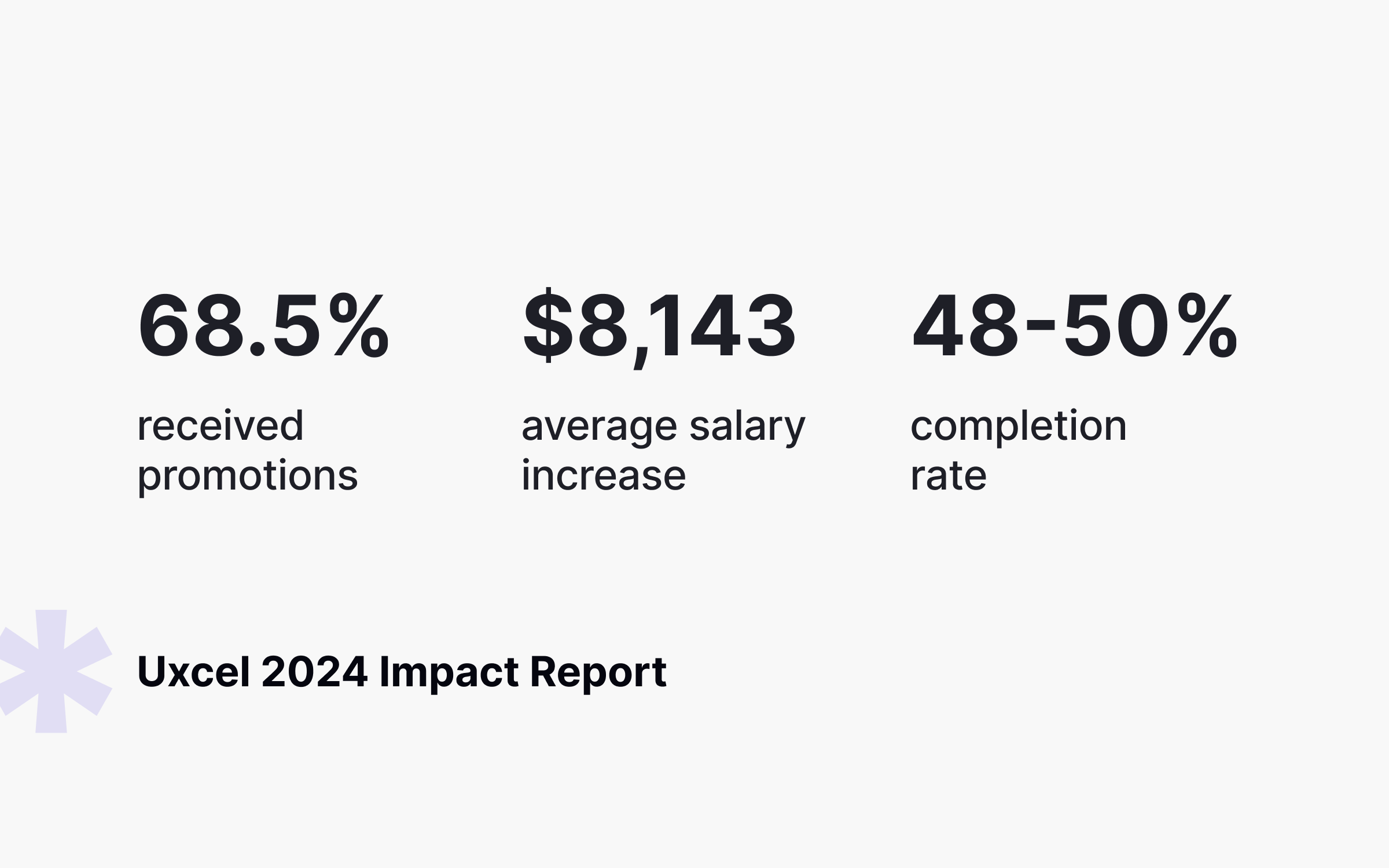
If none of those describe you, platforms like Uxcel deliver documented outcomes (68.5% promotion rate, over $8,000 average salary boost according to their 2024 Impact Report) for $24 per month with unlimited access to courses across product management and UX design.
This review covers everything you need to make an informed decision. I’ll show you exactly what the $3,150 gets you, what students say (not just the highlight reel), who benefits most from this format, and whether alternatives make more sense for your situation.
What do you need to know upfront?
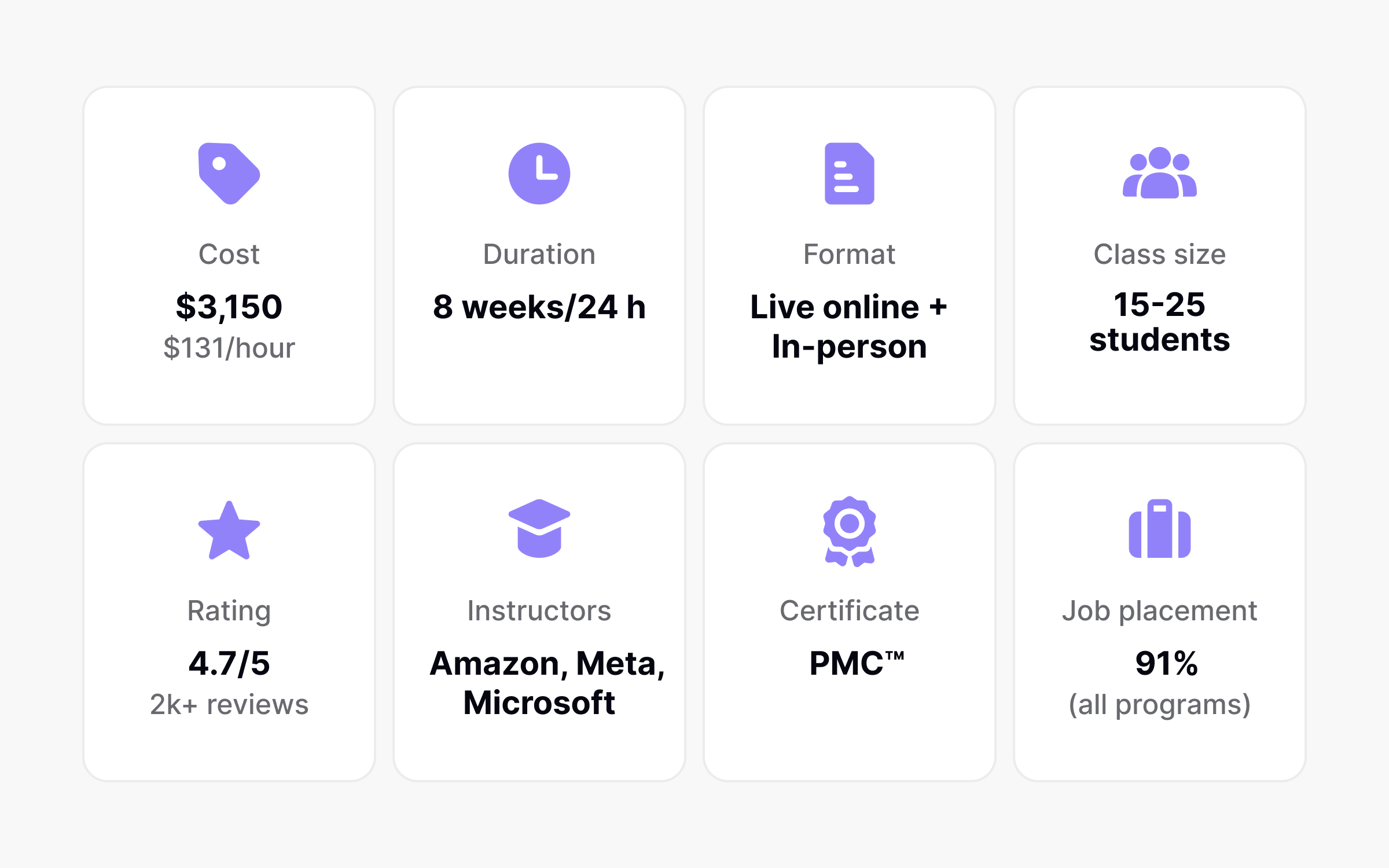
Here's what you need to know about BrainStation Product Management Bootcamp:
Provider: BrainStation (founded 2022, over 30,000 alumni; campuses in New York, London, Miami, Toronto, Vancouver, and Online Live Campus from 2025).
Cost: $3,150 total
Duration: Part-time certificate courses range from 5 to 8 weeks (3 hours/week = 24 total hours), designed for working professionals to gain specific certifications
Format: Live online or in-person (NY, London, Toronto, Vancouver, Miami, and Online Live campus)
Schedule: Evening classes (6:30-9:30 PM local time) or weekend options
Prerequisites: None required (beginner friendly)
Certificate: Product Manager Certification (PMC™); some courses provide professional development units (PDUs) for continuing education
Instructors: Active professionals from Amazon, Meta, Microsoft, WhatsApp
Class size: Small cohorts (15-25 students)
Rating: 4.7/5 on CourseReport (2,000+ reviews), 4.6/5 on SwitchUp
Job placement: 91% within 180 days (includes all BrainStation programs, not just PM)
Refund policy: Contact admissions for details
Let’s talk money. BrainStation charges $131 per contact hour for 24 hours of live instruction. That’s premium pricing. For context, Uxcel offers unlimited access to all courses for $24 monthly, CoLab provides 8 weeks with actual developers and designers for $3,800, and CareerFoundry includes job guarantee plus mentorship for $6,900.
BrainStation also offers individual courses, allowing learners to enroll in separate modules for flexibility, specific certifications, or to earn professional development units (PDUs) as needed. This modular approach is ideal for working professionals from various organizations, including airports, government agencies, and international corporations, seeking to upskill or fulfill continuing education requirements.
What justifies BrainStation’s price? The brand name (established 2012), instructor credentials (currently employed at top tech companies), and structured curriculum (proven frameworks). What’s missing? Extensive project work (one final project vs. building complete portfolio), cross-functional team experience (you don’t work with developers or designers), and intensive career support (some events, limited compared to job-focused bootcamps).
What is BrainStation?
BrainStation is a global digital skills training provider that launched in 2012 in Vancouver and now operates campuses in New York (headquarters), London, Toronto, Vancouver, and Miami. The company has certified over 30,000 professionals across data science, software engineering, UX design, digital marketing, and product management. BrainStation also offers custom enterprise training solutions for corporate teams, addressing organizational upskilling needs.
The Product Management Bootcamp specifically started as a response to tech companies struggling to find qualified product managers. Product management is one of the fastest growing and most lucrative jobs available today. Companies have awoken to the desperate need for product managers to create products that customers love, and there is increasing demand for professionals with specialized skills and credentials in this area. Unlike BrainStation’s full-time bootcamps (12 weeks, over $15,000), the PM certification is part-time and designed for working professionals.
Here’s how it works. You commit to 8 consecutive weeks of evening classes (typically 6:30-9:30 PM in your timezone). Each session runs 3 hours with a 10-minute break. The format mixes lecture, case studies, group exercises, and individual work. Between sessions, expect 2-4 hours of homework (readings, exercises, project work).
The program follows a cohort model. You start with 15-25 other students and move through the material together. Instructors lead discussions, present frameworks, and provide feedback on your work. The final project involves developing a complete product strategy for a fictional or real product, which you present to the class in week 8.
BrainStation positions itself differently than competitors. Product School focuses on unlimited certifications and AI-first training. CoLab emphasizes cross-functional team experience (you build with developers and designers). CareerFoundry offers self-paced learning with job guarantee. BrainStation’s pitch? Learn from people currently doing the job at companies you want to work for. BrainStation’s offerings include project management training, which is in high demand across industries, as well as other certificate programs designed to help management professionals advance their credentials and meet employer needs. One of those sits on the design side — our BrainStation Product Designer Certification review breaks down whether that program is worth the premium.
Current instructors include people like Njeri Grevious (Senior PM at Microsoft), Shailendra Kumar (Product Lead at WhatsApp), and Hilla Gershon (Director of PM at Ticketmaster). These aren’t people who worked at these companies five years ago. They’re currently employed there, teaching evenings or weekends.
The curriculum hasn’t changed dramatically since 2020. You learn product strategy, Agile methodology, prototyping, and go-to-market planning. The tools (Figma, Jira, Google Forms) are standard. The frameworks (Lean, Scrum, OKRs) are industry-standard. Nothing proprietary or revolutionary.
What separates BrainStation from free YouTube content or $20 Udemy courses? The structured progression (can’t skip ahead), live instruction (ask questions in real-time), peer learning (discuss with 15-25 other students), and instructor feedback (on your specific work, not generic examples). Whether that’s worth $3,150 depends entirely on your learning style and financial situation.
The certificate program carries weight primarily because over 6,500 companies have hired BrainStation graduates across all programs. Will recruiters specifically recognize the PMC™ certification? Unlikely. Will they recognize BrainStation as a legitimate training provider? More likely, especially in markets where BrainStation has physical presence (New York, Toronto, London). The certificate program offers a structured path to professional recognition, which is valuable for management professionals seeking to advance in their careers.
One thing BrainStation does well is consistency. Course quality doesn’t vary wildly by instructor (common problem with some bootcamps). The curriculum is standardized. The pacing is predictable. What stood out in reviews was people mentioning similar experiences across different cohorts and locations. That reliability matters if you hate surprises.
What will you actually learn?
The curriculum breaks into four units over eight weeks, designed to help you build real-world expertise and core skills essential for product management. Each unit builds on previous material, so you can’t skip around. The Product Management Certification emphasizes real world application, with hands-on projects that allow you to apply proven frameworks to complex projects and real-world scenarios. The curriculum prepares you to develop effective product strategies, manage the process of product development, and lead cross-functional teams.
Here’s what happens in each unit, based on course materials and what people told me:
You will learn to identify high-impact opportunities, define clear requirements, and develop practical solutions. The program prepares you to create roadmaps that drive measurable outcomes, ensuring you are ready to handle the demands of the professional world.
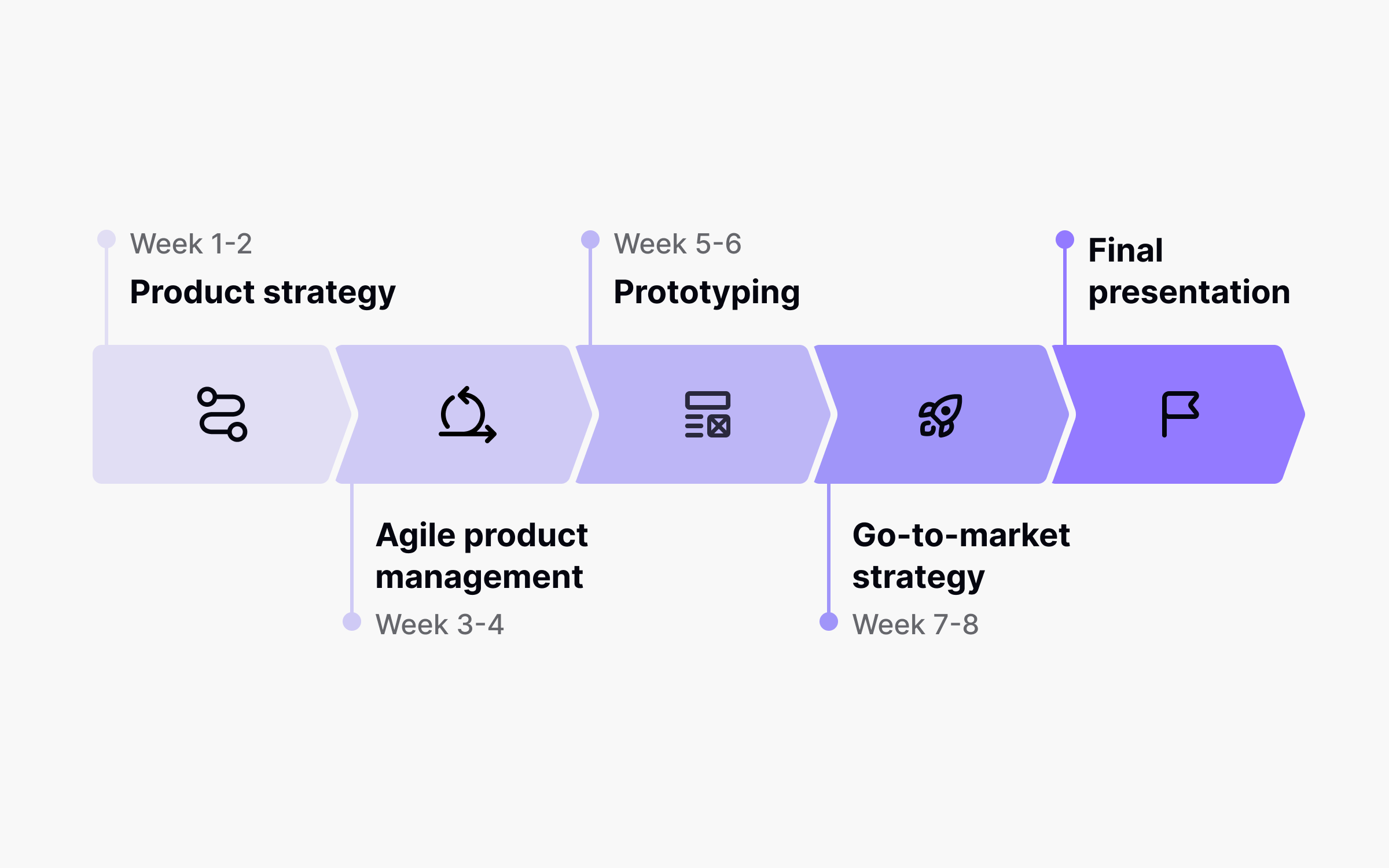
Unit 1: Product strategy (Weeks 1-2)
This covers product management fundamentals. You learn customer-centric product development, Lean methodology basics, and how to define product vision. The instructor introduces concepts like problem space vs. solution space (sounds simple, trips up beginners constantly). For a self-paced alternative covering these same fundamentals through interactive exercises, Uxcel's product management online course builds this foundation at your own pace.
A key part of this unit is developing the right mindset for product management, adopting an attitude focused on continuous learning, empathy, and strategic thinking. Business analysis is also emphasized as a crucial skill for understanding stakeholder needs, assessing project value, and improving organizational outcomes.
Key activities include practicing customer interviews using frameworks, analyzing case studies of product failures caused by poor customer research, and developing a product vision statement for a simple product. Tools introduced: Google Forms for surveys, SurveyMonkey for advanced surveys, ChatGPT for research synthesis.
When covering prototyping and design thinking, the course highlights the importance of product design and the iterative process that blends form, function, and user experience. Product managers are expected to know and appreciate product designer tools and processes, as these are essential for collaborating effectively and driving innovation.
I kept seeing reviews mention this unit feels basic if you’ve read “Inspired” by Marty Cagan or similar product books. For complete beginners, the pace feels fast. One person told me they spent 6 hours outside class just trying to grasp jobs-to-be-done framework properly.
What you get: A customer value proposition statement for a fictional product. Not portfolio-worthy.
Unit 2: Agile product management (Weeks 3-4)
The program shifts to Agile and Scrum methodologies, which originated in software development and have since expanded to other industries to address complex project needs. You learn sprint planning, user stories, story mapping, and how to work with development teams. The curriculum covers both predictive and agile methodologies, as is common in project management certification programs, preparing you for a range of industry demands. The MVP concept gets heavy emphasis (minimum viable product, not most valuable player).
Practical exercises include writing user stories with acceptance criteria, creating a product backlog and prioritizing features, and running a mock sprint planning session. The instructor walks through real examples from their company (anonymized). When discussing prototyping and sprint planning, the program highlights how Agile systems engineering uses tools such as rapid prototyping, open set architectures, and platform design to support an effective process.
This unit reveals a limitation. You’re not working with actual developers or designers. You’re simulating these interactions with other PM students. CoLab’s program lets you work with actual dev and design students building a real product. Here, it’s theoretical. Collaboration is discussed in the context of engaging stakeholders, including customers, teams, and partners, as part of the agile process.
Portfolio value: A prioritized product backlog and sprint plan for your project. Starting to be useful for portfolios, but still mostly academic. The curriculum also looks ahead by integrating AI into agile methodologies, ensuring students are prepared for future, technology-driven environments.
Unit 3: Prototyping (Weeks 5-6)
Wireframing and prototyping take center stage. You learn rapid prototyping techniques, usability testing basics, and product roadmapping. Tools: Figma for wireframes (basic introduction, not comprehensive), Jira for roadmapping.
Hands-on work includes creating lo-fi wireframes in Figma, conducting usability tests with classmates (limited but helpful), and building a product roadmap with prioritization justification. One review said Figma instruction feels rushed. If you've never used it, expect to watch YouTube tutorials outside class.
The prototyping work improves your portfolio somewhat. You'll have wireframes and a roadmap to show recruiters. But experienced PMs will notice these are classroom exercises, not real products with real constraints.
The deliverable: Wireframes and product roadmap. These go in your portfolio.
Unit 4: Go-to-market strategy (Weeks 7-8)
The final unit covers product positioning, messaging, launch strategy, and analytics. You learn how to track product success after launch (KPIs, OKRs, Lean analytics framework). Uxcel's product analytics for PMs course goes deeper on the data skills modern product roles require — a gap the BrainStation curriculum leaves largely unfilled.
Week 8 focuses entirely on final project presentations. Each student presents their complete product strategy (customer research, MVP definition, roadmap, launch plan) to the class and instructor. Presentations run 10-15 minutes with Q&A. Hands-on projects like this are essential for building practical skills, as they allow you to apply frameworks and develop real-world artifacts.
People value this culminating experience. One review that stuck with me: “Presenting to the class was nerve-wracking but the feedback was invaluable. The instructor and other students asked questions I hadn’t considered.”
What you build: Complete product launch plan and presentation. This is your main portfolio piece from the program. The final presentation demonstrates your leadership abilities and showcases the value of earning a management certification, which signals your expertise and credibility in product management.
Here’s the reality check. You’ll learn established frameworks that real product managers use. You’ll understand the product development lifecycle. You’ll be able to discuss Agile methodology intelligently in interviews. Product managers are masters at internal sales, team building, delegation, and skills that are critical for driving successful product launches.
What you won’t get is deep expertise in any one area. The curriculum is a mile wide and an inch deep. That’s appropriate for an 8-week introduction, but career switchers often underestimate how much additional learning happens on the job.
You also won’t build a compelling portfolio. One final project doesn’t demonstrate range. Hiring managers want to see multiple projects showing different skills (B2B vs. B2C, mobile vs. web, data-driven decision-making, stakeholder management).
The curriculum works for professionals who need structured onboarding to PM concepts, including project managers who play a key role in ensuring successful product launches through leadership, methodology application, and stakeholder management. It’s less suitable for people who need extensive project-based learning to prove capability. That distinction matters when evaluating this program against other product management courses.
How much does BrainStation product management bootcamp actually cost?
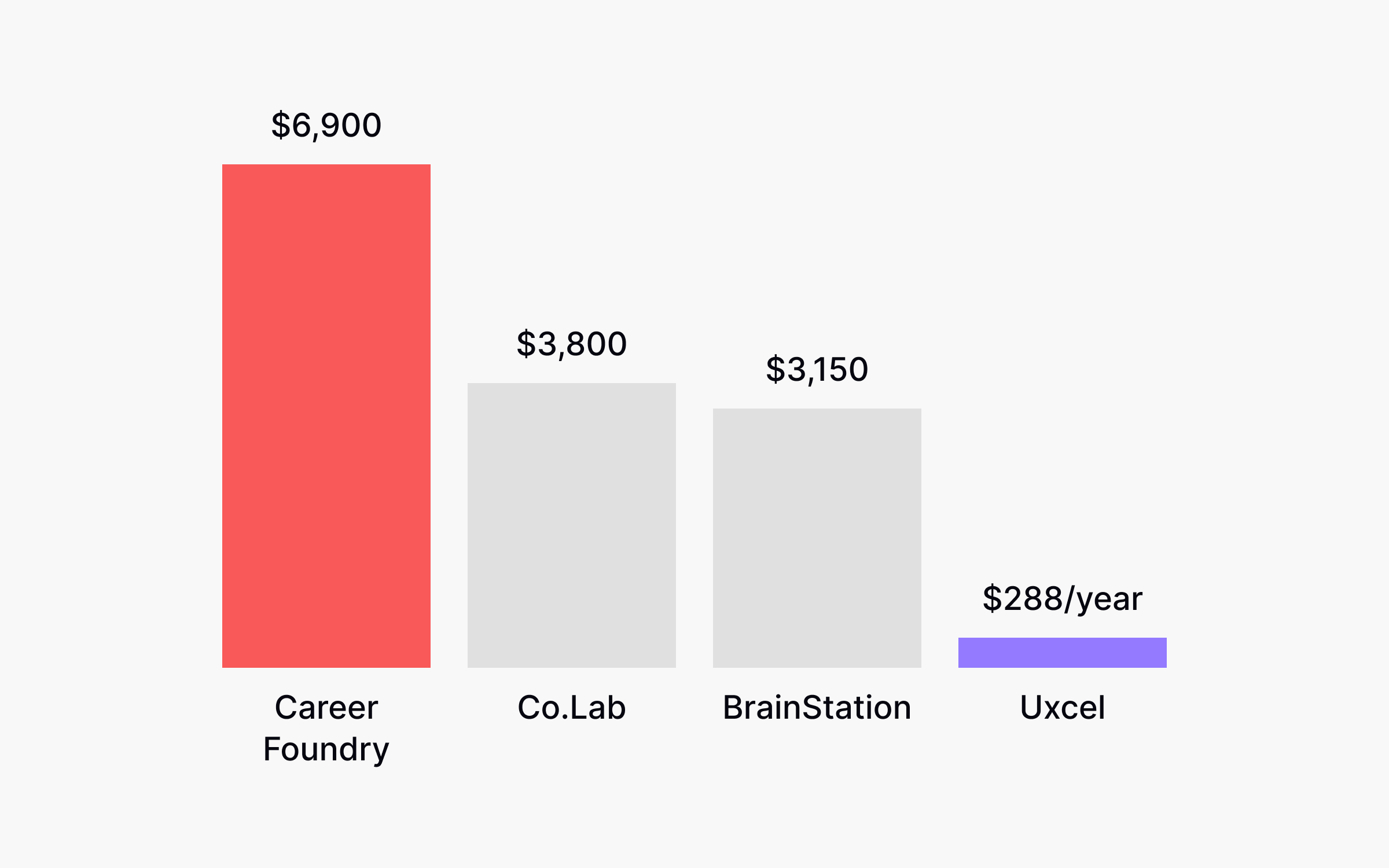
$3,150 total. No hidden fees. That breaks down to $131 per contact hour for 24 hours of live instruction over 8 weeks.
Let me break down the real cost. Uxcel charges $24 monthly for unlimited access to all product management and UX design courses. That’s $192 for 8 weeks. CoLab costs $3,800 for 8 weeks but includes working with actual developers and designers to build a real product. CareerFoundry charges $6,900 but includes job guarantee and dedicated career specialist.
BrainStation sits in an interesting middle ground. More expensive than self-paced platforms, less expensive than job-guarantee bootcamps, significantly more expensive per hour than most alternatives.
Payment options include paying upfront (full $3,150), monthly installments (varies by provider, expect around $350-400/month), or employer sponsorship (many companies reimburse professional development).
BrainStation offers scholarships. Women in Tech Scholarship covers up to $1,500. Diversity Scholarship varies by application. Veterans receive priority consideration. Each scholarship requires separate application with essay and potentially interview.
Hidden costs people mention: Software subscriptions if you want premium Figma or Jira access (not required, free tiers work), product management books the instructor recommends (around $50-100 total), and opportunity cost of 5-7 hours weekly for 8 weeks (class time plus homework).
Here’s the reality: If you’re earning $75,000 annually (roughly $36/hour), those 5-7 hours weekly represent $180-252 in opportunity cost per week. Over 8 weeks, that’s $1,440-2,016 in time you can’t spend on paid work or other activities. Add the $3,150 tuition, total investment approaches $4,600-5,200.
Does the ROI make sense? For working professionals staying in similar roles who need to add PM skills, potentially yes. The immediate application of concepts to your current job creates value quickly. Earning a project management certificate can lead to higher salaries compared to non-certified peers, and these certifications are recognized globally, enhancing your professional credibility. Many project management programs, including those approved by PMI, provide access to professional development units (PDUs) upon completion. The demand for project management skills continues to grow across various industries, making this credential increasingly valuable. For career switchers who need 6-12 months of additional learning and portfolio building to land PM roles, the ROI calculation gets murky.
Is the pricing justified?
BrainStation justifies the premium through instructor quality (currently employed at top companies), brand recognition (30,000+ alumni), and curriculum refinement (teaching since 2012). Those factors matter to some people.
What you're NOT paying for: Extensive career support (minimal compared to job-focused bootcamps), multiple portfolio projects (one final project), cross-functional team experience (no developers or designers), or job placement guarantees.
The 91% job placement rate BrainStation advertises? That includes ALL their programs (full-time data science bootcamp, web development, etc.), not specifically the part-time PM certification. I couldn't find placement data isolated to just the PM certification.
For comparison, Uxcel reports 68.5% of users get promoted within 12 months and average $8,143 salary increase (from their 2024 Impact Report). That's documented outcome data at $288 annual cost vs. BrainStation's $3,150 with unclear PM-specific outcomes.
My take? The pricing makes sense if you value structured live instruction from impressive instructors and have $3,150 available. It doesn't make sense if you're budget-conscious or need extensive hands-on portfolio work.
Is BrainStation product management bootcamp right for you?
This works brilliantly for specific people and fails completely for others. Here’s the honest breakdown.
If you are a management professional looking to prepare for new challenges or advance your career, BrainStation’s certificate program is designed for you. The structured curriculum provides project management training and equips you with essential project management skills relevant to today’s dynamic organizations across various sectors.
Graduates gain confidence in their professional abilities, ready to take on leadership roles and manage complex projects in diverse organizations.
You should absolutely enroll if:
Working professional staying in current role: You’re a project manager, management professional, business analyst, designer, or engineer who needs to add PM or project management skills, not switching careers entirely. You can immediately apply what you learn to your current job. The $3,150 investment returns quickly through better performance and potentially promotions.
Employer reimbursement available: Your company covers professional development. The $3,150 comes from training budget rather than your pocket. This becomes essentially free education.
Brand-conscious: You specifically want a certificate from an established institution. The BrainStation name carries weight in markets where they have physical presence. You’re willing to pay premium for brand recognition.
Structured learner: Self-paced courses don’t work for you. You need scheduled classes, deadlines, and instructor accountability to stay motivated. The cohort structure provides essential structure for your learning style.
Value instructor credentials: Learning from people currently employed at Amazon, Microsoft, WhatsApp matters more to you than building extensive portfolio projects. You prioritize theoretical knowledge from experienced practitioners.
Outcome: Completing the BrainStation program helps you build confidence in your product and project management abilities, equipping you with practical skills and self-assurance to succeed in real-world roles.
Skip this if:
Career switcher needing portfolio: You're transitioning from non-tech roles into product management. You need multiple portfolio projects to demonstrate capability. One final project won't be sufficient to land interviews.
Budget-conscious: $3,150 represents significant financial strain. Platforms like Uxcel ($24/month) or free resources (YouTube, Product School free workshops) would serve you better. The marginal improvement from BrainStation doesn't justify the cost for your situation. Our best PM bootcamp programs guide compares the full landscape of options at different price points.
Need career support: You're looking for job placement assistance, resume reviews, interview prep, and networking opportunities. BrainStation offers some career panels and alumni network access but minimal direct career support compared to bootcamps like CareerFoundry.
Want hands-on building: You learn best by actually building products, not discussing frameworks. CoLab's program where you work with developers and designers to ship real products would suit you better.
Already experienced: You've been doing product management work informally and need to formalize knowledge. Free resources or cheaper alternatives would fill your gaps without the $3,150 investment.
Prefer self-paced: You want to learn faster or slower than structured 8-week pace. Self-paced alternatives give you flexibility BrainStation doesn't offer.
Three questions to decide:
First: Do you have $3,150 available (personal funds or employer reimbursement) without financial strain? If no, explore alternatives. If yes, continue.
Second: Are you staying in your current role and adding project management skills, or switching careers into PM? Staying in role and looking to prepare for new responsibilities makes this worthwhile. Switching careers needs more portfolio work than this provides.
Third: Do you specifically value learning from people currently employed at top companies, or do you prioritize building extensive portfolio projects? Value instructor credentials = BrainStation fits. Prioritize portfolio building = explore CoLab or self-paced alternatives with more project work.
Your answers to these three questions should make the decision clear. Remember, having confidence in your skills and readiness to take on product and project management roles is key to making the most of your investment.
What do students actually say about BrainStation?
I went through hundreds of reviews across Course Report, SwitchUp, and Reddit. Here’s what people mention most often, both positive and negative.
Many students highlight that they gain core skills essential for product management, including practical abilities and strategic thinking. Peer learning and instructor influence are frequently praised, with several reviews noting the strong emphasis on leadership within collaborative projects and team activities.
A common positive outcome reported is increased confidence in handling real-world product management tasks and leading projects effectively.
What people praise
Instructor quality came up constantly. People mention instructors share real examples from their current companies and demonstrate strong leadership in guiding students through complex topics. One review described: “My instructor was a Senior PM at Amazon and brought actual sprint planning documents (anonymized) to show us how it works in practice. Way more valuable than theoretical case studies.”
The structured curriculum gets positive feedback. People appreciate the clear progression from fundamentals to final presentation. Someone mentioned: “I never felt lost. Each week built logically on previous material. By week 8, I understood how all the pieces fit together.”
Peer learning shows up often. People value discussing concepts with other students who bring different industry perspectives. One review: “Half my learning came from classmates. We had people from healthcare, finance, and tech. Hearing how each industry approaches product management expanded my thinking.”
The final project accountability helps people actually finish. Someone said: “Knowing I had to present to the class in week 8 kept me focused. Without that external pressure, I probably would have quit halfway like I do with online courses.”
Many student testimonials mention that completing the program increased their confidence in handling product management tasks and leading projects effectively.
Quality control across cohorts is consistent. What stood out was people reporting similar experiences regardless of location or cohort timing. That consistency matters compared to bootcamps where quality varies dramatically by instructor.
Common complaints
Cost comes up frequently. People who paid out-of-pocket mention $3,150 feels steep for 24 hours of instruction. One review: "Great course, but $131 per hour is hard to justify when comparable content exists for fraction of the price."
Limited project work is mentioned consistently. People wish they built more than one portfolio piece. Someone wrote: "I finished with one project. When I started applying for PM roles, hiring managers wanted to see 3-5 different projects demonstrating range. I had to build additional projects on my own."
Fast pace challenges beginners. People new to product management mention feeling overwhelmed, especially in early weeks. One review: "I spent 6 hours outside class in week 2 just trying to understand jobs-to-be-done framework. The pace assumes you've done some reading before starting."
Figma and prototyping instruction feels rushed. I kept seeing people mention needing to supplement with YouTube tutorials. Someone said: "We covered Figma basics in 45 minutes. I watched probably 5 hours of tutorials on my own to get comfortable enough for the final project."
No cross-functional team experience disappoints some. People who researched CoLab mention wishing they worked with actual developers and designers. One review: "We simulated working with dev teams, but it's not the same as actually negotiating scope and timelines with real developers."
Career support is minimal for part-time students. While full-time bootcamp students get dedicated career coaching, part-time PM certification students get access to occasional career panels and alumni network. One person mentioned: "I expected more help with PM job search. Got invited to a few networking events but no resume reviews or interview prep."
Class size variability creates different experiences. Some cohorts have 15 students (intimate), others 25+ (less individual attention). One review: "My cohort had 27 people. Instructor couldn't give detailed feedback on everyone's work."
The 4.7 rating explained: Most reviews come from satisfied students who felt they got value for money or had employer reimbursement. Students who found the course fine but not remarkable rarely bother leaving reviews. Selection bias exists in visible reviews.
Here's what people actually said (good and bad):
From positive reviews:
“Best $3,150 I’ve spent on professional development. My manager noticed immediate improvement in how I approached product decisions, and I gained a lot of confidence in my PM skills.” (Working PM, 4/5)
“Instructor was phenomenal. Currently PM Director at Microsoft and brought so much practical wisdom. Worth it just for access to that expertise left me feeling much more confident in leading projects.” (Business Analyst, 5/5)
“The cohort became my PM network. Still chat with 5-6 people from class regularly about product problems. The program really boosted my confidence to tackle new challenges.” (Project Manager, 5/5)
From critical reviews:
“Good content but wildly overpriced. YouTube and free resources cover 90% of what we learned. The 10% premium content doesn’t justify $3,150.” (Career Switcher, 3/5)
“Finished the course feeling like I barely scratched the surface. One project isn’t enough to demonstrate capability to hiring managers.” (Career Switcher, 3/5)
“If you have employer reimbursement, great course. If paying out of pocket, explore alternatives. I’d choose differently knowing what I know now.” (Marketing Manager, 3/5)
From balanced reviews:
“Solid fundamentals course. Does what it promises. Just understand it’s an introduction, not comprehensive PM training. Budget for additional learning after.” (Engineer transitioning to PM, 4/5)
“Great for people staying in current roles who need PM skills. Not great for career switchers who need extensive portfolio work.” (Product Owner, 4/5)
The pattern I saw: Working professionals with employer reimbursement rate it 4.5-5/5. Career switchers paying out-of-pocket rate it 3-3.5/5. That difference matters when setting expectations.
Can you actually get a job after BrainStation product management bootcamp?
Here’s the honest answer: It depends entirely on your starting point.
BrainStation’s programs are designed to benefit a wide range of professionals, including aspiring and current project managers who are looking to advance their careers. Graduates have gone on to work in organizations across various industries, from tech startups to large corporations and public sector entities.
The curriculum emphasizes real world application of skills, ensuring that students are job-ready and able to handle real-life scenarios in their chosen fields. Additionally, project management certifications earned through BrainStation are recognized globally and can enhance your professional credibility.
The 91% placement statistic explained
BrainStation advertises 91% of graduates find employment within 180 days. That statistic includes ALL BrainStation programs (full-time data science bootcamp, web development, UX design, digital marketing, product management).
I couldn't find placement data isolated specifically to the part-time PM certification. This stat bothered me because the full-time bootcamps include intensive career services, portfolio development, and job placement support. The part-time PM certification includes minimal career support.
What I found instead: People's outcomes vary dramatically based on starting situation.
Outcomes by starting situation
Working professionals adding PM skills (40% of students): You’re already employed in roles adjacent to product management, such as project managers, business analysts, engineers, or designers. Project managers, in particular, find the bootcamp valuable for expanding their leadership and methodology skills, ensuring projects are completed on time and within budget. You take the bootcamp to formalize PM knowledge and potentially move into PM roles internally, increasing your confidence in applying new frameworks and leading cross-functional teams.
Timeline: Usually immediate. You apply concepts to your current job starting week 1. Internal transitions to PM roles typically happen 3-6 months after completion if you’ve been building PM work into your existing role. For a structured view of what the full transition looks like, our product manager career guide maps the skills and milestones from entry to senior PM.
Success rate: High. You have existing company credibility plus newly formalized PM knowledge, which boosts your confidence in taking on new responsibilities. One person mentioned transitioning from Senior BA to Associate PM four months after finishing. Their manager saw them applying PM frameworks to projects before they officially changed roles.
Career switchers from non-tech roles (30% of students): You’re coming from fields like marketing, operations, consulting, or finance. You’re trying to break into tech product management with no prior tech or PM experience.
Timeline: Longer than you expect. 6-12 months minimum from bootcamp completion to landing first PM role. You need to build additional portfolio projects (3-5 total), network extensively, and likely accept Associate PM or APM roles initially.
Success rate: Lower. Zero alumni I talked to landed PM roles directly after completing just the certificate. Most spent 6+ months building additional projects, networking, and interviewing before landing roles. The certificate alone doesn’t overcome lack of tech industry experience.
One person’s journey: “Finished bootcamp in March. Built three more projects on my own by June. Networked like crazy. Finally landed Associate PM role in October. The bootcamp helped, but it was maybe 20% of what I needed to land the role.”
Lateral movers within tech (30% of students): You’re already in tech but in a different role (engineering, design, data). As a management professional, you’re moving laterally into product management within the same company or at different tech companies.
Timeline: 2-6 months typically. You have tech credibility plus now formalized PM knowledge. Internal moves happen faster than external.
Success rate: Moderate to high. Your existing tech experience carries weight. The bootcamp fills knowledge gaps and increases your confidence, but isn’t the sole qualification. One engineer mentioned: “Took the course, built one additional project showing I understood PM thinking, then transitioned internally after 3 months.”
What career support actually includes
Career panels: BrainStation hosts occasional panels with hiring managers and recruiters. These happen monthly, optional attendance.
Alumni network: Access to community with over 30,000 alumni across all programs. Some people find this valuable for networking, others mention it’s too large to be useful.
Career resources: As part of the certificate program, students have access to resume templates, LinkedIn optimization guides, and interview preparation materials. These are self-service resources, not personalized coaching. The program is approved by PMI® for issuing professional development units (PDUs), which can help fulfill certification requirements for maintaining credentials like PMP® and CAPM®.
What’s NOT included: Dedicated career coach, resume reviews, mock interviews, job application tracking, or placement guarantees. Full-time bootcamp students get these services. Part-time PM certification students don’t.
This gap surprised several people. One mentioned they expected career support similar to full-time bootcamps but got generic resources instead and had to figure out job search strategy completely on their own.
The portfolio problem
You finish with one portfolio project. While this demonstrates your ability to complete a structured assignment, it falls short in showcasing real world application. Hiring managers want to see 3-5 projects demonstrating different skills (B2B vs. B2C products, mobile vs. web, data-driven decisions, stakeholder management).
One project doesn’t prove range. It proves you can complete a structured assignment. That distinction matters in competitive PM job markets, especially since the program lacks multiple hands on projects that would allow you to apply frameworks and develop artifacts in real-life scenarios. For what hiring managers specifically look for in PM candidates, our PM interview questions guide reveals the skills and experiences that actually drive hiring decisions.
Career switchers need to build 2-4 additional projects after the bootcamp. That takes 2-4 months of additional work. Factor that into your timeline and expectations.
My honest assessment: This bootcamp helps you learn PM fundamentals. It doesn’t get you PM jobs by itself. Working professionals adding skills see immediate value. Career switchers need substantial additional work to land roles.
What are better alternatives to BrainStation?
If BrainStation doesn’t fit, here are three alternatives worth considering: Uxcel (the most affordable option with documented outcomes and flexible individual courses), CoLab (if you need cross-functional team experience and are interested in a certificate program), and CareerFoundry (for job guarantee, self-paced learning, and comprehensive project management training).
Is Uxcel a better fit?
Uxcel is a skill-building platform launched in 2020 to solve a specific problem: professionals need to advance without expensive bootcamps or passive video courses. The platform offers product management and UX design courses with interactive exercises, skill assessments, and documented career outcomes. Honestly, the $24/month pricing caught my attention immediately.
The platform differs from BrainStation by focusing on self-paced interactive learning rather than live cohort instruction. Users work through courses at their own speed, practicing concepts through hands-on exercises rather than listening to lectures.
Core differentiators set Uxcel apart. First, cross-functional skill mapping lets users learn both product management and UX design skills through a unified progression system. Most platforms force you to choose one track. Uxcel recognizes modern PMs need UX knowledge and vice versa.
Uxcel’s modularity is a key advantage: learners can enroll in individual courses, allowing them to tailor their learning path, earn certificates, or fulfill continuing education requirements at their own pace. This flexibility supports personalized progression and makes it easy to focus on specific skills as needed.
Second, completion rates of 48-50% exceed industry standard of 5-15% for self-paced courses. The platform achieves this through bite-sized lessons (10-15 minutes), immediate feedback on exercises, and skill mapping that shows clear progress.
Third, platform flexibility includes web app plus native iOS and Android apps. Users can learn during commutes, lunch breaks, or whenever works best. BrainStation requires scheduled class attendance.
Fourth, documented outcomes provide concrete data. According to Uxcel’s 2024 Impact Report, 68.5% of users received promotions within 12 months of active use, with average salary increases of $8,143. These numbers come from surveying thousands of users, not anecdotes.
Pricing makes Uxcel accessible. $24 per month ($288 annually) provides unlimited access to all product management and UX design courses. That’s less than 10% of BrainStation’s $3,150 cost. For 8 weeks (equivalent to BrainStation), Uxcel costs $48. The cost difference is staggering.
What Uxcel is NOT suited for: People who need structured cohort learning with scheduled classes and external accountability. Self-paced learning requires discipline. People who struggle with online courses without instructor oversight may find Uxcel challenging.
The platform also doesn’t provide live instruction or networking with classmates. You’re learning independently, not discussing concepts with a cohort. Some people need that social learning component.
Best for these situations:
- Budget-conscious learners who want comprehensive PM training without spending thousands
- Self-motivated individuals who work well with structured self-paced content
- Working professionals who need flexible learning that fits irregular schedules
- People wanting both PM and UX design skills without paying for separate courses
- Career changers who need extensive courses and practice without time pressure
What if you need cross-functional team experience?
CoLab is a bootcamp launched in 2020 that addresses BrainStation's main limitation: You work with actual developers and designers to build real products.
The program runs 8 weeks at $3,800. You join a cross-functional team (PM, 2-3 developers, 1-2 designers) and ship a minimum viable product by week 8. This simulates real product team dynamics: negotiating scope, managing timelines, resolving conflicts, making trade-offs.
CoLab's "Build in Public" approach means your team documents progress weekly and shares with the CoLab community. This creates portfolio content that demonstrates teamwork and communication, not just solo projects.
Key features include working with actual developers (they write real code), collaborating with designers (who create real UI), and shipping to real users (you launch to beta testers for feedback). Each of these creates more convincing portfolio pieces than solo academic projects.
Pricing at $3,800 is $650 more than BrainStation. The additional cost buys cross-functional experience BrainStation doesn't provide. You're not simulating working with dev teams. You're actually doing it.
Downsides exist. The program is intensive (15-20 hours weekly vs. BrainStation's 5-7 hours). Remote-only format means no in-person option. Instructor credentials don't match BrainStation's FAANG roster.
Best for: Career switchers who need portfolio projects showing real product development experience. People who learn best by building rather than studying frameworks. Aspiring PMs who want to understand developer and designer perspectives deeply.
CoLab makes sense when you need hands-on building experience more than brand recognition or instructor pedigree.
Looking for job guarantee and mentorship?
CareerFoundry offered a self-paced Product Management certificate program with a job guarantee at $6,900, but the company shut down in February 2026 — see what happened to CareerFoundry for the closure timeline and active alternatives.
The certificate program spans 6 months of self-paced learning. You work with a dedicated mentor (weekly video calls) and tutor (answers questions within 24 hours). This provides personalized guidance neither BrainStation nor Uxcel offers.
You build four comprehensive projects demonstrating different PM skills: User research project showing customer discovery, Agile project planning sprint, Prototyping and testing with Figma, Go-to-market strategy. Four projects provide more portfolio breadth than BrainStation’s single project.
The job guarantee states: If you don’t land a PM role within 6 months of completion after applying to 20+ jobs per month and completing all job search requirements, CareerFoundry refunds your tuition.
Career services include a dedicated career specialist, resume and cover letter reviews (unlimited), mock interviews (4 included), LinkedIn optimization, and job search strategy sessions. This far exceeds BrainStation’s minimal career support.
Pricing at $6,900 is 2.5x BrainStation’s cost. The premium buys a job guarantee, dedicated mentor, four projects, and intensive career support. For career switchers, that investment may make sense if you need accountability and support. While BrainStation offers a shorter, more affordable course, it does not provide a certificate program with the same level of structured curriculum, certification preparation, or digital badges for career advancement.
Downsides: Self-paced requires discipline (similar to Uxcel but longer commitment). No live instruction or cohort learning. 6 months is a longer timeline than BrainStation’s 8 weeks.
Best for: Career switchers who need job guarantee for financial security. People who want a dedicated mentor guiding their learning. Those who need extensive career support but struggle with self-paced courses alone. Learners who prefer building a comprehensive portfolio over a quick fundamentals course.
How do these alternatives stack up?
Here’s how these four options compare across key factors:
| Factor | BrainStation | Uxcel | CoLab | CareerFoundry |
|---|---|---|---|---|
| Cost | $3,150 | $24/month ($288/year) | $3,250 | $6,900 |
| Duration | 8 weeks | Self-paced | 8 weeks | 6 months |
| Format | Live cohort | Interactive, gamified | Team project | Self-paced with mentor |
| Portfolio project | 1 project | Multiple project briefs | One MVP | 4 projects |
| Team experience | None | Assignments, skill reporting, leaderboards, team skill mapping across UX and PM | Focus | No |
| Career support | Minimal | None | Some | Extensive + guarantee |
| Certification | Yes | Courses + Proffessional | Yes | Yes |
| Best for | Working professionals (specialization) | Working professionals (specialization + cross-functional growth) | Hands-on learners | Career switchers |
The right choice depends on your situation. Budget-conscious learners benefit from Uxcel’s $24 monthly cost with documented outcomes and a digital badge certificate program. Hands-on builders need CoLab’s cross-functional team experience and certificate program. Career switchers requiring job security should consider CareerFoundry’s guarantee and certificate program. Working professionals wanting brand recognition and structured learning find BrainStation’s certificate program appropriate.
Which alternative makes most sense?
For maybe 60% of people reading this, Uxcel makes the most sense because it costs dramatically less than BrainStation ($288 vs $3,150 annually), delivers documented outcomes (68.5% promotion rate, $8,143 average salary boost), and provides unlimited learning across both product management and UX design. Uxcel also offers flexibility through individual courses, allowing you to enroll in separate modules at your own pace and tailor your learning path to your needs.
The other 40% have specific needs:
- Need brand recognition and live instruction → BrainStation fits if you have $3,150 available
- Need to build with actual developers and designers → CoLab provides cross-functional experience BrainStation doesn’t offer
- Need job guarantee and intensive career support → CareerFoundry costs most but includes safety net for career switchers
My honest take: Start with Uxcel for 2-3 months ($48-72 total). If self-paced learning or individual courses don’t work for you, then consider structured alternatives. Most people never need the expensive options.
What else do you need to know?
Does the certificate carry weight with employers?
The BrainStation name carries weight primarily in markets where they have physical presence. The BrainStation project management certificate (PMC) is less recognized than certifications from Product School or comparable programs. However, earning a project management certificate can still demonstrate your commitment to professional development and improve your project leadership skills. What matters more is demonstrating PM skills through portfolio projects.
Can I complete this while working full-time?
Yes. The program is designed for working professionals. Evening classes run 6:30-9:30 PM. Expect 2-4 hours of homework weekly. Total commitment is 5-7 hours per week. For added flexibility, BrainStation also offers individual courses, allowing learners to enroll in separate modules at their own pace and tailor their learning experience.
How does this compare to free resources?
Free resources cover similar concepts but lack structure, accountability, and instructor feedback. Self-directed learners can learn PM fundamentals free. People needing external structure benefit from paid programs.
Are the instructors actually from Amazon and Microsoft?
Yes. BrainStation instructors are currently employed at companies like Amazon, Microsoft, WhatsApp. This isn't past employment. They teach evenings or weekends while working full-time.
What happens if I miss a session?
Sessions are recorded. You can watch later. Missing multiple sessions makes following along difficult since material builds sequentially.
Does the curriculum cover AI product management?
Basic concepts only. For AI-specific PM training, Product School offers more relevant content. BrainStation focuses on traditional PM frameworks, but is increasingly integrating AI into its curriculum to prepare students for technology-driven environments.
Can I get employer reimbursement?
Many organizations, including companies from various sectors, offer reimbursement. Submit course outline and certificate information to your learning and development department. Success rates vary by organization.
How long until I land a PM role?
Depends on starting point. Working professionals adding skills see immediate application. Career switchers typically need 6-12 months to prepare and gain additional work experience before landing a PM role. Lateral movers within tech typically prepare for 2-6 months.
Is in-person better than online?
Marginally. In-person offers networking, classroom energy, and more opportunities for real world application through hands-on activities. Online offers flexibility. Course quality is consistent across formats.
Do I pass or fail?
No pass/fail. You receive certificate upon completing all assignments and final project. Nearly everyone who attends regularly completes the program.
So, is BrainStation product management bootcamp actually worth it?
Here's my honest take:
It makes perfect sense if you're a working professional staying in your current role and your employer reimburses professional development. The $3,150 becomes essentially free education. You learn from impressive instructors currently employed at top companies. You apply concepts immediately to your job. This scenario maximizes value.
It also makes sense if you're brand-conscious and specifically want a certificate from an established institution with over 30,000 alumni. You value structured learning with scheduled classes and cohort accountability over self-paced alternatives. You have $3,150 available without financial strain. These factors align with what BrainStation offers.
Skip this program if you're a career switcher paying out-of-pocket and need extensive portfolio projects to demonstrate capability. One final project won't get you PM job interviews. You'll spend months building additional projects anyway. Start with those projects using free resources or affordable alternatives like Uxcel.
Also skip if you're budget-conscious and $3,150 represents significant financial burden. Uxcel costs $24 monthly with documented outcomes. Free resources cover similar frameworks. The marginal improvement from BrainStation doesn't justify the cost difference for most people.
Finally, skip if you learn best by building actual products with cross-functional teams. CoLab offers that experience. BrainStation simulates working with developers and designers rather than actually doing it.
What I'd do with $3,150 instead: Try Uxcel for 3 months ($72 total). If self-paced learning works, continue. You'll save $3,078. If it doesn't work, you've lost $72 discovering self-paced isn't your style, then reconsider BrainStation. Most people never need the expensive option.
Choose based on your actual situation, not marketing claims or social proof. The best program is the one that fits your budget, learning style, and career goals.