.svg)


Is a $60 certification from IBM actually enough to break into product management? After analyzing 959 student reviews and comparing this against six competitors, the answer surprised me.
The program makes a bold claim: it can transform complete beginners into job-ready product managers in three months. Earning a recognized product management credential can also boost your earning potential and accelerate your career advancement in the product management field. For around $60 to $177, depending on how quickly you finish, you get seven courses, hands-on projects, and preparation for the industry-standard AIPMM Certified Product Manager exam. The program has passed 70,000 enrollments and holds a 4.7 out of 5 rating from more than 4,500 course reviews on Coursera.
The 4.7-star rating looks impressive, but ratings never tell you what really matters: can you actually get hired? I analyzed 959 Coursera reviews and examined the complete curriculum structure. I also compared pricing against six major competitors and researched PM salary data from five sources. Here’s what became clear: this isn’t trying to compete with $3,000 bootcamps or $15,000 intensive programs. It’s solving a different problem entirely. There is a high and increasing demand for skilled product managers, as companies are rapidly recognizing the need for professionals who can create products that customers love. Product management is now considered one of the fastest growing and most lucrative jobs available today.
This review covers what the program actually teaches, not the marketing version, honest student feedback including the negatives, realistic job outcomes for graduates, the hidden costs beyond the advertised price, and whether this makes sense as your entry point to product management. You’ll know whether IBM’s approach fits your situation or if you should look elsewhere.
What you need to know about IBM Product Manager Professional Certification upfront
Provider: IBM via Coursera
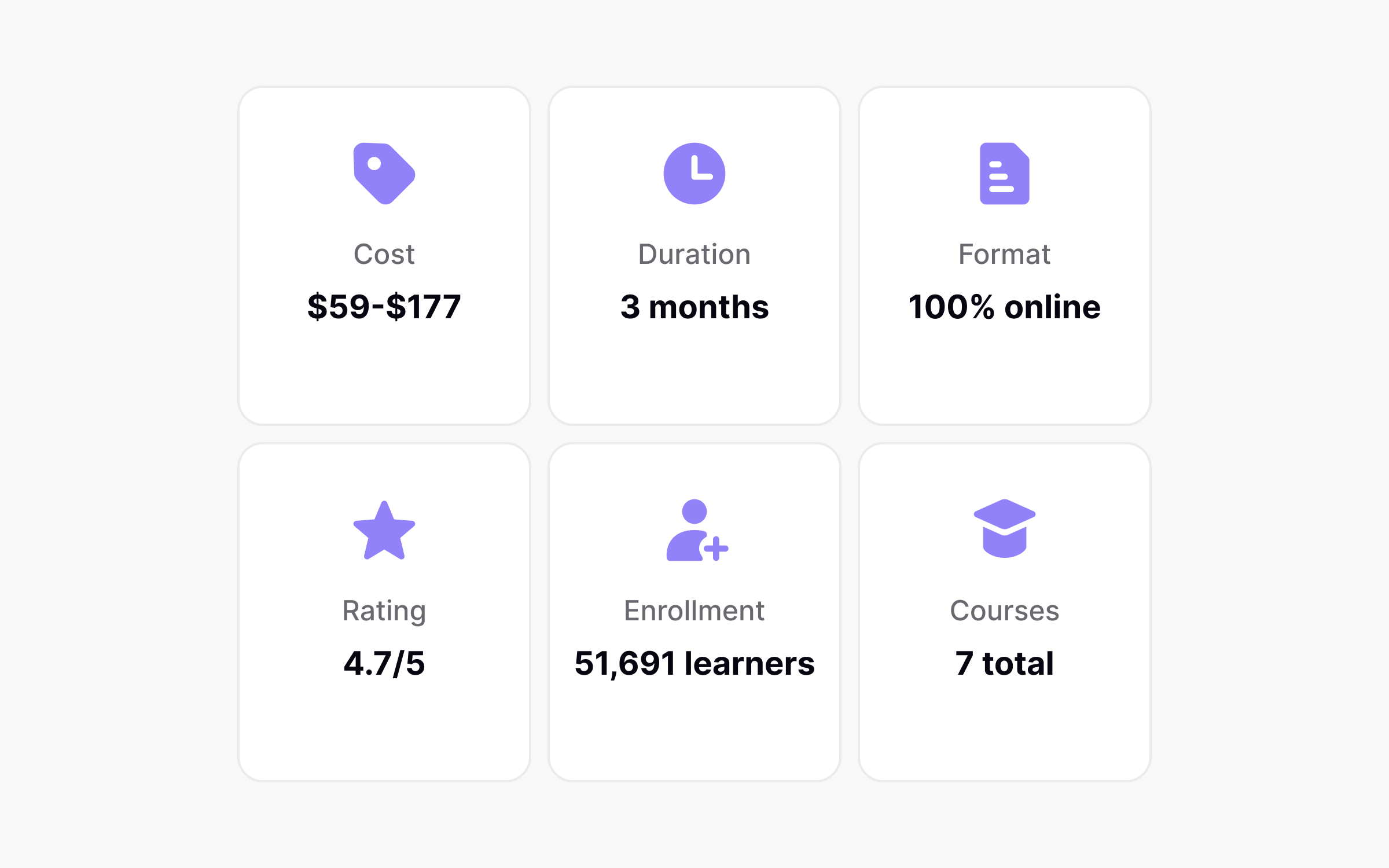
Cost: $59 to $177 (typically 1-3 months)
Duration: 3 months at 10 hours/week (94 total hours)
Format: 100% online, self-paced, asynchronous
Difficulty: Beginner (no prerequisites)
Time Commitment: 10 hours per week recommended
Prerequisites: None required
Certificate Type: Professional certificate + IBM Digital Badge + ACE/ECTS credit
Career Support: Basic resources (no dedicated coaching or job placement)
Job Outcomes: No published placement statistics
Best For: Career switchers, recent graduates, budget-conscious learners, international professionals
Not Ideal For: Experienced PMs (3+ years), those needing career coaching, live instruction preference
Current Enrollment: 70,000+ learners
Student Rating: 4.7/5 stars (4,500+ Coursera reviews)
Our Rating: 8.5/10
Essential program details
IBM via Coursera offers this 100% online, self-paced, asynchronous program. The duration is 3 months at 10 hours per week, totaling 94 hours. You can finish faster or slower. No fixed deadlines. Some students complete in 6 weeks at an intensive pace, others stretch to 6 months around full-time work.
The program runs through Coursera Plus at $59 per month. Most students finish in 1 to 3 months, bringing total cost to $59 to $177. You can audit courses for free. Financial aid available through application process with typical 15-day approval.
Price: Coursera subscription, $59 a month; $59 to $177 for most learners. The AIPMM CPM exam is a separate $500. Enrollment and rating figures from coursera.org.
You’ll complete seven courses covering product lifecycle, stakeholder management, strategy, Agile methodology, and a capstone project. You get a digital IBM badge via Credly, professional certificate from IBM, and mock exam for AIPMM Certified Product Manager credential. The actual CPM exam costs an additional $500 and isn’t included. In addition to preparing for the AIPMM exam, the program can also help management professionals prepare for other certifications such as the Certified Associate in Project Management (CAPM) and Project Management Professional (PMP), supporting your pathway to becoming a certified associate or project management professional.
The program carries an ACE recommendation for up to 9 college credits and 4 ECTS credits from FIBAA for those pursuing degrees in the U.S. or Europe. Individual schools decide acceptance, but this opens pathways. The program can also contribute to professional development units (PDUs) required by the Project Management Institute (PMI) for maintaining project management certifications.
Enrollment has passed 70,000 learners, with a 4.7 out of 5 rating from more than 4,500 Coursera reviews.
No prerequisites required. Designed for complete beginners with no prior product management experience.
Six instructors from IBM and SkillUp EdTech teach the program, including Rav Ahuja, an expert in AI and data science who has taught over 4.5 million students, and John Rofrano, an IBM lead instructor with over 300,000 learners.
Career support includes resume guidance and mock interview resources. No dedicated career coaching or job placement services. This is self-directed.
The program works best for career switchers from technical or business backgrounds, recent graduates entering product management, international professionals seeking U.S. or European-recognized credentials, and budget-conscious learners who need flexibility. Earning this project management certificate is a valuable credential for management professionals seeking to enhance their skills and advance their careers.
Not ideal for experienced product managers seeking advanced strategy frameworks, professionals requiring intensive career coaching and placement services, or those who strongly prefer live instruction over asynchronous learning.
What exactly is IBM Product Manager Professional Certification?
IBM launched this program on Coursera in 2024 because they saw an opportunity: most people can’t afford $10,000 bootcamps but still need real PM training. While expensive bootcamps cost $3,000 to $15,000 and provide intensive support, many people simply need solid foundational knowledge at an accessible price. IBM built a self-paced alternative that delivers comprehensive curriculum without the premium price tag or cohort schedule constraints.
The program runs on Coursera’s platform. Here’s why that matters. You’re not locked into fixed course dates. Everything is available immediately when you enroll. The subscription model means you can binge through content quickly to reduce costs, or take your time if you need flexibility. Coursera’s infrastructure handles video hosting, quizzes, peer reviews, and certificate generation.
IBM is a Fortune 50 technology company with over a century of history. Their IBM Skills Network division creates professional certificates in AI, cybersecurity, data science, and now product management. The brand recognition carries weight. When you list an IBM certification on your resume or LinkedIn, employers understand you’ve learned from an established tech leader, not an unknown startup.
The program targets people in career transition or just starting out. The curriculum assumes zero product management experience and builds from absolute basics like what even is a product manager through to practical portfolio projects. It provides a strong foundation in core product management skills, making it ideal for beginners and those looking to break into the field. About half of enrollees come from technical backgrounds like software engineering and data analysis. The other half includes business analysts, marketers, and recent graduates exploring product management as a career path.
Seven courses make up the full certification. Each course includes video lessons, readings, hands-on exercises, and graded assessments. The structure follows a logical progression. It covers introduction to the field, stakeholder collaboration skills, initial strategy development, product development and delivery, Agile methodologies, comprehensive capstone project, and finally CPM exam preparation. Agile methodologies, which originated in software development, are now widely used to manage complex projects across various industries. You work through everything at your own pace, submitting projects for automated grading or peer review depending on the assignment type.
The certification launched fairly recently in 2024, which means it lacks the decades-long track record of older programs like AIPMM or Pragmatic Institute. However, IBM’s broader certification portfolio has been growing since around 2020, and their approach has remained consistent: practical, hands-on learning at scale with recognized credentials at the end. Over 54,000 people have enrolled in this specific product management track, making it one of the larger PM certification programs by student count.
What will you actually learn?
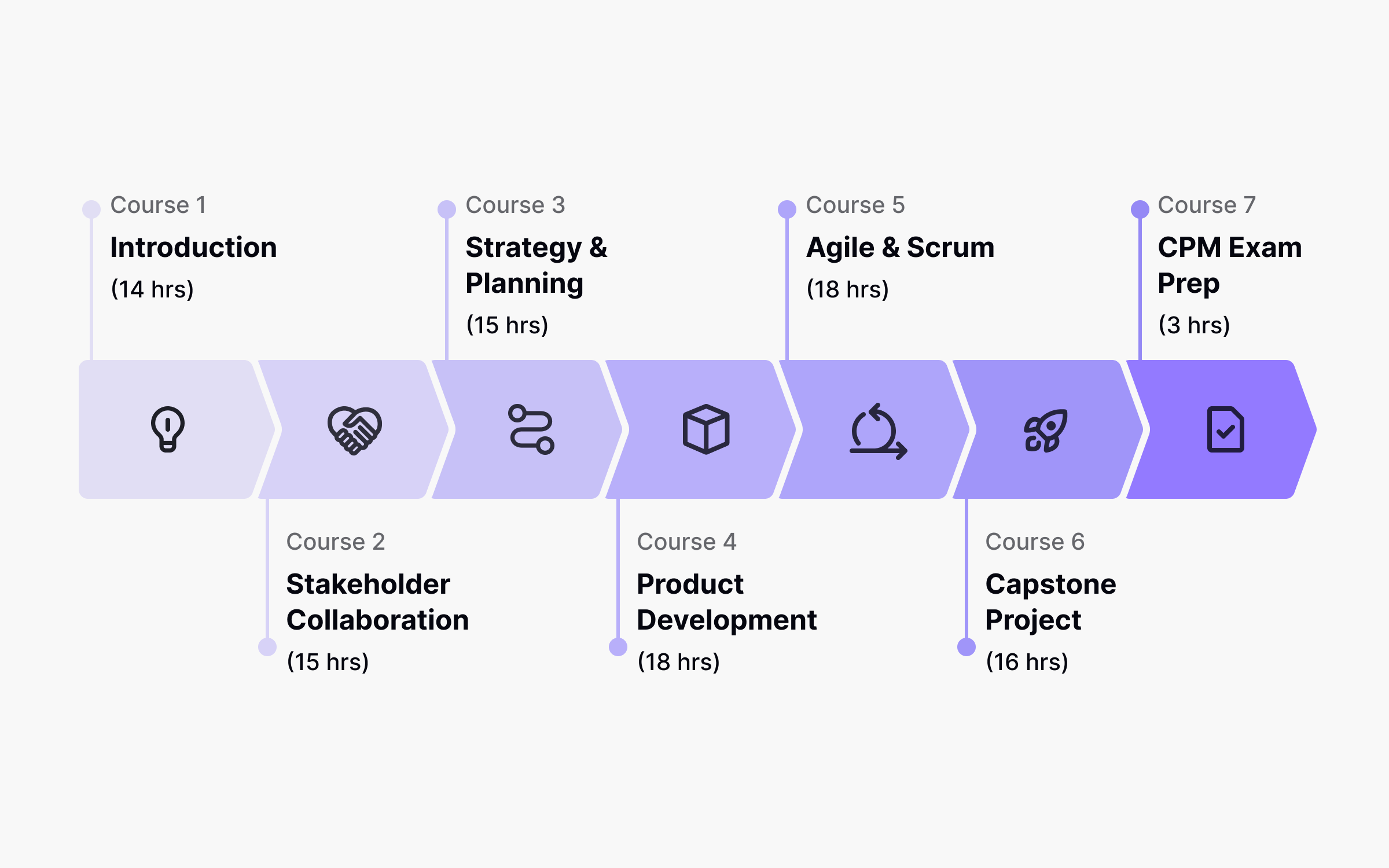
The curriculum breaks down into seven courses totaling about 94 hours of learning. IBM structures the content around applied learning, meaning you spend significant time creating actual product management documents and practicing frameworks on simulated scenarios.
Course 1: Product Management - An Introduction (14 hours)
This foundation course establishes what product management entails. You learn core responsibilities, required skills, and how PMs fit within organizations. The course introduces the product lifecycle and the seven-step product management lifecycle: opportunity identification, concept development, requirements definition, design and development, validation, launch, and lifecycle management. Product managers need to understand the entire product lifecycle to effectively guide products from conception to retirement.
The course covers value creation, showing how PMs add value through market research and strategic decisions, and introduces the ProdBOK, the Product Management Body of Knowledge from AIPMM. You’ll also explore career paths in product management and certifications available to advance your career. For those wanting a parallel self-paced supplement, Uxcel's course on product management basics covers the same foundational concepts in interactive 5-minute lessons.
Course 2: Product Management - Foundations & Stakeholder Collaboration (15 hours)
This course addresses a reality that catches many new PMs off guard: you spend more time managing people than products. The curriculum focuses on communication and collaboration skills that matter daily. You learn how to engage stakeholders with different priorities, identify the impact of communication styles, and adapt your approach. Core skills such as leadership, influence, and team-building are emphasized as essential for effective product management.
The course uses case study methodology, presenting real-world scenarios where you evaluate what went right, what went wrong, and develop actionable recommendations. It integrates business skills throughout since PMs operate at the intersection of technology, business, and user experience.
Course 3: Product Management - Initial Product Strategy and Plan (18 hours)
Strategy development is where PM work gets both exciting and difficult. This course teaches you how to develop product concepts using design thinking and customer research. You perform SWOT analysis, create Market Requirements Documents which translate customer needs into actionable requirements, and build product roadmaps showing strategic direction over time. Product managers must be skilled in data-driven decision making and have a deep understanding of customer needs and value propositions. For learners who want to go deeper on product analytics fundamentals, Uxcel's dedicated course covers metrics frameworks, funnel analysis, and data-driven decision-making practices.
Financial analysis receives practical attention. You build business cases that justify product investments, including revenue projections, cost estimates, and ROI calculations. This matters. Executives make funding decisions based on business cases. Creating effective product roadmaps that align with business strategy is a key focus in this course.
Moving into execution, Course 4 is an 18-hour module covering product development, qualification, launch, delivery, and retirement. You develop comprehensive checklists for each phase. Pre-launch work includes coordinating marketing materials, sales enablement, and technical readiness. Post-launch focuses on monitoring metrics, gathering feedback, and planning iterations.
Beta testing receives dedicated attention. You learn how to design beta programs that generate useful feedback, recruit testers, track metrics, and decide when a product is truly ready for release.
The Agile course covers 11 hours and focuses on working in modern development environments. The course covers five key Agile practices: small batches, minimum viable product, pair programming, behavior-driven development, and test-driven development. User stories get thorough coverage since they’re how PMs communicate requirements in Agile teams.
The Scrum framework gets explained practically: sprint planning, daily standups, sprint reviews, and retrospectives. You learn to create burndown charts and manage product backlogs.
Course 6: Product Management - Capstone Project (16 hours)
The capstone pulls everything together. Students create the key artifacts a PM would produce: product concept documents, vision statements, project charters, market requirements documents, product roadmaps, business cases, go-to-market plans, and end-of-life plans. These documents become your portfolio for job interviews. The capstone emphasizes collaboration with cross-functional teams and managing complex projects, reflecting real-world challenges faced by product managers.
Course 7: Practice Exam for AIPMM Certified Product Manager (3 hours)
The final course prepares you for the Certified Product Manager credential from AIPMM. You take a 40-question practice exam and a full 120-question mock exam under timed conditions. The actual exam costs $500 (not included), but you’re well-prepared if you choose to pursue it.
Skills you’ll actually develop
By the end, you’ll have hands-on experience across three key areas:
- Strategy skills: product lifecycle management, market research, and roadmapping.
- Execution skills: Agile/Scrum methodologies, sprint planning, and user story creation.
- Business skills: financial analysis, competitive analysis, and business case development.
You’ll also gain practical expertise through real world application, including collaboration with cross-functional teams and managing complex projects. You’ll have a portfolio of artifacts demonstrating these competencies, helping you gain the skills, knowledge, and credentials needed for a successful product management career.
Curriculum summary
| Course | Topics covered | Duration | Key deliverables |
|---|---|---|---|
| Course 1 | PM Introduction, Product Lifecycle, ProdBOK, Career Paths | 14 hours | Foundational frameworks |
| Course 2 | Stakeholder Collaboration, Communication Skills, Business Acumen | 15 hours | Case study analysis |
| Course 3 | Product Strategy, SWOT Analysis, MRD, Roadmaps, Business Cases | 18 hours | Market requirements |
| Course 4 | Product Development, Launch Planning, Beta Testing, Delivery | 18 hours | Launch checklists |
| Course 5 | Agile Practices, User Stories, Scrum, Sprint Planning, Kanban | 11 hours | User stories, burndown charts |
| Course 6 | Capstone Project, Full PM Portfolio Creatio | 16 hours | Complete PM portfolio |
| Course 7 | AIPMM CPM Exam Preparation, Mock Exams | 3 hours | CPM readiness |
| TOTAL | Full Product Management Lifecycle | 94 hours | 7 portfolio pieces |
What you won't master: highly specialized skills like growth product management or domain-specific PM (healthcare, fintech). The program gives you foundations. Specialization comes through work experience or additional training.
How much does this actually cost?
The advertised price is simple: $59 per month for Coursera Plus, which gives unlimited access to this certification and thousands of other courses. Reality is slightly more complicated when you factor in completion time, additional fees, and opportunity costs.
Direct costs breakdown
Most students finish in one to three months. At $59 per month, you’ll pay $59 to $177 if you finish within that timeframe. Some students stretch to 4-5 months while juggling work and family, bringing total cost to $236-$295. You control this variable through your effort and available time.
The monthly subscription model creates interesting incentives. If you’re highly motivated and can dedicate 20 to 30 hours weekly, you might complete the entire program in 4 to 6 weeks for just $59. That’s an aggressive pace requiring significant daily commitment, but it’s possible. The courses don’t have built-in delays or waiting periods.
Alternatively, you can take a more measured approach at one course every two weeks. This takes 3.5 months with a total of $236 but doesn’t require unsustainable effort.
Coursera occasionally runs promotions. IBM’s training blog mentioned a “first month free” offer, though availability varies by region and timing. Check Coursera’s promotions page before enrolling to see current offers.
You can audit individual courses for free, accessing video content and readings without paying anything. You just don’t get the certificate, graded assignments, or hands-on projects. Auditing works if you want to preview content before committing to paid enrollment.
Financial aid exists through Coursera’s application system. You explain your financial situation and why you need assistance. Approval typically takes 15 days, and successful applicants get course access without paying. Not everyone qualifies, but it’s worth applying if cost is a genuine barrier.
The AIPMM Certified Product Manager exam adds $500 if you want that credential beyond the IBM certificate. The program prepares you thoroughly for the CPM exam, but taking it is optional. Many students skip the CPM initially, get hired based on the IBM certificate alone, and then pursue CPM later if their employer values it.
What about the hidden costs?
Time investment translates to opportunity cost. At 10 hours per week for three months, you’re investing 120 hours of your life. More practically, those 120 hours could go toward networking events, informational interviews, or freelance projects that build your resume.
The opportunity cost calculation gets interesting when you consider alternatives. Would those 120 hours generate more career value if spent differently? Probably not. Unstructured networking without PM knowledge to discuss is less effective. The certification provides structure and legitimacy that makes your time investment more valuable. Project management training included in the IBM program not only builds foundational skills but also helps professionals excel in their roles and advance their careers by meeting industry standards.
Computer and internet access matter though most people already have these. Books and supplementary materials aren’t required, but some students invest $20 to $50 in PM books like “Inspired” by Marty Cagan or “Cracking the PM Interview.”
Cost comparison to alternatives
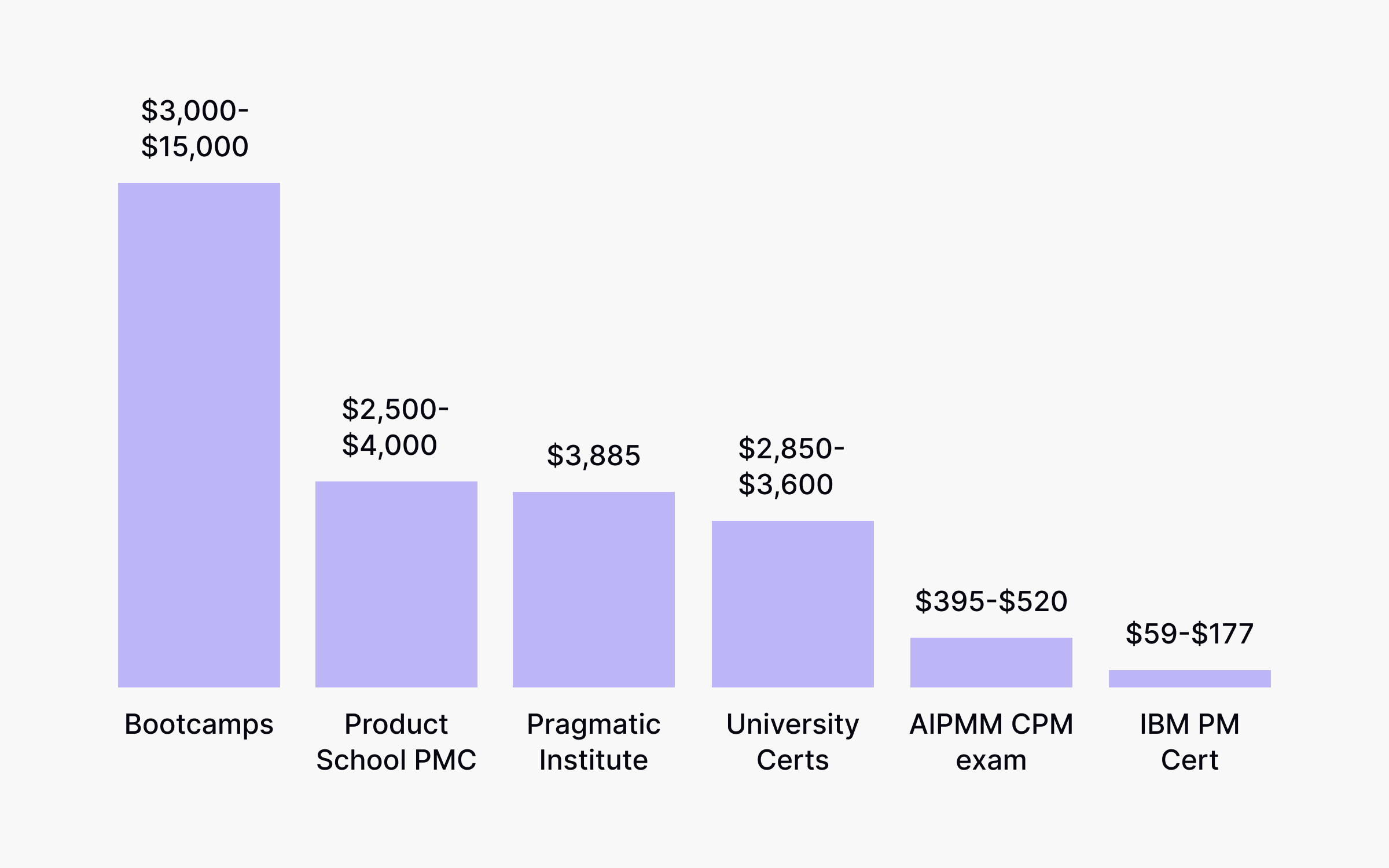
The Product School PMC certification costs $2,500 to $4,000 for eight weeks of live online classes. You get smaller cohorts (around 20 students), instructors from Google and Meta, and extensive networking through their 100,000+ member Slack community. IBM’s program costs $59 to $177, which is roughly 15 to 40 times cheaper. You sacrifice live instruction and built-in networking, but many people can create those experiences independently.
Pragmatic Institute charges $1,295 per course with three courses required for full certification, totaling $3,885. Their curriculum goes deeper on enterprise product management for experienced professionals. IBM costs 22 times less but targets beginners.
Traditional bootcamps like General Assembly or BrainStation run $3,000 to $15,000 with intensive career support. They provide dedicated coaches, resume review, interview practice, and employer connections. Some bootcamps even offer job guarantees. IBM provides basic career resources but expects you to drive your own job search. The 17 to 84 times price difference reflects this support gap.
The AIPMM CPM exam alone costs $500 without any training. IBM’s program includes comprehensive CPM exam preparation plus the full PM curriculum for $59 to $177, making it economically efficient for CPM candidates and providing the advanced proficiency needed to excel in product management roles.
University certificate programs from Northwestern Kellogg or UC Berkeley cost $2,850 to $3,600. You get academic prestige and alumni networks. IBM costs 16 to 21 times less with corporate brand recognition instead of university prestige.
Cost comparison with alternatives
| Program | Cost | Duration | Format | Career support | Cost per hour |
|---|---|---|---|---|---|
| IBM PM Cert | $59 - $177 | 3 months | Self-paced | Basic | $1.89 - $5.96 |
| Product School PMC | $2,500 - $4,000 | 8 weeks | Live cohort | Strong networking | ~$32 |
| Pragmatic Institute | $3,885 | 3 courses | Live + self-study | Enterprise focus | ~$40 |
| Bootcamps (GA, BrainStation...) | $3,000 - $15,000 | 3 - 6 months | Intensive | Extensive | $30 - $50 |
| AIPMM CPM (exam only) | $395 - $520 | Self-study | Exam only | None | N/A |
| University certificates (Kellog, Berkeley) | $2,850 - $3,6000 | Varies | Hybrid | Alumni network | $35 - $45 |
Is the price justified?
For career switchers and beginners, yes. You're paying $1.89 to $5.96 per hour of instruction ($177 divided by 94 hours at the high end). Compare that to $300 per hour for one-on-one career coaching or $32 per hour for bootcamp instruction. The self-paced format means you can complete quickly and reduce effective hourly cost.
For experienced product managers, probably not. The entry-level content won't advance senior PM careers, making even $177 a poor investment when specialized training would serve better.
The biggest value comes from the career impact. Think about it this way: if this $177 certification helps you land a $120,000 PM role even two months earlier, you've made $20,000 by spending $177. Even if it only boosts your interview rate slightly, it's worth it when bootcamps cost $3,000 to $15,000.
Consider the alternative: you don't take any certification and apply based solely on adjacent experience. Your job search takes 12 months instead of 9 months because you lack PM credentials and portfolio projects. Those extra 3 months cost you $25,000 to $37,500 in lost PM salary. The $177 certification cost is trivial compared to extended job search costs.
Is IBM Product Manager Professional Certification right for you?
This program works brilliantly for specific people and poorly for others. Understanding which category you fall into saves time and money.
You're an ideal candidate if you're:
Software engineers and analysts transitioning to PM already understand technical concepts. The certification fills gaps in business strategy and product lifecycle knowledge. Your technical background plus PM certification creates a compelling profile. At $177 maximum, it's accessible versus $10,000 bootcamps.
Recent graduates exploring PM careers have theoretical knowledge but lack practical experience. The hands-on projects give you tangible artifacts for applications. The IBM brand adds credibility. Entry-level PM positions require demonstrated interest, and this certification shows commitment.
Or if you're an international professional seeking recognized credentials, the ACE and ECTS credit recommendations help with U.S. and European employers. The IBM brand translates globally. Self-paced format works across time zones.
Another good fit: currently employed but exploring PM as your next move. You can't quit for a full-time bootcamp. The self-paced structure lets you learn evenings and weekends. You can apply learnings immediately if your role has PM adjacency. For those mapping their product manager career from an adjacent role, Uxcel's career path page outlines the skills and milestones at each level.
The program also works if you're budget-conscious with limited funds. At $59 to $177, this represents an accessible entry point without massive financial risk.
This probably isn't for you if you're:
- Experienced PMs with 3+ years seeking advanced training will find the entry-level content won't advance their careers. Focus on Pragmatic Institute, Reforge, or specialized training.
- Expecting guaranteed employment means disappointment. IBM provides career resources but no placement services, dedicated coaches, or employer partnerships. You'll conduct a self-directed job search.
- Someone who learns best through live interaction won't find what they need. The asynchronous format lacks scheduled video calls, live Q&A, or cohort dynamics. Forums exist but don't replicate classroom energy.
- Seeking deep networking opportunities won't work here. The program doesn't provide structured networking. You'll build your PM network independently through LinkedIn and meetups.
- Requiring hands-on work with real companies won't happen. The program uses simulated scenarios. Portfolio projects are well-designed but not real products shipped to customers.
- Expecting an all-in-one complete solution will leave you disappointed. This certification is one component of career transition. You also need networking, domain knowledge, interview skills, and likely volunteer PM work.
Quick decision guide
| ✅ You're an ideal fit if: | ❌ Skip this if: |
|---|---|
| Transitioning from engineering, analysis, or business roles | Experienced PM with 3+ years in role |
| Recent graduate exploring PM careers | Expecting guaranteed job placements |
| Budget limited to under $500 | Need intensive career coaching |
| Need flexible self-paced schedule | Prefer live instruction and cohorts |
| International professional seeking recognized credentials | Want extensive networking opportunities |
| Currently employed, learning part-time | Require hands-on work with real companies |
| Want foundational PM knowledge | Have adjacent experience |
What do students actually say about IBM Product Manager Professional Certification?
The program maintains a 4.7 out of 5-star rating across 959 reviews on Coursera. That's unusually high for professional certifications, which typically range from 4.3 to 4.6. Looking at actual student feedback reveals both consistent praise and legitimate criticisms worth considering.
The positives that appear repeatedly
Portfolio building comes up constantly in positive reviews. Students appreciate creating tangible artifacts they can show employers: product concept documents, market requirements documents, product roadmaps, business cases, sprint plans. One review noted: "I finally have actual PM documents for job interviews instead of just saying I'm interested in product management." Others echoed this, with one mentioning the capstone project "gave me talking points for every interview question about my PM experience."
Here's why that's important: career switchers typically lack product management work samples. The certification solves that problem directly. You finish with a portfolio that demonstrates competency even if you've never held a PM title. When recruiters ask "What product management experience do you have?", you can show concrete documents rather than fumbling through theoretical responses. That's the difference.
IBM brand recognition gets mentioned frequently as a confidence booster. Reviews say things like "Having IBM on my LinkedIn actually gets recruiter responses" and "Employers recognize the name immediately unlike smaller bootcamps." The Fortune 50 credibility makes the certificate feel legitimate rather than just another online course completion. One international student noted "IBM carries weight in India in a way that regional programs don't."
Comprehensive curriculum design earns praise for covering the full product lifecycle. Students note that they're learning both traditional product management (strategy, planning, launch) and Agile methodologies (Scrum, sprints, user stories), which matters because most modern PM roles require both approaches. Several reviews specifically called out the Agile course as valuable for understanding how to work with engineering teams. One software engineer transitioning to PM mentioned "The Scrum content helped me understand what PMs actually need from engineering teams."
Affordability appears in nearly every positive review. Comments range from "Best value in PM education" to "Learned as much as friends who paid $5,000 for bootcamps." The price-to-value ratio creates satisfaction because students feel they're getting comprehensive training without financial stress. One review from a parent noted "Could actually afford this while supporting a family, unlike bootcamps that require quitting my job."
Self-paced flexibility gets appreciated by working professionals. Reviews frequently mention "Finished in 6 weeks studying evenings" or "Took 4 months juggling full-time job and family, no pressure." The lack of deadlines means students don't fail due to life getting in the way. You pause when needed and resume without penalty. A healthcare worker mentioned "My rotating shift schedule would have made bootcamps impossible. This worked perfectly."
Instructor quality draws positive mentions, particularly Rav Ahuja's teaching style. Reviews note clear explanations, well-organized content, and practical examples. Students appreciate instructors with actual industry experience rather than pure academics. The video production is generally professional, making lectures easy to follow.
CPM exam preparation is seen as valuable bonus content. Students who plan to eventually pursue the AIPMM Certified Product Manager credential appreciate getting structured prep included. One review noted "The mock CPM exam revealed gaps in my knowledge before I spent $400 on the real test." Another mentioned "The CPM prep alone is worth the subscription cost."
The negatives worth considering
Entry-level content limitation frustrates some students with prior PM exposure. Reviews from people with product management experience express disappointment: "Too basic if you've already worked in product" and "Covers fundamentals well but nothing advanced." A few reviews mentioned finishing quickly because they already knew 60 to 70% of the content through work experience.
This isn't a flaw in the program. It's designed for beginners. But it means experienced professionals shouldn't expect new insights. One reviewer with 2 years of PM experience noted "Good refresher on frameworks but didn't teach me anything I don't already use daily."
Lack of live interaction appears as a common complaint. Students mention missing real-time Q&A with instructors, wanting discussion with classmates, and feeling isolated during self-study. One review said "Great content but lonely learning experience." Another noted "Forums exist but they're not very active, maybe 3 to 4 responses per week to my questions." For extroverted learners or people who process ideas through discussion, this absence matters.
The asynchronous format means you can't ask follow-up questions immediately when concepts are unclear. You post in forums and wait hours or days for responses, by which time you've moved on or figured it out yourself. Some students compensate by finding external study groups on Reddit or Discord.
No dedicated career services disappoints job seekers expecting placement support. Reviews mention "Certificate alone doesn't get you hired" and "Still need to network independently." Some students expected more hand-holding through the job search process. The reality is you get resume tips and general career resources (generic advice like "tailor your resume" and "prepare for common interview questions"), but no personal career coach reviewing your applications or connecting you to hiring managers.
One reviewer compared it to bootcamp experience: "My friend did Product School and had weekly career check-ins, resume reviews, and mock interviews. IBM gave me a PDF with interview tips. The price difference reflects this gap."
Generic capstone projects come up in critical reviews. Students note that the projects are well-designed but simulated rather than real client work. One review mentioned "Would have preferred working with an actual startup." Another said "Portfolio projects look good but I can't say I launched a real product that customers use." This matters for credibility when competing against candidates who have genuine PM experience.
The capstone scenarios are professional and realistic, but they're not the same as saying "I shipped a mobile app feature to 50,000 users and increased engagement 15%." That level of real-world impact requires actual PM work, which the program can't provide.
CPM exam not included causes confusion for some students. Reviews reveal that people assumed the AIPMM Certified Product Manager credential came with the program. When they discover the exam costs an additional $500, they feel misled. The program clearly prepares you for CPM but explicitly states the exam is separate. Still, some students missed that detail during enrollment. One review complained "Misleading marketing, should clearly state CPM EXAM NOT INCLUDED in bold letters."
Sentiment patterns worth noting
Recent reviews (past few months) maintain the same 4.7-star average as older reviews from the 2024 launch period, suggesting consistent quality over time. There's no pattern of declining satisfaction or emerging problems. The review distribution is stable: roughly 70% five-star, 20% four-star, and 10% three-star or below.
Career switchers give higher ratings than people exploring multiple PM programs. The highest-rated reviews come from software engineers, analysts, and business professionals making their first serious attempt at learning product management. They're comparing the program to zero previous training rather than to competitive alternatives. One engineer noted "This is exactly what I needed to understand what PMs actually do beyond just writing requirements."
International students express high satisfaction, particularly noting the global accessibility and recognized brand name. Reviews from India, Europe, and Latin America frequently mention the certification's value in their job markets. A reviewer from Brazil mentioned "IBM is recognized here in ways that U.S.-only bootcamps aren't." In India, one student noted "Much more affordable than Indian PM bootcamps while being more recognized."
Critical reviews typically come from either experienced product managers who found the content too basic, or from people expecting bootcamp-style career support. These aren't quality issues with the program. They're misaligned expectations. The program description is accurate about being entry-level and self-directed, but some people enroll hoping for more than advertised.
What reviews reveal about success factors
Successful students share common patterns in their reviews. They treat the certification as one part of a broader strategy, not a magic solution. Networking and informational interviews supplement the coursework. Most finish in 1-3 months rather than letting it drag to 6+ months. Building the portfolio actively as they go, rather than rushing through for the certificate, makes the difference.
Successful students also mention setting specific goals before starting: "I wanted to transition from engineering to PM within 6 months" or "I needed PM credentials to apply for internal PM roles." Clear objectives help them focus on relevant content and apply learning strategically.
Students who express disappointment often expected the certification alone to transform their careers. They skipped supplemental networking and job search work. They enrolled without clear understanding of what entry-level content means. They assumed the certificate would directly lead to interviews without additional effort. One disappointed review noted "Finished the cert 4 months ago, applied to 50 PM jobs, got zero interviews." But deeper reading revealed they had no relevant experience, didn't network, and mass-applied without customizing applications.
The lesson from review patterns is clear: this certification provides knowledge and credentials. You still own responsibility for converting those assets into employment. The 4.7-star rating reflects satisfied students who understood this reality going in.
Review platform summary
| Platform | Rating | Review count | Key strength | Main complaint |
|---|---|---|---|---|
| Coursera | 4.75/5 | 959 | Portfolio projects, affordability | Entry-level content only |
| Medium | Positive | 5+ articles | IBM brand recognition | Lacks networking |
| Mixed | 10+ threads | Flexible self-pacedy | No career services |
Can you actually get a job after completing this certification?
This is the question that matters most. The honest answer: the certification improves your candidacy but doesn’t guarantee employment. Your background before enrolling matters more than the certificate itself.
The realistic job market for new product managers
Entry-level product manager positions are genuinely competitive in 2025. Entry-level PM roles pay well. Glassdoor shows $116,000 to $192,000 with averages around $148,000, while ZipRecruiter reports $141,000 to $197,000. These attractive numbers draw lots of applicants. For a comprehensive look at how PM compensation varies by experience, city, and specialization, Uxcel's PM salary data guide covers the full picture. The competition is intense. You’re competing against people with PM experience, MBAs from target schools, engineers from brand-name tech companies, and bootcamp graduates who received 3 months of intensive career coaching.
The competition varies by role type. Technical PM positions (working closely with engineering teams on backend systems, APIs, or infrastructure) typically require engineering backgrounds and attract fewer non-technical candidates. Growth PM roles (focused on user acquisition, activation, and retention metrics) attract marketers and analysts. Platform PM positions (building tools and systems for other developers) require deep technical understanding. Entry-level generalist PM roles receive the most applications because they have broader eligibility.
Geographic location affects your prospects significantly. San Jose and San Francisco offer the highest PM salaries (around $212,000 for experienced PMs, $120,000+ even for entry-level) but also have the most competition because every aspiring PM moves there. Cities like Austin, Seattle, Denver, and New York have growing product management markets with slightly less saturation. Remote positions have become more common post-pandemic, but they often prefer candidates with proven PM track records rather than complete beginners.
Industry matters too. Tech companies (software, SaaS, platforms) hire the most product managers but also set the highest bar. They want evidence of technical thinking, customer obsession, and ability to work in ambiguous environments. Financial services, healthcare, retail, and manufacturing all need product managers but may not call the role “product manager.” You might see “product owner,” “program manager,” or “solutions manager” for essentially the same work. Being flexible about job titles expands opportunities significantly.
What the IBM certification actually does for your candidacy
The certificate demonstrates foundational knowledge. When recruiters or hiring managers see IBM Product Manager Professional Certificate on your resume, they understand you’ve learned core concepts: product lifecycle, Agile methodologies, stakeholder management, strategic planning. This addresses the “why should we consider someone without PM experience” objection. You’ve invested time and shown commitment beyond casual interest.
The certification signals serious intent. Hiring managers see lots of applications from people who “think they might like product management.” The certificate indicates you’ve invested 94 hours learning what the role actually entails. You’re less likely to quit 3 months in when you discover PM work involves more meetings and fewer brilliant product ideas than expected.
Your portfolio artifacts give you interview talking points. Instead of saying “I’m interested in product management,” you can say “I developed a complete product roadmap for a mobile app concept, including market analysis, competitive positioning, and go-to-market strategy. My business case projected 30% user adoption in the first quarter based on comparable app launches.” You can walk through your business case explaining how you calculated ROI and justified product investment. These concrete examples help interviewers assess your thinking process beyond just answering behavioral questions.
The ACE and ECTS credit recommendations add academic weight that most online certificates lack. If you’re also pursuing or have completed a degree, the college credit eligibility creates a stronger credibility story. International candidates particularly benefit since the ECTS recognition helps European employers understand the certification’s legitimacy. A hiring manager in Germany can verify that FIBAA accreditation means the program meets academic quality standards.
The AIPMM CPM exam preparation pathway matters for companies that value or require CPM credentials. While you haven’t taken the CPM exam yet (additional $400+ cost), you can honestly say you’re CPM-prepared and planning to test soon. For enterprise product roles where AIPMM credentials carry weight (common in large corporations outside tech), this positions you favorably. Some job postings explicitly state “CPM certification preferred” or “AIPMM training required.”
Additionally, the Project Management Institute (PMI) is widely recognized for setting industry standards and validating professional credentials in project and product management. While the IBM Product Management Certification is not directly accredited by PMI, understanding PMI standards and the value of PMI-approved training can further strengthen your professional profile, especially for roles that emphasize project management certificate requirements or PMI-aligned methodologies.
What the certification doesn’t do
It doesn’t create networking connections to hiring managers. Unlike bootcamps that host employer meetups or universities with active alumni networks, you finish this program without built-in job leads. You need to create networking opportunities independently through LinkedIn outreach, PM meetups, product management Slack communities, and informational interviews.
Product School graduates enter a 100,000-member Slack workspace where members share job openings, referrals, and hiring manager connections. IBM provides discussion forums with other learners, but there’s no equivalent job board or employer pipeline. The networking gap is real and requires intentional effort to close.
It doesn’t provide personalized career coaching. Bootcamp graduates get resume reviews from coaches who understand product management hiring patterns. They practice mock interviews with feedback on their answers (“Your answer was too tactical, focus more on strategic impact”). They receive guidance on which companies to target and how to position themselves. IBM’s program offers generic career resources but no dedicated coach for your specific situation.
The career resources IBM provides are essentially PDFs with standard advice: “Use the STAR method for behavioral interviews,” “Quantify your accomplishments,” “Research the company before applying.” This advice is accurate but not personalized to your background or target roles.
It doesn’t guarantee interview invitations. The certificate improves your resume but doesn’t automatically get past applicant tracking systems or impress recruiters enough to immediately interview you. You still need a strong overall profile: relevant work experience (even if not PM), demonstrable skills, education, and often personal connections or referrals. In competitive markets, 80% of interviews come from referrals rather than cold applications.
It doesn’t replace domain expertise. Product managers usually need knowledge of the industry they’re working in. A healthcare product manager understands healthcare systems, regulations (HIPAA compliance), reimbursement models, and clinical workflows. A fintech PM knows financial products, regulatory requirements (KYC, AML), payment processing, and risk management. The IBM certification teaches product management process, not domain-specific knowledge. You need to build that separately through industry research, volunteer work, or adjacent roles.
Time to employment reality check
IBM doesn’t publish job placement statistics, which tells you something. Bootcamps with strong placement rates advertise them heavily (“85% hired within 6 months!” or “92% employment rate!”). The absence of IBM placement data means there’s no formal tracking or standardized outcome measurement. This isn’t necessarily negative, it just means you shouldn’t expect guarantees.
Based on Coursera’s general professional certificate data, they report “positive career outcomes within 6 months” for certificate graduates. This extremely vague language could mean anything from landing your dream PM role to getting a small promotion in your current job. It’s not a useful metric for setting expectations.
From reviewing LinkedIn profiles and Reddit posts, successful career switchers using this certification typically take 3 to 9 months from completion to landing a PM role. That timeline includes finishing the certification (1 to 3 months), conducting an active job search while networking (2 to 6 months), interviewing across multiple companies, and negotiating offers. Some get lucky faster with internal transfers or strong referrals. Others take over a year, especially if they’re trying to break into competitive markets without technical backgrounds or without relocating.
Your pre-certification experience is the biggest predictor of success timeline. Software engineers with 3+ years experience who complete this certification transition relatively quickly because they bring technical credibility and can target technical PM roles. They understand development processes, can speak knowledgeably with engineering teams, and have seen products built from concept to launch. Business analysts with stakeholder management experience use their collaboration skills and business acumen. Recent graduates face longer searches because they lack both PM experience and adjacent professional experience to fall back on.
Strategies that improve your outcomes
Starting your job search before completing the certification helps significantly. As soon as you finish Course 3 or 4, you can legitimately claim you’re developing PM skills and have portfolio projects underway. You can begin informational interviews, network at PM meetups, and have conversations that might lead to opportunities. Waiting until full completion before networking wastes 2 to 3 months of relationship building.
One successful strategy: after completing the stakeholder management course, reach out to product managers for informational interviews and specifically ask about stakeholder challenges they face. Use your coursework as conversation starters. This demonstrates genuine interest and knowledge while building relationships that might lead to referrals.
Volunteering your PM skills builds real experience that strengthens applications. Look for nonprofits that need product help (many mission-driven organizations need digital product guidance), open-source projects seeking product owners, or startups willing to take on unpaid PM interns for short periods. Even 2-3 months of volunteer PM work gives you real examples. You might say: “I worked with a nonprofit to redesign their volunteer platform, conducting user research and implementing a new onboarding flow that measurably increased completion rates.”
Focusing on PM-adjacent roles in your current company creates internal opportunities with lower barriers. For a step-by-step breakdown of the portfolio, skills, and networking moves that make those transitions stick, Uxcel's PM career transition guide is worth reading before you start applying. Many people become product managers by first demonstrating PM skills in their existing roles. Engineers who write product specs and engage with customers are doing PM work. Analysts who do competitive research and present recommendations are practicing PM thinking. Project managers who facilitate cross-functional collaboration are building PM skills. Make this work visible to leadership, then pursue internal PM openings with a track record rather than competing externally.
Internal transitions have huge advantages: hiring managers already know your work quality, cultural fit isn’t a question, and you understand company processes and politics. It’s the smart path. The IBM certification provides formal credibility for internal switches.
Targeting smaller companies or startups reduces competition significantly. FAANG companies and well-funded unicorns attract thousands of PM applicants for each role. A 50-person B2B SaaS company might only get 20 to 50 applicants for PM roles. Your IBM certificate carries more weight when competing against a smaller, less credentialed pool. Plus, smaller companies often value scrappiness and learning ability over perfect credentials.
Getting specific about your PM specialty helps applications stand out. Rather than applying for every “product manager” role, target areas where you have credibility. Former engineers should target technical PM roles requiring API knowledge or backend systems understanding. People with design backgrounds should emphasize product design or UX-focused PM roles. Those from customer-facing roles should highlight customer discovery and research. Marketing professionals can target growth PM positions focused on acquisition and activation.
This specialization makes your story more compelling: “I’m not just another person interested in PM, I’m specifically interested in growth PM because my 3 years in digital marketing gave me deep understanding of acquisition funnels and retention metrics.”
Why is Uxcel the best alternative to IBM Product Manager Professional Certification
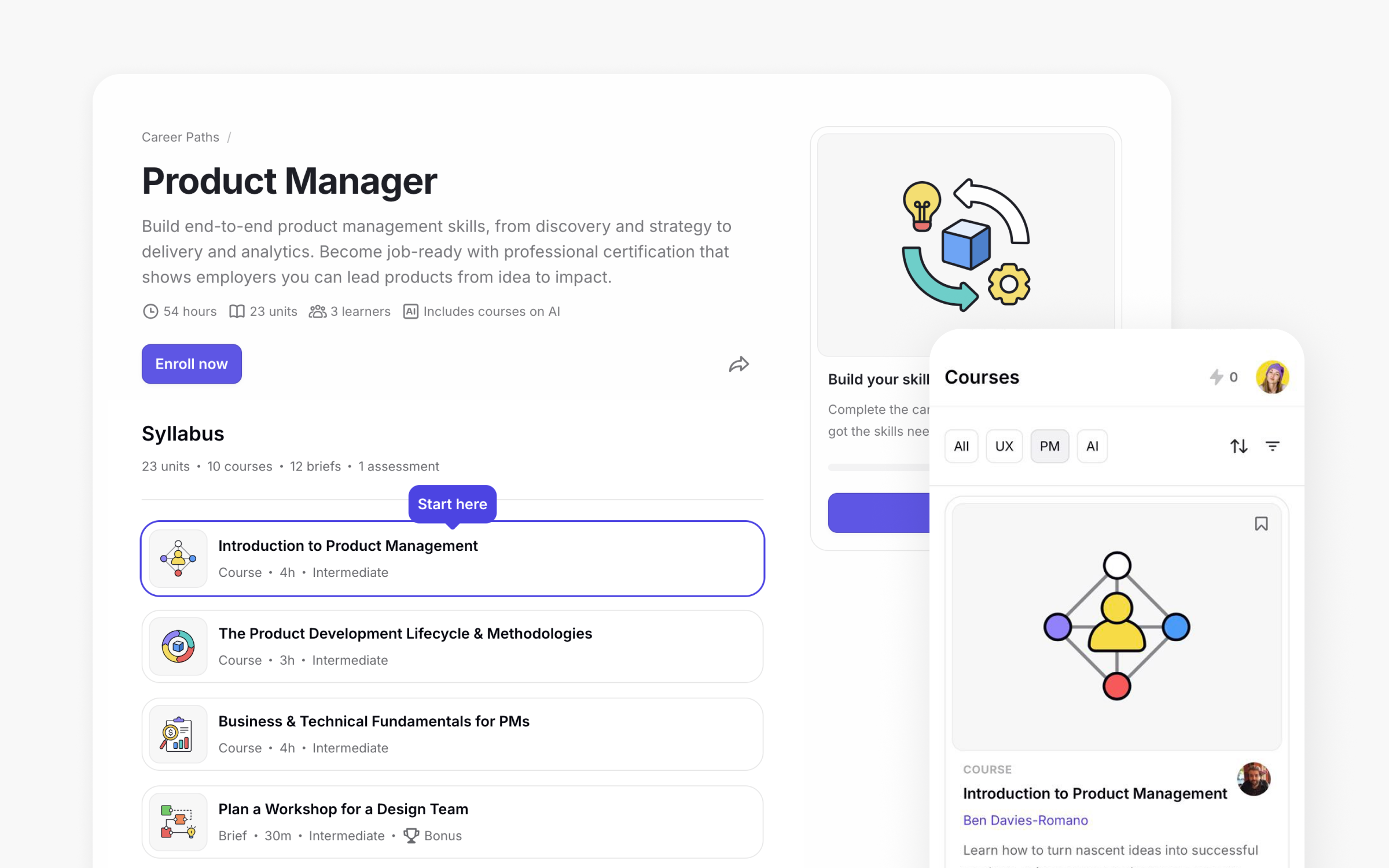
Uxcel launched in 2020 with a different approach: professionals could advance their skills without spending thousands on bootcamps or watching passive video courses. The platform differs from IBM's product management focus by teaching both UX design and product management skills simultaneously, with unique cross-functional skill mapping that tracks your competencies across both disciplines.
The platform works through bite-sized, interactive lessons (around 5 minutes each) that fit into busy schedules. Over 500,000 learners from 140+ countries use Uxcel, which has achieved a 48 to 50% completion rate. That's roughly 10 times higher than typical online courses (5 to 15% industry standard). The gamification elements (points, streaks, achievements) and multi-platform access (web-first with native iOS and Android apps) keep people engaged.
What makes Uxcel unique is the skill mapping across two disciplines. If you're a senior designer learning product management or a product manager wanting UX knowledge, the system tracks your progress in both domains simultaneously. None of the competitive platforms actually allow you to learn complementary skills while mapping improvement across both disciplines. This matters for senior roles where understanding both design and product is crucial.
According to Uxcel's 2025 Impact Report, 68.5% of members got promoted with an average salary increase of around $8,000 (75x ROI claimed). These are self-reported outcomes, not independent verification, but the sample size (over 500,000 users) and consistency over multiple years lends credibility.
Pricing is $24 per month ($288 annually) compared to IBM's $59 to $177 for the full certification. However, Uxcel is subscription-based ongoing learning rather than a completion certificate. You'd keep paying monthly to maintain access. For continuous skill development as you grow in your career, that model works. For getting a specific PM credential to improve job applications, IBM's completion-based structure makes more sense.
Uxcel works particularly well for designers moving into product roles or product managers wanting deeper design understanding. It's excellent for senior individual contributors building multi-disciplinary expertise. The platform suits people who learn well through interactive exercises rather than video lectures. And it's ideal if you want ongoing skill development rather than one-time certification.
Uxcel doesn't work as well if you specifically need a credential from a recognized corporate brand like IBM. It's not ideal for people who strongly prefer structured video lectures over interactive exercises. The platform isn't portfolio-heavy, so career switchers needing extensive project samples for job applications might need to supplement elsewhere.
What else do you need to know?
Q: How long does it really take to complete?
A: IBM advertises 3 months at 10 hours per week, but completion varies significantly. Intensive students (20-30 hours weekly) finish in 4-6 weeks for $59. Working professionals stretch to 4-5 months. The pace matters financially since you're paying $59 monthly. Finishing in 6 weeks costs $59 while taking 6 months costs $354.
Q: Can you really learn PM without real work?
A: Not entirely. That's the fundamental limitation of all PM certifications. Product management is learned primarily through making decisions with incomplete information, navigating politics, and learning from failures. The certification provides vocabulary, frameworks, and mental models. The key: apply learnings immediately through volunteer work or in your current role.
Q: Does the IBM brand actually matter to employers?
A: Yes, though not universally. Fortune 500 companies and enterprises recognize IBM as a legitimate technology leader. Startups may care less about certifications generally. The brand matters most when you lack other PM credentials. International employers often value IBM's name more highly than U.S. domestic employers.
Q: Is the ACE credit recommendation useful?
A: Depends where you are in your career. If you're pursuing a degree and the institution accepts ACE credit, you could save $1,000 to $5,000 in tuition since 3 credits typically equals one course. If you're not pursuing degrees, it just adds general credibility. The ECTS recommendation similarly helps only with European higher education.
Q: Should you pursue the AIPMM CPM exam after?
A: Depends on which industries you're targeting. The CPM carries weight in enterprise environments, especially outside pure tech. If you're targeting healthcare, finance, manufacturing, or consulting product roles, the CPM might open doors. The exam costs $500. Wait until you're employed and see if your company will pay for it.
Q: What if PM isn't for you halfway through?
A: This happens often. The beauty of a $59 to $118 investment is the low cost of discovering a bad fit. Many concepts apply broadly. Agile methodology matters for engineers and designers. Strategic planning helps in business roles. Even if you decide against PM, the content isn't wasted.
Q: How do you maximize ROI?
A: Start networking before finishing. Begin informational interviews after 2-3 courses. Document your projects publicly through a website or LinkedIn portfolio. Join PM communities independently (Mind the Product, local meetups). Apply learnings in your current role immediately. Target 10-20 specific companies rather than mass applying.
Q: Can you succeed without technical background?
A: Yes, but it's harder. Target product roles where business acumen matters more: consumer products, operations PM, or B2B products. You can build technical credibility through SQL, understanding APIs conceptually, or taking basic programming courses. The most successful non-technical PMs came from design, research, or business analysis backgrounds.
Q: What's the refund policy?
A: Coursera offers a 7-day free trial period. You can cancel anytime and only pay for months you're actively enrolled. If you complete the certification within one month, your total cost is just $59. There's no long-term contract or cancellation fee.
Q: Do employers recognize this certificate?
A: Recognition varies by industry and role. Fortune 500 companies and established enterprises generally recognize IBM credentials. Tech startups focus more on demonstrable PM skills than certificates. The ACE credit recommendation adds legitimacy. The certificate is most valuable when combined with relevant experience and a strong portfolio.
So, is IBM Product Manager Professional Certification actually worth it?
For most people reading this, yes. But "worth it" depends on whether you're a career switcher on a budget or an experienced PM needing advanced training.
The certification makes sense if you're looking for credible foundational training to support a career transition at minimal financial risk. At $59 to $177, if the certification increases your probability of landing a $120,000 PM role by even 10%, the expected value massively exceeds the cost.
The IBM brand recognition matters. Recruiters pause at "IBM Product Manager Professional Certificate" in ways they don't for unknown online courses, because Fortune 50 credibility signals legitimate training. The portfolio projects give you artifacts that career switchers typically lack. The dual academic credit recommendations (ACE and ECTS) add legitimacy. International candidates particularly benefit from global recognition.
When does IBM Product Manager Professional Certification make sense?
You're transitioning from adjacent roles like engineering, analysis, project management, or marketing where you have transferable skills. You're a recent graduate needing practical PM knowledge beyond coursework. You're budget-constrained with less than $500 available. You're employed full-time and need complete schedule flexibility. You're an international professional seeking recognized credentials. You're exploring PM as a career without wanting to commit thousands of dollars.
When should you skip this?
You're an experienced PM with 3+ years seeking advanced training. You have $3,000+ and value live instruction with strong networking. You strongly prefer structured accountability with external deadlines. You're expecting comprehensive career coaching and job placement. You lack professional experience and expect the certificate alone to launch a PM career.
What should you do now?
Summarize all the learnings you got from this article. Understand whether IBM Product Management Certification is the right choice for you. If yes, do a bit of your own research and then decide whether this would truly meet your standards.
If you see that it is not the right choice for you, then choose Uxcel. You can start for free, see whether it fits you. If yes, you get access to 500+ learning resources at $288/year, which is 10x cheaper compared to Product School.