.svg)


Five product management certifications are genuinely free in 2026, and the paid ones earn their price only in specific situations. The rest of the market sits in an awkward middle: courses advertised as free that quietly charge for the certificate, or charge nothing and hand you a credential no hiring manager recognizes. This guide separates the three groups, with prices and time commitments checked in August 2026. A product manager cert program is worth pursuing, but only once you know which tier you're buying into.
The confusion here is structural, not accidental. A platform can honestly advertise a free course, charge for the certificate at the end, and never technically mislead anyone. Another can hand you a certificate for nothing that no recruiter has heard of. Both look identical in a search result, which is how people end up three hours into a course before they find the paywall.
Key takeaways
- Only five product management certifications give you a credential without asking for payment at any point.
- "Free course" and "free certificate" are different claims, so check which one a platform is actually making.
- A free certificate proves you finished something, not that you can do the job.
- Paid programs buy you three things: live teaching, a cohort, and portfolio feedback. If a program offers none of those, paying is hard to justify.
- Two well-known programs changed shape this year: General Assembly's PM short course is no longer bookable, and Kellogg's has been rebuilt around AI.
What to look for in a product management certification
Start with what the credential has to do. If you're switching careers, you need something that produces artifacts you can talk about in interviews. If you're already working in product, you need a specific gap filled, and a two-hour course can do that honestly.
Four checks separate a useful program from a badge mill:
- Is the certificate free, or just the course? Many platforms gate the credential behind payment or a financial-aid application.
- Is there an assessment? A completion certificate with no exam is a receipt, not a credential.
- Who teaches it? Courses taught by practicing product managers age better than those built by career instructors.
- Does it produce something you can show? A capstone project outlasts the certificate, and it's the part interviewers ask about.
Be honest about what any certificate does: it gets you past a screen and gives you vocabulary. It doesn't substitute for shipped work, which is why most hiring managers weigh a portfolio above a credential. If you're mapping a longer route, our guide to the product manager career journey covers the sequence. If the credential isn't the point at all, the companion roundup of free product management courses covers learning without it.
The 11 programs at a glance
- Uxcel, exam-based and cross-functional
- Alison, the accredited free diploma
- Pendo, a $149 credential for free
- Simplilearn, the fastest free option
- UXCam, mobile product management
- Product School, free and paid tiers
- Coursera, the low-cost academic route
- edX, advanced and university-backed
- Reforge, for senior product people
- Udacity, portfolio plus mentor review
- Aha, roadmapping in practice
The 11 certifications, free and paid
1. Uxcel
Best for building product, AI, and design skills together, then certifying by exam.
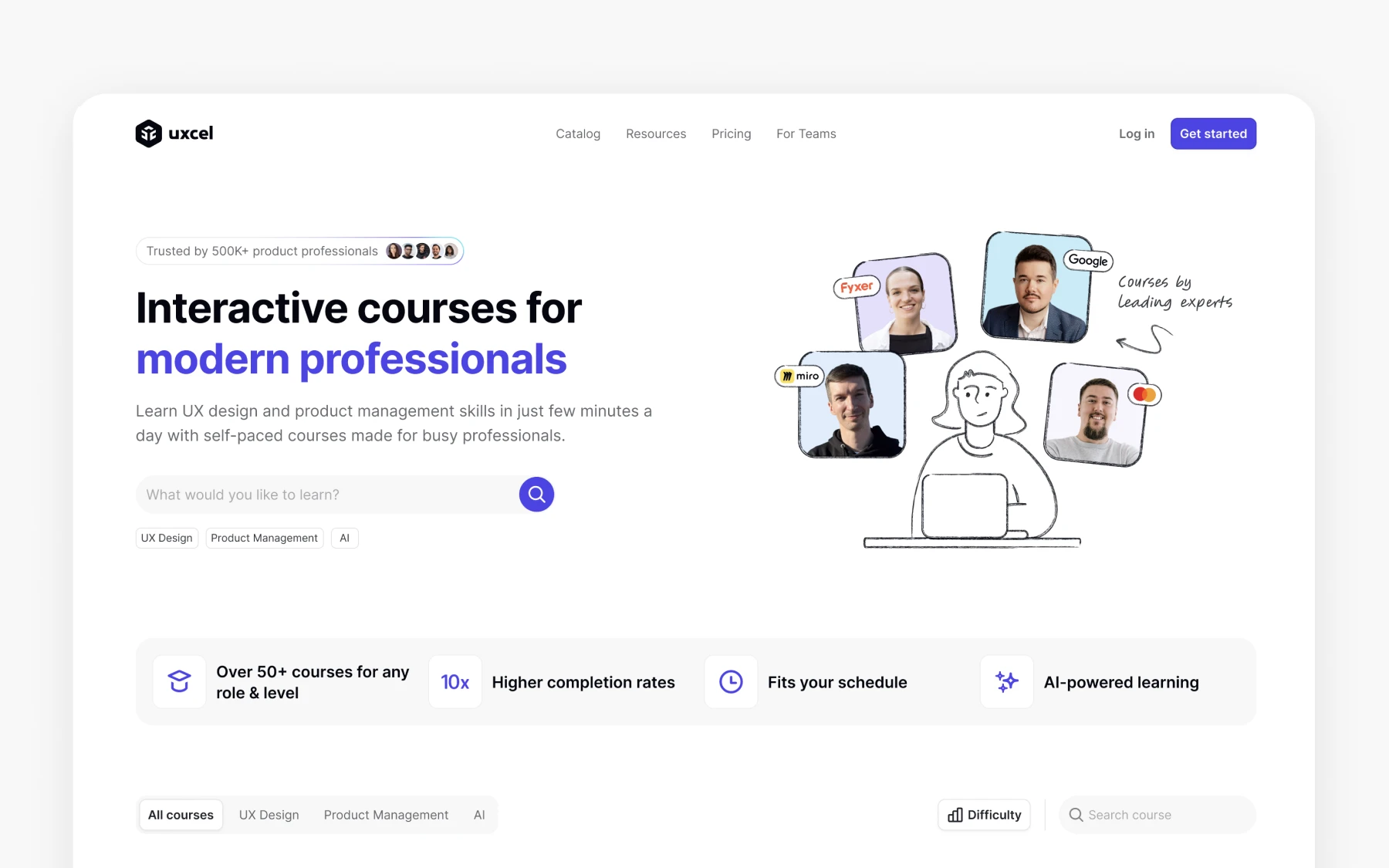
Uxcel is the only option here where the credential comes from an exam rather than course completion. Every course is free to start and some are free to finish, but the certificates are paid. One Uxcel Pro subscription unlocks all 60 courses across product management, AI, and UX design, which is the actual argument for it. Product work sits between those three disciplines, and most platforms make you buy them separately. More than 500,000 product professionals use the platform, and the interactive format suits people who stall on video courses.
The Uxcel Certified Product Manager certification is separate from the courses. The product manager exam costs $300, or $210 with the 30% Uxcel Pro discount, while Uxcel Pro starts at $24 a month and unlocks the full course catalog.
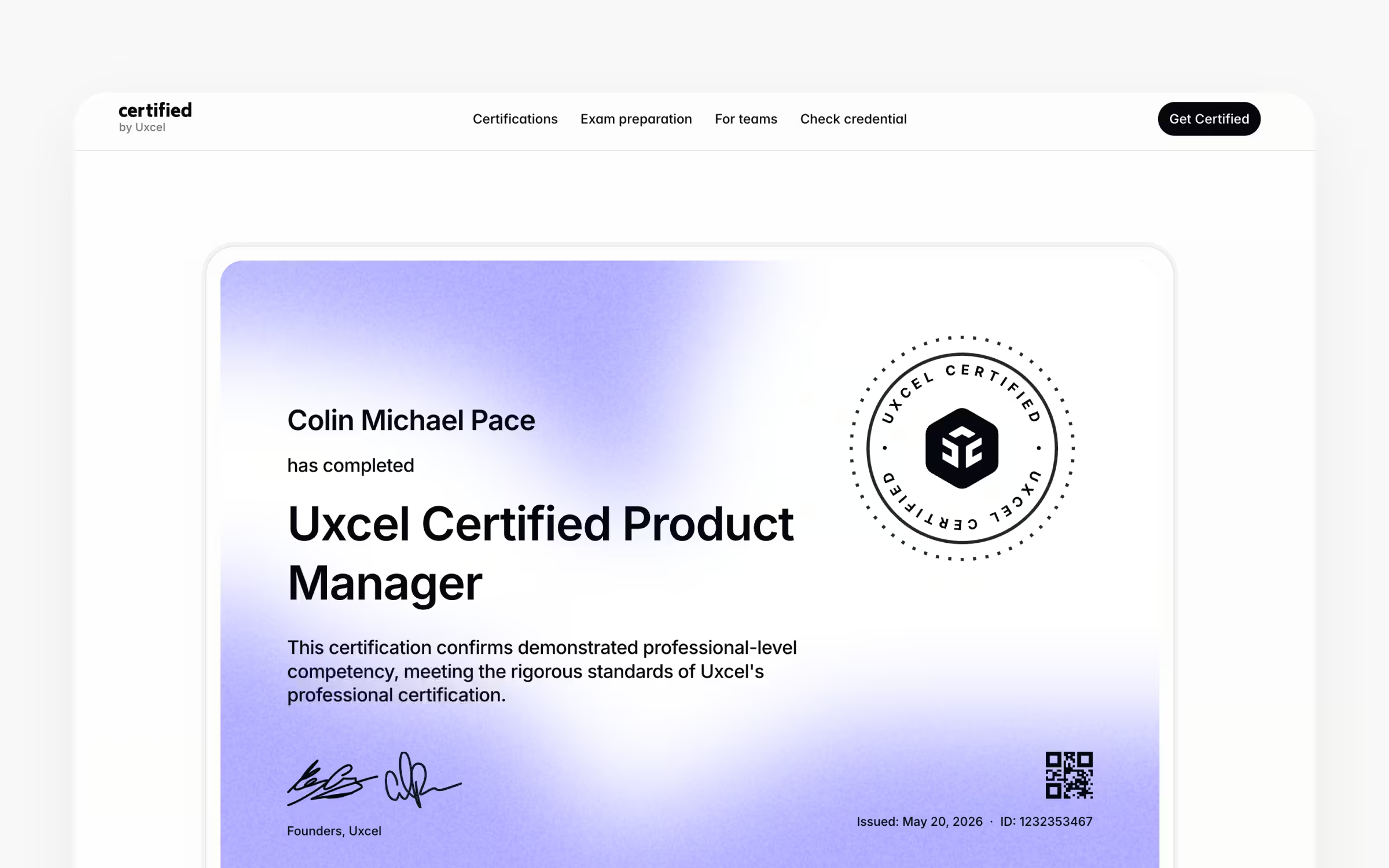
The exam runs 80 questions in 80 minutes, online proctored, and the questions are scenario-based rather than recall. You have to apply the material instead of remembering it, which is what separates it from a completion certificate.
So this isn't the cheapest route to a single badge, and it isn't meant to be. It pays off when you're building across disciplines rather than collecting one credential. Start with the product management learning path if you want the foundations in order first.
2. Alison

Best for a genuinely free accredited credential with no trial and no payment step.
Alison is the cleanest free option in this list. Its Digital Product Management course is CPD accredited, runs 1.5 to 3 hours, and had 3,906 learners enrolled when we checked. Finish the modules, pass the assessment, and the digital certificate costs nothing. There's no upsell waiting at the end, which is rarer here than it should be. Alison also runs a longer Diploma in Product Management for the same price.
The delivery is the weak point. Expect to read rather than watch, because it's text-heavy with no instructor contact and no peer group. If you've bounced off dense written material before, that pattern will repeat. Alison rates the difficulty as intermediate, so complete beginners may want something lighter first.
3. Pendo and Mind the Product

Best for working product people who want a recognized badge in one afternoon.
This is the best value in the set: Pendo's Product Discovery Certification, built with Mind the Product, normally sells for $149 and is currently free to everyone. You get a Credly badge on passing, which is verifiable on LinkedIn rather than just a PDF. That distinction matters more than it sounds, because a PDF proves nothing a screenshot couldn't fake while a Credly badge links back to the issuer. The recruiters who bother to check are checking exactly that. The content itself covers discovery, hypothesis forming, and using AI at each stage.
It assumes you already work around digital products, so it isn't an entry point. And the free pricing is a promotion, not a policy, so the $149 could return.
4. Simplilearn SkillUp

Best for deciding within an hour whether product management appeals to you at all.
Product Management 101 answers one question, "who is a product manager", in roughly an hour of video. It's rated 4.5 with 19,575 learners enrolled, it's free, and it issues a completion certificate. As a way to test the water before committing money, nothing here is faster.
There are two limits. Access to the free course expires after 90 days, so don't enroll and forget about it. And an hour of video is a taster, so treat the certificate as evidence of curiosity rather than capability. That's still worth something, because it's enough to learn whether roadmaps and prioritization sound interesting to you or tedious. It's a cheap answer to an expensive question.
5. UXCam Academy
Best for anyone working on mobile products specifically.
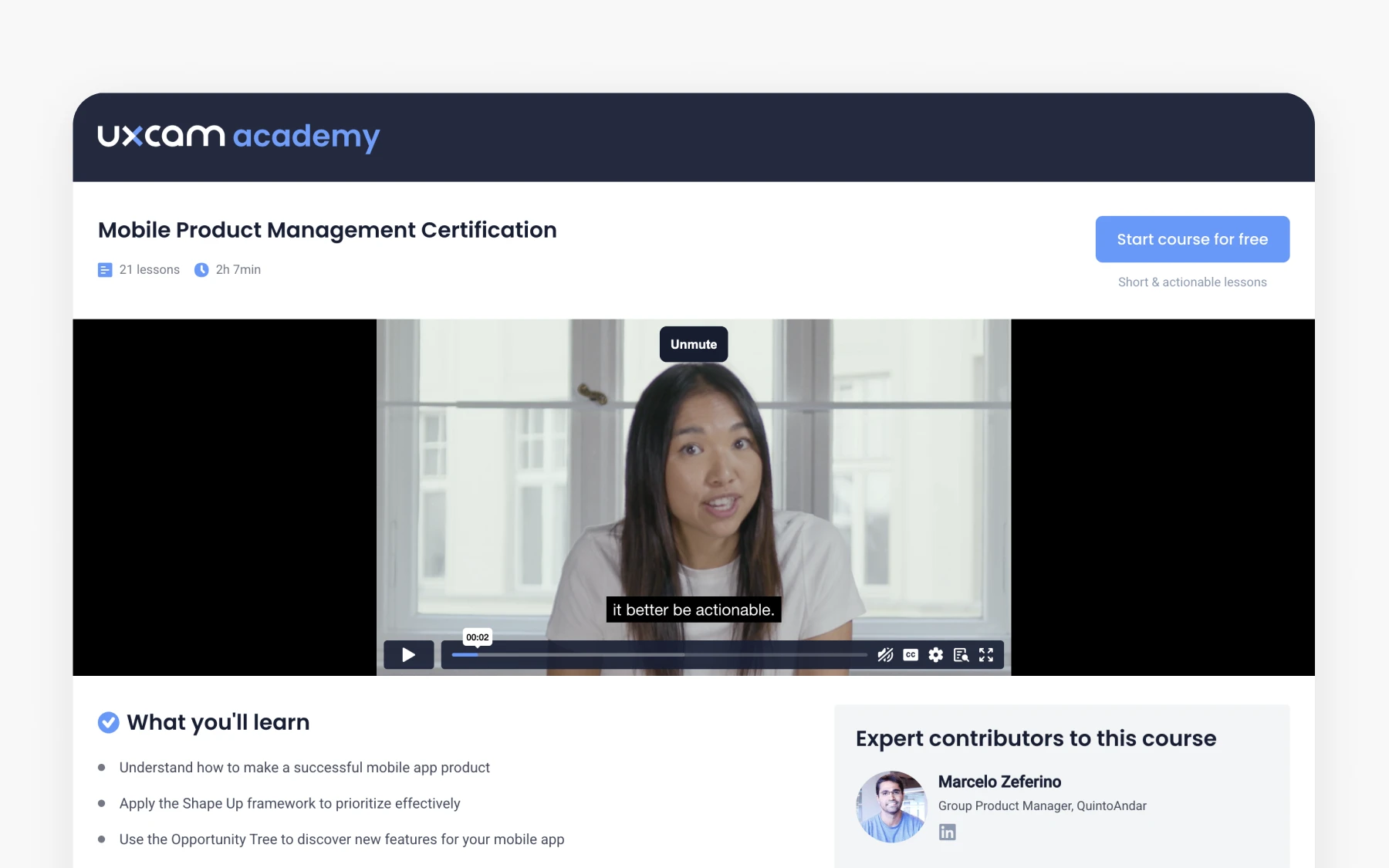
Most PM courses treat mobile as a footnote. This one is built for it: 21 lessons across 2 hours 7 minutes, free, with contributors including Marcelo Zeferino, a group product manager at QuintoAndar. It teaches Shape Up prioritization and the opportunity tree, and there's a real exam behind the certificate rather than a completion tick. Two hours is short enough to finish in one sitting, and the exam stops it becoming passive watching.
The narrow focus has a cost. If you don't work on apps, much of the framing won't transfer, and the certificate signals a specialism rather than general PM competence.
6. Product School
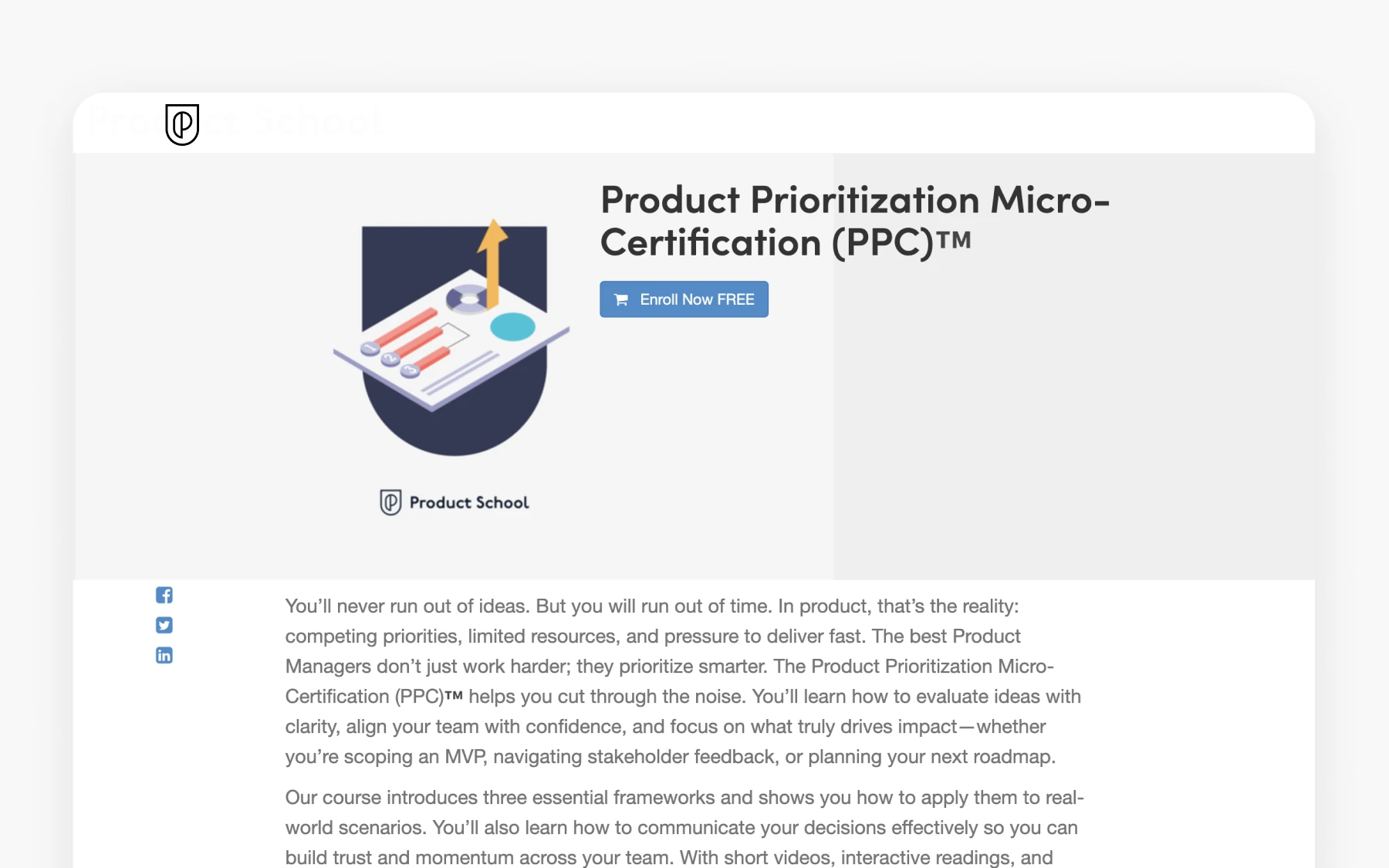
Best for name recognition, at either end of the price range.
Product School runs two very different things, starting with micro-certifications such as the Product Prioritization Micro-Certification, which enroll free and directly with no newsletter hoop required. Its flagship PMC is an eight-week part-time cohort taught by product managers from companies like Google, Meta, and Amazon, and it's completion-based with no exam.
Pricing is the problem, and published figures disagree badly. In August 2026 the same program appeared at roughly $3,000, at $4,499, and at $5,559 across different sources. None of those are wrong, exactly. They're different cohorts, promotions, and payment plans, which is why a written quote beats any number printed on a page. Our Product School pricing review breaks down what the tiers actually include.
7. Coursera and UVA Darden
Best for a university-branded certificate without a university price.
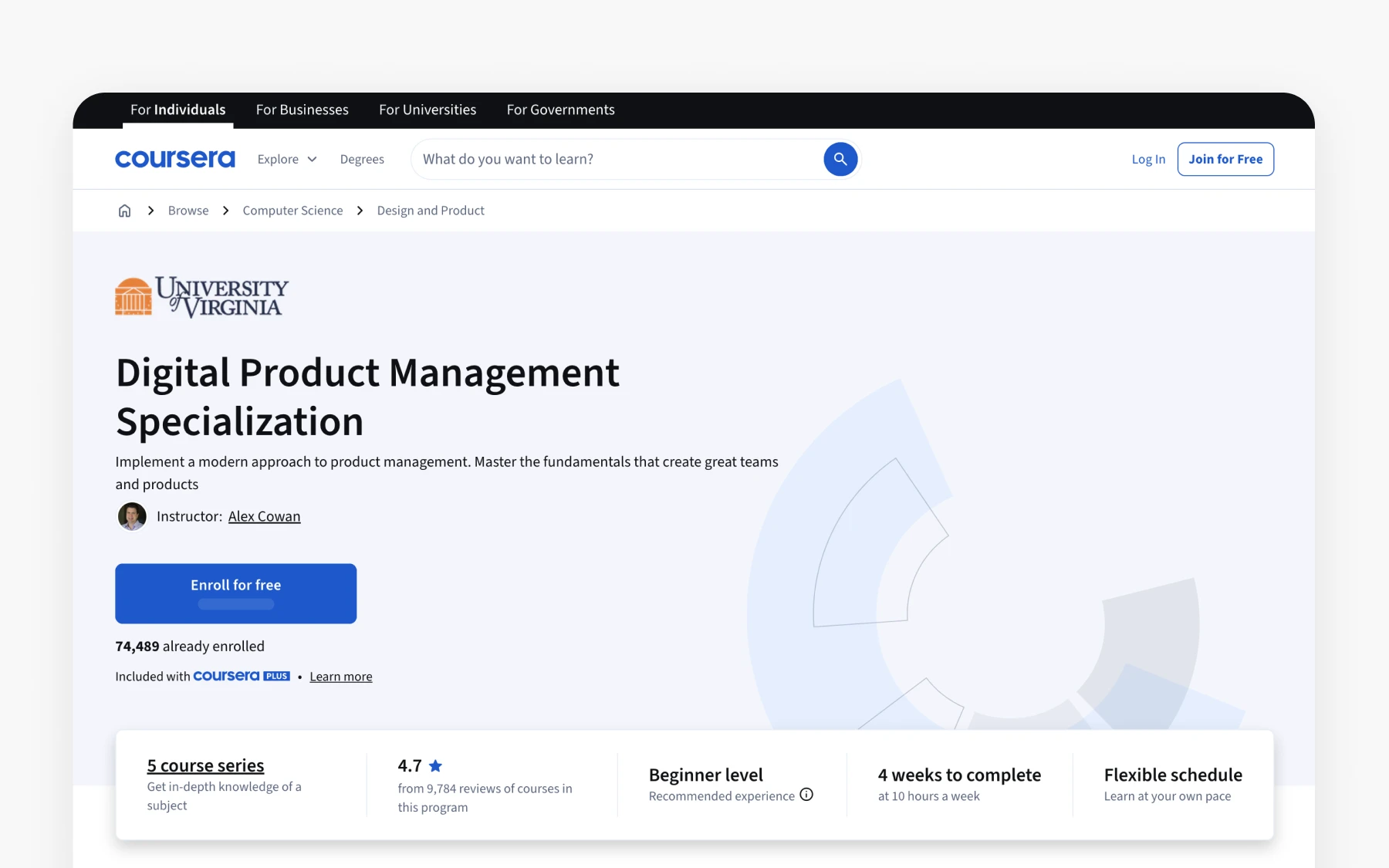
The Digital Product Management Specialization from UVA's Darden School is the most popular academic route here, with 74,489 learners enrolled and a 4.7 rating from 9,784 reviews. Five courses cover hypothesis-driven development, customer discovery, and launches, taught by Alex Cowan. Coursera lists it as beginner level at about 10 hours a week.
You can audit the videos free, but the certificate requires a subscription or Coursera Plus. It's also self-paced with no cohort, so nobody notices if you stop. That's the quiet failure mode of every self-paced program on this list. Enrollment numbers get published proudly, and completion numbers almost never do.
8. edX and Boston University
Best for experienced professionals who want graduate-level depth.
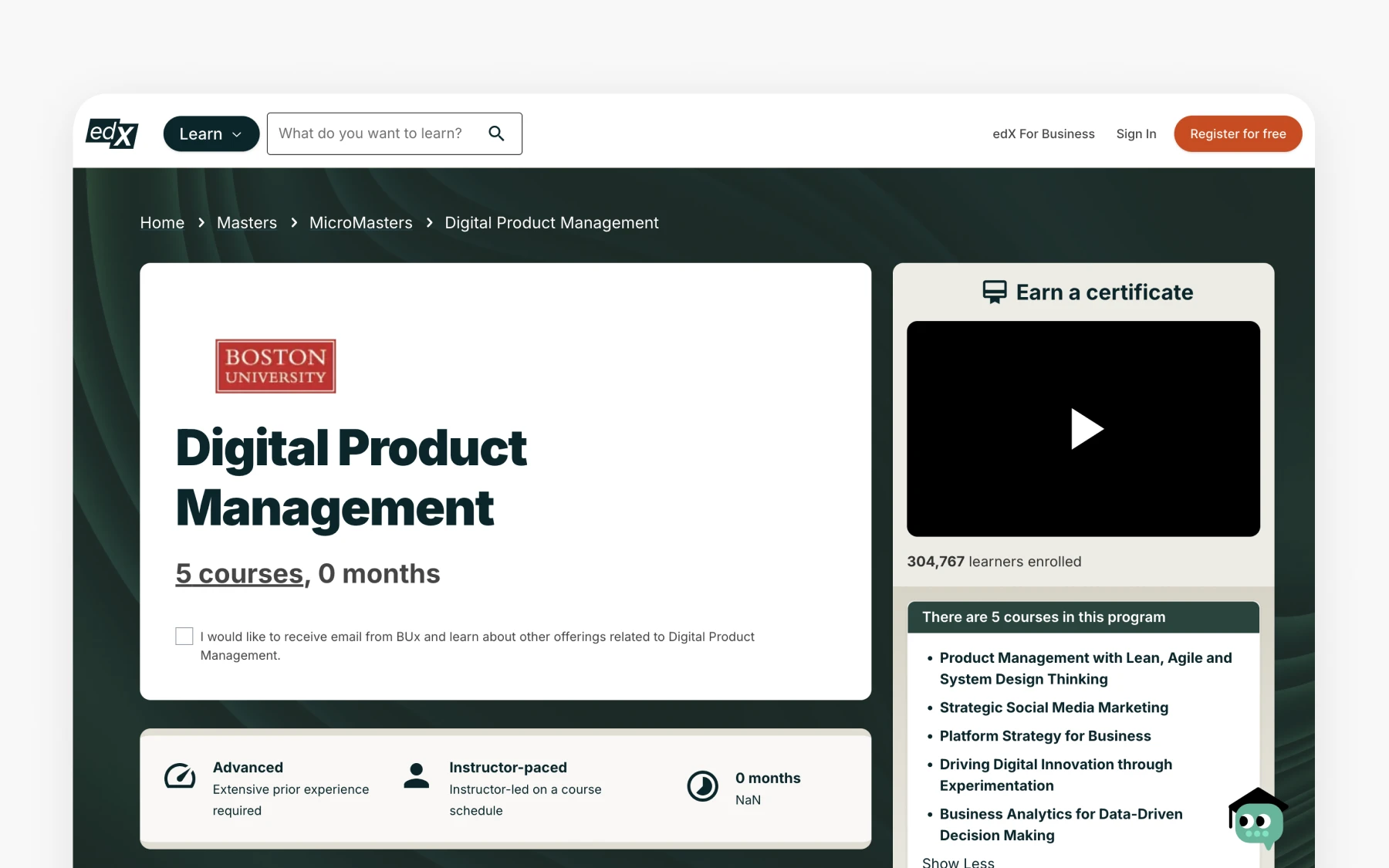
Boston University's Digital Product Management MicroMasters has 304,767 learners enrolled across five instructor-paced courses. It's the most academically serious option in this list, and edX rates the difficulty as advanced, saying extensive prior experience is required.
Read the course list before you enroll, because only one of the five is core product management. The others cover social media marketing, platform strategy, experimentation, and business analytics. The title promises a product management program, while the syllabus delivers a digital business program with product management sitting inside it. That's still valuable, but it isn't the same purchase, and you should know that before you commit five courses of your evenings. Auditing is free; the verified certificate is not.
9. Reforge
Best for senior product managers who already have the fundamentals.
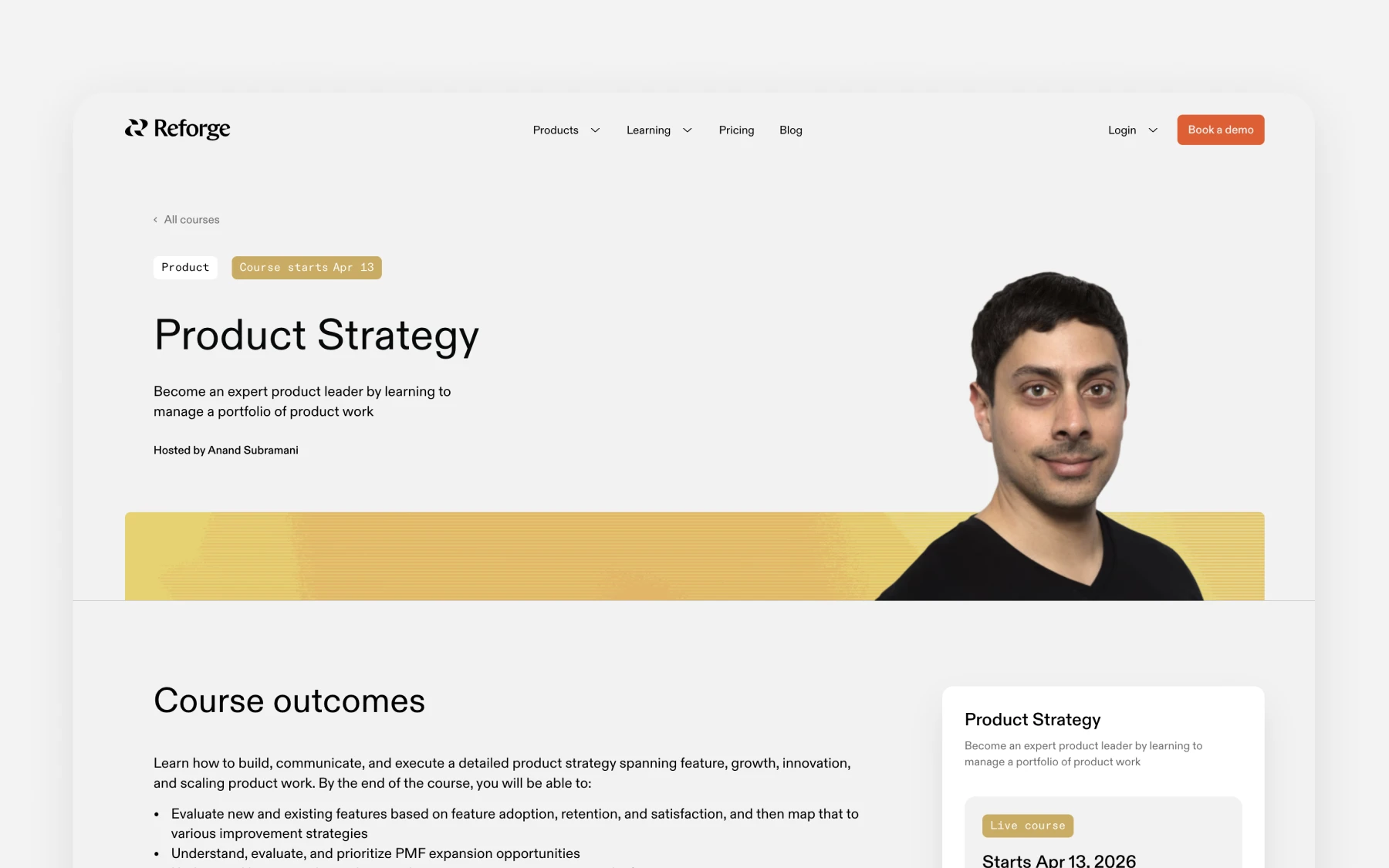
Reforge sells a membership rather than a course: $1,995 a year for the on-demand catalog plus one live course per season. Programs like Product Strategy are taught by operators from companies such as Slack, HubSpot, and Stripe, and the peer group skews to directors and VPs.
This is explicitly not for beginners, and the annual model means you pay for the catalog whether or not you use it. If you're still learning what a roadmap is, spend the money elsewhere. Be clear about what you are actually buying. The membership is the product rather than the certificate, and nobody joins Reforge for the credential or mentions it in interviews.
10. Udacity
Best for career switchers who need portfolio pieces and human feedback.
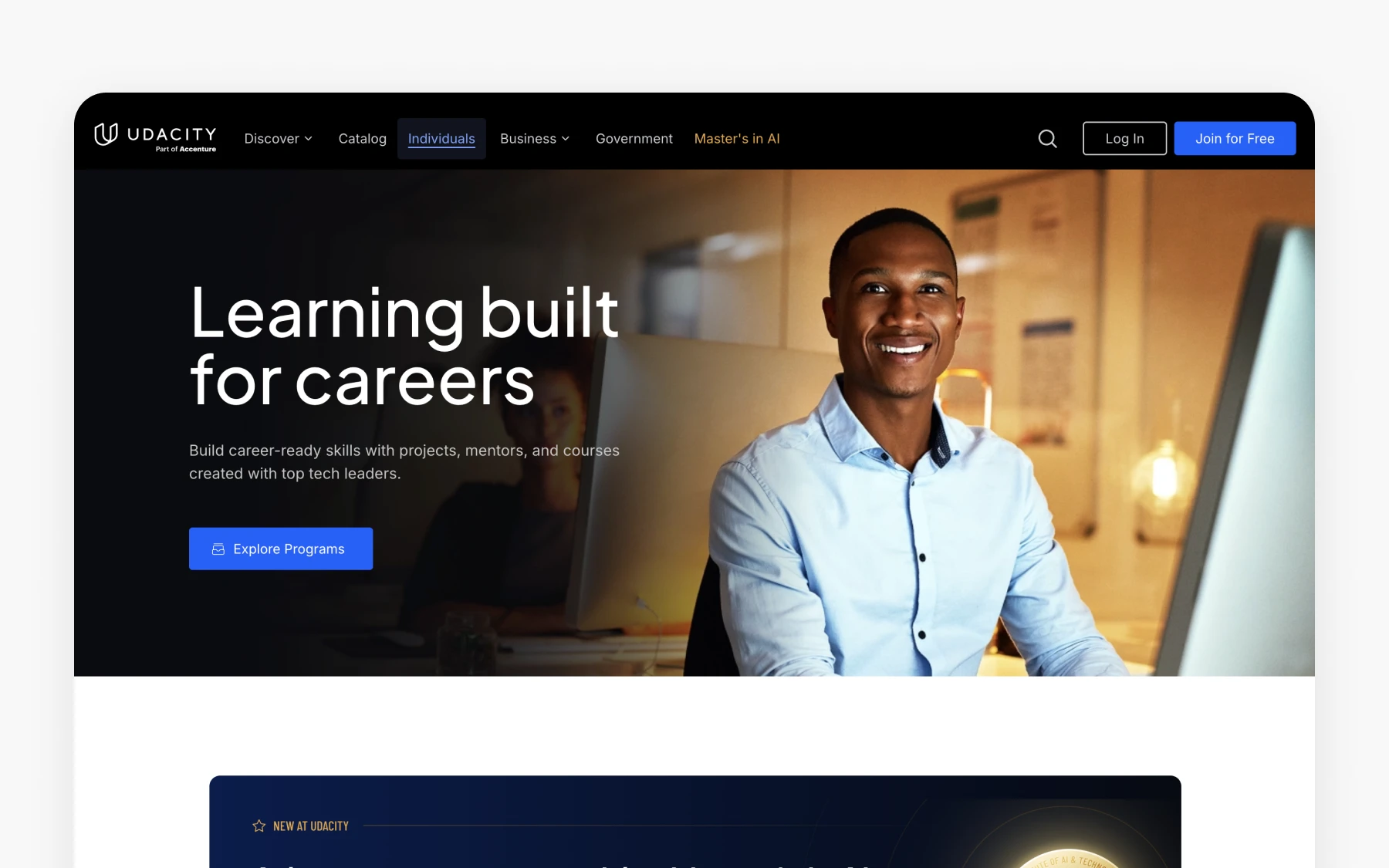
The Product Manager Nanodegree is built around output: six courses, 25 lessons, four projects, roughly 50 hours in total. Mentor review on submitted work is the real product here, since feedback is what most self-paced learning lacks. Udacity is now part of Accenture, which has stabilized the catalog.
Pricing moved to a subscription, so the total depends entirely on how fast you finish. Two people can pay very different amounts for the same nanodegree, and the only variable is momentum. Work out your own timeline before subscribing, because a slow month is an expensive one.
11. Aha Academy

Best for product managers who want roadmapping and planning discipline.
Aha Academy is run by the team behind the roadmapping tool, and it certifies both the software and the practice around it. The strength is specificity: goal setting, idea management, release planning, and connecting roadmaps to company objectives, with templates you can use the same week.
It's tightly bound to the Aha way of working, so the value drops if your company uses something else. There's no job placement support either, which makes this an upskilling choice rather than a career-entry one.
Comparing the 11 programs
| Program | Cost | Time | Certificate | Best for |
|---|---|---|---|---|
| Uxcel | Pro from $24/mo; exam $300, or $210 for Pro | Self-paced, 60 courses | Exam-based, 80 questions | Cross-functional product, AI, and design skills |
| Alison | Free | 1.5 to 3 hrs | Free, CPD accredited | A no-payment accredited credential |
| Pendo and Mind the Product | Free, normally $149 | Around 2 hrs | Credly badge | Working PMs wanting a real badge |
| Simplilearn SkillUp | Free, 90-day access | About 1 hr | Completion certificate | Testing interest fast |
| UXCam Academy | Free | 2 hrs 7 min | Exam-assessed | Mobile product work |
| Product School | Free micro-certs; PMC approx $3,000 to $5,600 | 8 weeks for the PMC | Yes | Name recognition |
| Coursera, UVA Darden | Subscription, audit free | 5 courses, approx 10 hrs/wk | Yes, paid track | University brand, low cost |
| edX, Boston University | Paid verified track, audit free | 5 courses, instructor-paced | Yes, paid track | Advanced, academic depth |
| Reforge | $1,995 per year | 1 live course per season | Yes | Senior PMs and leads |
| Udacity | Subscription | Approx 50 hrs | Yes | Portfolio and mentor feedback |
| Aha Academy | Paid | Live and on-demand | Yes | Roadmapping practice |
Two programs that changed in 2026
If you're working from an older roundup, two entries have moved, and both moves point the same direction.
General Assembly's Product Management Short Course is no longer bookable. Its page returns a "course not available" notice, and GA's catalog now leads with AI-First Product Management, AI Product Strategy, and Project Management Skills with AI instead.
Kellogg made the same turn, and its Product Strategy certificate now appears as AI-Driven Product Strategy. Kellogg has also added a separate 20-week Professional Certificate in AI-Enabled Product Management at roughly $7,025.
Executive education is rebuilding its product curriculum around AI, so a certificate someone earned two years ago now describes a syllabus that no longer exists. In an interview that works both ways. It dates you if you can't discuss what changed, and it helps you if you can.
So check the provider's own page for the current outline before you pay for anything, or before you name either program in an interview.
Others worth a look
These didn't make the main list, but they're credible in the right circumstances:
- Pragmatic Institute runs a modular series aimed at B2B and SaaS teams, and it's the standard where companies want one shared PM vocabulary.
- BrainStation offers a part-time certificate with live instruction and career coaching, online or in several cities.
- LinkedIn Learning certificates are free during a 30-day trial and post straight to your profile, which suits people who can finish several courses fast.
- Builders Camp is a four-week program with strong alumni ratings, but pricing sits behind a membership signup rather than a published figure.
- Google's Project Management Certificate is excellent and frequently recommended, but it certifies project management rather than product management, and the two roles differ more than the titles suggest.
How to choose
Match the credential to the decision you're actually making. Testing whether product management interests you? Spend an hour on Simplilearn or Alison and stop there.
Already in a product-adjacent role and want proof of a specific skill? Take the Pendo certification while it's free, then add a micro-certification. Both are verifiable, and together they cost nothing.
Moving between disciplines? Designers picking up product work, and product managers who need to talk about AI and design credibly, need breadth rather than one deep credential. That's the case for Uxcel: one subscription across all three, and an exam that tests what you retained rather than what you finished.
Switching careers and needing interview material? This is the only case where paying clearly pays back, because you're buying feedback and artifacts rather than information. Udacity and Product School both deliver those; Coursera and edX deliver knowledge more cheaply but leave you to build the portfolio alone. Our guide on becoming a product manager covers the steps around the credential.
Senior already? Skip certificates and buy access to peers instead, because Reforge is priced for that and the conversations are the point.
One last thing to keep in view: every program here teaches a vocabulary, and none of them ship a product. The certificate opens the conversation, and the work you can describe is what finishes it.