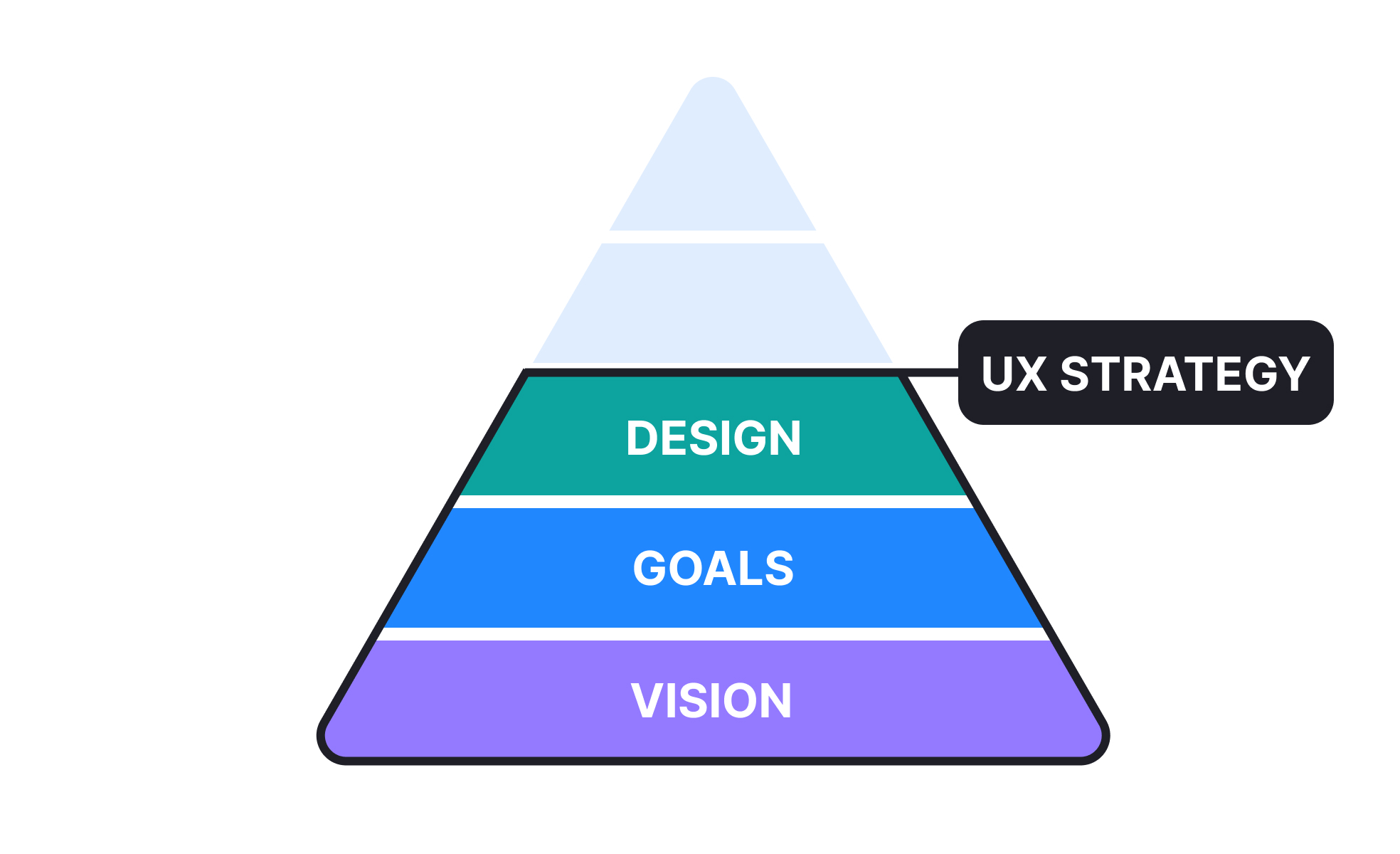
What is UX Strategy?
Your user experience efforts are tactical and reactive rather than strategic, leading to inconsistent experiences and design decisions that don't align with business objectives or create competitive advantages through systematic user experience excellence.
Most organizations treat UX as project-level design work without developing comprehensive user experience strategies that connect design decisions to business goals, market positioning, and long-term competitive advantages through user experience leadership.
UX strategy is the systematic planning and coordination of user experience efforts to achieve business objectives through intentional design choices, user research insights, and experience optimization that creates sustainable competitive advantages and customer value.
Companies with strong UX strategy achieve 80% better user experience consistency, 60% higher customer satisfaction, and significantly improved business outcomes because user experience decisions are aligned with strategic objectives rather than made independently.
Think about how companies like Apple develop comprehensive UX strategies that differentiate their products through consistent user experience philosophy, or how digital-first companies use UX strategy to compete effectively against established brands through superior customer experiences.
Why UX Strategy Matters for Business Success
Your user experience efforts don't create sustainable competitive advantages because design decisions are made without strategic coordination, missing opportunities to differentiate through systematic user experience excellence that serves business objectives.
The cost of lacking UX strategy compounds through every user experience decision that could be optimized for business impact. You get inconsistent experiences that confuse users, design efforts that don't contribute to business goals, and missed opportunities to compete through user experience leadership.
What effective UX strategy delivers:
Better alignment between user experience and business objectives because strategic planning ensures design decisions support business goals rather than just optimizing user experience without considering organizational priorities and market positioning.
When UX strategy connects user needs to business success, user experience improvements create competitive advantages rather than just better usability that doesn't differentiate in markets.
More consistent and coherent user experiences across different products, touchpoints, and customer interactions because strategic coordination prevents fragmented experiences that result from uncoordinated design decisions.
Enhanced competitive positioning through user experience differentiation because strategic UX planning identifies opportunities to compete through superior customer experiences rather than just feature parity with competitors.
Improved resource allocation and UX investment priorities through strategic understanding of which user experience improvements provide the highest business value and competitive advantage potential.
Stronger organizational alignment around user experience vision that creates shared understanding of UX objectives and priorities across different teams and business functions.
Advanced UX Strategy Strategies
Once you've established basic UX strategy capabilities, implement sophisticated strategic planning and competitive positioning approaches.
Multi-Channel Experience Strategy Coordination: Develop UX strategies that coordinate user experiences across different channels and touchpoints rather than optimizing individual interactions without journey coherence.
Ecosystem and Platform UX Strategy: Create strategic approaches for user experience across product ecosystems and platforms that serve different user types while maintaining strategic coherence and competitive differentiation.
Global and Localization UX Strategy: Develop user experience strategies that work across different markets and cultures while maintaining strategic consistency and local user experience optimization.
Innovation and Future UX Strategy Planning: Use strategic planning to anticipate user experience trends and technology changes that inform proactive strategic positioning rather than just reactive improvement.