


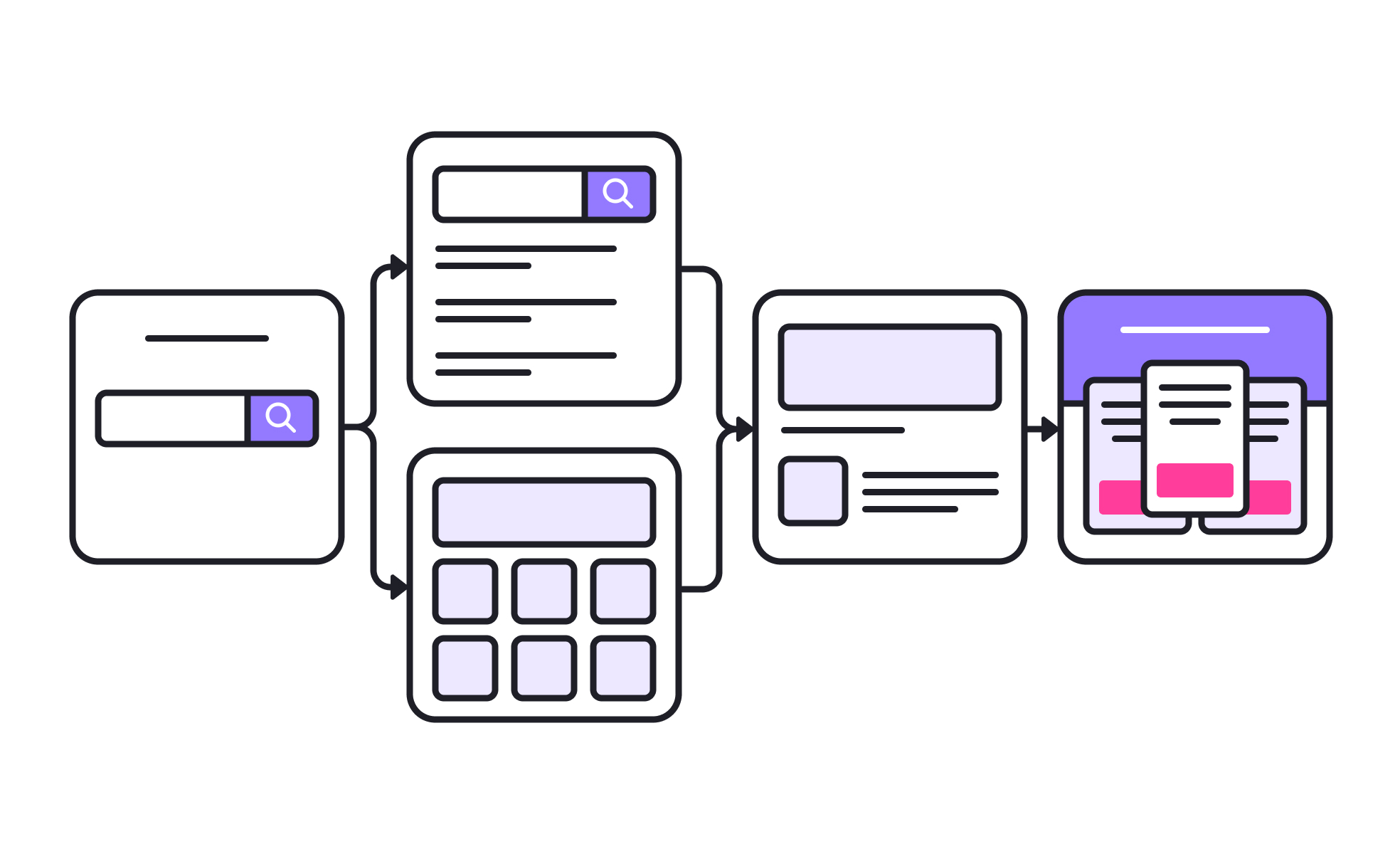
A design workflow describes the sequence of steps a design team follows to take an idea from concept to finished solution. It defines how tasks are initiated, who contributes at each stage, and how outcomes are delivered to development or other stakeholders. While each team may customize its workflow, the common goal is to remove ambiguity, keep everyone aligned, and build a repeatable process that maintains quality over time.
For UX and UI designers, workflows usually include research, ideation, prototyping, feedback collection, and final delivery. Research ensures that design decisions stem from user needs. Ideation and sketching provide the space for creativity, while prototyping makes ideas tangible for validation.
In product management, design workflows serve as a bridge between vision and execution. A product manager might define priorities and goals, while designers structure their workflow to deliver outputs that answer those priorities. For example, a team might establish a shared workflow where research feeds into design sprints, prototypes are validated, and developers receive assets through a defined handoff process. The workflow thus acts as a shared contract across disciplines, ensuring that everyone works toward the same objectives.
One of the biggest strengths of a defined design workflow is scalability. Startups often operate with informal processes, but as teams grow, inconsistent methods lead to bottlenecks. A clear workflow reduces redundancy, ensures reviews happen at the right time, and allows for onboarding of new team members without disrupting momentum. Real-world examples include teams using design systems integrated into their workflow to speed up prototyping and maintain consistency across multiple product surfaces.
Workflows also integrate tools and collaboration practices. Platforms like Figma, Sketch, or Adobe XD become hubs where design activities take place. Feedback channels through Slack or project management tools like Jira ensure conversations are documented. When workflows are too rigid, creativity can be stifled, but when they are too loose, delivery suffers. The best design workflows strike a balance, offering enough structure for accountability without closing off space for exploration.
Learn more about this in the Design Workflow Lesson, a part of the Design Composition Course.
Key Takeaways
- Outlines the structured process from concept to delivery.
- Includes research, ideation, prototyping, and feedback loops.
- Aligns design with product management goals.
- Scales effectively with growing teams.
- Integrates tools and collaboration practices.
- Flexible and adaptable over time.


