


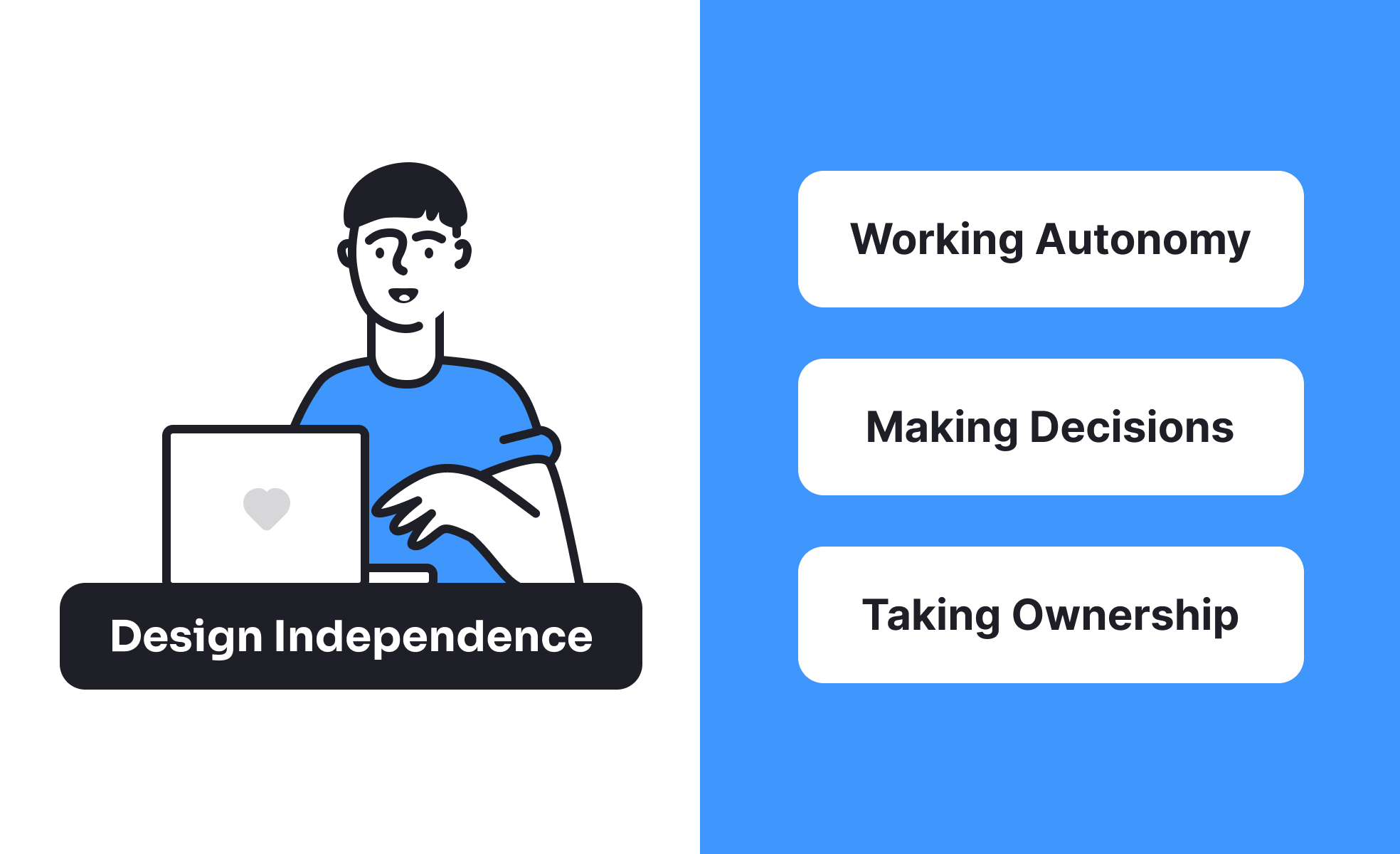
TL;DR
- Ability to work and decide without constant supervision.
- Encourages ownership and accountability in teams.
- Balances autonomy with collaboration and alignment.
- Supports efficiency, growth, and creative problem-solving.
Definition
Independence is the capacity of individuals or teams to act, make decisions, and deliver outcomes without requiring continuous guidance, while still aligning with broader product or organizational goals.
Detailed Overview
Independence is often viewed as a balance between autonomy and alignment. In product and design work, independence allows teams to move quickly and innovate while still staying within the boundaries of strategic direction. It prevents bottlenecks by reducing reliance on constant approval, but also requires trust and clarity to ensure decisions support overall goals.
One of the most common questions is whether independence means working alone. Independence does not exclude collaboration. Instead, it enables individuals and teams to contribute confidently without waiting for every step to be validated. A designer, for example, may propose and test interface ideas independently but still share findings with the team to confirm alignment.
Another frequent query concerns how to build independence within teams. Clear guidelines, documentation, and shared goals are critical. When teams understand the vision and constraints, they can make informed choices without escalating every decision. Establishing frameworks like design systems or product principles also empowers teams to operate independently within structured boundaries.
Independence is also linked to accountability. When individuals have the freedom to make decisions, they must also own the results. This accountability builds trust among colleagues and leaders. It also reduces micromanagement, freeing up leadership to focus on strategy instead of daily decisions.
A recurring concern is whether independence risks inconsistency. Without shared standards, different teams might make conflicting choices. This is why independence works best when paired with strong communication and alignment practices. Regular check-ins, shared documentation, and collaborative tools ensure that independent actions still support the broader system.
Finally, independence is tied to growth and motivation. When employees or teams feel trusted to act, they develop confidence and new skills. Independence encourages experimentation and problem-solving, which leads to innovation. At the same time, knowing when to ask for input is part of maturity; true independence involves recognizing when collaboration will strengthen outcomes.


