
.svg)


AI news breaks on X before it reaches a blog, a newsletter, or a press release. When Andrej Karpathy joined Anthropic in May 2026, he said so in a post on his own timeline, and that is where most of the industry read it first.
The trouble is everything else on that timeline. AI X is the loudest corner of the platform, thick with engagement bait and screenshot recyclers. The 20 accounts below are the opposite: people who build the things everyone else is posting about. They're grouped by role, because a designer, a product manager, and an engineer have no business reading the same feed. And if you want to know whether your own AI skills are keeping pace with them, that's what the Uxcel Certified AI Practitioner exam measures.
The best AI accounts to follow on X, by role
Best AI accounts for researchers and analysts
- Andrej Karpathy for how models actually work
- Simon Willison for building with LLMs
- Ethan Mollick for evidence about AI and work
- Shawn "swyx" Wang for the shape of the ecosystem
- Demis Hassabis for frontier research milestones
Best AI accounts for designers
- Ammaar Reshi for AI design tooling
- Karina Nguyen for where AI interfaces are heading
- Fabricio Teixeira for AI and design careers
- Amelia Wattenberger for interfaces past the chat box
- fofr for generative image and video
Best AI accounts for product managers
- Lenny Rachitsky for how teams actually adopt AI
- Sarah Guo for AI products before they launch
- Julie Zhuo for judgment and craft
- Logan Kilpatrick for the Gemini ecosystem
- Claire Vo for the AI-augmented PM workflow
Best AI accounts for engineers
- Boris Cherny for agentic coding
- Greg Brockman for the technical substance behind OpenAI
- Lee Robinson for making AI tools stick on a team
- Jason Liu for structured outputs and evals
- Thariq Shihipar for agents beyond code
The core signal: researchers and analysts
Follow these five whatever your role is. They set the terms the rest of the timeline argues about.
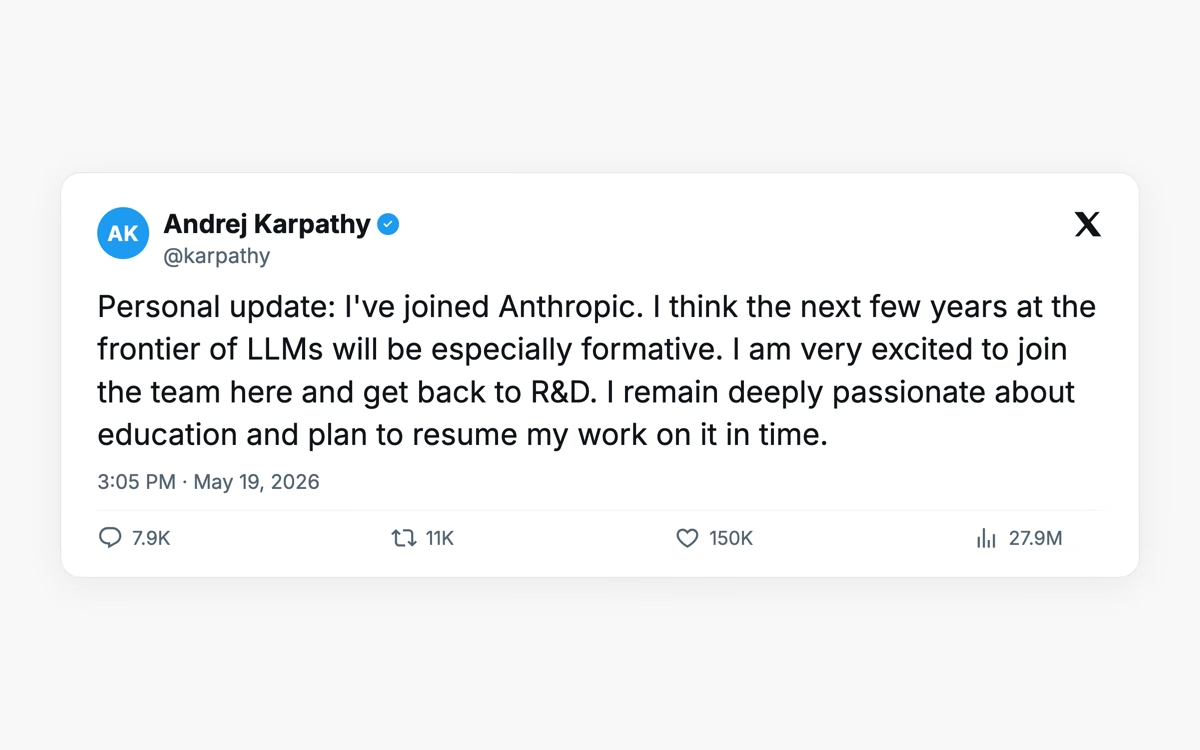
1. Andrej Karpathy, @karpathy
Co-founder of OpenAI and former director of AI at Tesla, though his most durable contribution is teaching. His from-scratch builds, including nanoGPT and the "Let's build GPT" video series, are how a generation of engineers came to understand what a language model actually does. He also coined the term "vibe coding" in early 2025. He joined Anthropic's pre-training team in May 2026, working under Nick Joseph.
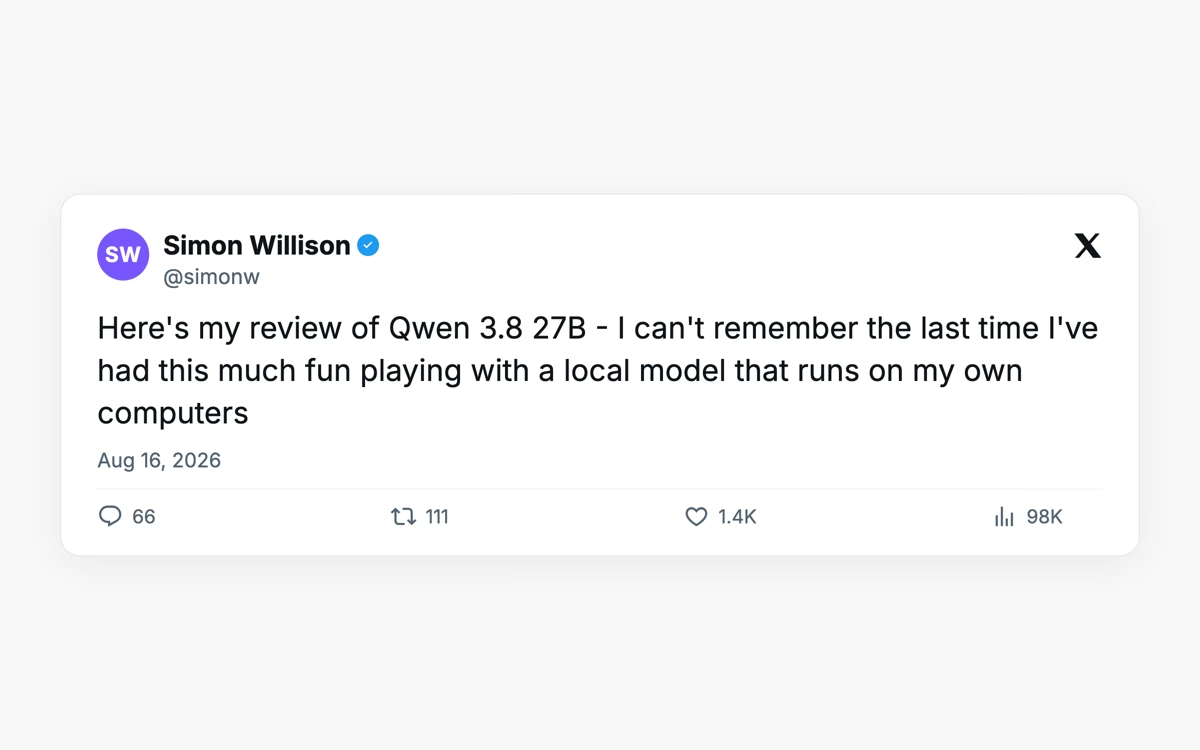
2. Simon Willison, @simonw
Co-creator of Django and creator of Datasette, and the most practically useful LLM account on the platform. Willison documents what models really do, including real prompts, real failures, and tooling breakdowns, and has done so since before most companies had an AI strategy. His writing on prompt injection is the reference other people cite. If you build with LLMs, this is the single highest-value follow here.
3. Ethan Mollick, @emollick
Associate professor at Wharton and co-director of the Wharton Generative AI Labs, studying what AI does to work, education, and organizations. Mollick runs the experiments that everyone else quotes secondhand. He posts them with unusual candor about what's actually known versus what's being hyped.
4. Shawn "swyx" Wang, @swyx
Coined the term "AI engineer" in 2023 and co-hosts the Latent Space podcast. He also founded the AI Engineer World's Fair, which drew around 6,000 people to Moscone West in mid-2026. swyx maps which tools, patterns, and research directions are gaining real adoption. Think of the feed as the industry's table of contents.
5. Demis Hassabis, @demishassabis
Co-founder and chair of Google DeepMind, chief scientist of Alphabet, and a shared winner of the 2024 Nobel Prize in Chemistry with John Jumper and David Baker for work on protein structure prediction. He stepped aside as DeepMind's CEO in August 2026 to focus on science and AI safety. Low volume, high signal: milestone papers, scientific applications, and the occasional long view worth reading precisely because he doesn't post daily takes.
Best AI accounts for designers
The design conversation moved past "will this take my job" a while ago. These five are working out what AI-native interfaces actually look like, which is the more useful thing to watch. If you want the underlying skills in structured form rather than commentary, the AI Fundamentals for UX course covers the same territory.
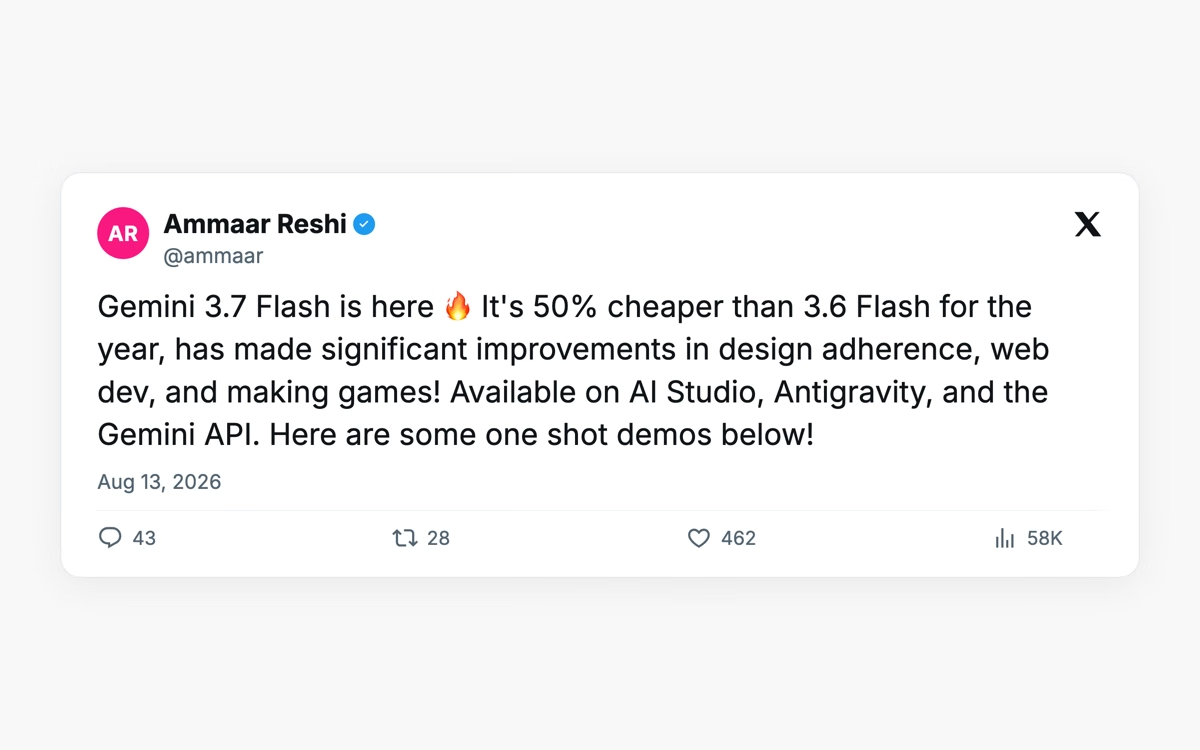
6. Ammaar Reshi, @ammaar
Leads product and design at Google AI Studio. His prompt-to-deployed-app demos did more than any essay to define what vibe coding looks like in practice, and he shows rather than argues. The clearest available window into how design tooling is changing.
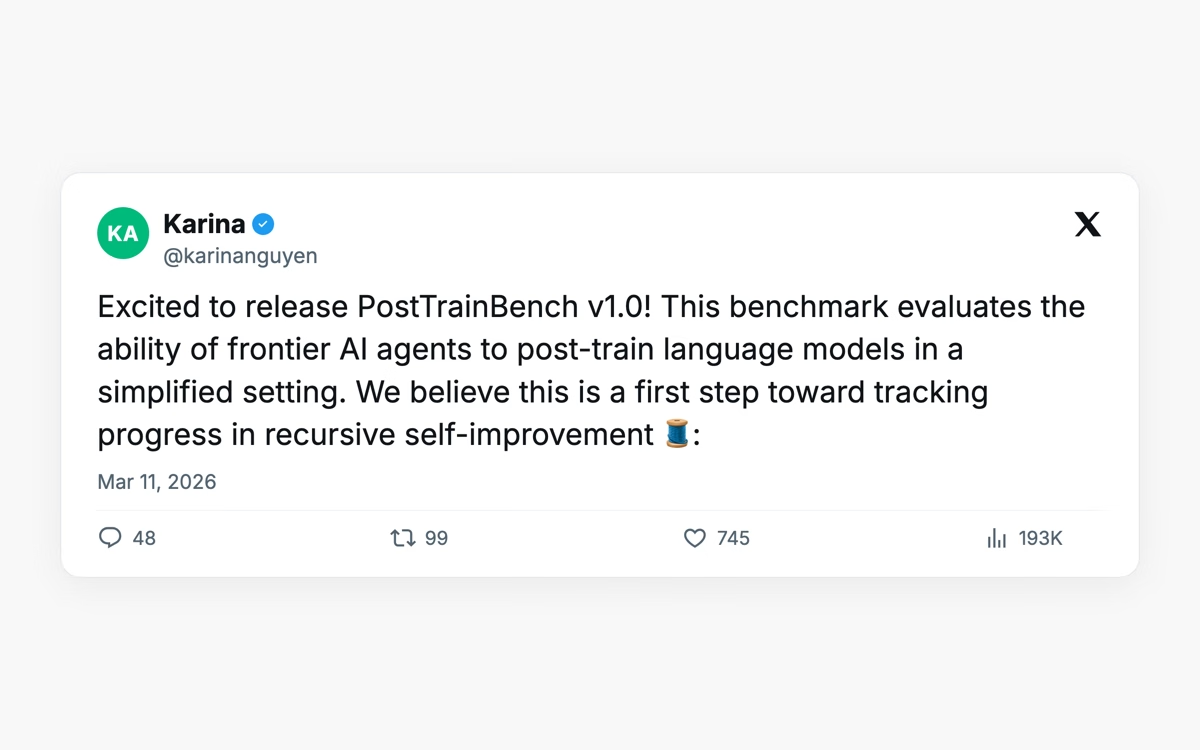
7. Karina Nguyen, @karinanguyen
Shipped ChatGPT Canvas and Tasks and worked on o-series model behavior at OpenAI, after a stint at Anthropic from 2022 to 2024. She's now building her own venture, Thoughtful. Nguyen doesn't comment on the interaction patterns of AI systems so much as set them, which makes her feed a leading indicator rather than a lagging one.
8. Fabricio Teixeira, @fabriciot
Co-founder and editor, with Caio Braga, of UX Collective, one of the most widely read design publications on the web. Teixeira writes the sharpest ongoing commentary on what AI means for design careers, including the essays rethinking Figma-era workflows that design teams end up arguing about in Slack.
9. Amelia Wattenberger, @wattenberger
A design engineer who doesn't theorize about AI interfaces so much as build them and publish the experiments. Her interactive essays on what comes after the chat box are among the most original interface thinking anywhere. Formerly of GitHub Next, she's now a partner at Sutter Hill Ventures and product lead on Intent at Augment Code.
10. fofr, @fofrAI
A daily experimenter with generative image, video, and audio models, now working at Google DeepMind. He's responsible for much of the public model catalog that image generation people rely on. fofr finds what has newly become possible weeks before it turns up in shipped products. A scout report for anyone doing visual work.
Best AI accounts for product managers
Product management is where AI hype and AI reality diverge most sharply, so this section leans toward people who ship rather than people who forecast. For the judgment side of building AI products, the human-centered AI course is a useful companion to the feeds below.
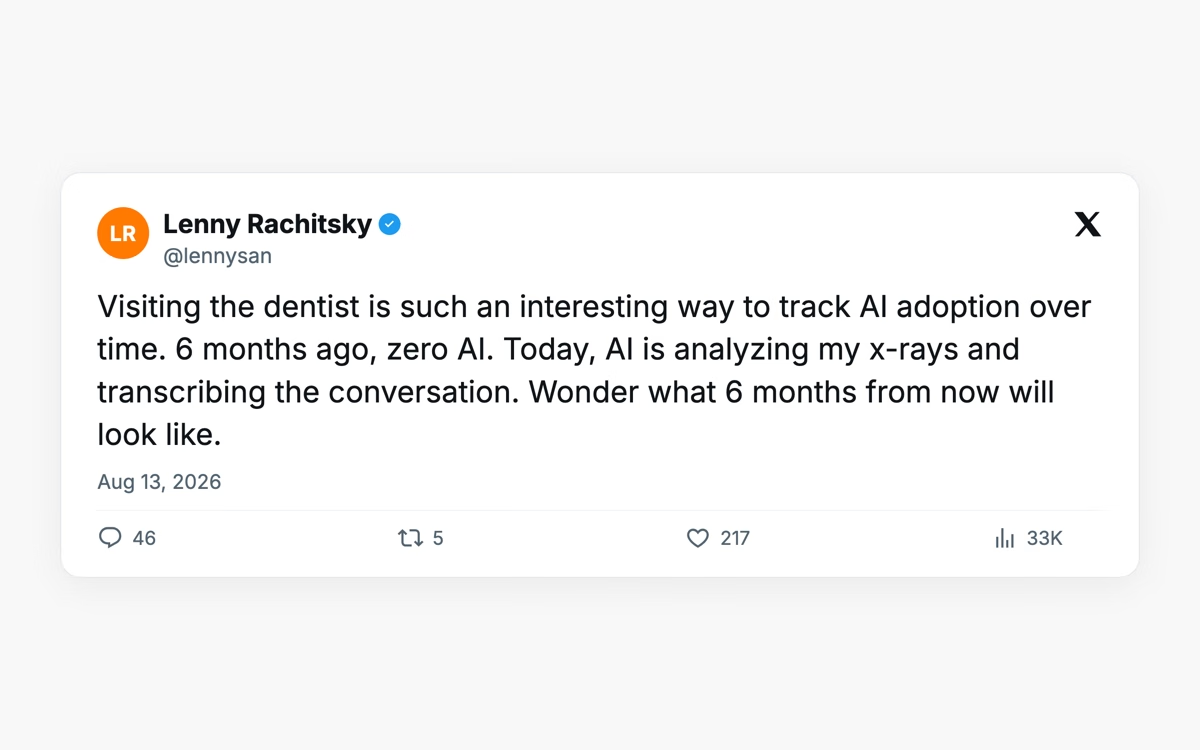
11. Lenny Rachitsky, @lennysan
Author of the largest paid product newsletter on Substack, with more than a million subscribers. His interviews and frameworks have become the default reference for how product teams adopt AI, largely because he asks operators what they did rather than what they recommend. If a PM follows one account, this is it.
12. Sarah Guo, @saranormous
Founder of Conviction, the AI-focused venture firm she launched in 2022, and co-host of the No Priors podcast with Elad Gil. Previously the youngest general partner at Greylock. She sees early-stage AI products months before they launch and talks about the patterns openly.
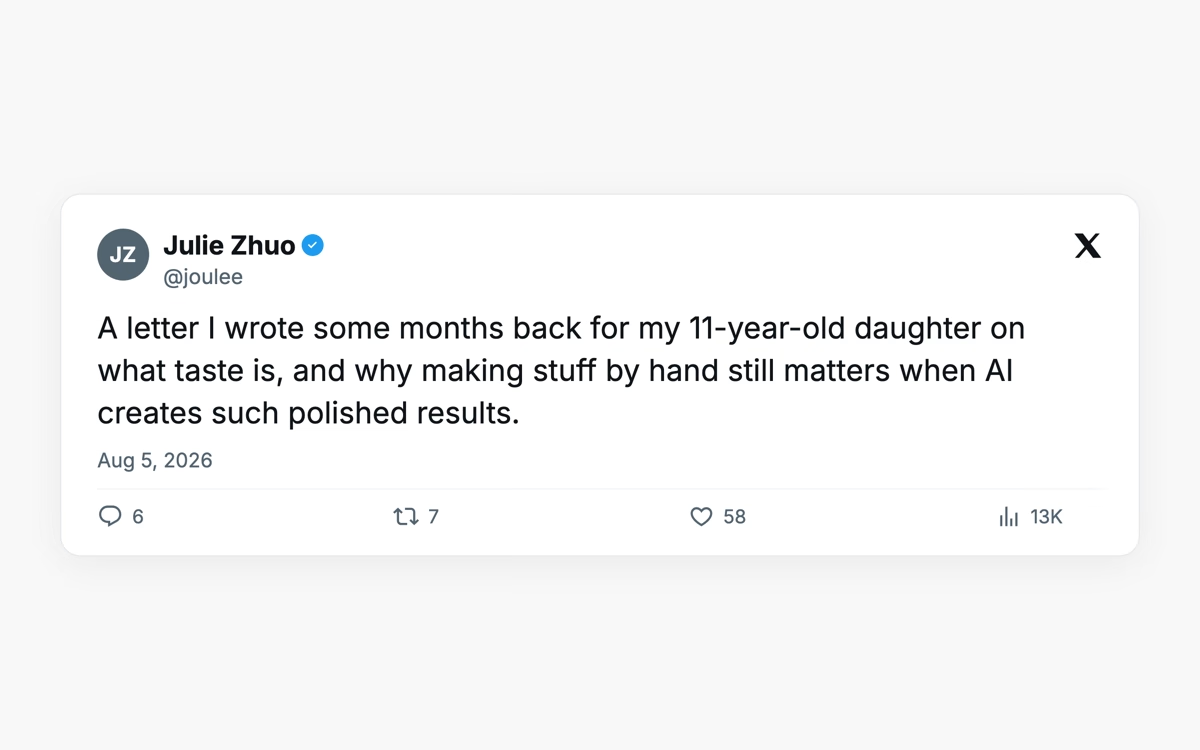
13. Julie Zhuo, @joulee
Former VP of product design at Facebook, author of The Making of a Manager, and co-founder of Sundial. Zhuo writes from inside the work of building with AI, on judgment, craft, and what product leadership means when the tools produce the first draft. Original thinking with no funnel attached to it.
14. Logan Kilpatrick, @OfficialLoganK
Group product manager at Google DeepMind and product lead for Google AI Studio and the Gemini API. Kilpatrick is effectively the public voice of the Gemini developer ecosystem, and new capabilities tend to surface on his feed first. Follow to know what's shippable before your roadmap meeting decides it isn't.
15. Claire Vo, @clairevo
Founder and CEO of ChatPRD, and a three-time chief product officer, most recently at LaunchDarkly. Vo builds AI tools for product people and demonstrates concretely what an AI-augmented workflow looks like, from spec writing through prioritization. The practical counterpart to the strategy accounts above.
Best AI accounts for engineers
Agentic coding changed the job faster than any tooling shift in years, and these five are the primary sources on it. If the terminology is moving faster than you are, Intro to Vibe Coding is a short way in.
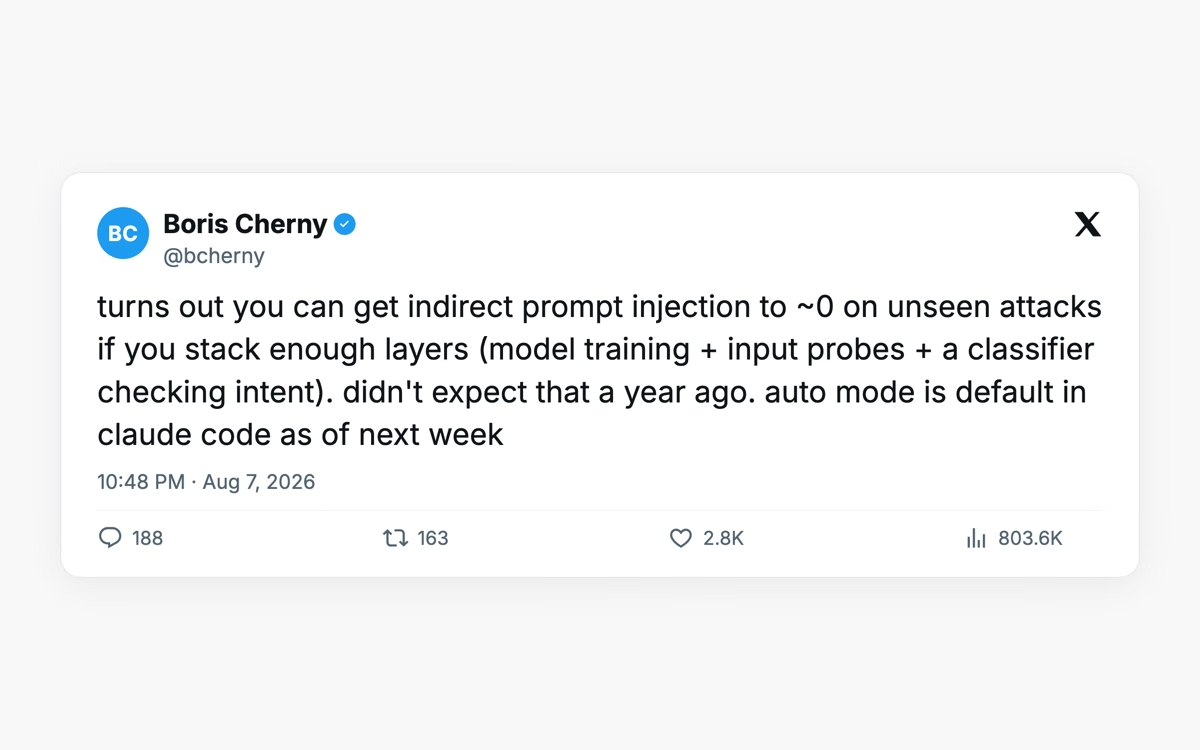
16. Boris Cherny, @bcherny
Creator and head of Claude Code at Anthropic. Cherny posts daily setups, multi-agent workflows, and feature previews, including agent squads that review pull requests. He briefly left for Cursor in early 2026 and returned within weeks, which is its own comment on the state of the talent market.
17. Greg Brockman, @gdb
President, chairman, and co-founder of OpenAI, where he leads the scaling organization. Live-coded demos, training infrastructure detail, and a founder's view of the frontier. Brockman posts the technical substance behind OpenAI releases that the official account leaves out.
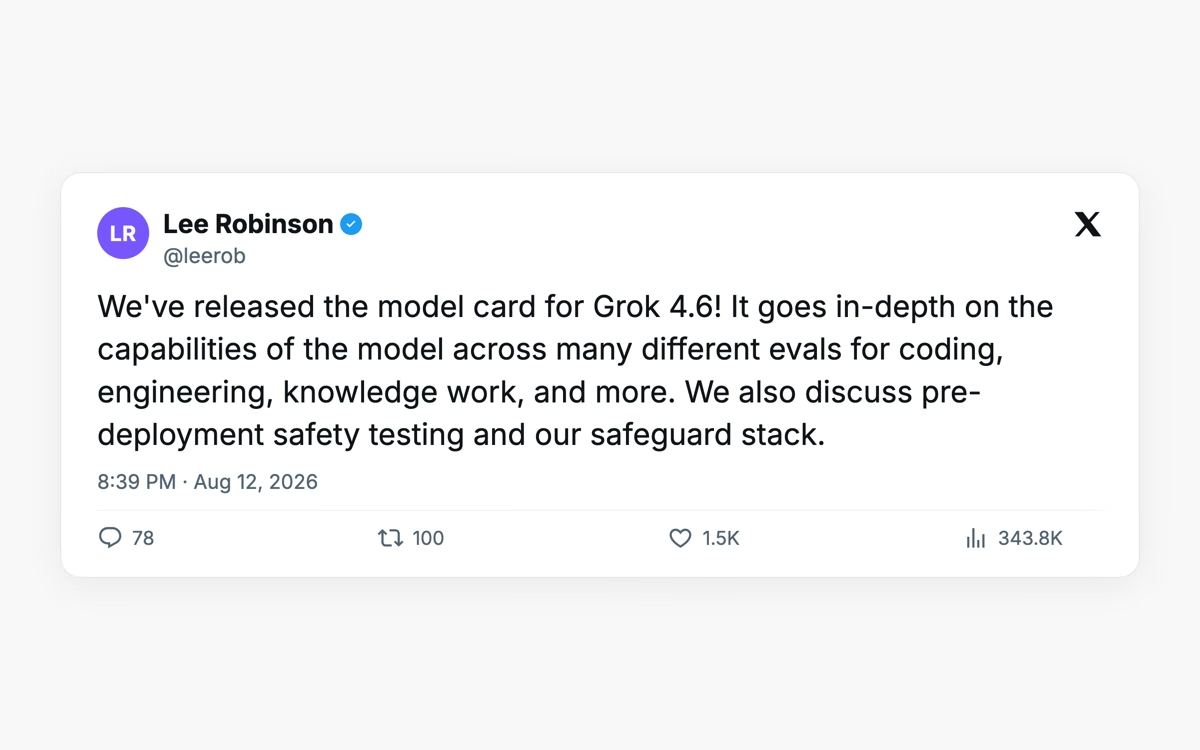
18. Lee Robinson, @leerob
Best known for tutorials that made Next.js and, later, coding agents click for a lot of working developers, first at Vercel and then at Cursor. He moved in June 2026 to SpaceXAI, where he works on model behavior. Follow him for the teaching instinct, which has survived three very different jobs.
19. Jason Liu, @jxnlco
Creator of Instructor, the standard library for getting structured outputs out of language models. Liu spent years fixing real retrieval and agent systems for clients and wrote up what he learned, including failure modes, evaluation tactics, and working code rather than opinion. He's now a developer experience engineer on OpenAI's Codex team.
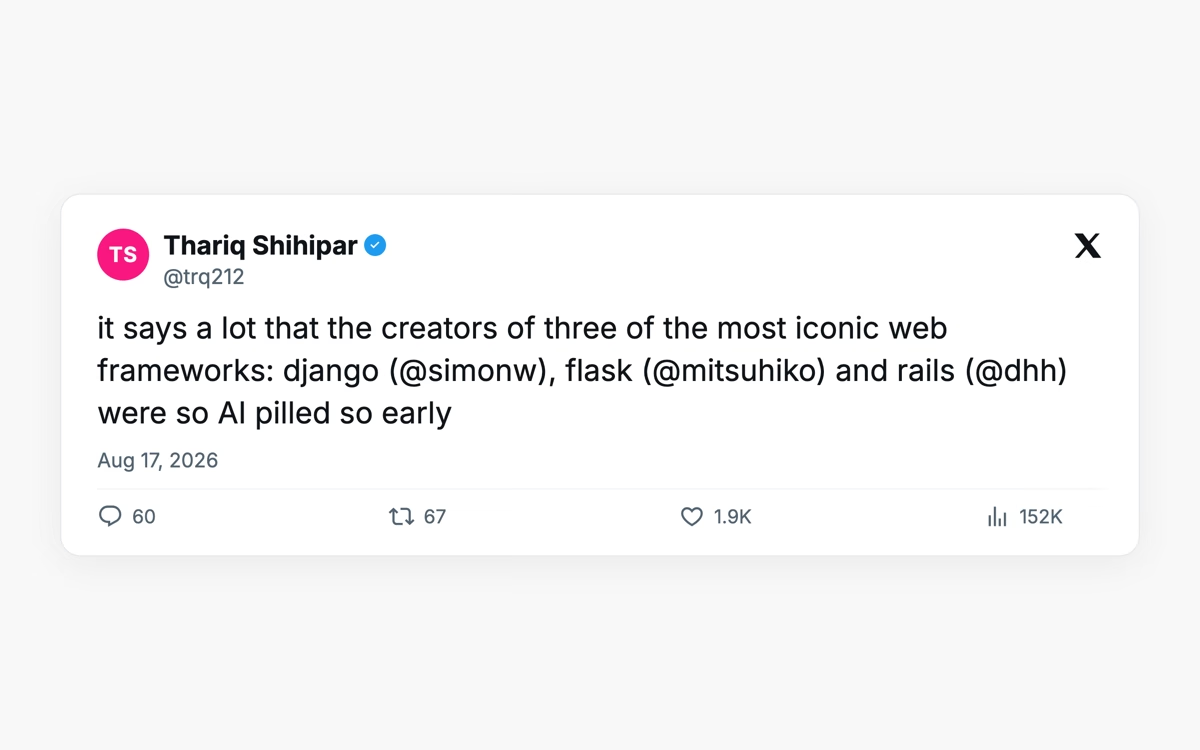
20. Thariq Shihipar, @trq212
On the Claude Code team at Anthropic, specializing in the non-coding uses of coding agents: slides, research, knowledge management. His experiments, like the case for HTML as an output format for agents, keep reappearing in other people's decks a few weeks later.
How to actually use this list
Following 20 accounts on the open timeline means the algorithm decides what you see, and it optimizes for engagement rather than for your job. Build a private X List instead, add all 20, and read the List for ten minutes a day. If you'd rather keep AI news off X entirely, daily.dev collects AI and engineering articles from across the web into one developer feed.
Then turn on notifications for only the two or three closest to your actual work. Designers: Reshi and Nguyen. Product managers: Rachitsky and Kilpatrick. Engineers: Cherny and Willison. Everything else can wait for your daily pass.
Which accounts should you follow first?
Only have room for three? Take Willison for practical grounding and Mollick for evidence about what AI is doing to work. Then add whichever role-specific account matches your job.
Trying to decide whether AI changes your career or just your tooling? Mollick and Zhuo write about that honestly, without a product to sell you at the end of it.
If you're a designer, Nguyen and Wattenberger are building the interaction patterns everyone else will copy. Pair them with a credential like the AI Product Design certification and you cover both the watching and the doing.
And if you find yourself following 60 AI accounts by December, prune back to 20. Past roughly 30 follows on one topic, the marginal account adds noise instead of signal.