.svg)



Technical debt might be the most expensive thing your company isn't tracking. It doesn't show up on the balance sheet. There's no line item in the budget. But every product team feels it: in the features that take three times longer than they should, in the Sunday night outages, in the senior engineer who just quit because they were tired of fighting the codebase.
But…The people who control priorities often can't see it. To your CEO, "we need to refactor the authentication module" sounds like engineers wanting to tinker instead of building things customers actually want.
This guide will help you bridge that gap. You'll learn how to explain technical debt in plain business terms, show what it's actually costing, and make a case for fixing it that stakeholders will actually listen to.
First, let's get concrete about what we're talking about
Think of your codebase like a house.
When you're rushing to move in, you might skip a few things. The wiring is a bit messy. The plumbing works, but it's not up to code. The foundation has a small crack you'll "get to later." Each shortcut is fine on its own. But over time, they add up. The messy wiring means you can't add new outlets without risking a fire. The plumbing springs leaks. The foundation crack spreads.
Eventually, you're not renovating the kitchen, but just trying to keep the house standing.
That's technical debt. It's all the shortcuts, workarounds, and "good enough for now" decisions that pile up in your product's code over time.
How does technical debt happen?
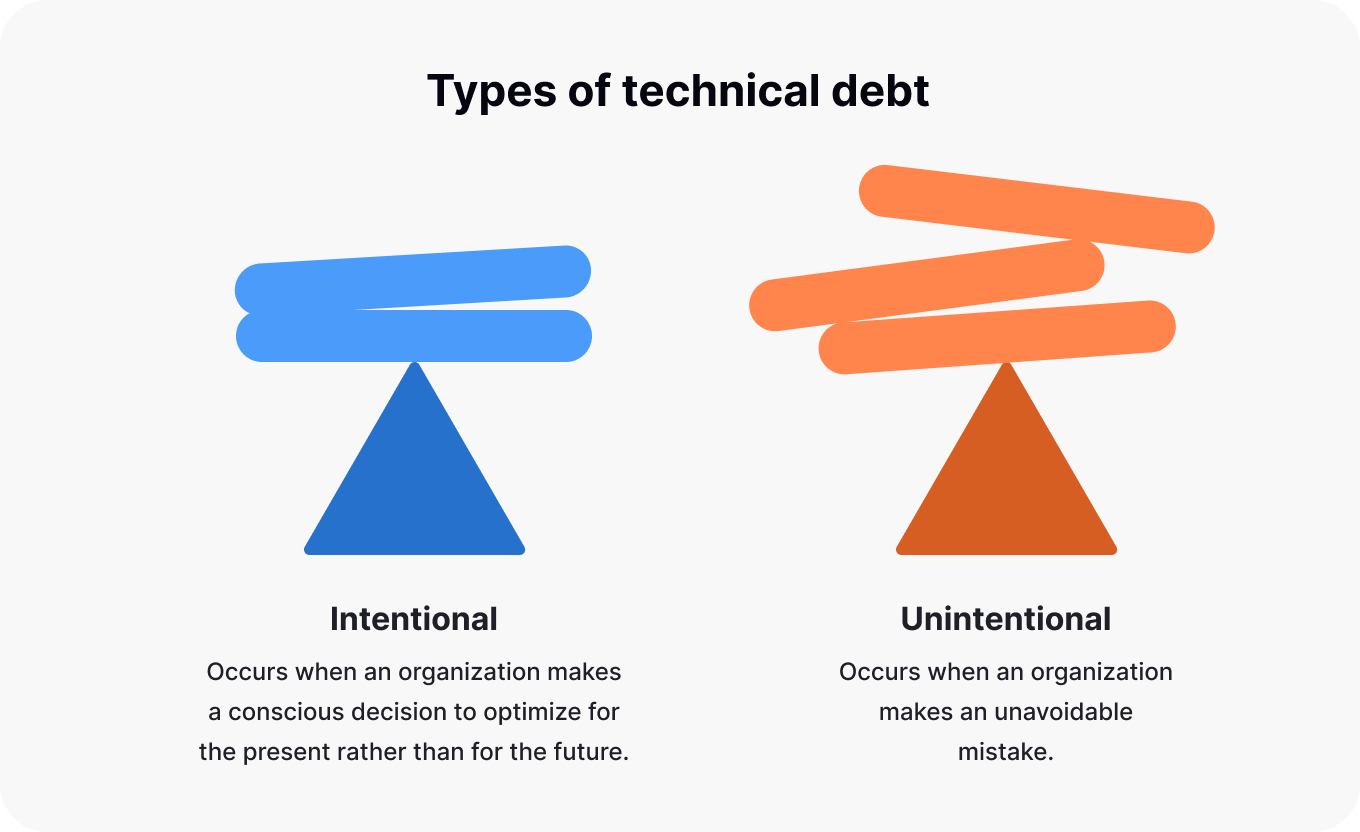
It's usually not because anyone did anything wrong. It happens because:
- You needed to move fast. Maybe you had to launch before a competitor. So you cut some corners to hit the deadline. Totally reasonable. But those corners stay cut.
- Things grew faster than expected. Your system worked great for 1,000 users. Now you have 100,000, and everything's slowing down. The original design just wasn't built for this scale.
- People left. The engineer who built your payment system moved on two years ago. Nobody really understands how it works anymore. Everyone's scared to touch it.
- Technology moved on. Your app uses tools that were great five years ago. Now they're outdated, and it's getting harder to find developers who want to work with them.
None of this is failure. It's just reality. Products evolve. What worked before doesn't always work now. Every product has some debt. The problem is not knowing how much you have or what it's costing you.
Why should non-technical people care?
When engineers bring up technical debt, they often talk about code quality or system architecture. Important stuff, but it doesn't mean much to a CEO or sales lead. Here's how technical debt hurts the business in terms everyone understands:
1. Features take forever
This is the most obvious cost. When your code is messy, every new feature has to work around the mess. Let’s say you want to add a simple "download report" button. Should take a few days, right? But the way data is stored is a disaster. Your engineer spends a week just figuring out how the current system works, then another week making sure the new button doesn't break anything else. A few-day project becomes a few-week project. Multiply that across your whole roadmap, and you're essentially losing a chunk of your engineering team to complexity tax.
2. Things break more often
Messy systems are fragile. When code is full of workarounds and patches, small changes can cause unexpected problems in completely unrelated areas. An engineer fixes a small bug in checkout, and suddenly, confirmation emails stop sending. Nobody saw it coming because the connection between those two things shouldn't exist, but it does, buried in some shortcut from years ago. And when things do break, they take longer to fix because nobody fully understands how the system behaves.
3. Some things become impossible to build
This is the sneaky one. Sometimes, technical debt doesn't just slow you down. It blocks you completely. Maybe your app's structure can't support the offline mode customers are asking for. Maybe your database can't handle the reporting features enterprise clients need. The foundation simply won't support what you want to build on top of it. Your engineers aren't making excuses. The system genuinely can't do what you need it to do.
4. Good people leave
Engineers have options. The good ones don't want to spend their careers fighting a codebase that works against them. When your system is frustrating to work with, your best people start job hunting. The ones who stay get burned out. New hires take forever to get up to speed because everything is confusing. Nobody lists "technical debt" as their reason for quitting. But ask your engineers honestly, and you might be surprised.
How to make the case for fixing it
Here's where most conversations about technical debt fall apart. Engineers have been warning about problems forever, predicting disasters that haven't happened yet. Leadership has learned to tune it out.
To actually get buy-in, try a different approach:
1. Get specific
"We have technical debt" is too vague to act on. Instead, identify the specific problems and their specific costs.
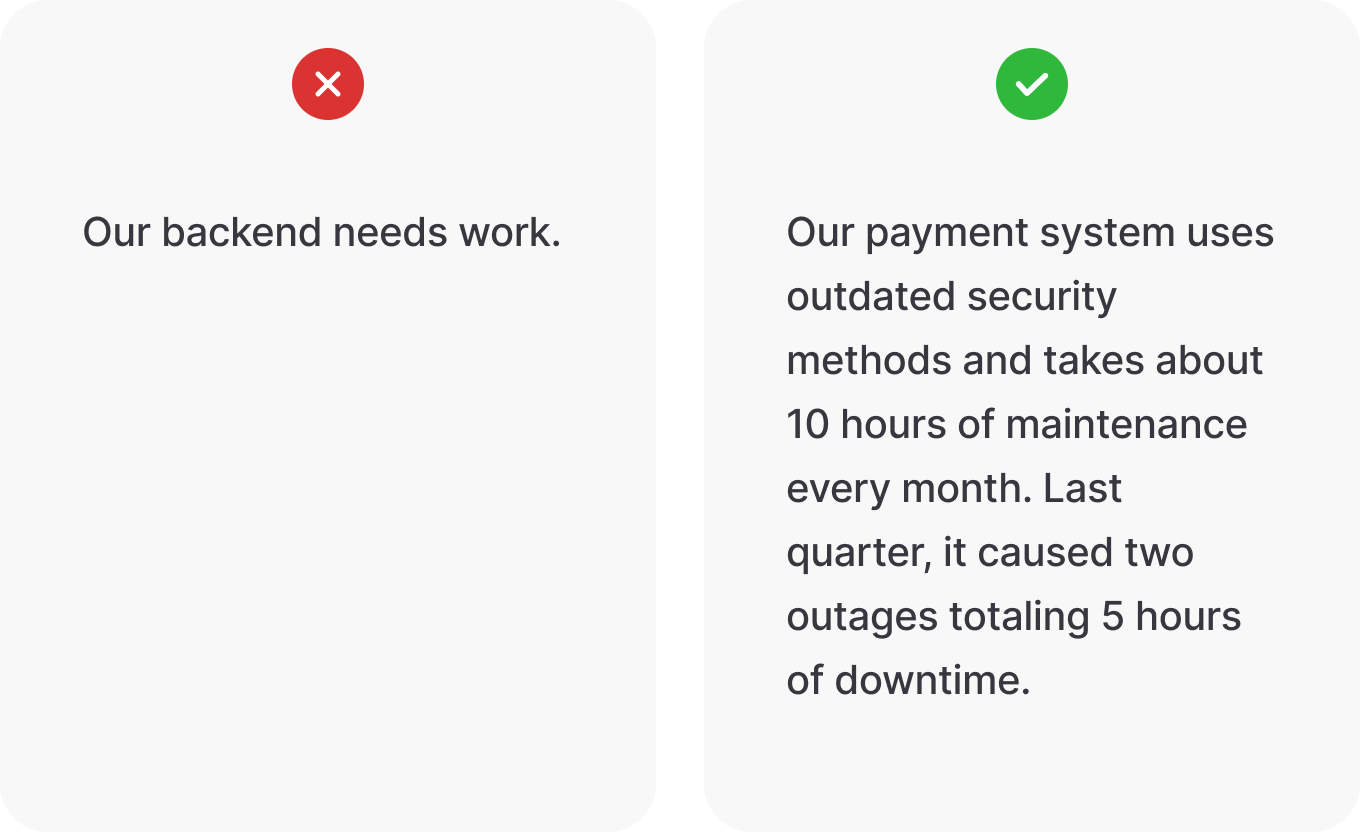
Specific problems can be evaluated. Vague complaints get ignored.
2. Put numbers on it
Even rough estimates help. Try things like:
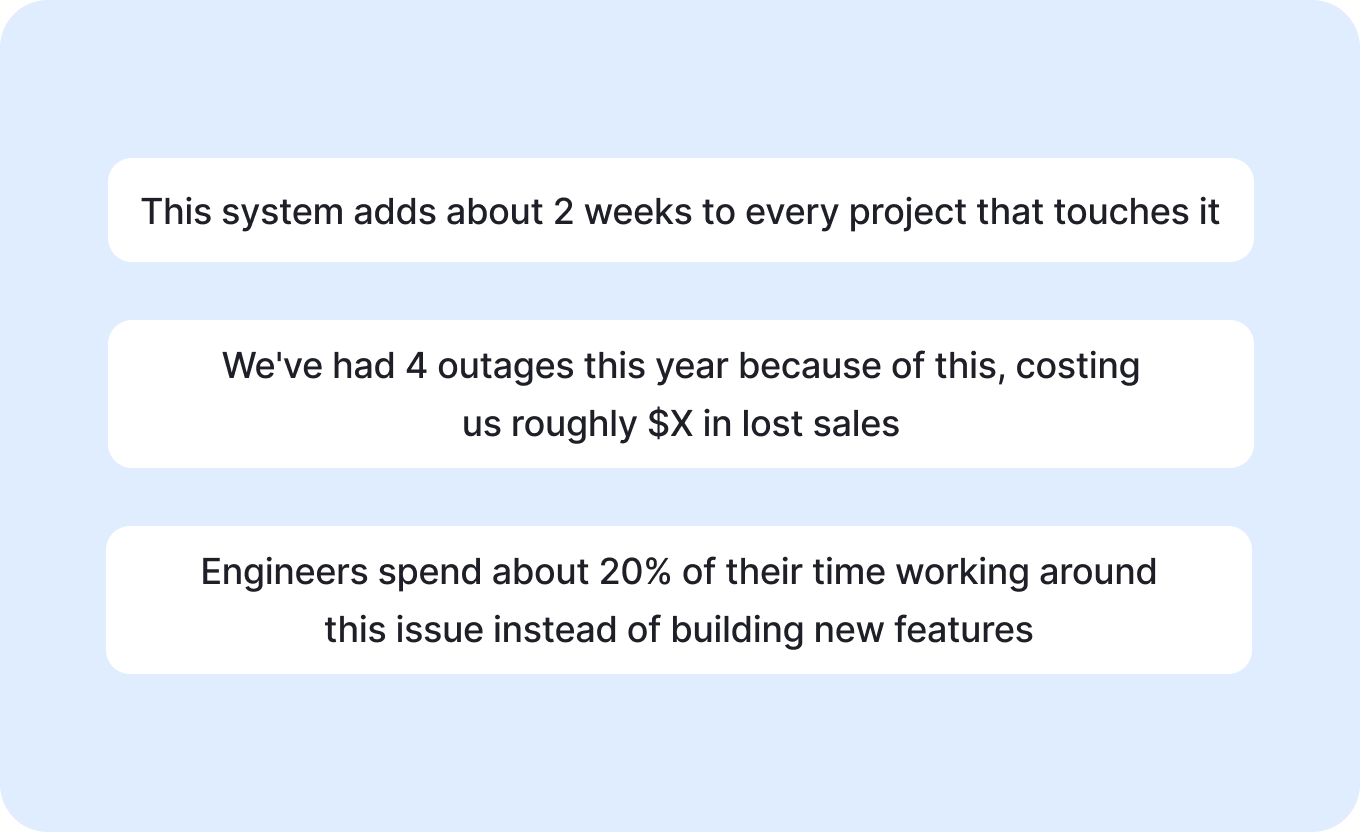
You don't need perfect data. You need enough to show this is a real business problem, not just engineers complaining.
3. Give options, not demands
Instead of "we need to fix this," present choices:
- Option A: Fix it properly. Six weeks of work. Solves the problem for good and makes future features faster.
- Option B: Quick patch. Two weeks. Buys us maybe a year before we have to deal with it again. Doesn't fully solve the problem, but stops things from getting worse.
- Option C: Do nothing. We save time now, but projects in this area keep taking 30% longer than they should, and we're risking [specific bad outcome].
Now you're having a conversation about tradeoffs. Business people are good at evaluating tradeoffs.
Connect it to something they already want
This is the move that actually works. Tie technical debt to goals that already have buy-in.
"You want us to launch the enterprise plan by September. Our current system can't handle enterprise-level usage. We can either spend 4 weeks building workarounds that create more problems later, or spend 6 weeks fixing the foundation properly, which also makes the next 3 enterprise features easier to build."
You're not asking for permission to clean up code. You're showing that fixing this problem is the path to something they already care about.
Keeping it under control long-term
One-time cleanup projects rarely stick. You make progress, business pressure returns, and six months later, you're back where you started.
Teams that actually manage technical debt well treat it like regular maintenance, not a special event.
Some approaches that work:
- Set aside time every sprint. Maybe 15-20% of engineering time goes to maintenance and improvements, every sprint, no exceptions. Not exciting, but sustainable.
- Fix things as you go. When you're building a feature in a messy area, include time to clean up what you touch. Small improvements add up.
- Learn from outages. Every time something breaks because of technical debt, follow up with a project to fix the root cause and not just the immediate symptom.
The goal isn't zero debt. That's impossible, and sometimes taking shortcuts is the right call. The goal is to keep debt at a level where it doesn't constantly slow you down or put you at serious risk.
What this really comes down to
Technical debt is about now versus later.
Every shortcut trades speed today for friction tomorrow. Sometimes that trade makes sense. Launching before a competitor matters. Hitting a funding milestone matters. Getting your product out so you can learn from real users. All these things matter.
But the bills come due. Your job as a PM is to help the people making decisions understand what those bills actually look like, not in technical terms they don't understand, but in real business impact they can't ignore.
The engineers aren't being dramatic. They're watching problems get worse. Help everyone else see what they see, in language that clicks, and you'll have a much better chance of fixing things before there's a crisis.
P.S.: For more on bridging technical and business conversations, check out our Business & Technical Fundamentals for PMs course.