


Every product is somewhere on a curve: being introduced, growing, holding its plateau, or fading. The stage it occupies changes what good decisions look like, which is why a tactic that grows a young product can quietly damage a mature one. Managing the lifecycle means matching the strategy to the stage, not fighting the curve.
In this glossary topic:

What is product lifecycle management?
Product lifecycle management is the practice of steering a product through its market stages, from introduction to eventual decline, with deliberate decisions at each one: how to invest, when to scale, what to enhance, and when to retire. It treats a product as something with a lifespan whose phases demand different strategies rather than one plan executed forever.
What are the stages of the product lifecycle?
The classic model has 4 market stages. Introduction is the expensive one: awareness is low, and the work is finding fit and early adopters. Growth is where sales accelerate and the priority shifts to scaling what works before competitors copy it. Maturity is the plateau, where growth slows, differentiation drives the fight for share, and margins peak. Decline is the managed exit or reinvention, where the honest question is whether to refresh, pivot, or retire.
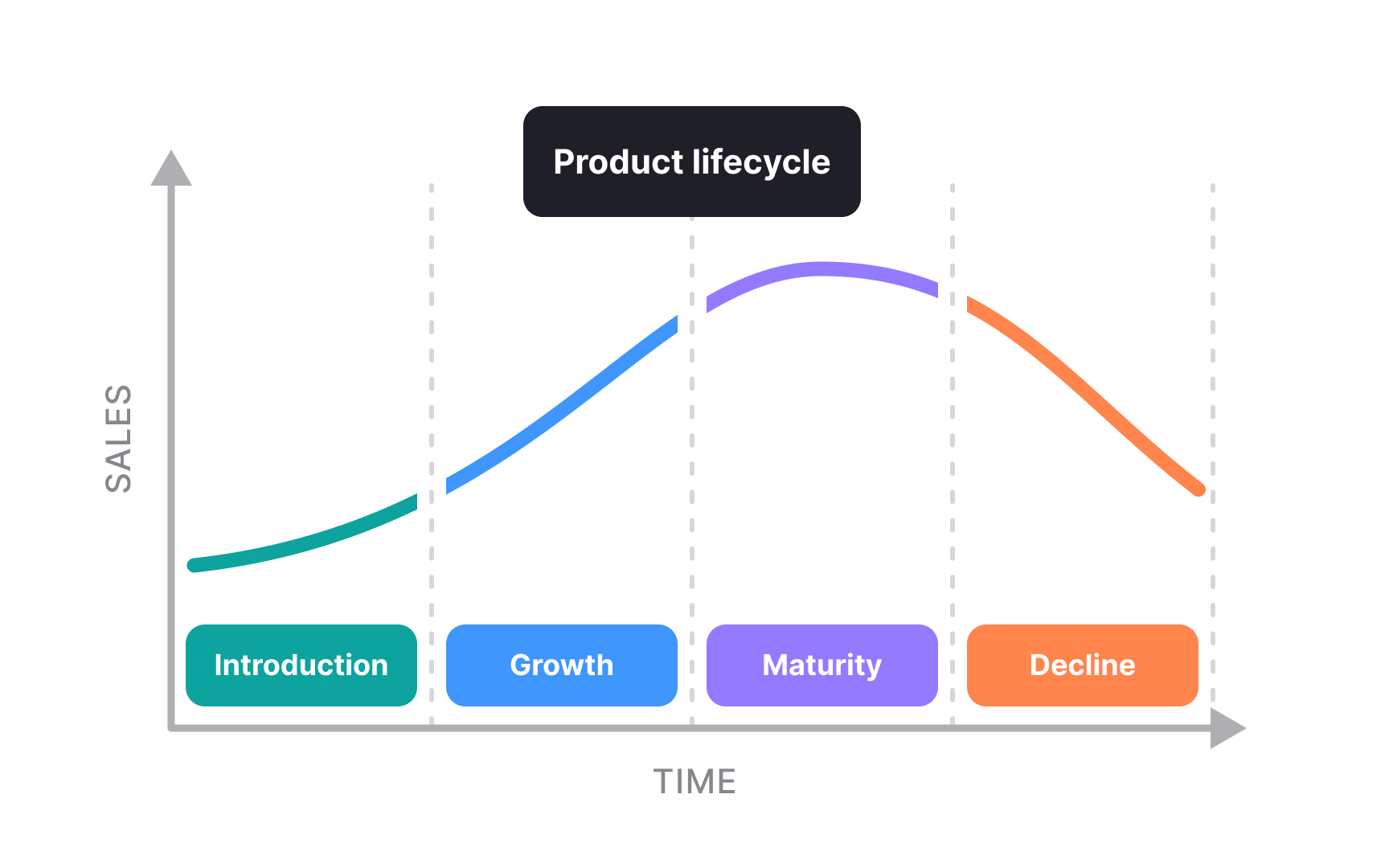
The lifecycle curve: sales over time across the 4 stages. The dashed boundaries are the decision points, since each crossing changes what the right strategy is. From the lesson Core Responsibilities of a Product Manager.
How does the product lifecycle differ from the development cycle?
They measure different clocks. The product development cycle tracks how a product gets built, from discovery through launch and iteration, and it can repeat many times in a single year. The product lifecycle tracks how a product performs in its market over years. A mature product on the lifecycle curve still runs development cycles weekly; confusing the two leads teams to treat a market-stage problem as a shipping-speed problem.
Why does lifecycle management matter?
Stage-blind strategy is expensive in both directions: overinvesting in a declining product burns resources that growth products needed, while starving a growth product to fund a mature one hands the market to competitors. Reading the stage correctly also sets expectations honestly, since flat growth in maturity is normal, not a crisis, and the response it calls for is differentiation rather than panic.


