


Research produces piles of quotes, observations, and contradictions, and teams need a way to hold them in one view before the nuance gets averaged away. The empathy map is that view: one user, four quadrants, everything the evidence says about them. An empathy map is where raw research becomes a person the whole team can reason about.
In this glossary topic:
What is an empathy map?
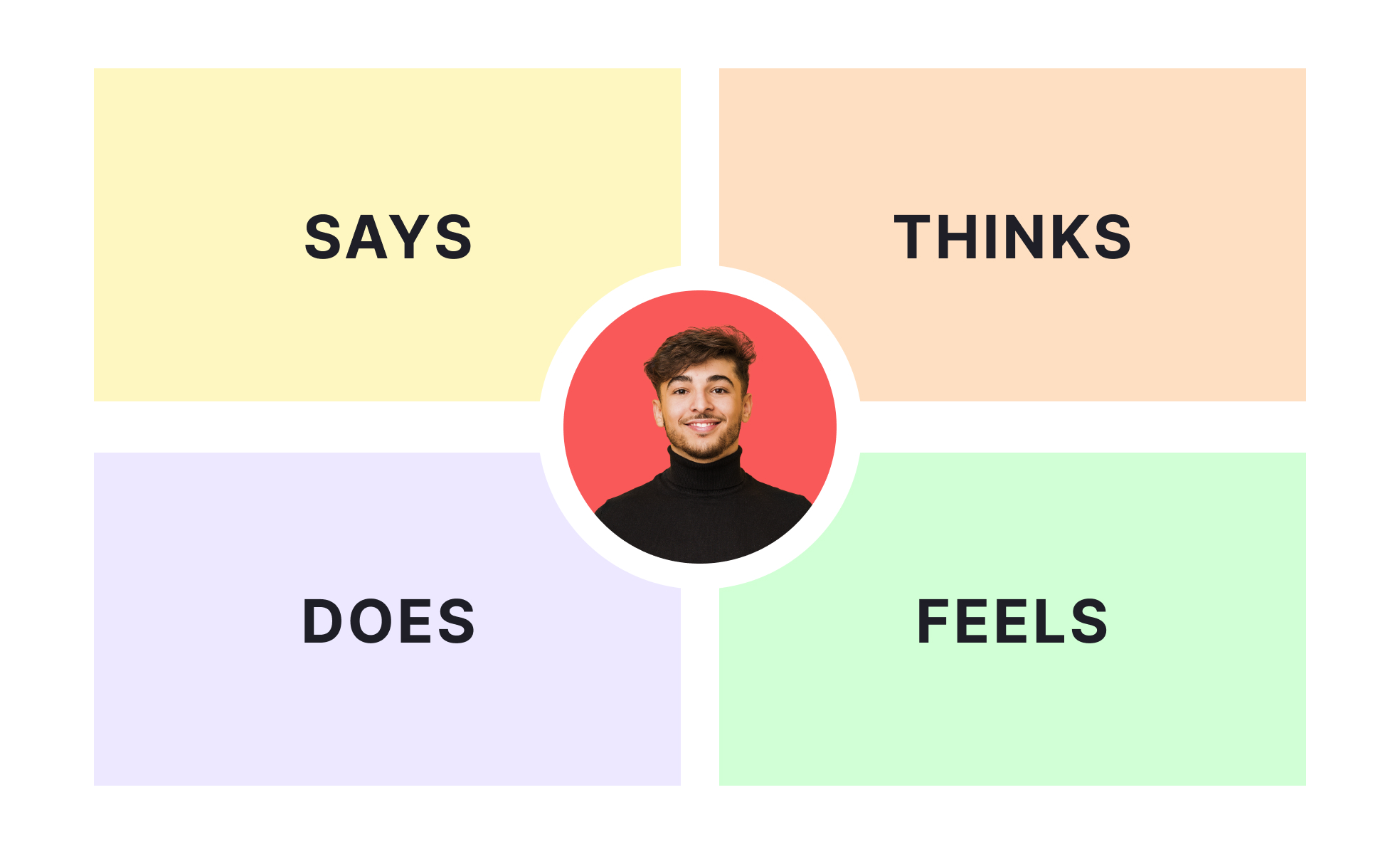
An empathy map is a collaborative artifact that organizes what a team knows about a user into four quadrants: what they say, think, do, and feel. Built from research notes rather than assumptions, it forces a useful discipline, since every sticky note has to come from something a real user actually said or did.
What do the four quadrants capture?
Says holds direct quotes, the user's own words. Thinks captures what occupies their mind but may go unsaid, inferred from hesitations and contradictions. Does records observable behavior, which frequently disagrees with the first two quadrants. Feels names the emotional states underneath. The disagreements between quadrants are the payoff: a user who says the tool is fine, but re-does every export by hand, is telling the team where the real work is.
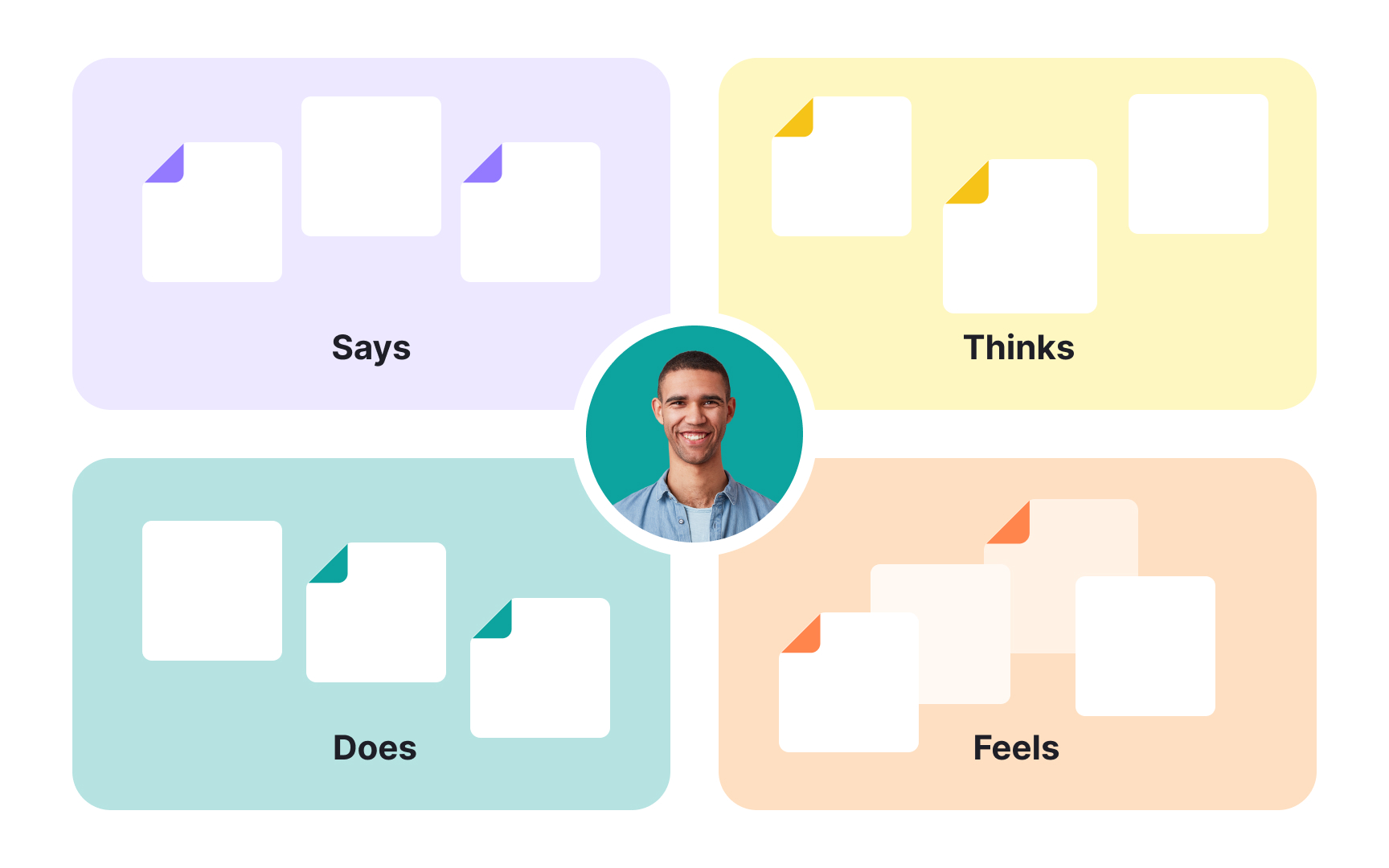
The standard layout: one real user in the center, evidence sorted into 4 quadrants around them. Contradictions between quadrants are findings, not errors. From the lesson Empathy Maps.
How does an empathy map differ from a persona?
An empathy map is evidence about one user or one research session, raw and specific. A persona is a synthesis: a fictional, representative user built from patterns across many maps and studies. Teams that skip the mapping step and write personas directly tend to produce demographic fiction, since the persona inherits assumptions instead of observations. The practical sequence runs map first, persona after the maps start repeating themselves.
When should teams build one?
Immediately after research sessions, while the observations are fresh, and at the start of projects inheriting old research that nobody quite remembers. The exercise takes under an hour with the team present, and the collaborative version earns its time twice: the map itself, and the shared exposure to evidence that stakeholders otherwise only meet as summary bullet points.


