


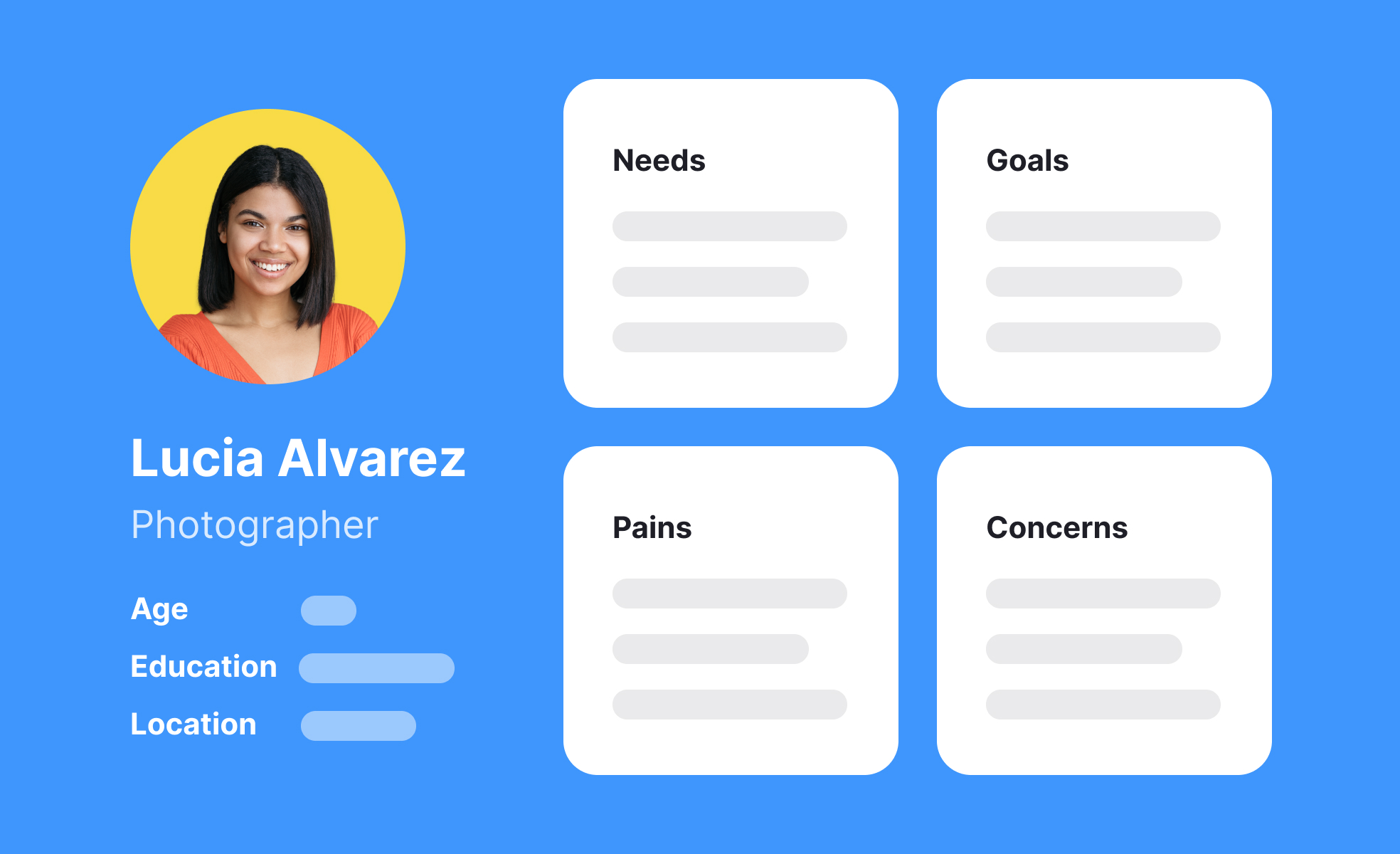
What are Personas?
Your product development and marketing efforts miss the mark because your team has different assumptions about customer needs, preferences, and behaviors. You've probably experienced frustrating meetings where everyone talks about "users" but means completely different people with conflicting requirements.
Most teams create generic personas based on demographics instead of behavioral insights, resulting in fictional characters that don't actually guide decision-making or improve customer understanding.
Personas are research-based, detailed representations of target customer segments that synthesize behavioral patterns, motivations, goals, and pain points into actionable character profiles that guide product development, marketing strategy, and user experience decisions.
Teams using research-based personas see 73% better user satisfaction, 50% faster product development cycles, and 25% higher conversion rates because they make customer-focused decisions rather than assuming everyone thinks like they do.
Consider how Spotify created distinct personas for different listener types like commuters, fitness enthusiasts, and discovery seekers, enabling features like Daily Mix playlists that serve specific usage contexts rather than generic music recommendations.
Why Personas Matter for Customer-Centered Business
Your team builds products and creates marketing based on internal assumptions about customer needs, leading to solutions that work well for people like you but miss the mark for actual target customers with different contexts and constraints.
The cost of assumption-based development compounds over time. You get features nobody wants, marketing messages that don't resonate, customer acquisition strategies that target the wrong people, and competitive disadvantage against companies that understand their customers better.
What research-based personas deliver:
Better product decisions because personas provide specific customer contexts that help teams evaluate features, prioritize development, and design solutions that address real problems in realistic usage scenarios.
When you really understand how your customers work and what frustrates them daily, you can build features they didn't even know they needed because you see opportunities they don't.
More effective marketing through messaging and channel strategies tailored to specific customer segments rather than generic approaches that try to appeal to everyone but resonate with no one.
Generic marketing copy screams "we don't really understand your business." Persona-specific language and examples show you get it, which builds trust faster than any other factor.
Improved team alignment as personas create shared understanding of customer priorities, reducing internal debates based on personal preferences and focusing discussions on customer value.
Higher conversion rates because customer-focused design and messaging naturally performs better with target audiences than internally-focused approaches that emphasize features rather than benefits.
Faster decision-making when teams can evaluate options through specific customer perspectives rather than debating abstract scenarios or relying on personal opinions about user preferences.
Advanced Persona Strategies
Once you've established basic personas, implement sophisticated customer understanding and application approaches.
Dynamic Persona Evolution: Update personas based on changing customer behavior, market conditions, and product usage patterns rather than treating them as static documents that become outdated over time.
Journey-Based Persona Application: Map personas to specific customer journey stages, understanding how needs and behaviors change from awareness through post-purchase advocacy.
Negative Persona Development: Create personas representing customers you don't want to serve, helping teams avoid feature bloat and marketing messages that attract unprofitable or poor-fit customers.
Cross-Functional Persona Integration: Ensure personas influence sales training, customer support, product marketing, and business development rather than just product design and marketing campaigns.


