


Teams ship faster than ever, and AI has made producing interfaces cheap. Deciding what deserves to be built is now the harder problem, and that decision is only as good as the evidence behind it. User research is how product teams replace assumption with observation before the cost of being wrong compounds.
In this glossary topic:
- What is user research?
- What methods does user research use?
- How does user research differ from market research?
- Why does user research matter for product teams?
- How has user research changed with AI?
- What does user research look like in practice?
- How to learn user research
- Building a user research career
- Recommended resources
- FAQ
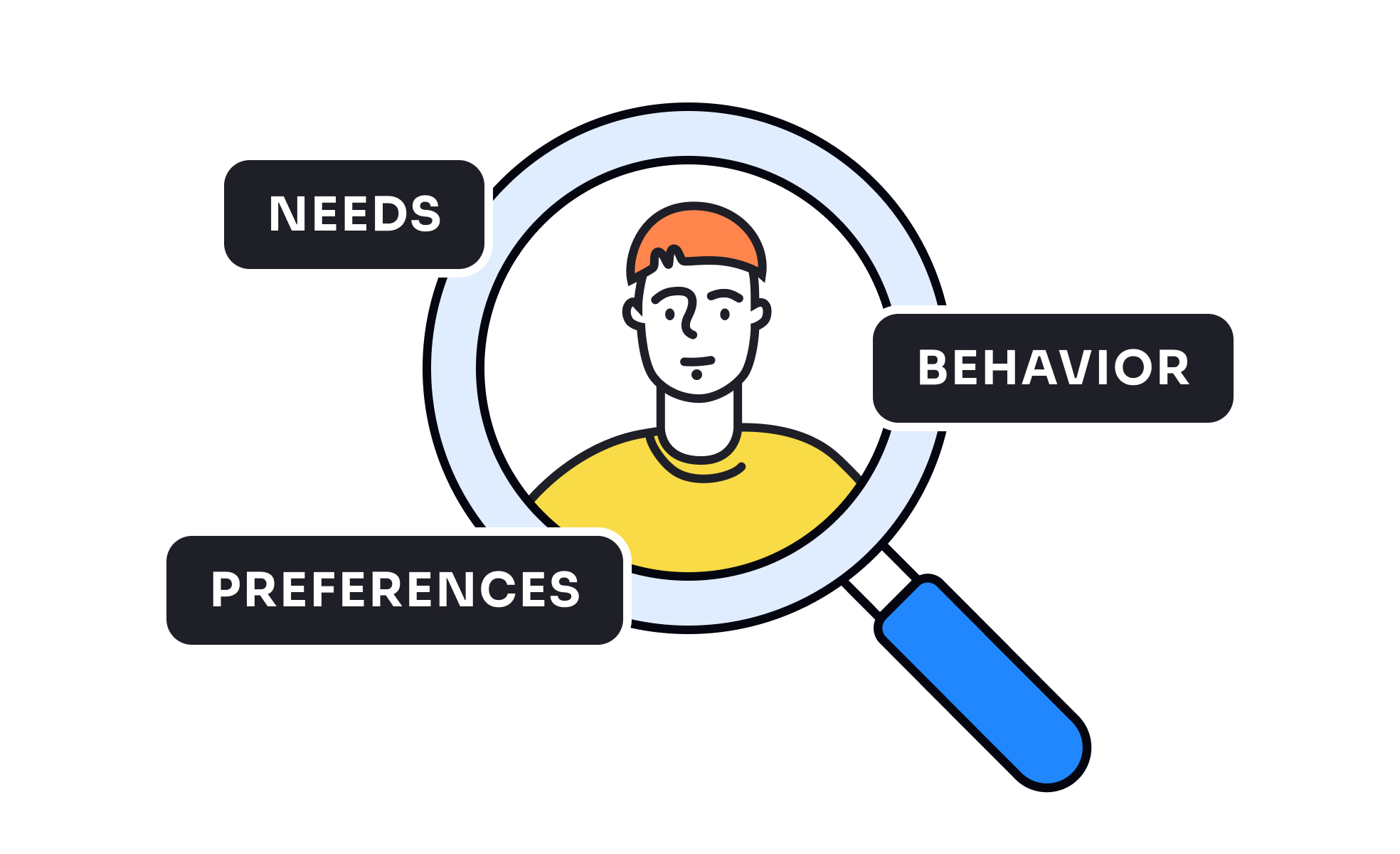
What is user research?
User research is the process of gathering insights about users' goals, behaviors, and frustrations through methods like interviews, usability testing, and analytics. The findings inform what gets designed, how it gets built, and whether it worked.
The discipline rests on one distinction: what people actually do, rather than what they say or what teams assume. Products shaped by observed behavior tend to be useful, usable, and satisfying. Products shaped by assumption tend to surprise their makers at launch.
What methods does user research use?
Research blends two families of methods, and mature teams alternate between them.
- Qualitative methods, like interviews, usability tests, and field studies, explain behavior. They answer why something happens and produce depth.
- Quantitative methods, like surveys and analytics, measure behavior. They answer how much and how often, and produce scale.
Neither family is better. The method is chosen by the question, never the other way around.
How does user research differ from market research?
Market research studies customers: broader trends, demographics, and purchasing habits. User research studies product interactions. Market research may reveal that professionals need productivity tools; user research shows where they struggle inside a specific app's interface. The two inform different decisions, and confusing them produces research that answers neither question well.
Why does user research matter for product teams?
Research informs every stage of product work: early exploration identifies problems worth solving, mid-stage evaluation tests prototypes while change is cheap, and post-launch studies measure real use. Involving participants with diverse backgrounds and abilities also surfaces accessibility barriers that a homogeneous test group misses entirely.
The business case is direct. Products informed by research see higher adoption, stronger retention, and fewer expensive redesigns, because the costly corrections happen before launch instead of after.
How has user research changed with AI?
AI has compressed the mechanical parts of research: transcription, clustering, and first-pass synthesis that once took days now take hours in tools like Dovetail and Maze. Some teams go further and test with synthetic users, AI models simulating participant responses. Industry studies of these simulations keep reaching the same conclusion: they mirror average, predictable answers and miss the surprises real participants provide, and surprises are the reason research exists. AI accelerates the analysis; the observation still has to be real.
What does user research look like in practice?
Picture a settings screen that hides the one thing people came to do. In the example below, the user wants to change a payment method, and the account page offers everything except that. The team that shipped it never watched anyone try. UX research exists to catch the gap between what teams assume and what users actually do, before the product ships.

When nobody watches a real user attempt the task, the most common request can end up missing from the screen entirely. From the lesson User Research Basics.
Catching those gaps is not a matter of collecting more opinions. Working researchers start from a plan: what the team needs to learn, from whom, and only then which method will answer it. Data collection and analysis follow the question, never the other way around.
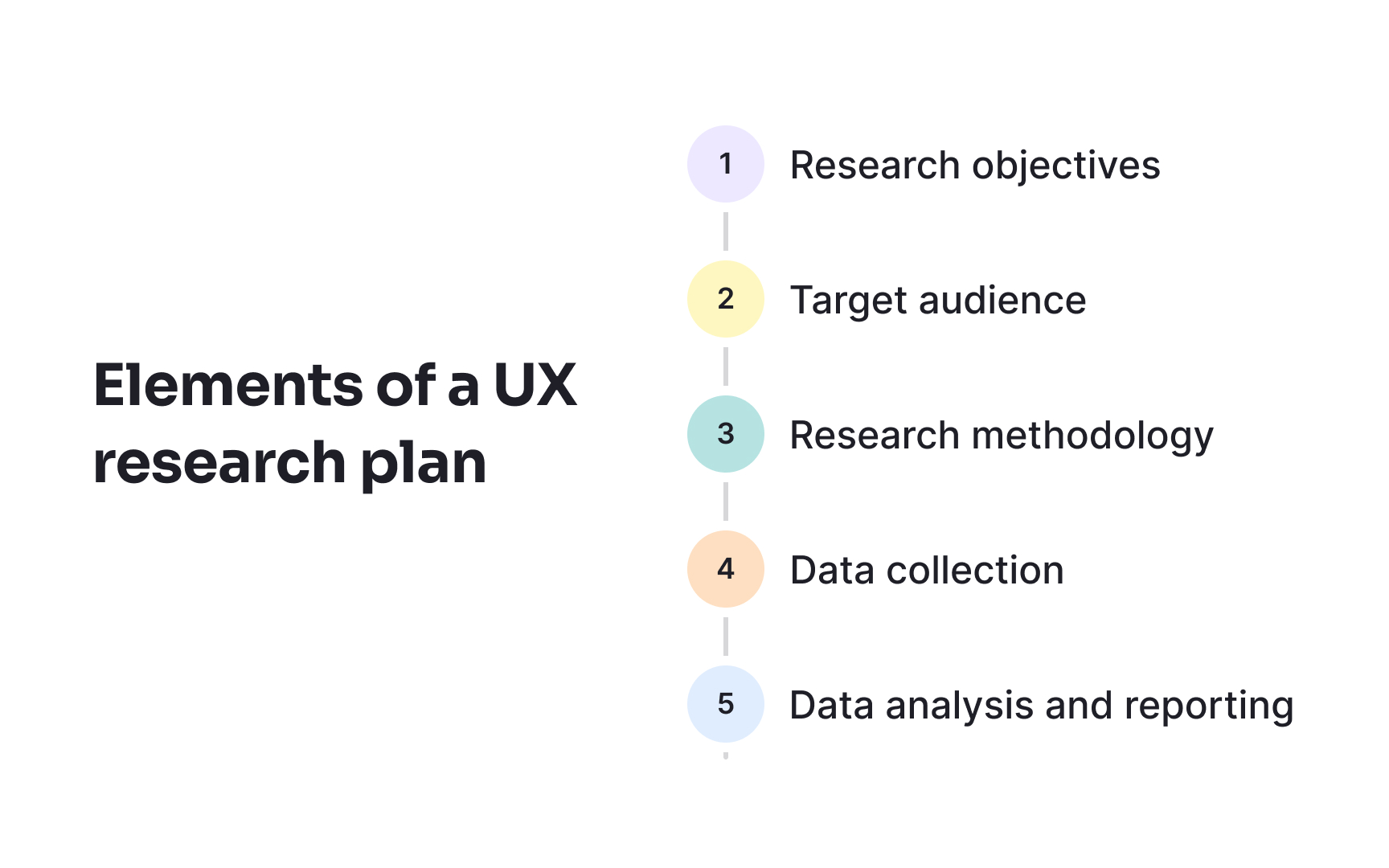
The 5 elements of a research plan. Choosing the method third, after objectives and audience, is what separates research from opinion gathering.
How to learn user research
Foundations and strategy
Research pays off when it is a practice, not an event. The UX Research Strategy & Methodology lesson covers when to invest in research and how to connect studies to product decisions, which is the difference between insight and shelf-ware.
Choosing a research method
No method is good or bad on its own, only right or wrong for the question being asked. Broad "what do users need" questions call for qualitative research: interviews and field observation that explain behavior. "How many" and "how often" questions call for quantitative research, where analytics and surveys measure it. Most real projects alternate between the two, and the Choosing a Research Method lesson gives a decision path for the alternation.
Running studies
Study quality is decided mostly before the study starts: recruiting the right participants, writing non-leading questions, and picking the right format, whether a user interview, a card sorting session, or a moderated usability test. The Conducting User Interviews lesson covers the hardest skill in the set: asking questions that do not contaminate the answers.
Making sense of the data
Raw findings become useful when they are clustered, prioritized, and reported in a form stakeholders act on. The UX Research Analysis lesson covers affinity mapping and synthesis, the step where 40 pages of notes become 3 decisions.
Turning research into artifacts
Findings live on as personas, user journey maps, and mental models, the artifacts teams consult long after the study ends. The Personas lesson shows how to build ones that get used rather than framed.
Building a user research career
Research is one of the few product disciplines with a clear specialist path. Useful starting points, each covering a different step:
- How to become a UX researcher: the route in, with or without a research degree
- Top UX researcher skills: what hiring managers actually screen for
- UX researcher interview questions: how the role is assessed
- UX researcher salary guide: what the market pays by level and region
For the structured version of the whole journey, the UX research career path sequences methods, practice, and portfolio work end to end.


