


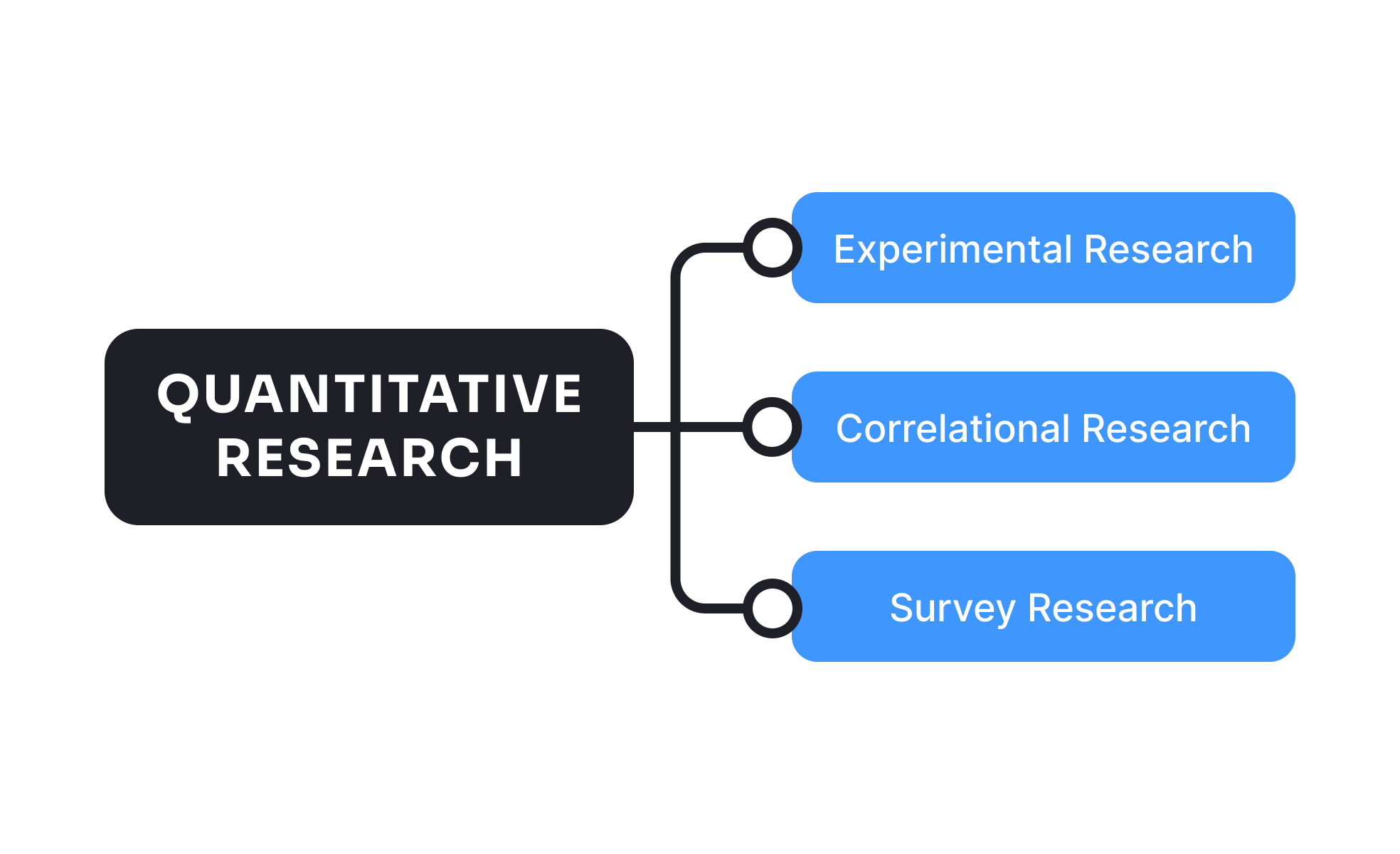
What is Quantitative Research?
Your product decisions rely on gut feelings and small user feedback samples instead of statistical evidence about user behavior patterns, leading to choices that might feel right but don't reflect actual user needs at scale.
Most teams collect some usage data but don't systematically analyze quantitative patterns that reveal user preferences, behavior trends, and opportunities for optimization based on statistically significant evidence.
Quantitative research is the systematic collection and statistical analysis of numerical data about user behavior, preferences, and outcomes to identify patterns, measure impact, and validate hypotheses through statistically rigorous methods that provide reliable evidence for product decisions.
Teams using strong quantitative research achieve 45% more accurate product decisions, 35% better feature adoption rates, and significantly higher ROI because their choices are based on statistical evidence rather than assumptions or small sample feedback.
Think about how companies like Google use A/B testing and analytics to optimize search results based on millions of user interactions, or how e-commerce companies use conversion funnel analysis to identify optimization opportunities that improve business outcomes.
Why Quantitative Research Matters for Data-Driven Decisions
Your product development lacks statistical validation because decisions are based on qualitative feedback from small user groups that might not represent broader user behavior patterns or preferences.
The cost of skipping quantitative research accumulates through every product decision. You optimize for vocal minority preferences, miss behavior patterns that affect most users, and compete based on assumptions rather than evidence about what actually drives user satisfaction and business results.
What systematic quantitative research delivers:
Better decision accuracy because statistical analysis reveals user behavior patterns that aren't obvious from individual feedback or internal assumptions about user preferences.
When you have statistically significant data, you can make confident decisions about feature changes, interface improvements, and strategic directions that actually improve outcomes.
Higher optimization success through measurement of specific metrics that show whether changes improve user experience, engagement, or business outcomes rather than just implementing changes that seem theoretically better.
Faster learning cycles because quantitative research provides quick feedback about what works and what doesn't, enabling rapid iteration based on measurable results rather than lengthy qualitative research processes.
Stronger business cases as quantitative research provides compelling evidence for resource allocation, strategic investments, and product direction that stakeholders can evaluate objectively.
Enhanced competitive advantage through understanding of user behavior patterns that inform product improvements and strategic positioning based on evidence rather than market assumptions.
Advanced Quantitative Research Strategies
Once you've established basic quantitative research capabilities, implement sophisticated statistical analysis and optimization approaches.
Predictive Analytics and Modeling: Use statistical modeling to predict user behavior, churn risk, and feature adoption patterns that inform proactive product improvements and strategic planning.
Multivariate Testing and Optimization: Conduct complex testing that evaluates multiple variables simultaneously to identify optimal combinations of features, interfaces, and experiences.
Cohort and Segmentation Analysis: Analyze user behavior patterns across different segments and time periods to understand how user needs and preferences vary across different contexts.
Statistical Significance and Power Analysis: Apply rigorous statistical methods that ensure research results are reliable and actionable rather than just statistically interesting but practically meaningless.


