


Every team wants to know what is coming next, and every stakeholder wants a date. The roadmap is where those two pressures meet, and how it is built decides whether it aligns a company or just decorates a slide. A good roadmap communicates direction and sequence without pretending to predict the future.
In this glossary topic:
What is a product roadmap?
A product roadmap is a visual plan that shows what a product team intends to build, in what order, and why. It connects strategy to delivery: goals and themes at the top, initiatives and features beneath them, and a rough sequence that tells everyone where the product is heading.
A roadmap is a communication tool before it is a planning tool. Its audience includes engineers deciding what to build next, stakeholders asking about timelines, and leadership checking that work matches strategy.
What does a product roadmap include?
Most roadmaps carry 4 elements: goals or outcomes the work should produce, the initiatives or features planned to achieve them, a time horizon (quarters, or looser buckets like now, next, and later), and status. What a roadmap deliberately leaves out matters just as much. Task-level detail belongs in the backlog, and exact dates belong in release plans, because a roadmap loaded with either becomes a project plan that expires the first time priorities shift.
How does a roadmap differ from a project plan?
A project plan commits to fixed scope and dates; a roadmap commits to direction and relative priority. Project plans work when the work is known and stable. Product work rarely is, which is why teams that manage roadmaps as Gantt charts spend their time explaining slippage instead of outcomes. The distinction shows up in stakeholder conversations: a roadmap answers "what matters next and why", not "which day does feature 4 ship".
Why do product roadmaps matter?
Without a shared roadmap, teams work on conflicting priorities, stakeholders ask the same timeline questions repeatedly, and strategy changes travel by rumor. A visible, current roadmap replaces that with one source of direction. It also forces the hardest product conversation to happen on purpose: deciding what does NOT get built this quarter, and being able to show why.
How have product roadmaps changed lately?
The clearest shift is from output to outcome. Feature-and-date roadmaps are giving way to outcome-based formats, where columns like now, next, and later carry goals such as improving activation rather than named features with deadlines. The format change reflects a deeper one: roadmaps are increasingly treated as living documents that get re-prioritized as evidence arrives, not annual commitments.
What does a product roadmap look like in practice?
Two formats dominate real product work, and they answer different questions.
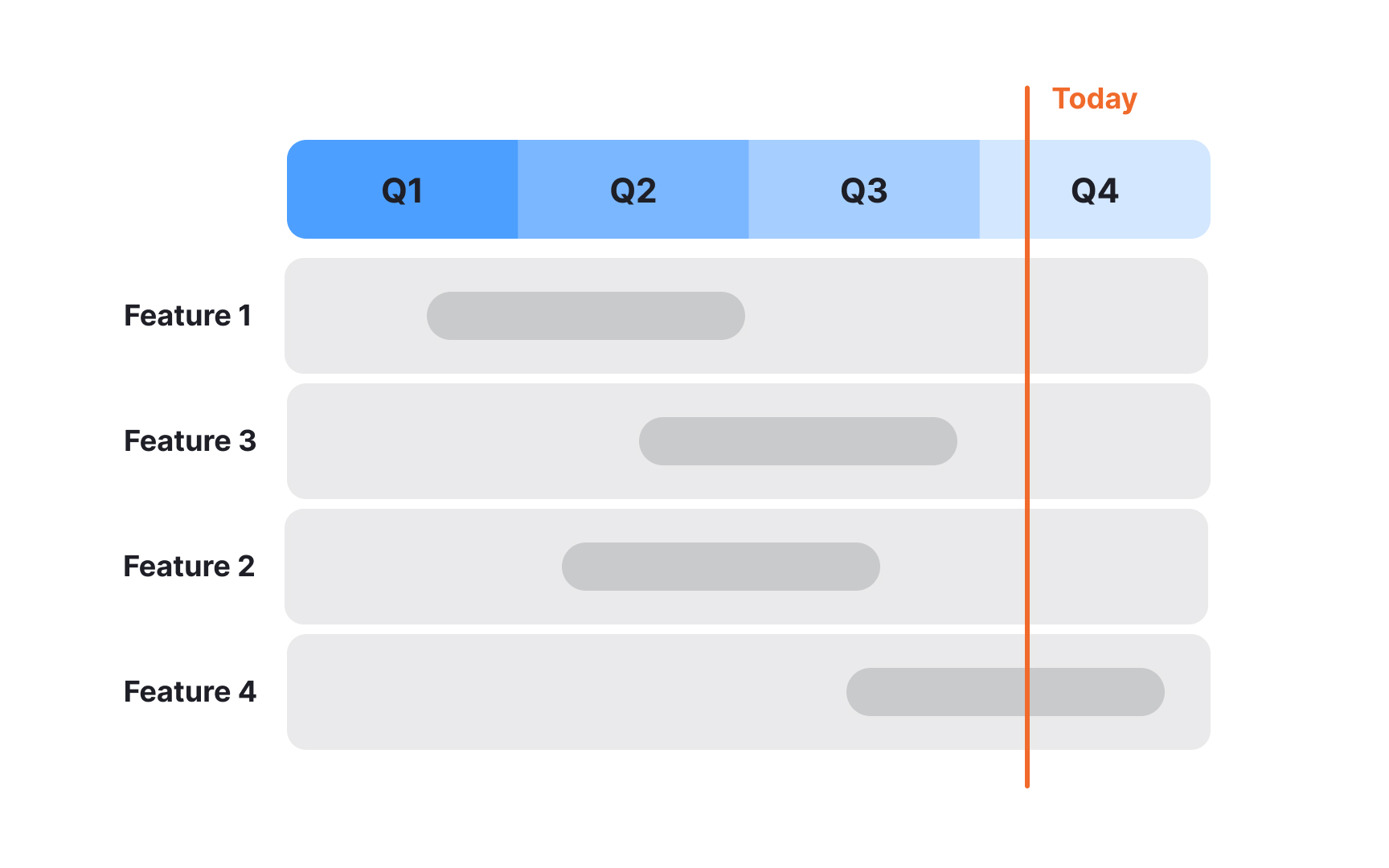
The timeline format: features placed across quarters, with a marker showing where reality currently stands. Useful for delivery conversations, risky when dates get read as promises. From the lesson Roadmaps and Prioritization.
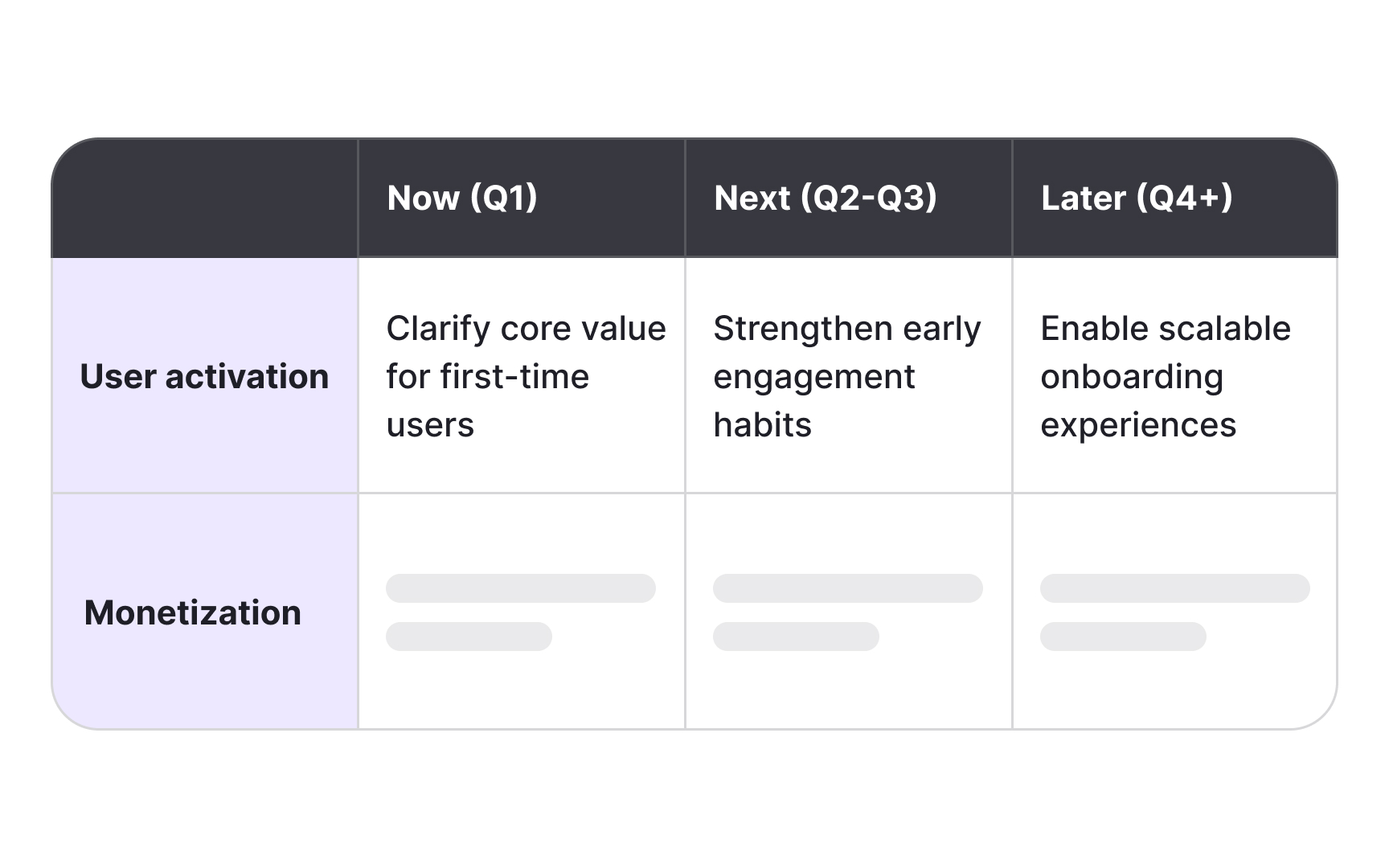
The outcome-based format: now, next, and later columns organized by goals like user activation instead of feature names. From the lesson Using the Product Strategy to Build Your Roadmap.
The choice between them is itself a product decision. Timeline formats suit coordinated launches with hard dependencies; outcome formats suit teams that discover their way toward goals and need room to change tactics.


