


Every product team has opinions about its users; a UX researcher is the person paid to find out which of them are true. The role has grown from a support function inside design into a discipline with its own career ladder, and it is now expected to shape what gets built, not only to check it afterward. The value of a UX researcher is not knowing the answers but knowing how to get reliable ones, and which questions are worth the cost of asking.
In this glossary topic:
- What is a UX researcher?
- What does a UX researcher do day to day?
- How does a UX researcher differ from a UX designer or a market researcher?
- What skills does a UX researcher need?
- How has the UX researcher role changed with AI?
- What does a UX researcher's work look like in practice?
- How to learn the skills of a UX researcher
- Building a UX researcher career
- FAQ
What is a UX researcher?
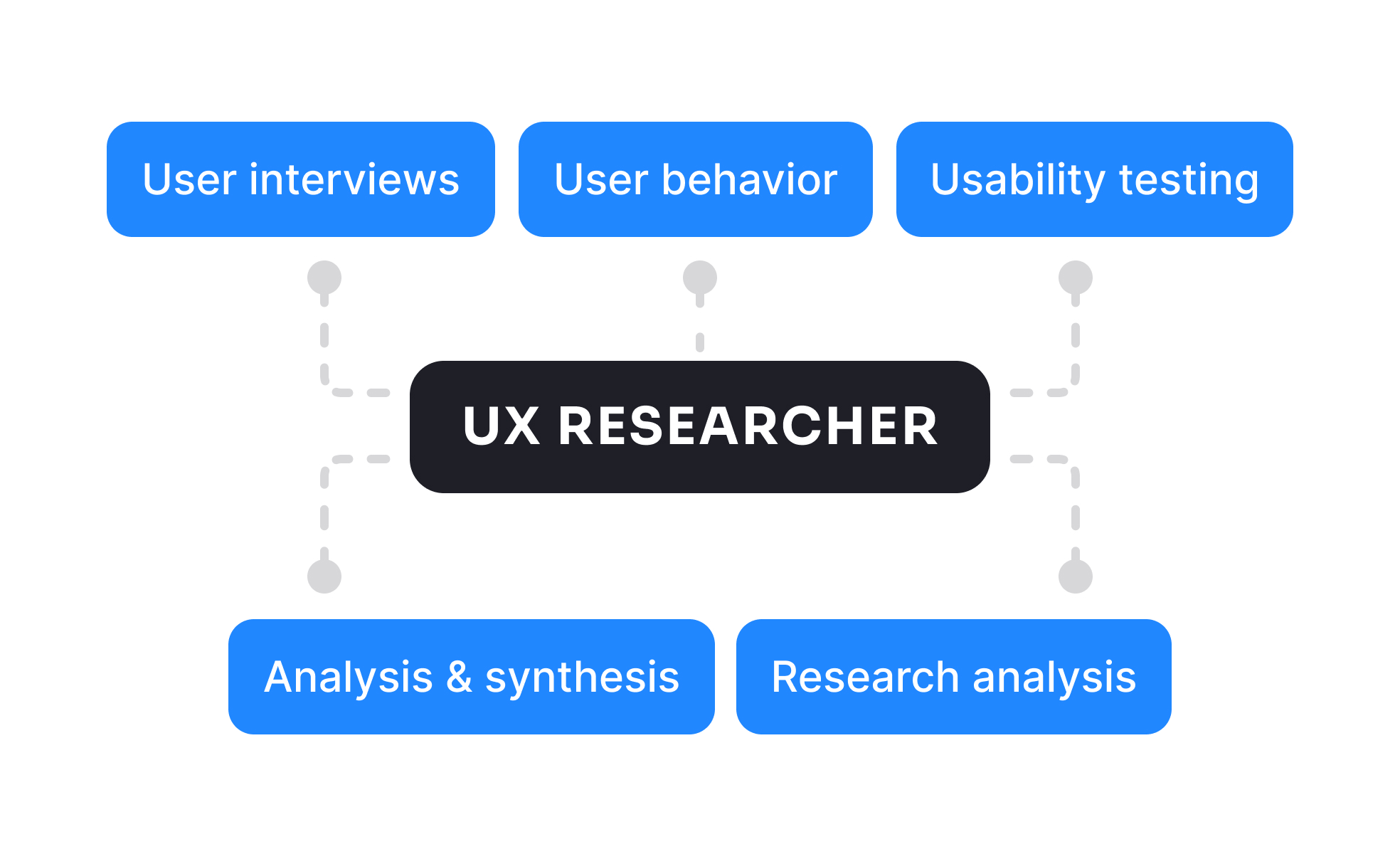
A UX researcher is the specialist on a product team who studies how people actually behave, what they need, and why, and turns that evidence into decisions the team can act on. The job covers the whole research cycle: framing the question, choosing a method, recruiting participants, running the study, analyzing what came back, and getting the findings in front of the people who decide what to build.
The role exists because product teams are full of confident guesses about users, and many of them are wrong in ways nobody notices until launch. User research as a discipline can be practiced by anyone on the team; the UX researcher is the person who practices it as a job, with the training to do it rigorously and the independence to report what the team would rather not hear.
What does a UX researcher do day to day?
Most weeks split between three kinds of work. The first is planning: meeting product managers and designers to learn which decision is coming up, writing a research plan that names the question, the method, and the participants, and agreeing with stakeholders on what a useful answer looks like before a single session is scheduled. The second is fieldwork: moderating interviews and usability sessions, launching surveys, watching recordings from unmoderated tests, and taking notes that separate what a participant said from what they did. The third is synthesis and communication: tagging and clustering observations, writing the report, presenting it, and then following up so the findings become backlog items rather than a deck nobody opens again.
Around that core sit the less visible tasks that make research possible: maintaining a participant panel, handling consent and incentives, keeping a research repository organized so past studies can be found, and coaching the designers and product managers who run lightweight research themselves. In mature teams a researcher spends as much time enabling other people's research as running their own, which is why the role often grows into research operations or research leadership.
How does a UX researcher differ from a UX designer or a market researcher?
A UX designer and a UX researcher work on the same product and often sit in the same meetings, but the designer's output is the solution and the researcher's output is the evidence. Designers run research too, usually quick evaluative studies on their own work; the researcher owns the harder questions, the studies that need rigor, and the distance from the design that makes an honest verdict possible. On small teams the two collapse into one person. As teams grow, the split lets each go deeper.
A market researcher studies the market: segments, willingness to pay, brand perception, and what would make someone buy. A UX researcher studies the use: whether people can complete the task, where they hesitate, what they expected instead, and what their day looks like around the product. The two overlap in surveys and interviews but ask different questions of the same participant. Market research tells a company whether to build a product; UX research tells it whether the product it built works for the people it was built for.
What skills does a UX researcher need?
The craft skills are method knowledge and its execution: knowing when a qualitative approach answers the question and when a quantitative one does, writing questions that do not lead the participant, moderating a session without contaminating it, and designing a survey whose results can be trusted. Analysis skills follow: coding transcripts, building affinity diagrams, reading analytics well enough to know when a number needs a story behind it, and enough statistics to say how much confidence a finding deserves.
The skills that separate a working researcher from a good research student are the ones that get findings used. Stakeholder management, storytelling, and the judgment to trade rigor for speed when the decision is small are what turn a study into a shipped change. Add the operational side, recruiting, consent, ethics, and repository hygiene, and the list is long for one job, which is why the role has a clear junior-to-senior arc. A researcher who can run a flawless study but cannot get anyone to act on it has done half the job.
How has the UX researcher role changed with AI?
Two things have changed and one has not. The mechanical middle of a study has compressed: research repositories such as Dovetail and testing platforms such as Maze and UserTesting now transcribe sessions, suggest tags, and draft summaries, so the gap between the last session and the first insight has shrunk from days to an afternoon. The questions arriving at the researcher's desk have changed as well, because more of the products under study contain AI features whose behavior varies from one user to the next, which makes usability harder to evaluate with a fixed script.
What has not changed is the part of the job that AI cannot do on the team's behalf. Deciding which question matters, recruiting real people rather than synthetic stand-ins, noticing what a participant does not say, and judging whether a machine-drafted theme is actually in the data all remain the researcher's work. Faster synthesis raises the value of good study design, because a badly framed study now produces confident nonsense faster.
What does a UX researcher's work look like in practice?
Method choice is the decision a researcher makes most often, and it depends on where the product is in its cycle. The figure below matches research methods to design phases: generative methods early, when the team is still deciding what to build; evaluative methods later, when there is something to test; and measurement once the product is live.
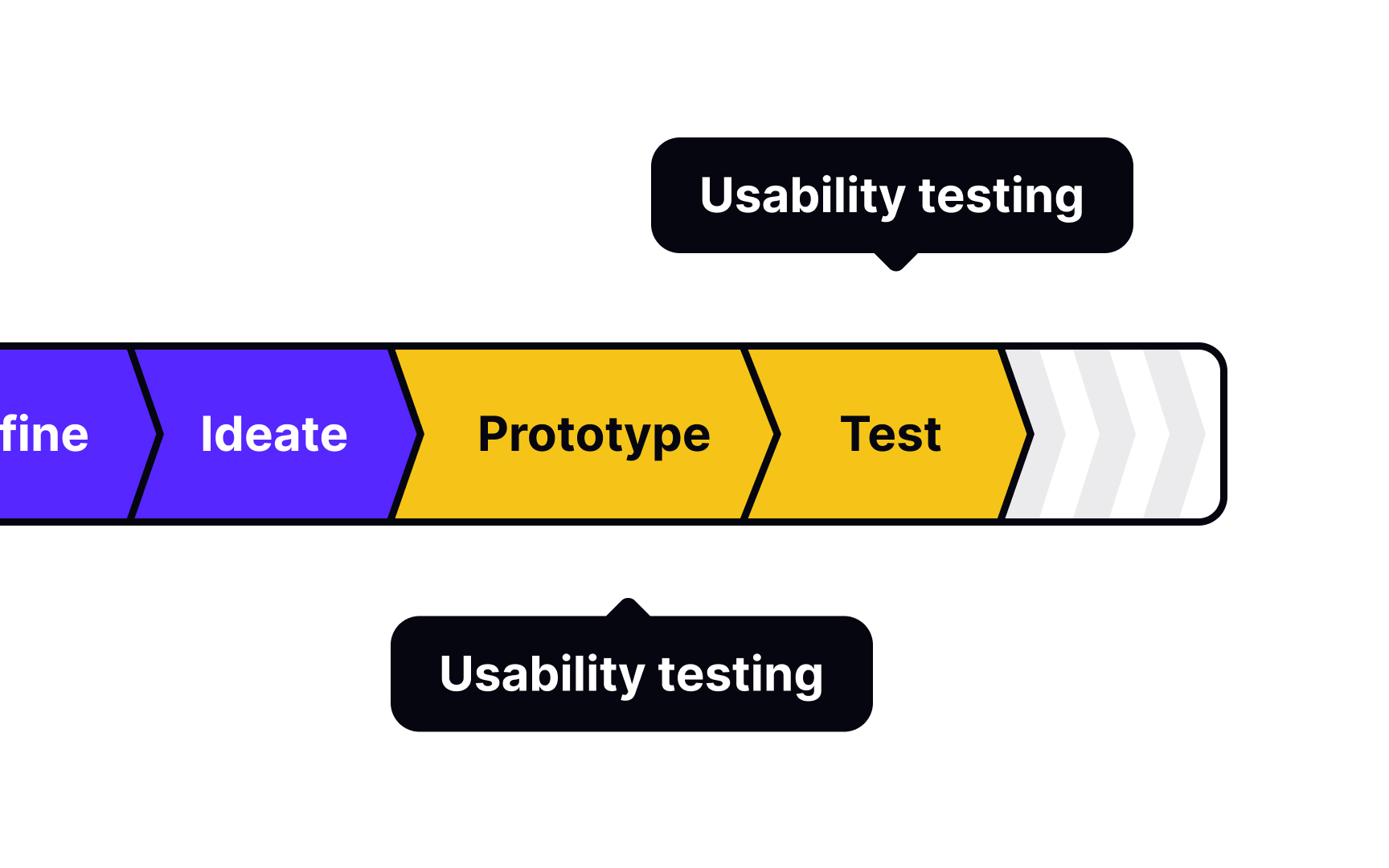
A method belongs to a phase: usability testing earns its keep once there is a prototype to put in front of people. Placing each study where its answer can still change the design is the researcher's first job. From the lesson Choosing a UX Research Method.
The research report is the artifact that carries a study out of the researcher's head and into the roadmap. A report that leads with the decision it supports gets read; one that leads with methodology gets skimmed. The second figure shows the parts a standard report contains and the order that keeps stakeholders reading.
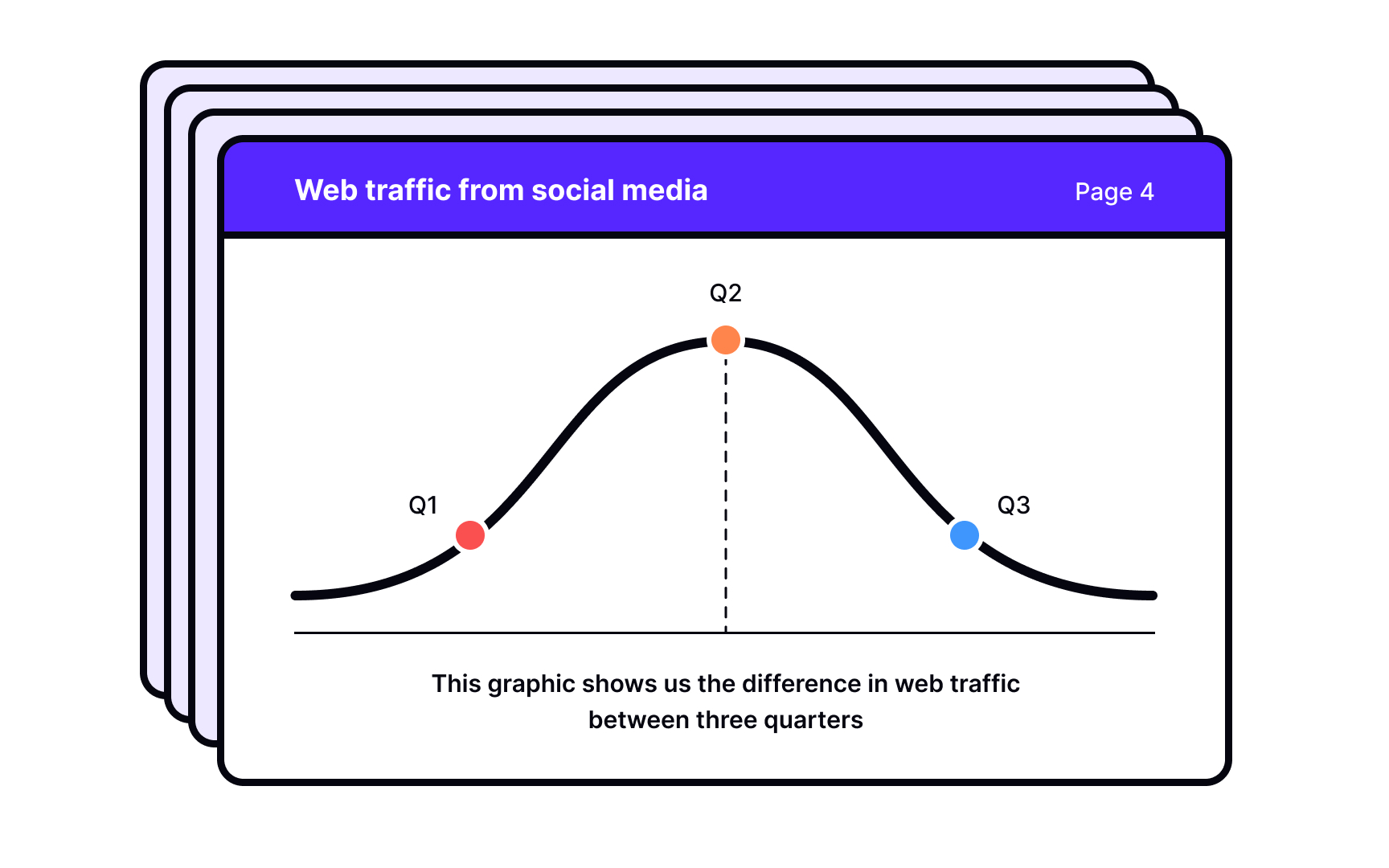
One finding per page, one chart, one sentence of interpretation. The format is what gets a report read by the people who never sat in a session.
How to learn the skills of a UX researcher
Understanding the role and where it sits
The job is easier to learn once its neighbors are clear. The Common Designer Roles lesson places the researcher among the design roles it works alongside, and the User Research Basics lesson covers what research is for, what it cannot do, and what happens to products that skip it. For the discipline itself, methods included, the user research entry is the companion to this one.
Planning studies and choosing methods
Research pays off when each study is tied to a decision. The UX Research Strategy & Methodology lesson covers connecting studies to product decisions and resourcing them, and the UX Research Questions Best Practices lesson covers writing the questions themselves. Knowing the research methods menu, and when qualitative research explains a behavior versus when quantitative research measures it, is the core of the planning skill.
Recruiting participants and running sessions
Study quality is mostly decided before the first session. The Participant Recruitment for UX Research lesson covers finding people who represent the real audience, the Conducting User Interviews for UX Research lesson covers moderating without contaminating the answers, and the Creating Surveys for UX Research lesson covers the quantitative counterpart. The same discipline applies whether the format is a user interview, a usability test, or a card sorting session.
Analyzing and synthesizing findings
Raw notes become findings through a repeatable process, not inspiration. The UX Research Analysis lesson covers coding and prioritizing qualitative and quantitative data, and the Affinity Diagrams in UX Research lesson covers the clustering technique most teams use to see patterns. Findings then live on as personas and empathy maps, the artifacts the rest of the team consults long after the study.
Communicating research and getting it used
A finding nobody acts on costs the same as one that changed the roadmap. The UX Research Reporting lesson covers structuring a report and a presentation around the decision, and the Conducting Debrief Sessions lesson covers the quick post-session ritual that keeps observations fresh and the team aligned. This is where stakeholder management becomes a research skill rather than a management one.
Ethics, accessibility, and research operations
Senior researchers are trusted with the parts of the job that protect participants and the team. The UX Research Ethics & Biases lesson covers consent, incentives, and the cognitive biases that distort studies, the Accessibility Research lesson covers including participants across the full range of abilities, and the Organizing UX Research lesson covers the repository and tagging systems that let findings be found again. Research that ignores accessibility describes a narrower audience than the product actually has.
Building a UX researcher career
Research has one of the clearer specialist ladders in product work, from associate researcher through senior and lead to research operations or research management. The blog covers each step of the route in depth:
- How to become a UX researcher: the way in, with or without a research degree
- Top UX researcher skills: what hiring managers actually screen for
- UX researcher interview questions: how the role is assessed
- UX researcher salary guide: what the market pays by level and region
For a structured sequence of the UX Research course and the adjacent skills a researcher needs (design foundations, facilitation, accessibility, analytics), the UX research career path covers the whole journey in order.


