


Some product questions are too expensive to answer by building and too important to answer by opinion. The design sprint exists for exactly those: a week that ends with real user reactions to a realistic prototype, before any engineering budget is spent. A sprint buys evidence at the price of five days, which is cheap compared to shipping the wrong thing.
In this glossary topic:
What is a design sprint?
A design sprint is a time-boxed process, classically 5 days, that takes a team from a defined problem to a user-tested prototype. Developed at Google Ventures by Jake Knapp, it compresses months of debate into one structured week by replacing open discussion with a fixed sequence of individual work, group decisions, and a real test.
How does a design sprint work?
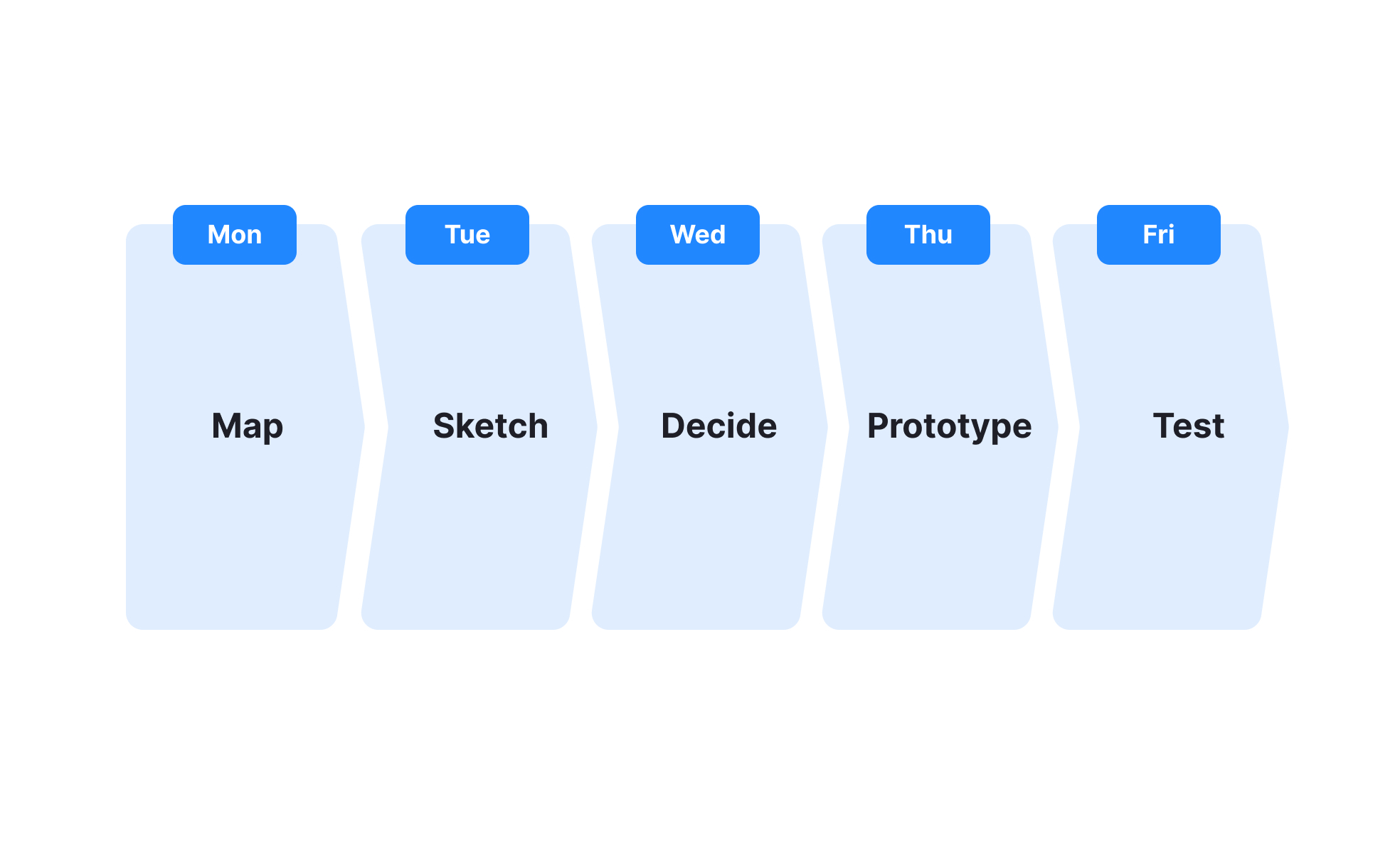
Each day has one job. Monday maps the problem and picks the target. Tuesday produces competing solution sketches, made individually so the loudest voice does not set the direction. Wednesday decides, converting sketches into one storyboard. Thursday builds a realistic prototype, a facade good enough to test. Friday puts it in front of 5 users, and their reactions, not the team's preferences, close the week.
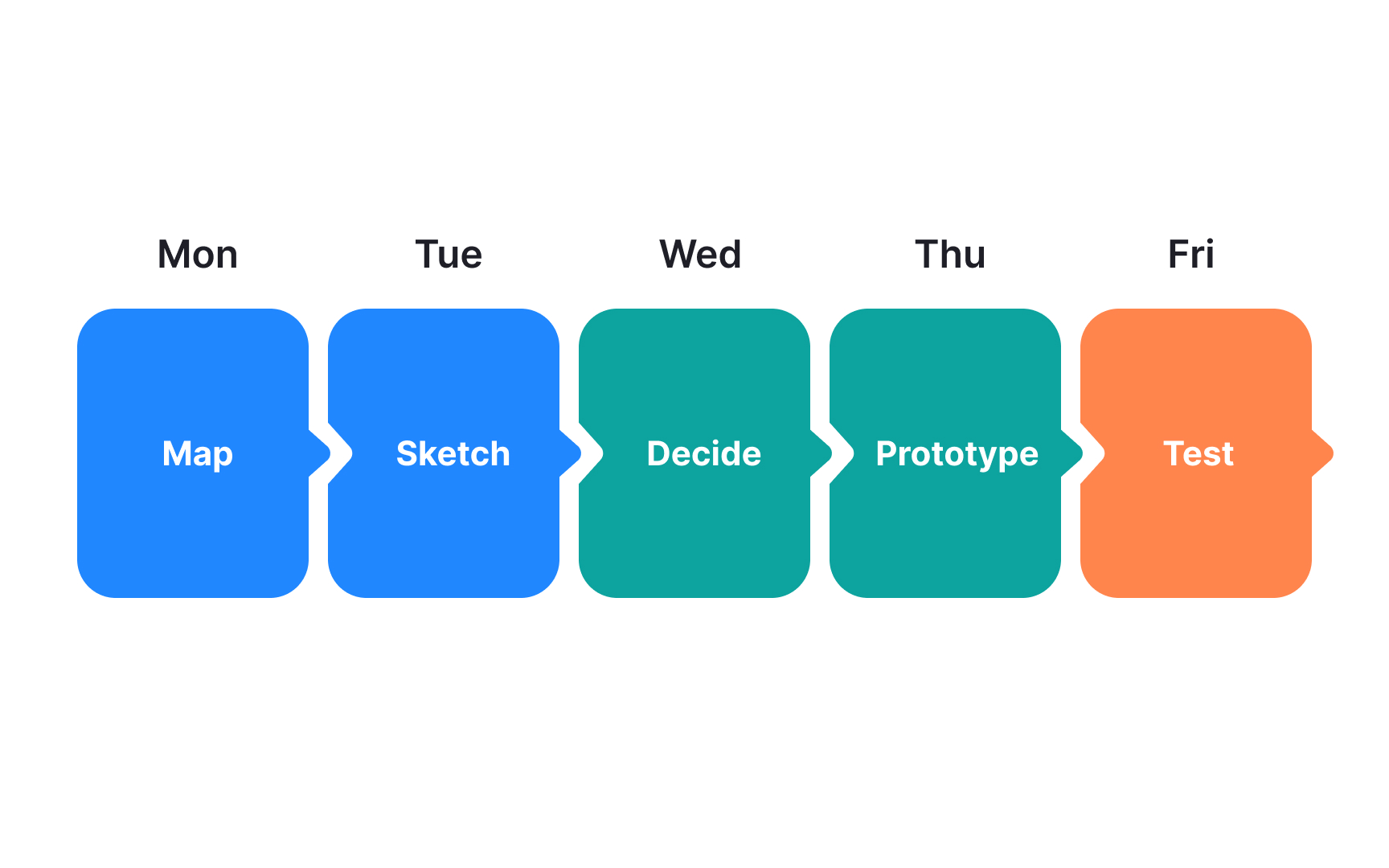
The sprint week: each day exists to force one kind of progress, and the sequence ends with users, not opinions. From the lesson Design Processes.
How does a design sprint differ from a design workshop?
Scale and output. A design workshop is a single session aimed at one decision or artifact; a sprint is a multi-day process that contains workshop-style sessions and ends with tested evidence. The common mistake runs in both directions: running a full sprint to answer a two-hour question, or running a two-hour workshop and treating its output as validated.
When should teams run one?
Sprints pay off when the question is big, the answer is genuinely uncertain, and the cost of building wrong is high: new products, risky redesigns, strategic bets with stakeholder disagreement. They are overkill for incremental improvements and no substitute for ongoing discovery, since a sprint answers one question well rather than making a team continuously smarter.


