


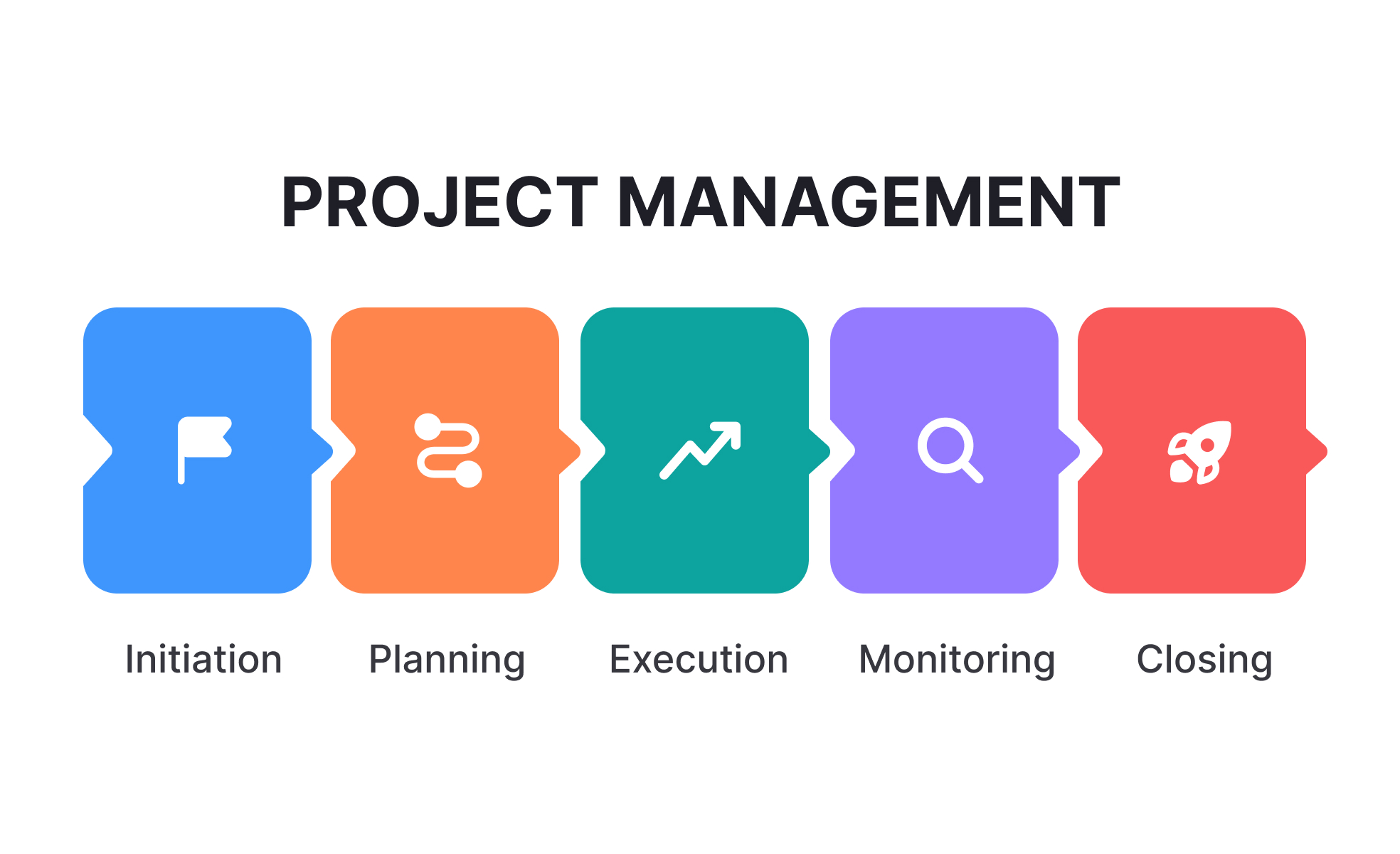
What is Project Management?
Your projects consistently run late, go over budget, or fail to deliver expected outcomes because tasks aren't coordinated effectively and team members work without clear understanding of priorities, dependencies, or success criteria.
Most teams struggle with project execution because they confuse activity management with outcome achievement, focusing on task completion rather than systematic approaches to delivering value within constraints.
Project management is the systematic application of knowledge, skills, tools, and techniques to project activities to meet specific objectives within defined scope, time, and budget constraints while coordinating resources and managing risks throughout the project lifecycle.
Teams with strong project management achieve 70% higher success rates, 35% better resource utilization, and 25% faster delivery because they follow proven processes for planning, executing, and controlling work toward specific outcomes.
Think about how companies like NASA manage complex space missions through rigorous project management that coordinates thousands of people and components, or how construction projects deliver buildings on time and budget through systematic planning and execution.
Why Project Management Matters for Delivery Success
Your projects suffer from scope creep, missed deadlines, and budget overruns because work isn't organized systematically, leading to wasted effort and disappointing results despite team members working hard.
The cost of poor project management compounds throughout project lifecycles. You get delayed deliveries, exceeded budgets, frustrated team members, disappointed stakeholders, and competitive disadvantage from slower execution on important initiatives.
What effective project management delivers:
Higher success rates because systematic planning identifies risks, dependencies, and resource requirements before they become problems that derail project progress.
When you plan thoroughly and manage systematically, problems get solved before they impact deadlines or outcomes.
Better resource utilization through optimization of team skills, time allocation, and budget spending that maximizes value delivery within available constraints.
Faster delivery because project management eliminates wasted effort, prevents rework, and keeps teams focused on critical path activities that move projects forward efficiently.
Improved stakeholder satisfaction through clear communication about progress, realistic expectation setting, and consistent delivery of promised outcomes within agreed timelines.
Enhanced team coordination as project management creates shared understanding of objectives, responsibilities, and timelines that enables effective collaboration across different roles and skills.
Advanced Project Management Strategies
Once you've established basic project management capabilities, implement sophisticated coordination and optimization approaches.
Agile Project Management Integration: Combine traditional project management with agile methodologies that enable flexibility while maintaining delivery predictability and stakeholder communication.
Portfolio Project Management: Coordinate multiple related projects to optimize resource allocation and strategic outcomes across project portfolios rather than managing projects in isolation.
Risk-Based Project Planning: Use sophisticated risk analysis and scenario planning to develop project approaches that remain robust under different conditions and challenges.
Stakeholder-Centric Project Design: Design project management approaches that serve different stakeholder needs while maintaining team productivity and delivery focus.


