


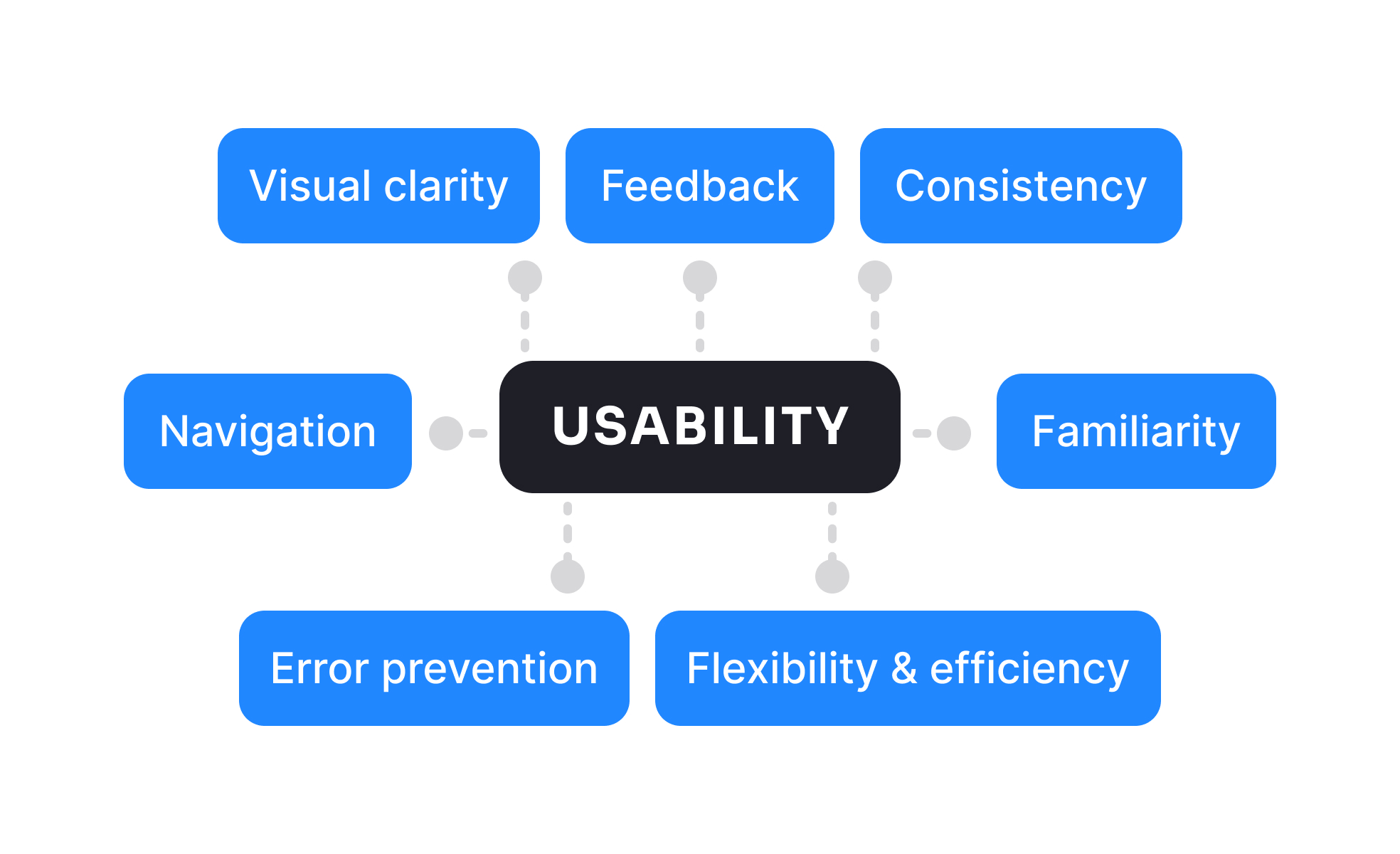
TL;DR
- Evaluates how simple and effective a product is to use.
- Focuses on clarity, efficiency, and satisfaction.
- Reduces friction in completing user tasks.
- A core pillar of user experience design.
Definition
Usability refers to the degree to which a product allows users to achieve their goals effectively, efficiently, and with satisfaction, minimizing friction and confusion.
Detailed Overview
Usability is one of the fundamental pillars of user experience. It ensures that digital products are not only functional but also intuitive and efficient to use. A product with high usability allows users to complete tasks quickly and with minimal errors, while a product with poor usability frustrates users, causes drop-offs, and undermines trust.
A frequent question is how usability differs from user experience. UX encompasses the overall impression of using a product, including emotional, aesthetic, and functional factors. Usability is a subset of UX, focusing specifically on whether users can accomplish their goals easily.
Another common query involves the principles of usability. The five classic factors are effectiveness, efficiency, satisfaction, learnability, and error tolerance. Effectiveness measures whether users can achieve tasks at all, while efficiency evaluates the time and effort required. Satisfaction captures whether users feel positive about the experience. Learnability ensures new users can quickly become proficient, and error tolerance ensures mistakes do not derail progress.
Teams often ask how usability is evaluated. Methods include usability testing, where real users attempt tasks while researchers observe; heuristic evaluations, where experts assess products against usability principles; and analytics, which track completion rates and error frequency. Combining these approaches gives teams a comprehensive understanding of usability strengths and weaknesses.
Accessibility is closely tied to usability. An interface that is easy for one group of users but inaccessible to others cannot be considered fully usable. For example, insufficient text contrast or poorly designed navigation can exclude users with disabilities.
Finally, usability drives measurable business outcomes. Products with strong usability increase adoption, reduce support costs, and improve retention. In competitive markets, usability can be the difference between a product users recommend and one they abandon.
Learn more about this in the Usability Exercise, taken from the UX Design Principles Lesson, a part of the UX Design Foundations Course.


