


Every research method answers some questions well and others not at all. Interviews explain motivation but cannot say how common it is; analytics count behavior but cannot explain it. Choosing the method is the first research decision, and it decides what kind of answer is even possible.
In this glossary topic:
What are research methods?
Research methods are the structured approaches teams use to learn from users: interviews, surveys, usability tests, field studies, analytics reviews, and their many variants. Each method is a defined procedure for collecting evidence, chosen to fit a question rather than a preference.
The structure is what separates a method from a conversation. The same user chat becomes an interview when it has research objectives, a participant profile, and a plan for analyzing what was said.
What are the main types of research methods?
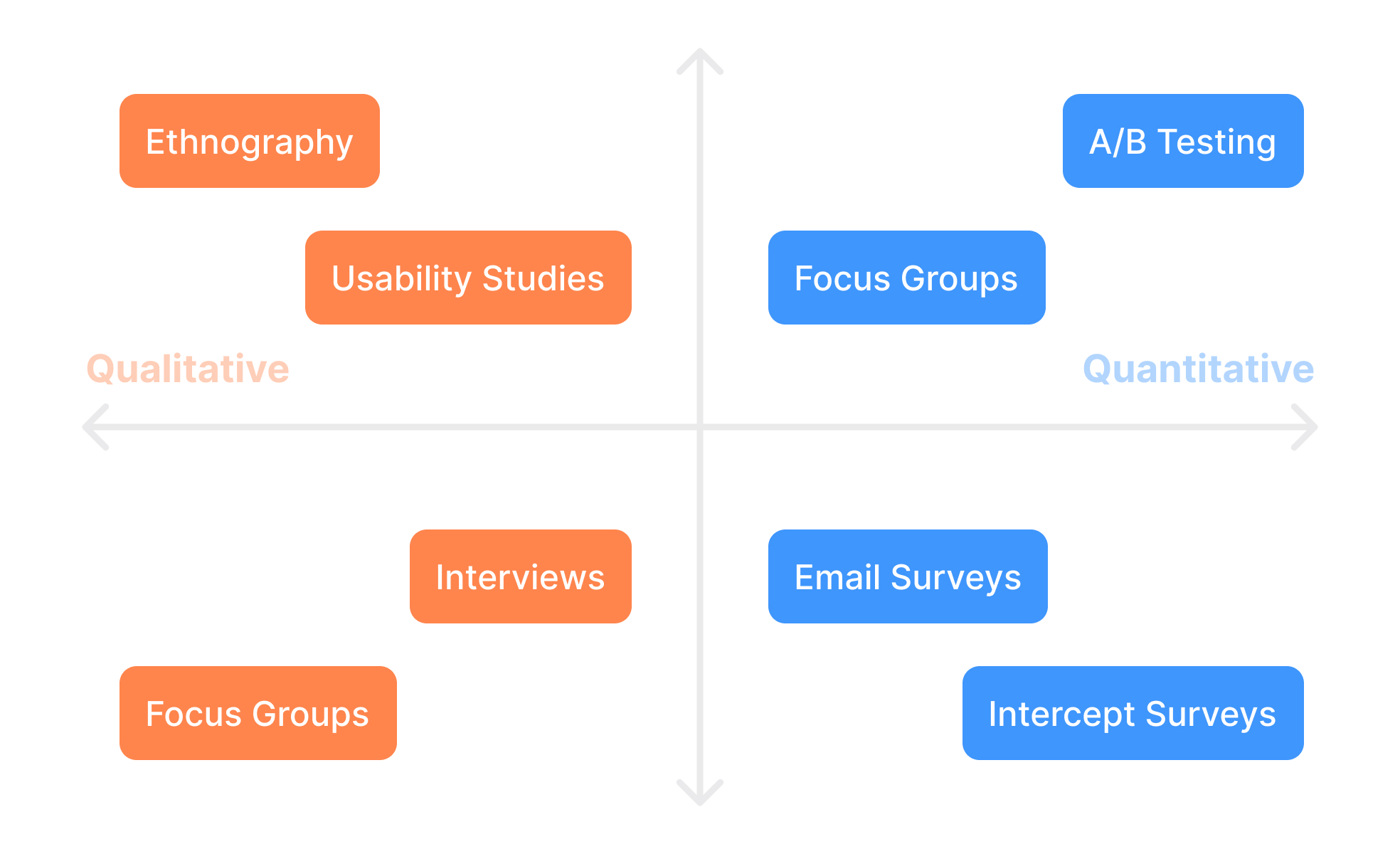
Two axes organize the whole landscape. The first is qualitative versus quantitative: qualitative methods like interviews and field studies explain why behavior happens, while quantitative methods like surveys and analytics measure how much and how often. The second is attitudinal versus behavioral: what people say against what people do, and the gap between those two is where many product surprises live. Any research question can be located on these two axes, and its position points to the right family of methods.
How do teams choose a research method?
The question comes first, then the method. Discovery questions (what do users need) point to qualitative work. Measurement questions (how many hit this problem) point to quantitative work. Validation questions usually need both, in sequence. Budget and access matter too: 5 usability sessions this week beat a perfect study that never runs.
Why do research methods matter?
Method choice is quality control for evidence. Teams that pick whatever approach feels convenient collect insights that are interesting but do not answer the question they actually have, and decisions made on mismatched evidence inherit the mismatch. A deliberate method also makes findings defensible: stakeholders can challenge a conclusion, but a documented procedure shows exactly how it was reached.
What do research methods look like in practice?
Working researchers keep a mental map of the landscape, and it looks like the two diagrams below.
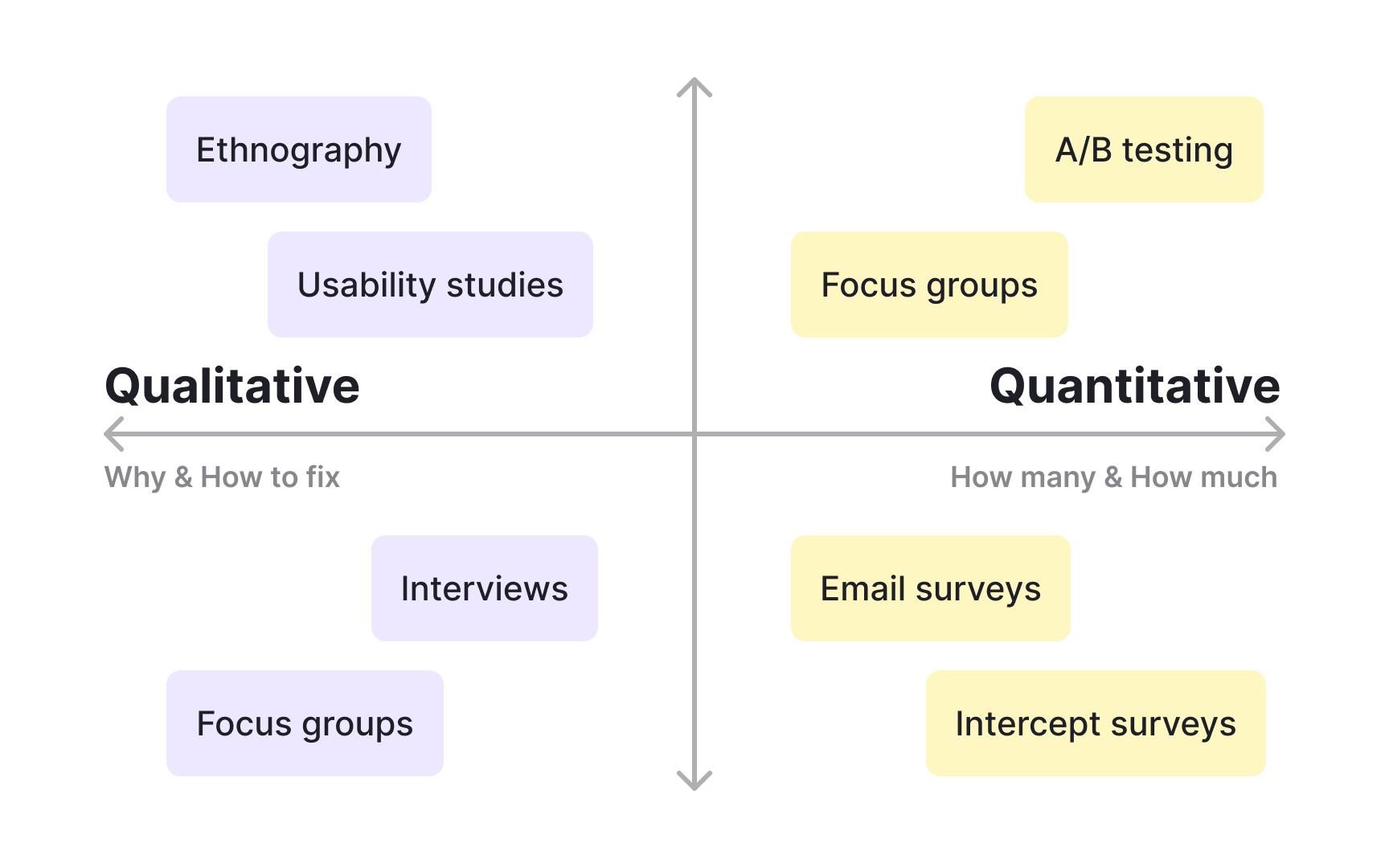
The first axis: qualitative methods answer why and how to fix, quantitative methods answer how many and how much. The same method can sit in different places depending on how it is run. From the lesson Choosing a UX Research Method.
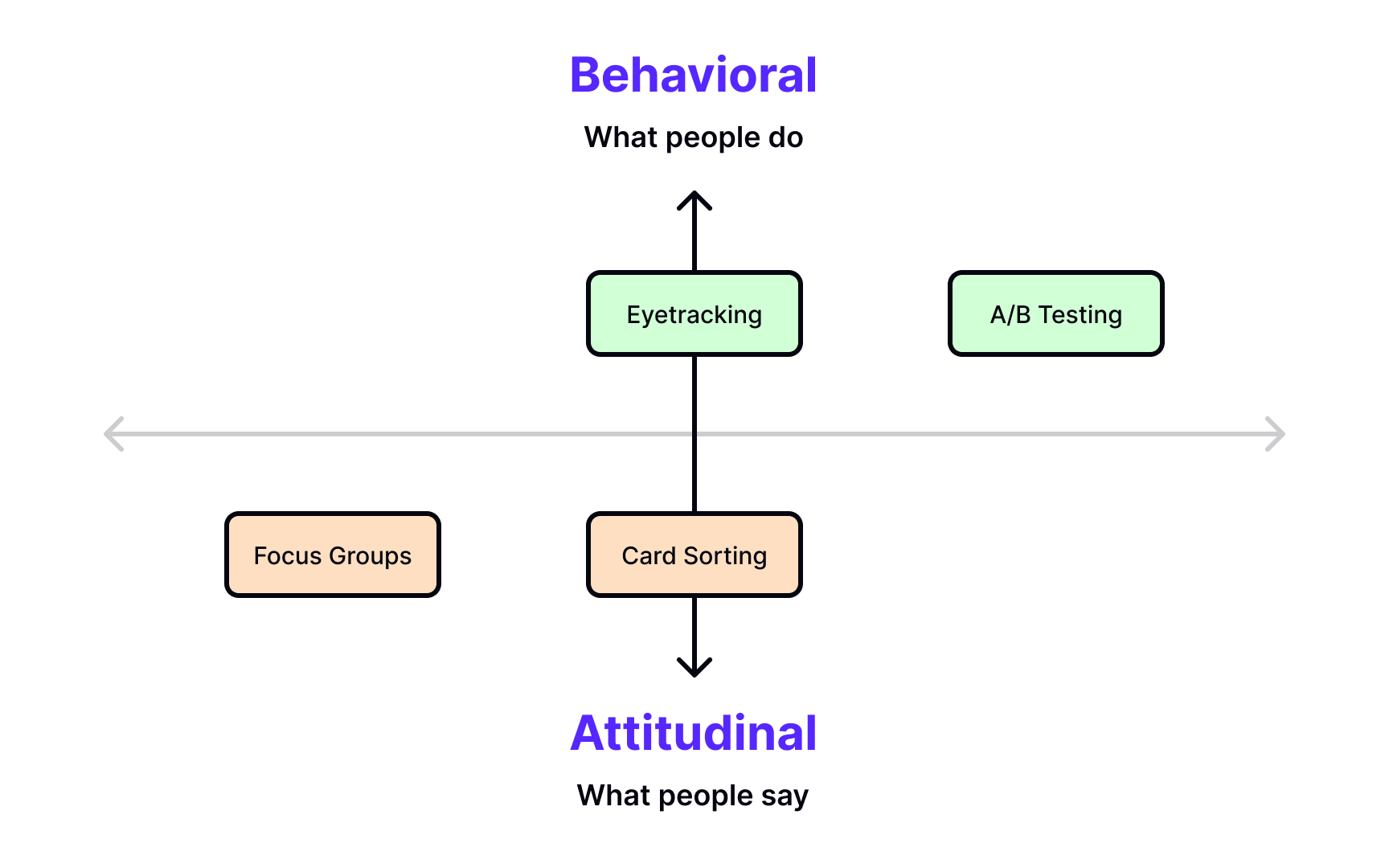
The second axis: attitudinal methods capture what people say, behavioral methods capture what people do. When the two disagree, behavior usually tells the truth.


