.svg)


Product designer interviews probe five areas: your design process, fundamentals, judgment on real complexity, technical and data literacy, and how you reason through scenarios. This guide covers 45 real questions across all five, each with an example answer and the reason interviewers ask it. The bar shifted with the market: portfolios get you in the room, but offers go to candidates who can connect design decisions to business outcomes, handle stakeholder friction, and show structured thinking out loud. Prioritize the sections that match your level, and benchmark against the product designer skills employers actually screen for.
Key takeaways
- General questions (process, feedback, collaboration) appear at every level and set the tone; a rigid process and no process both read as red flags.
- Behavioral answers need specifics and outcomes: "cart abandonment dropped from 68% to 45%" beats any adjective.
- Technical questions now include metrics, A/B testing logic, and AI ethics, even for design roles.
- Scenario questions score your reasoning process, not the conclusion; say the trade-offs out loud.
- Structure answers with the STAR format (Situation, Task, Action, Result), and keep each story near two minutes.
- Close the gaps before interview week: a Product Designer career path sequences the skills these questions test.
Where should you focus your prep time?
| Your situation | Focus areas | Skip or skim |
|---|---|---|
| First design job | Fundamentals, portfolio stories, design thinking basics | Advanced strategy, design systems architecture |
| Switching from graphic design | UX process, research methods, interaction patterns | Visual design questions (you've got those) |
| Moving from junior to mid | Metrics, collaboration stories, stakeholder examples | Basic definitions you already know |
| Targeting senior roles | Leadership scenarios, business impact, mentoring | Entry-level technical questions |
| Interviewing at a startup | Scrappiness, speed vs. quality, wearing multiple hats | Enterprise process questions |
| Interviewing at enterprise | Process rigor, cross-functional alignment, scale | Generalist "do everything" questions |
General product designer interview questions
These appear in almost every design interview regardless of seniority. Interviewers use them to understand how you think, how you work with others, and whether you'll fit the team.
1. Walk me through your design process
A strong answer: "My process adapts to the project, but typically starts with understanding the problem through stakeholder conversations and user research. I define success criteria early, explore through sketches and wireframes, validate with prototypes and testing, then iterate. On my last project, early testing showed our initial direction missed a key user need, so we pivoted before investing in high-fidelity work."
Why they ask: Rigid process followers and candidates with no process both raise red flags; they want structure plus adaptability.
2. How do you handle feedback or criticism on your designs?
A strong answer: "I listen first to understand the concern before responding. Sometimes feedback points to a real problem I missed; sometimes it's a preference difference I can reason through. Recently a stakeholder pushed back hard on a navigation pattern. Instead of defending it, I asked what wasn't working, and it turned out they had user-complaint context I didn't. The solution got stronger because of it."
Why they ask: Design runs on critique; they need your ego separated from your work.
3. Tell me about a project you're most proud of
A strong answer: Pick a project with a measurable outcome and a judgment call. Example shape: "Cart abandonment sat at 68%. Research showed the problem wasn't the checkout flow but uncertainty about shipping costs, so we surfaced them earlier and added a delivery estimator. Abandonment dropped to 45% in two months, and shipping-related support tickets fell 30%. I'm proud we resisted redesigning everything and fixed the actual problem."
Why they ask: They're evaluating your judgment about what good design work is and whether you can articulate impact.
4. How do you prioritize multiple projects competing for your time?
A strong answer: "I clarify business impact and urgency with product managers and push back when everything is marked urgent. I block deep-work time, batch small tasks, and when I genuinely can't do everything, I communicate trade-offs early rather than letting things slip. Last quarter three projects overlapped; staging them with clear milestones kept quality up without burning the team."
Why they ask: Real design work is constant prioritization; they want evidence you manage demand without chaos.
5. Describe a time you disagreed with a product decision
A strong answer: "Our PM wanted social sharing based on competitor analysis; our research showed users valued privacy. Rather than just objecting, I proposed a quick validation study: 10 of 12 users were uncomfortable with the feature. The data redirected the effort to something users wanted, and the disagreement stayed constructive because it ran on evidence rather than opinion."
Why they ask: Healthy teams disagree; they're checking you can advocate for users without being difficult.
6. How do you stay current with design trends and tools?
A strong answer: "A few curated sources instead of every trend: newsletters, case studies from companies solving similar problems, and weekly learning time. Right now I'm going deeper on design systems and how AI is changing research synthesis. My network surfaces at least as much as my reading list does."
Why they ask: Design moves fast; they're hiring for the growth curve, not just current skills.
7. What's your approach to collaborating with engineers?
A strong answer: "Early and often. I run ideas past engineers before I'm deep in solutions, document designs with annotations and specs, and stay available during implementation. When they suggest an easier-to-build alternative, I evaluate whether the trade-off meaningfully affects the experience; sometimes their simpler approach is better. That trust means they fight for the details that matter when I need them to."
Why they ask: They're assessing whether you'll be a partner or a source of friction.
Beginner product designer interview questions
Entry-level interviews focus on fundamentals, learning ability, and how you think through problems, plus self-awareness about what you're still learning.
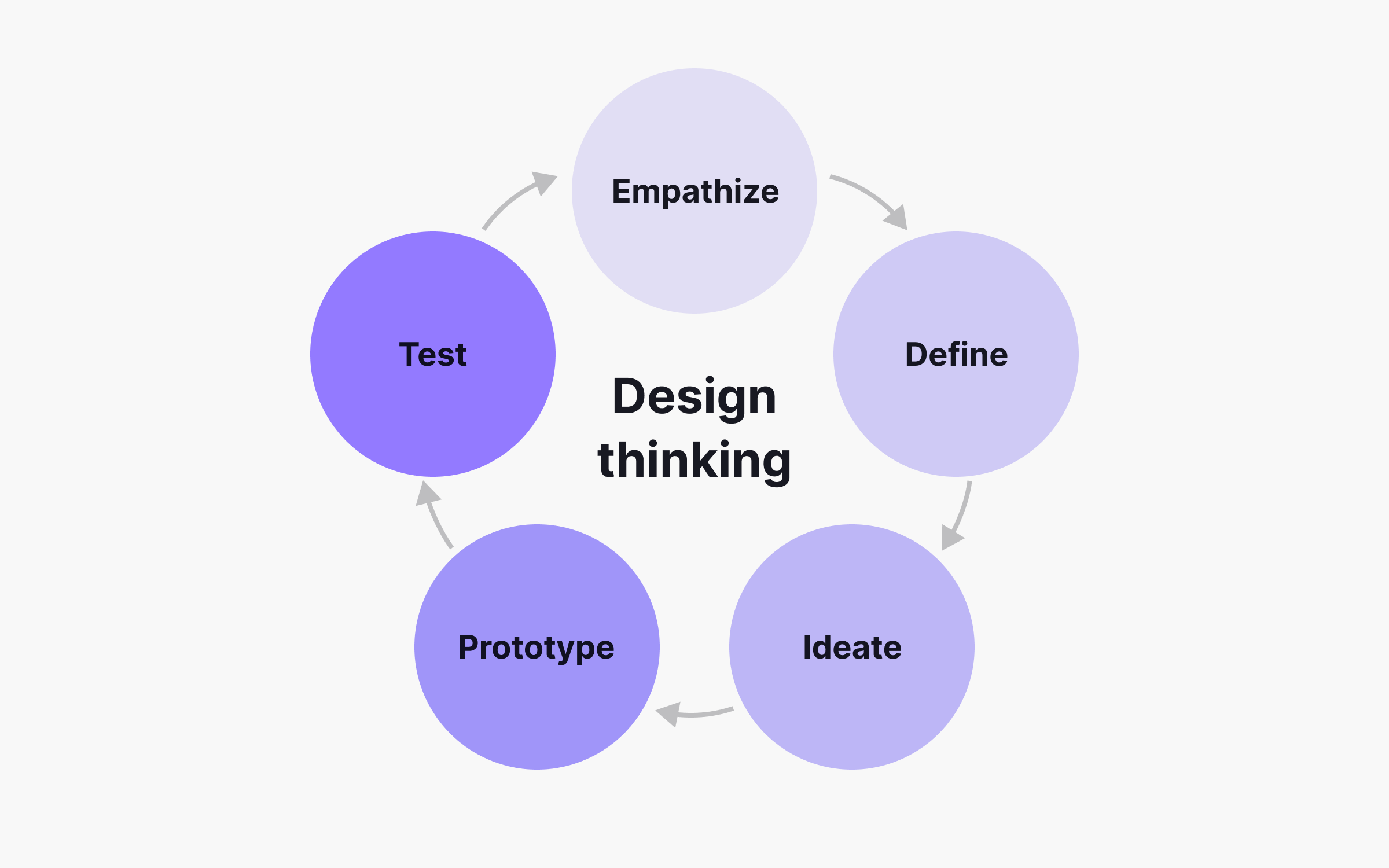
8. What is the purpose of the empathize stage in design thinking?
A strong answer: "It's about deeply understanding users' needs, frustrations, and motivations before jumping to solutions, through interviews, observation, and contextual inquiry. Without it you design for assumptions. I learned that in a student project where I skipped research and built something nobody needed."
Why they ask: They're testing whether you know good design starts with people, not pixels.
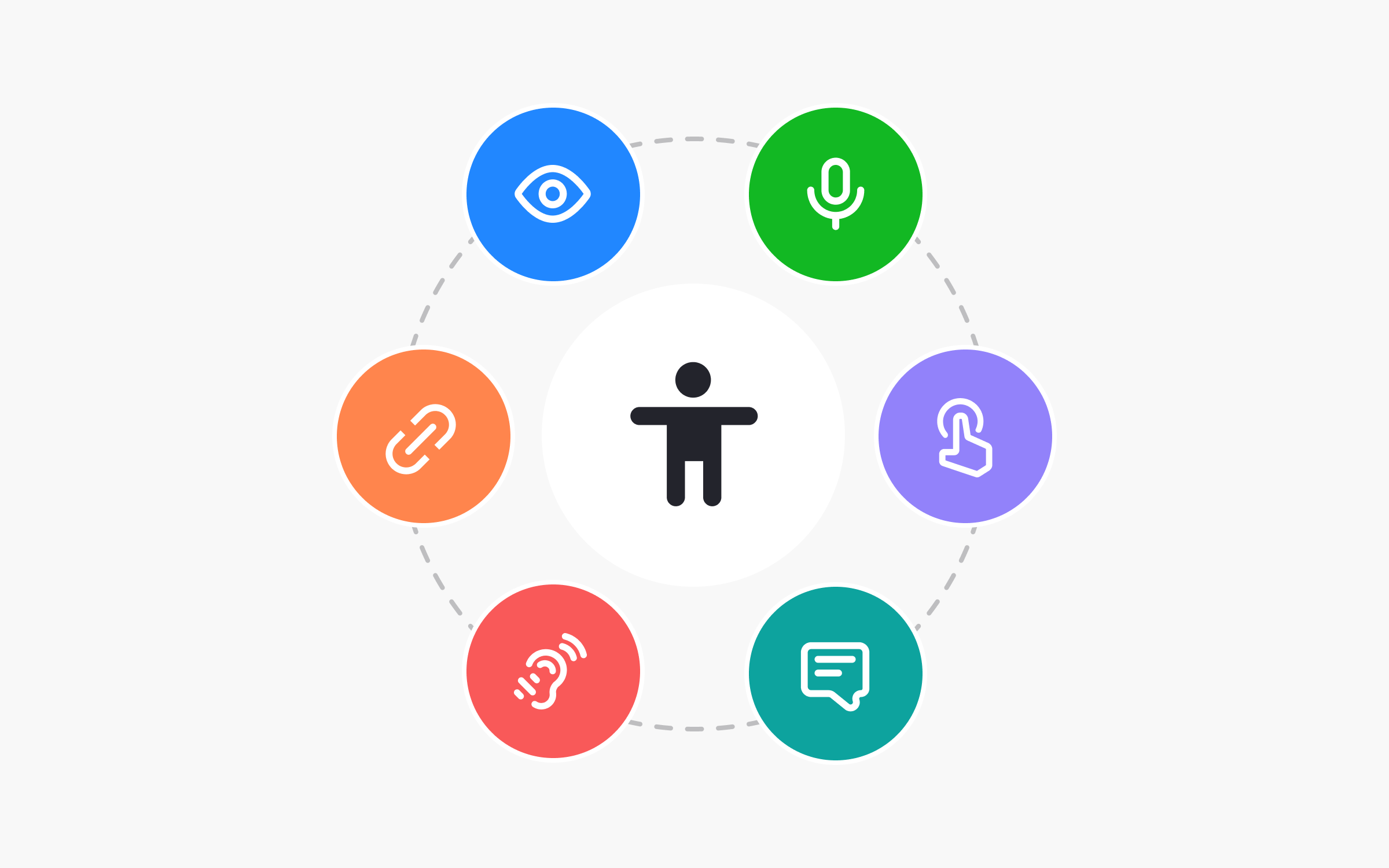
9. Why is accessibility important in product design?
A strong answer: "It broadens who can use the product and reduces legal and ethical risk. And it's bigger than compliance: it means designing for the full spectrum of ability, including temporary and situational limits like a broken arm or bright sunlight. Accessible design usually improves the experience for everyone, and it belongs at the start of the process, not retrofitted."
Why they ask: They want designers who build accessibility in, not bolt it on.
10. How would you conduct a competitive analysis?
A strong answer: "Identify two to five direct and indirect competitors, then analyze systematically across features, experience, pricing, positioning, and audience, with screenshots and notes. The goal isn't copying; it's mapping the landscape, spotting the gaps everyone leaves open, and turning that into specific recommendations."
Why they ask: Even junior designers need to learn from the market systematically.
11. What's the difference between UX and UI design?
A strong answer: "UX is the overall experience: whether users accomplish their goals and whether the product solves real problems. UI is the visual and interactive layer: layout, typography, color, micro-interactions. They overlap but answer different questions, and a product can have beautiful UI with terrible UX. Product designers integrate both."
Why they ask: Foundational scope check.
12. Walk me through how you'd approach a wireframing project
A strong answer: "Clarify the problem and the user first, review existing research and technical constraints, then sketch multiple rough concepts before committing. Low-fidelity wireframes focus on information hierarchy and flow, not visuals; feedback and iteration come before any fidelity increase. Color and visual polish come last, after the structure is validated."
Why they ask: They want structured thinking and awareness that wireframes are about structure, not aesthetics.
13. What is a user persona and what makes one effective?
A strong answer: "A fictional representation of a target user built from research data. The effective part is goals, motivations, and frustrations that drive behavior, not demographics. Good personas get used: the team asks 'would this solve Sarah's problem?' instead of debating abstract features. Elaborate personas nobody references are decoration."
Why they ask: They're checking you understand the tool's purpose beyond the template.
14. How do you ensure your designs are user-centered?
A strong answer: "Involve users throughout: research to understand problems, early concept testing at low fidelity, validation before and after launch. And challenge my own assumptions: when I catch myself saying 'users will probably want this,' I go find evidence."
Why they ask: They want the mindset to be genuine, not a slogan.
15. What's the most valuable feedback you've received on your work?
A strong answer: The shape that works: real feedback that changed your practice. Example: "A mentor told me I was designing for other designers, not users. It stung, and it changed everything: I now test with people outside the design bubble and judge work by whether it works, not whether it impresses a portfolio review."
Why they ask: Coachability is the core junior trait; they're listening for self-awareness and growth.
Intermediate product designer interview questions
Mid-level interviews dig into how you handle complexity, influence decisions, and deliver business impact, with concrete examples of leading within projects even without the title.
16. How do you synthesize user research into insights teams can act on?
A strong answer: "Affinity mapping finds the themes; the real work is insight statements that carry their implication, like 'users struggle with X, which means we should consider Y.' I separate what users say from what their behavior shows. The output is prioritized recommendations tied to specific design decisions, not a report that sits on a shelf."
Why they ask: Research without synthesis is just data; they want observations turned into direction.
17. Describe your experience working with cross-functional teams
A strong answer: "Product, engineering, data science, marketing: the skill is knowing what each function cares about and speaking that language. With engineers it's feasibility and implementation detail; with PMs it's impact and priority. Inviting partners in early, instead of presenting finished work, catches constraints I'd miss and builds buy-in that survives review."
Why they ask: Isolated designers produce work that doesn't ship well.
18. How do you measure the success of your designs?
A strong answer: "Success metrics get defined before designing, aligned with product goals: quantitative like task completion, time on task, or conversion, plus qualitative signals. The metric matches the goal (activation rate for onboarding, abandonment and revenue per session for checkout), and after launch I check whether we solved the original problem, not just whether numbers moved."
Why they ask: They're checking you think past aesthetics to outcomes.
19. Tell me about presenting to stakeholders who weren't designers
A strong answer: "For an executive navigation-redesign pitch, I led with the problem in business terms: users couldn't find key features, driving support costs and churn. Then the evidence, then the solution, with each design decision tied back to the business problem and zero design jargon. They approved it the same day because the case was made in their terms."
Why they ask: Design needs organizational support, which means communicating value beyond the design team.
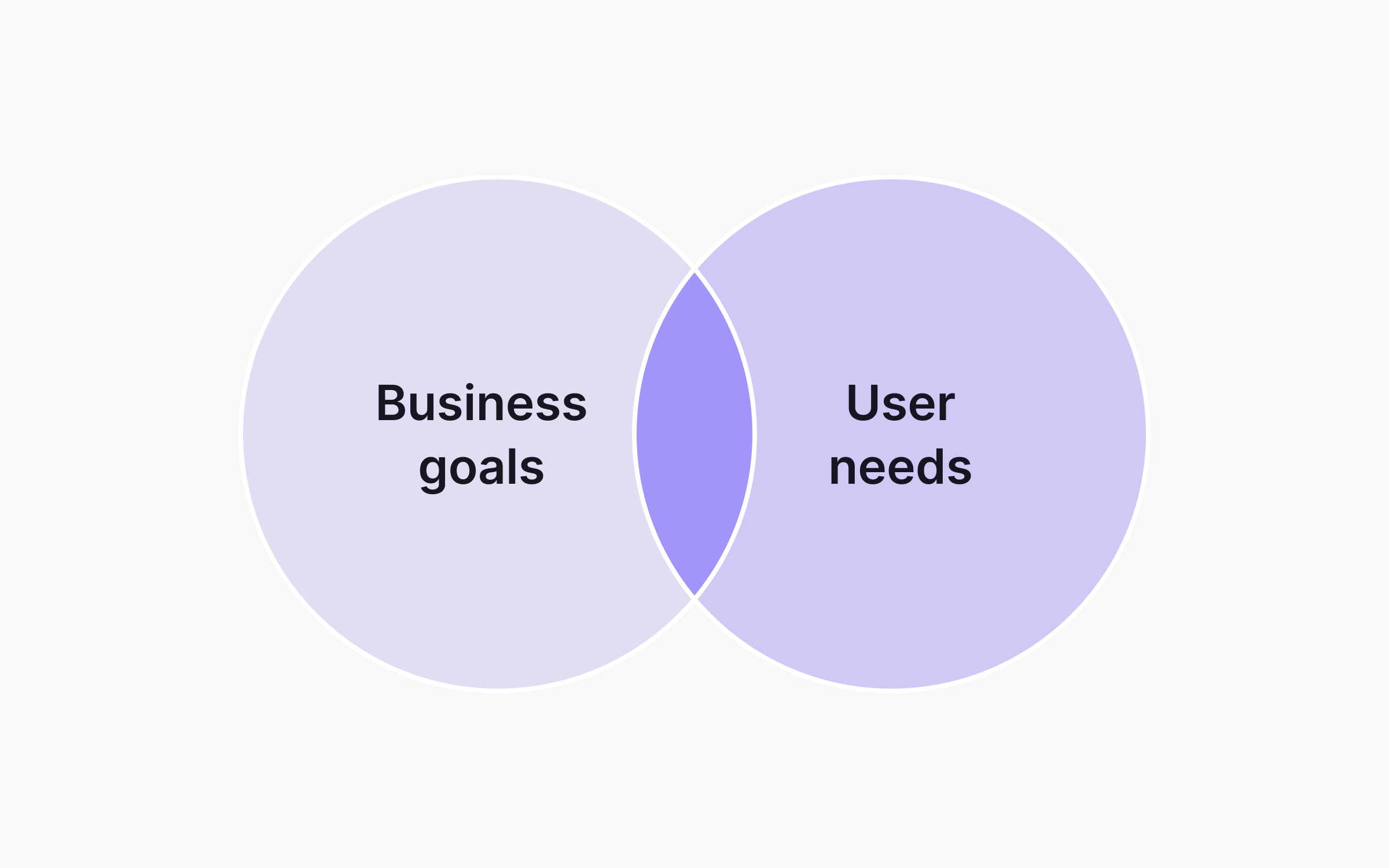
20. How do you handle user needs conflicting with business goals?
A strong answer: "First I question whether the conflict is real; it's often a false trade-off with a creative third option. When the tension is genuine, I advocate for the user while being honest about constraints: alternatives that hit the business goal with less user harm, or an experiment to test the assumptions. If we ship a compromise, I document the decision so we can revisit it. Quietly accepting dark patterns is the failure mode."
Why they ask: This tension is constant, and they need to know you navigate it deliberately.
21. What's your approach to building and maintaining design systems?
A strong answer: "A design system is a product whose users are the design and engineering teams, so it gets the same treatment: understand needs, iterate on feedback, document clearly. The balance is standardization against flexibility: too rigid and teams route around it, too loose and it adds nothing. And it's never done; governance and maintenance are the job."
Why they ask: They're assessing whether you see systems strategically or as a component library.
22. How do you approach designing for different platforms?
A strong answer: "Context first: mobile users are distracted with limited screen space, so key actions get priority and flows get simpler; web supports richer functionality. I design the core experience first and adapt per platform rather than forcing consistency across contexts with different needs."
Why they ask: They want evidence you think beyond one-size-fits-all.
23. Describe a project where you changed direction based on user feedback
A strong answer: "Weeks into a dashboard design, testing showed our information hierarchy was wrong: users prioritized metrics we'd buried. We acknowledged the miss and restructured rather than rationalizing the sunk cost. Humbling, and exactly why we test early; the shipped version performed significantly better."
Why they ask: Adaptability beats being right the first time.
24. How do you balance speed with quality?
A strong answer: "By classifying decisions: high-impact, hard-to-reverse ones get exploration; low-stakes ones get quick judgment and iteration. When a deadline forces corners, I name what we're sacrificing and log the debt. Speed without quality creates problems; quality without speed ships nothing."
Why they ask: Every team lives in this tension; they want it navigated with awareness.
Technical product designer interview questions
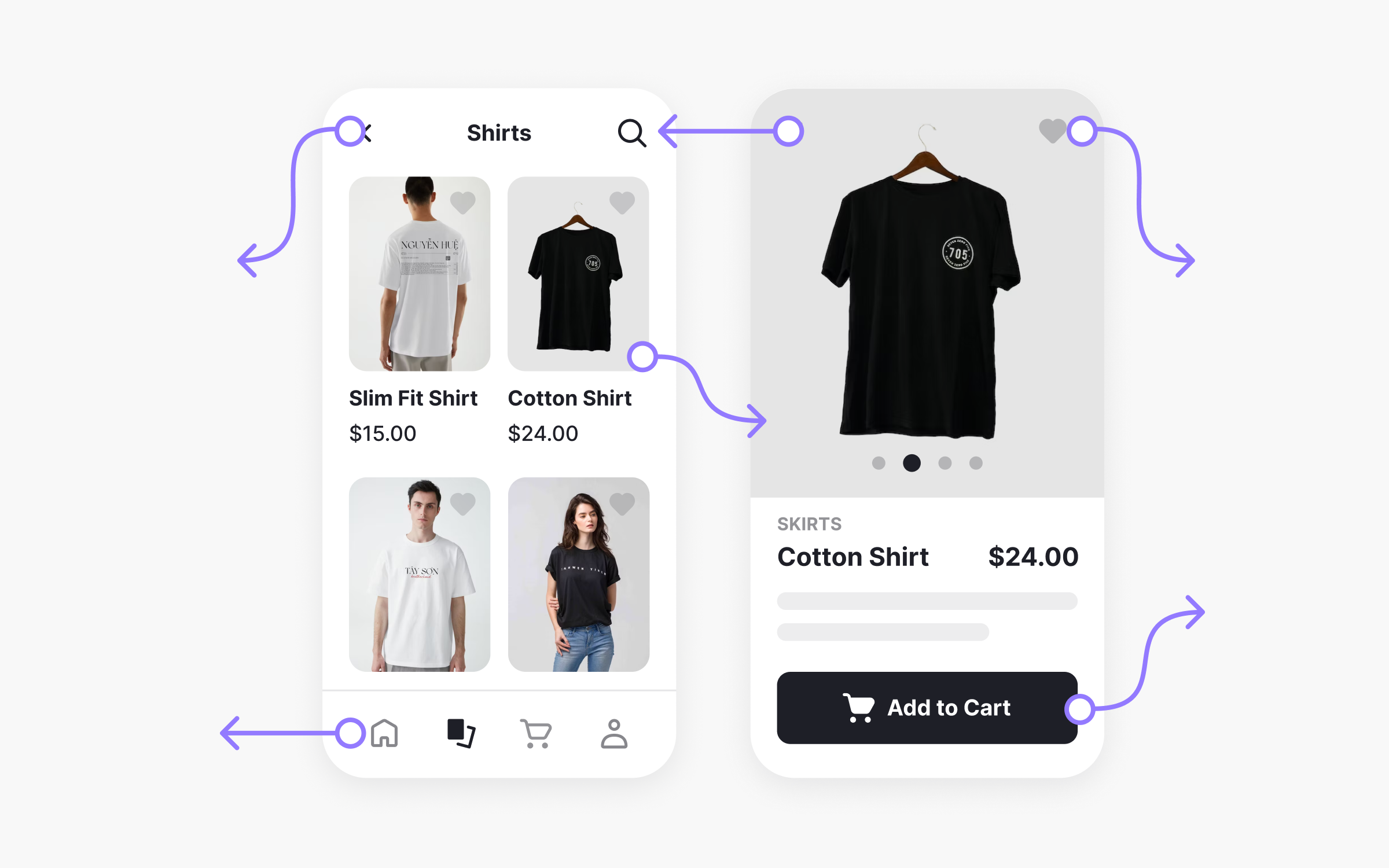
These test specific knowledge and problem-solving, many adapted from real design assessments: metrics, experiments, systems, and AI.
25. What does a high bounce rate indicate about a website's design?
A strong answer: "Users leave quickly, and the metric alone doesn't say why: expectation mismatch, poor information architecture, slow loads, overwhelming layouts, or a landing page that answered the question immediately. I'd read behavior patterns and session recordings, then add qualitative research before concluding anything."
Why they ask: Diagnostic thinking versus jumping to conclusions.
26. When is a high-fidelity prototype most appropriate?
A strong answer: "After the core concept and structure are validated: for testing interactions lower fidelity can't simulate, winning over stakeholders who can't extrapolate from wireframes, or preparing developer handoff. Going high-fidelity early wastes effort and anchors everyone on visual detail before the fundamental problems are solved."
Why they ask: Fidelity-to-purpose matching signals strategic method choice.
27. What's the primary role of a workshop facilitator?
A strong answer: "Leading activities that help the group do its best thinking: structure, psychological safety, time and energy management, drawing out quieter voices. The facilitator serves the group's objective rather than their own agenda, and the best ones are nearly invisible while the group reaches real outcomes."
Why they ask: Facilitating and participating are different jobs; they check you know which is which.
28. Why is randomization critical in A/B testing?
A strong answer: "It makes the groups statistically comparable at the start, so outcome differences can be attributed to the design change rather than pre-existing group differences. Weekday signups seeing variant A while weekend users see variant B would confound the result; randomization removes that."
Why they ask: Experimentation literacy is now expected of designers.
29. What is evolutionary prototyping?
A strong answer: "Developing a system in increments where each prototype becomes the basis for the next, evolving with user feedback until it's the final product, rather than building throwaways. It fits when requirements are unclear upfront and the team iterates quickly."
Why they ask: Knowing multiple prototyping approaches means choosing the right one per situation.
30. What can go wrong with biased research?
A strong answer: "Teams build features users don't need. Only talking to fans hides critical problems; leading questions confirm assumptions instead of testing them, and confirmation bias feels like validation. The costs: wasted development, missed market fit, and eroded trust in research itself. Good research hunts for disconfirming evidence."
Why they ask: Research rigor caps design quality.
31. How should teams handle an outdated but still-used API version?
A strong answer: "Set a clear deprecation timeline and support users through the migration: announce well ahead, document the upgrade path, monitor usage until affected users have moved. Killing access without warning breaks trust; running old versions forever accumulates maintenance and security risk."
Why they ask: Product thinking extends past UI into system lifecycles.
32. What makes user flows clear and intuitive?
A strong answer: "Minimum friction aligned to user goals: no unnecessary steps, clear signposts for where you are and what's next, consistent patterns, limited choices per decision point, and clean error recovery. The test is whether users reach their goal without thinking about the interface."
Why they ask: Flows are fundamental, and they want the principles, not the deliverable.
33. What is the goal of the diverge stage in diverge-and-converge workshops?
A strong answer: "Generating ideas individually, without bias or groupthink, so quieter voices contribute equally. The stage optimizes for quantity: wild ideas spark practical ones, and the converge stage filters and refines what diverging produced."
Why they ask: Workshop mechanics are core tools; they test when and why, not just what.
34. What does ecosystem mapping help identify?
A strong answer: "Interdependencies that affect product outcomes: how actors, systems, and touchpoints influence each other and the experience. It exposes risks invisible at the feature level and shows how a change ripples through connected systems and stakeholders."
Why they ask: Systems thinking, zoomed out from individual screens.
35. Which metric assesses how quickly users complete a task?
A strong answer: "Task completion time, measured against benchmarks or previous versions. Its companions tell the rest of the story: task success rate (did they finish at all), error rate (stumbles on the way), and satisfaction (how it felt)."
Why they ask: Metric selection reveals whether you know which numbers answer which questions.
36. What is a strategic outcome of strong prototyping practice?
A strong answer: "Reduced development risk and faster validated learning. Prototyping tests ideas cheaply before implementation, surfaces problems while they're inexpensive, aligns stakeholders around concrete artifacts, and protects engineering capacity from building failures."
Why they ask: Prototyping has strategic value beyond making clickable things; they check you see it.
37. How can CRM data support product decision-making?
A strong answer: "It reveals behavior and need trends: which features customers ask about, what drives support tickets, how segments engage, where the journey breaks. Connected to specific design decisions, it validates research and locates high-impact improvements; treated as background noise, it's wasted."
Why they ask: Data literacy beyond the analytics dashboard.
38. How do teams turn performance metrics into meaningful product decisions?
A strong answer: "Goal-driven KPIs: start from the question, choose metrics that answer it, deprioritize vanity numbers. Then baselines, targets, and a feedback loop between metric movement and design changes, so measurement and decisions stay coupled."
Why they ask: Metrics without action are decoration.
39. What's a common mistake when localizing UI content?
A strong answer: "Not leaving space for text expansion: German runs roughly 30% longer than English, and layouts designed tightly around English break in translation. Close behind: unreviewed machine translation, culturally specific idioms, and assuming icons and colors read universally. Localization flexibility is a design-time decision."
Why they ask: Global products need designers who think past their own language.
40. When implementing ML that affects user opportunities, what matters most?
A strong answer: "Fairness, transparency, and freedom from harmful bias, with ongoing monitoring. ML amplifies training-data bias, and in domains like job recommendations or loan approvals that means discriminatory outcomes. Designers advocate for fairness testing, explainable decisions, and user recourse. It's ethics and risk management at once."
Why they ask: AI ethics is now a designer's problem too.
Scenario-based interview questions
Scenario questions test reasoning through complex situations; the process is scored more than the conclusion.
41. Your team struggles to stay aligned with the product vision. Your approach?
A strong answer: "Diagnose first: is the vision unclear, or clear but disconnected from daily work? Then reinforce it through tangible artifacts (principles, example decisions) and regular is-this-serving-the-vision check-ins. And look for structural causes; if incentives conflict with the vision, communication won't fix it."
Why they ask: Alignment is a leadership problem, and they want diagnosis before remedies.
42. A feature you designed is usable but not accessible. What do you do?
A strong answer: "Delay or revise before launch. Shipping inaccessible features creates exclusion, legal exposure, and debt that's harder to fix later. If timeline pressure is real, accessibility fixes become the documented top priority of the next iteration. Launching and hoping nobody notices is the one wrong answer."
Why they ask: They want someone who holds the line under pressure.
43. Your workshops lack structure and clear outcomes. What's happening?
A strong answer: "Almost always unclear objectives: if I can't name the decisions the workshop should enable, neither can participants. The fix is specific goals up front, activities that build toward them, timeboxes, a capture process for outputs, the right people in the room, and named next steps before anyone leaves."
Why they ask: Facilitation failures are diagnosable, and they want to hear the diagnosis.
44. Your company wants more innovative features. Most effective approach?
A strong answer: "A culture and process balancing exploration with execution: dedicated experiment time, clear criteria for which bets get resourced, and fast test-and-learn loops. Idea quotas produce quantity over quality, and isolated innovation labs fail because innovation needs contact with real customer problems."
Why they ask: Innovation is a buzzword; they want the mechanics.
45. You need to test a prototype with no time for dry runs. What type do you build?
A strong answer: "A static prototype: defined screens navigated manually, so the facilitator shows the appropriate next screen instead of trusting clickable logic that might break mid-session. It trades some realism for reliability, which is the right trade when preparation time is gone."
Why they ask: Practical constraints shape methodology; they want the adaptation reasoned, not improvised.
How to prepare for your product designer interview
Start with self-assessment. Take the Uxcel Pulse assessment for an objective read on your skill levels across design disciplines, so prep time goes where the gaps are.
Practice out loud. Review portfolio projects in STAR format (Situation, Task, Action, Result) and tell the stories until they flow. Answers that seem clear in your head fall apart the first time you say them.
Prepare for the technical layer. Metrics, experiment logic, accessibility, and AI questions now show up in design interviews; brush up where the sections above felt thin.
Mock interview if you can. A friend or mentor giving feedback on content and delivery beats another silent read-through.
In the room: lead with the headline, support it with evidence, acknowledge trade-offs, and ask clarifying questions instead of guessing what the interviewer wants. Long unstructured answers hurt even strong candidates.
Where do you go from here?
Work the questions that felt thin until they don't, out loud. The patterns repeat across companies: process plus adaptability, evidence-backed stories, metric literacy, and reasoning you can narrate. For a structured route through the gaps, the Product Designer career path combines courses, practice briefs, and skill assessments into one progression, and Pulse will tell you exactly which sections of this guide to reread.