




.svg)


Having many ideas is good, but at some point you need to focus. The challenge is reducing options without prematurely killing ideas that might be valuable or defaulting to the safest choice.
Keep in mind that the process should feel fair to participants. When people feel their ideas were dismissed without consideration, they disengage from the project. Transparent criteria and documented rationale help maintain buy-in even when someone's favorite idea doesn't make the cut.
It's worth keeping a "parking lot" for ideas that don't fit the current project but might be valuable later. Good ideas that arrive at the wrong time shouldn't disappear entirely. They might be exactly what's needed for the next initiative.
Forced ranking

Forced ranking is a technique where a group is given a list of options and asked to rank them in order of importance or relevance. This technique can be useful when the group needs to prioritize many ideas or options quickly.
Here's an example of how forced ranking can be used in service design ideation:
- Let's say a team is tasked with designing a new mobile app that helps people manage their finances. In the ideation phase, the team comes up with a list of 20 potential features that could be included in the app.
- Including all 20 features would make the app overwhelming and confusing for users. The team needs to narrow down the list of features to the most essential ones that will provide the most value to users. To do this, the team can use forced ranking to identify the top 5 most important features for the app.
- Each team member would rank the 20 features from most important to least important, and then the rankings would be combined to determine which 5 features were ranked the highest overall.
- These top 5 features would then be included in the app, while the remaining 15 ones could be either discarded or reconsidered in a later phase of the design process.
While forced ranking can be useful in reducing the number of options in service design ideation, there are also some drawbacks to consider. The method can be influenced by personal biases, leading to rankings that don't accurately reflect the quality or potential of each idea. It can also limit the ability to consider more unique or unconventional ideas and can be a time-consuming process. Additionally, it doesn't provide much context or reasoning for why certain ideas were ranked higher or lower, which can lead to disagreements and misunderstandings among team members.
Prioritization matrix
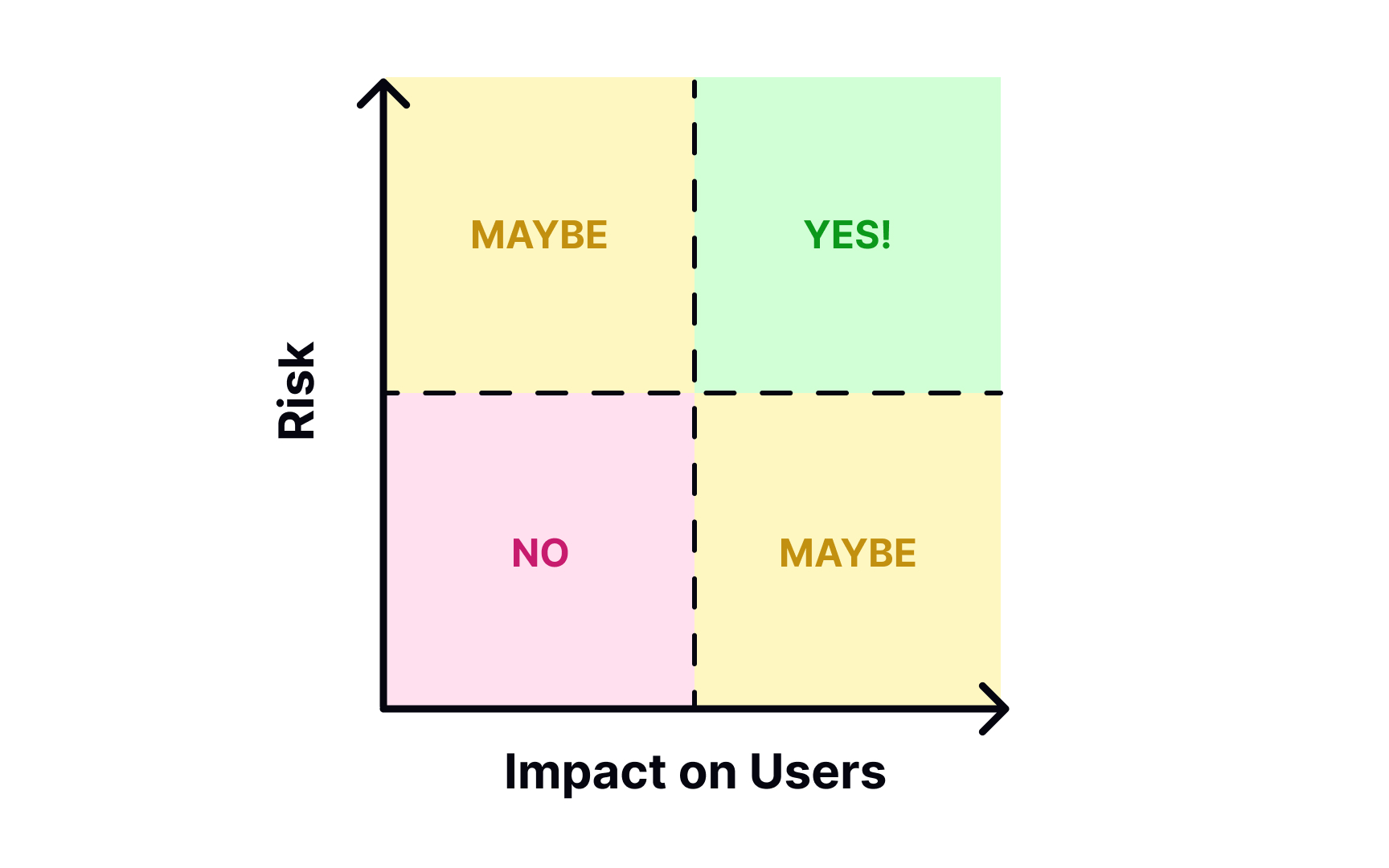

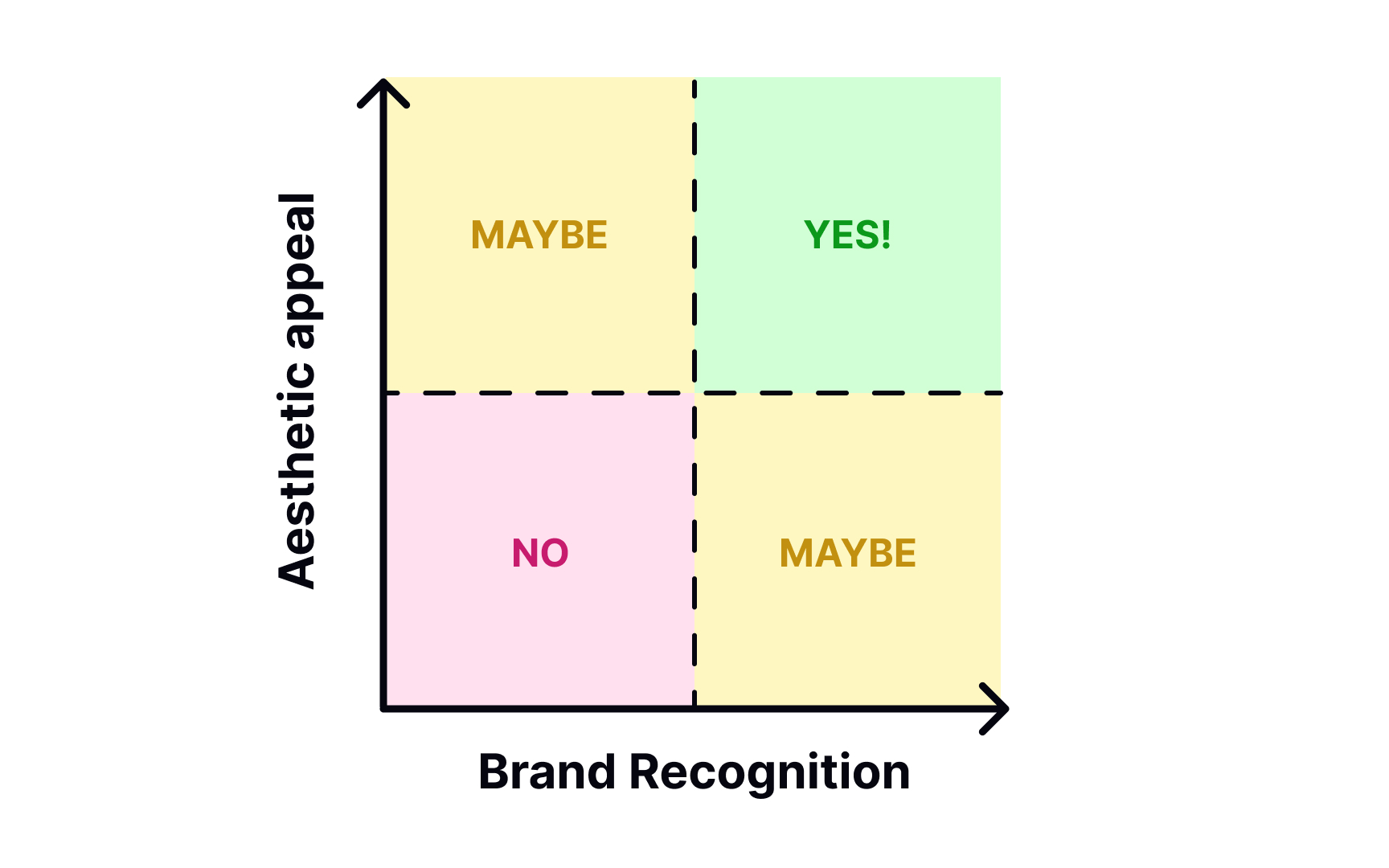

A prioritization matrix helps teams evaluate ideas against specific criteria to identify which ones will deliver the most value to users. One common approach is the 2x2 matrix, which plots ideas against two key dimensions.
Here's how to use a 2x2 prioritization matrix to reduce options:
- Define your two evaluation criteria. Choose dimensions that matter most for your project goals and user needs. For example, a team designing a fitness app needs to prioritize features like workout tracking, social sharing, and nutrition tracking. They choose "Impact on Users" (how much value it provides) and "Risk" (how difficult or uncertain it is to build).
- Plot each option on the matrix. Place ideas in one of four quadrants based on where they fall on both dimensions. High-impact, low-risk ideas land in the "YES!" quadrant and should be prioritized first. High-impact, high-risk ideas are "MAYBE" (worth exploring but need risk mitigation). Low-impact options, regardless of risk, typically fall into "MAYBE" or "NO" categories.
- Focus on the high-priority quadrant. The ideas in the "YES!" zone (high impact, low risk) become your starting point for development, while others may be deprioritized or require further validation.
Teams can customize their matrix axes based on what matters most: effort vs. value, feasibility vs. desirability, or cost vs. user engagement. The visual nature of the matrix makes trade-offs clear and helps teams align on priorities quickly.[1]
Dot voting technique
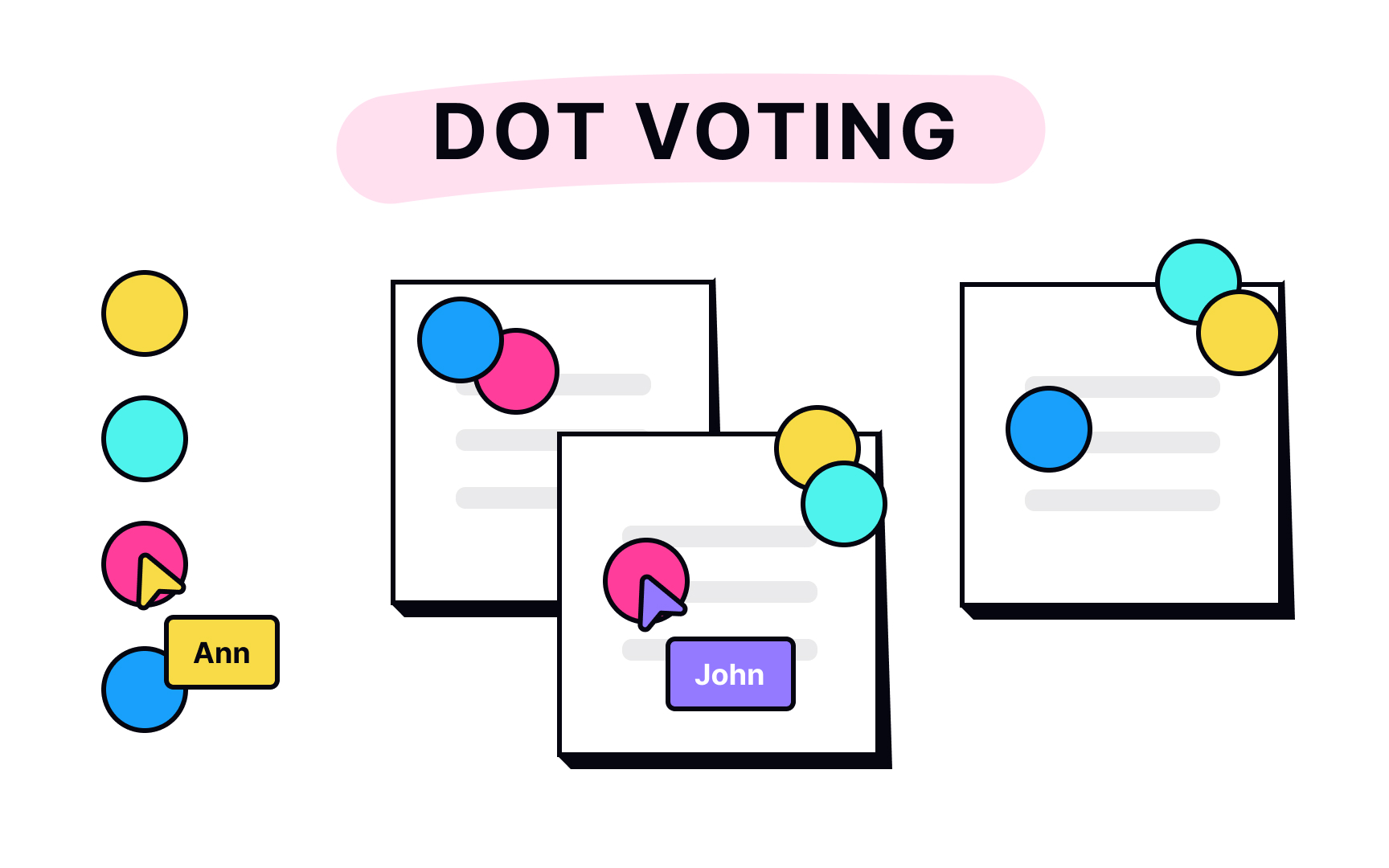
Dot voting is a shortlisting technique that allows team members to vote on the ideas that they believe are most valuable or important. This is a quick and simple way to prioritize options without lengthy discussion or debate.
Here's an example of how dot voting can be used in service design ideation:
- Let’s say a team is brainstorming ideas for a new product feature for an online marketplace. They have generated a list of 20 potential ideas, but they need to narrow down the list to the top five ideas to focus on in the next phase of development.
- To do this, each team member is given a certain number of dots, such as 5 or 10. They are asked to place their dots next to the ideas they believe are the most valuable or important. Each team member can place their dots all on one idea or spread them out among multiple ideas.
- After all the dots have been placed, the team tallies up the number of dots next to each idea, and the ideas with the most dots are prioritized for further development or inclusion in the final design.
While dot voting is a quick and simple way to prioritize options, it is important to note that it may not work in every situation. For example, it may not be effective when the options are complex or require more detailed analysis or discussion. Additionally, if there is a power dynamic or bias within the team, certain ideas may be given more or less attention than they deserve.
SWOT analysis
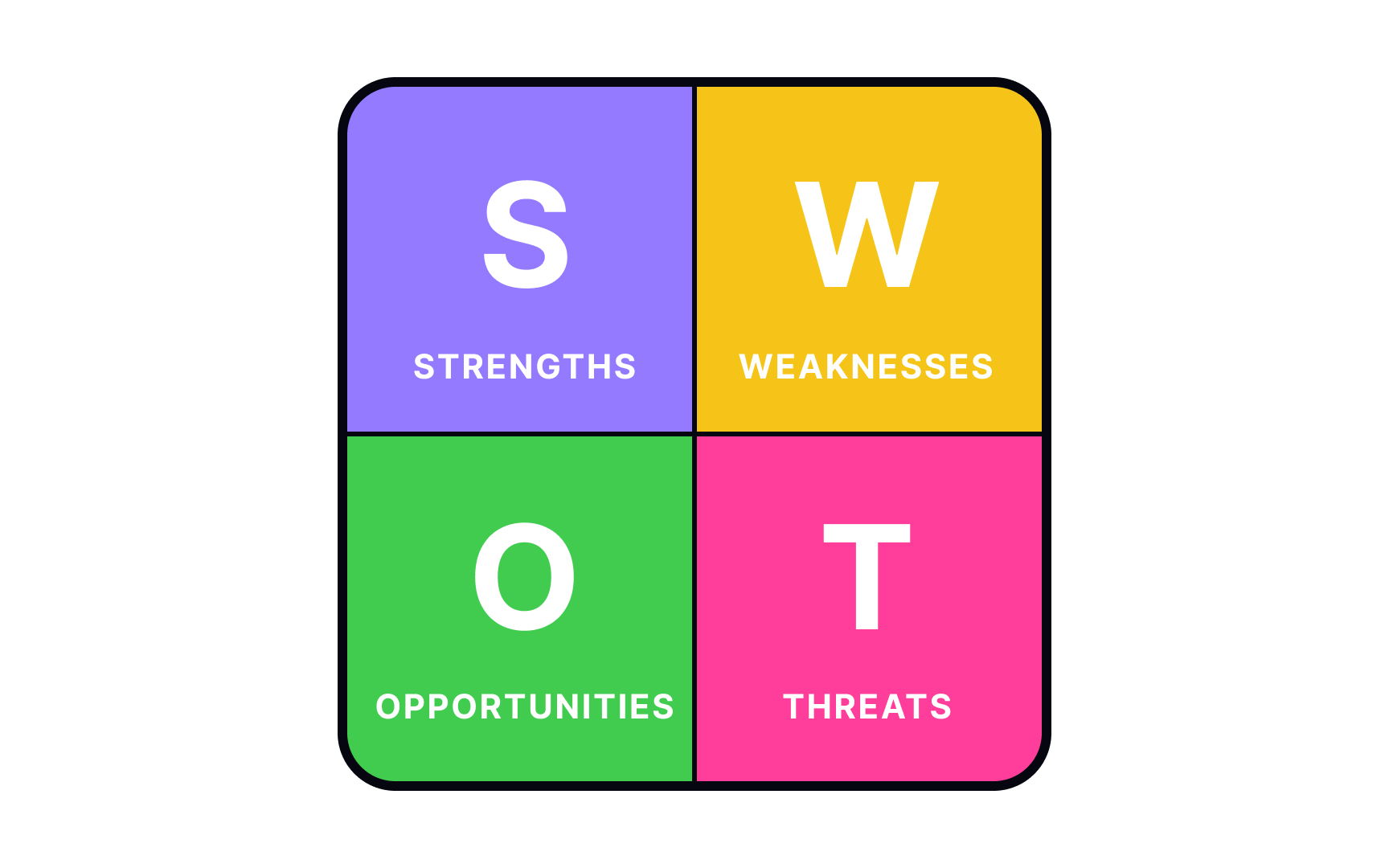
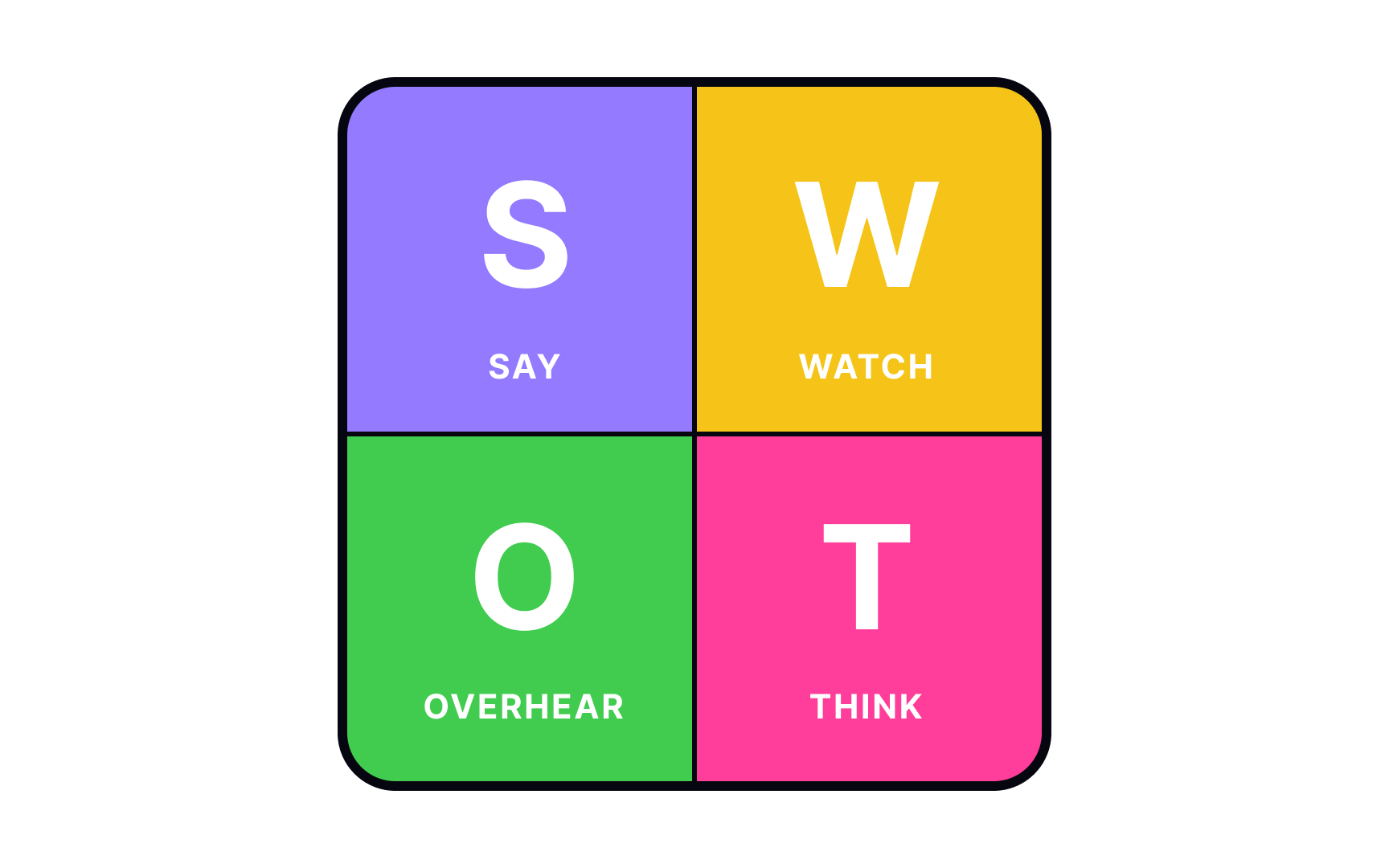
SWOT analysis is a strategic tool used to identify and analyze the Strengths, Weaknesses, Opportunities, and Threats of an idea. It can be used in service design ideation to reduce options by identifying potential risks and opportunities early on in the process.
Here’s how to use SWOT analysis to shortlist ideas:
- For each idea on your list, identify the strengths. These could be unique selling propositions, features that set the idea apart from competitors, or other positive aspects.
- Next, identify the weaknesses of each idea. These could include design challenges, resource limitations, or other factors that could make it more difficult to bring the idea to fruition.
- Consider the opportunities that each idea presents. These could include untapped markets, potential partnerships, or other possibilities that could be leveraged to make the idea a success.
- Finally, consider the threats that each idea faces. These could include competition from existing products, regulatory challenges, or other factors that could impact the idea's success.
- After completing the SWOT analysis for each idea on your list, evaluate the results and use them to shortlist the most promising ideas. You may choose to prioritize ideas with strong strengths and opportunities or to focus on those with minimal weaknesses and threats.
Pareto analysis
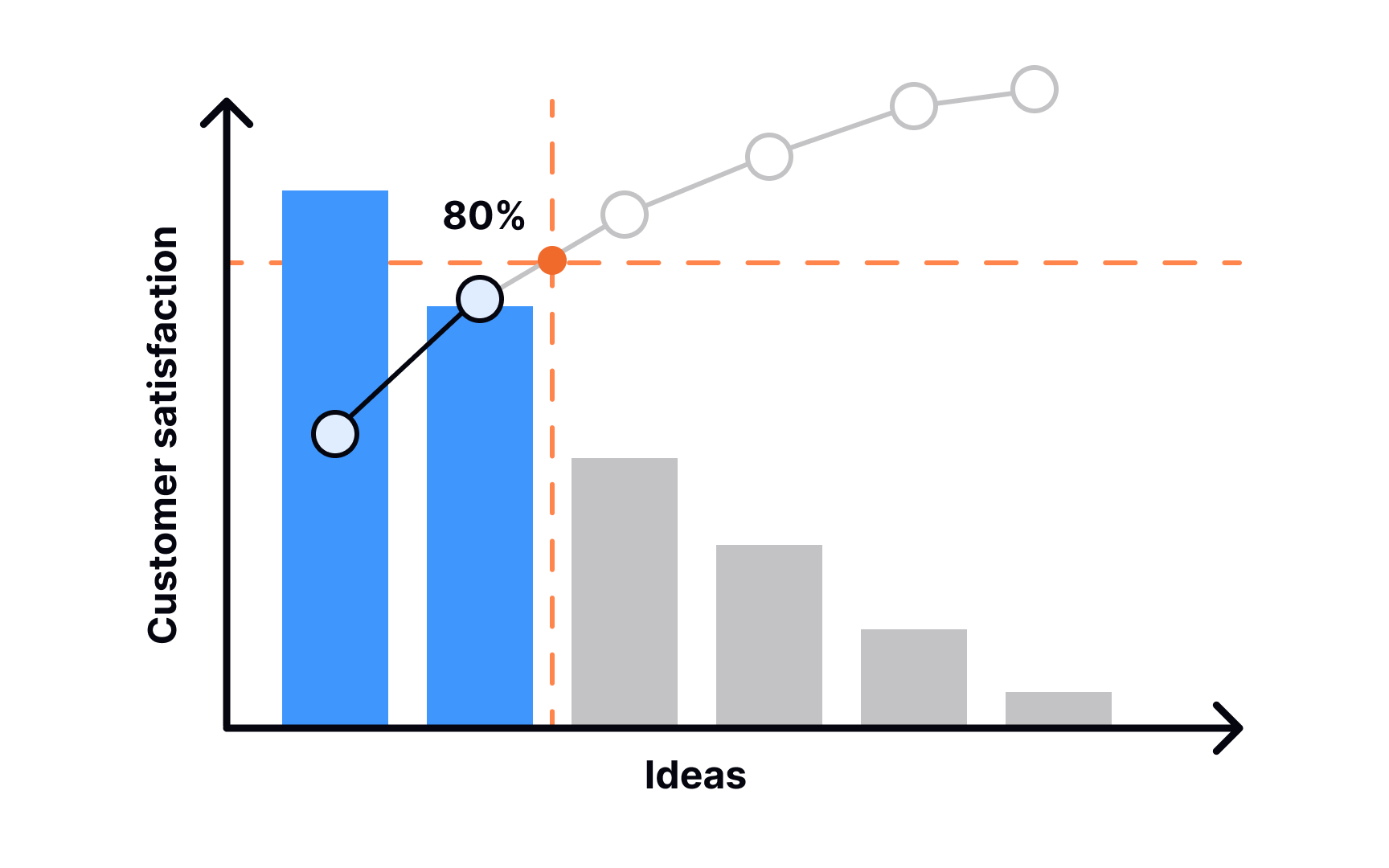
The Pareto principle, also known as the 80/20 rule, states that 80% of the effects come from 20% of the causes.[2] In the context of service design, 80% of the benefits or problems arise from 20% of the options generated. For example, if a company receives customer complaints about their product, the Pareto principle suggests that 80% of the complaints come from 20% of the product's features. Identifying these critical features can help the company prioritize improvements and allocate resources more efficiently.
To conduct a Pareto analysis, follow these steps:
- Collect data on the options generated and their impact on the service's success. This could include factors like customer satisfaction, cost savings, time savings, or any other relevant metrics.
- Rank the options based on their impact, prioritizing the most impactful options.
- Represent the ranked options in a bar graph, with the tallest bar representing the option with the most significant impact.
- Calculate and represent the cumulative impact of each option in a line graph.
- Identify the vital few options with the most significant impact and prioritize them for implementation.
Benny Hill sorting (”Thirty-Five”)

The Benny Hill sorting (”Thirty-Five”) method is a fast and energetic way to choose the most interesting options from a large group of ideas. The method involves participants exchanging papers with each other, comparing the ideas on the papers, and assigning points to determine the ranking of the ideas.
Here are the steps to conducting a Benny Hill sorting session:
- Ask each participant to prepare their pitch, sketch, idea, or insight on a piece of paper. The ideas should be concise and understandable within about 15 seconds of viewing it.
- Play lively music and instruct everyone to move around and exchange papers with each other randomly.
- Participants form pairs with the nearest person and compare the ideas on their papers, assigning 7 "interestingness points" between the two ideas.
- After several rounds of moving around and exchanging papers, each participant will have a paper with an unfamiliar idea and a number of points written on it.
- Participants add up the points assigned to their papers, and the highest-ranked ideas are the ones that most interest the group. The highest-ranked ideas may not necessarily be the ones chosen to keep, but they provide a good starting point for further discussion and decision-making.[3]
Pro Tip! The Benny Hill sorting method can help people let go of ownership by creating a more collaborative and fluid environment for idea-sharing and decision-making. Use it when members of the group are too attached to their own ideas.
Topics
References
- Using Prioritization Matrices to Inform UX Decisions | Nielsen Norman Group
- Prioritize Quantitative Data with the Pareto Principle | Nielsen Norman Group
- This Is Service Design Doing | O’Reilly Online Learning