.svg)


The best product design course in 2026 costs anywhere from $0 to about $4,000, and the price tells you almost nothing about the fit. Udacity's Product Design by Google is free and rated 4.6 out of 5 by 219 learners. Pratt's live certificate runs about $4,000. Between them sit subscription platforms, an 8-week live certification, and a university credential that stacks toward a master's degree. The right pick depends on whether you need structure, a brand name on a certificate, or a portfolio piece, so this list is organized around exactly that.
Key takeaways
- Six courses made the cut, priced from free (Udacity) to about $4,000 (Pratt). Prices are current as of August 2026.
- The cheapest serious option is a subscription: Uxcel's Product Designer career path costs $24 a month billed annually and ends in an exam-based product design certification.
- Two entries changed recently: BrainStation renamed its program AI Product Design Certification, and it no longer publishes tuition.
- "Product design" also means furniture and industrial design. Every course here teaches digital product design, the screen kind.
- Courses build skills. If you want a supervised career change with mentorship, that's a bootcamp decision, and a different budget.
Quick picks
- Best structured path: Uxcel Product Designer career path
- Best free course: Product Design by Google on Udacity
- Best budget certificate: Microsoft Product Design and UX/UI Fundamentals
- Best live instruction: BrainStation AI Product Design Certification
- Best university certificate: Pratt Digital Product Design certificate
- Best graduate stepping stone: CMU Product Design Innovation certificate
What counts as a product design course in 2026?
A product design course teaches the end of design work that ships software: user research, interaction design, UI, prototyping, and the product thinking that connects them. The same phrase names a second, older discipline. At art schools like Parsons, product design means industrial design: furniture, hardware, and physical goods, taught with CAD tools rather than Figma. Every course on this list teaches the digital kind. If you want to design chairs, this isn't your list.
Three criteria filtered the field. The course had to be enrollable right now, at a published format you can verify. It had to teach digital product design as its core subject, not as a module inside something else. And it had to produce something you can show or apply: a portfolio piece, a credential, or an assessed skill. Programs that no longer operate are out, and that rule cuts deeper than it used to: the market shed CareerFoundry, Thinkful, and most recently Flatiron's design track.
Which product design courses are worth taking?
1. Uxcel Product Designer career path
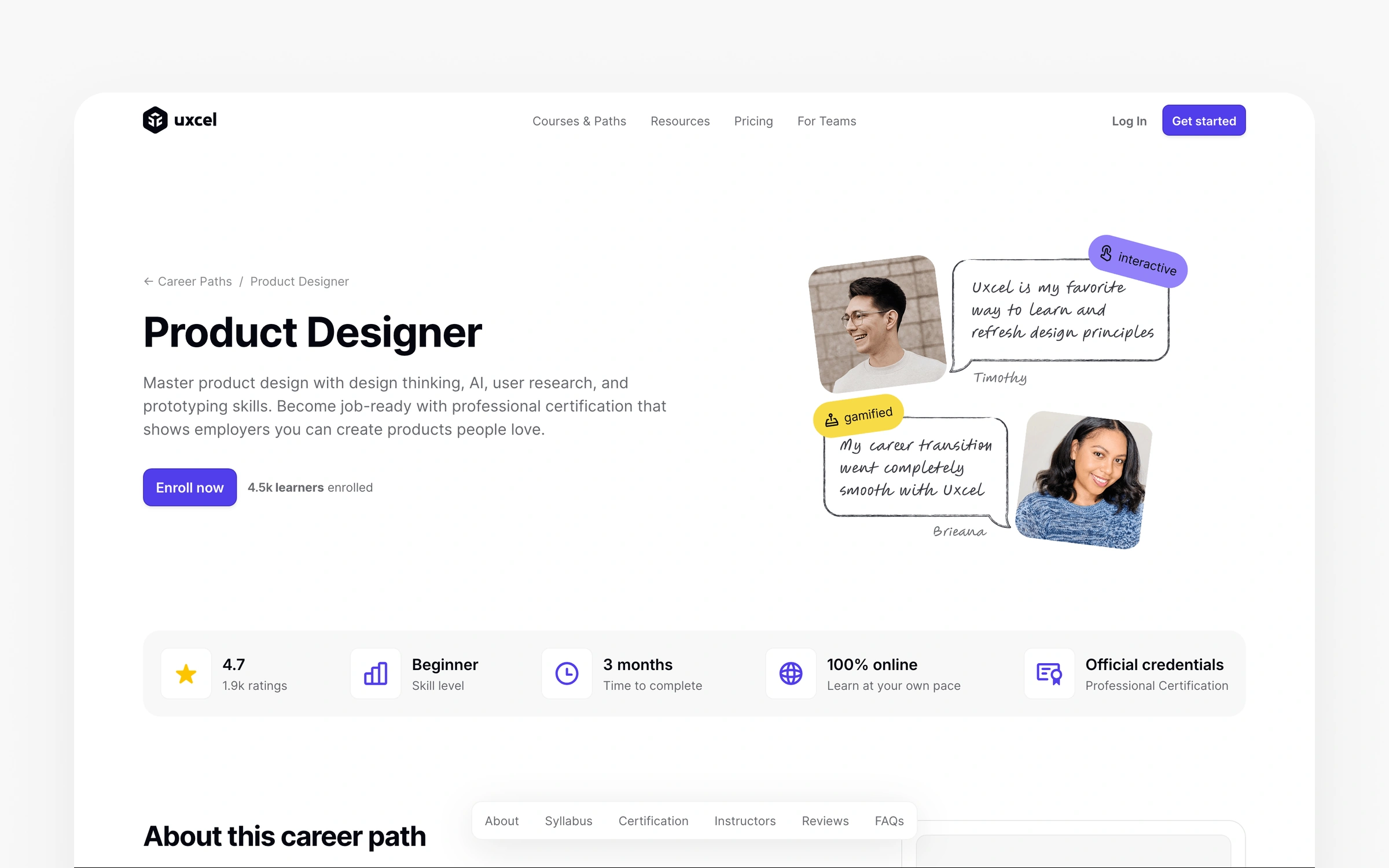
Best for: building the full skill set in daily, self-paced steps while keeping your job.
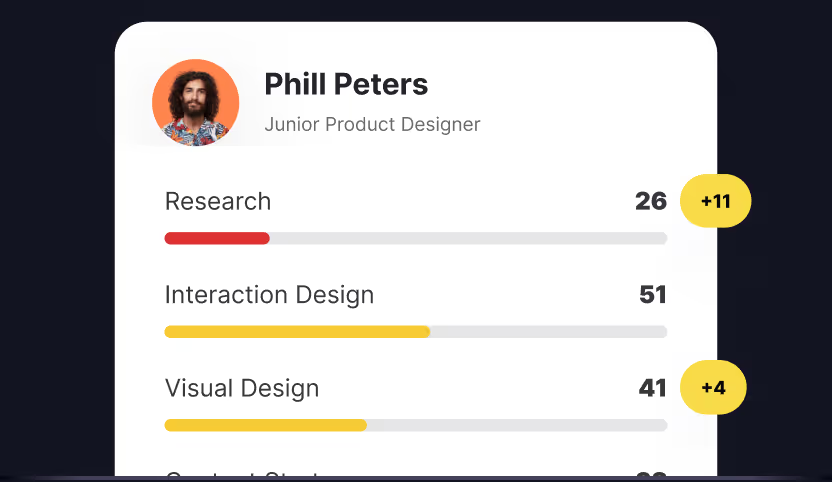
Uxcel structures product design learning as a Product Designer career path: a sequenced set of courses running from design foundations through UX research, UI, and product thinking. The library behind it holds 59 courses built as 5-minute interactive lessons. The format is the differentiator. Instead of blocking out evenings for video lectures, you work through short exercises that assess as you go, and skill assessments show you where you stand against the role's requirements.
The honest limit: there's no live instructor and no cohort. If external pressure is the only way you finish things, a scheduled program will serve you better. And while the path ends with an exam-based certification, it's a skills credential, not a university seal.
Price: $24 a month billed annually ($288 a year), or $39 month to month. Pro plans carry a 14-day money-back guarantee.
2. Product Design by Google on Udacity
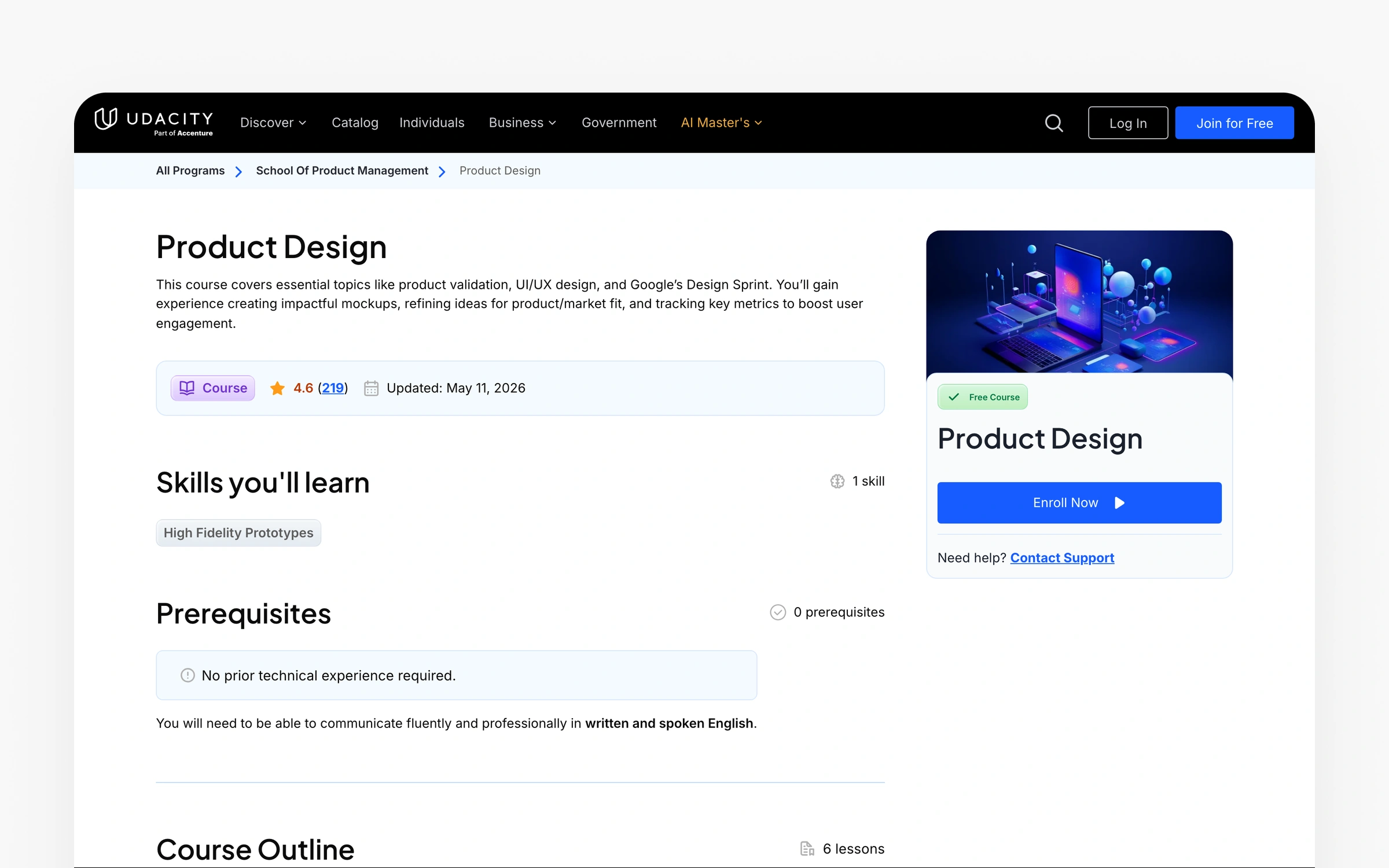
Best for: testing whether product design interests you before spending anything.
Google built this free six-lesson course around its Design Sprint methodology, and Udacity still maintains it, with updates as recent as May 2026. It covers ideation and validation, UX and UI principles, and the metrics that tell you whether a design works. Learners rate it 4.6 out of 5 across 219 reviews.
Treat it as a survey, not a training program. There's no project feedback, no credential worth listing, and no depth in any single skill. As a zero-risk first step, though, nothing else on this list competes.
Price: free.
3. Microsoft Product Design and UX/UI Fundamentals
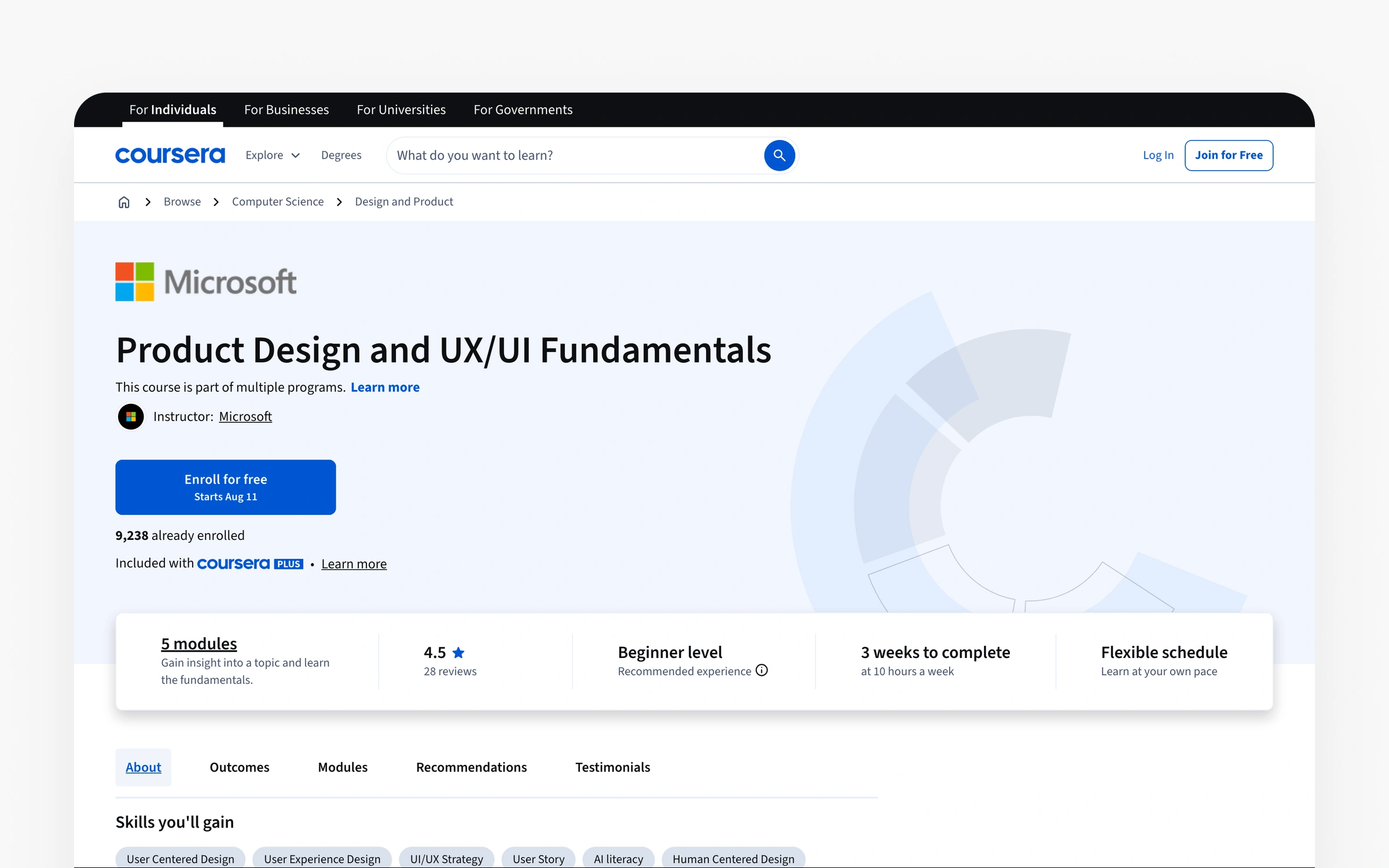
Best for: a brand-name certificate on a small budget, in under a month.
This beginner course on Coursera takes about three weeks at ten hours a week across five modules. It's free to audit; the certificate requires a paid Coursera subscription, and the activities need a Microsoft 365 license or free trial. Current learners rate it 4.5 out of 5, though from a small sample of 28 reviews.
The Microsoft name carries weight on a resume, and the course sits inside Microsoft's larger AI Product Manager program if you want to keep going. The trade-off is depth: three weeks of fundamentals won't produce a portfolio piece, so plan what comes after it.
Price: free to audit; the certificate requires a Coursera subscription.
4. BrainStation AI Product Design Certification
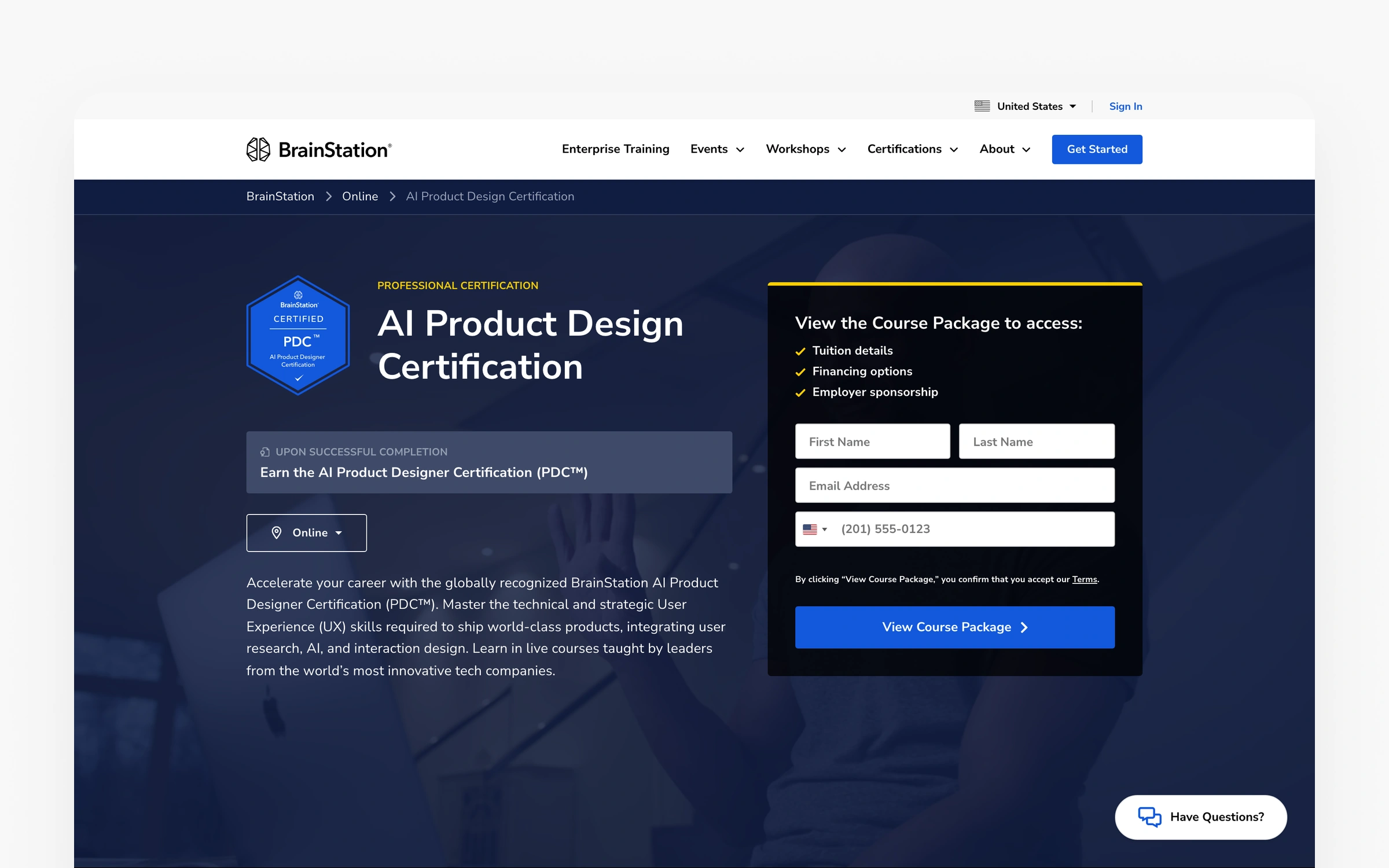
Best for: live, scheduled instruction with AI woven through the curriculum.
BrainStation renamed this program in its AI-first repositioning; it now runs as the AI Product Design Certification. The format is 8 weeks part-time: 3 hours of live instruction a week plus 2 to 4 hours of independent work. You can take it online or in person in New York, Toronto, or London. The curriculum covers the full design workflow, from research and information architecture through UI and usability testing, with AI used to accelerate research and strategy.
Two cautions. BrainStation no longer publishes tuition on the course page, so you'll need to request the course package to see a number. And the certification is a completion credential, so the value sits in the instruction, not the paper. The full BrainStation product design certification review covers what students say.
Price: not published. Request the course package for current tuition; employer sponsorship is common.
5. Pratt Digital Product Design certificate
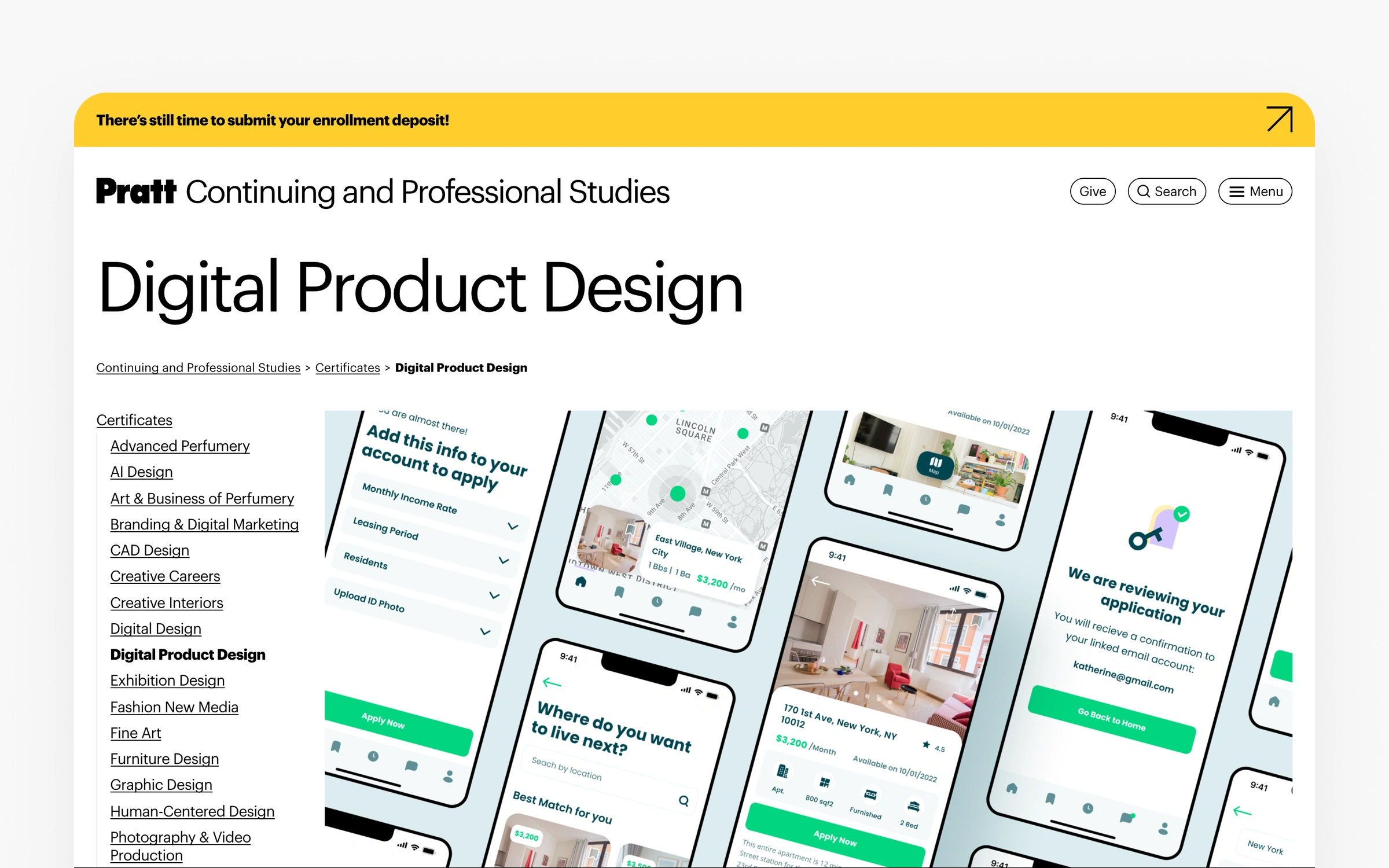
Best for: a university certificate with live teaching and a portfolio case study at the end.
Pratt's School of Continuing and Professional Studies runs this certificate as small live classes, in person or on Zoom, covering the product design process, Figma component systems, design systems, and AI in design workflows. It ends with a portfolio-ready case study, and enrollment includes free software access and campus lab time. At roughly $4,000 it's the most expensive item here, and also the only one that pairs a university name with hands-on, instructor-led work.
The catch is logistics. Live schedules move slower than self-paced study, and the certificate is a continuing-education credential rather than a degree.
Price: about $4,000.
6. CMU Product Design Innovation certificate
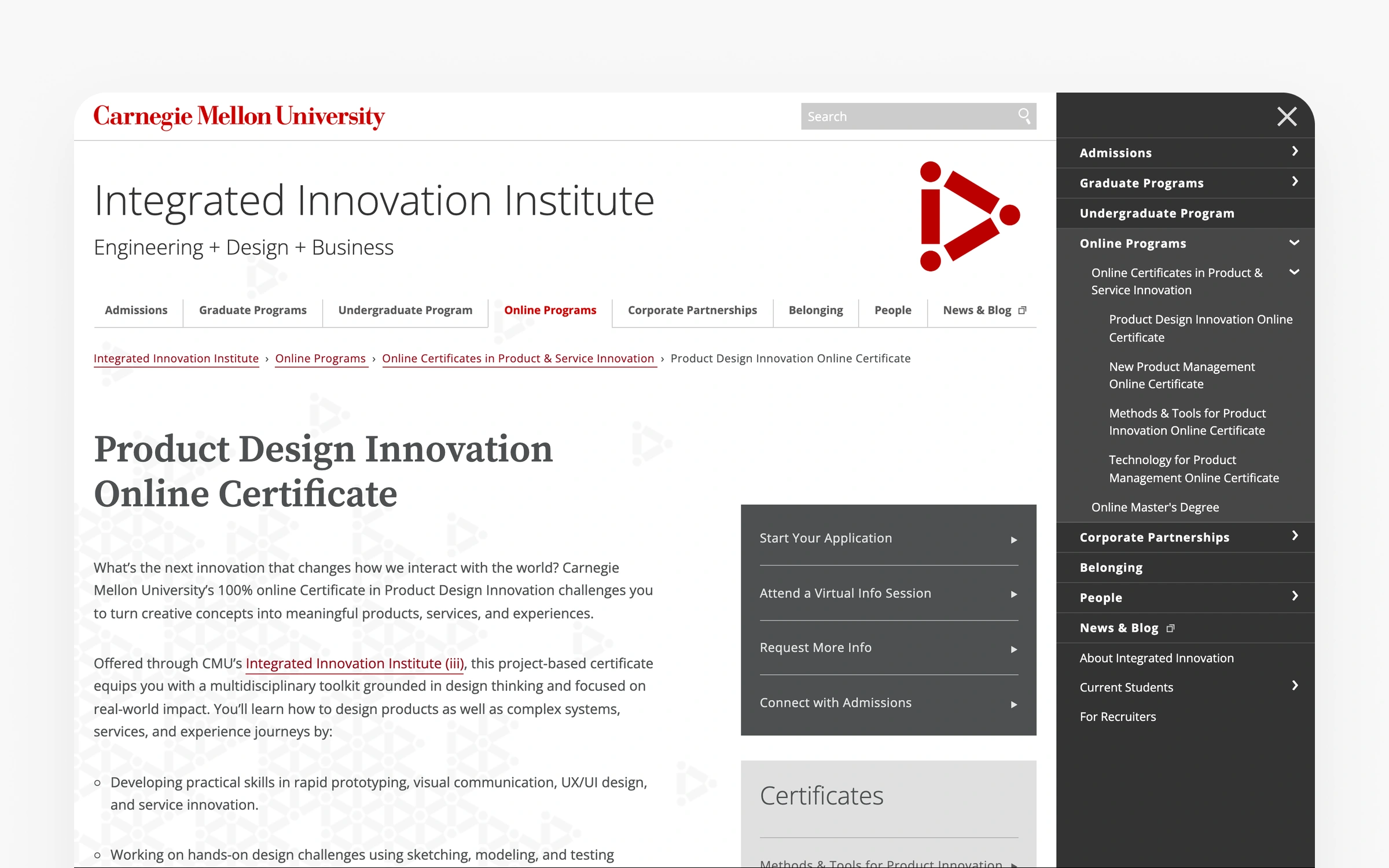
Best for: professionals aiming at product leadership or an eventual master's degree.
Carnegie Mellon's online certificate covers design foundations, prototyping, UX and UI, and service innovation across two required courses, with live sessions on a fixed cadence. You can finish it in one semester or spread it over two. Its distinctive feature is stacking: the certificate counts toward CMU's Master of Integrated Innovation for Products and Services, so it can be a low-commitment first step toward a graduate credential.
It's also the least flexible entry on the list. Enrollment follows academic terms (Summer 2026 and Spring 2027 are the next listed), and tuition isn't published on the program page.
Price: not published. Enrollment runs by academic term through CMU's application portal.
Do you need a product design certification?
Mostly no, sometimes yes. Portfolios outrank certificates in nearly every product design hiring process, and no certificate on this list substitutes for shipped work. Certifications earn their keep in three cases. Your resume needs a signal that survives an automated screen. An employer is paying, and the credential comes with training you wanted anyway. Or you're switching fields and need third-party proof you've covered the fundamentals. If that's your situation, pick the credential attached to the best training, not the best-looking badge.
Course or bootcamp?
Courses teach skills; bootcamps sell a supervised career change. The bootcamp package adds mentorship, career coaching, and portfolio review, at prices that start around $8,000, and the category has been consolidating fast. If you're weighing that trade, the product design bootcamp comparison covers the four programs still worth considering and what happened to the ones that aren't.
How to pick the right one
Complete beginner, unsure if design is for you. Start free with Udacity's course. If it holds your interest, move to a structured path before spending serious money.
Career switcher who needs to keep working. Subscription self-pacing (Uxcel) or a part-time live program (BrainStation, Pratt) fit around a job. Decide first whether you finish things without a schedule, and be honest about it.
Working designer filling gaps. Skip anything branded "fundamentals". Skill assessments plus targeted courses beat re-taking basics, and a portfolio case study (Pratt) or a leadership-oriented credential (CMU) does more for a promotion conversation than another beginner certificate.
So which product design course should you start with?
Start with the cheapest option that matches how you actually finish things. Self-directed finishers get the most from free and subscription formats, and can trade up later. People who need external structure should put their money into live instruction from the start, because an unfinished cheap course costs more than a completed expensive one. Whichever route you take, aim every course at the same output: work you can show.