

I almost didn't write this review. BrainStation's Product Designer Certification (PDC) sits in an awkward category: it's not a bootcamp, not a degree, and not quite a self-paced course. It's 24 hours of live instruction spread across 8 weeks, priced at roughly $131 per contact hour. And the instructors work at Amazon, Meta, and Microsoft. That combination of premium pricing and impressive pedigree made me curious enough to spend 3 weeks pulling it apart.

This BrainStation product design certification review is based on Course Report reviews (BrainStation has 2,000+ across all programs), Trustpilot feedback, pricing comparisons against a dozen alternatives, and conversations with people who've completed BrainStation certificate courses. I also examined the curriculum unit by unit, checked what the PDC certification actually signals to hiring managers looking for a UX designer, weighed it against earning a product design certificate another way, and calculated the real cost once you factor in time investment.
The short version: this is a well-taught course with genuinely impressive instructors. It delivers solid foundational UX and product design knowledge in a structured, live format that fits around a full-time job. But the value calculation gets complicated fast. At $3,150, you're paying more per hour than almost any alternative on the market, and you walk away with a single portfolio piece and limited career support. For some people, that trade-off makes perfect sense. For others, alternatives deliver dramatically more for less money.
This review breaks down exactly what the PDC includes, what it costs (including the hidden expenses nobody mentions), what students actually say after completing it, and who should realistically consider enrolling. I've also compared it against alternatives that might serve you better depending on your specific situation.
What do you need to know upfront?
Before diving into the details, here are the essential numbers and facts about BrainStation's Product Design Certification:
One detail worth noting immediately: the 35,000+ alumni figure covers all BrainStation programs across data, marketing, development, and design. It's not specific to the PDC. Similarly, the 90%+ employment rate BrainStation advertises applies to their full-time bootcamps, not their part-time certificate courses. These distinctions matter when you're evaluating what a $3,150 investment actually buys.

What exactly is BrainStation's Product Design Certification?
BrainStation is a Canadian-headquartered digital skills training company and global leader in professional development, founded in 2012. They operate physical campuses in New York, London, Toronto, Vancouver, and Miami, plus an online live campus launched in 2025. Their training spans AI, product management, product design, data science, digital marketing, cybersecurity, and software engineering. Over 500 experienced industry professionals from global tech companies like Amazon, Meta, Microsoft, and Google have contributed to their curriculum.
The company offers two tiers of programs. Full-time diploma programs (their bootcamps) run 10-12 weeks at around $16,500 and include comprehensive career services, industry sprints, and multiple portfolio projects. Part-time certificate courses run 5-8 weeks at $2,950-$3,950 and provide professional development with a single project output. The Product Designer Certification falls into the second category. This distinction is important because the marketing sometimes blurs the line between these two very different offerings.
The PDC specifically teaches user experience and product design skills through a structured, instructor-led format. Whether you're an aspiring UX designer, a product management professional, or someone in an adjacent tech role, you attend live sessions for 3 hours each week over 8 weeks. That's 24 total hours of direct instruction, supplemented by homework and project work that pushes the weekly commitment to roughly 5-7 hours. Classes happen in the evening or on weekends, making it feasible for people with day jobs.
The course is built around a cumulative project. Rather than working through disconnected exercises, you take a single product concept from initial strategy and user research all the way through to a high-fidelity Figma prototype. By the end, you've created one complete UX case study for your portfolio. That project-based approach is one of the course's genuine strengths, even if the output is limited compared to longer programs.
Instructors aren't former tech employees teaching full-time. They're currently employed at companies like Amazon, Meta, Microsoft, Mastercard, AMEX, and Shopify, teaching evenings or weekends. BrainStation rotates instructors across locations and cohorts, with people like Hailey Shi (Senior Product Experience Designer at Mastercard), Gillian Zwengler (UX Designer at AMEX), and Sarah Doss listed on various city pages. The instructor roster changes between cohorts, but BrainStation maintains a consistent curriculum so your experience shouldn't vary dramatically based on who's teaching.
Upon completion, you receive the BrainStation Product Designer Certification (PDC), which is BrainStation's proprietary credential. It's not accredited by any external body, but BrainStation emphasizes that it's "globally recognized by top companies." The certification can be added to your LinkedIn profile and resume. Whether hiring managers specifically value the PDC credential is debatable, though BrainStation's name recognition in markets where they have physical campuses (especially Toronto and New York) is stronger than many online-only providers.
What does the curriculum actually cover?
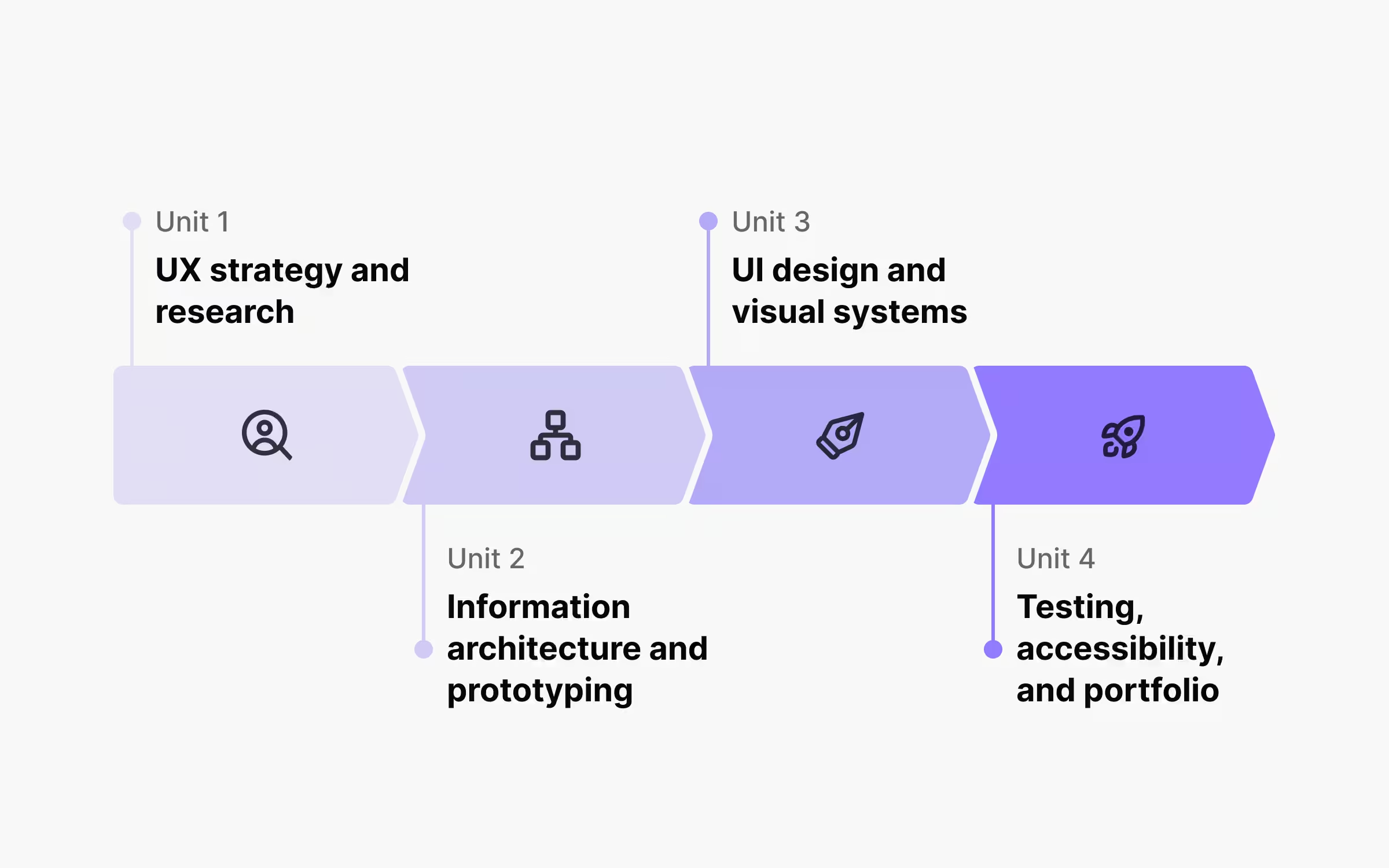
The PDC breaks into 4 units, each roughly two weeks long. Each unit builds on the previous one, feeding into the cumulative portfolio project. The curriculum is designed to give aspiring UX designers and product management professionals a complete view of the product design lifecycle. Here's what each covers in practice, not just the marketing copy.

Unit 1: UX strategy and research
The course opens with human-centered design principles and design thinking methodology. You learn how to integrate AI tools directly into your UX workflow for brainstorming concepts, summarizing research, and role-playing user scenarios. This AI integration piece is relatively current and differentiates the PDC from other UX design courses that haven't updated their curriculum since 2022. You also learn to conduct user research through interviews, empathy maps, and persona development, the same user research skills that anchor any serious product design process. The goal is to move past assumptions and build a product strategy grounded in actual user feedback.
One thing that stood out in student reviews: the research phase feels practical rather than theoretical. You don't just learn about empathy maps in the abstract. You create them for your project and get instructor feedback on whether they reflect genuine user understanding or lazy generalizations.
Unit 2: Information architecture and prototyping
This is where the structural work happens. You learn card sorting, tree testing, and content hierarchy methods, the building blocks of any UX information architecture course, to organize complex information systems. Then you translate that architecture into user flows, task flows, wireframes, and clickable Figma prototypes. The emphasis is on validating your logic through interactive prototypes before committing to high-fidelity design.
Figma is the primary industry standard tool throughout the course. If you're already comfortable with Figma, some of the tool instruction may feel redundant. If you've never opened Figma, expect to spend extra time outside class getting up to speed. The course doesn't provide a standalone Figma tutorial. It teaches design thinking principles while using Figma as the vehicle, which means tool proficiency and design knowledge develop simultaneously.
Unit 3: UI design and visual systems
Unit 3 moves beyond wireframes into visual design. You work with grids, typography systems, atomic components, and style guides, the same territory an intro to design systems covers. The curriculum covers Figma Auto Layout for creating responsive interfaces that adapt to content changes. There's a focus on type hierarchy as a tool for driving user behavior rather than just making things look nice.
The design systems content is particularly relevant for anyone working in cross functional teams. You learn to build components that scale, which is a practical skill employers actively look for. Several reviewers mentioned this unit as the most directly applicable to their day-to-day work, especially those already in tech roles adjacent to design who want to strengthen their technical skills.
Unit 4: Testing, accessibility, and portfolio
The final unit covers usability testing, heuristic evaluation, and accessibility standards. You learn to evaluate your product against established heuristics to identify friction points before development begins. The accessibility content goes beyond color contrast into broader inclusive design methods.
The unit closes with packaging your end-to-end process into a professional UX case study. You learn to articulate design rationale and present your work in a way that demonstrates both process and thinking. This portfolio piece becomes the tangible output of the entire course.
What's missing from the essential skills curriculum
The PDC covers the design lifecycle competently, but 24 hours creates natural constraints. Topics that get minimal or no coverage include: advanced methods to conduct user research (diary studies, contextual inquiry, A/B testing), design handoff workflows with developers, deeper stakeholder management techniques, product management strategy, motion design and micro-interactions, design ops and scaling design processes, and advanced Figma techniques (variables, conditional logic, Dev Mode). These gaps are expected given the course length, but worth noting if you're comparing against longer programs that cover them.
The curriculum also doesn't cover front-end basics (HTML/CSS), which some bootcamps include to help designers communicate with developers. Whether that matters depends on your career goals and existing skill set.
How the cumulative project works in practice
Rather than bouncing between disconnected exercises, the PDC builds everything around a single product concept that you define in Unit 1. Each week, you apply new techniques to that same project: researching users for it, mapping its architecture, designing its interface, and testing it with real users. By week 8, you have a complete case study showing the full design lifecycle.
The strength of this approach is coherence. Your portfolio piece tells one complete story rather than showing fragments of different projects. The weakness is scope: if your chosen concept turns out to be too simple or too complex, 8 weeks doesn't leave much room to pivot. Students who put real thought into their project concept in the first session tend to produce stronger final case studies than those who pick something safe.
Instructor feedback on your project happens throughout the course, not just at the end. This iterative review cycle is where the live format's value becomes most apparent. Getting real-time critique from someone who reviews product design work professionally adds a layer of quality that self-paced courses can't match.
How much does this actually cost?
BrainStation doesn't publicly list exact pricing for the PDC on their website. Instead, they ask you to request a "Course Package" or speak with a learning advisor. Based on their published ranges and comparable certificate course pricing, expect to pay approximately $2,950-$3,950 for the PDC.
Let me do the math that BrainStation's marketing doesn't. At $3,150 for 24 contact hours, you're paying roughly $131 per hour of live instruction. That positions the PDC among the most expensive per-hour design education options available. For context, a 6-month Google UX Design Certificate on Coursera costs about $294 total. Uxcel provides unlimited access to all design and product courses for $24/month. Designlab's UX Academy runs $8,499 but delivers 530+ hours of instruction with 1:1 mentorship.

Payment options
BrainStation offers flexible payment plans and several ways to pay. Upfront payment is the simplest option. Installment plans let you split costs over 3, 6, or 12 months, making the tuition more manageable. Employer sponsorship is available, and BrainStation provides documentation to help you make the case to your company's learning and development team. Many students report successfully getting their employer to cover tuition, which dramatically changes the value equation.
Scholarships
BrainStation offers partial scholarships for specific groups. The Women in Tech Scholarship covers up to $1,500. A Diversity Scholarship is available with variable amounts based on your application. Veterans receive priority consideration. Each scholarship requires a separate application, typically including an essay. These aren't full rides, but a $1,500 Women in Tech scholarship would reduce a $3,150 tuition to $1,650, which substantially changes the cost-per-hour calculation.
The hidden costs nobody mentions
Software subscriptions aren't strictly required since Figma's free tier works for the course. But if your instructor recommends premium tools or advanced Figma features, expect potential costs. Recommended books add $50-100. The bigger hidden cost is time. At 5-7 hours weekly for 8 weeks (class plus homework), you're investing 40-56 hours total. If you earn $75,000 annually (roughly $36/hour), that time investment represents $1,440-$2,016 in opportunity cost. Add tuition, and the real investment approaches $4,600-$5,200.
No refund policy
Some bootcamps offer partial refunds within the first week. BrainStation apparently doesn't. Ask your learning advisor directly about refund terms before paying.
Pricing comparison
The table reveals the core tension. BrainStation delivers the highest cost per hour by a wide margin, but also the lowest time commitment. Whether you see that as efficiency or insufficient depth depends entirely on what you need.
Is the BrainStation PDC right for you?
This is where most reviews get vague. They list generic personas like "anyone interested in design" and call it a day. But the PDC's narrow format means it genuinely works for some people and wastes money for others. Let me be specific.
The PDC makes sense if you're:
A product manager wanting to speak the design language. If you already work in product management and need to collaborate more effectively with UX designers, the PDC gives you enough vocabulary and process understanding to participate meaningfully in design reviews, provide better feedback, and understand why your designers push back on certain requests. Several testimonials mention exactly this scenario. Kristina, a Product Owner at Nestle, credited the course with leading to two promotions.
A developer or marketer adding design to your toolkit. You're not trying to become a full-time UX designer or product designer. You want to understand user research, prototyping, and design systems well enough to work in cross functional teams. The 24-hour commitment won't disrupt your primary role.
Employer-sponsored and time-constrained. If your company is paying and you can't take time off for a bootcamp, the PDC's evening schedule and 8-week duration make it one of the few structured options that genuinely fits around a demanding job. The employer sponsorship option is BrainStation's strongest value proposition for this audience.
Someone who values live instruction from active practitioners. You learn differently from watching pre-recorded videos than from interacting with someone who shipped a feature at Microsoft last week. If that real-time access to working professionals drives your learning, the premium might be justifiable.
The PDC doesn't make sense if you're:
Trying to change careers into product design. 24 hours of instruction cannot prepare you for a junior UX designer or product designer role. You'll graduate with one portfolio piece when hiring managers typically expect 3-5. You won't get career coaching, resume reviews, mock interviews, or a job guarantee. Career changers need a full UX design course or bootcamp (Designlab, Springboard, or BrainStation's own full-time UX Design Bootcamp at $16,500) or a sustained self-study approach with practical skills development.
Budget-conscious and self-motivated. If $3,150 is a significant investment for you and you're comfortable learning independently, the same foundational knowledge is available through the Google UX Design Certificate ($294), Uxcel ($24/month), or free resources like Udacity's Product Design course. The PDC's live format is a convenience, not a necessity.
An experienced designer looking for advanced skills. Multiple BrainStation reviews mention that students with existing design knowledge found the content too introductory. One reviewer of the UI Design certificate (same format) said: "I and many other students already had some base knowledge in UI design and for us this course had very little new information." If you're past the fundamentals, the PDC likely won't push you.
Expecting robust career support. Certificate students get access to a Slack community and networking events. That's it. The dedicated Career Success team, resume reviews, and interview prep are reserved for full-time bootcamp students. If career services are a factor in your decision, look elsewhere.
The employer-sponsored sweet spot
I keep coming back to employer sponsorship because it genuinely changes the equation. If your company has a learning and development budget (and most tech companies above 50 employees do), the PDC becomes a no-brainer. You invest your evenings. They invest the money. You come back with UX fluency that helps you work better with designers, contribute to product decisions with more confidence, and potentially qualify for cross-functional roles. BrainStation provides documentation to help you make the business case to your manager, and the short duration (8 weeks) makes it an easy approval compared to asking for months off for a bootcamp.
Several BrainStation reviews from corporate learners describe exactly this scenario. Professionals from banks, consulting firms, government agencies, and large tech companies taking certificate courses to fill specific skill gaps. The part-time evening format exists precisely for this audience. If that's you, stop overthinking it and ask your employer.
What are students saying about the experience?
BrainStation has accumulated over 2,000 reviews on Course Report across all programs, scores 4.5/5 on Career Karma (200+ reviews), and holds a 95/100 on BootcampRankings. However, isolating feedback specific to the Product Design Certification is tricky because most platforms aggregate reviews across all BrainStation courses.
I pulled comments from Course Report, Trustpilot, Career Karma, and CourseCompare to piece together what the certificate experience looks like. Here's what patterns emerged.
What students consistently praise about industry expert instructors
Instructor quality is the single most mentioned positive across every platform. One PDC reviewer wrote that their instructor was "a true subject matter expert who brought the material to life through personal insights and real-world product scenarios." This theme repeated across dozens of reviews. BrainStation's strategy of hiring experienced industry professionals who currently work at top global tech companies clearly delivers on the learning experience front.
The curriculum structure gets reliable marks too. Students describe the mix of lectures, hands-on labs, and project deliverables as reinforcing key concepts effectively. The progressive nature of the cumulative project (building one product from research to prototype) creates a sense of momentum that keeps people engaged over 8 weeks.
The collaborative environment also comes up frequently. One reviewer specifically noted that "along with my fellow participants, we created an engaging and collaborative learning environment." The live format creates organic peer connections that self-paced courses can't replicate. A UX design bootcamp graduate described the experience as "one of the most rewarding decisions I've made," citing the beginner-friendly structure and the emphasis on design thinking over just tools.
BrainStation's consistency across cohorts and locations also matters. Unlike some programs where quality varies wildly by instructor, reviews suggest a standardized experience. Whether you take the course in Toronto, New York, or online, the curriculum and teaching approach remain similar. That predictability reduces risk.
Where students express frustration
The most damaging criticism came from a Trustpilot reviewer who described the post-course experience bluntly: "They want to sell you a course, and that's it. Once you finish your course, ghosting happens, no network access, they don't drive you as they promise." That reviewer also noted that the course content was "already on internet, you can literally learn UI UX Design by yourself." This is a minority opinion, but it appeared in different forms across multiple reviews.
A Career Karma reviewer of the UI Design certificate (identical format to PDC) provided a measured critique: "Instructors reading a slide deck does not count as teaching. I recently finished the online UI Design certificate course. It consisted of 8 weekly online classes, each primarily a 3 hour lecture." The reviewer added that students with existing knowledge "had very little new information." This suggests the quality of the live experience depends partly on the specific instructor and partly on your existing baseline.
The pricing objection surfaces regularly. While most students acknowledge the instruction quality, several note that the cost is high relative to what's delivered. The BootcampRankings review noted that BrainStation certificate courses cost $3,250-$3,950, which is "higher than the average price" but argued the quality justified it. Others disagree.
Career support for certificate students is a consistent gap. Full-time bootcamp students praise BrainStation's career services, but certificate students report feeling disconnected after completing their course. The Slack community exists, but multiple reviewers describe it as inactive or unhelpful for actual job seeking.
The credibility question
Does the PDC credential actually help you get hired as a UX designer? The honest answer is nuanced. BrainStation's brand recognition is stronger in Toronto and New York, where their physical campuses create a local reputation. In other markets, the PDC functions more like any other professional development certificate: it shows initiative and baseline knowledge of human centered design, but it won't single-handedly open doors. Hiring managers evaluating product designers care about portfolio quality, design thinking process, and problem-solving ability. A design certification from any single provider rarely moves the needle on its own.
One positive data point: BrainStation reports that graduates have been hired at Shopify, Google, Amazon, Walmart, Microsoft, and Capital One. However, these outcomes almost certainly reflect full-time bootcamp graduates rather than part-time certificate completers. BrainStation doesn't publish placement data specific to the PDC.
What the in-person experience adds
Several reviewers specifically chose BrainStation because of the physical campuses. One London-based student described the Shoreditch location as being "at the heart of London's digital scene" and valued the networking that happened naturally before and after class. A Toronto graduate wrote: "I chose BrainStation over other bootcamps because it was in-person and the campus is really nice." The physical spaces seem well-maintained, and BrainStation uses them for events, workshops, and panel discussions beyond just course delivery.
For the online experience, BrainStation uses their proprietary learning platform rather than Zoom or a generic video tool. Students maintain a Slack workspace for asynchronous communication. Multiple reviewers noted that the online classes felt interactive rather than passive, though one dissenter described the experience as "primarily a 3 hour lecture." Your mileage appears to vary based on the specific instructor's teaching style.
The review platform gap
Something worth noting: BrainStation has 2,000+ reviews on Course Report but only 14 on Trustpilot. That discrepancy is unusual. Course Report is an industry platform where bootcamps actively solicit reviews. Trustpilot captures more organic, unsolicited feedback. The Trustpilot reviews skew more critical than Course Report, which is common for education providers. When you're researching the PDC, read both platforms rather than relying on one.
Will this actually help your career and provide career support?
This question requires splitting into two scenarios, because the answer is radically different depending on where you're starting.
Scenario 1: You're already working in tech
If you're a UX designer, product manager, developer, marketer, or project manager at a tech company, the PDC can meaningfully accelerate your career. Not by getting you a new job (the course isn't designed for that), but by expanding your skill set in ways that make you more effective and promotable in your current role. The practical skills you develop, from learning to conduct user research to building prototypes, translate directly into better product management and design collaboration, which is exactly the gap a designer's guide to product management is built to close.
Kristina's testimonial about earning two promotions after completing a BrainStation course is the clearest example of this outcome. She was already a Product Owner at Nestle. The course didn't get her hired there. It gave her UX fluency that made her more valuable within an organization that already employed her.
For this audience, the PDC's career impact comes through understanding how designers think, being able to contribute to design conversations with credibility, and demonstrating initiative on your annual review. If your employer is paying, the ROI is almost guaranteed. You invest evening hours, your company invests dollars, and you emerge as a more cross-functional contributor.
Scenario 2: You're trying to break into product design
If you're outside of tech and hoping the PDC will get you a product design job, recalibrate expectations. 24 hours of instruction produces one portfolio piece. Entry-level product design roles typically expect candidates to present 3-5 case studies demonstrating different aspects of the design process. A single case study, no matter how polished, signals that you've taken one course, not that you're ready for professional design work.
The PDC also lacks the career support infrastructure that career changers need. No dedicated career coach. No resume reviews. No mock interviews. No job guarantee. Compare this to Springboard's UI/UX Design Career Track, which includes a tuition-back promise, or TripleTen's UX/UI Bootcamp, which guarantees a job within 10 months or refunds your money. BrainStation offers none of these safety nets for certificate students.
This doesn't mean the PDC has zero value for career changers. It can serve as a starting point. Take the PDC, build additional portfolio pieces independently, supplement with Uxcel or another platform for ongoing skill development, and pursue career support through other channels. But treating the PDC alone as a career-change vehicle would be setting yourself up for disappointment.
The employment numbers in context
BrainStation's headline stat is that over 90% of graduates find employment within 180 days. Let me explain why you should read that carefully. That figure comes from their full-time bootcamp programs (software engineering, UX design, data science), where students invest $16,500 and 10-12 weeks of full-time study. The part-time certificate courses operate under completely different conditions. BrainStation does not publish separate employment data for PDC completers. BootcampRankings confirmed this, noting that while BrainStation reports high employment overall, "there is no formal job guarantee with any of its courses or programs."
Graduates of the full program have landed roles at Shopify, Google, Amazon, Walmart, Microsoft, and Capital One. Those are impressive names. But attributing those outcomes to an 8-week evening course rather than the intensive 12-week bootcamp would be misleading.
What the PDC actually signals to employers
I spent some time thinking about what the PDC certification means on a resume or LinkedIn profile. Here's my honest read. In cities where BrainStation has campuses (especially Toronto, New York, and London), the brand carries some weight. Hiring managers in those markets have likely heard of BrainStation, may have attended one of their events, or know colleagues who've completed programs there. The PDC on your LinkedIn signals initiative and baseline knowledge, which matters.
In markets without a BrainStation presence, the PDC functions like any other professional development certificate. It shows you invested time and money in learning UX skills, but it won't differentiate you from someone who completed a Google UX Certificate or a Designlab course. Product design hiring is portfolio-driven. Your case studies, design process documentation, and ability to articulate design decisions in an interview matter infinitely more than any certificate.
That said, the PDC isn't useless signaling. It demonstrates structured learning (not just YouTube), active investment (you paid for this), and breadth (UX strategy through UI design). If you're supplementing an already-strong profile with UX credentials, the PDC adds a credible line item. If you're building a profile from scratch, one certificate won't be sufficient regardless of which provider issued it.
Still have questions about the BrainStation PDC?
Is BrainStation's PDC worth it for beginners?
It depends on your definition of "worth it." If you have $3,150 (or employer sponsorship), want structured live instruction, and prefer learning from active tech professionals, the PDC provides a genuine introduction to product design. No prior experience is required. However, beginners on a budget can get similar foundational knowledge through the Google UX Design Certificate on Coursera for around $294 or through Uxcel's unlimited course library at $24/month. The PDC's advantage is live instruction and real-time feedback, not exclusive content.
How does the BrainStation PDC compare to their full UX Design Bootcamp?
These are fundamentally different products. The full UX Design Bootcamp runs 12 weeks (or equivalent part-time), costs around $16,500, includes comprehensive career services (resume reviews, mock interviews, career coaching), multiple portfolio projects, and industry sprints where you solve real problems from companies. It's designed to turn you into a job-ready UX designer. The PDC runs 8 weeks at roughly $3,150 with 24 contact hours, one portfolio piece, and limited career support. The bootcamp is a career-change program. The PDC is professional development. Choose based on your goal, not just your budget.
Can I get a job as a product designer with just the PDC?
Unlikely as a standalone credential. The PDC provides foundational UX knowledge and one portfolio piece, but entry-level product design roles typically require 3-5 portfolio case studies, demonstrated proficiency with design tools, and evidence of design thinking in practice. The PDC could be a starting point, but you'd need to supplement it with additional portfolio work, continued learning, and networking. Career changers should consider longer programs with career support.
Are BrainStation certificates recognized by employers?
BrainStation has trained 35,000+ professionals and has partnerships with Fortune 500 companies for corporate training. In markets where BrainStation has physical campuses (New York, Toronto, London, Vancouver, Miami), the brand carries some recognition. However, hiring managers for product design roles primarily evaluate portfolio quality and demonstrated skills, not certificates. The PDC won't hurt your resume, but it's unlikely to be the deciding factor in a hiring decision.
What tools will I learn in the PDC?
Figma is the primary industry standard tool throughout the course. You'll use it for wireframing, prototyping, UI design, auto layout, and creating design systems. The UX design course also covers design thinking frameworks, empathy mapping tools, and introduces AI tools for UX research and ideation. You won't learn front-end development tools (HTML/CSS) or other design software like Sketch or Adobe XD.
Does BrainStation offer refunds?
BrainStation does not publish a refund policy for certificate courses. If this is a concern, ask your learning advisor directly about refund terms before enrolling. Some bootcamps offer partial refunds within the first week, but BrainStation's policy on this is not publicly documented. Given the $3,150 price point, getting clarity on this before you pay is worth the extra conversation.
Can I take the PDC entirely online?
Yes. BrainStation offers the PDC both online (through their live virtual campus) and in-person at their campuses. The online version uses their proprietary learning platform with live instruction, not pre-recorded videos. You attend scheduled sessions and interact with your instructor and classmates in real time. Multiple start dates are available throughout the year to provide flexibility.
How does BrainStation compare to the Google UX Design Certificate?
These target different needs. BrainStation offers 24 hours of live instructor-led sessions at $3,150, with one portfolio piece and real-time feedback from active tech professionals. The Google UX Certificate on Coursera offers 200+ hours of self-paced video content at around $294, with 3+ portfolio projects but no live instruction. If you value live interaction and can afford the premium (or your employer pays), BrainStation wins on learning experience. If you value depth, portfolio breadth, and cost-effectiveness, Google wins on every metric except live instruction.
What's the difference between BrainStation's PDC and their UX Design Certification?
BrainStation offers both a Product Design Certification (PDC) and a separate UX Design Certification (UXDC). Both are 8-week certificate courses with the same format and similar pricing. The PDC focuses on the product design lifecycle from strategy through high-fidelity prototyping, with emphasis on design thinking and AI integration. The UXDC focuses specifically on UX research, user testing, and UX process. If your interest is more strategic (product vision, design systems, shipping products), the PDC may be the better fit. If your interest is more research-heavy (user interviews, usability testing, research synthesis), consider the UXDC.
What else should you consider?
If the BrainStation PDC doesn't quite fit your needs, here are 3 alternatives worth considering: Uxcel (the most affordable option with documented career outcomes), Designlab UX Academy (if you need comprehensive training with mentorship), and Google UX Design Certificate (for budget-friendly foundational learning).
Could Uxcel work instead?
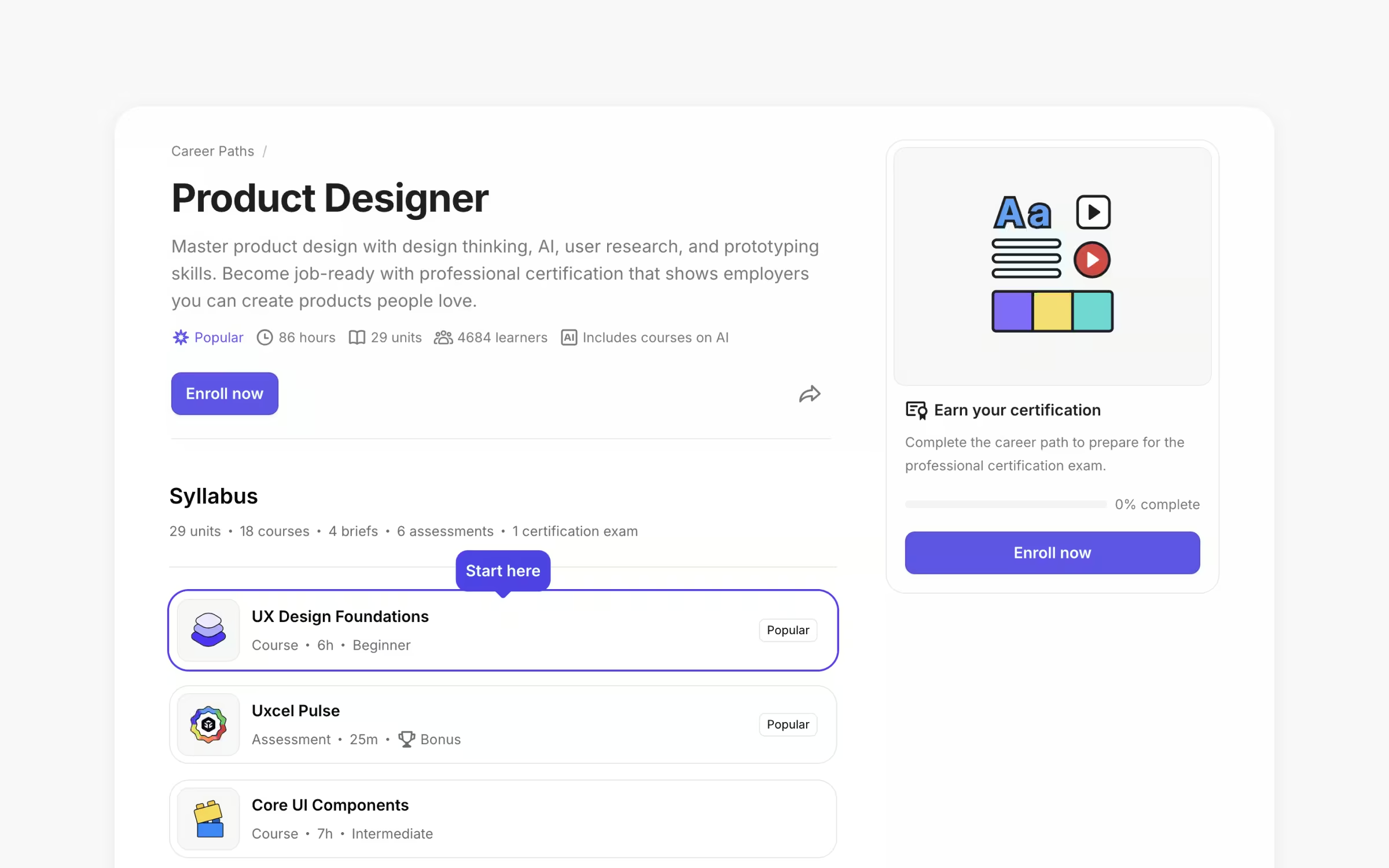
Uxcel is a skill-building platform launched in 2020 to solve a specific problem: professionals need to advance their design and product skills without expensive bootcamps or passive video courses. The platform takes a fundamentally different approach than BrainStation, focusing on interactive, gamified micro-lessons rather than live lectures.
The core difference is learning model. Where BrainStation gives you 24 hours of scheduled instruction, Uxcel provides unlimited access to 500+ resources across UX and product design, product management, and AI. The platform covers everything a UX designer needs, from user research to visual design, plus product management fundamentals for those building cross-functional skills. Lessons run about 5 minutes each, designed for daily practice rather than marathon sessions. The platform works on web browsers plus native iOS and Android apps, so you can learn during a commute, a lunch break, or those 15 minutes between meetings that would otherwise go to doom-scrolling.
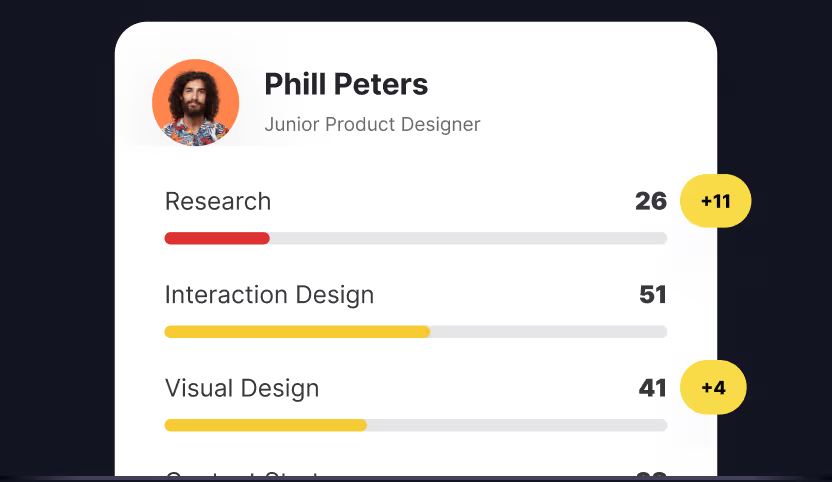
Uxcel's cross-functional skill mapping is genuinely unique in the market. The platform automatically tracks your competencies across both design and product management disciplines simultaneously. If you're a designer building product skills, or a PM building design skills (which describes many people considering the BrainStation PDC), Uxcel's Product Designer Career Path shows exactly where you stand in both domains and what to learn next. No other platform offers this.

The outcomes data is hard to argue with. According to Uxcel's Impact Report, 68.5% of users received promotions within 12 months of active use, with average salary increases of $8,143. Completion rates sit at 48-50%, which is roughly 10 times the industry average for online courses. Over 200 companies including Microsoft, Deloitte, and PwC use Uxcel for team training.
Pricing makes the comparison almost unfair. Uxcel Pro costs $24/month billed annually ($288/year). That's less than 10% of BrainStation's PDC tuition. For the cost of one BrainStation certificate, you could use Uxcel for over 10 years.
Honest limitations: There are no scheduled live classes, no instructor leading your session, and no cohort-based experience. If you need external accountability and structured live interaction, Uxcel won't provide that. The project briefs and mentor feedback features are available but not as intensive as a dedicated instructor walking you through a single project over 8 weeks. Uxcel is also not primarily video-based, which won't suit learners who prefer watching explanations.
Best for: Working professionals building design and product skills daily, budget-conscious learners, anyone wanting documented career outcomes, people who prefer self-paced learning, and senior professionals developing cross-functional skills.
One thing that makes Uxcel particularly relevant for people considering the BrainStation PDC: the audience overlap is nearly perfect. Both attract working professionals who want to build UX and product skills without quitting their jobs. The difference is the learning model. BrainStation gives you 24 hours of scheduled instruction from impressive individuals. Uxcel gives you unlimited, on-demand access to interactive content that you can use for years. Both approaches work. The question is which learning style suits you, and whether the $2,862 annual savings matters to your situation.
What if you need a full career-change program?
If BrainStation's PDC feels too light for your goals, Designlab's UX Academy operates at the opposite end of the spectrum. It's a 36-week intensive online program (21 weeks full-time) costing $8,499, with 530+ hours of UX/UI design instruction and weekly 1:1 sessions with a professional design mentor.
The curriculum covers the full product design process from UX foundations and user research through to UI deep-dives, usability testing, and portfolio strategy. You build 5+ portfolio pieces, not just one. Cohorts are intentionally small (around 15 seats), and students gain access to an active Slack community with UI challenges and networking events. Designlab only teaches digital design, which gives them a focused expertise in training UX designers that broader providers like BrainStation can't match.
At $8,499, Designlab costs about 2.7 times more than the BrainStation PDC. But you're getting 22 times more instruction hours, 5 times more portfolio pieces, dedicated mentorship, and a program specifically designed for career changers. The cost per hour drops to roughly $16, making it dramatically more efficient than BrainStation's $131 per hour.
Downsides: the time commitment is substantial (20-40 hours weekly), and there's no job guarantee. If you're currently employed full-time, fitting Designlab around work is much harder than BrainStation's 3-hours-per-week commitment.
Best for: Career changers who can dedicate serious time to learning, anyone who needs multiple portfolio pieces, people who benefit from ongoing 1:1 mentorship.
Is there a cheaper way to learn the same skills?
The Google UX Design Professional Certificate on Coursera is arguably the most accessible product design education available. It costs approximately $49/month (about $294 for 6 months), is entirely self-paced, and was developed by Google's own design team. The curriculum covers the entire UX design process: user research, wireframing, prototyping, usability testing, and portfolio development.
You'll build 3+ portfolio projects and earn a certificate backed by one of the most recognized names in tech. Google designed the program for complete beginners, so no prior experience is required. The main limitation is the absence of live instruction or real-time feedback. You're learning from pre-recorded content, and the peer community (while active) isn't the same as sitting in a room (or live session) with an instructor from Amazon.
At roughly $1.50 per hour of content vs. BrainStation's $131, the price difference is staggering. The Google certificate also has massive brand recognition: hiring managers across the industry know what it is, which isn't always true of BrainStation's PDC outside their campus cities.
Best for: Budget-conscious learners, self-motivated individuals, complete beginners, anyone who values the Google brand for resume purposes.
How do these alternatives stack up?
For most people reading this, roughly 6 out of 10, Uxcel makes the most sense. The documented career outcomes (68.5% promotion rate, $8,143 average salary increase) at $24/month are hard to beat. The cross-functional skill mapping solves the exact problem many BrainStation PDC candidates face: building complementary skills across design and product disciplines.
The other 40% have specific needs that point elsewhere. If you need comprehensive career-change training with mentorship and multiple portfolio pieces, Designlab UX Academy is worth the higher investment. If you want a recognized certificate on a tight budget and learn well from video, the Google UX Certificate delivers remarkable value at $294. And if your employer is paying, you value live instruction from active FAANG professionals, and you're upskilling (not career changing), BrainStation's PDC remains a solid choice.
So, should you enroll in BrainStation's Product Design Certification?
After weeks of research, here's what I keep coming back to: the BrainStation PDC is a good course wrapped in questionable value for most people considering it.
The instruction is genuinely strong. Having someone who currently designs products at Microsoft or Mastercard walk you through the design lifecycle, critique your work, and share how their team actually operates is valuable. You can't get that from a Coursera video. The curriculum is well-structured, the progressive project approach works, and the consistency across cohorts means you're unlikely to get a dud experience. BrainStation has been doing this since 2012, and the operational maturity shows.
But the value proposition only holds together under specific conditions. If your employer is paying, the PDC is an easy yes. You invest your evenings, they invest the dollars, and you gain cross-functional UX skills that make you more effective in your current role. No brainer. If you're paying out of pocket and could spend a week's vacation time on alternatives, the math gets harder to justify.
The fundamental tension is this: BrainStation charges bootcamp-level prices for certificate-level depth. 24 hours cannot deliver what 400-600 hours can. One portfolio piece cannot compete with 5. A Slack community cannot replace dedicated career coaching. BrainStation knows this, which is why they also sell a $16,500 full-time bootcamp. The PDC exists in the space between "free YouTube tutorials" and "serious career investment," and that space has gotten extremely competitive.
For career changers, the PDC is a starting point, not a solution. You'll learn the vocabulary and process, but you'll need to invest significantly more time and possibly money elsewhere before you're job-ready. Programs like Designlab UX Academy, Springboard, or even BrainStation's own full bootcamp are better bets if career change is the goal.
For working professionals looking to upskill, the PDC competes with Uxcel (documented 68.5% promotion rate for $24/month), the Google UX Certificate ($294 total), and self-directed learning through books and free courses. The PDC's edge is live interaction with top-tier instructors. If that's worth $3,150 to you, or more accurately, if it's worth $3,150 to your employer, go for it.
The product design industry doesn't have a credentialing bottleneck. Nobody checks whether you have a PDC before letting you work as a UX designer or conduct user research. What matters is your portfolio, your process, and your ability to solve problems using human centered design principles. The best use of $3,150 is whatever investment gets you closest to demonstrating those 3 things.
The best decision isn't about which program is objectively "best." It's about matching your specific situation (budget, timeline, goals, learning style, employment status) to the right format. Whether you're pursuing product management skills, UX designer roles, or cross functional team collaboration, BrainStation built a quality product. They just priced it in a way that makes it a clear win for a narrow audience and a questionable investment for everyone else.
Disclaimer: This review is based on independent research conducted in April 2026 using publicly available information. Program details, pricing, and availability may change over time. Uxcel is included as one of several alternative learning options for comparison purposes.