
.svg)


Vibe coding is building working software by describing it to an AI in plain language, then directing, testing, and shipping what it writes. Andrej Karpathy coined the term in a February 2025 post, and within a year it went from a joke about weekend projects to a skill employers ask about. The courses teaching it now split into two kinds: those that teach a tool, and those that teach the judgment that survives the tool. Tools like Cursor, Lovable, and v0 change monthly. Knowing what to build, how to direct the AI, and when to trust the result doesn't.
This list covers both kinds, grouped by how you want to learn, with the real price on one line for each. And if you already use AI at work and want to prove it, the Uxcel Certified AI Practitioner exam tests that skill directly.
The shortlist
In-depth vibe coding courses
- Uxcel's Intro to Vibe Coding for the judgment layer that outlasts the tools
- Zero To Mastery's Vibe Coding Bootcamp for project volume
- AI Coder on Udemy for Claude Code depth on a budget
- Coursera's Vibe Coding Essentials for a university-style path
Free vibe coding courses
- Vibe Coding 101 by DeepLearning.AI as the best free starting point
- Codecademy's Intro to Vibe Coding for a free interactive hour
- Claude Code in Action by Anthropic for a free certificate
- Microsoft's Introduction to Vibe Coding for the enterprise view
- Replit Learn as the tool-native quick start
Live vibe coding bootcamps
- Maven's Vibe Coding Bootcamp for a live cohort with feedback
- Stanford Continuing Studies for a university name
What to look for in a vibe coding course
Five things separate a course that transfers from a tool demo with a syllabus:
- Judgment over tools. The durable skills are scoping what to build, directing the AI precisely, verifying output, and knowing when a project has outgrown vibes. A course built entirely around one tool ages as fast as the tool.
- Verification and safety coverage. Anyone can generate code; the skill is catching silent failures and knowing what's safe to ship. If a course never mentions testing or a pre-ship check, it's teaching optimism.
- Recency. This field moves monthly. Anything last updated before 2025 predates the term itself.
- Format honesty. Most options are video. If you retain by doing rather than watching, the interactive minority matters.
- What tool vendors offer is documentation, not curriculum. Cursor and Lovable publish good tutorials for their own products; they teach the tool, not the craft. For the broader AI skill stack beyond building, the top AI courses and certifications roundup covers that ground.
In-depth vibe coding courses
1. Intro to Vibe Coding by Uxcel: best for learning the judgment layer
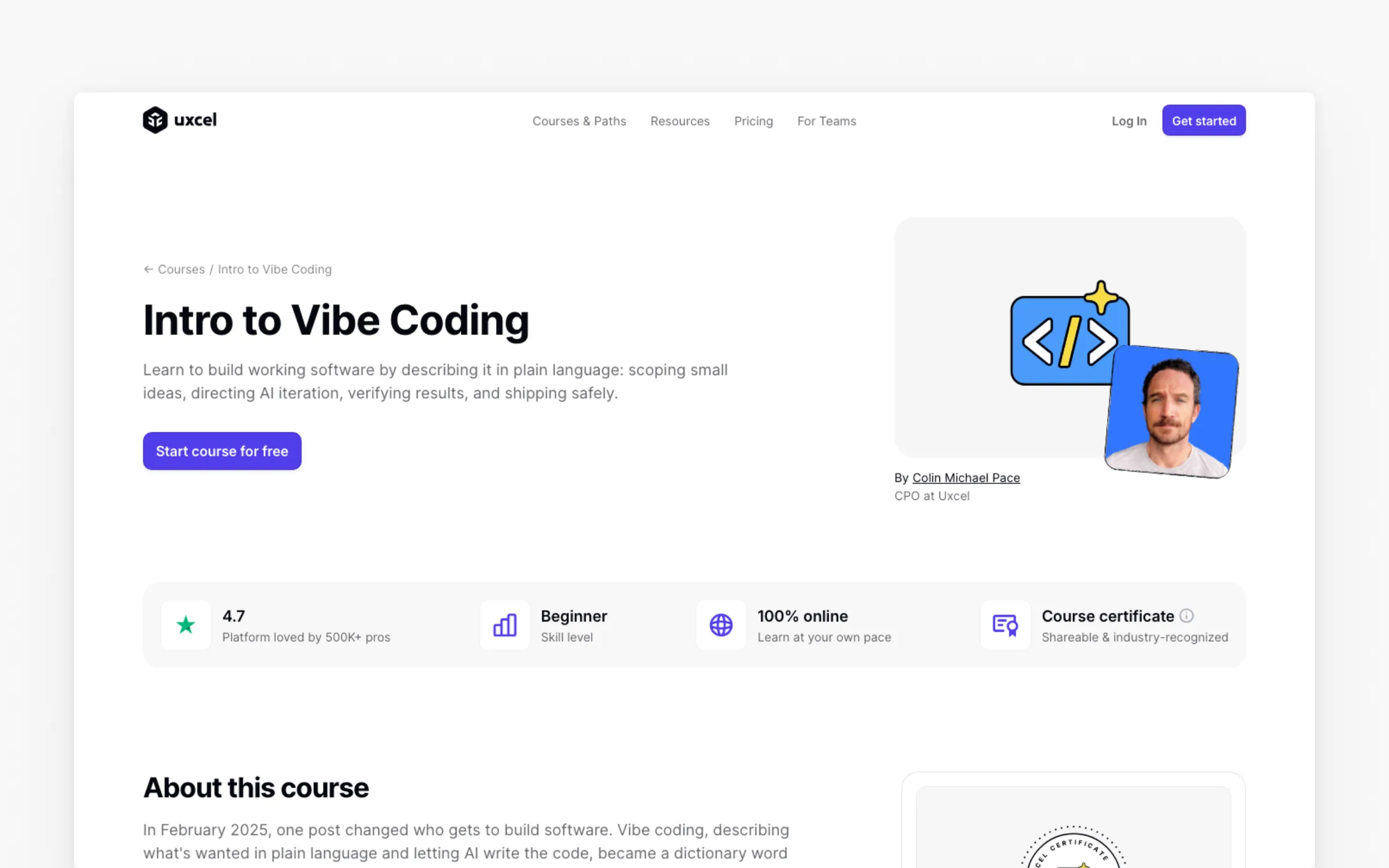
Intro to Vibe Coding is the deepest self-paced option on this list at nine hours across 18 lessons, and the only in-depth one that's interactive rather than video. Every lesson runs as scenario questions with immediate feedback, so you practice decisions instead of watching someone else make them. It's also deliberately tool-agnostic. Claude, Cursor, Lovable, v0, and Replit appear as dated examples, while the lessons teach the layer that outlasts them.
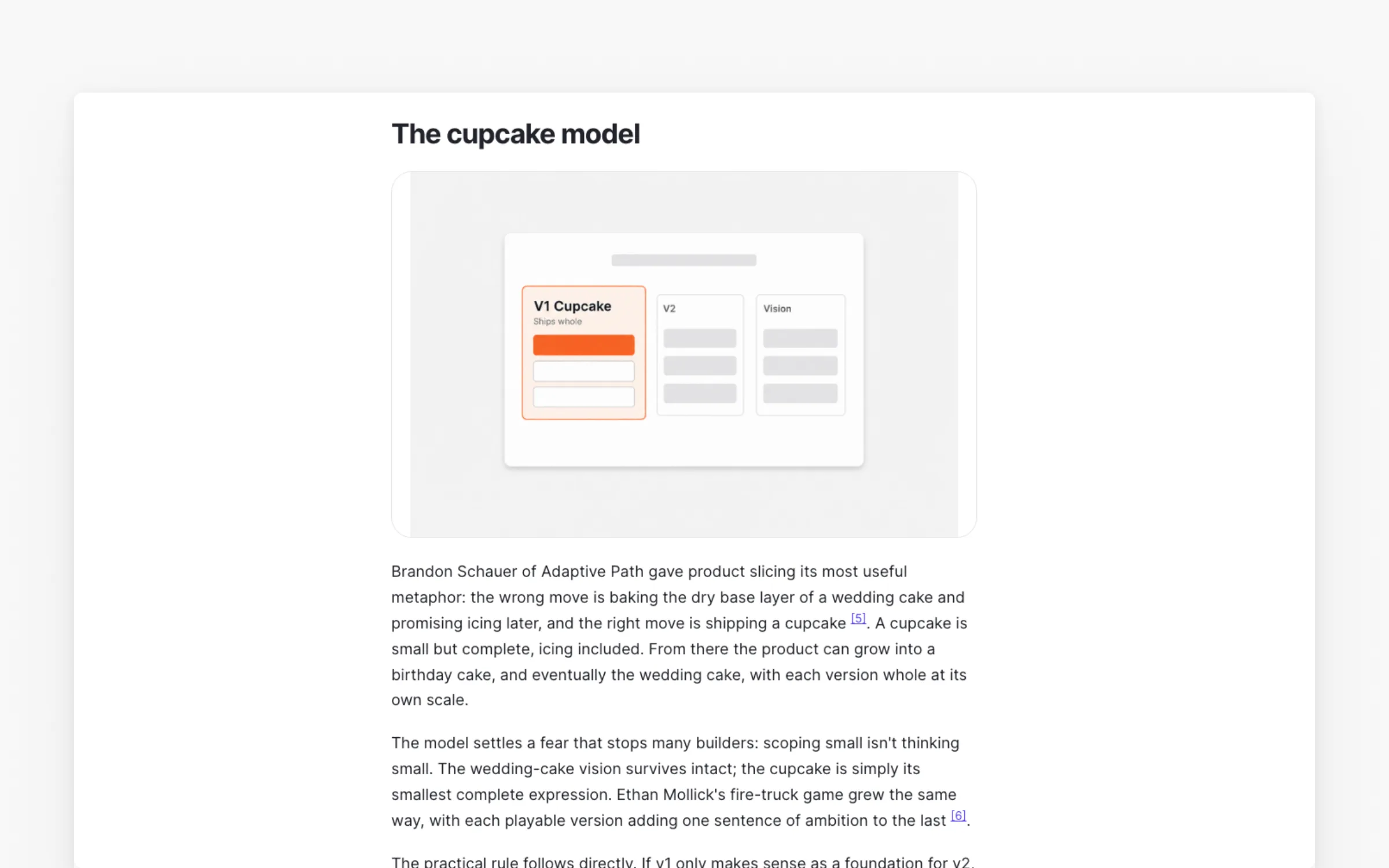
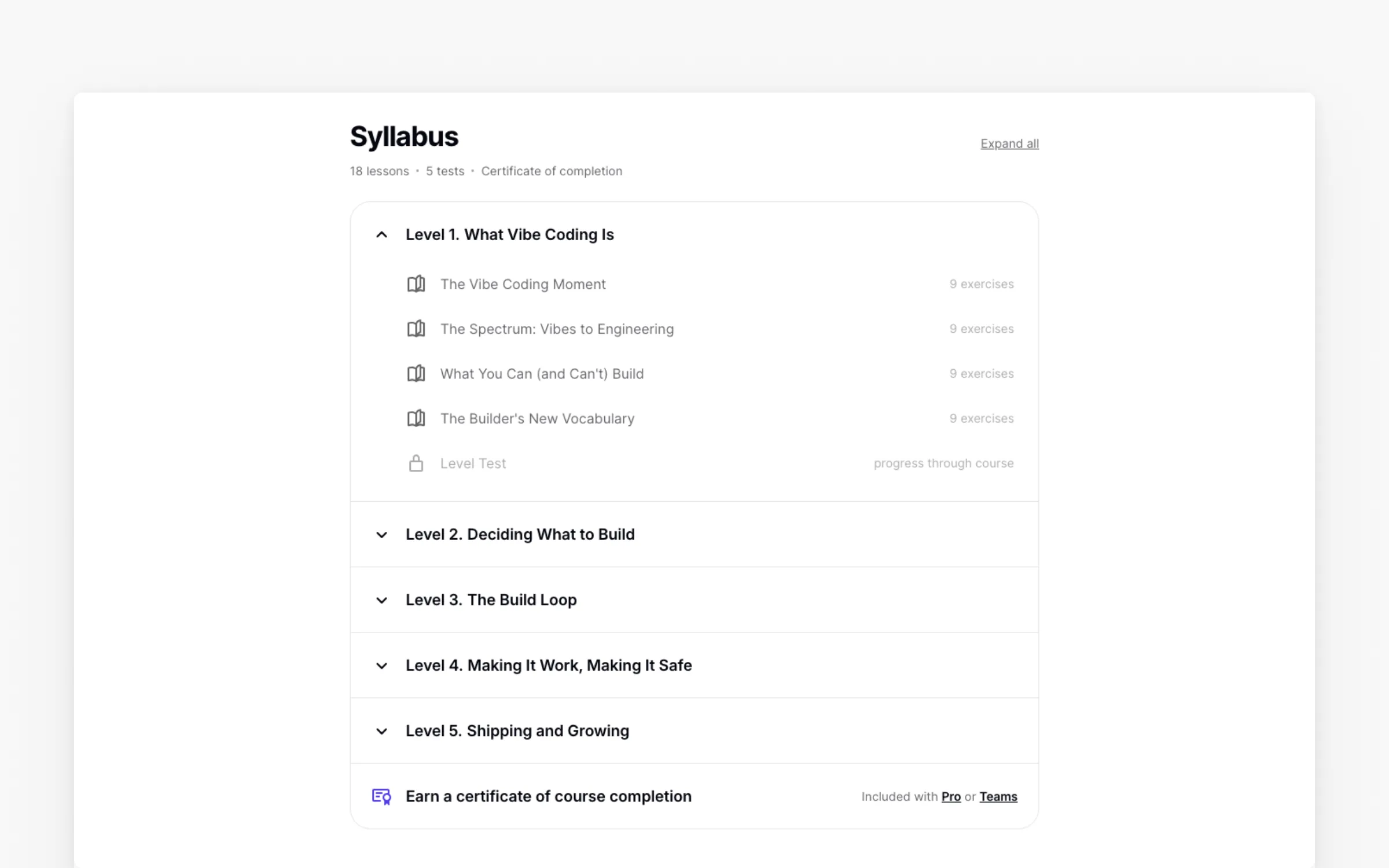
The curriculum is grounded in the field's actual history and its honest limits. The opening level covers Karpathy's post that named the practice and Simon Willison's line between vibe coding and AI-assisted engineering: whether you review the code decides which one you're doing. From there it moves through deciding what to build, the build loop, and a level devoted to making it work and making it safe. That safety level is the differentiator: plain-language test cases that catch silent failures, secrets hygiene, and a pre-ship checklist. It ends at the personal-tool line, which separates what you can ship confidently from what needs an engineer.
The honest limit mirrors the platform: there's no live instructor, so if you want cohort accountability, pair it with a bootcamp below.
Price: free to start, with every Level 1 lesson free. Pro unlocks the full course and catalog.
2. The Vibe Coding Bootcamp by Zero To Mastery: best for project volume
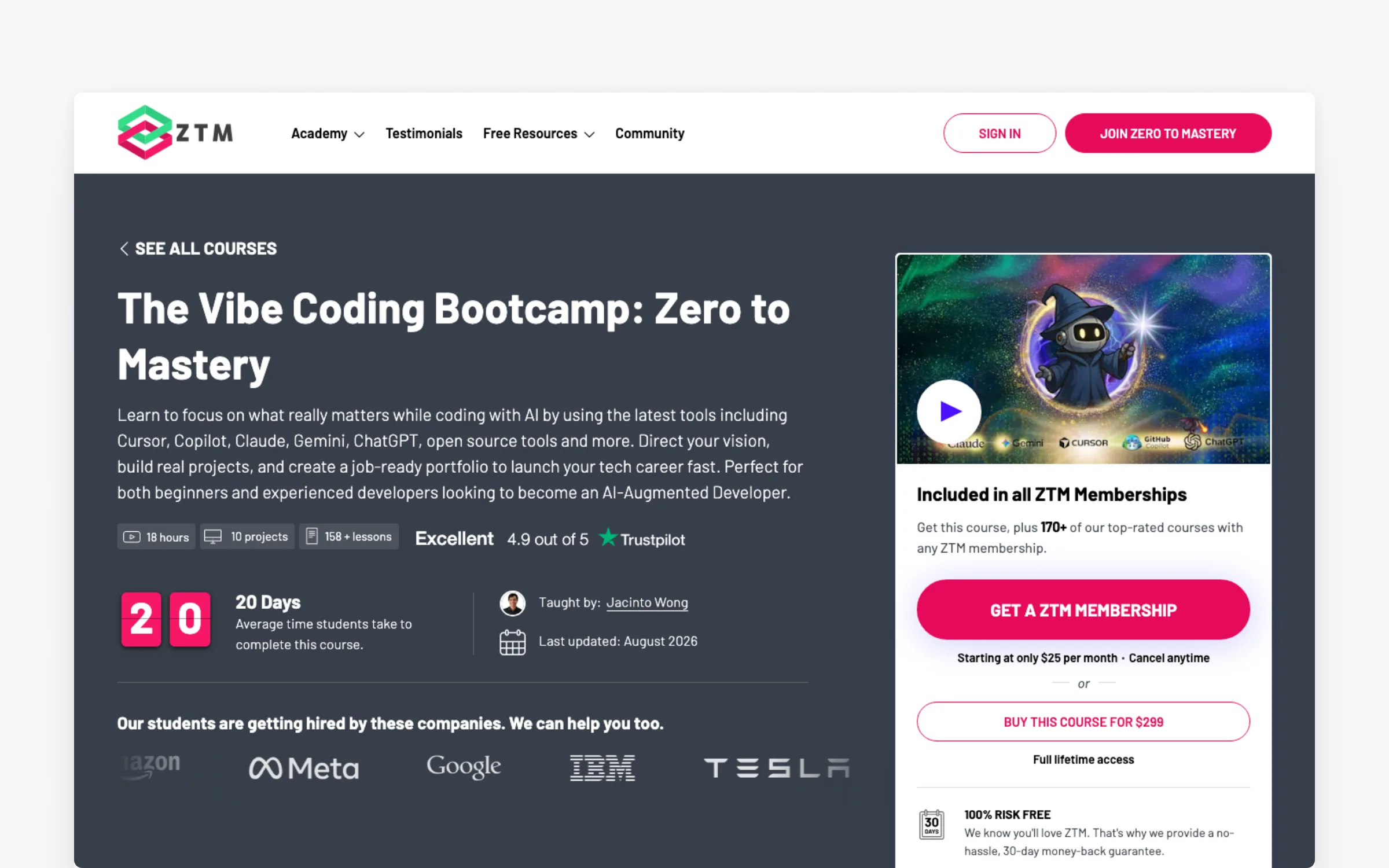
Zero To Mastery's bootcamp is the volume play: 18 hours of video across 158 lessons and 10 build-along projects. You finish with a portfolio of shipped things, which is the fastest way to convince yourself the workflow is real. It's video-first and tool-heavy, so expect some content to date as the tools move.
Price: $25 a month, or $299 for lifetime access.
3. AI Coder on Udemy: best for Claude Code depth on a budget
AI Coder is the standout among Udemy's crowded vibe coding shelf, rated 4.7 by more than 88,000 students. It focuses on taking you from casual vibe coding toward directing coding agents properly, with Claude Code at the center. Udemy's rotating sales make it the cheapest paid option here most weeks.
Price: usually $10 to $20 on Udemy's rotating sales.
4. Vibe Coding Essentials on Coursera: best for a university-style path
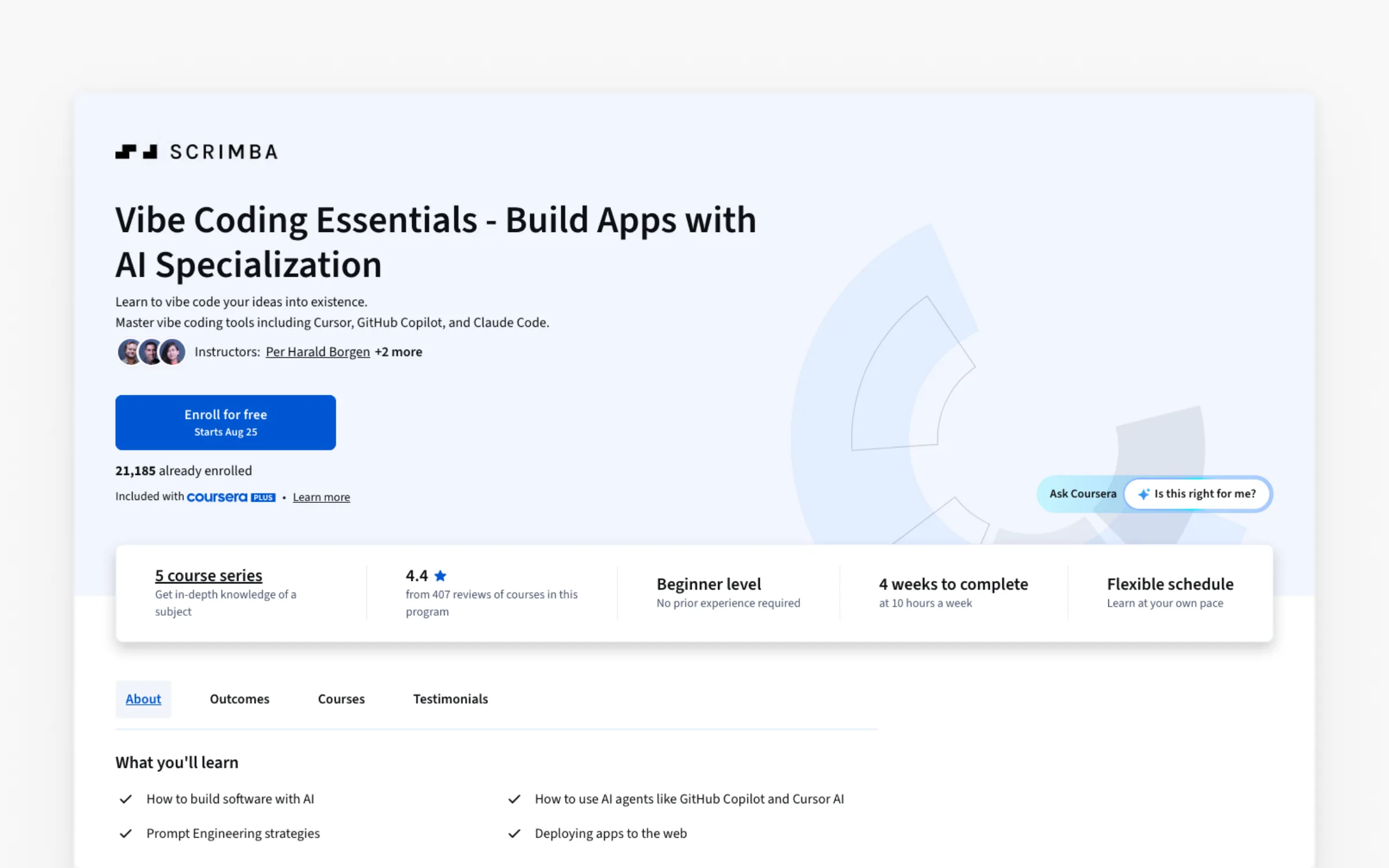
Coursera's Vibe Coding Essentials specialization is a five-course sequence totaling about 40 hours, with graded work and a shareable certificate. It's the most structured path here, at the cost of pace: it moves like a semester, not a sprint.
Price: Coursera subscription, about $59 a month; free 7-day trial.
Free vibe coding courses
5. Vibe Coding 101 by DeepLearning.AI: best free starting point
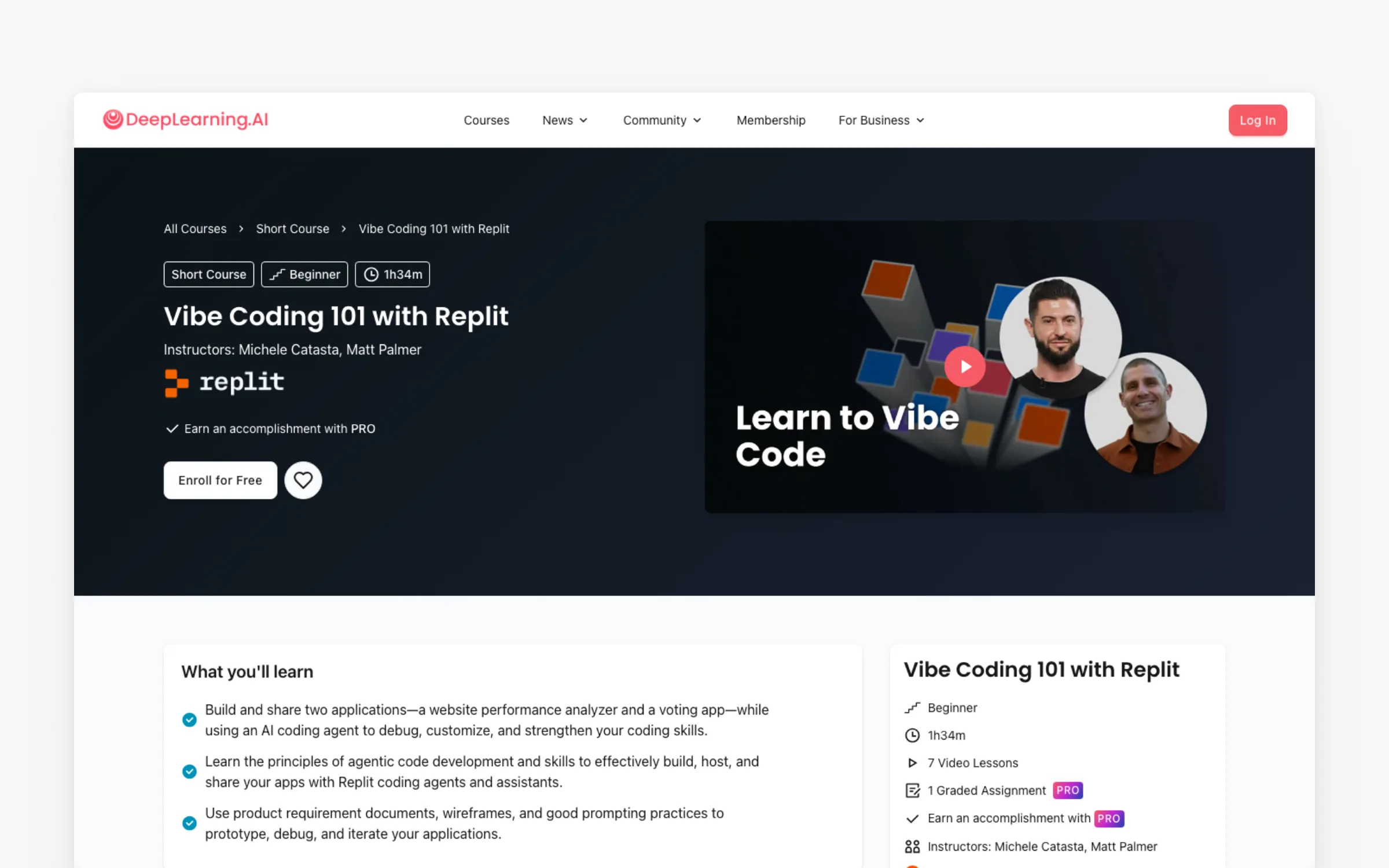
Vibe Coding 101 with Replit packs the core workflow into 95 minutes from the most credible name in AI education. You build two small projects inside Replit's agent environment. It's an appetizer by design, and the right first hour for anyone still deciding whether this is real.
Price: free.
6. Intro to Vibe Coding by Codecademy: best free interactive hour
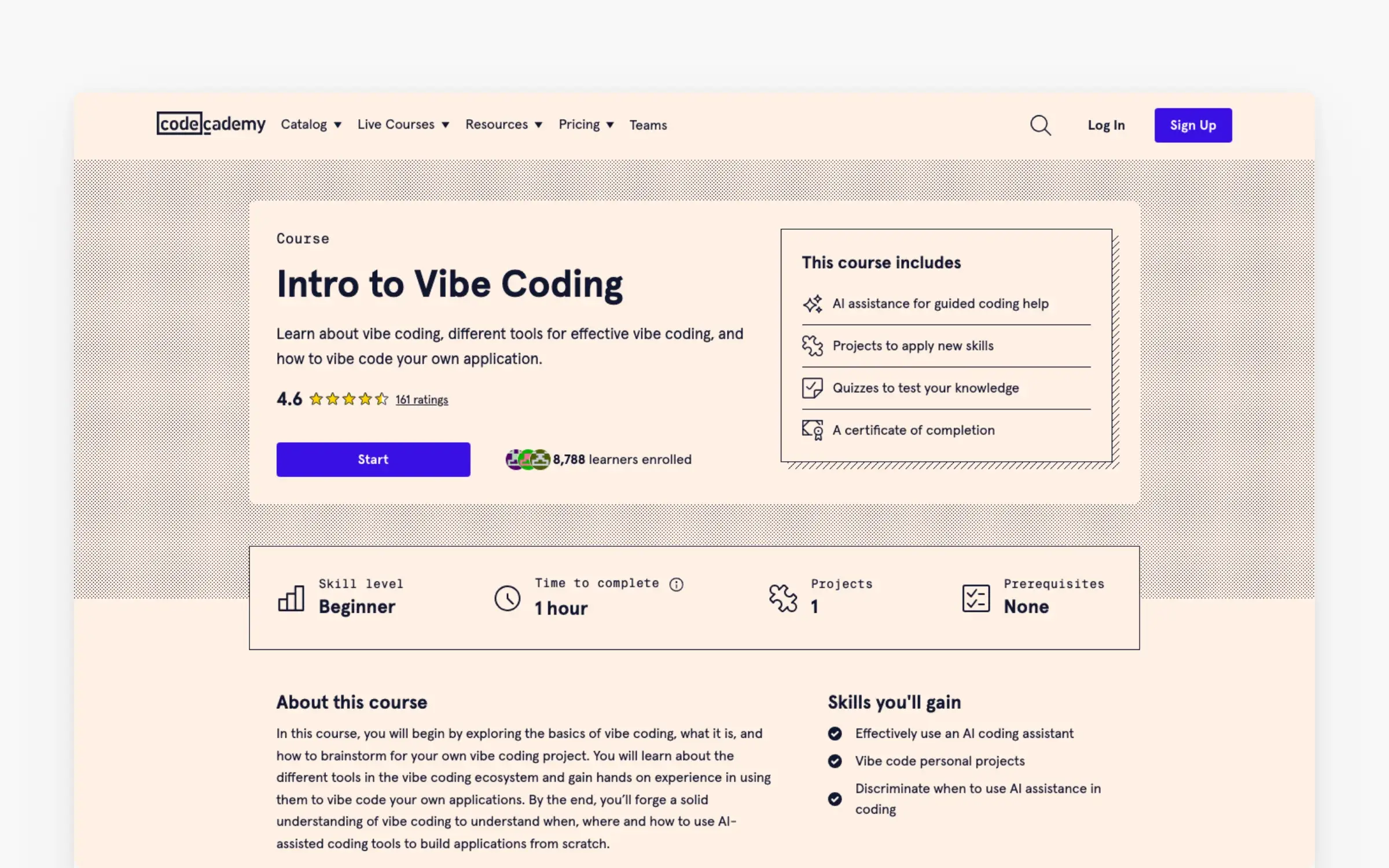
Codecademy's intro is the one free option that's hands-on rather than video: about an hour of guided practice on Codecademy's free tier. Short, but you leave having actually done the thing.
Price: free.
7. Claude Code in Action by Anthropic Academy: best free course with a certificate
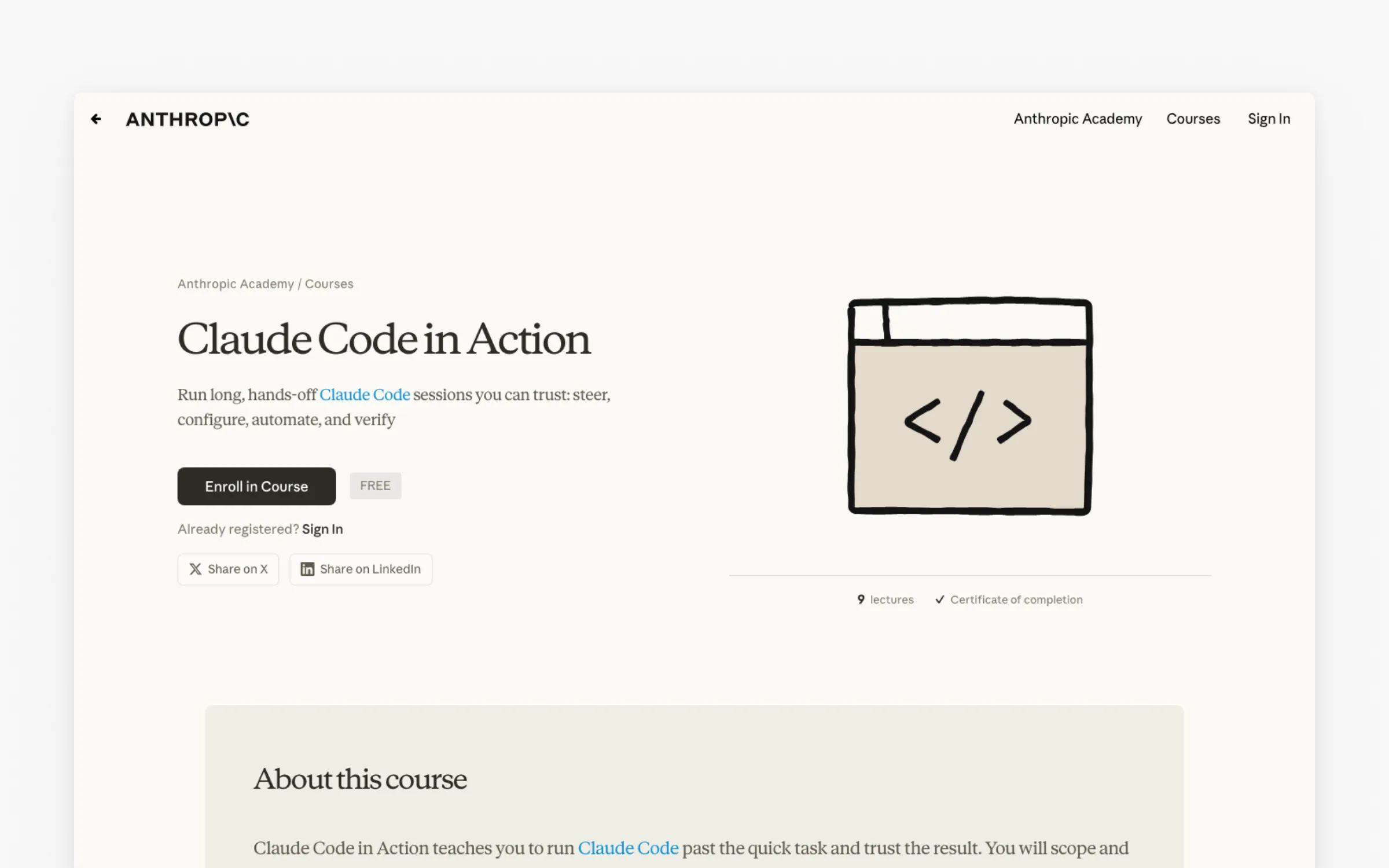
Anthropic's Claude Code in Action is a nine-lecture course on directing an agentic coding tool from the company that builds one, and it's the rare free course that issues a certificate. Naturally Claude-centric, and the concepts transfer.
Price: free, certificate included.
8. Introduction to Vibe Coding by Microsoft Learn: best for the enterprise view
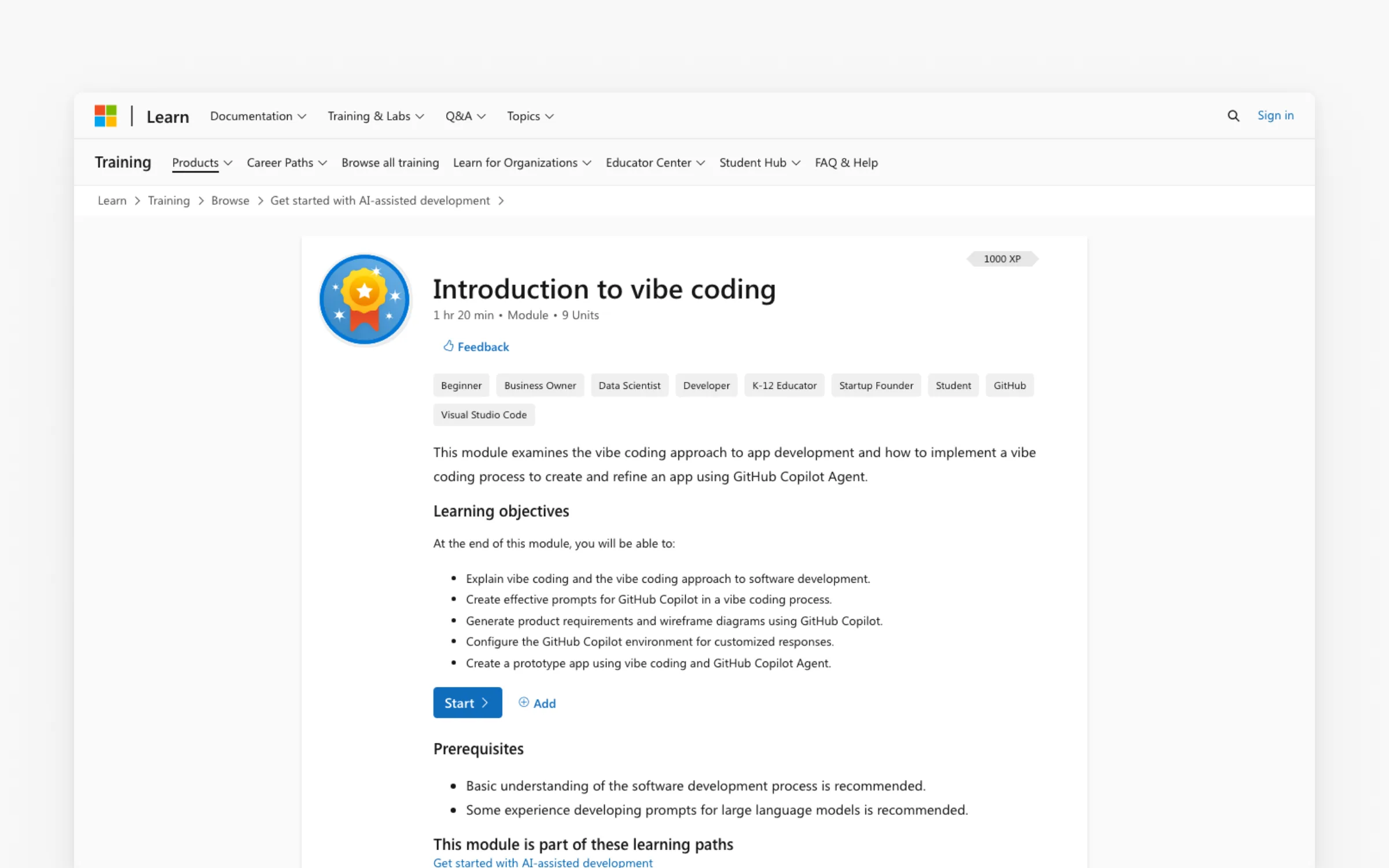
Microsoft's module covers the fundamentals in 80 minutes with the sobriety you'd expect: what the practice is, where it fits in professional development, and its limits. Useful if you need to explain vibe coding to an engineering manager.
Price: free.
9. Replit Learn: best tool-native quick start
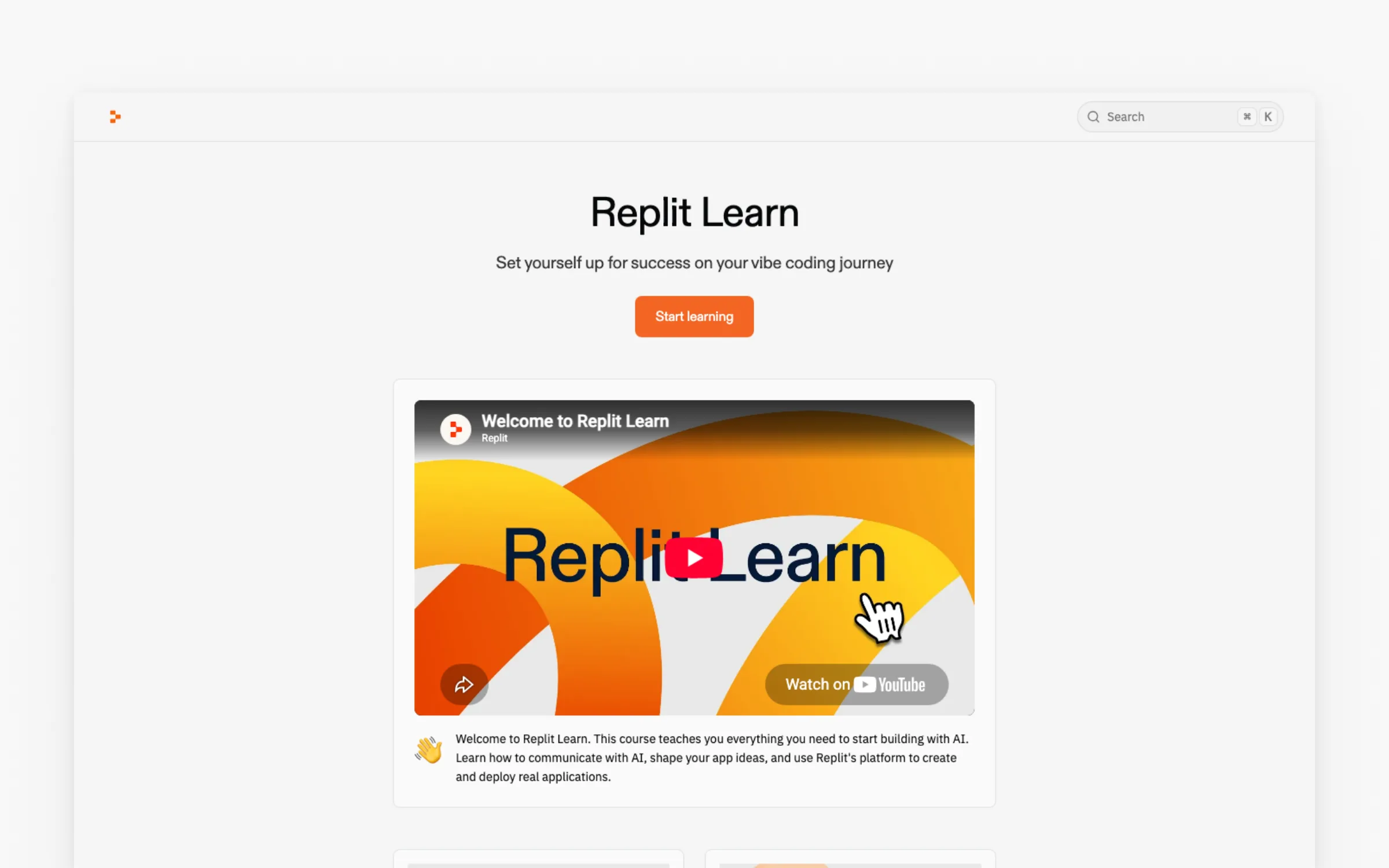
Replit Learn offers free 30-minute foundation modules built into the platform where many people vibe code anyway. It's the shortest path from zero to a deployed toy app, and the most tool-bound option here by the same token.
Price: free.
Live vibe coding bootcamps
10. Vibe Coding Bootcamp on Maven: best live cohort
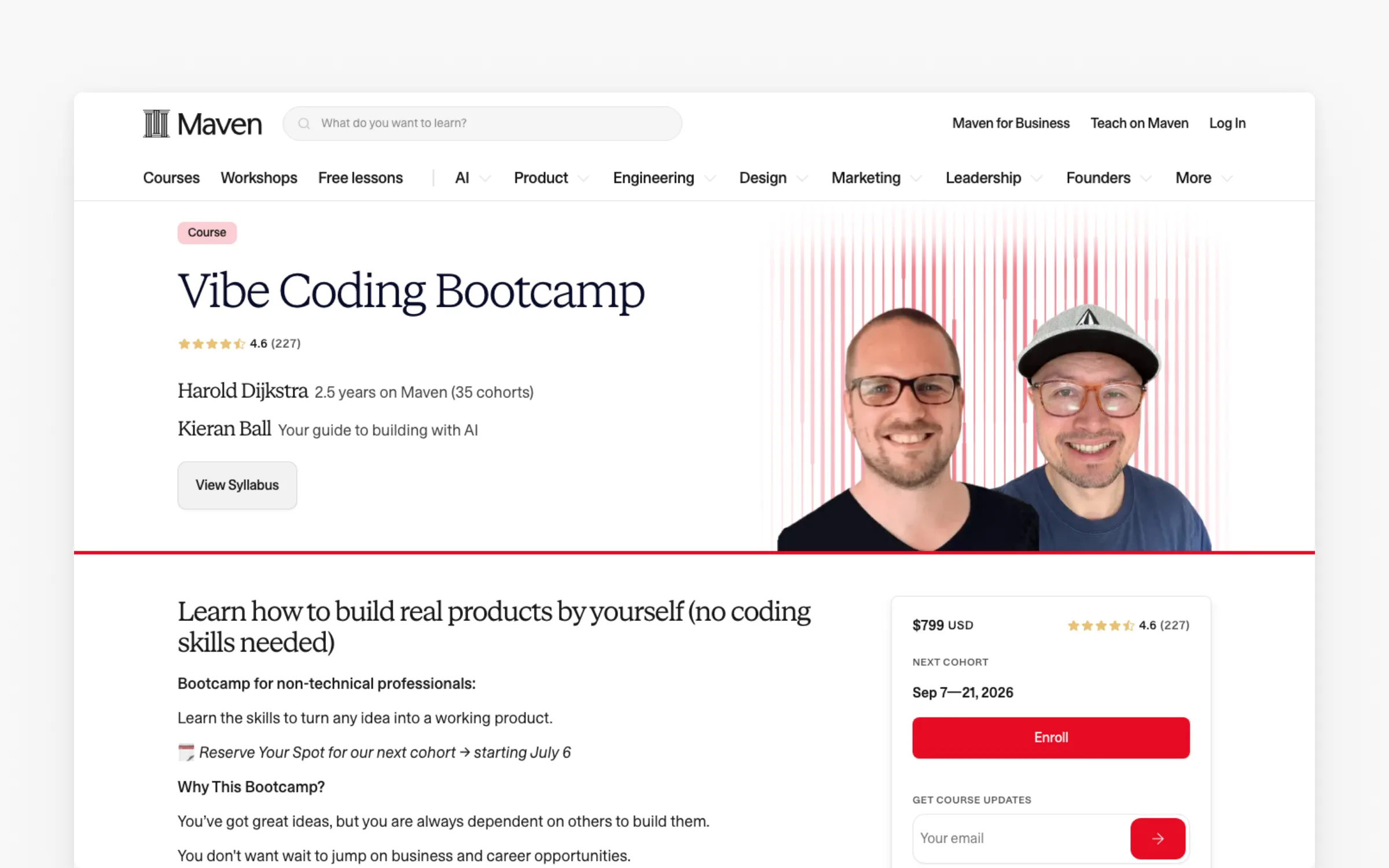
Maven's bootcamp runs two and a half weeks as a live cohort, with instructor feedback on what you build. It's the option for people who ship when someone is watching, and the September 2026 cohort was open for enrollment at the time of writing.
Price: $799.
11. Vibe Coding at Stanford Continuing Studies: best for a university name
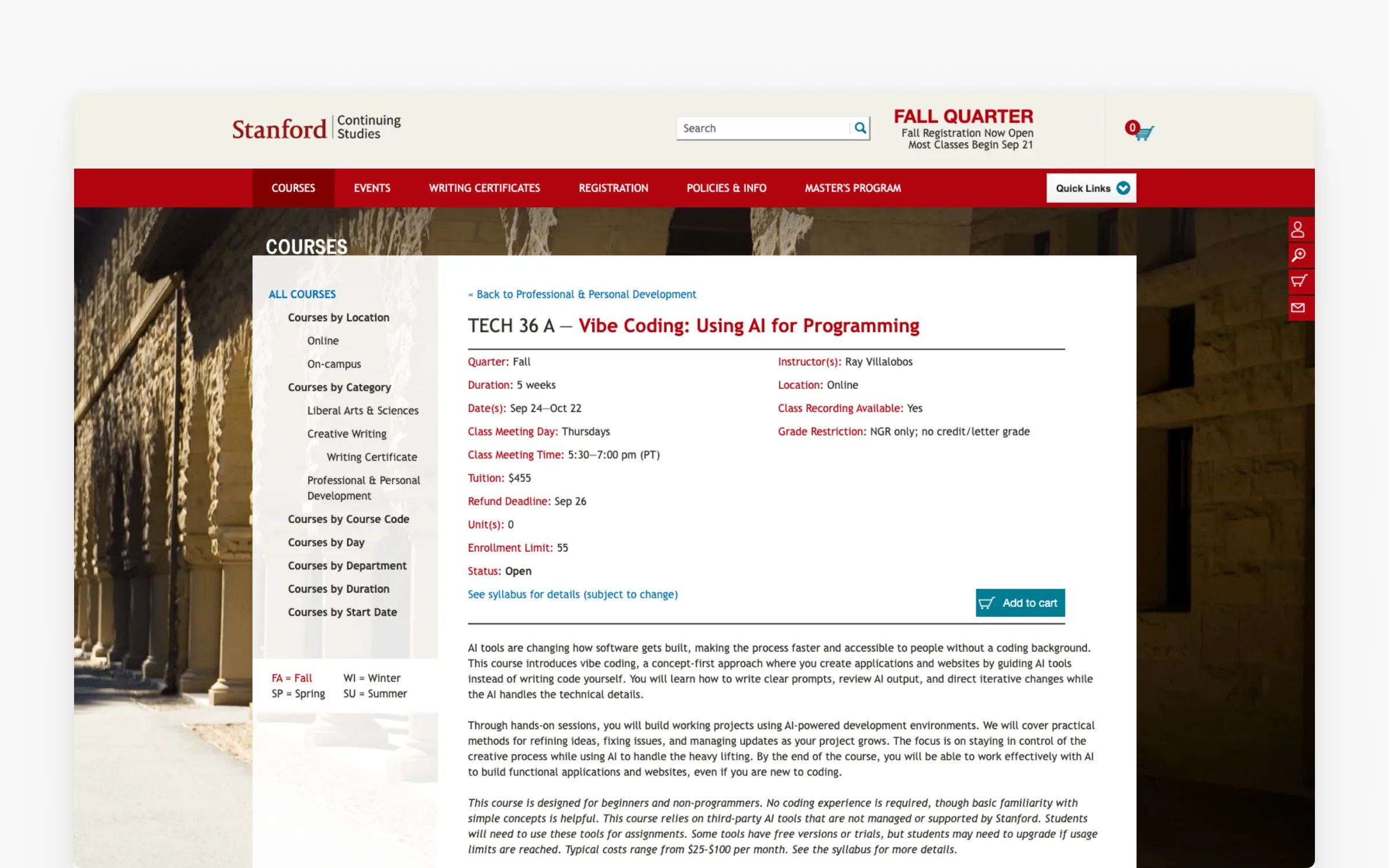
Stanford Continuing Studies runs Vibe Coding: Using AI for Programming as a five-week live online course, open enrollment, no admission process. The brand on the certificate does a specific kind of work on a resume that no self-paced course matches.
Price: $455.
Is vibe coding safe to rely on?
For personal tools and prototypes, yes. For software that holds other people's data or money, it requires exactly the judgment the better courses teach: knowing where the personal-tool line sits, keeping secrets out of generated code, and testing before trusting. The practice's own founders drew this boundary from the start; Karpathy scoped it to throwaway projects in the tweet that named it. A course that skips these limits is selling the fun half of the skill.
How to choose
Never coded, just curious: DeepLearning.AI's free 95 minutes, then Codecademy's interactive hour. Two free sessions tell you if this is your thing.
Designer or PM building real skill: Uxcel's Intro to Vibe Coding for the judgment layer, free to start. It's built for exactly this audience.
Developer adding agentic workflow: AI Coder on Udemy or Anthropic's free course, depending on budget and how Claude-centric your stack is.
Founder shipping an MVP: learn the craft with any option above, then the AI-Native Founder's Playbook covers taking a product from idea to scale with these tools as infrastructure.
Whichever you pick, favor the course that teaches you to distrust the output. That skepticism is the skill.