


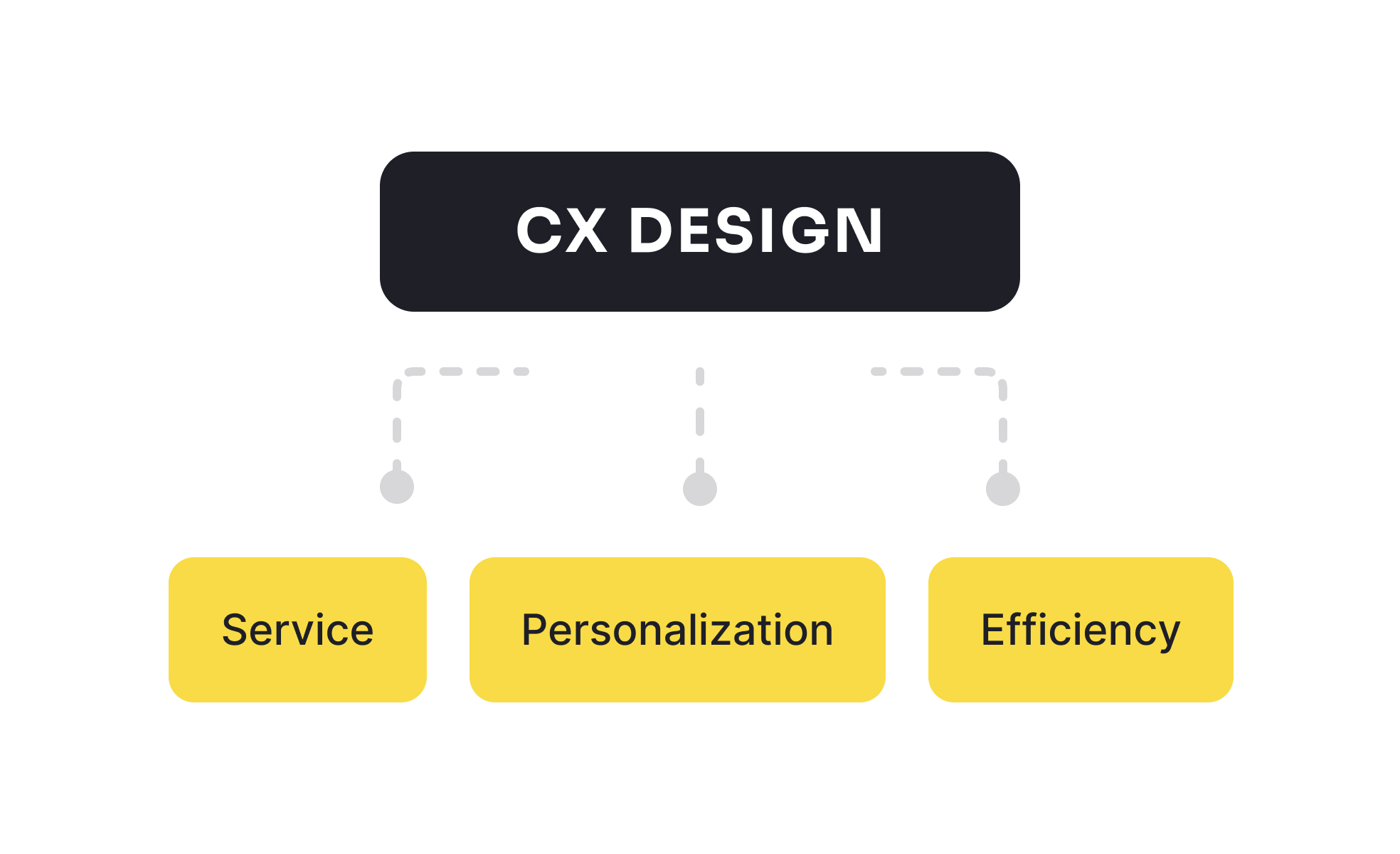
Customer Experience (CX) is the overall impression users form through all their interactions with a product, service, or brand. It includes not only the usability of the interface but also the quality of support, communication, and emotional connection. From a product perspective, CX reflects how well a solution aligns with user needs and how smoothly it helps them achieve their goals. Strong CX builds trust, reduces friction, and directly impacts whether customers return or recommend a product to others.
In UX and UI design, CX is inseparable from the product interface. Every click, scroll, or form entry influences how a customer perceives the product. For example, a confusing navigation menu can cause frustration, while a clear and intuitive flow can delight the user. Designers consider how elements like typography, layout, and responsiveness combine to create a seamless journey.
For product managers, CX is a broader strategic concern. It extends beyond the interface into the entire lifecycle of the customer’s relationship with the company. This includes discovery, onboarding, customer service, feature updates, and even billing.
Measuring CX requires a blend of quantitative and qualitative methods. Metrics like Net Promoter Score (NPS), Customer Satisfaction (CSAT), and Customer Effort Score (CES) provide numerical insights, while surveys, interviews, and usability tests uncover emotional responses. Businesses that invest in tracking these signals can detect friction points and prioritize improvements that matter most to users. For instance, reducing the number of steps in a checkout flow might cut abandonment rates and boost satisfaction simultaneously.
Real-world examples highlight the impact of CX on product success. Companies like Apple have built their reputation on experiences that feel polished at every step, from packaging to customer support. Similarly, digital-first brands such as Spotify continually refine touchpoints based on customer feedback, ensuring their services feel personal and effortless. On the other hand, products that ignore CX often face churn, even when their core features are strong, because customers evaluate the overall journey, not just functionality.
Learn more about this in the Customer Satisfaction Measurement Lesson, a part of the Product Analytics Course.
Key Takeaways
- CX covers every customer interaction with a product, service, or brand.
- UX/UI design directly shapes CX through usability and clarity.
- Product managers oversee CX at a strategic level across touchpoints.
- Metrics like NPS, CSAT, and CES measure CX effectiveness.
- Positive CX drives loyalty, reduces churn, and boosts advocacy.


