


Every signed-in product is quietly building a model of each person who uses it, and that model decides what they see next. The quality of recommendations, the continuity between devices, and the credibility of a privacy promise all rest on the same record. A user profile is only as valuable as it is accurate, and only as trusted as it is transparent, which is why the data design matters more than the page that displays it.
In this glossary topic:
What is a user profile?
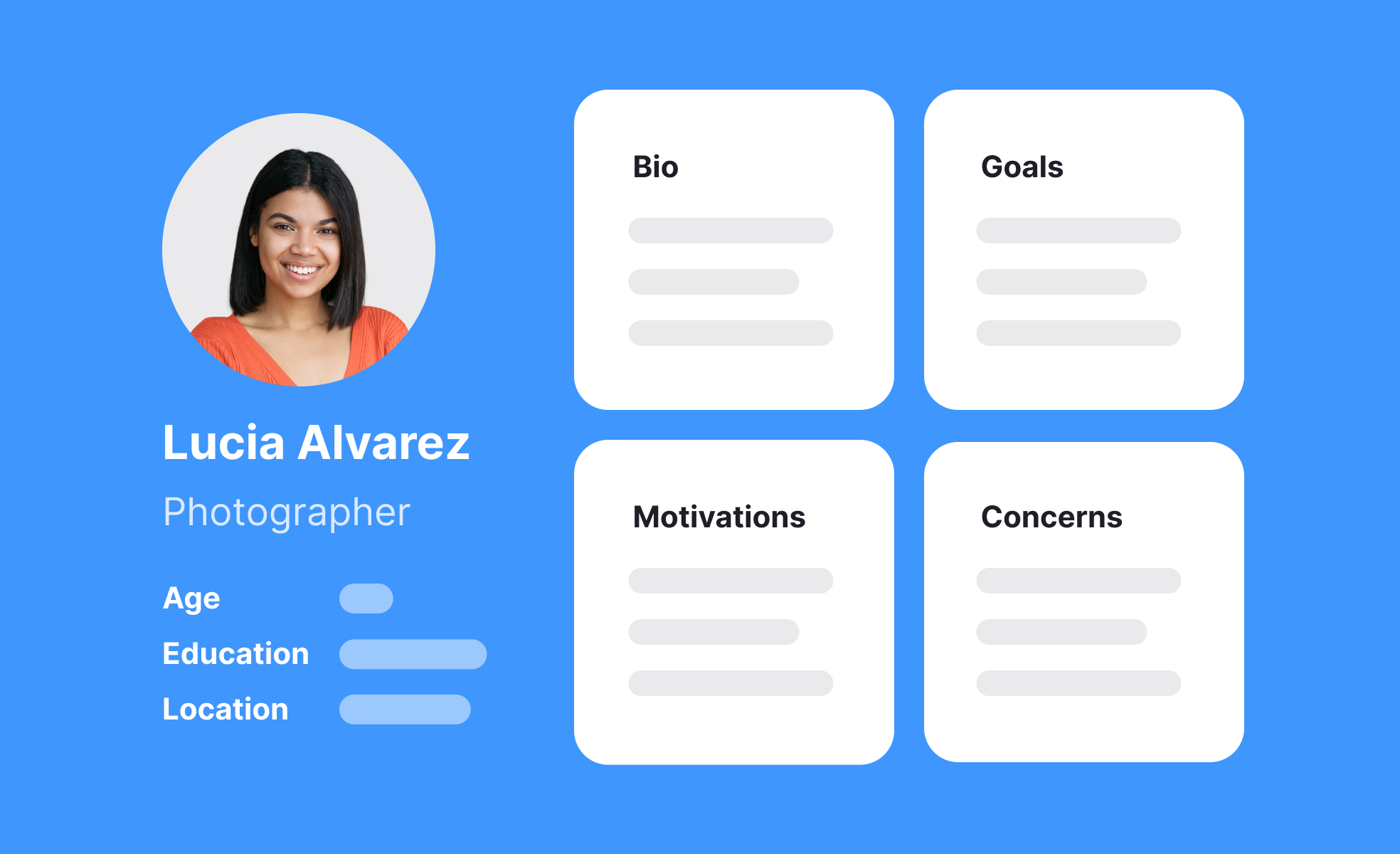
A user profile is the collection of information a product holds about an individual user. It typically includes account credentials, personal details, stated preferences, historical activity, and behavioral data accumulated through use. The profile is the product's model of who a user is and how they use the product.
Profiles serve two distinct functions. From the user's perspective, they're the mechanism for personalization: the system knows what they've done before, what they prefer, and how they like to work, so it can adapt accordingly. From the product team's perspective, aggregated profile data is a research and analytical resource: a signal about what users actually do, what they engage with, and where they encounter friction.
The concept spans a wide range of implementations. A social platform's user profile includes a public-facing page with bio and content. A SaaS product's user profile might be primarily settings and preferences with no public visibility. An e-commerce account includes order history, saved addresses, and payment methods. Despite these differences, all are doing the same underlying thing: storing a structured representation of a person's relationship with the product.
What data does a user profile typically contain?
The specific data in a profile varies by product type and purpose, but several categories are common across most products that use profiles.
- Identity and account data is the baseline: name, email address, username, authentication credentials, account creation date, and subscription or access tier. This is the data that identifies who the user is within the system.
- Stated preferences are explicitly provided by the user: communication settings, language and locale preferences, notification opt-ins, privacy settings, and any configuration the user has intentionally set. This data is directly actionable for personalization because the user has explicitly told the product what they want.
- Behavioral and activity data is accumulated through use: what the user has viewed, purchased, completed, created, or interacted with. Unlike stated preferences, behavioral data reflects what users actually do rather than what they say they want, which often surfaces more accurate signals for personalization models.
- Derived attributes are inferences the system makes based on behavioral data: a user who frequently engages with content tagged "accessibility" is inferred to have an interest in that topic. These inferences power recommendation systems but require careful handling, since incorrect inferences can produce irrelevant or unwanted personalization that erodes trust.
How do user profiles support personalization?
Personalization is the primary product-facing function of user profile data. By knowing what a user has done and what they've expressed interest in, a product can adapt the experience to be more relevant.
Content recommendations are the most visible form of profile-driven personalization: a streaming service that knows what a viewer has watched surfacing similar titles, a learning platform that knows a learner's skill level and learning history recommending the next relevant course, an e-commerce site surfacing products related to a shopper's browsing and purchase history. These features depend directly on the accuracy and richness of profile data.
Interface personalization goes further than content: adapting the layout, navigation shortcuts, or feature prominence based on individual usage patterns. A dashboard that surfaces a user's most-used tools in the most accessible positions, rather than a default layout the same for everyone, is an example of this approach. As AI-powered adaptive interfaces become more common, profile data is increasingly the input that drives real-time interface adaptation.
Continuity across devices and sessions is also a profile-enabled feature: picking up where a user left off in a document, maintaining cart state across devices, or resuming a course at the correct lesson all depend on profile data persisting across sessions and contexts.
What are the privacy and ethical considerations?
User profiles accumulate sensitive data, and the obligations that creates are significant.
- Privacy regulations including GDPR in Europe, CCPA in California, and similar frameworks in other jurisdictions establish specific rights around personal data: the right to access what's stored, the right to correct inaccuracies, the right to have data deleted, and the right to opt out of certain types of processing. Products that collect profile data must design data management features that support these rights, not just as compliance requirements but as genuine user-facing functionality.
- Transparency about what data is collected and how it's used is both a legal requirement and a trust-building practice. Users who understand what data a product holds about them and what it's used for are more likely to engage actively with profile features and provide more accurate preference data.
- Data minimization, the practice of collecting only the data actually needed for the product's stated purpose, is both a privacy best practice and a practical design principle. Profiles that collect unnecessary data create compliance overhead without creating product value, and larger data sets are more consequential in the event of a security breach.
- Bias in derived attributes and recommendation models is a genuine risk. If a model infers a user's interests based on behavioral data and surfaces only content that confirms those inferences, it can create filter bubbles that limit discovery. If demographic attributes in profile data are used in ways that create disparate outcomes for different user groups, this raises fairness concerns. These are active areas of concern in product development and require deliberate design attention rather than assuming the model's outputs are neutral.
How do user profiles differ from UX personas?
User profiles and UX personas are both tools for understanding users, but they represent fundamentally different things.
A UX persona is a fictional archetype: a synthesized representation of a pattern of user types, goals, and behaviors derived from research. "Maria, 34, a freelance designer who uses the product primarily on her laptop and values efficiency over features" is a persona. It doesn't correspond to any real individual; it's a composite designed to represent a segment.
A user profile contains real data about a specific individual. It reflects what that person has actually done, said, and chosen within the product. Profiles accumulate continuously and reflect change over time. Personas are created at a point in time based on research and updated infrequently.
The two are complementary. Personas inform design decisions about what the product should do and how it should work. User profiles inform personalization, analysis, and understanding of how specific users are actually engaging with what's been built. Confusing them by treating aggregate profile data as design research, or by trying to make a persona do the job of a profile, leads to decisions grounded in the wrong type of evidence.


