.svg)


Design thinking is a problem-solving method that starts from user needs, generates options before committing, and tests ideas cheaply before anything gets built. IDEO spent four decades turning it into a teachable practice, and Stanford built a school around it. Job descriptions for product managers and designers now treat it as an expected skill. The training market splits along one line: university-brand certificates that run from $1,798 to about $3,000, and practical courses that cost little or nothing. Which side you need depends on whether you're buying the skill or the credential. If it's the credential, Uxcel's design thinking certification validates the skill directly with an 80-question exam. This list covers both sides, grouped by format, with the real price on one line for each.
The shortlist
Self-paced design thinking courses
- Uxcel's Design Thinking for Product Teams for the version that survives real product work
- IxDF's Design Thinking: The Ultimate Guide for depth on a budget
- Design Thinking for Innovation by UVA Darden for a university course you can audit free
Free design thinking courses and badges
- IBM's Enterprise Design Thinking Practitioner for a free badge in an afternoon
- Stanford d.school's Starter Kit for free workshop materials
University certificates and cohort programs
- IDEO U's Foundations in Design Thinking for learning from the source
- HBS Online's Design Thinking and Innovation for a business school name
- Stanford's Creativity and Design Thinking Program for self-paced university depth
- MIT Sloan's Mastering Design Thinking for a capstone project with feedback
What to look for in a design thinking course
Four things separate training that changes how you work from an expensive slideshow:
- The job version, or the workshop version. Most courses teach design thinking as a facilitated event: sticky notes, a room, a day. The harder skill is running empathy work, framing, and testing inside a product cycle, with deadlines and stakeholders who didn't attend the workshop.
- Practice over lectures. The method is a set of behaviors, so a course that only explains it hasn't taught it. Look for exercises, projects, or scenario decisions.
- What the certificate actually certifies. University certificates carry the university's brand, and that's what you're paying for. None of them are a hiring requirement. Treat the credential as a bonus on top of skills you'd want anyway. For role-level training instead, the best UX design courses roundup covers that ground.
- Cohort or self-paced. Cohorts add live feedback and accountability at five to ten times the price. Self-paced options win on cost and schedule. They also lose the deadline pressure that makes some people finish.
Self-paced design thinking courses
1. Design Thinking for Product Teams by Uxcel: best for real product work
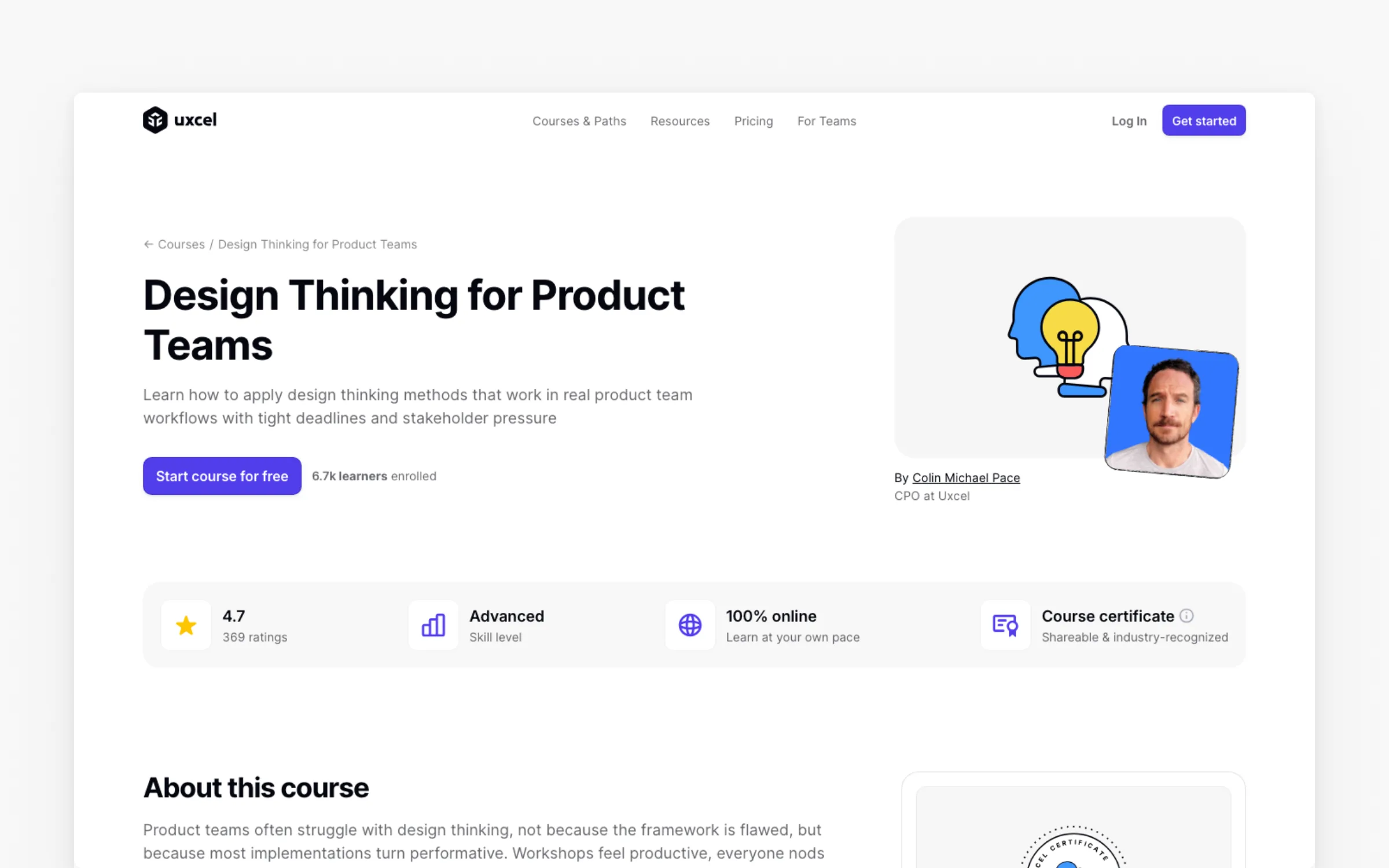
Design Thinking for Product Teams was built for people already shipping product. The premise is that the method usually dies on contact with a roadmap. So every lesson deals with the version that survives: research that fits a sprint, problem framing under stakeholder pressure, and testing that doesn't wait for a lab. It's an advanced course, and it says so. If you're new to the method, start with the free UVA Darden course below, then come back.
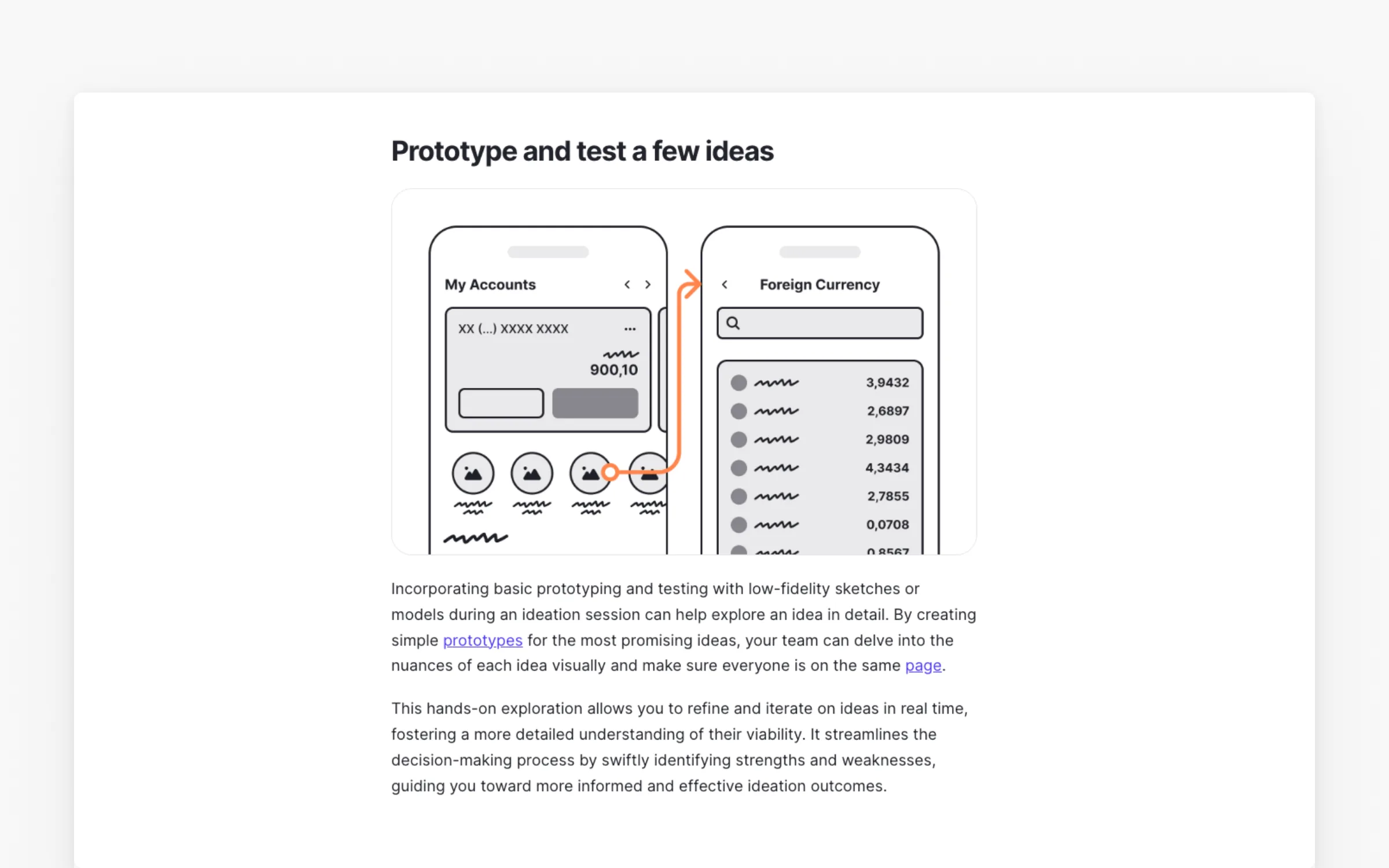
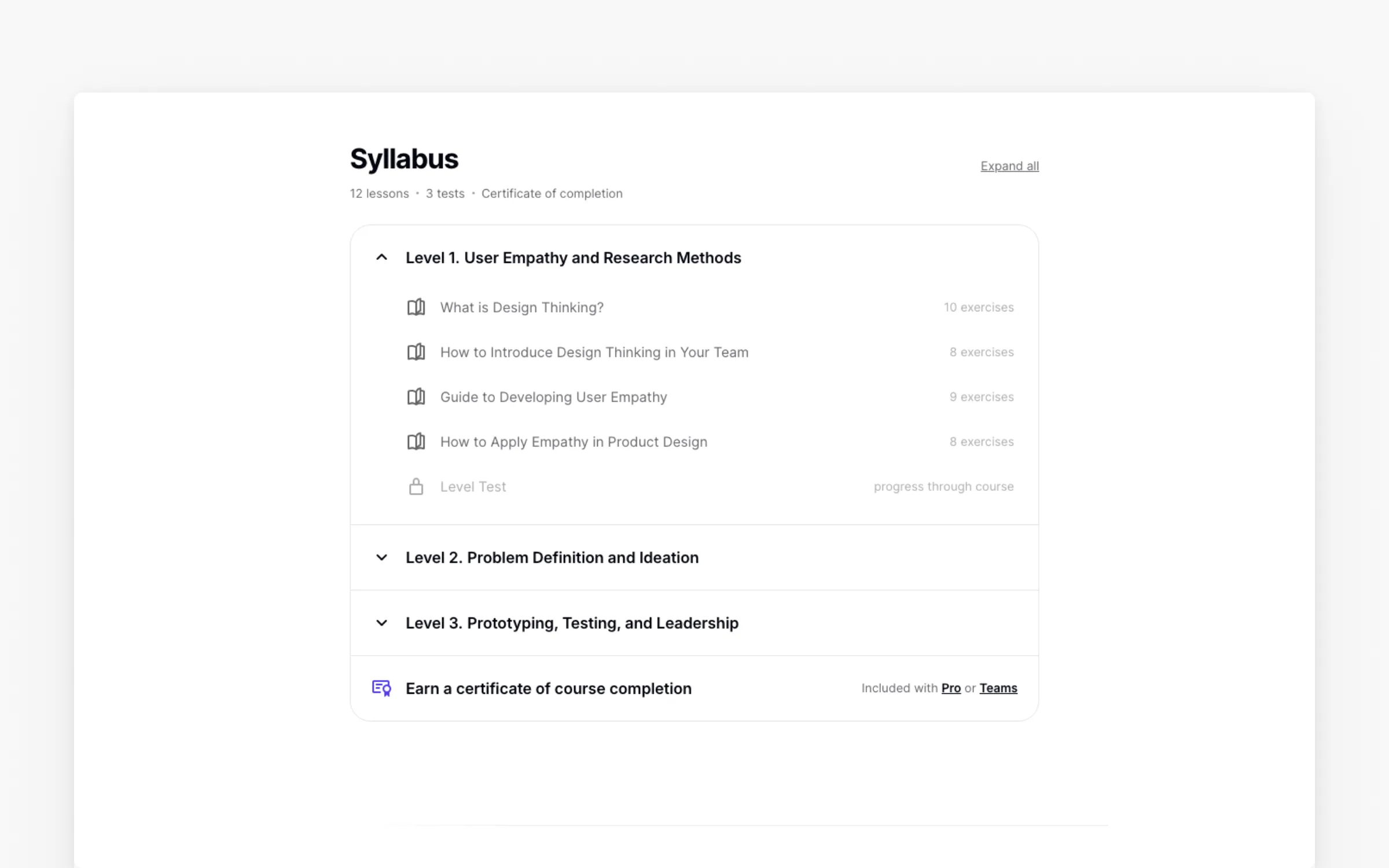
The format is the differentiator. Twelve interactive lessons across three levels, about three hours total, run as scenario decisions with immediate feedback rather than video. The levels move from user empathy and research methods through problem definition and ideation to prototyping, testing, and leadership. That's the full arc of the method, compressed to what product work actually uses. Over 6,700 learners have enrolled, rating it 4.7 from over 360 ratings. The honest limit: it assumes you have a team and real work to apply it to. Students without a live project will get more from a project-based option.
Price: every Level 1 lesson is free, no card required. Pro unlocks the full course and catalog.
2. Design Thinking: The Ultimate Guide by IxDF: best for depth on a budget
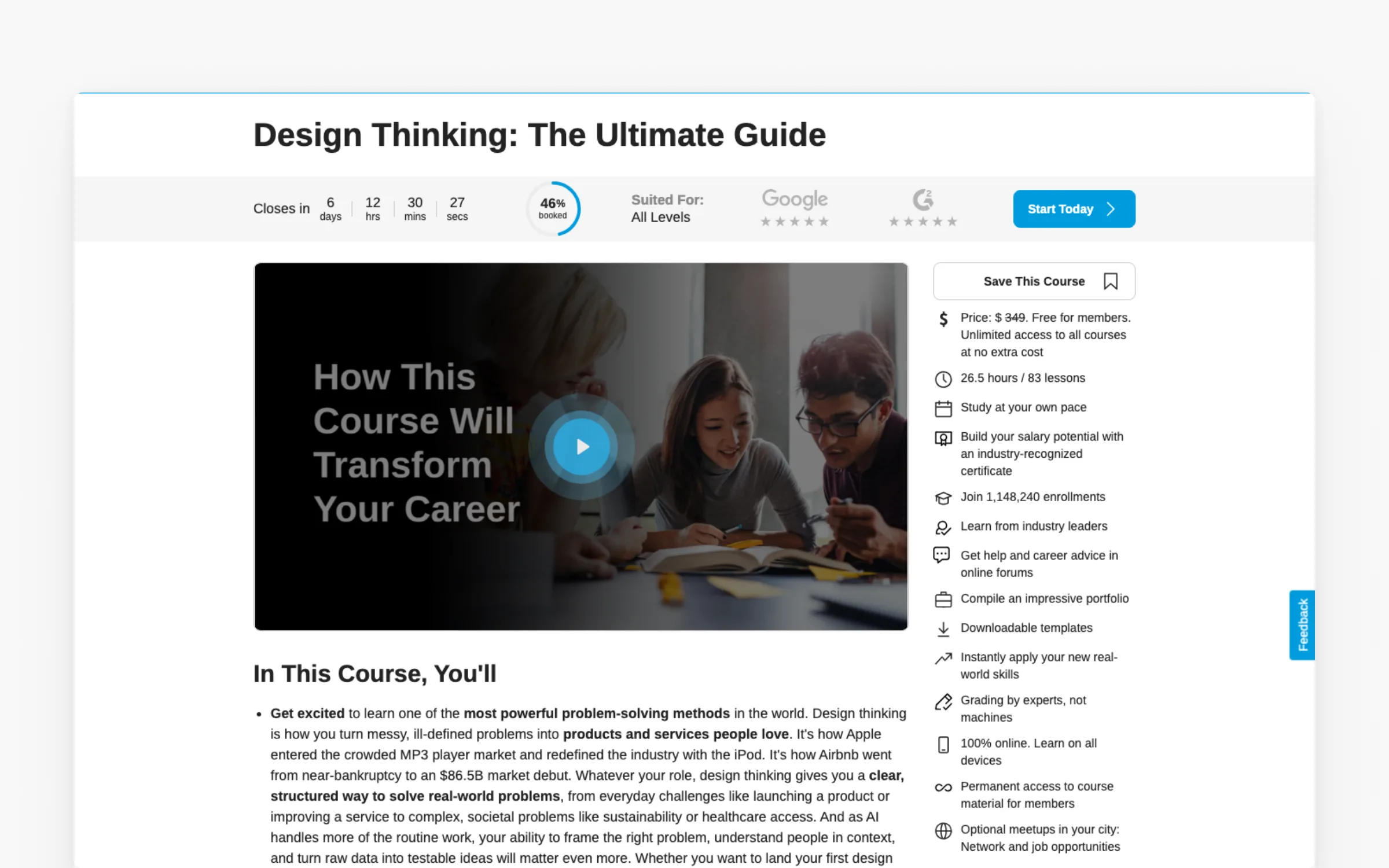
Design Thinking: The Ultimate Guide is the longest self-paced option here. It runs 26.5 hours across 83 lessons around the five-stage empathize, define, ideate, prototype, test model, with instructors including Don Norman. It's thorough in a way nothing else at this price matches, with templates and portfolio exercises alongside the lessons. The trade-off is that same depth. Over 26 hours of mostly reading and video takes discipline to finish, and the membership model means you're subscribing, not buying a course.
Price: included with IxDF membership. The course alone would run $349 without it.
3. Design Thinking for Innovation by UVA Darden: best free university course
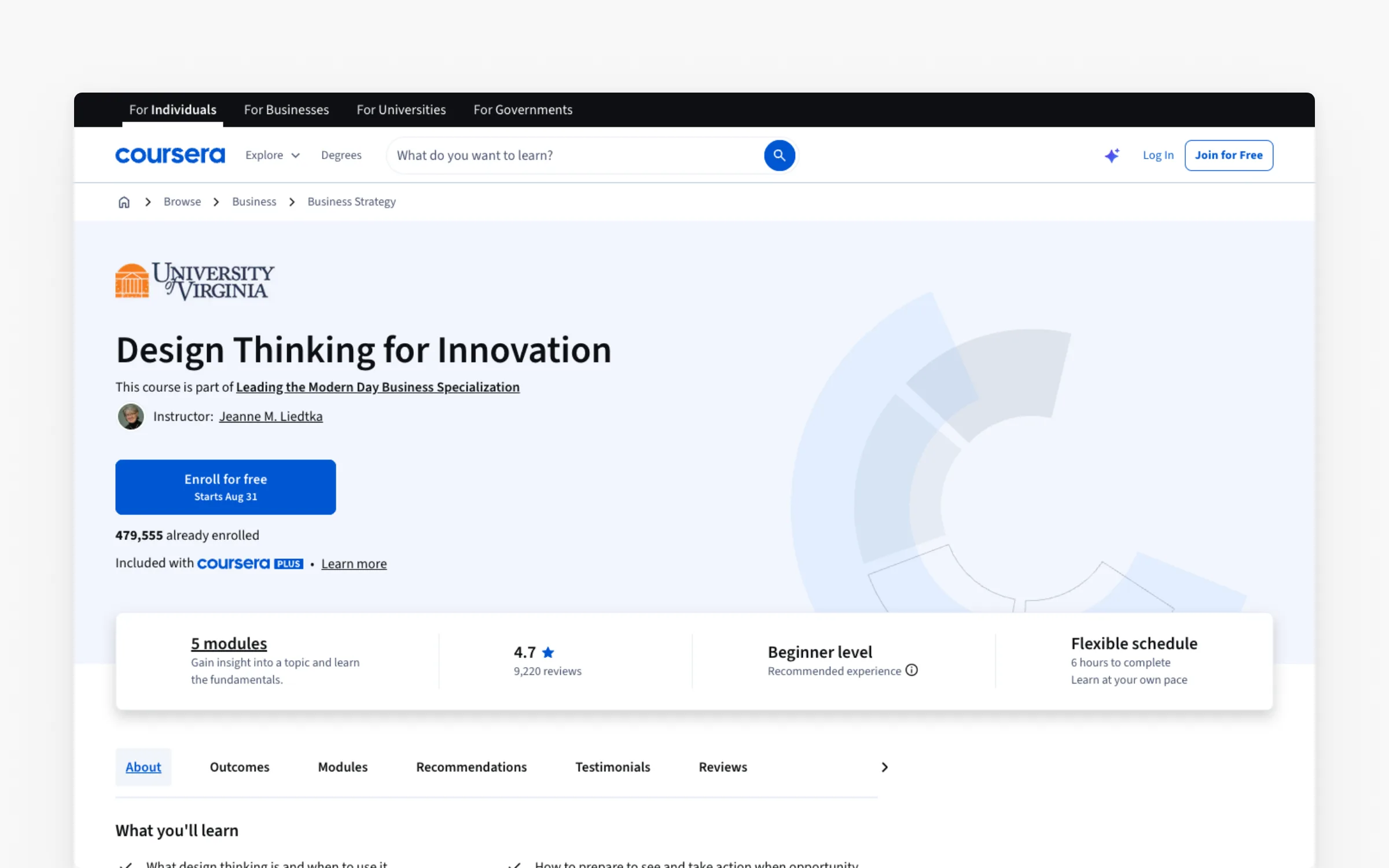
Design Thinking for Innovation on Coursera is the most-taken design thinking course in the world. More than 479,000 people have enrolled, and it holds a 4.7 rating across more than 9,200 reviews. Jeanne Liedtka teaches the method as a business tool, with cases that show what worked and why, in about six hours across five modules. It's the right first course: short, credible, and free to audit. The limit is that it's a lecture course. You'll understand the method well and still not have practiced it.
Price: free to audit. A shareable certificate comes with Coursera's paid tier, about $59 a month.
Free design thinking courses and badges
4. Enterprise Design Thinking Practitioner by IBM: best free badge
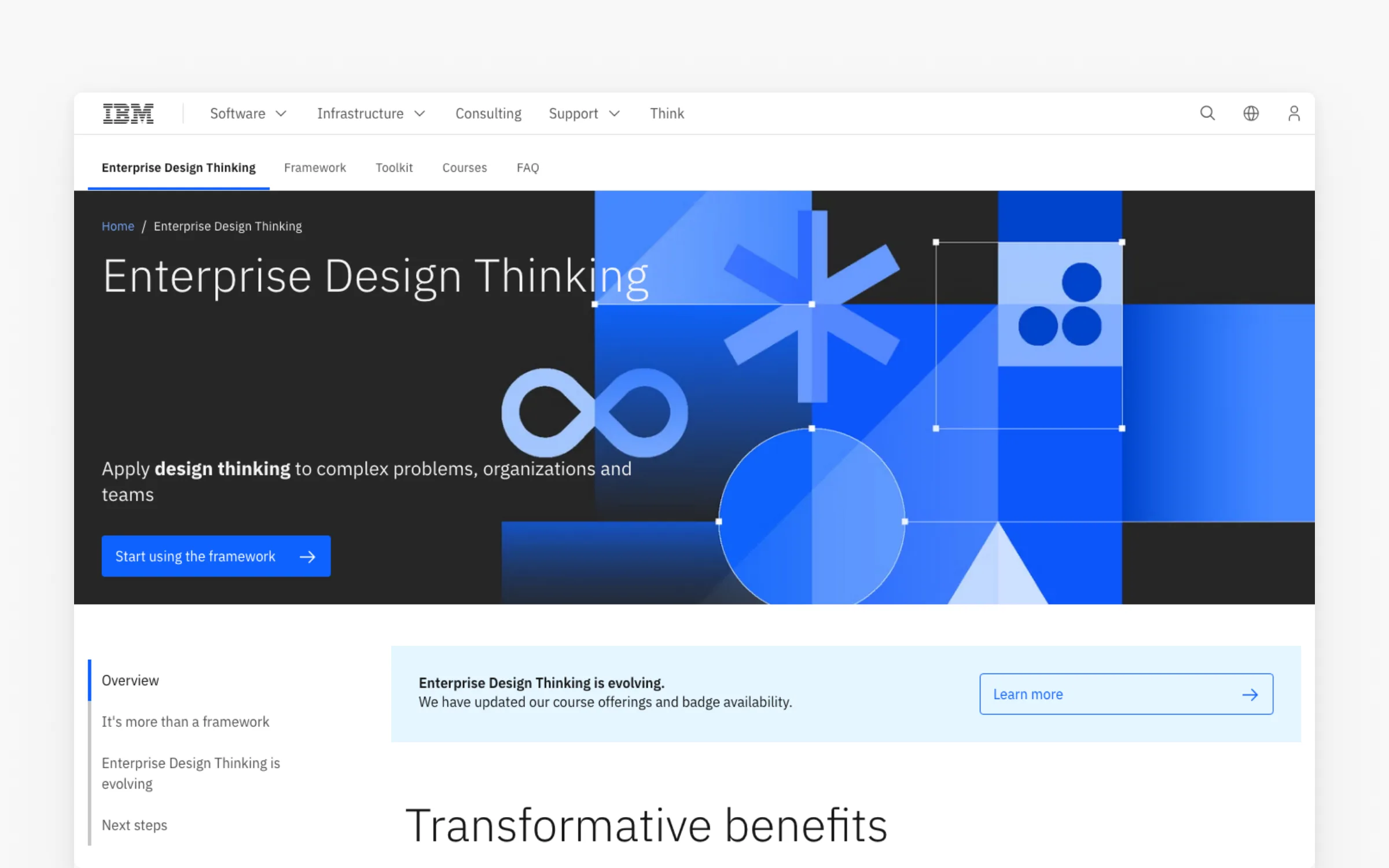
IBM's Enterprise Design Thinking Practitioner course runs about two hours and ends in a digital badge. It teaches IBM's enterprise flavor of the method: design thinking adapted to large organizations, aligning teams around users and keeping momentum between workshops. It's the fastest legitimate credential in this space, and the badge posts straight to LinkedIn. The limit is scope. Two hours covers the framework and vocabulary, and the badge signals familiarity, not practice.
Price: free through IBM SkillsBuild.
5. The d.school Starter Kit by Stanford: best free workshop materials
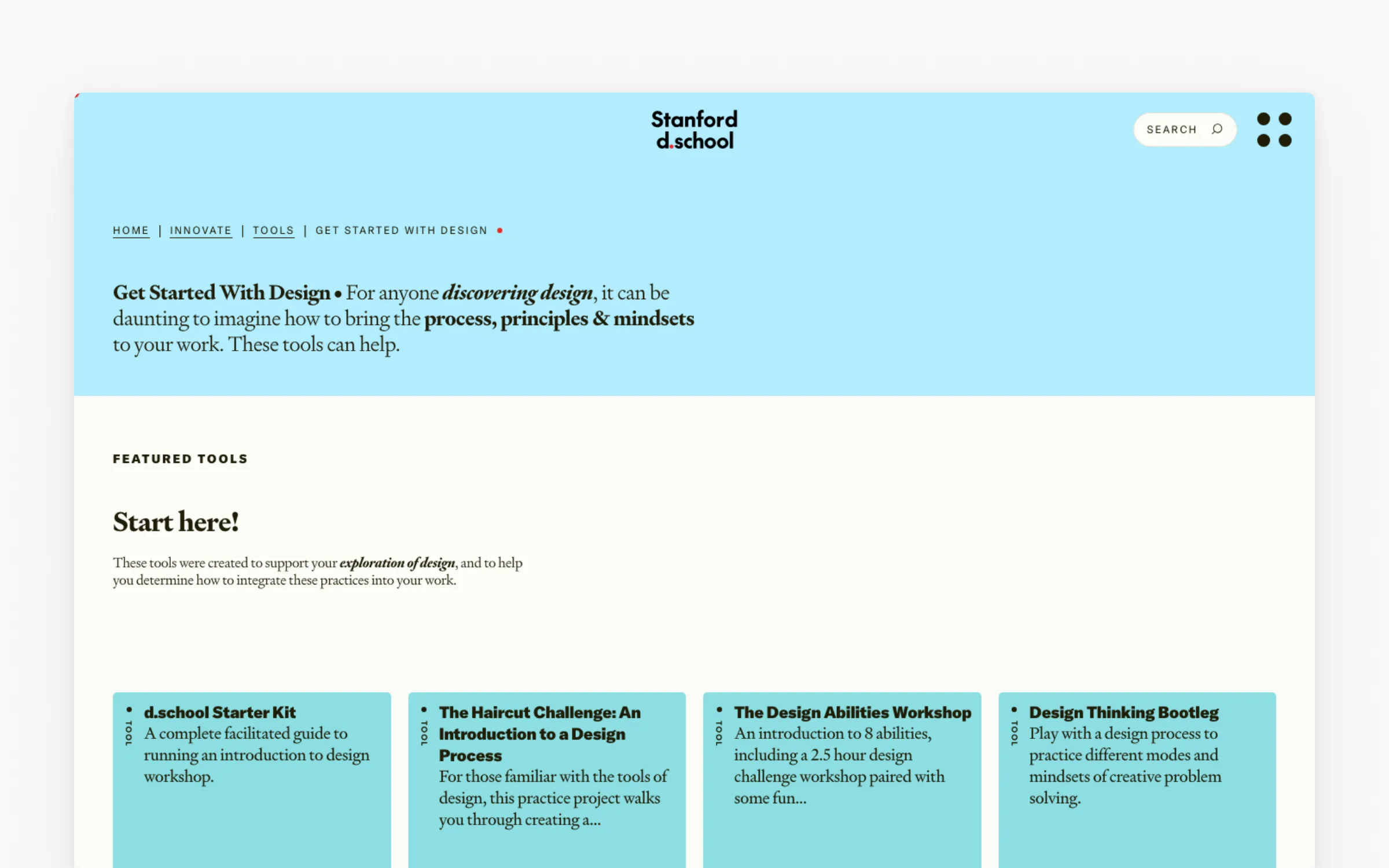
The Stanford d.school publishes its Starter Kit free. It's a facilitated guide to running an introductory design workshop, next to the Design Thinking Bootleg method cards and a 2.5-hour design challenge. If your goal is to run a session for your team rather than earn a credential, start here. This is the source material most paid workshops repackage. It's a toolkit rather than a course, so it works best for someone comfortable facilitating a room.
Price: free.
University certificates and cohort programs
6. Foundations in Design Thinking by IDEO U: best for learning from the source
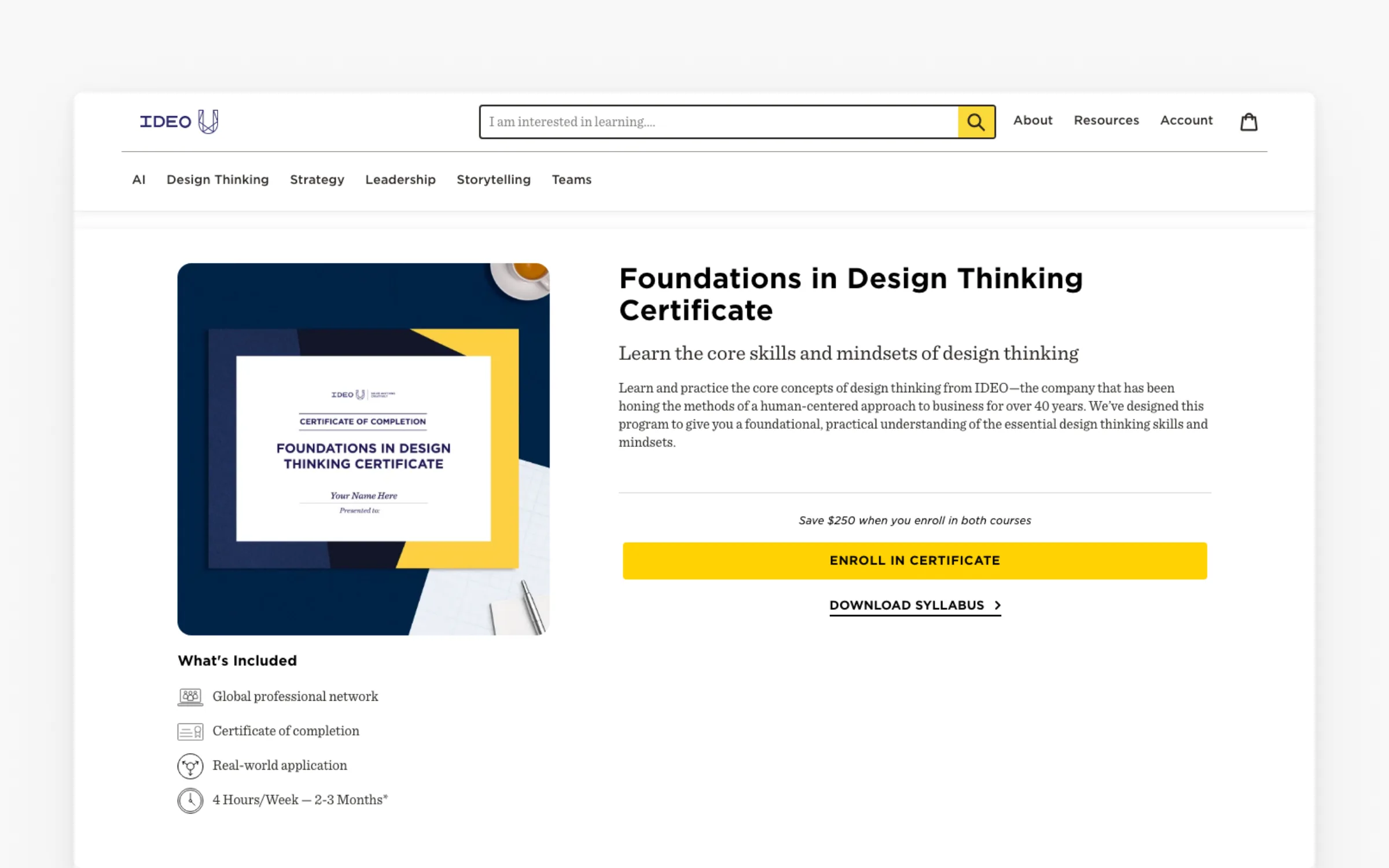
IDEO codified design thinking as a commercial practice. Foundations in Design Thinking is its certificate: two five-week cohort courses, Insights for Innovation and From Ideas to Action, at about four hours a week. Teaching leads and peer feedback come with the format, and cohorts run on fixed dates a few times a year. You're getting the method from the people who codified it, in a format that forces practice. The limit is the price against the outcome. It's a strong learning experience, and the PDF certificate carries less weight than the skills.
Price: $1,798 for the two-course certificate, $899 per course separately.
7. Design Thinking and Innovation by HBS Online: best for a business school name
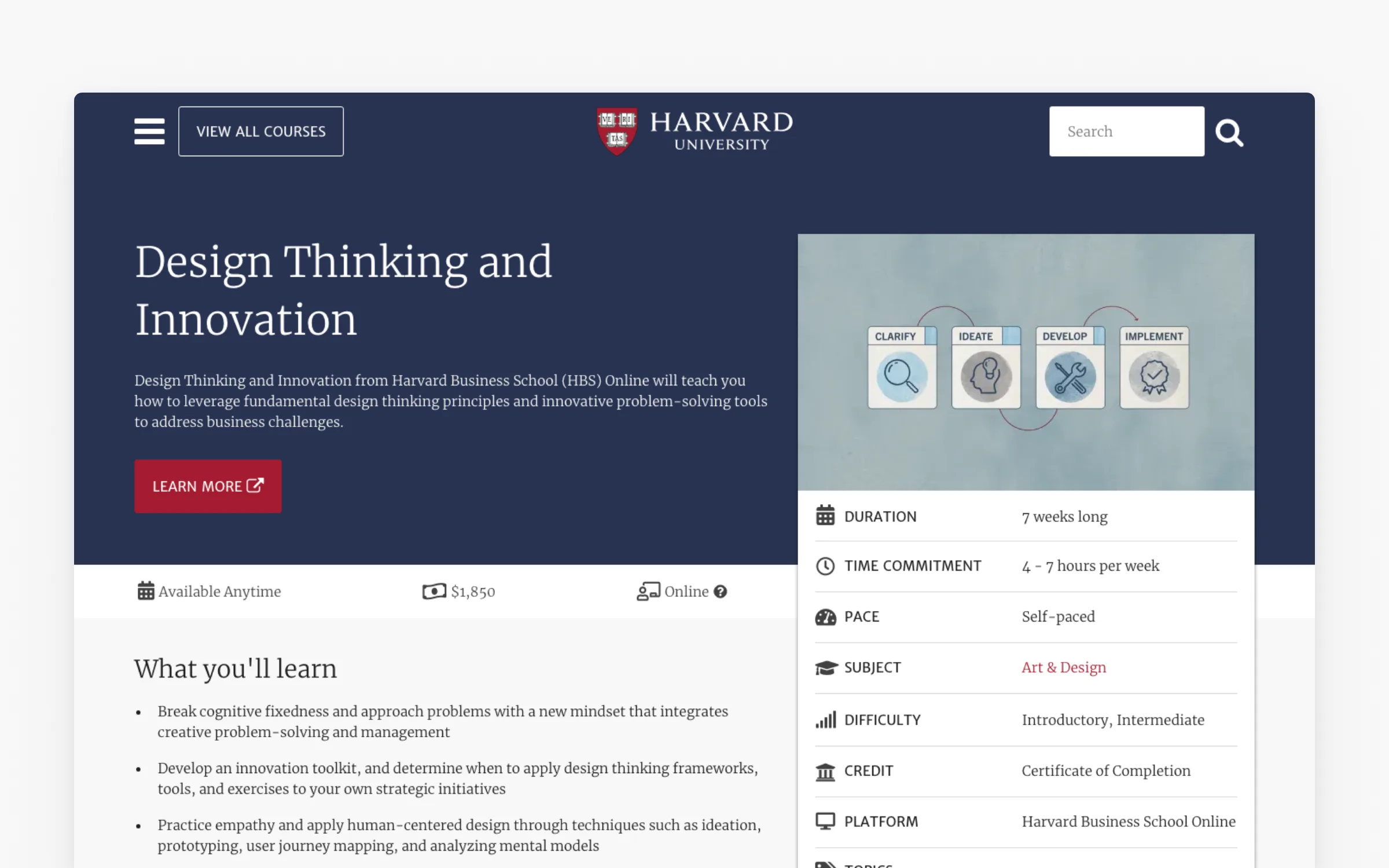
Harvard's Design Thinking and Innovation runs seven weeks under dean Srikant Datar. It frames the method for managers: five weeks of coursework, then two weeks of a cohort project. The certificate of completion carries a name every hiring manager recognizes, which makes it the strongest brand-per-dollar option in the university tier. The limit mirrors the format. It teaches you to lead and evaluate design thinking work more than to do it hands-on.
Price: $1,850.
8. Creativity and Design Thinking Program by Stanford Online: best for self-paced university depth
Stanford's Creativity and Design Thinking Program bundles three courses with a year of access. Expect 50 to 70 hours of coursework, coaching sessions, and interviews with David Kelley, who founded IDEO and the d.school. It ends in a Stanford Certificate of Achievement, and unlike the cohort programs it starts whenever you do. One catch worth knowing before you click: Stanford doesn't publish the tuition on the open page. Budget a conversation with their enrollment team before you can compare it to anything else here.
Price: not published. Tuition is quoted through Stanford's enrollment page.
9. Mastering Design Thinking by MIT Sloan: best for a capstone project
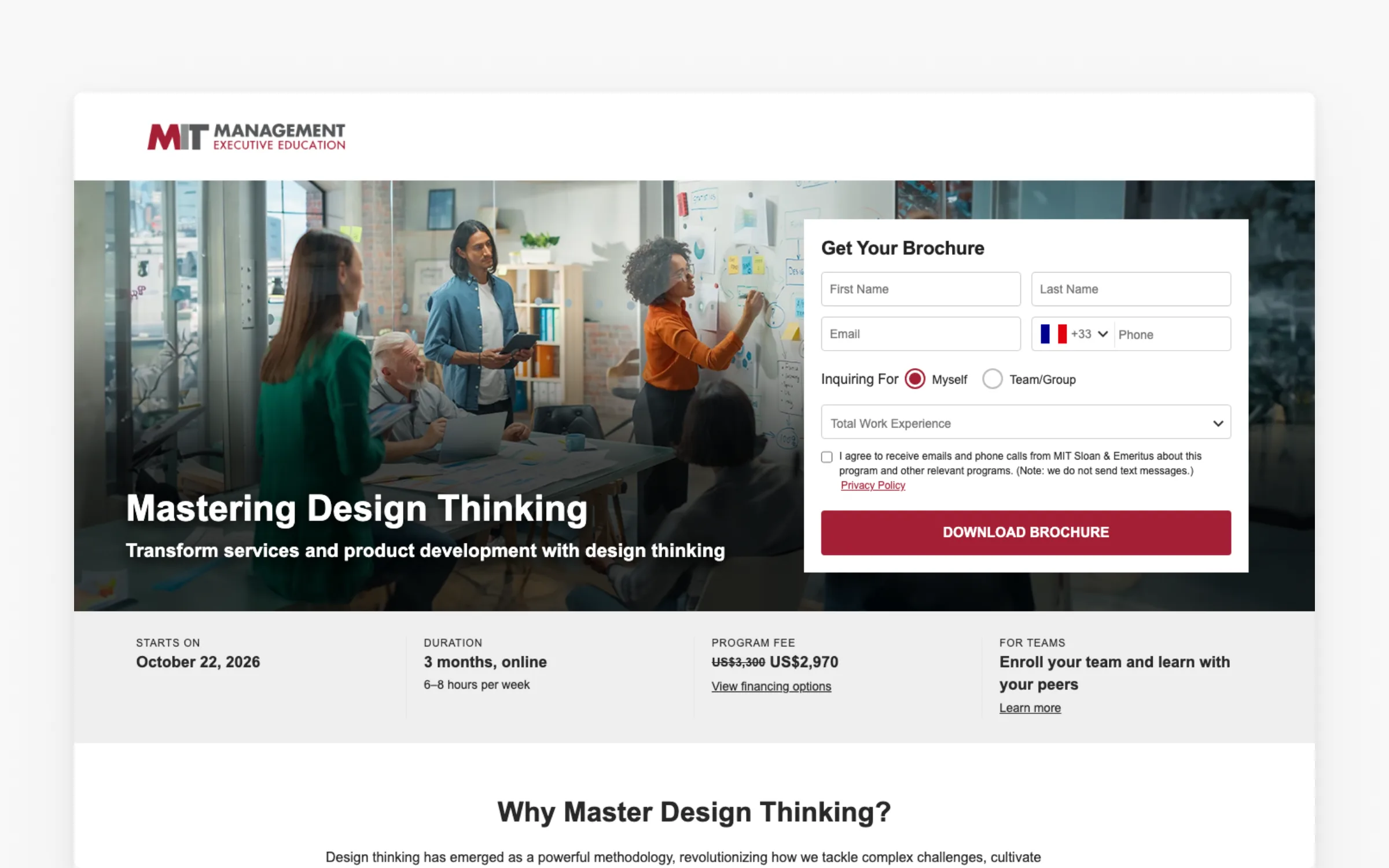
Mastering Design Thinking is the heaviest program on this list. It runs three months at six to eight hours a week: 140+ video lectures, three group projects, ten assignments, and a capstone. The verified digital certificate comes from MIT Sloan, and the workload makes it the closest thing here to a course you can't passively watch. One honest caveat: it's delivered through an online education partner rather than MIT faculty live.
Price: $2,970, marked down from a $3,300 list price at the time of writing.
Is a design thinking certificate worth it?
For skills, the free and low-cost tier covers the method completely. For a credential, no design thinking certificate is a hiring requirement anywhere. The university options are worth it only when the brand does separate work for you, like a career pivot where your resume needs a recognizable name. The middle path is a skills exam like Uxcel's design thinking certification, which validates the ability without the four-figure tuition. Weigh a $1,850 certificate against a portfolio project that applies the method to a real problem. The project wins the interview every time.
How to choose
Start from your situation, not the brand. New to the method entirely: audit UVA Darden free, and add the IBM badge if you want something to show for it. Working on a product team now: Uxcel's course teaches the version that survives contact with a roadmap. Need to run a workshop next month: the d.school Starter Kit is the source material. Employer paying, or the brand matters to your next move: IDEO U for craft, HBS for the name, MIT for the project work. The method itself hasn't changed much since IDEO codified it. What varies is how honestly a course connects it to the work you already do.