You already know how to build software. What separates a product engineer from a software engineer isn't code. It's knowing what to build, why users need it, and how to defend product decisions. This path gives experienced developers the UX design and product management skills to own features end to end, working in AI-aided workflows to move from ticket-taker to decision-maker. One thing it won't do is teach you development. You've got that covered.
You start with UX design foundations and user psychology. You'll see why some interfaces feel obvious while others confuse people, and how design patterns solve problems you've been hacking around for years. Wireframing, Figma, and design systems come next because that's where you'll meet designers halfway: reading handoffs fluently, prototyping ideas before writing a line of code, and building accessible interfaces by default. UX research teaches you to test assumptions with real users instead of shipping and hoping.
The product management half turns judgment into a skill. You learn how discovery works, how to weigh trade-offs when everything seems urgent, and how to build a roadmap you can stand behind. KPIs, OKRs, and product analytics show you how teams measure success, and writing effective product specs turns your ideas into documents other people can build from. Business fundamentals close the loop: how companies make money, and how engineering choices shape that. Each course is built by leading industry experts.
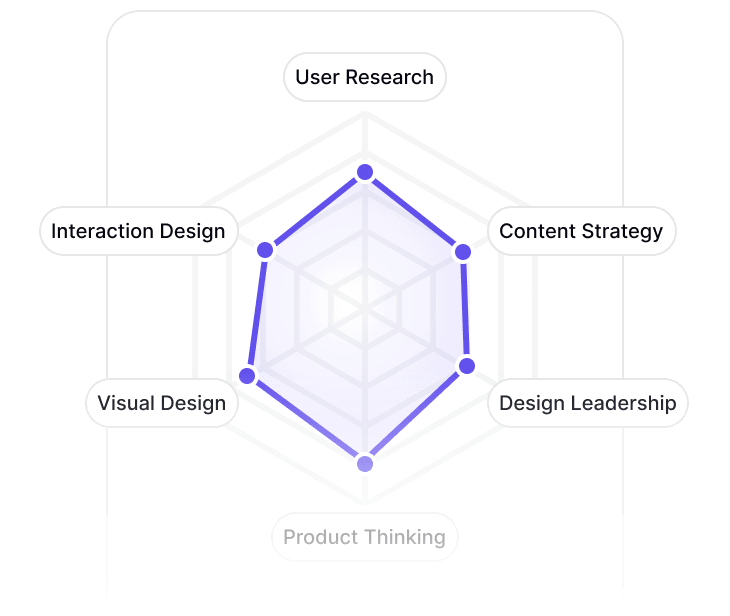
The final stretch connects your new skills to AI-era product work. Human-centered AI and AI fundamentals for UX show you how to design AI features people trust, and ethical product design covers the privacy and responsibility questions every product engineer now faces. The Uxcel Pulse assessment then lets you test your UX and product management skills and see where you stand.
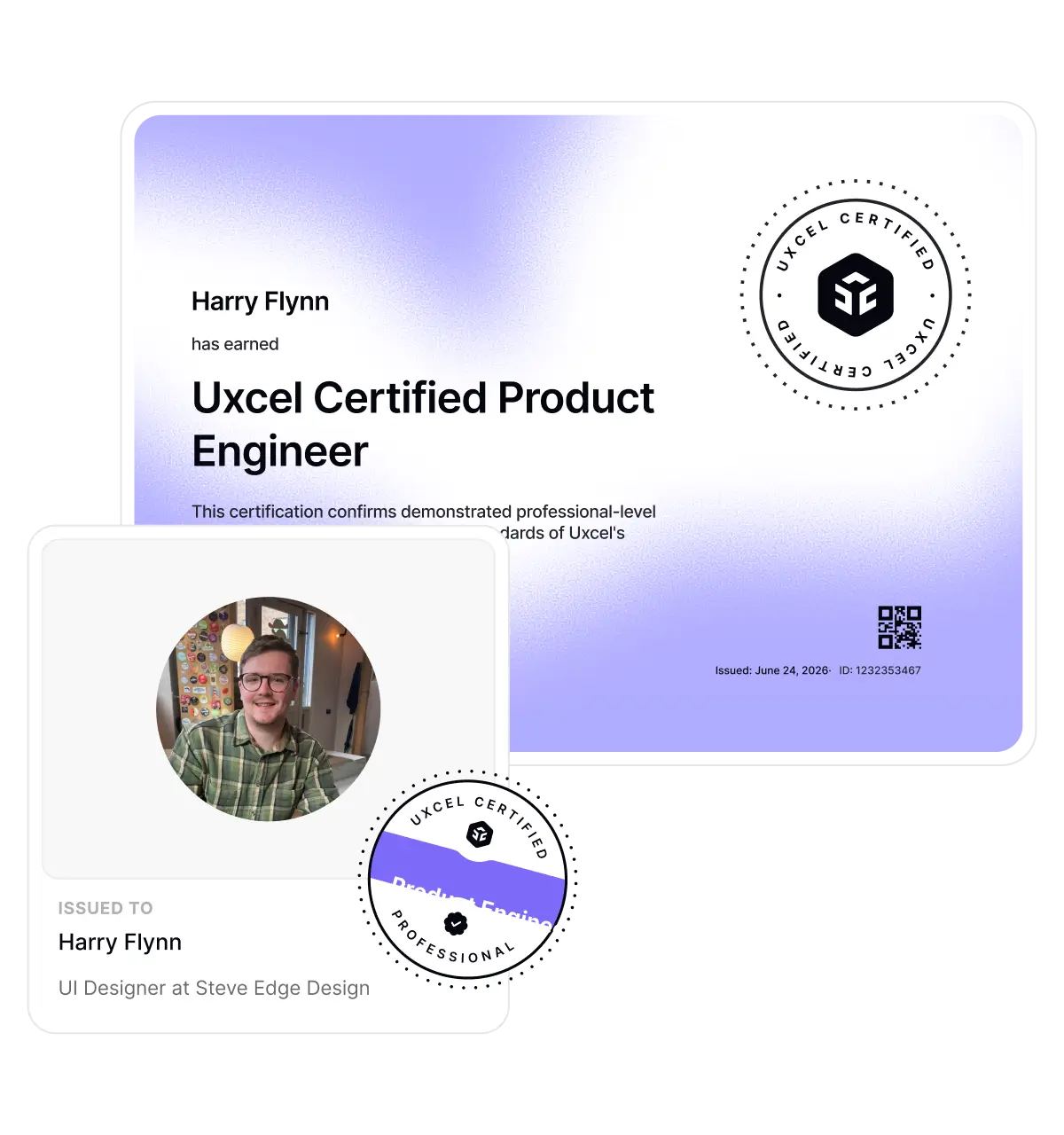
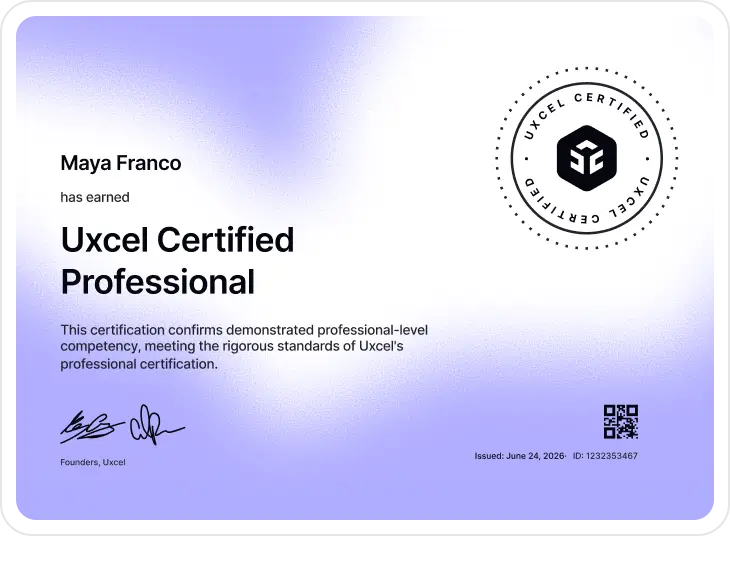
When you finish, you'll operate as a full product engineer: someone who can talk to users, shape the roadmap, design the flow, and ship it. If you want a credential to show for it, the Product Engineer Certification is the natural next step. Either way, you'll be the engineer product managers fight to have on their team.


 Listed in public directory
 Exam-based


.avif)





















.svg)
.svg)

.svg)
.svg)