


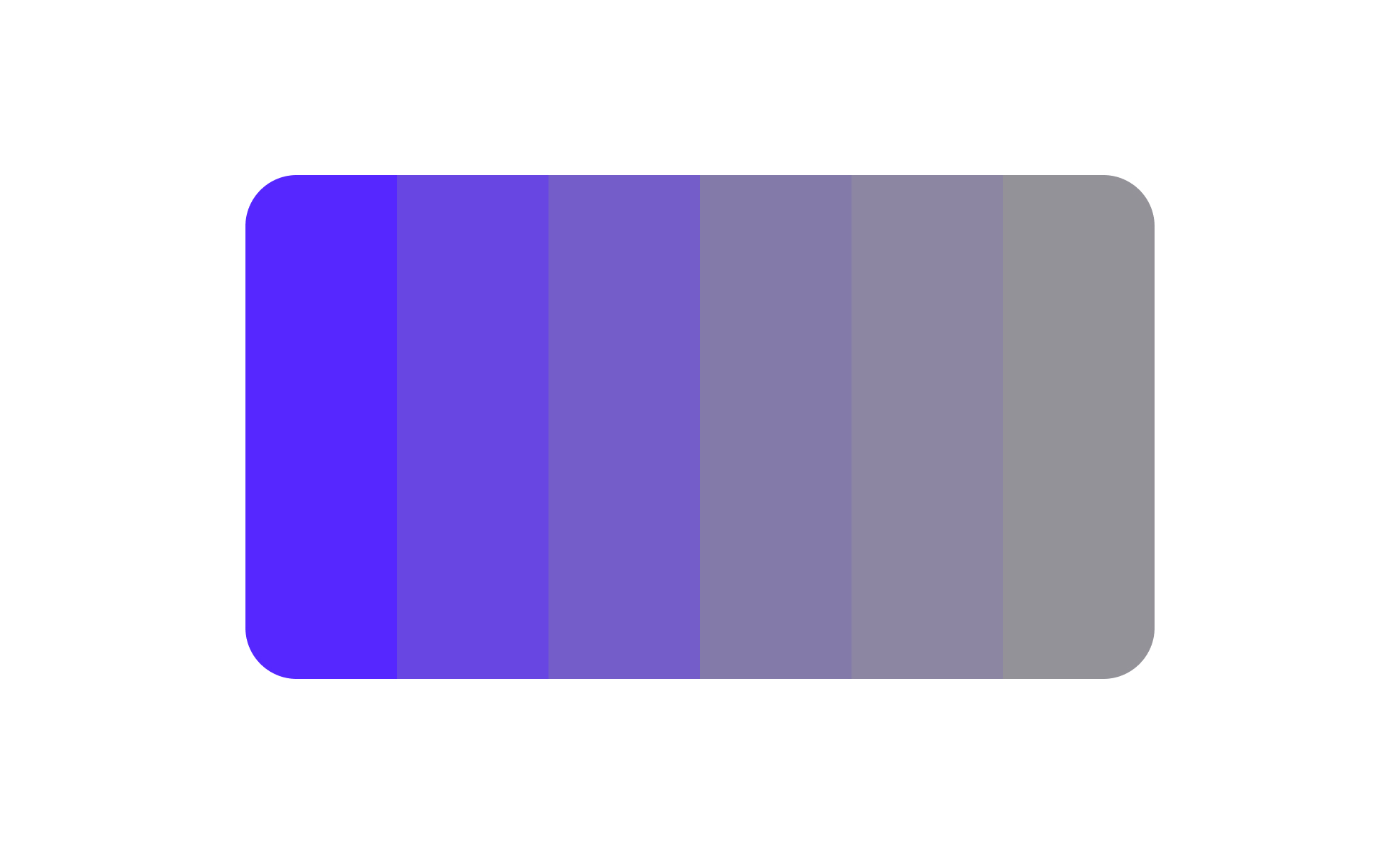
TL;DR
- Defines the intensity of a color.
- High saturation = vivid, strong hues.
- Low saturation = muted, grayish tones.
- Affects mood, emphasis, and readability.
Definition
Saturation is the measure of a color’s intensity or purity, describing how vivid or dull it appears, and is a core property in color theory for design and visual communication.
Detailed Overview
Saturation is one of the three key attributes of color, alongside hue and brightness. It defines how strong, vivid, or pure a color appears. A highly saturated red appears bold and striking, while a desaturated red shifts toward gray, feeling softer and less dominant. Designers manipulate saturation to balance emphasis, contrast, and harmony in visual compositions.
A frequent question is how saturation impacts user perception. High-saturation colors attract attention and convey energy or urgency, making them effective for calls-to-action such as buttons or alerts. Low-saturation colors, by contrast, create subtlety, calmness, and background balance, often used for secondary elements. Understanding this dynamic allows designers to guide user focus deliberately.
Another common query relates to accessibility. Overly saturated color schemes can cause visual strain, especially when combined with poor contrast. Similarly, very low saturation without sufficient distinction may reduce readability. Designers must balance saturation with contrast ratios to ensure inclusivity and usability for all audiences.
Teams also ask how saturation fits into brand identity. A brand might rely on bold, saturated colors to project confidence and energy, while another may prefer muted tones for elegance or professionalism. Maintaining consistent saturation levels across touchpoints strengthens recognition and communicates the brand personality effectively.
Another important aspect is saturation in digital displays. Because screen technologies vary, the same color may appear more or less saturated across devices. Designers often test colors across multiple screens to ensure consistency. Tools that simulate different environments or color-blind views help ensure that saturation choices work universally.
Finally, saturation plays a role in emotional design. Designers strategically adjust saturation to evoke feelings: bright, saturated palettes suggest playfulness and excitement, while muted, desaturated tones communicate calmness or seriousness. This emotional layer reinforces product goals, whether driving engagement, focus, or trust.
Learn more about this in the Saturation Exercise, taken from the Color Properties Lesson, a part of the UX Design Foundations Course.


