


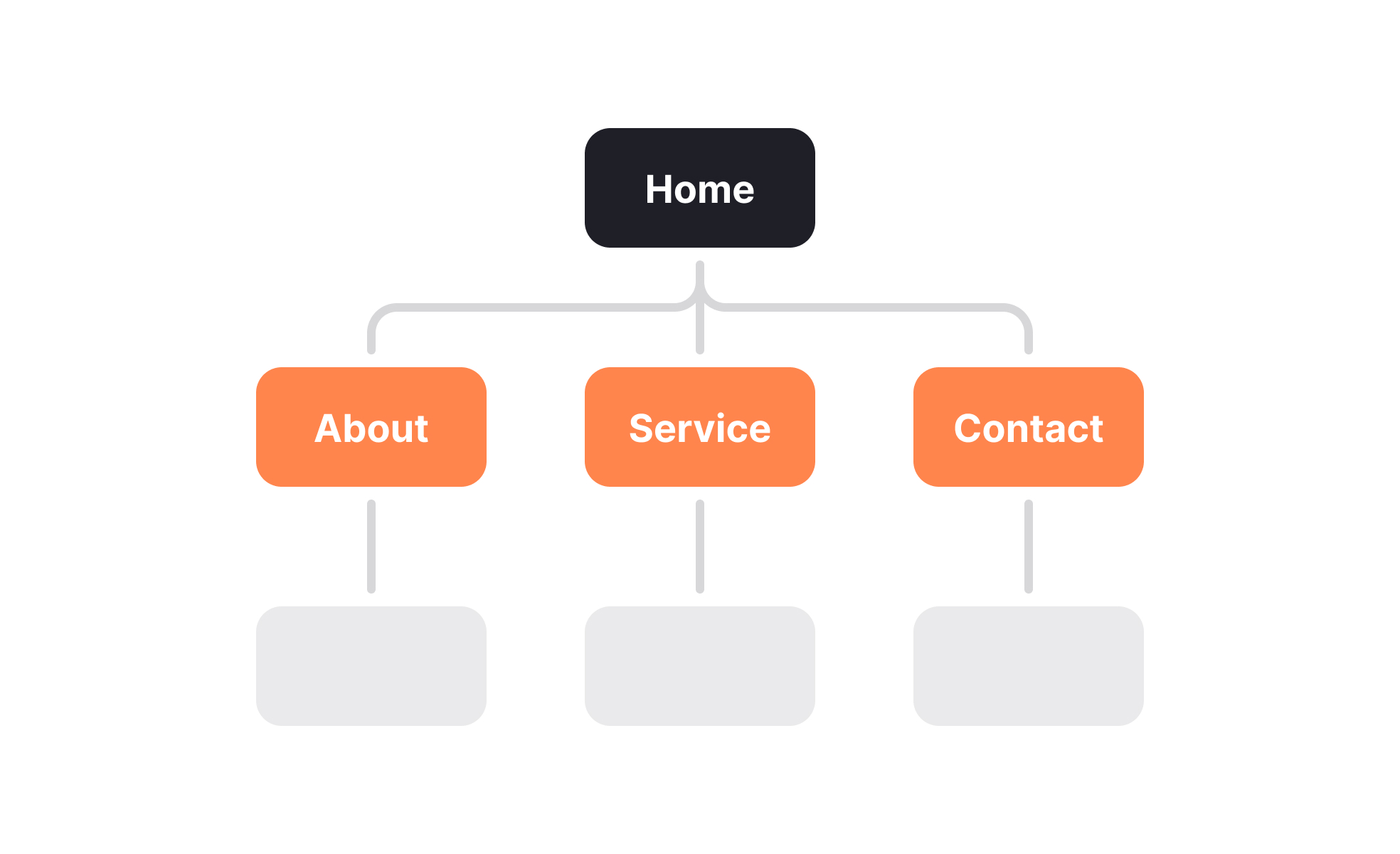
TL;DR
- Visual or structured list of all website pages.
- Defines hierarchy and relationships.
- Guides design, navigation, and SEO.
- Used by both users and search engines.
Definition
A site map is an organized representation of a website’s structure, showing how pages are arranged, linked, and prioritized for users, designers, and search engines.
Detailed Overview
A site map provides a blueprint for how content is structured within a website. By outlining all pages and their relationships, it creates clarity for both users navigating the site and teams building or maintaining it. Without a clear site map, websites risk becoming confusing, inconsistent, or fragmented over time.
A frequent question is the difference between XML and visual site maps. XML site maps are machine-readable files designed for search engines. They help crawlers discover and index pages efficiently. Visual or HTML site maps, on the other hand, are human-readable overviews often used during design and strategy phases. These highlight the hierarchy of content and guide teams in creating consistent navigation patterns.
Another common query concerns the role of site maps in SEO. Search engines rely on XML site maps to identify pages that may not be easily discoverable through links. Including metadata like update frequency or priority helps crawlers understand the site’s structure. For businesses, this ensures that all important content is visible in search results.
Teams often ask about site maps in user experience design. Early in a project, a site map helps stakeholders visualize the scope of work, anticipate navigation needs, and identify redundancies. It prevents issues like duplicate pages or deep navigation trees that frustrate users. Site maps serve as a planning tool, ensuring structure is deliberate rather than improvised.
Another critical function is scalability. As websites grow, maintaining a site map prevents chaos. By updating it regularly, teams keep track of new content, ensuring it fits logically into the hierarchy. This discipline reduces broken links, improves consistency, and simplifies future redesigns.
Finally, site maps are collaboration tools. Designers, developers, content strategists, and SEO specialists all benefit from a shared overview. This common reference point reduces miscommunication, aligns priorities, and creates a foundation for more cohesive digital products.
Learn more about this in the Site Map Exercise, taken from the UX Design Deliverables Lesson, a part of the UX Design Foundations Course.


