.svg)

Strong product decisions often fail not because they are wrong, but because they are poorly explained. Product managers constantly translate complex thinking into clear narratives that others can follow, trust, and act on. This applies equally to interviews, stakeholder meetings, and everyday collaboration with teams.
Clear communication starts with structure. Well-formed explanations make the problem, constraints, and intent visible instead of jumping straight to solutions. Narrative flow helps connect context, decisions, and outcomes into a story that makes sense to people who are not close to the work. When done well, this reduces friction, shortens discussions, and builds confidence in decision-making.
Another challenge lies in avoiding feature-focused language. Listing features without explaining why they matter often signals shallow thinking and leads to misalignment. Outcome-oriented storytelling shifts attention from outputs to the value created for users and the business. By adapting language to different audiences and keeping the story anchored in purpose, product managers create shared understanding instead of confusion.
This lesson focuses on practical communication habits that help ideas travel further, land better, and stand up to scrutiny in both interviews and real product environments.
Structure clear product explanations
In case studies, explanations are evaluated as much as decisions themselves. Interviewers and stakeholders look for clear thinking that can be followed step by step. Jumping straight into a solution often makes answers sound reactive or shallow, even when the idea is strong.
Clear case study explanations follow consistent patterns that make reasoning visible instead of implied:
- Start with the goal or outcome the case is trying to achieve
- Add context that explains the situation or constraint
- Define the problem that needs to be solved
- Present the decision or direction being proposed
- Explain the reasoning behind that choice
- Call out trade-offs or risks that influenced the decision
- End with the expected impact or next step
Using this structure helps others track how conclusions were reached. It also makes it easier to pause, challenge assumptions, or explore alternatives without losing the thread of the answer. In case studies, this signals structured thinking rather than memorized frameworks.
Writing or speaking in full sentences strengthens this effect. It forces clarity around intent and reduces the risk of hiding uncertainty behind short phrases or feature lists. Well-structured explanations turn case studies into conversations, not monologues.[1]
Pro Tip! If feedback feels unfocused, ask which part is unclear. Goal, context, decision, or impact usually needs sharpening.
Build a logical narrative flow
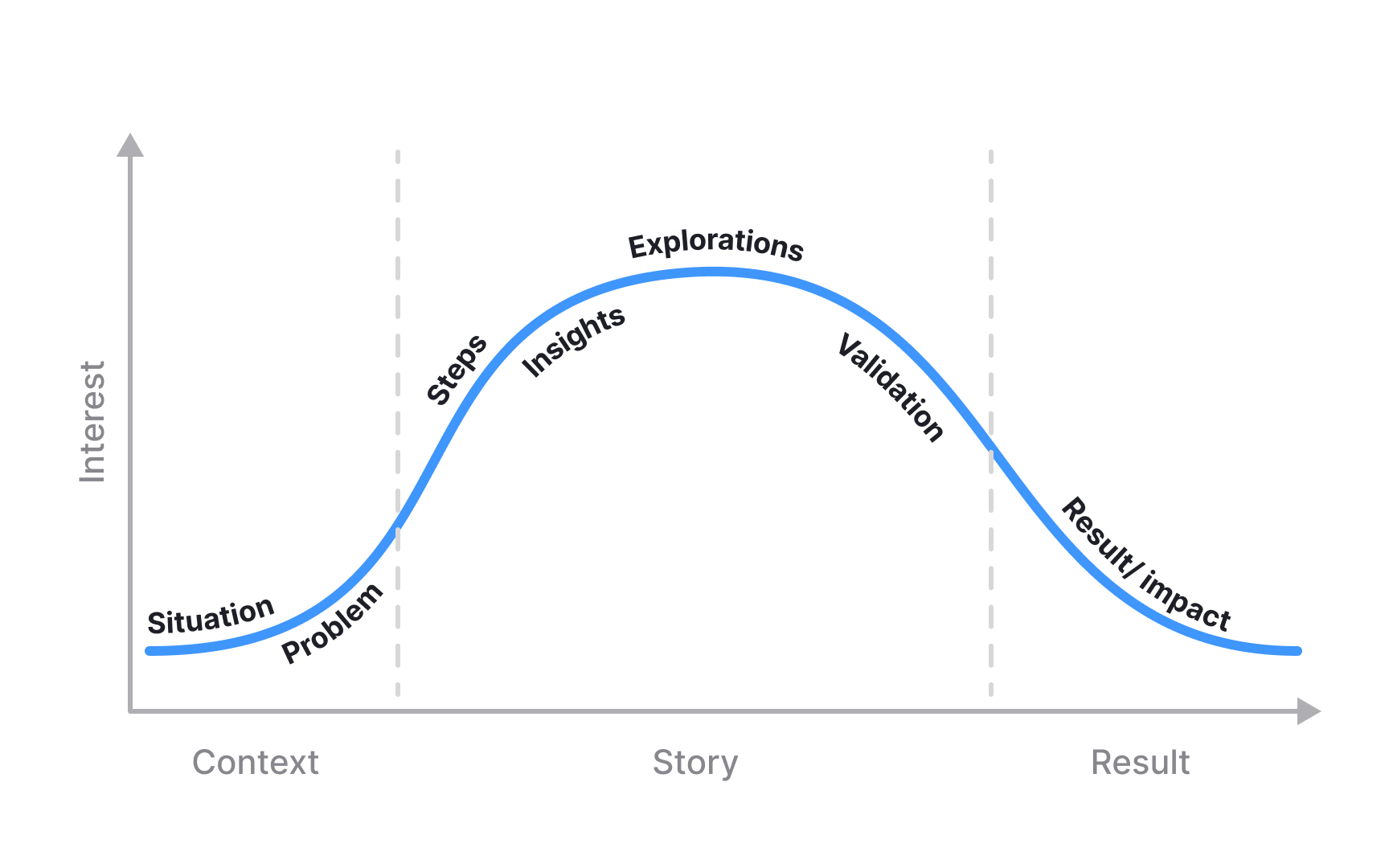
In case studies, strong answers are not judged by how much detail they include, but by how clearly the story unfolds. A logical narrative helps others understand what happened, why it mattered, and how decisions were shaped along the way. Without flow, even good reasoning can sound fragmented or unconvincing.
Effective case study narratives move in a clear sequence. They begin by setting the situation, so listeners understand the environment and constraints. The problem then becomes the central tension that needs resolution. Only after that does the response appear, followed by the impact it aimed to create. This order mirrors how decisions actually form, which makes the story feel credible rather than rehearsed.
A strong narrative also keeps the focus on change. Case studies are not timelines of actions but stories of movement from one state to another. By centering the narrative on how a problem evolved and how outcomes shifted, product work becomes easier to follow and easier to evaluate. This approach helps interviewers and stakeholders assess thinking, not just results.[2]
Pro Tip! If a case story feels flat, check whether it shows change. No visible shift usually means no real narrative.
Move from features to outcomes
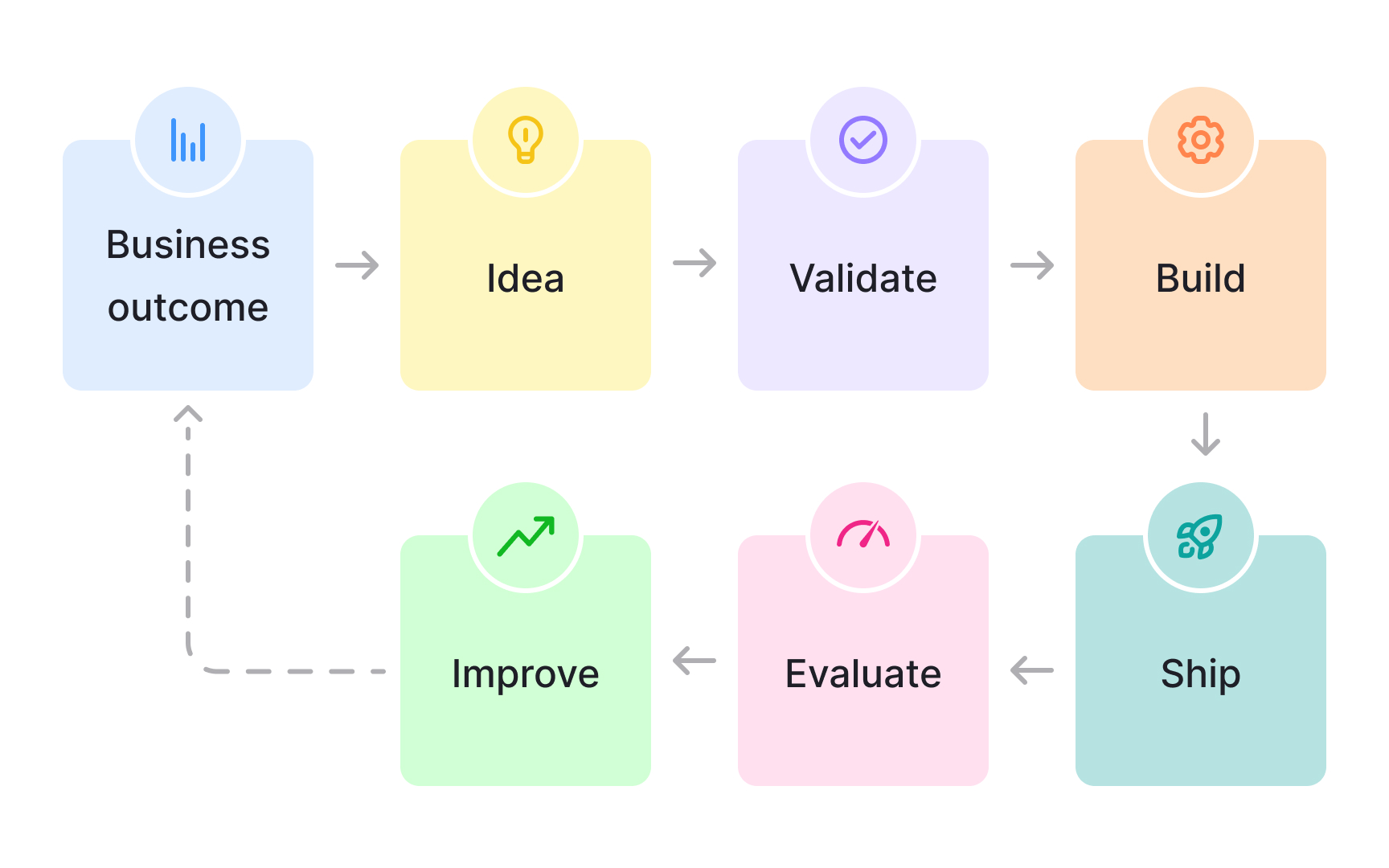
Case study answers often sound weak when they focus on what was built instead of why it mattered. Listing features without explaining their purpose makes it hard to judge whether the decision created real value. In case studies, this usually signals output-focused thinking rather than product reasoning.
Strong case answers shift the focus from features to outcomes. Instead of describing functionality, they explain the problem being addressed, the behavior change expected, and how success would be measured. This makes it clear that features are only tools, not the goal. Outcomes give context to decisions and show that trade-offs were made intentionally.
In interviews and internal reviews, outcome-driven language helps others understand priorities. It shows that decisions connect user needs, business goals, and constraints instead of reacting to requests. This makes case answers easier to trust and easier to compare.[3]
Pro Tip! If a case answer sounds impressive but vague, remove feature names and check whether the outcome still makes sense.
Adapt messages to stakeholders




Case studies are rarely evaluated by one audience alone. Interviewers, leaders, and cross-functional partners listen for different signals in the same story. A strong case answer keeps the decision intact while adjusting what is emphasized.
Effective adaptation means choosing what to foreground. Some stakeholders focus on impact and risk. Others care more about constraints, feasibility, or dependencies. The core problem and outcome stay the same, but the explanation highlights the parts that help the listener judge the decision.
Weak case answers often fail in two ways. Some are too abstract and skip the reasoning. Others overload the listener with details before the context is clear. Stakeholder-aware case stories stay focused, introduce detail only when it supports understanding, and make the decision easy to evaluate.
This approach shows communication maturity. It signals that the case was understood beyond a single perspective and that decisions were made with real people and constraints in mind.[4]
Pro Tip! Before answering, ask yourself what the listener needs to decide or evaluate. Shape the case story to support that moment.
Explain trade-offs and constraints
Case studies rarely involve perfect choices. Most decisions balance speed, risk, impact, and constraints. Strong case answers make these tensions visible instead of presenting decisions as obvious or inevitable. This helps others understand the reasoning behind the choice, not just the result.
Clear case discussions explain what was prioritized and what was intentionally left out. This includes alternatives that were considered but rejected, along with the reasons why. Calling out trade-offs shows awareness of opportunity cost and signals that the decision was made under real conditions, not in isolation.
Good explanations also match the depth of trade-offs to the situation. High-impact or hard-to-reverse decisions deserve more careful justification. Lower-risk decisions can be explained more lightly, while still acknowledging what was sacrificed. This balance shows judgment and control over the decision-making process.
In interviews and internal reviews, explaining trade-offs builds trust. It shows that decisions were deliberate, grounded in context, and open to scrutiny rather than driven by preference or habit.
Pro Tip! If a decision sounds too clean, add one rejected option. Trade-offs make case answers feel real.
Separate story from evidence
Case studies rely on storytelling to create clarity, but stories alone are not enough. Strong answers distinguish between the narrative that frames the decision and the evidence that supports it. When these two blend together, it becomes hard to judge whether confidence comes from insight or from persuasion.
In clear case answers, the story sets direction. It explains the situation, the problem, and the intended change. Evidence then validates that direction through signals like data, user input, or observed behavior. Keeping these roles separate helps listeners understand what guided the decision and what confirmed it.
Weak case responses often use storytelling to fill gaps where evidence is thin. They rely on strong language or confident framing without showing how conclusions were tested or challenged. Stronger answers make it explicit where assumptions existed and what was used to reduce uncertainty.
This separation improves credibility. It shows that storytelling is used to communicate thinking, not to replace proof. In case discussions, this helps others evaluate decisions on substance rather than presentation.
Pro Tip! If a case sounds convincing but hard to question, check whether the evidence is visible or hidden inside the story.
Answer interview questions clearly
Case interview questions test clarity under pressure. Strong answers show structured thinking even when time is limited. Clear case responses avoid long setups and focus on making reasoning easy to follow from the first sentence.
Effective answers start by framing the problem before reacting to it. This shows control over the discussion and prevents jumping into tactics too early. Once the context is set, the answer progresses through decision logic and ends with impact or next steps. This makes it easier for interviewers to evaluate thinking without interrupting.
Clear case answers also manage depth carefully. They stay high level unless more detail is requested. This signals judgment and awareness of the listener’s role. When details are added, they support the decision rather than distract from it.
In interviews, clarity is not about being fast. It is about being intentional. Well-paced answers create space for follow-up questions and show confidence in both communication and reasoning.
Pro Tip! If an answer feels rushed, pause after the problem statement. That short reset often improves clarity.
Identify broken narratives
Broken narratives make case answers hard to follow, even when individual points are strong. The story may jump between ideas, introduce details too early, or change direction without explanation. These gaps force listeners to reconstruct the logic on their own.
In case studies, broken narratives often appear when context is missing or when actions are listed without showing how they connect to the problem. Another common signal is an unclear ending. The story stops after execution, without explaining what changed or what was learned. This makes the case feel incomplete.
Identifying these breaks helps strengthen communication. When the narrative is repaired, the case becomes easier to evaluate and easier to discuss. Clear flow allows others to question assumptions, explore alternatives, and understand why a decision made sense at the time.
This exercise focuses on recognizing where a story loses coherence so it can be reshaped into a clear, outcome-driven case explanation.
Pro Tip! If listeners ask you to repeat parts of the story, the narrative likely broke earlier than expected.