.svg)


Many products fail in the market, often because they don’t meet customer needs or solve the right problems. However, this can often be avoided through effective product discovery. Product discovery allows teams to deeply understand customer needs, ensuring they build solutions that address real problems. Identifying and validating ideas early reduces the risk of wasting time and resources on features that don’t resonate with users. In this lesson, we’ll explore the key phases of product discovery, its benefits, and why it’s essential for developing successful products.
What is product discovery
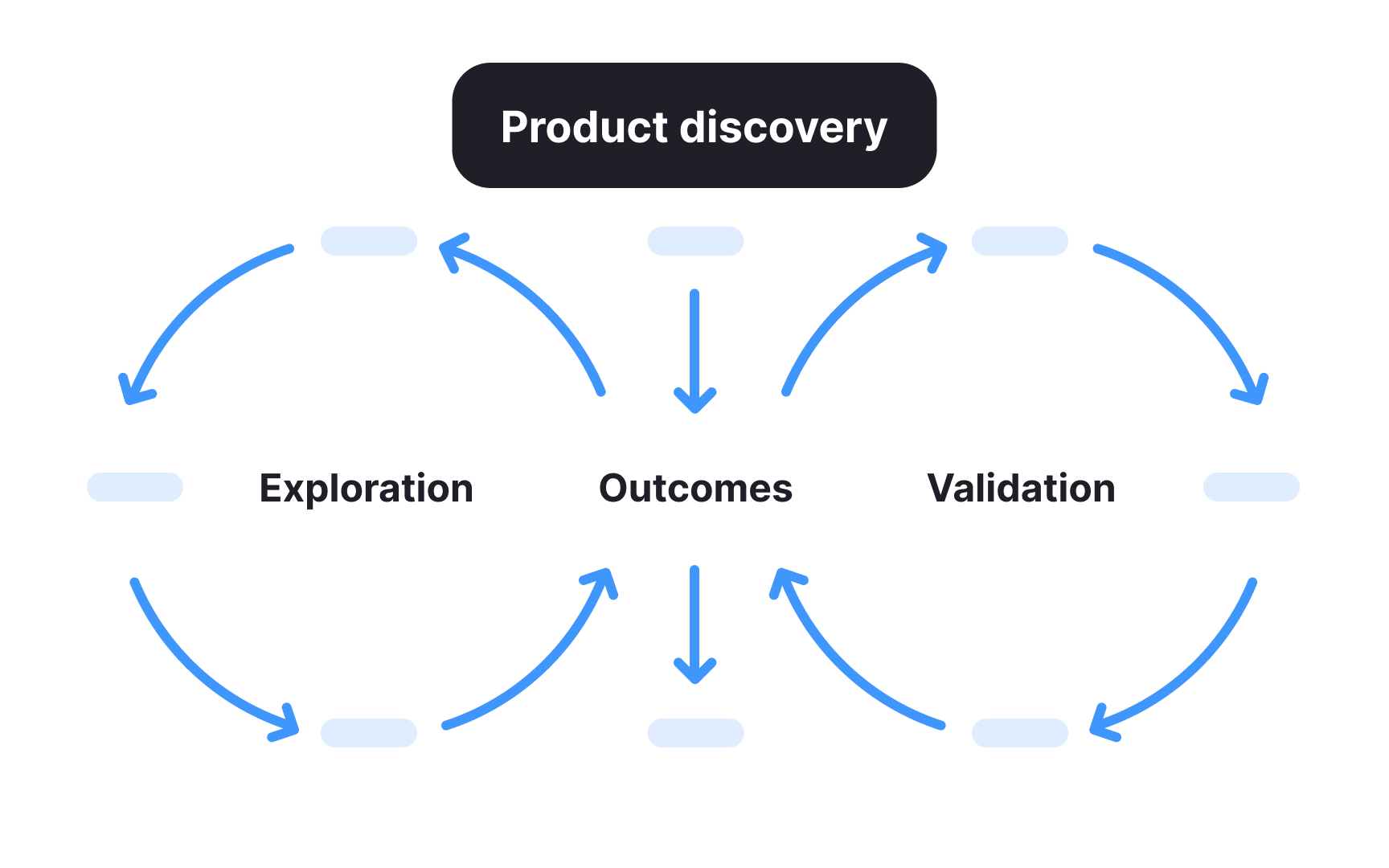
Product discovery is the process of figuring out what your customers really need before you start building something. Imagine you’re about to create a new app or product. Instead of jumping straight into designing and coding, you first spend time talking to potential users, researching their problems, and brainstorming solutions. This helps you avoid making something that nobody wants.
During product discovery, you test ideas with simple prototypes or gather feedback from real people. This way, you can see if your ideas actually solve the problems they’re facing. It’s like a reality check before you invest time and money into building the final product.
By doing this, you make sure that what you create is useful, solves a real problem, and is something people will want to use. In short, product discovery helps you build products that matter.
What is a product trio
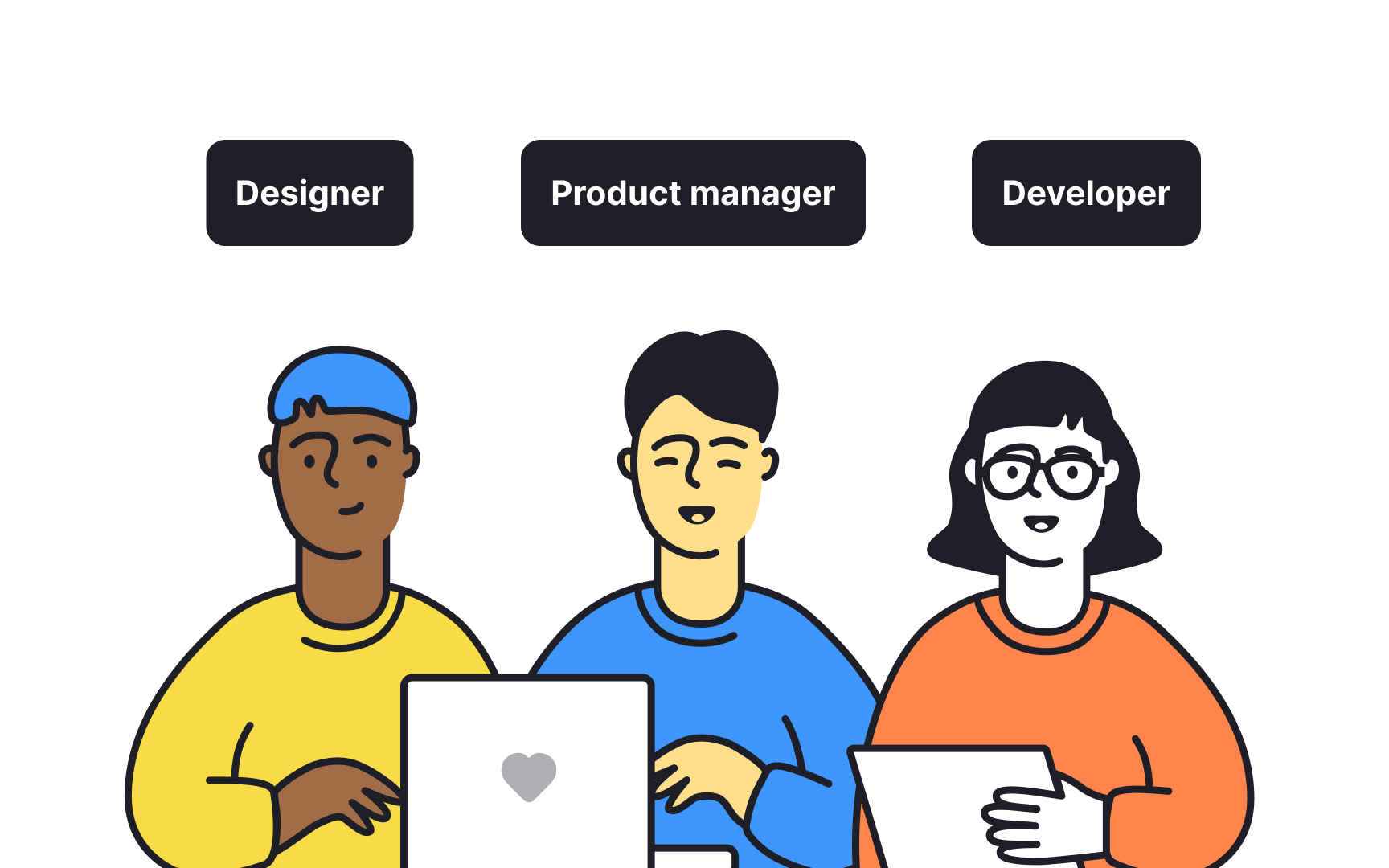
A product trio is a small team made up of 3 key roles: a product manager, a designer, and a developer. This team works closely together to discover, design, and build products that meet user needs. The idea behind a product trio is that each person contributes their unique expertise, ensuring that the product is valuable, usable, and technically feasible.
Here are their roles:
- The product manager focuses on the business side and user needs
- The designer ensures the product is easy and enjoyable to use
- The developer figures out how to build it efficiently
By collaborating from the start, a product trio helps avoid misunderstandings and keeps the project moving smoothly. It’s a way to make sure everyone’s ideas are heard, and the product is well-rounded and user-centered.
The value of product discovery
Product discovery helps you tackle the 4 major risks involved in product development:
- Value risk: The risk that the product won't deliver enough value for customers to want to buy or use it.
- Usability risk: The risk that users will find the product difficult or confusing to use.
- Feasibility risk: The risk that your team might not be able to build the product with the available time, skills, or technology.
- Business viability risk: The risk that the product won't align with the business’s strategic goals and endeavors.[1]
By addressing these risks, product discovery ensures you're building the right product for your users. It encourages a focus on understanding user needs and promotes continuous learning, allowing you to improve your product incrementally.
The challenges of product discovery
The challenges of product discovery often stem from trying to answer key questions: Is it valuable? Is it usable? Is it feasible? Is it viable for the business? Even with these guiding questions, product discovery is not an easy road because:
- It requires deep user understanding, but people don't always know or can't express what they need. Gathering accurate feedback takes time, and business timelines often push teams to skip research and jump straight to building.
- Discovery generates significant volumes of insights from interviews, support tickets, stakeholder feedback, and industry trends. Ingesting and organizing this data takes effort and expertise. Done right, it becomes a reliable foundation teams can reference for years. Done wrong, it creates a trap where teams think they're using solid evidence but are actually working from biased or poorly organized information.
- Stakeholders often want certainty and detailed plans upfront, but discovery works best when you explore uncertainty and adapt as you learn.
- Budget constraints limit how much research and testing you can actually do, forcing tough decisions about where to invest discovery effort.
- Balancing user needs with business goals and technical limitations requires real effort, especially when designers, engineers, and business teams have different priorities and ways of working.
Despite these challenges, effective product discovery is key to building successful products. Teams that navigate these constraints well create products that truly solve problems.
Understand user needs
When starting product discovery, the first step is to understand your users’ needs and challenges. This involves gathering as much information as possible by talking to users, observing how they interact with products, and identifying common patterns in their feedback.
Let's say you're working on a fitness app. Instead of jumping straight into designing its features, you first focus on understanding broader problems your users face, like staying motivated to exercise regularly or finding time for workouts in a busy schedule. To do this, you could use techniques like surveys, customer interviews, focus groups, empathy mapping, journey mapping, and observational studies. This will help you zero in on the key issues that your product should address.
It’s also a good idea to do some market research during this stage to see what competitors are doing and find potential opportunities. This thorough understanding of user needs sets a strong foundation for the rest of the product discovery process.
Validate the problem
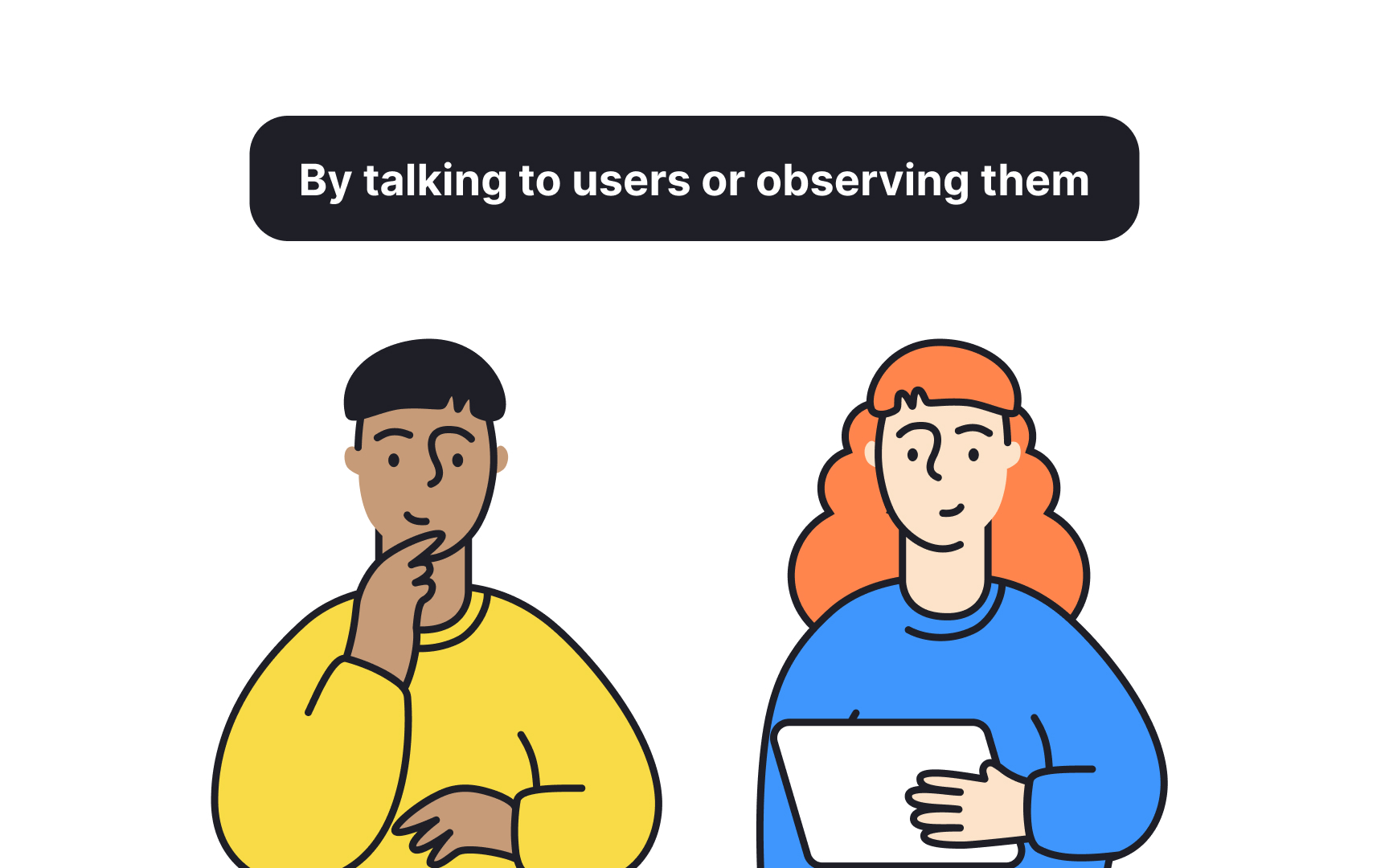


After understanding user needs, the next step is to validate the problem you want to solve. This means confirming that the issue you’ve identified is real and significant for your users. For example, when building a task management app, if you discovered that many users struggle with organizing their daily tasks, you’d validate this by talking to more users, running surveys, or observing how they currently manage their tasks.
If most users confirm that staying organized is a challenge, you’ve validated the problem. This step is essential because it ensures you’re focusing on a problem that truly matters. It helps you avoid wasting time on solutions that don’t address a real need.
Ideate
The ideation stage is where you brainstorm and come up with different ideas to solve the problem you've identified and validated. After understanding your users' needs, it's time to think of various ways to address those needs. This stage is all about creativity and exploring possibilities before committing to a single direction.
You can use structured brainstorming techniques to generate ideas effectively:
- Crazy 8s pushes you to sketch eight different ideas in eight minutes, forcing quick thinking without overthinking. This rapid-fire approach helps you move past obvious solutions and explore more creative options.
- Storyboarding lets you map out the user's journey step by step using simple drawings or sticky notes, helping you visualize how someone would actually experience your solution.
- Mind mapping helps you organize thoughts visually, connecting related ideas and uncovering relationships you might miss in a list.
- Sketching allows you to quickly draw out concepts to see how they might work in practice.
You can do this alone to explore ideas deeply, or with your team to benefit from diverse perspectives. The goal is to generate a wide range of solutions and then narrow down to the most promising ones based on what best addresses user needs, fits technical constraints, and aligns with business goals.
Prototype
The prototyping stage is where you bring your ideas to life by creating a simple and tangible model of your product. This could be as basic as a hand-drawn sketch or as detailed as an interactive digital mockup. The goal is to visualize and test how your solution will work in the real world. For example, if you're designing a new mobile app, you might create wireframes showing how each screen looks and functions.
Prototyping allows you to explore different designs, identify potential issues, and gather early feedback from users. This helps you refine your ideas and make improvements before investing time and resources into full development.
Test
The testing stage is where you evaluate your prototype with real users to see how well it meets their needs and solves the identified problem. In this stage, you focus on testing:
- Usability: How easily can users navigate and use your product? Observe users as they interact with the prototype, noting any difficulties or confusion they experience.
- Functionality: Does the product work as intended? Even if it’s a simple prototype, it’s important to test whether the core features function correctly and reliably.
- User experience: How do users feel about using the product? Gather feedback on their overall experience, including how intuitive and satisfying the interaction is.
- Usefulness: Does the product actually help users solve their problem or achieve their goals? This is crucial to ensure the product is delivering real value.
To test these aspects, you can use methods like user testing sessions, where you observe users interacting with the product, or surveys and interviews to gather feedback. Based on the results, you can make adjustments to improve the design before moving on to full development.
Present solutions to stakeholders
The final stage of product discovery is aligning with stakeholders on your solution. Rather than presenting finished findings, treat this as a collaborative checkpoint where you work together to refine direction before development begins. The goal is shared conviction, not just approval.
The key to successful alignment is avoiding surprises. Keep stakeholders looped in throughout discovery so they understand your course of action and become champions of your product. The closer they stay to the process, the easier alignment becomes.
Effective stakeholder collaboration means:
- Involve them early and often. Bring stakeholders into key research sessions or prototype reviews so they see the journey, not just the destination. Regular touchpoints prevent last-minute objections.
- Focus on problems first. Align on which user and business problems matter most before jumping to solutions. This builds shared understanding and creates buy-in.
- Make trade-offs visible. Use frameworks like impact versus effort matrices to collaboratively prioritize what to build first. When stakeholders participate in decisions, they own the outcomes.
- Show, don't just tell. Let stakeholders interact with prototypes or watch user testing recordings. Direct exposure to user struggles is more convincing than slides.
- Create space for concerns. Ask specific questions about their worries around feasibility, budget, or strategic fit. Addressing doubts collaboratively strengthens the final direction.
Topics
References
- Guide: Product Discovery Process & Techniques | Productboard | Productboard