



Surveys feel like the easiest research method. Write a few questions, share a link, and watch the responses arrive. That ease is the trap. A survey sent to the wrong people, asked at the wrong length, or used for a question it can't answer still produces neat charts, and the charts look just as convincing as good ones. Nobody can tell from a chart whether the right people answered, or whether they answered carefully.
Most survey problems are decided before anyone writes a question. You choose what the survey is for and whether a survey fits at all. You decide who receives it and who is left out, how long it can be before people stop answering carefully, what order the questions go in, and how to thank people for their time. Each decision affects whose views the results really show.
Planning a survey means deciding, in advance, what would make its results trustworthy: answers that would still hold if a different group of the same users had replied. A pilot with a handful of real people is the last check before the survey reaches everyone else.
What surveys can and can't tell you
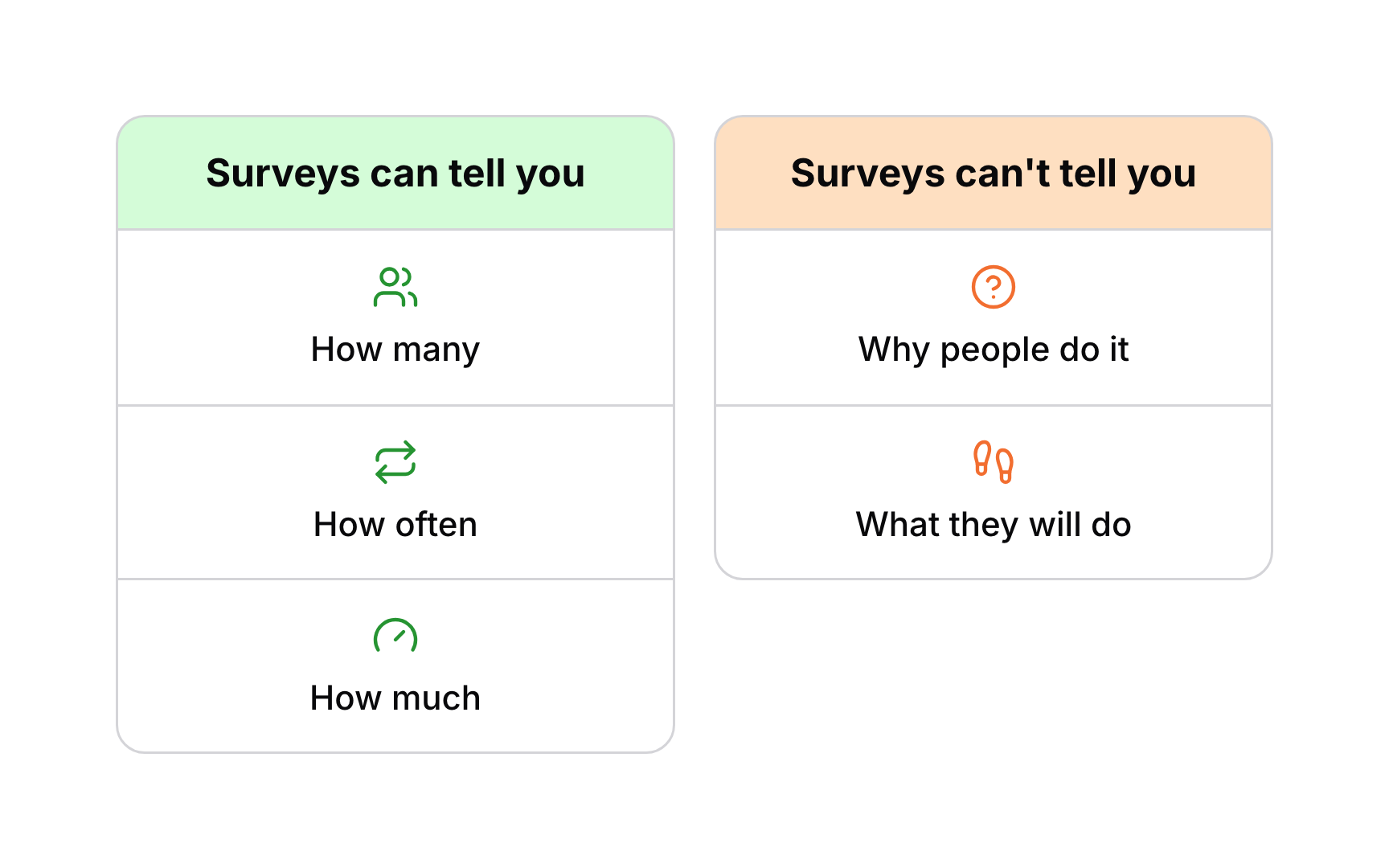
A survey measures what people say about themselves, across many people at once. It's a quantitative, attitudinal method: good at "how many," "how often," and "how much," such as what share of users feel confident after checkout.[1]
It's weak at "why" and at predicting behavior. A survey can show that many shoppers abandon their carts, but not what makes them leave. For that, watch people try the task in a usability test or talk to them in interviews. Researcher Erika Hall calls surveys the most dangerous research tool, because they're easy to run and their charts look convincing even when they answer the wrong question.
Define your survey goals

Write down what the team needs to learn before writing a single question. A clear goal, such as "How many customers reorder within 30 days, and how satisfied are they?", decides which questions belong and which are just interesting. Every question should trace back to it. If it doesn't, cut it, since each extra question makes the survey longer for everyone.
Goals also protect comparisons over time. When a survey repeats every quarter, keep the wording of tracked questions identical. Even small changes can shift answers, so a rise in satisfaction might come from the new wording rather than from a better product.
Sampling bias in surveys
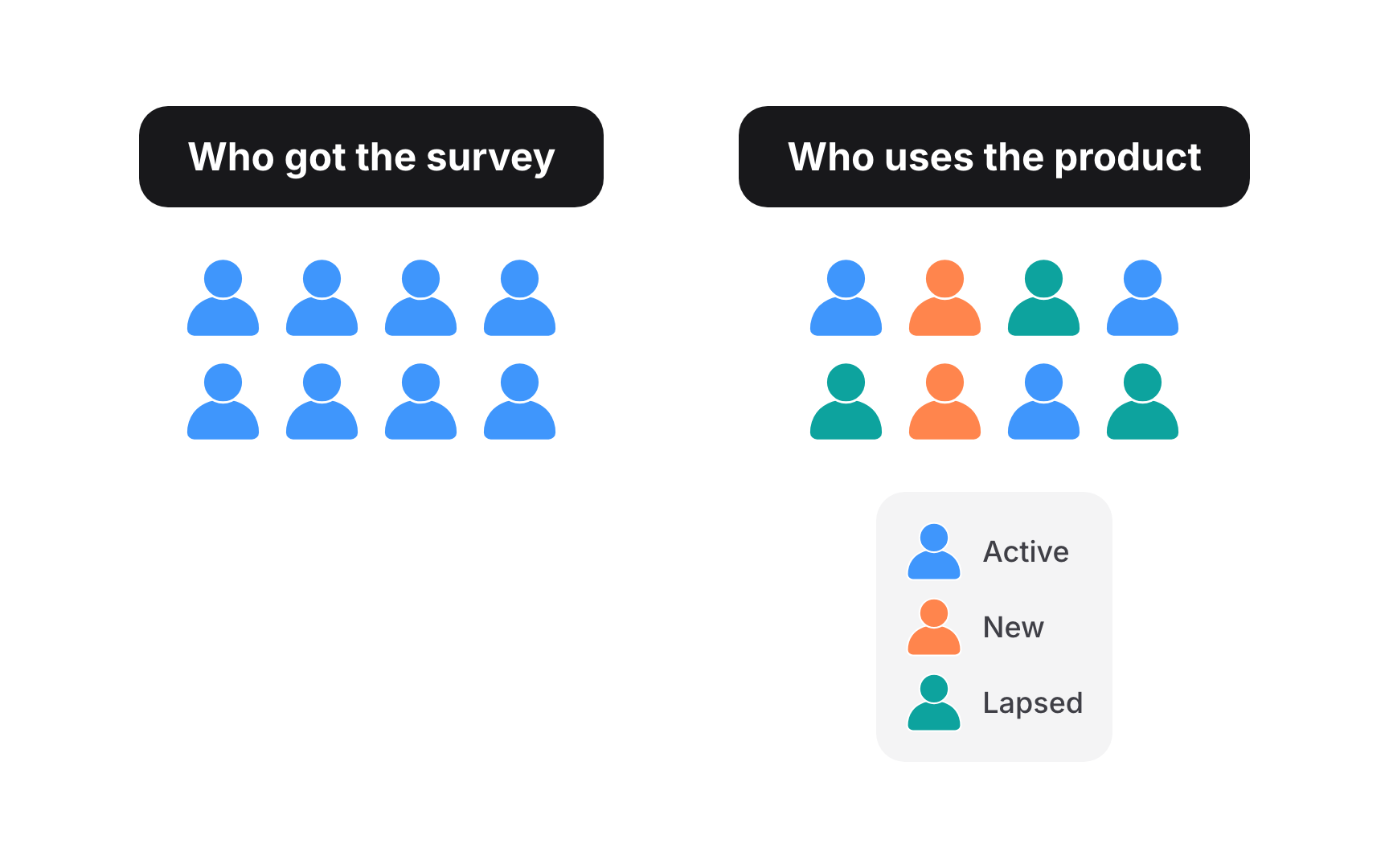
Sampling bias happens when the people who answer differ from the people the team wants to understand. Most UX surveys use convenience sampling: whoever is easy to reach, like newsletter subscribers or people who happen to open the app this week. That's fine for many decisions, but it overrepresents the most engaged users.
Imagine a satisfaction survey sent only to active users. The people who left because of a problem never see it, so the results look better than reality. Before sending, write down who the survey should represent, then check who it will actually reach and which groups are missing.
A big response isn't a fair sample
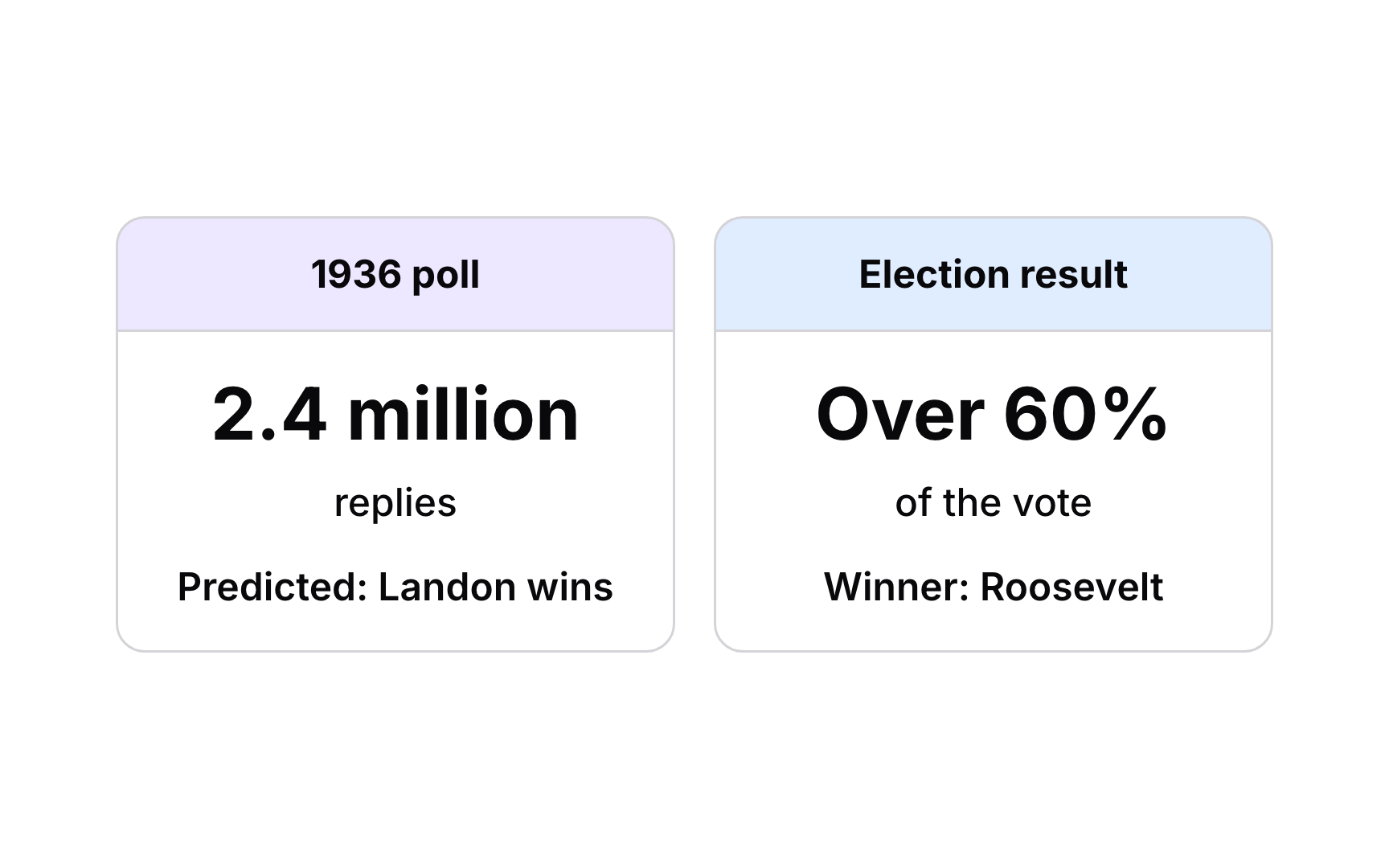
In 1936, the magazine Literary Digest mailed 10 million ballots and got about 2.4 million back. It predicted that Alf Landon would beat Franklin Roosevelt. Roosevelt won with more than 60% of the vote.[2] The mailing lists came largely from phone books and car registrations, and only about a quarter of people replied. Those who did were not like voters overall.
A huge response can't fix a skewed one. A high response rate doesn't guarantee accuracy either. What matters is whether the people who answer differ from those who don't, in ways related to the question.
Structure a survey from easy to sensitive
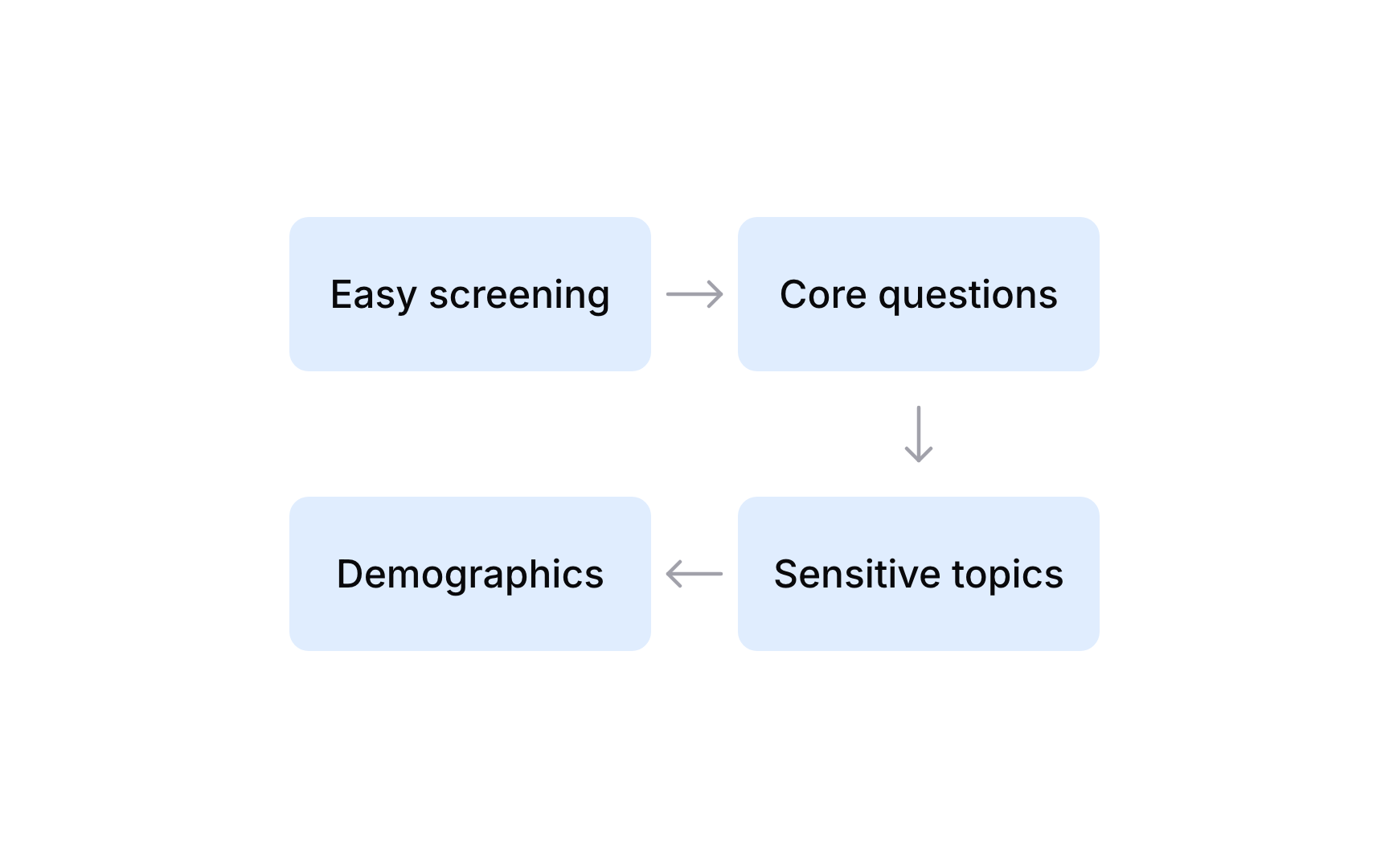
Open with simple, engaging questions that build momentum, then group questions on the same topic and move from general to specific. Put the questions that matter most early, since answers near the end of a long survey get faster, shorter, and more uniform. Save sensitive questions, and demographics like age or income, for the end unless they're needed to check eligibility.
Order also changes answers. When Pew Research Center asked about national satisfaction right after a question on presidential approval, 88% said they were dissatisfied, against 78% without that earlier question. Think about what each question puts on the respondent's mind for the next one.
Keep surveys short
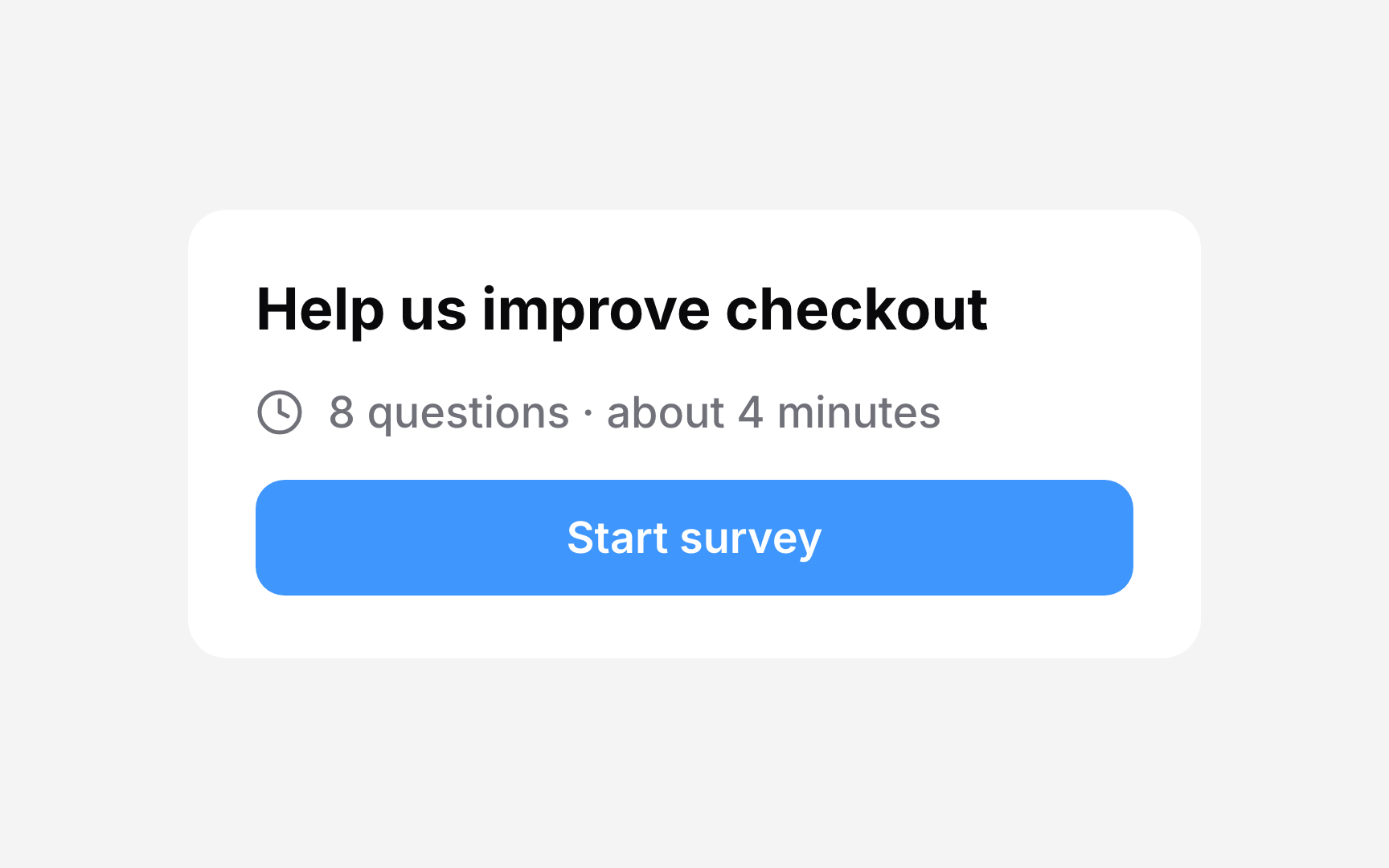
Length decides who finishes. In one experiment, invitations stated a survey would take 10, 20, or 30 minutes, and the longer the stated time, the fewer people started and completed it. Those who stayed answered later questions faster and in less detail.
State the real length upfront and keep it honest. A progress bar is often added to keep people going, but a meta-analysis of 32 experiments found that a steady progress bar doesn't reduce drop-off, and one that moves slowly at first makes it worse.[3] The fix is a shorter survey: make every question earn its place, and make most of them optional.
Offer incentives up front
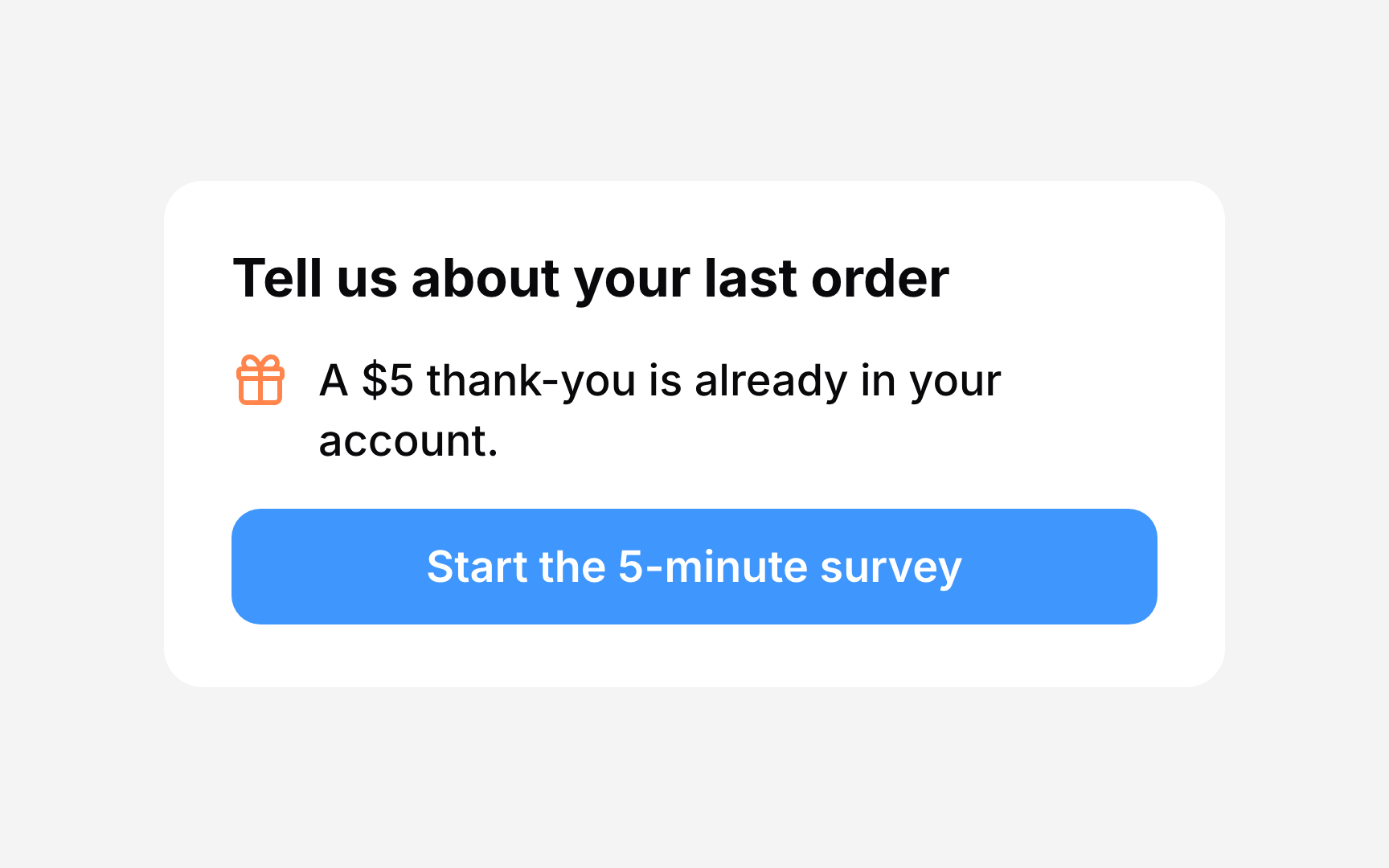

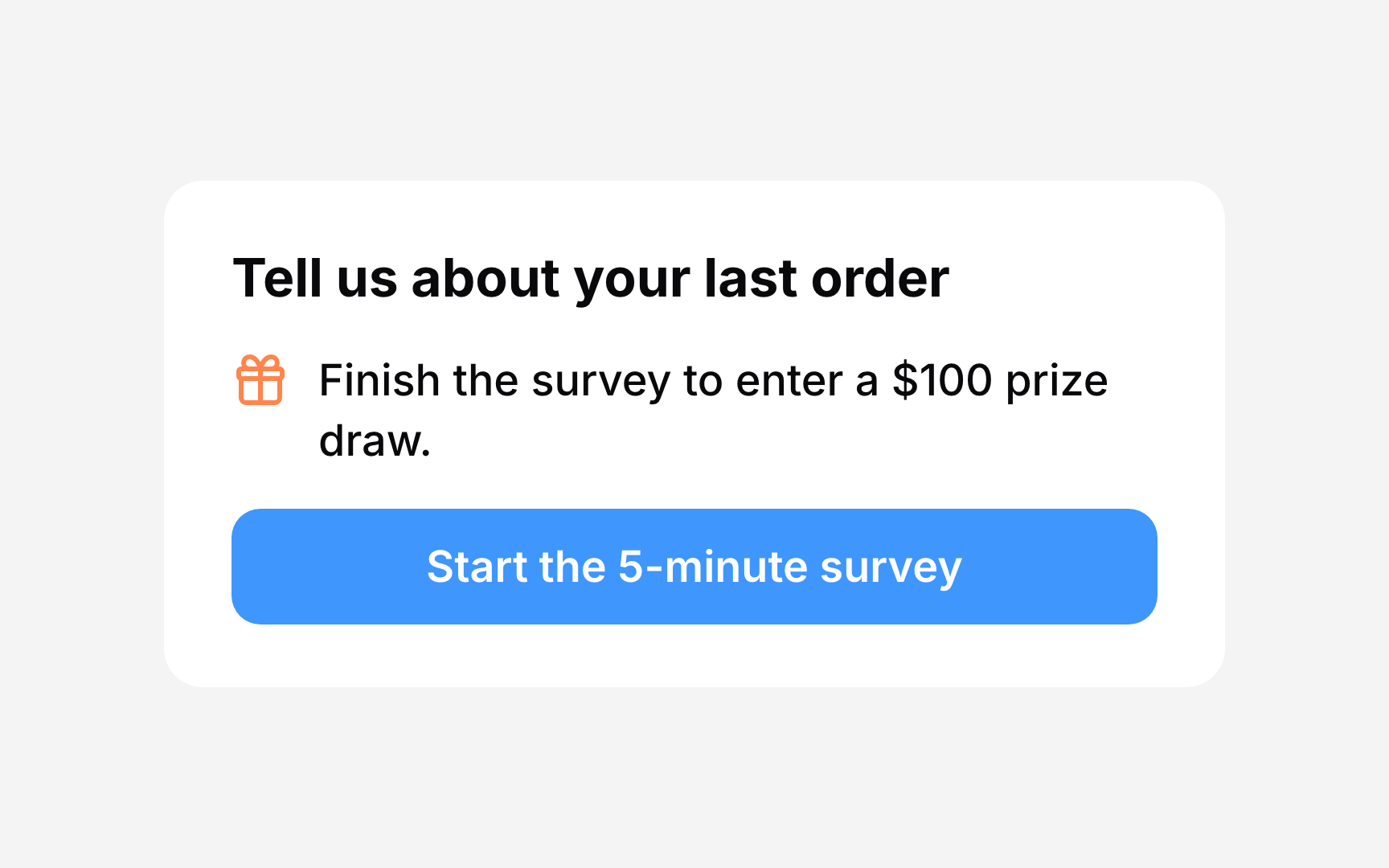

Incentives raise response rates, and how they're given matters as much as their size. In a meta-analysis of 38 mail surveys, cash sent with the invitation raised responses by about 19 percentage points on average. Rewards promised for finishing made no significant difference, and prize draws did consistently worse than small upfront payments.[4]
A small reward that arrives with the invite feels like a gift, and people return the favor. In UX surveys, paying strangers in advance isn't always possible, but for known participants, such as customers or a research panel, a small upfront thank-you usually works better than a big prize.
Pilot the survey with real people
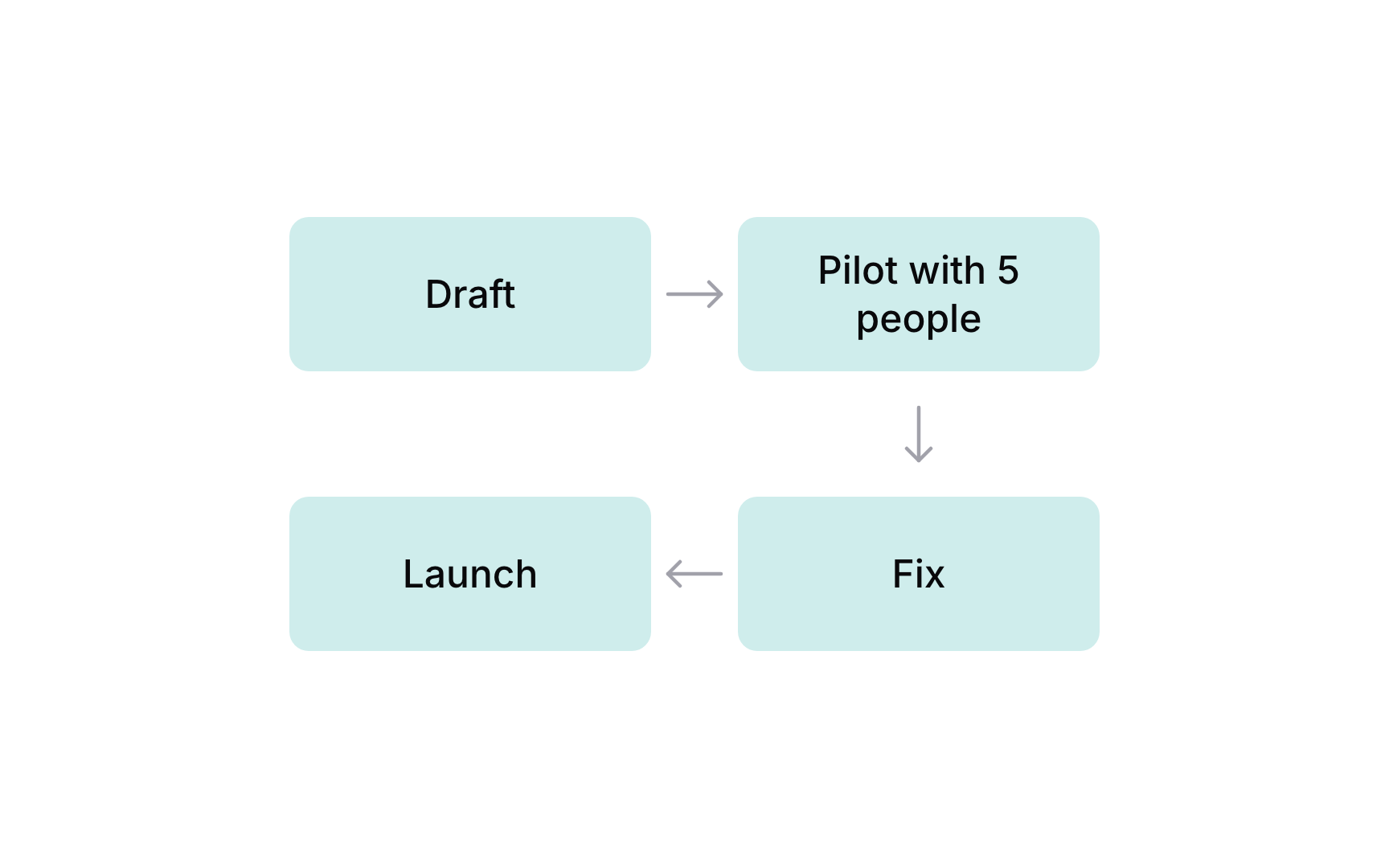
A pilot is a small trial run. Before the survey reaches hundreds of people, a handful from the target audience take it while the researcher watches or asks them afterward what they found confusing. Pew Research Center calls pretesting an essential step in questionnaire design.
Pilots catch what a team read-through misses: a term only the team understands, a question people read two different ways, a list without the answer they wanted, or a survey that feels much longer than planned. An AI review can catch wording problems, but it never experiences the survey as a respondent does. Fix what the pilot reveals, then launch.