

.svg)

Most product decisions don't fail in the boardroom. They fail in the hallways. A well-researched roadmap gets killed not because the data was weak, but because the wrong person heard about it for the first time in a room of ten executives. Stakeholder management isn't a soft skill to polish after you've mastered product craft. It's the craft. At the leadership level, your ability to influence without authority determines what actually ships.
The challenge is that organizational power rarely maps to job titles. The person who controls the budget is not always the person who controls the decision. Sales culture can override engineering culture. A founding engineer with no formal authority can veto a product direction with a single message to the CEO. To navigate this, product leaders need two things: a way to read the landscape accurately, and a set of practical techniques to move through it.
This lesson covers both. It walks through how to identify where real power sits using the power-interest grid, how to do discovery on stakeholders the same way you do discovery on users, how to build trust through predictable behavior rather than charm, and how to pre-wire high-stakes decisions before they enter a formal meeting room. It also covers the art of saying no without ending relationships, and the conversational reframe that turns adversarial moments into collaborative ones.
Identify hidden decision-makers in your organization
Every organization has two structures. The formal org chart shows who reports to whom. The shadow org chart shows who actually listens to whom. These two structures rarely match, and product leaders who rely only on the first one get blindsided by the second.
Real decision-making power sits at the intersection of positional authority and informal influence. A VP of Sales may hold the budget, but the Chief of Staff shapes which problems the CEO focuses on this week. A founding engineer with no management title may have more pull over technical direction than the entire leadership chain. Understanding who holds informal influence is not optional at the leadership level. It changes how you communicate, who you involve early, and which conversations you need to have before a room fills with people.
The power-interest grid is one practical tool for mapping this landscape. It plots stakeholders on two axes: how much power they hold over decisions, and how much interest they have in your work.
The hardest player to find on this map is the CEO whisperer: the person with no prominent title who has the CEO's ear. This might be a founding engineer, a Chief of Staff, or a long-tenured operator who has seen three product strategies come and go. Win this person over early, and you remove the most unpredictable veto in the building.[1]
Pro Tip! Build your power map at the start of any major initiative, not after the first objection lands. By the time you're managing resistance, you've already lost lead time.
Do discovery on your stakeholders
Most product managers do discovery on users and skip it entirely for internal stakeholders. This is a mistake. Stakeholders have goals, frustrations, and constraints that rarely show up in a roadmap review. When you understand what a stakeholder actually needs to succeed, you stop presenting features and start presenting solutions to their problems.
Before a roadmap presentation, meet individually with key stakeholders and ask about their priorities, the pressures they're facing from above, and the risks they're trying to avoid. Don't pitch anything. Just listen. A Head of Sales measured on new logo growth will respond to a retention feature very differently from one under pressure to expand existing accounts. When you've done this work, you can frame your roadmap as a response to each stakeholder's own stated priorities, which shifts the dynamic from "PM presents, stakeholders judge" to something that feels far more like a shared conversation.[2]
Map stakeholders by power and interest
Knowing your stakeholders exist is not the same as knowing how to work with them. Product leaders who treat every stakeholder with the same cadence, detail level, and communication channel waste time on people who don't need it and under-invest in the ones who can move or block decisions.
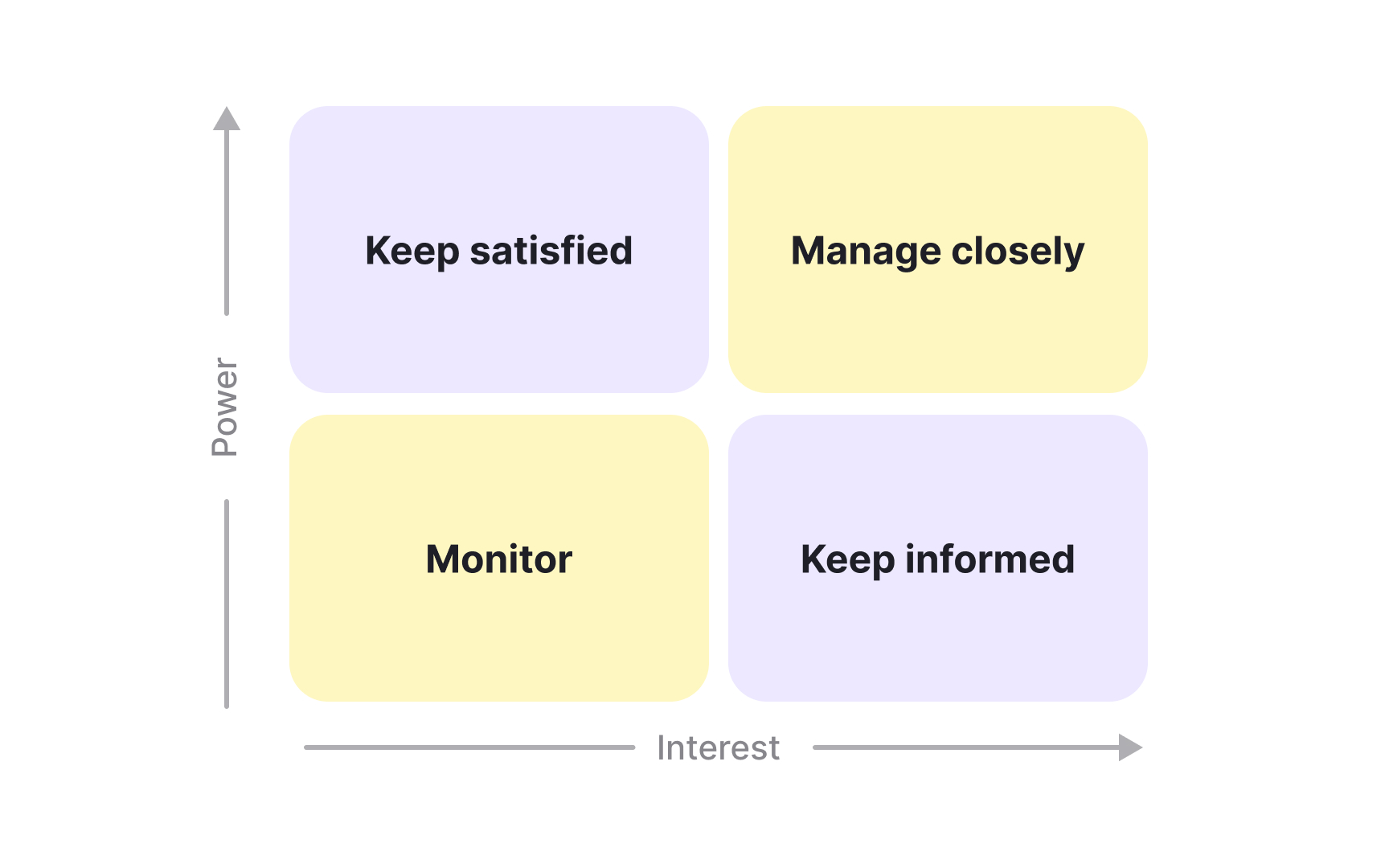
The power-interest grid assigns each stakeholder a management strategy based on two dimensions: how much power they hold and how much interest they have in your work.
- High-power, high-interest stakeholders are your core group. They need tight coordination, early visibility into decisions, and no surprises. These are the people whose questions you want to have already answered before the room fills.
- High-power, low-interest stakeholders (often Legal, Finance, or Compliance functions) operate on a "keep satisfied" basis. They don't need frequent engagement, but if they feel bypassed, they become blockers fast.
- Low-power, high-interest stakeholders are worth keeping informed regularly because they surface operational problems early.
- Low-power, low-interest stakeholders round out the map and need only periodic monitoring.
The most important discipline this model teaches is segmentation. Not every stakeholder needs a personalized update, a pre-meeting call, or a tailored slide. Knowing which category someone sits in tells you how much relationship capital to invest, and where over-investment creates noise instead of alignment.[3]
Pro Tip! Revisit your power-interest grid after any org restructure or executive departure. Power maps go stale faster than roadmaps do.
Build trust with stakeholders through predictable behavior
Trust between product managers and stakeholders is not built through charisma or a great presentation. It is built through consistency. Stakeholders who only hear from a PM when something has gone wrong learn to associate that PM with problems. Stakeholders who receive regular, predictable communication learn to treat the PM as a reliable partner.
This means creating ritual cadences: a biweekly check-in with high-power stakeholders, a monthly written update for the broader group, and clear rules about when and how bad news travels. The format matters less than the regularity. A stakeholder who expects to hear from you on the first Monday of every month will tolerate a difficult update on that first Monday far more readily than one who hears from you unexpectedly with the same information. Predictability is especially important when trust is still being established. Early in a relationship, the best signal a PM can send is simple: say what you'll do, then do it. When a trade-off gets made that affects a stakeholder's team, tell them directly before they find out through someone else. When an estimate slips, communicate early enough that they can adjust, not after the deadline has passed.
Trust is the compounded return on small, boring commitments kept over time.[4]
Pro Tip! Never let a stakeholder learn about a decision that affects their team from someone other than you. First contact is your responsibility.
Pre-wire high-stakes decisions before group meetings
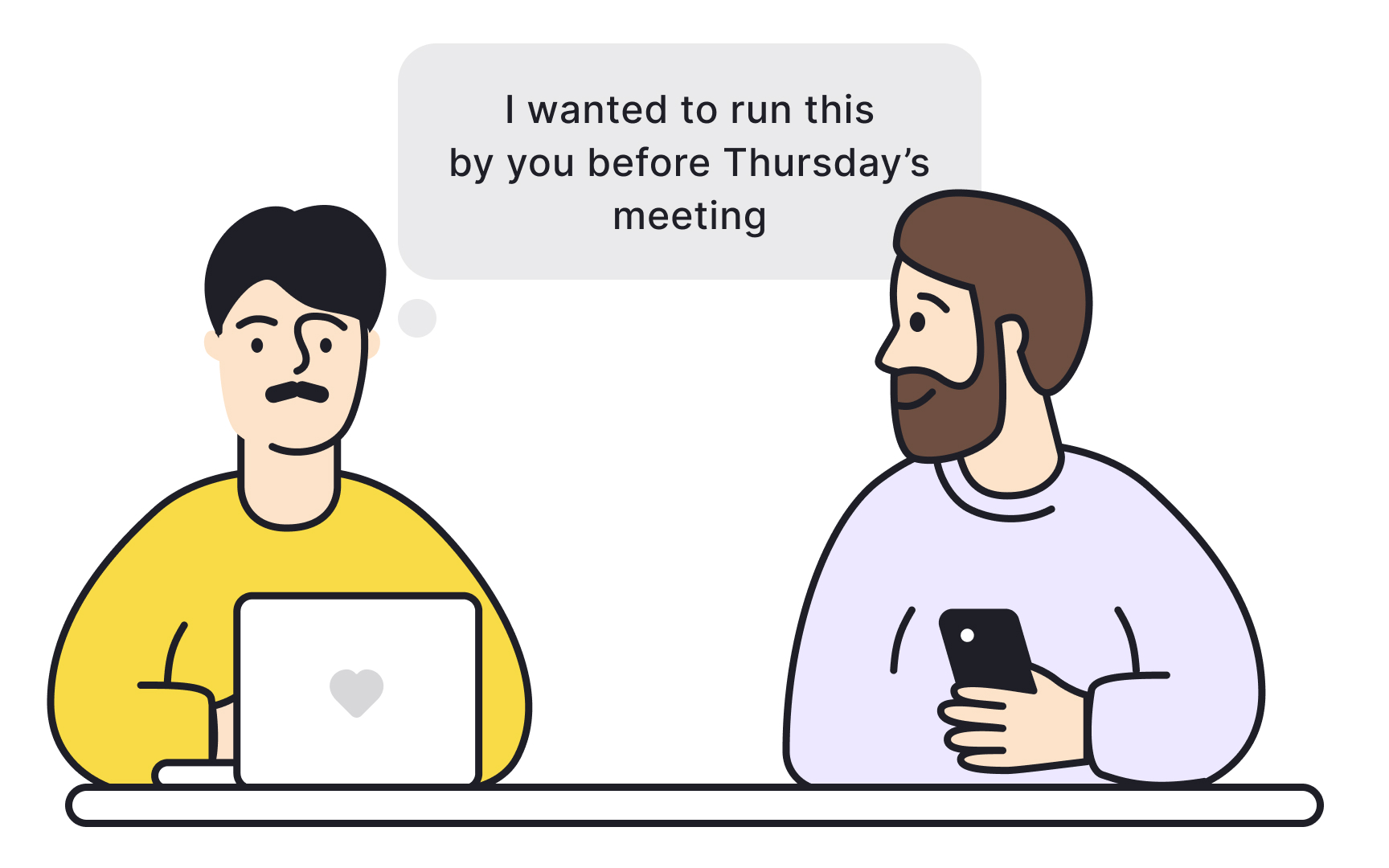
If you are presenting a major decision to a group of executives and it is the first time most of them are hearing about it, the meeting has already failed. Public forums are not good places to process new information, form opinions, and land on alignment. They're good for confirming decisions that have already been shaped through individual conversations.
Pre-wiring is the process of meeting key stakeholders one-on-one before a formal group meeting to share your thinking, understand their concerns, and incorporate their perspective. The goal is not to pre-sell a recommendation, but to remove surprises and surface objections early. Two to three days before the meeting, reach out individually to the stakeholders whose buy-in is most critical. Frame it as a feedback conversation. Incorporate what you hear. Then, in the group meeting, acknowledge the exchange: "As I discussed with Marcus earlier this week..." This signals that you've done the relational work, not just the analytical work.[1]
Scripts for saying no to stakeholder requests
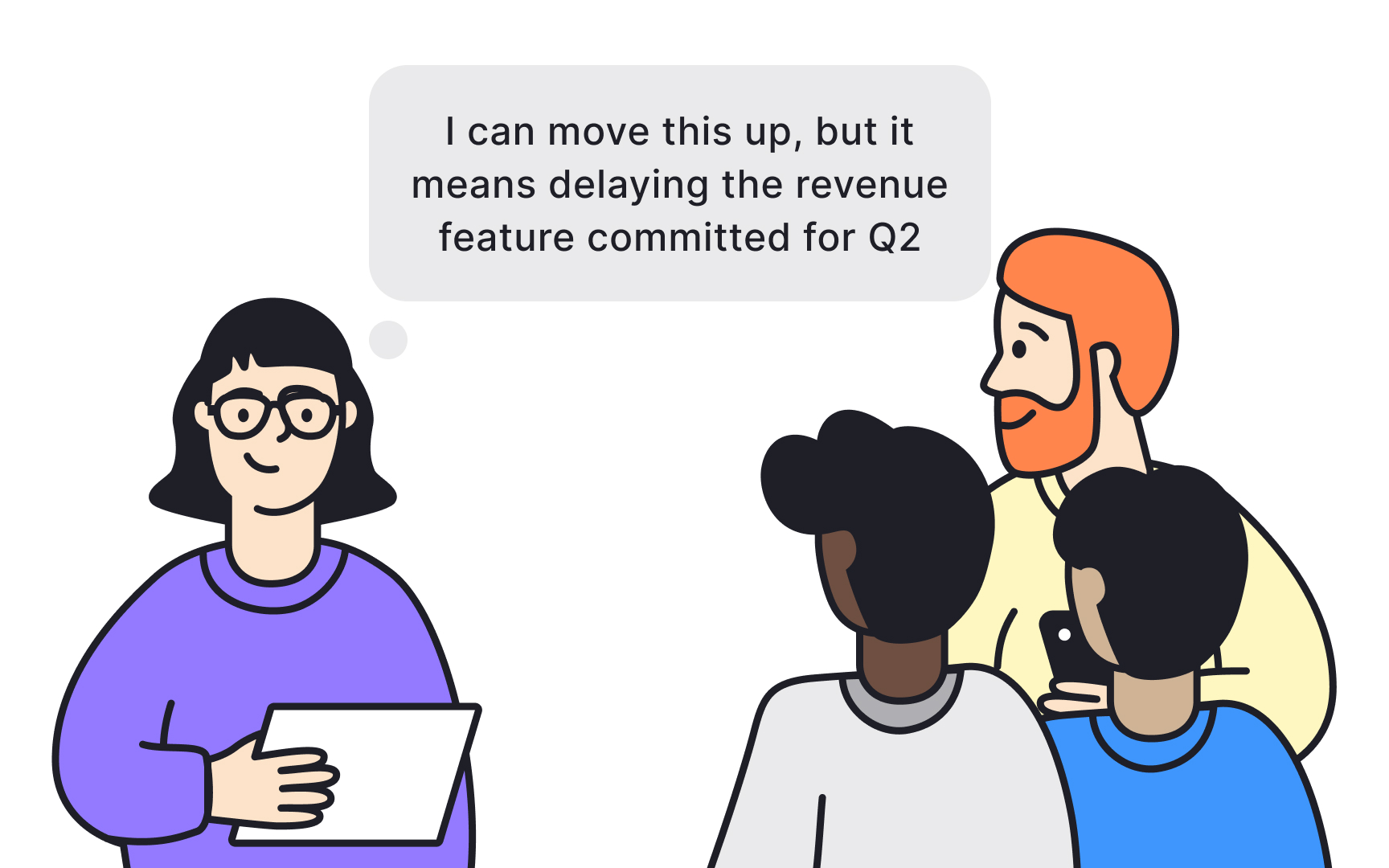
Every product manager eventually faces the same moment: a stakeholder walks in with an urgent request that shouldn't happen right now, or at all. Saying ‘yes’ hands your roadmap to whoever shows up most forcefully. Saying ‘no’ directly damages a relationship you'll need again. Neither is leadership.
The more effective approach is structured redirection. The trade-off redirect makes the cost of ‘yes’ visible: "I can move this up, but it means delaying the revenue feature committed for Q2. Are you comfortable with that trade?"
The data redirect depersonalizes the rejection: "Only 4 users triggered this last month. I can't justify the sprint, but let's revisit if the signal grows." The strategy redirect elevates the conversation: "This fits a services model, but we're building toward a platform. It doesn't match the three-year direction." All 3 acknowledge the request, give a real reason for declining, and keep the door open.
Read the room with contextual intelligence
Two product managers can walk into the same meeting with the same roadmap and get completely different outcomes. The difference is usually not the deck. It's how well each person reads the environment before and during the conversation.
Contextual intelligence is the ability to scan the environment at both levels:
- The macro environment: the broader organizational culture, its current priorities, and the mood after last quarter's results. At the macro level, this means staying current on your company's strategic direction, knowing which functions are in favor, and understanding what keeps your leadership team up at night.
- The micro environment: the specific room, the body language at the table, the political subtext behind a question. At the micro level, it means noticing when a question from the CFO is really an objection, or when the VP of Engineering's silence signals disagreement rather than consent.
Both levels of reading require the same foundational habit: listening more than you talk. Bring questions into every stakeholder interaction, not just talking points. The PM who walks into the room knowing what each person cares about most is never caught off guard by the question that derails a presentation. The ones who come in to perform their roadmap, rather than facilitate a conversation, are the ones who leave wondering what went wrong.[5]
Turn conflict into collaboration with verbal reframing


Some stakeholder conversations go sideways fast. A question lands with an edge. Someone challenges your data in front of their peers. The natural response is to defend. The effective response is to reframe.
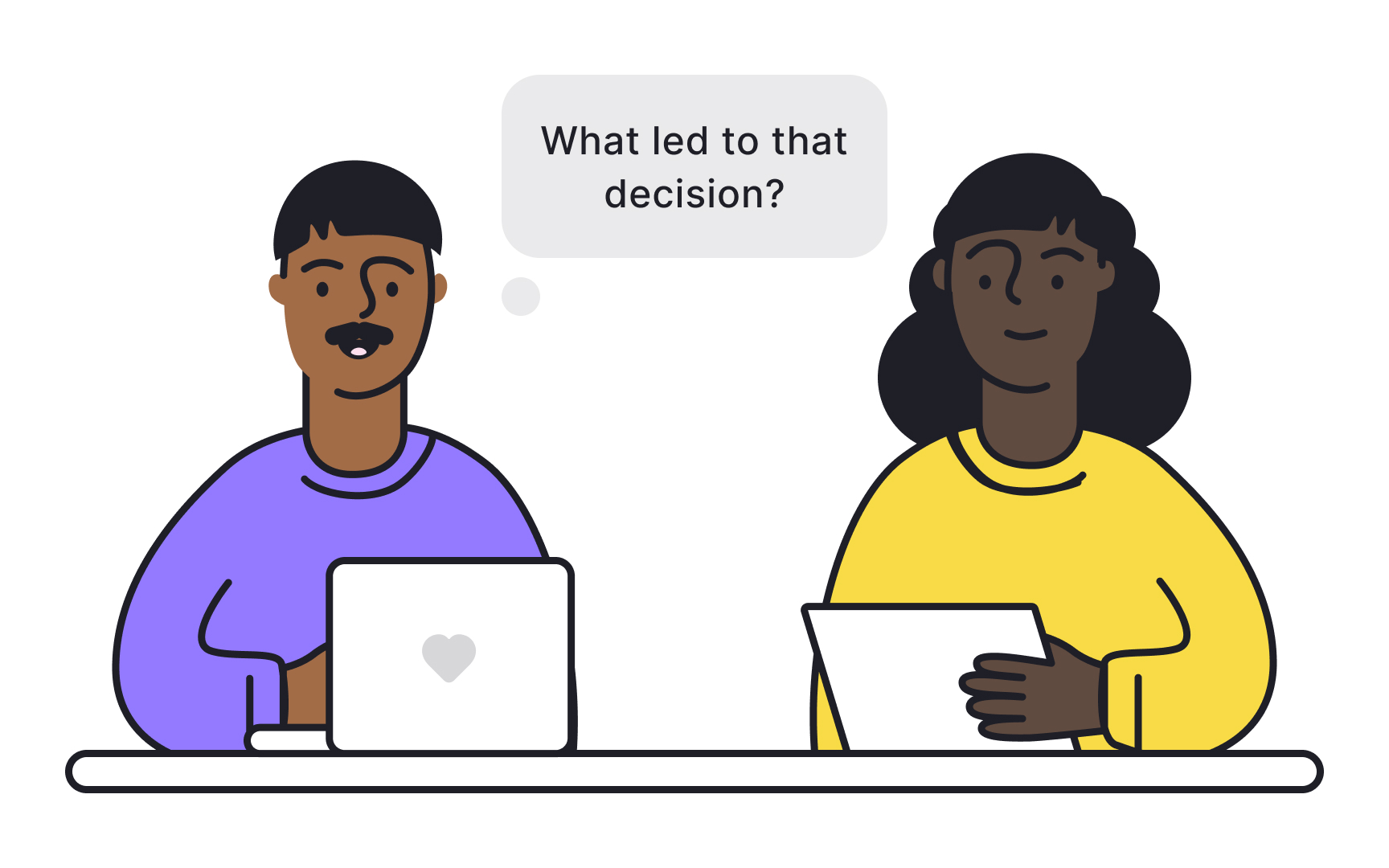
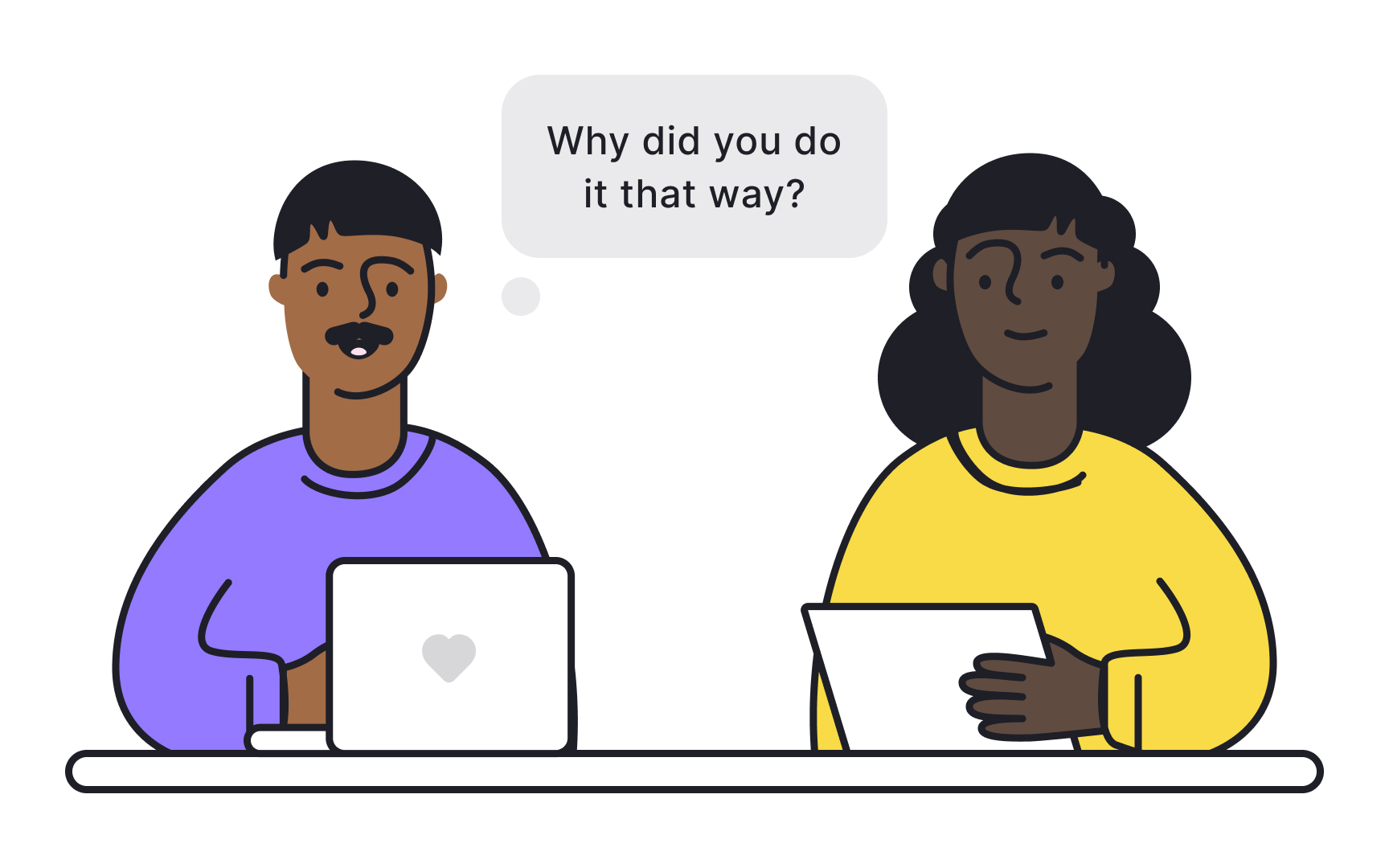
Verbal reframing shifts the dynamic from adversarial to collaborative by changing the direction of the conversation. Instead of treating a challenging question as an attack, you treat it as information about what the other person is worried about. The move is simple in principle and hard in practice: swap judgment-seeking language for curiosity-seeking language. "Why did you do it that way?" puts someone on trial. "What led to that decision?" opens a conversation. "That's wrong" closes thinking.
"Help me understand the gap you're seeing," invites both people to look at the problem together rather than at each other. A PM who responds to pushback with curiosity builds credibility faster than any well-formatted slide ever will.[6]
Pro Tip! Defensiveness in a stakeholder meeting signals you're protecting a position, not solving a problem. Curiosity signals you're still working.
Topics
References
- Getting Stakeholder Engagement Right | Roman Pichler
- Product Stakeholders: Categorize, Map, and Manage
- Getting Stakeholder Engagement Right | Roman Pichler
- Stakeholder Management Tips for Product People | Roman Pichler
- Product Stakeholders: Categorize, Map, and Manage
- The Art of Verbal Jiu Jitsu | The Jiu Jitsu Brotherhood