



.svg)

As product teams grow and challenges become more complex, basic frameworks sometimes fall short. Technical debt accumulates when teams take shortcuts under pressure. Enterprise organizations struggle to coordinate dozens of teams working on the same product. Standard methodologies don't always fit every situation, leading teams to create hybrid approaches that blend different frameworks. Advanced methodologies emerged to address these specific challenges. Some combine the best aspects of existing frameworks, while others provide structure for coordinating work at a massive scale. Many focus on continuous improvement, rigorous discovery processes, or managing technical quality alongside feature delivery. Understanding these specialized approaches helps you choose the right methodology for different contexts. These concepts show up frequently in product conversations about scaling Agile, managing code health, and adapting processes to organizational needs. Whether you're joining an enterprise implementing SAFe or advocating for continuous product discovery, knowing this terminology helps you participate confidently in discussions about how modern product teams operate.
Technical debt
Teams face constant pressure to ship quickly. Sometimes they take shortcuts, writing code that works but isn't ideal. This creates technical debt, a concept coined by Ward Cunningham to explain to management why code needs refactoring. Like financial debt, you get something now but pay interest later.
The interest in technical debt shows up as slower development, more bugs, and difficulty adding features. Code that was rushed becomes harder to change. Teams spend more time working around problems than building new capabilities. As debt accumulates, productivity drops and maintenance costs rise. Technical debt happens intentionally when teams prioritize speed, or accidentally through inexperience or changing requirements. Not all debt is bad. Strategic debt helps meet critical deadlines. The problem comes when debt accumulates without being addressed. Teams must balance short-term delivery pressure with long-term code health.[1]
Pro Tip! Track debt deliberately. Strategic debt taken for critical deadlines is manageable if you schedule refactoring work immediately after.
Continuous improvement
Continuous improvement means making small, ongoing changes rather than waiting for major overhauls. The philosophy, known as Kaizen, originated at Toyota and emphasizes that everyone can contribute to making processes better. Small daily improvements add up to significant results over time. Teams practice continuous improvement by regularly reflecting on what works and what doesn't. They identify bottlenecks, test solutions, and refine processes incrementally. This approach reduces risk compared to large transformations because changes are small and reversible. Teams learn quickly what helps and what doesn't. The Plan-Do-Check-Act cycle structures continuous improvement work. Teams plan a change, implement it on a small scale, check results, and act based on what they learned. This iterative approach builds organizational learning and creates momentum for sustainable change. Product teams apply this to features, processes, and team dynamics.[2]
Pro Tip! Start with a two-week experiment rather than committing to a permanent change. Test small, learn fast, then decide.
Product discovery
Product discovery is research and validation before building features. Teams investigate user problems, test assumptions, and validate solutions before committing development resources. Discovery reduces the risk of building things nobody wants or solving the wrong problem entirely. The process involves understanding user needs through interviews and observation, defining problems clearly, generating potential solutions, and testing prototypes with real users. Teams learn what matters most to users and which solutions actually address their needs. This front-loaded research prevents wasted effort on features that miss the mark. Discovery runs continuously alongside delivery rather than happening once at the start. While some teams build validated features, others research what to build next. This dual-track approach maintains momentum while ensuring teams work on the right problems. Good discovery answers whether a solution is valuable, usable, feasible, and strategically aligned.[3]
Pro Tip! Consistent small interviews with users beat massive research projects that delay decisions for months.
Scrumban
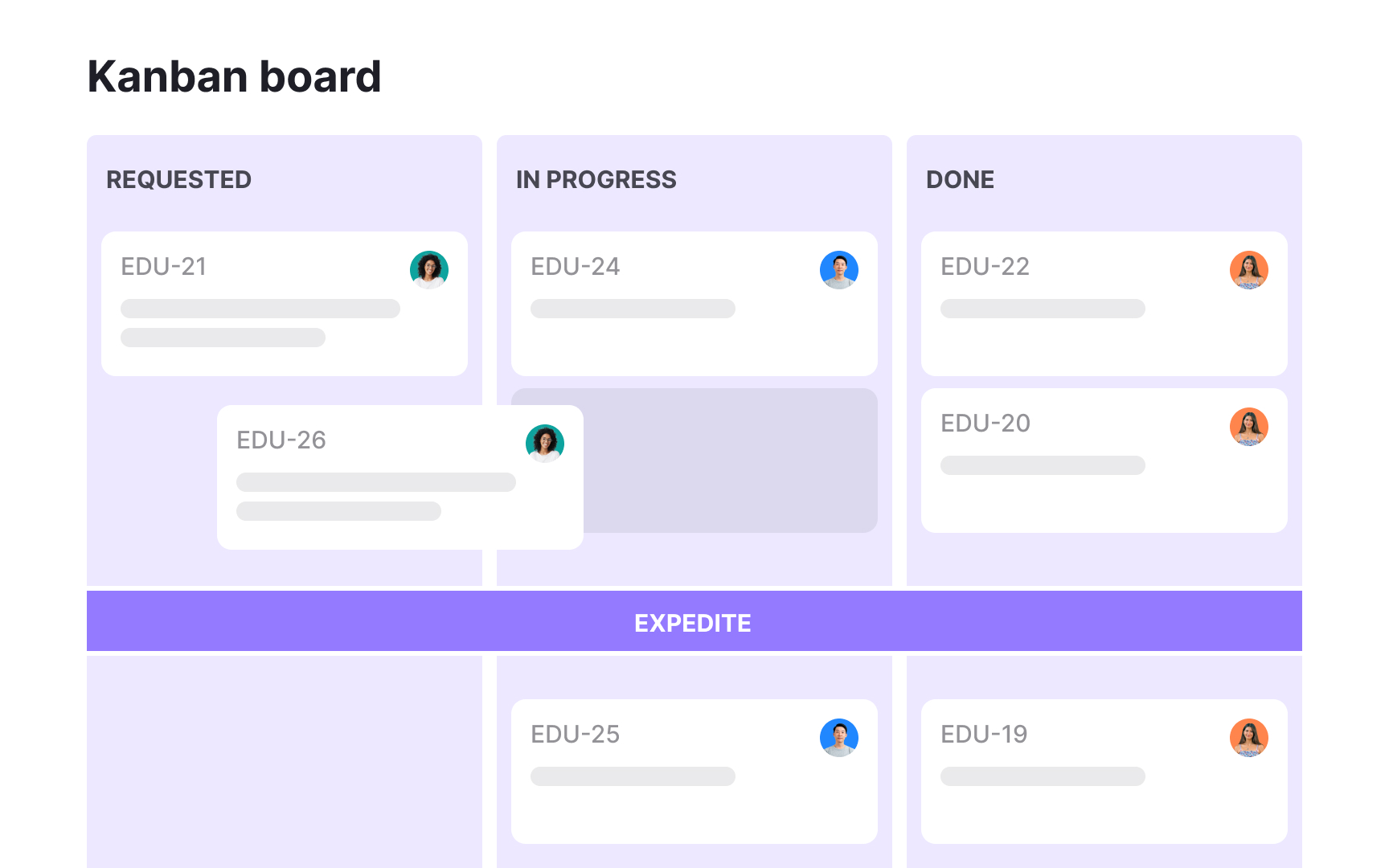
Scrumban combines Scrum's structure with Kanban's continuous flow. Originally created to help teams transition from Scrum to Kanban, it evolved into a standalone methodology. Teams use Scrum's planning and retrospectives while adopting Kanban's visual boards and work-in-progress limits. The hybrid approach works well for teams handling both planned features and unpredictable work like bugs or urgent requests. Teams visualize work on boards, limit how many items are in progress, and pull new work when capacity allows. This provides more flexibility than fixed sprints while maintaining more structure than pure Kanban. Scrumban adapts to each team's needs rather than following rigid rules. Teams might use sprint planning but skip fixed sprint boundaries. They might hold retrospectives without time-boxed iterations. This flexibility helps teams deal with shifting priorities or maintenance work alongside new features.[4]
Pro Tip! Try Scrumban when your team handles 30% or more unplanned work. Fixed sprints break down under constant interruptions.
Shape Up method

Shape Up is Basecamp's approach to product development using six-week cycles. Rather than estimating how long work takes, teams decide how much time they're willing to spend on a problem. This appetite sets boundaries upfront. If work can't be completed in six weeks, it doesn't get extended.
Before cycles begin, shapers define work loosely enough to give teams autonomy but specifically enough to reduce risk. They identify the problem, rough out a solution, and explain what's in and out of scope. Teams then build end-to-end slices rather than separate components, integrating continuously to discover issues early. The six-week timeframe balances focus with meaningful progress. It's long enough to build something substantial but short enough to maintain urgency. Teams have uninterrupted time to work without meetings or competing priorities. Between cycles, cool-down periods allow for cleanup, exploration, and planning what comes next.[5]
Scaled Agile Framework (SAFe)
SAFe provides structure for implementing Agile across large enterprises with hundreds of teams. It extends Agile principles from individual teams to programs, large solutions, and portfolios. SAFe addresses challenges that emerge at scale, including alignment, dependencies, and coordinating multiple teams working on the same product. The framework organizes work at 4 levels:
- Essential SAFe covers teams and programs
- Large Solution SAFe coordinates across multiple programs
- Portfolio SAFe handles strategic direction and investment
- Full SAFe combines all levels for enterprise-wide implementation
Each level has defined roles, events, and artifacts. SAFe emphasizes alignment through planning increments where all teams synchronize their work. Regular cadences ensure information flows upward from teams, downward from leadership, and across teams working on related features. This structure helps large organizations move faster while maintaining coordination and quality.[6]
Agile Release Train (ART)
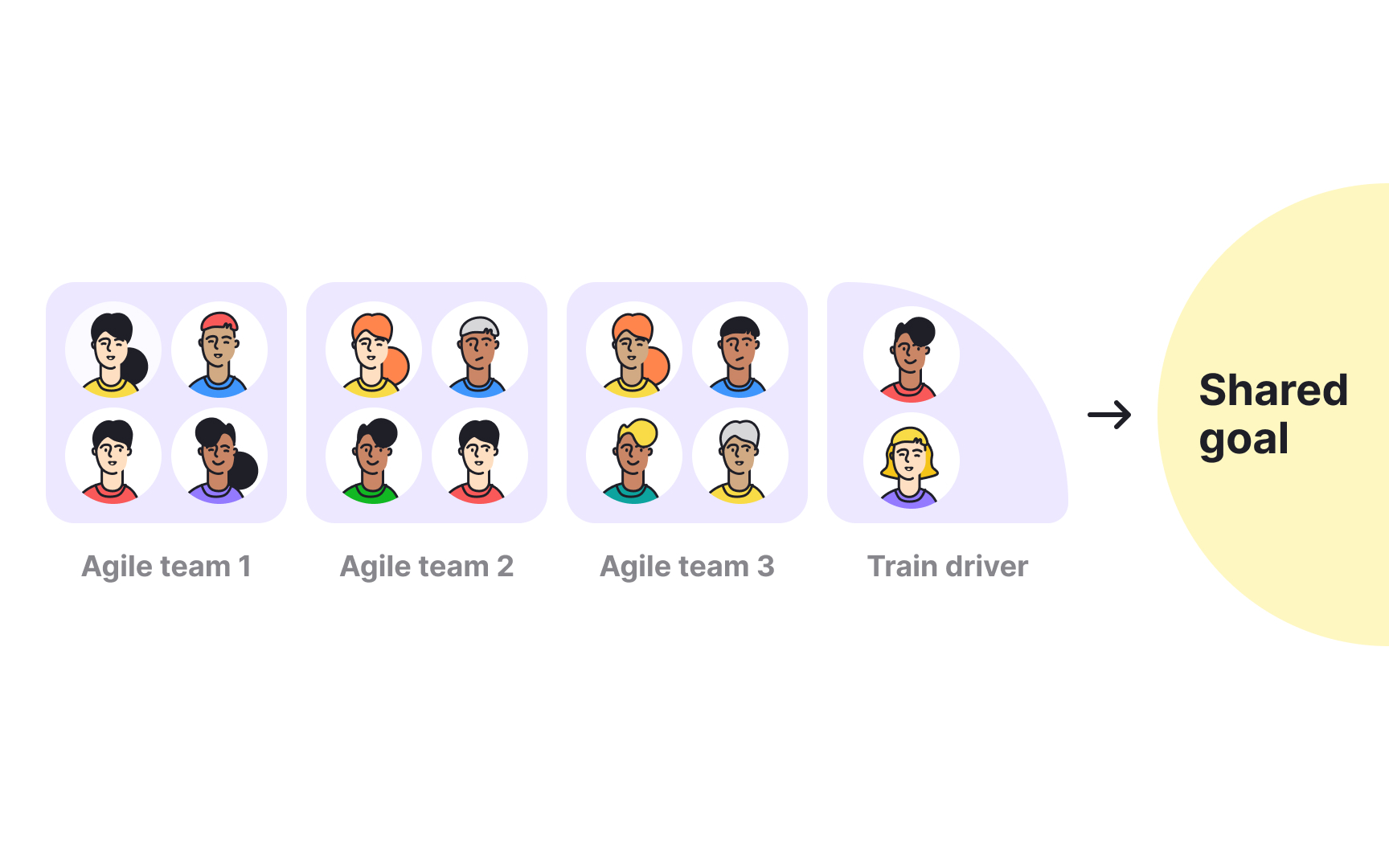
An Agile release train coordinates multiple Agile teams working toward shared goals in SAFe. The ART typically includes 50 to 125 people organized into 5 to 12 teams. All teams work on the same cadence, planning and delivering together in program increments that last 8 to 12 weeks.
The train includes all roles needed to define, build, test, and deploy solutions. Product managers define what gets built, system architects guide technical decisions, and the release train engineer facilitates coordination. Teams remain dedicated to the ART, providing stability and allowing deep collaboration. ARTs align teams through regular events. Program increment planning brings everyone together to commit to objectives. System demos show integrated progress every two weeks. Inspect and adapt sessions to drive improvement. This structured coordination helps teams manage dependencies and deliver cohesive solutions rather than disconnected pieces.
Method of procedure (MOP)

A method of procedure is a detailed, step-by-step document outlining exactly how to complete a specific task or operation. Unlike standard operating procedures that provide general guidelines, MOPs specify the precise sequence of actions, tools needed, and safety precautions. They originated in technical fields like data centers and telecommunications, where errors can cause significant downtime.
Product teams use MOPs to standardize critical processes. A team might create a MOP for deploying new features, handling production incidents, or onboarding new team members. The document includes prerequisites, detailed steps, rollback plans, and approval requirements. This eliminates ambiguity and reduces human error during high-stakes operations. MOPs work best for complex, infrequent tasks where consistency matters. Teams write them for processes performed occasionally but requiring precision. After executing a MOP, teams capture lessons learned and update the document. This creates institutional knowledge that persists even as team members change.[7]
Pro Tip! Walk through MOPs with the team before execution. Dry runs catch gaps in documentation before they cause production issues.
Feature-driven development
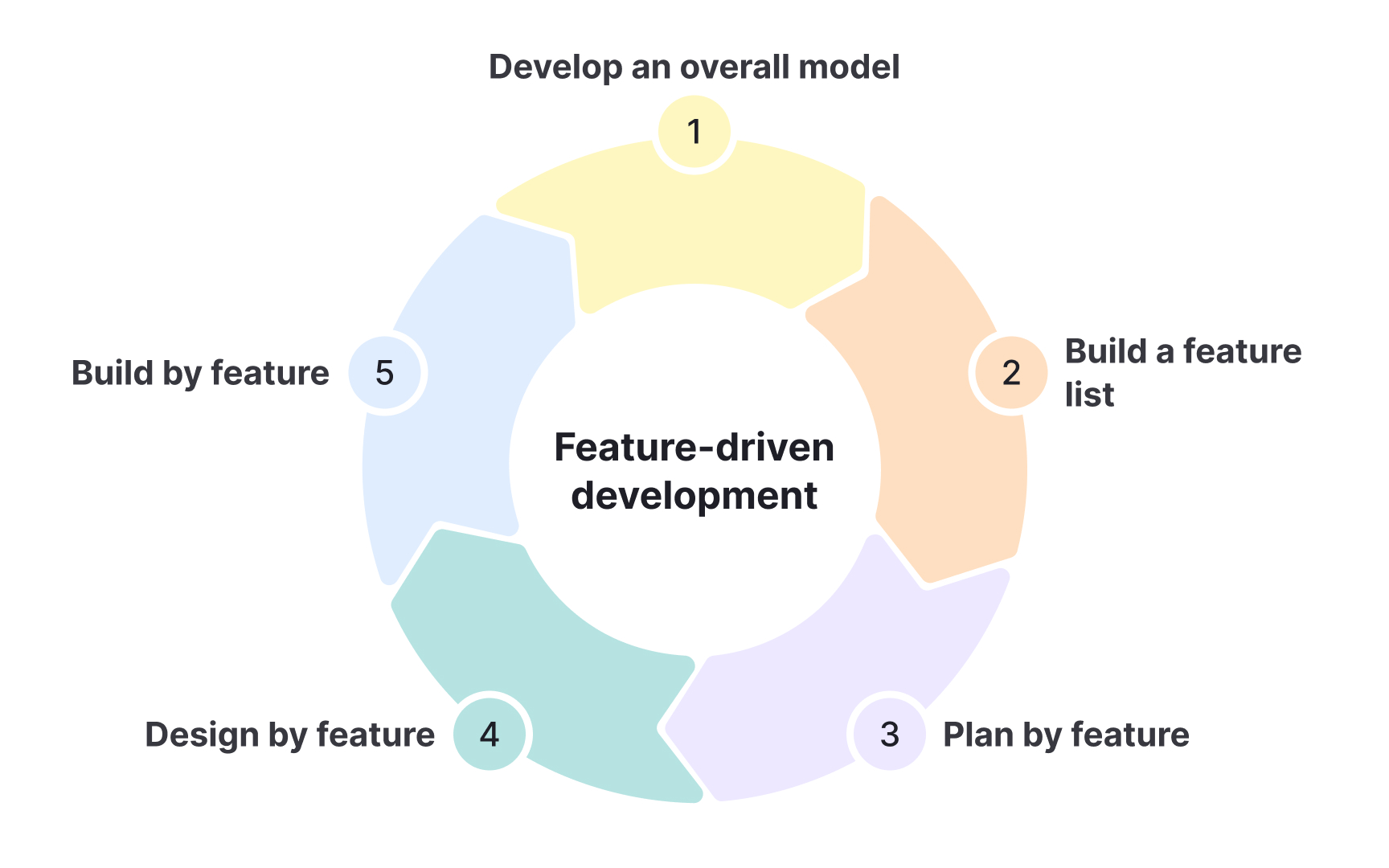
Feature-driven development organizes work around customer-valued features rather than technical components. Teams break the product into a list of features, each taking two weeks or less to complete. Features are small enough to deliver quickly but meaningful enough for users to understand and value. The methodology follows 5 processes:
- Developing an overall model
- Building a features list
- Planning by feature
- Designing by feature
- Building by feature
Chief programmers lead small feature teams through design and implementation. This structure provides clear ownership while maintaining architectural integrity across the system. FDD emphasizes regular builds and visible progress. Teams track completion percentage for each feature, making it easy to see what's done and what remains. This transparency helps stakeholders understand progress without requiring detailed technical knowledge. The feature-centric approach keeps teams focused on delivering business value rather than technical tasks.[8]
Topics
References
- What is technical debt? | GitHub
- Kaizen: Culture of Continuous Improvement | Lean Production
- Guide: Product Discovery Process & Techniques | Productboard
- Scrumban | Atlassian
- Introduction | Shape Up
- What Is a Scaled Agile Framework (SAFe)? | IBM
- Method of Procedure: Definition and Examples | Tempo | Tempo.io
- Feature Driven Development (FDD) | ProductPlan