



.svg)

Case studies rarely fail because of bad ideas. They fail because the problem was never clearly defined. Prompts are often incomplete on purpose, mixing goals, symptoms, and assumptions into a single request. The challenge is not to rush toward answers, but to slow down and separate what is known from what is assumed.
Strong product thinking starts with framing. A clear problem statement anchors decisions, keeps teams aligned, and prevents solution-first thinking. It forces focus on who is affected, what is actually happening, and why it matters now. Without this clarity, teams risk fixing surface issues while deeper causes remain untouched.
Ambiguity is not an obstacle but a signal. It shows where questions are missing, where data is unclear, and where priorities are not yet agreed on. Handling this well means identifying symptoms versus root causes, clarifying goals versus constraints, and asking questions that move the case forward instead of stalling it. This lesson builds the foundation for all later case work by sharpening how problems are defined before solutions are proposed.
Defining the primary user segment for a case study
Defining the primary user segment means deciding which group of users the case study is centered on. This segment becomes the reference point for the problem, the analysis, and the final recommendation. Without this decision, a case study risks drifting between different user needs and losing focus.
A primary segment is not the entire audience of a product. Products often serve many groups at once, but a case study needs one segment whose experience explains the problem best. This is the group that feels the issue most clearly, encounters it most often, or is most affected by its consequences. The case study is built around solving a problem for this specific group, not for everyone at the same time.
Customer development practices help identify this segment using real signals rather than assumptions. Interviews, feedback, and usage patterns reveal which users struggle in similar ways and share comparable goals or constraints. Selecting one primary segment makes later decisions easier to explain because trade-offs can be evaluated through a consistent user lens.[1]
Pro Tip! If a problem statement mentions “users” without clarity, it is often a sign that the primary segment was never defined.
Comparing segmentation approaches for a case study
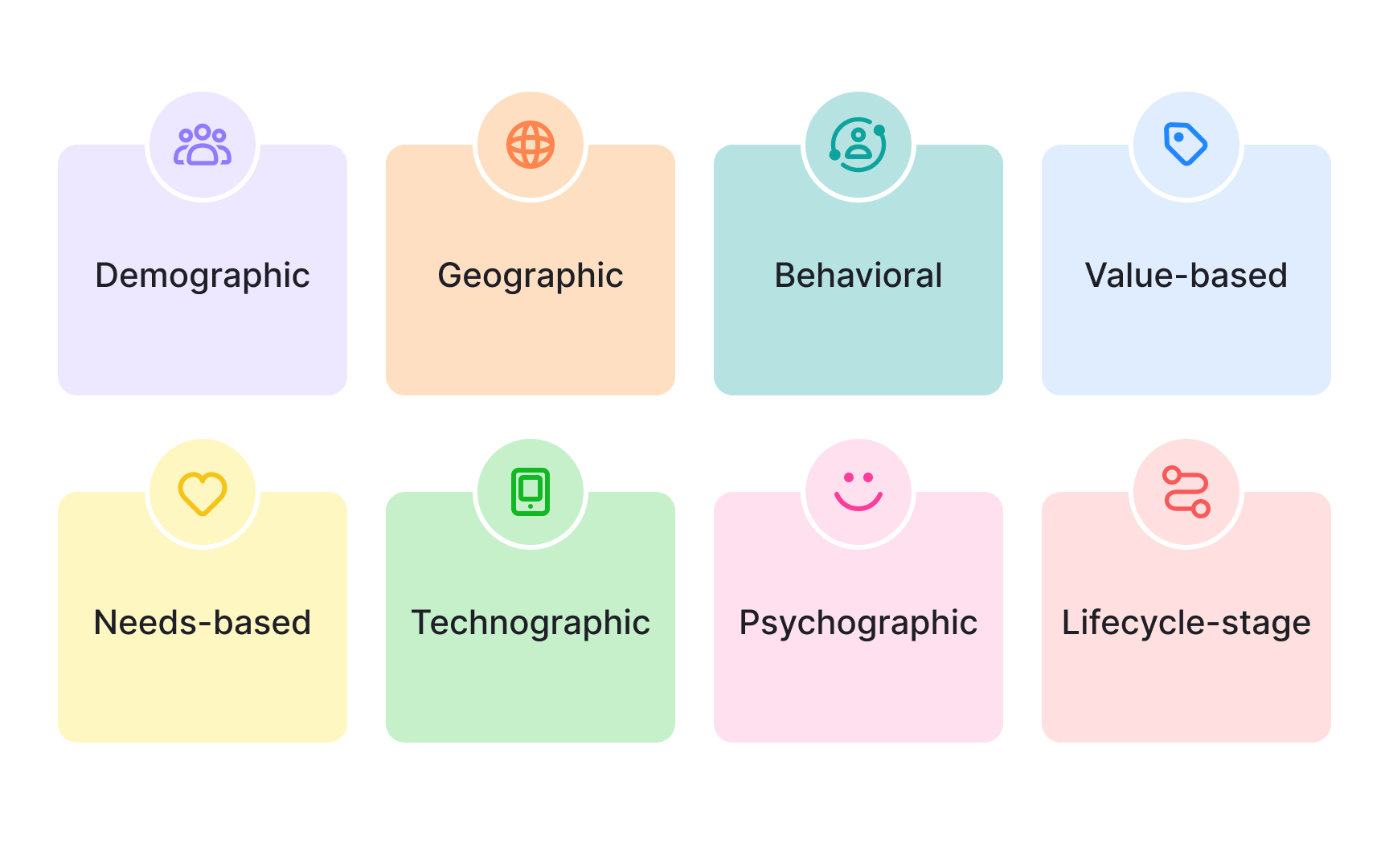
Segmentation approaches differ in what they explain about users. Some describe who users are, while others clarify how users behave or what they are trying to achieve. Choosing the right approach helps a case study explain decisions instead of just listing audience traits:
- Demographic and geographic segmentation groups users by attributes such as role, age, location, or language. These approaches help set context or scope, especially for products operating across markets. On their own, they rarely explain why users struggle or where friction appears in the experience.
- Behavioral segmentation focuses on how users interact with the product. This includes usage frequency, feature adoption, and drop-off points. It is especially useful in case studies about engagement or friction because it links decisions to observable patterns rather than assumptions.
- Needs-based segmentation groups users by goals, expectations, or problems. It helps explain why a solution works for some users and fails for others. This approach is often grounded in interviews and feedback and is well-suited for case studies focused on problem discovery or solution fit.
Strong case studies usually rely on one primary segmentation lens and use others only as supporting context. The key is selecting the approach that best explains the problem being solved.
Linking interview insights to segments in a case study
User interviews become useful for case studies when insights are connected to specific segments. Individual quotes or opinions matter less than patterns that repeat across people with similar goals or constraints. This step focuses on moving from isolated comments to segment-level understanding:
- Review interview notes and group responses by similarity.
- Look for repeated goals, frustrations, workarounds, or decision triggers. When several interviewees describe the same struggle in similar contexts, this often signals a shared segment rather than individual preference.
- Check whether these patterns align with existing segments or suggest the need to adjust them. Interviews may reveal that a segment assumed to be unified actually contains users with different needs. They may also confirm that a segment experiences the problem more intensely than others.
In case studies, interview insights should not stand alone as quotes. They should be used to explain why a segment was chosen, refined, or deprioritized. This shows structured reasoning and reduces the risk of decisions being perceived as opinion-driven.[2]
Pro Tip! If interview insights cannot be tied to a segment, they are signals, not evidence yet.
Identifying segment-specific pain points in a case study
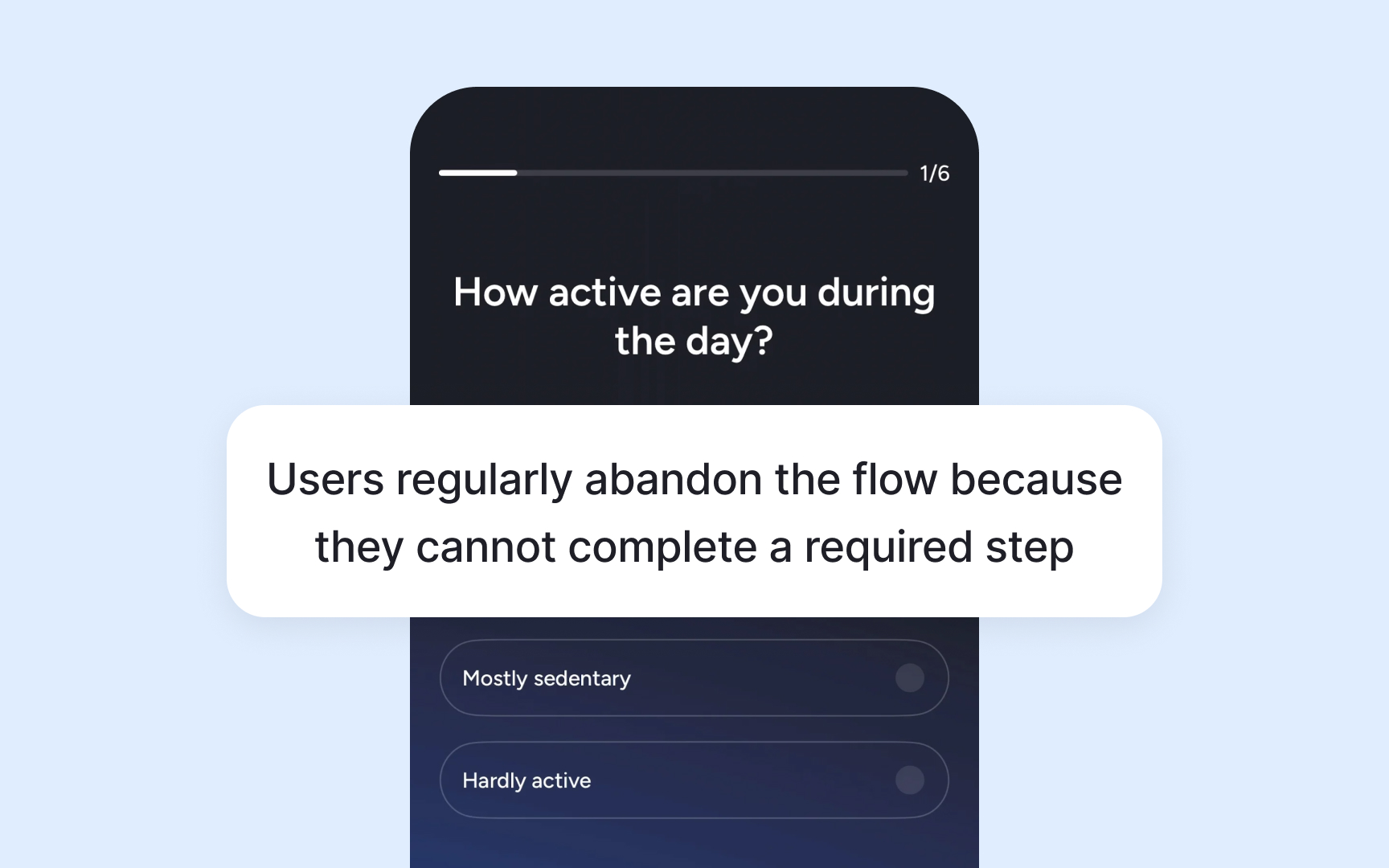

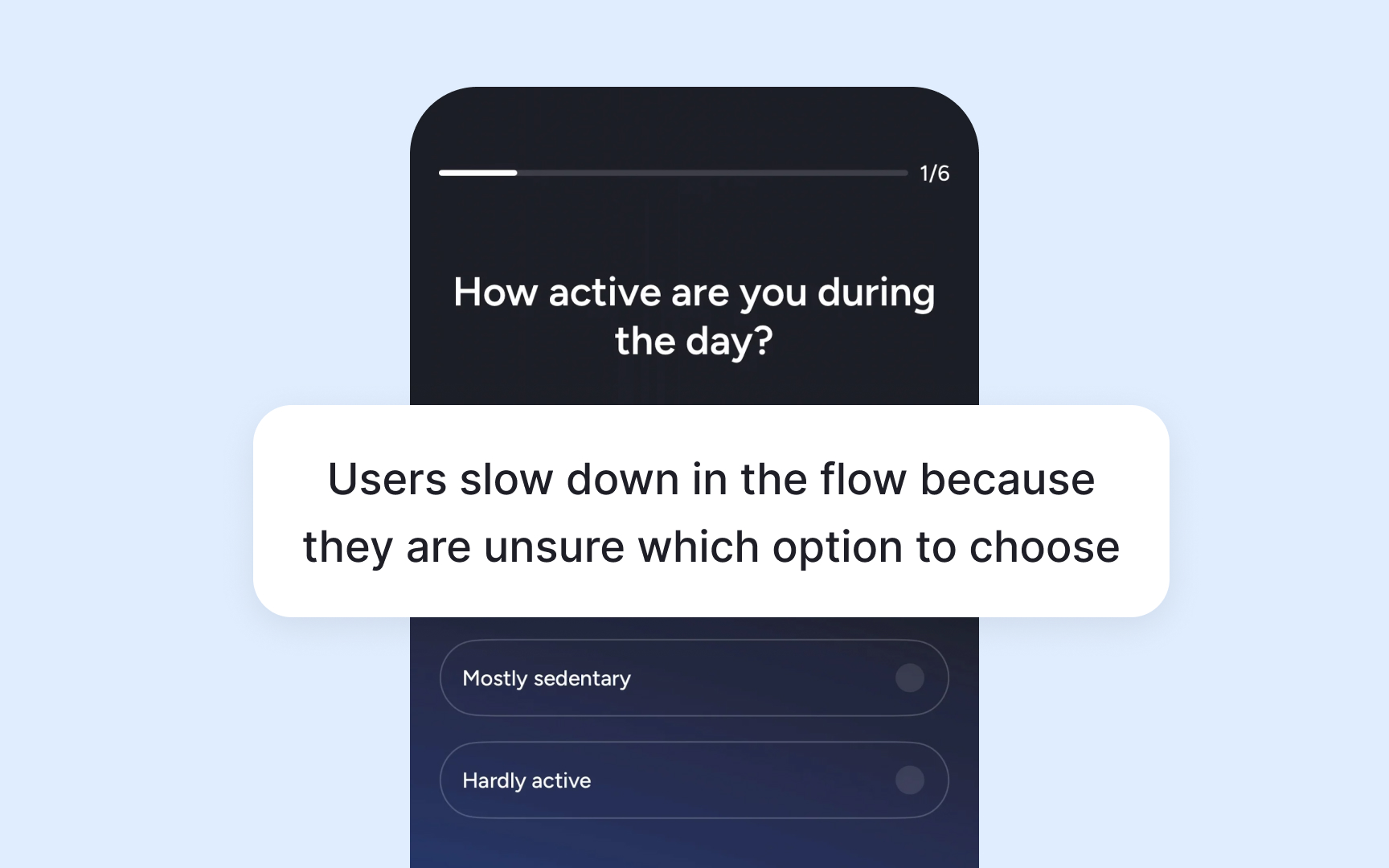

Pain points become useful in a case study only when they are tied to a specific segment. The same issue can be minor for one group and critical for another. What matters is how strongly a problem affects the ability of the chosen segment to reach its goal:
- List recurring difficulties this segment faces while using the product. These may appear as blocked steps, repeated errors, confusing transitions, or moments where users hesitate or abandon the task.
- Focus on issues that show up consistently across the segment, not on isolated complaints.
- Assess the impact of each pain point. Some problems slow users down, while others prevent completion or force workarounds. Segment-specific pain points are the ones that repeatedly limit success and explain why the current experience does not meet expectations.
In a case study, these pain points should directly shape the problem statement. They define what needs to change and help narrow the solution space.[3]
Pro Tip! If a problem sounds important but does not affect outcomes, it may be a symptom rather than a core pain point.
Separating symptoms from root problems in a case study
Segments often express problems in the form of visible symptoms. These include complaints about confusing screens, missing features, or slow processes. While these signals are useful, they rarely explain the real issue on their own.
Start by listing the symptoms observed for the segment. These may come from feedback, support tickets, or behavior patterns such as repeated errors or drop-offs. Then ask what prevents users from progressing or achieving their goal beneath each symptom. A slow flow, for example, may hide unclear priorities or missing guidance.
Behavior data helps validate this distinction. When many users repeat the same action, hesitate at the same step, or abandon the flow in similar ways, it suggests a deeper structural issue rather than isolated friction. Root problems usually explain several symptoms at once.[4]
In a case study, naming the root problem shows stronger reasoning than listing surface issues. It clarifies why certain solutions are considered and others are dismissed. This shift also prevents over-designing features that address complaints without improving outcomes.
Pro Tip! If multiple symptoms disappear when one issue is fixed, that issue was likely the root problem.
Interpreting user behavior patterns in a case study
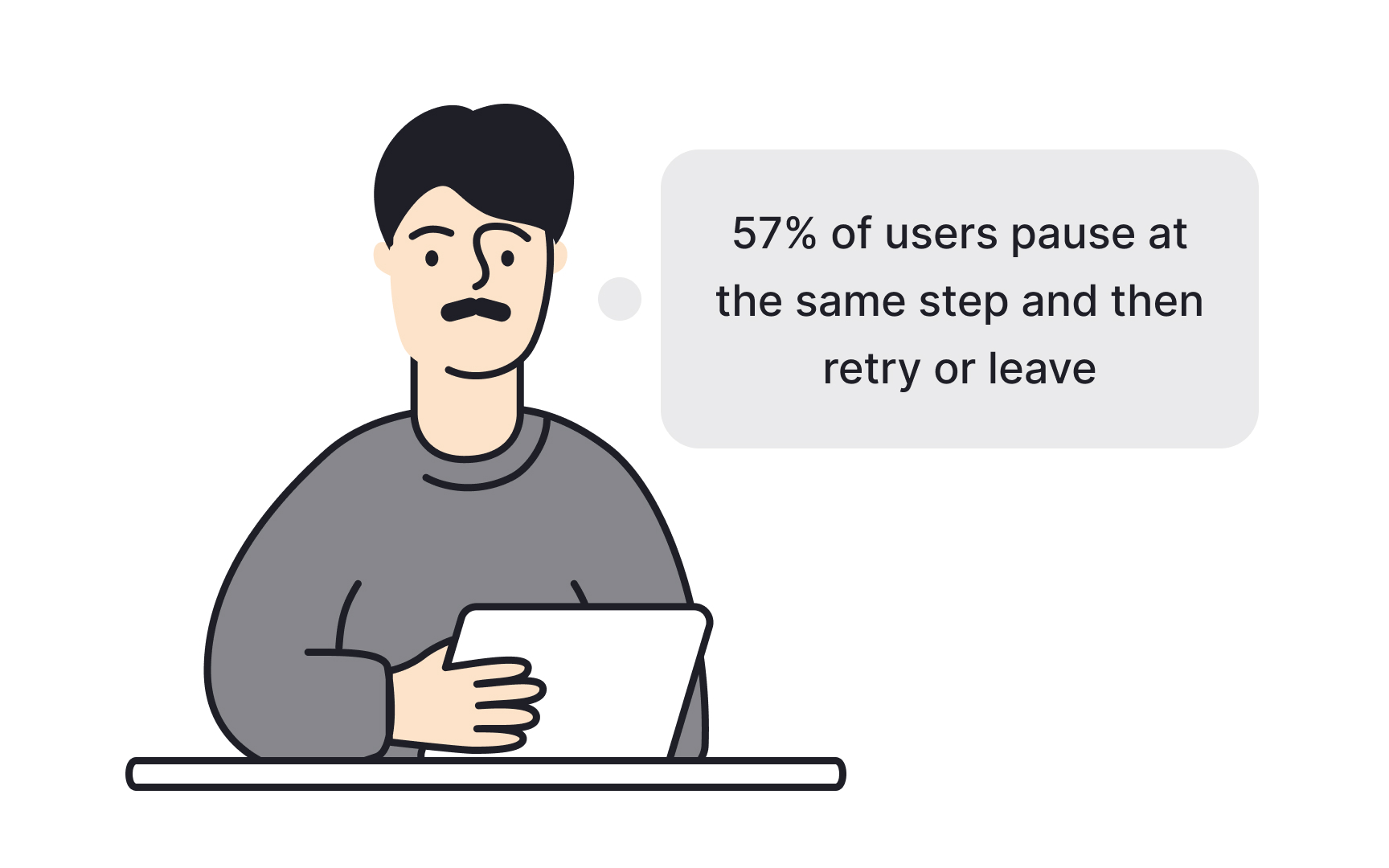
Behavior patterns show what users do when the product meets resistance. These patterns appear in repeated actions such as hesitation, backtracking, feature avoidance, or unexpected workarounds. Unlike opinions, behavior reveals how users actually navigate the experience.
Begin by looking for actions that repeat across the same segment. This may include frequent drop-offs at the same step, repeated clicks on non-interactive elements, or users skipping features meant to guide them. Patterns matter more than isolated events. A single unusual session rarely explains a product problem.
Next, relate these patterns to the segment’s goal. Some behaviors signal confusion, while others suggest a mismatch between expectations and system logic. When a pattern consistently delays progress or reduces completion, it becomes a meaningful input for case study reasoning.
In a case study, behavior patterns support decisions by showing consistency. They explain why a problem is real, widespread, and worth addressing. When behavior is used as evidence, recommendations feel grounded rather than speculative.[5]
Synthesizing insights with empathy mapping in case studies
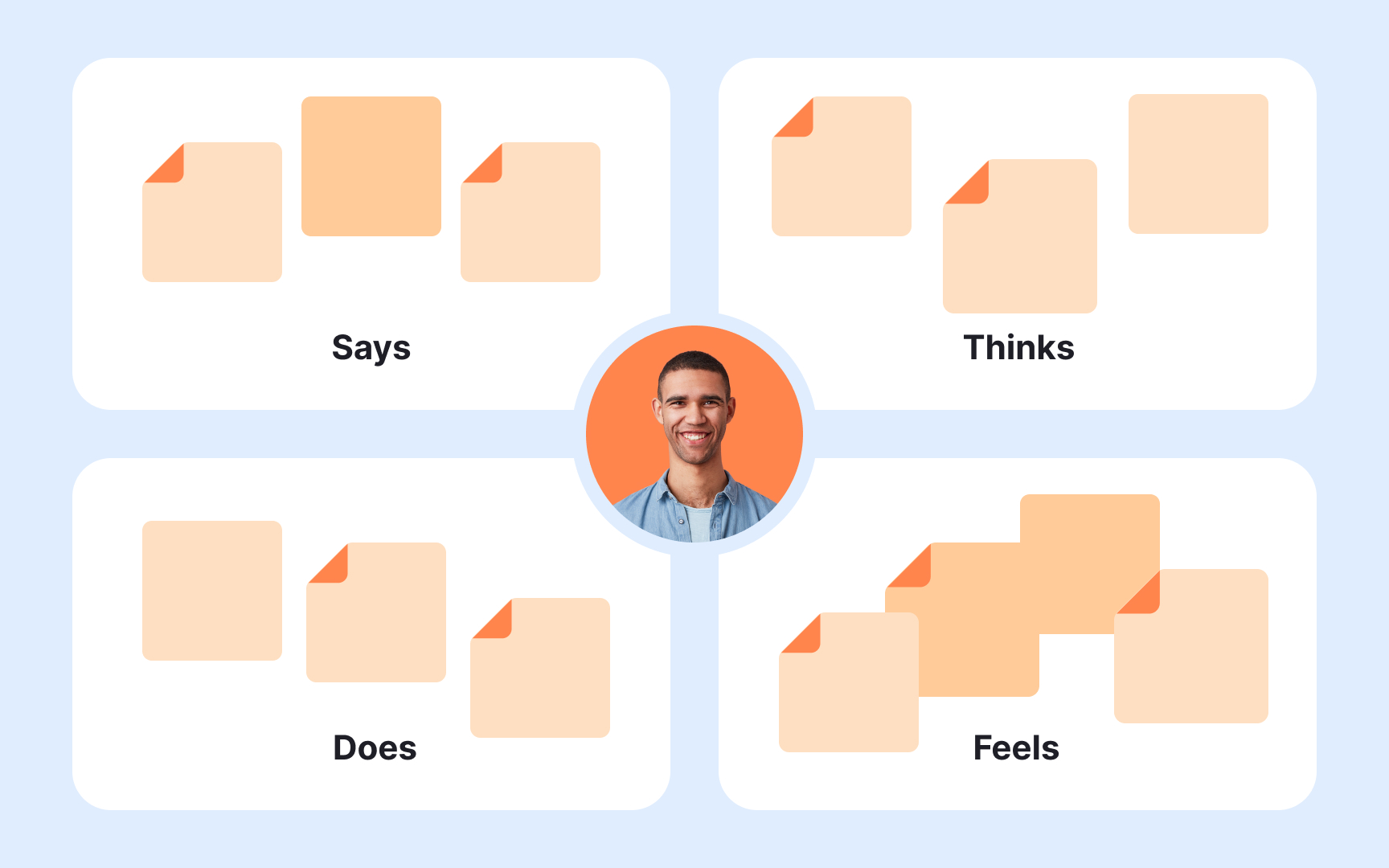

Empathy mapping helps organize research insights into a shared view of the segment. It brings together what users say, think, do, and feel, allowing patterns from interviews and behavior data to be seen side by side. This makes gaps and contradictions easier to notice.
Start by collecting inputs from existing research. Quotes from interviews, observed behaviors, and emotional reactions should be placed into the appropriate areas of the map. The goal is not to fill every section evenly, but to reflect what is actually known about the segment.
Next, look across the map for tensions or mismatches. Users may say one thing but behave differently, or show confidence in words while hesitation appears in actions. These contrasts often point to unmet needs or unclear expectations that are not visible through a single data source.
In case studies, empathy maps support reasoning rather than decoration. They help explain why certain problems were prioritized and why solutions needed to address both functional and emotional barriers.[6]
Pro Tip! If one quadrant stays empty, it often signals missing research rather than a complete understanding.
Evaluating solution fit by segment in a case study
Once a segment and its core problems are clear, the next step is checking whether the proposed solution truly fits that segment. A solution may look reasonable in general but fail when tested against the goals, constraints, or behaviors of the chosen group.
Start by comparing the solution assumptions with what is known about the segment. Consider whether the solution aligns with how users work, how often they engage with the product, and what limits their choices. A mismatch often appears when a solution adds complexity for a segment that already struggles with cognitive load or time pressure.
Next, assess how the solution affects the segment’s main pain points. A strong fit reduces the friction identified earlier rather than shifting it elsewhere. If a solution only benefits a different segment or optimizes for edge cases, this should be made explicit in the case study.
In case studies, evaluating solution fit by segment shows deliberate judgment. It explains why some ideas were rejected and why the final direction was chosen. This clarity makes recommendations easier to defend and easier to follow.
Recognizing when segmentation alters direction of a case study

Segmentation can reveal that an initial solution was shaped around the wrong assumptions. As research deepens, a product team may realize that the primary segment has different priorities, constraints, or behaviors than first expected. This moment often requires a change in direction rather than refinement.
Start by revisiting the original problem and solution through the lens of the chosen segment. Compare early assumptions with what research and behavior patterns later revealed. A shift is usually needed when the solution solves a real issue, but not for the segment that matters most.
Signals of a necessary direction change include repeated workarounds, low adoption among the primary segment, or strong engagement from a different segment than expected. These signals suggest that the problem framing or target audience needs adjustment, not just the feature details.
In a case study, acknowledging this shift builds trust. It shows that decisions were adjusted when new evidence appeared, instead of sticking to early assumptions.
Communicating segmentation logic in a case study
Segmentation only adds value to a case study when it is clearly communicated. Readers need to understand why a specific segment was chosen and how that choice influenced decisions. Without this clarity, segmentation remains implicit and the reasoning behind decisions can feel unclear or arbitrary.
Begin by explicitly naming the primary segment early in the case study. Describe it using the characteristics that matter for the problem, such as goals, behaviors, or constraints. Avoid long lists of traits. Focus on what makes this segment relevant to the problem being solved.
Next, connect decisions back to the segment throughout the case study. When discussing trade-offs, priorities, or rejected ideas, explain how they relate to the segment’s needs or limitations. This creates a consistent narrative and helps readers follow the logic behind each step.
A strong case study does not try to appear flawless. It shows how evidence shaped decisions over time.[7]
Pro Tip! If a decision feels hard to explain, check whether the segment was clearly stated before it.
Topics
References
- What is customer segmentation? Types, tips + strategy | Zendesk
- Customer Development Process 101 - The PM Guide | Thoughts about Product Adoption, User Onboarding and Good UX | Userpilot Blog
- How to Identify Customer Pain Points and Adress Them to Product Growth | Thoughts about Product Adoption, User Onboarding and Good UX | Userpilot Blog
- User Behavior Analytics Examples and Case Studies | UXCam Blog
- User Behavior Analytics Examples and Case Studies | UXCam Blog
- Empathy Mapping: The First Step in Design Thinking | Nielsen Norman Group