.svg)


You built a great product. So why do customers still walk away frustrated?
Often the problem isn't the product. It's everything around it: the confusing signup, the hold music, the email that never arrives. That's a service design problem.
So what is service design? In short, it's the practice of planning the people, props, and processes behind every interaction. Done well, it turns a scattered customer experience into one that actually holds together.
It also pays. McKinsey found the most design-led organizations outpaced rivals on revenue growth by 32 percentage points over five years.
This guide is your map to the world of service design. You'll learn:
- What is service design, and how is it different from UX?
- Which core components and principles actually make it work?
- How do you run the service design process, step by step?
Let's turn good products into services people love.
What is service design?
Service design is the activity of planning and organizing a business's people, props, and processes to deliver an experience that's coherent for customers and efficient for the company.
Put simply: the service design definition covers the entire service, not just the parts people see.
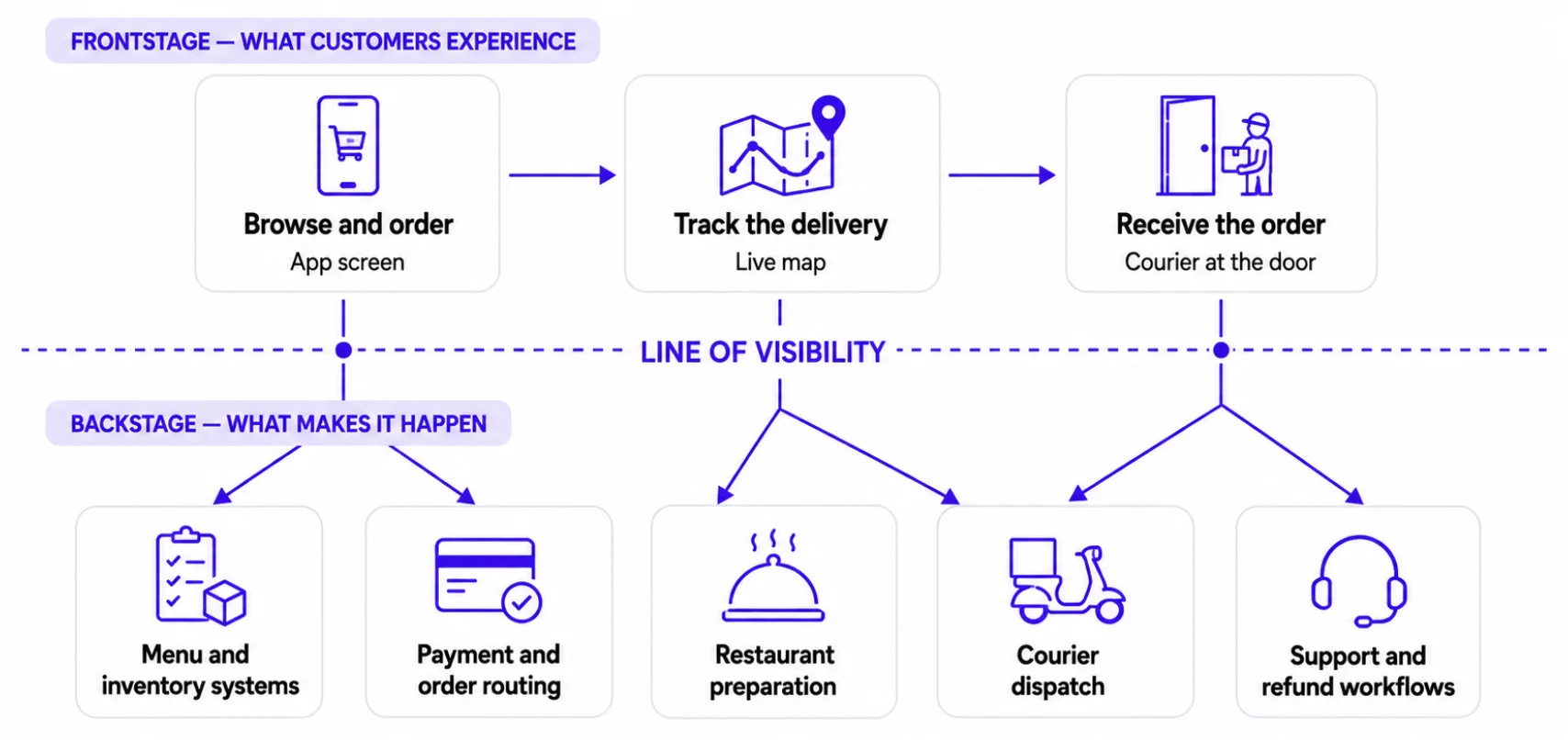
That seen-versus-unseen split is the core idea. Every service has a frontstage (what customers experience) and a backstage (the staff, systems, and workflows they never see), divided by a line of visibility. Service design manages both sides at once.
The field has deep roots in the industry. Lynn Shostack, then a banking executive, coined the term in a 1982 paper, and soon after invented service blueprinting, still its signature tool. Nielsen Norman Group's Service Design 101 uses her people-props-processes framing to this day.
So this is a mature design discipline with its own service designer career path, not a buzzword. It's a holistic approach to designing services end to end, closer to operations, design strategy, and management than to visual polish. It borrows methods from design thinking, then applies them to whole systems instead of single screens.
Why does it matter?
Because customer experience now drives revenue, and a single bad experience is enough to lose a customer who liked you.
Avoiding that is one of the clearest benefits of service design.
Service design vs. designing a service
They sound identical. They're not.
Designing a service shapes the offering customers touch: the menu, the app, the checkout. Service design goes deeper. It also fixes the backstage systems, staffing, and handoffs that decide whether that offering actually works.
| Designing a Service | Service Design | |
|---|---|---|
| Focus | The customer-facing offering | The whole system behind it |
| Scope | Touchpoints the user sees | Frontstage and backstage |
| Owner | Often one team | Cross-functional, org-wide |
| Goal | A usable, appealing service | Coherent for customers, efficient for the business |
Picture a restaurant: designing a service is the menu and the app; service design is the kitchen, staffing, and supply chain too. Get the backstage right, and the frontstage takes care of itself.
UX design vs. service design
The difference between service design and UX design comes down to one thing: scope.
Unlike user experience design, which perfects one product, service design orchestrates the full journey across every channel. In fact, one service design project usually contains several UX and product design projects inside it.
| UX Design | Service Design | |
|---|---|---|
| Scope | One digital product or interface | The entire service, all channels |
| Touchpoints | Mostly screens | Screens, people, spaces, phone, email |
| Perspective | The user on screen | Customer and employee, end to end |
| Typical artifact | Wireframes, prototypes | Service blueprints, journey maps |
UX design makes one screen shine. Service design makes the whole user experience hold together, on screen, on the phone, and in person.
3 components of service design
Every service, however complex, comes down to three moving parts. Lynn Shostack named them in the early 1980s, and the model still holds: people, props, and processes. It's the backbone of service design, and when designers mention service components, this is the trio they mean. When a service feels off, one of these three is usually the culprit, even if customers can't name which one.
People
People are everyone the service depends on, and the list runs longer than most teams assume. Frontline staff comes first, the support rep or onboarding specialist a new user actually talks to. Behind them sit the teams nobody sees, from developers to the warehouse crew packing the box. Partners and outside service providers count too, whether that's your payment processor or your delivery courier. Customers belong on the list as well, because in service design they participate in the service instead of just receiving it.
That last group carries more weight than it seems. In any shared service, other customers become part of the experience: the length of a support queue, the energy of a user community, the wait time at a clinic. You can leave the product untouched and still shift how a user feels, just by changing who else is around and how well your staff handles them.
Props
Props are the physical and digital infrastructure a service runs on:
- Physical: signage, packaging, a printed receipt, a self-checkout kiosk
- Digital: the mobile app, the confirmation email, the dashboard, the booking screen
Each prop sits on one side or the other of the line of visibility. Some are customer-facing, while others operate backstage. A weak link on either side can affect the customer experience. A polished booking screen won't save you if the calendar system behind it keeps double-booking people.
This gets more interesting when a digital prop takes over a step once handled by an employee. A conversational AI chatbot, for example, may answer initial questions, collect information, recommend the next step, or hand the conversation to a support agent. That makes it part of the service itself, not merely an interface layered on top of it. Designers need to consider what the chatbot can resolve, where it may create friction, and how smoothly it passes the customer and their context to the people and processes working backstage.
Processes
In service design, processes are the workflows that carry a service from start to finish, and most of them stay invisible to the person using it. Think onboarding a new account, issuing a refund, booking an appointment, verifying someone's identity, or escalating a support ticket.
Take that refund. During the journey, a user taps one button, but behind the tap a request gets approved, the item gets flagged, and finance releases the money. One visible action, several hidden steps. When any of them stalls, the customer feels the delay and blames the brand, rarely the process that actually failed.
5 principles of service design management
So you know the components. Handling them well is the harder part, and it runs on five principles from Marc Stickdorn and Jakob Schneider's This Is Service Design Thinking, the book most practitioners started with. They still shape everyday service design management. Here's the kicker: when McKinsey profiled its top design performers, the standout traits, constant user research and cross-functional work, line up almost exactly with the principles below.
1. User-centric
Good service work starts with evidence about real people. A service worth using grows from genuine customer needs, and you learn those only by watching and asking, whether that means a handful of interviews or a quiet dig through last month's support tickets. Worried you need a massive sample? Nielsen Norman Group found that five users surface about 85% of usability problems. A structured UX research course is the fastest way to get comfortable running them. Guess your way through instead, and you build for a user who politely does not exist.
2. Co-creative
Nobody builds a good service alone. Pull in the people who run the process daily and the ones stuck with its flaws, because a support agent will spot a broken handoff in an afternoon that analytics of an organization might hide for a quarter. That's the real payoff of strong cross-functional teams in service design, backed by shared design methods like journey mapping.
3. Sequencing
Time is the ingredient teams forget. A service runs as a customer journey, before, during, and after, and in service design you stage each phase to set up the next. SaaS onboarding is the classic run: signup, activation, first real value.
4. Evidencing
Services stay invisible, so you leave proof. A few small, well-timed signals carry the message:
- A confirmation email the second an order lands
- A "your technician is 10 minutes away" text
- An itemized receipt that shows what happened
Done right, quiet effort reads as trust and makes the experience feel more reliable.
5. Holistic
Zoom out, or pay for it later. Every design decision ripples outward, so a quick win in one corner can spring a leak in another. Speed up checkout and you shine, right until fulfillment stumbles behind you. The whole system is the unit of holistic service design, and business goals belong beside user goals, never above them.
The service design process
Principles stay theory until you run a process. The service design process is how a rough idea turns into a service people actually use, and it usually breaks into eight steps. Real projects rarely move through them in a straight line, since the design process loops and early steps get revisited as later ones teach you something.
We'll run all eight on one example: a new food delivery app. It looks simple from the outside. One tap, and couriers, kitchens, payments, and a support desk all start moving behind it. Nail the process and the whole thing holds together. Get it wrong, and customers feel the crack fast, because PwC found a third will abandon a brand they love after one bad experience.
1. Identify target customers
Imagine you've been hired to design the service behind our food app. Step one is knowing exactly who your customers are. The client hands you the basics: something like "people aged 16 to 40 who order dinner on weeknights." Useful, but thin. Demographics tell you who signs up. They tell you nothing about why someone places an order, or what makes them delete the app a week later.
To build something people stick with, you dig past the profile. A handful of questions do most of the heavy lifting, and their answers turn a fuzzy segment into a real user you can design for. The following set is worth asking on our food app.
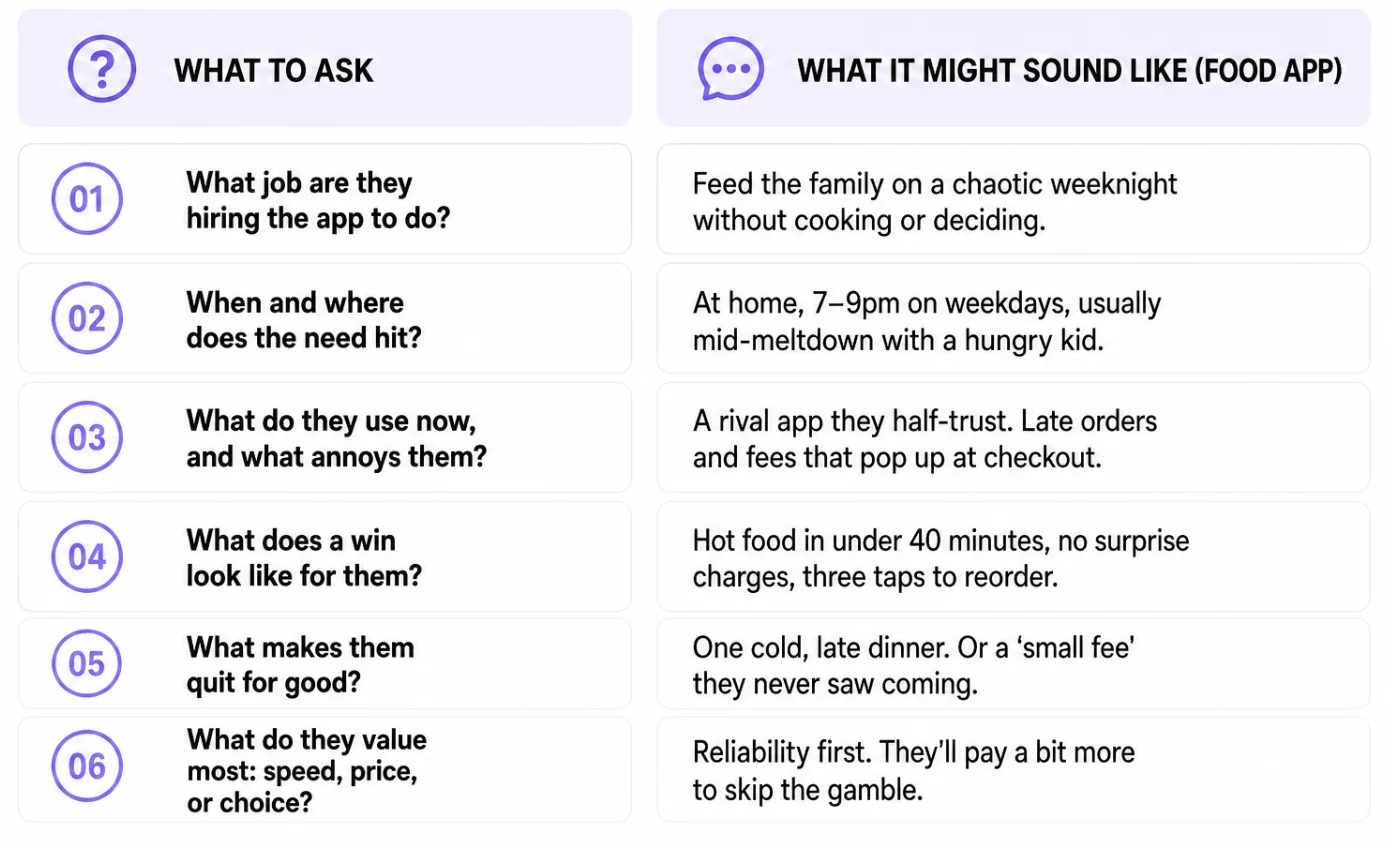
Run those questions across each segment and you've got working personas instead of slideware. Do the same for the restaurants paying you, who are clients in their own right, and the couriers holding the food. They're all customers of this service. Skip the depth, and every later step rests on a guess.
2. Assess their pain points, wants, and needs
Now you know who they are. Next, what's breaking for them, and here's where service design turns practical. You won't be digging through raw support tickets yourself. The people around you already sit in that pain, closer to your customers than any brief. So the real skill is asking them the right things, then reading between the lines of what a user actually means. A loud want like "more restaurants" often hides a quieter need like "dinner I can trust."
Gather those insights before you design anything. On our food app, a sharp request list pulls answers like these.
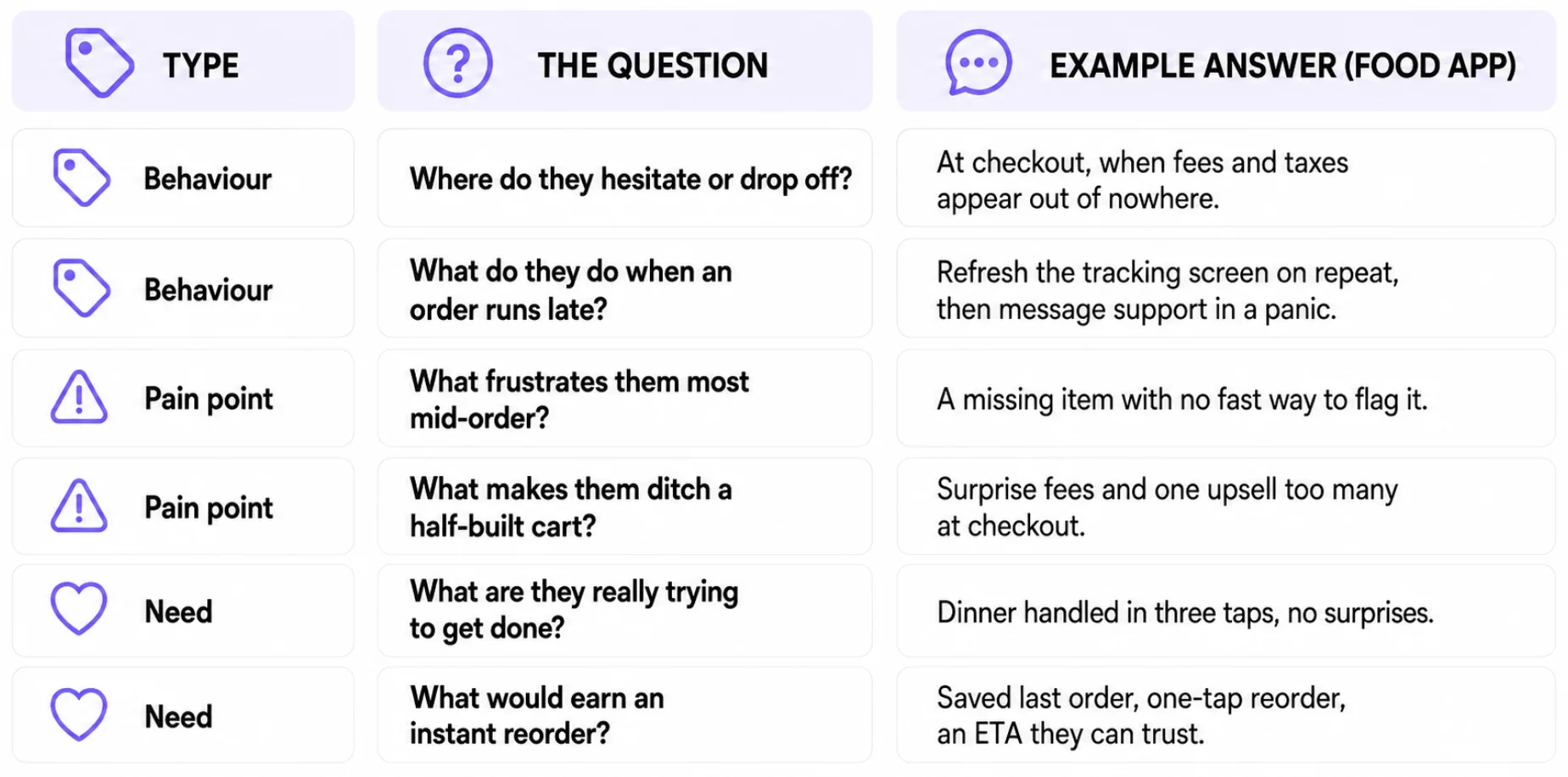
Tie each pain to your personas, then rank it by how often it bites.
3. Analyze your competitors: benchmarking
Before designing your own version, study products and services people already use. Benchmarking in service design runs deeper than a feature checklist. Order through Uber Eats and DoorDash yourself, then read a stack of their one-star reviews, since one order is an anecdote and a hundred reviews are a pattern.
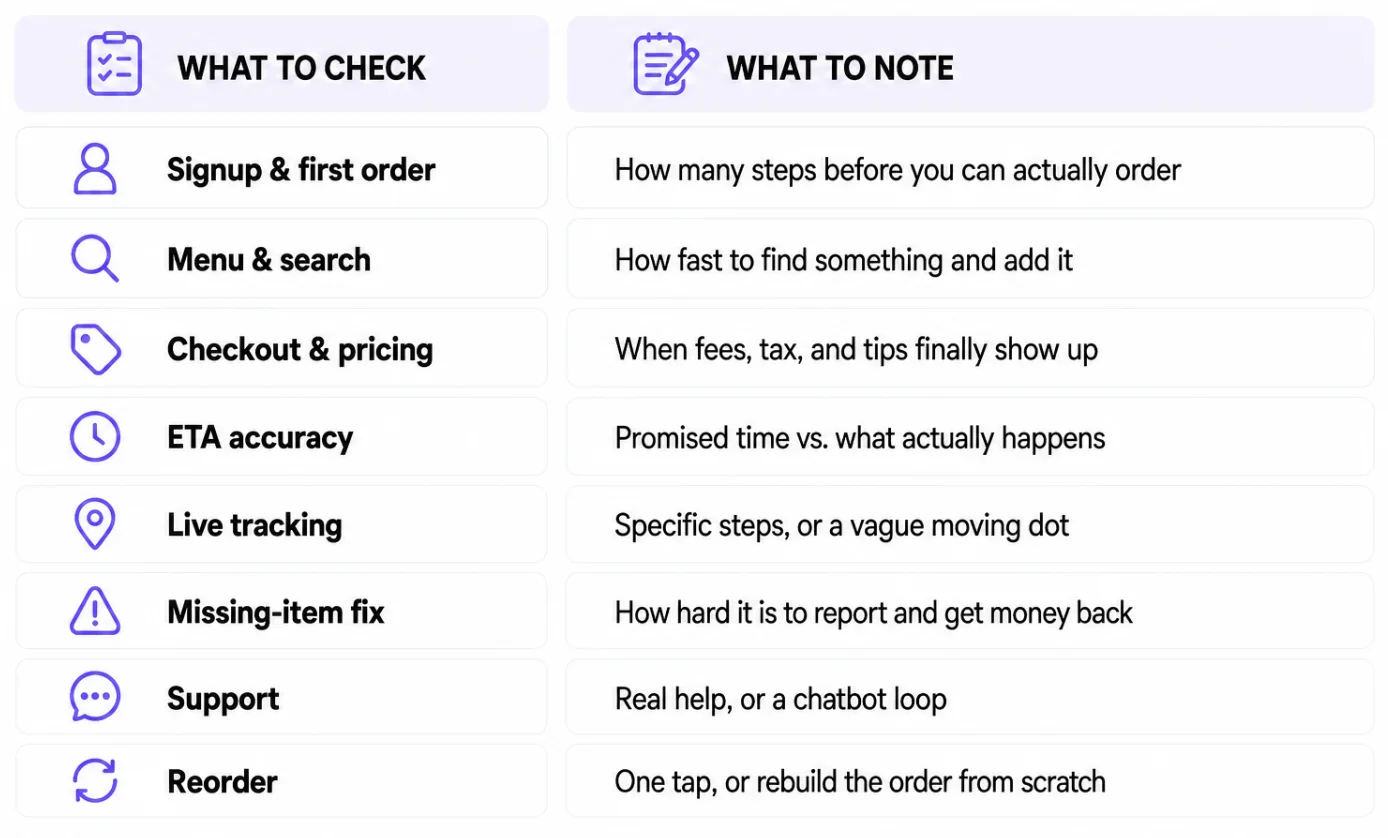
Split what you find. Some of it is table stakes everyone already nails, so you just match it. The rest is the sore spot they all share, and that gap is your way in.
4. Define your value proposition and differentiation factors
In service design, a value proposition rarely gets invented at your desk. You already hold two pieces from earlier, the real need and the open gap. The missing one is what the business can honestly promise, and that answer lives with other people. So you go ask them.
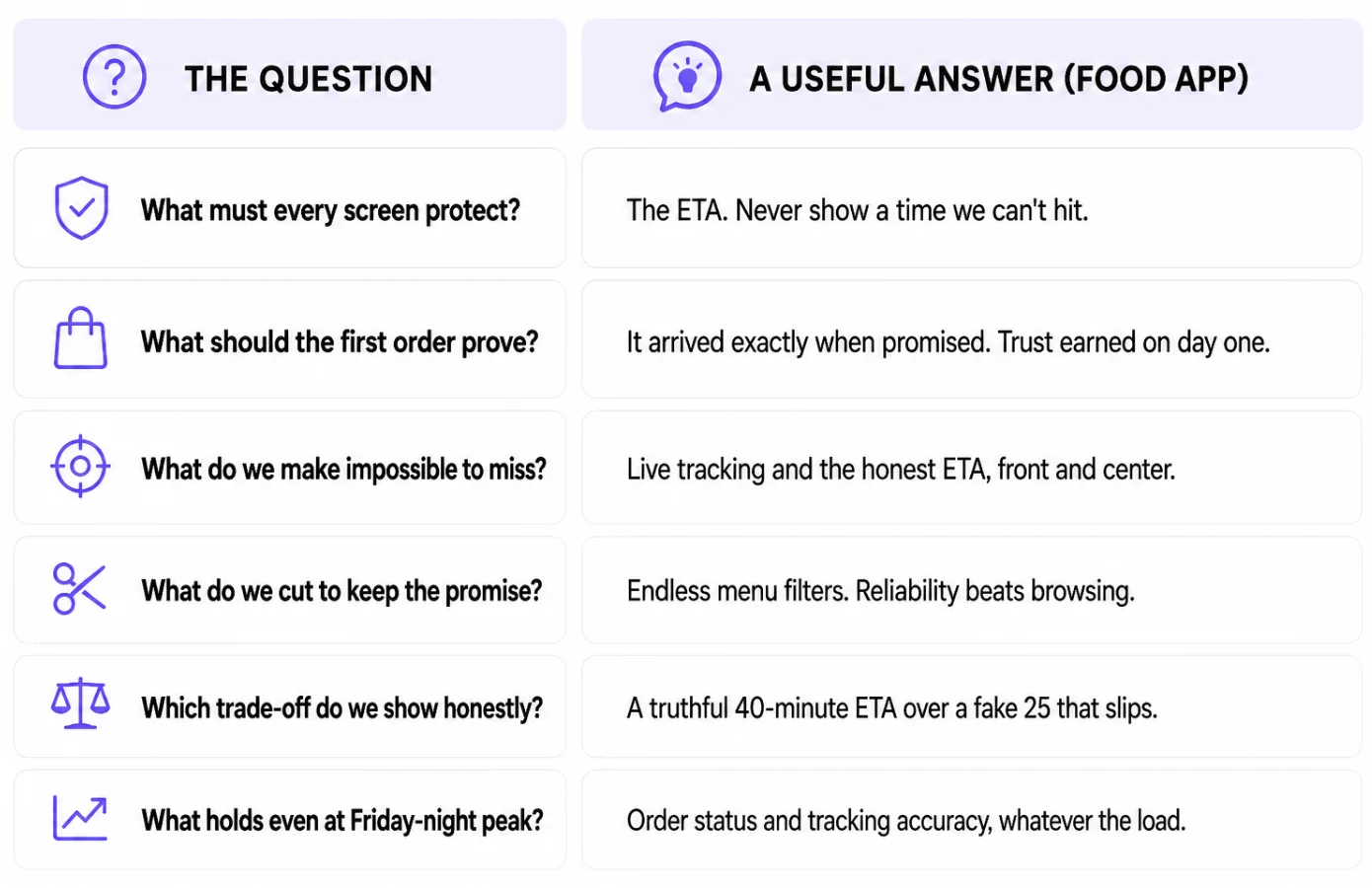
Pull what you learn from ops, finance, and leadership into a single sentence you can defend, that sentence becomes your service concept. For our app, it lands on dependable delivery: the ETA you see is the ETA you get. Ask well, and the promise almost writes itself.
5. Create a service blueprint
In service design, everything you've gathered lands in one artifact: the service blueprint. Think of it as a customer journey map with the floorboards pulled up. Up top, it tracks what the user sees. Below the line of visibility, a service blueprint stacks the layers nobody notices:
- Frontstage: the staff and screens the customer touches
- Backstage: the work they never see
- Support systems: the technologies doing the heavy lifting
You can't draw the blueprint's bottom half alone. Start from your customer journey mapping, then pull in ops and engineering to fill the backstage, because only they know what fires once an order lands.
In our case, the blueprint follows a single order from tap to doorstep, asking at each step what has to go right underneath.
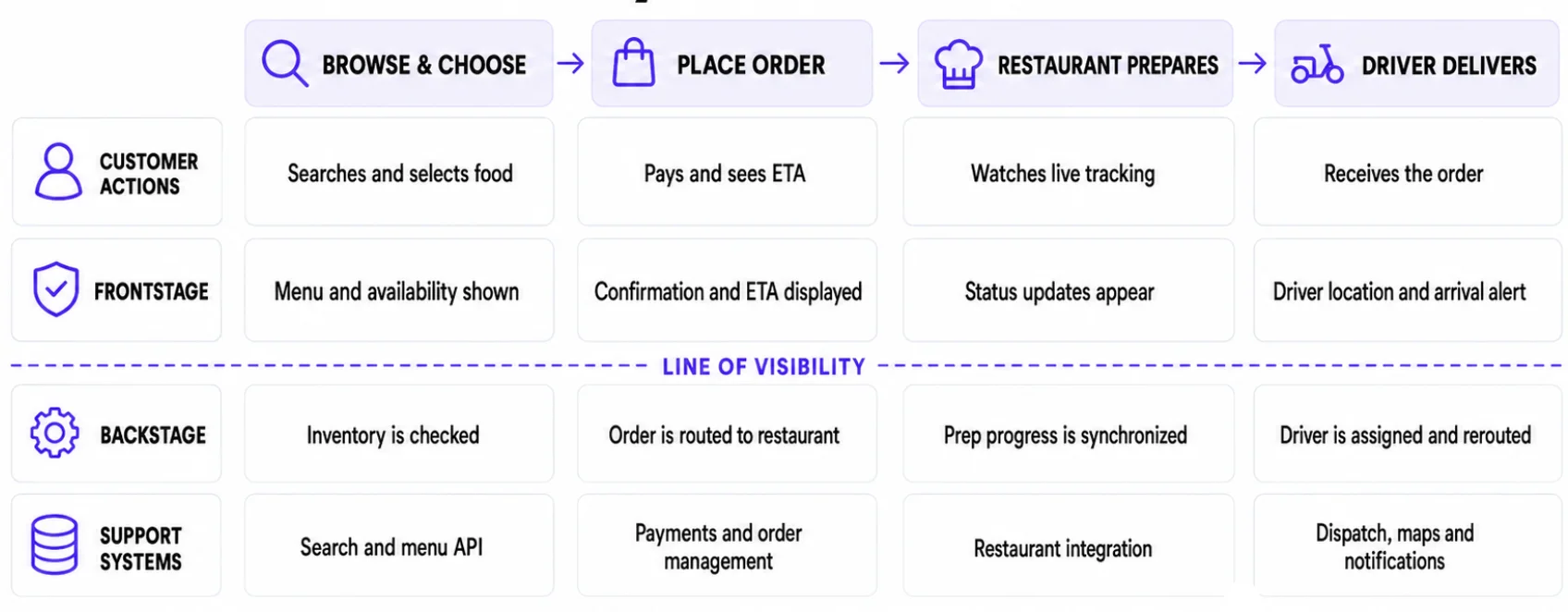
The blueprint surfaces the shaky handoff, the missing step, the moment two teams each assume the other has it covered. Among the design tools in this process, none shows you more.
6. Set KPIs that protect service quality
KPIs decide whether your service quality is real or just a slide. In service design, you rarely own the dashboard, so keep the metrics tied to what the user actually feels.
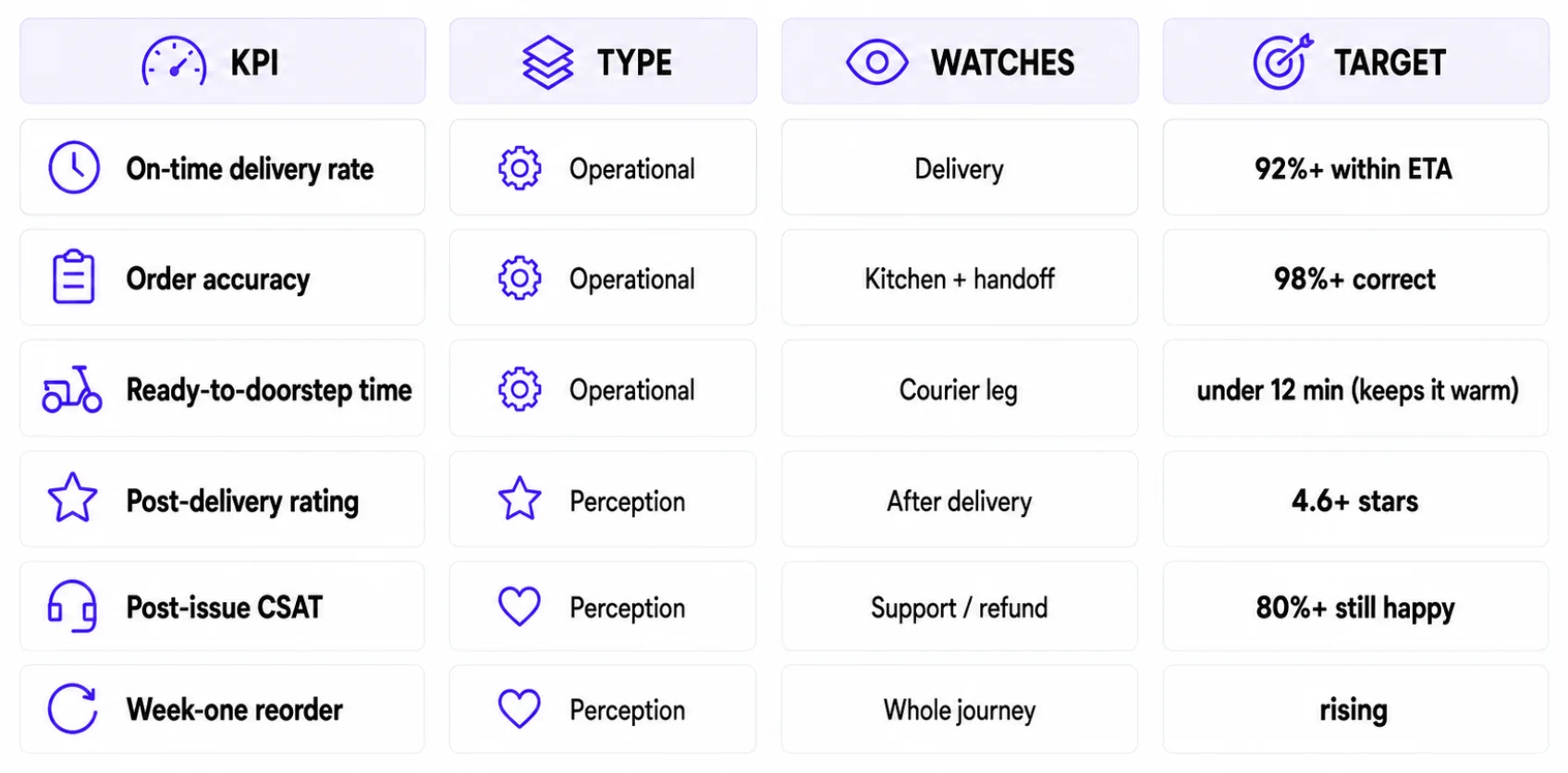
Pair every operational number with a perception one, and pin each to a step in the blueprint.
7. Pinpoint critical touchpoints in the customer journey
Your service touches people far more than you'd guess, and most of those touchpoints barely register. A few carry the whole memory, and that is what service design quietly obsesses over. Blame the peak-end rule: we judge an experience by its sharpest moment and its ending, then forget the middle.
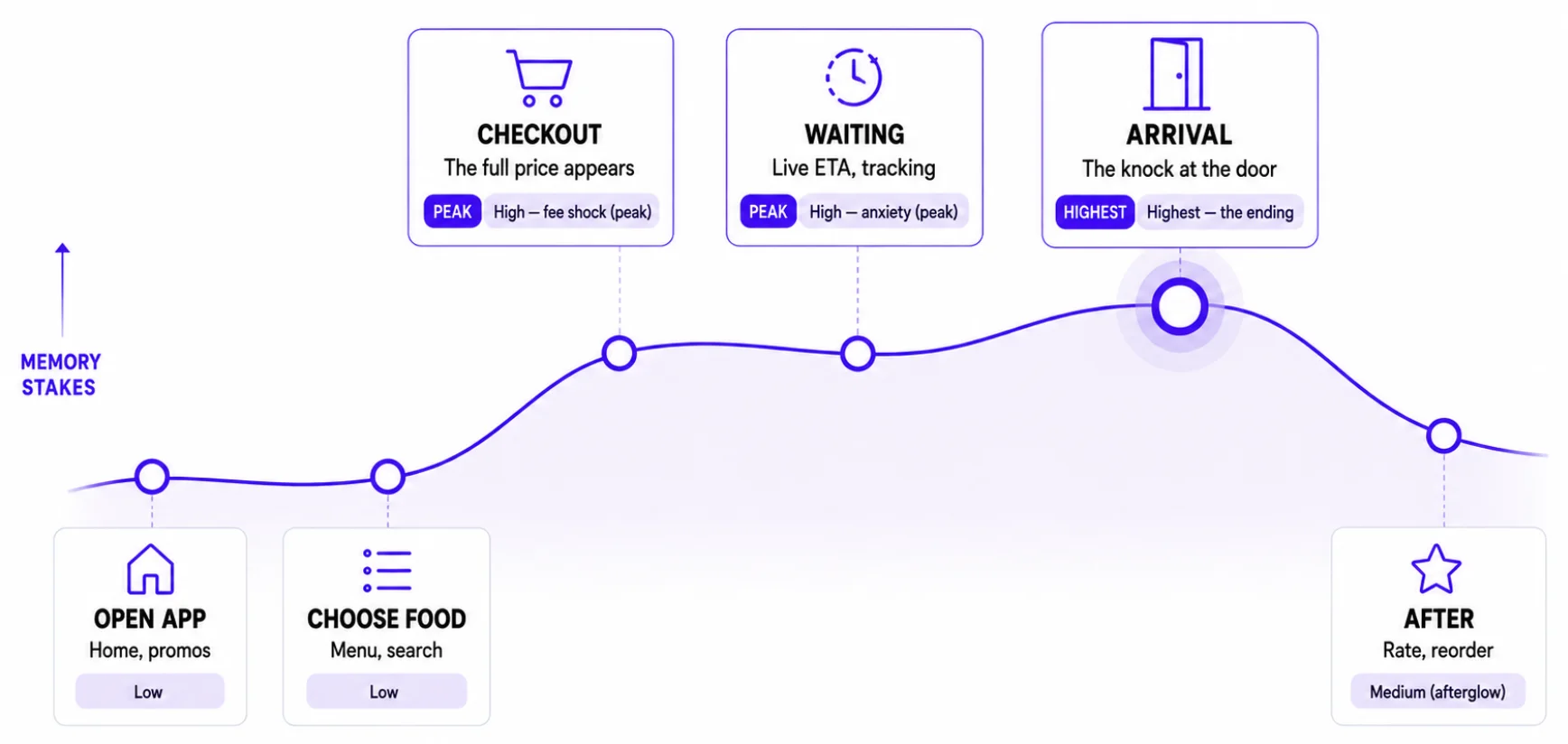
So walk the customer journey end to end and mark the moments of truth, the spots where feeling and stakes jump together.
8. Offer your service to people and gather feedback
Now stop designing and let real people use it. Launch a slice first, a soft rollout to a small group before everyone gets it. Watch what they do, then ask why. Their customer feedback, checked against the KPIs you set, points straight at what to fix.
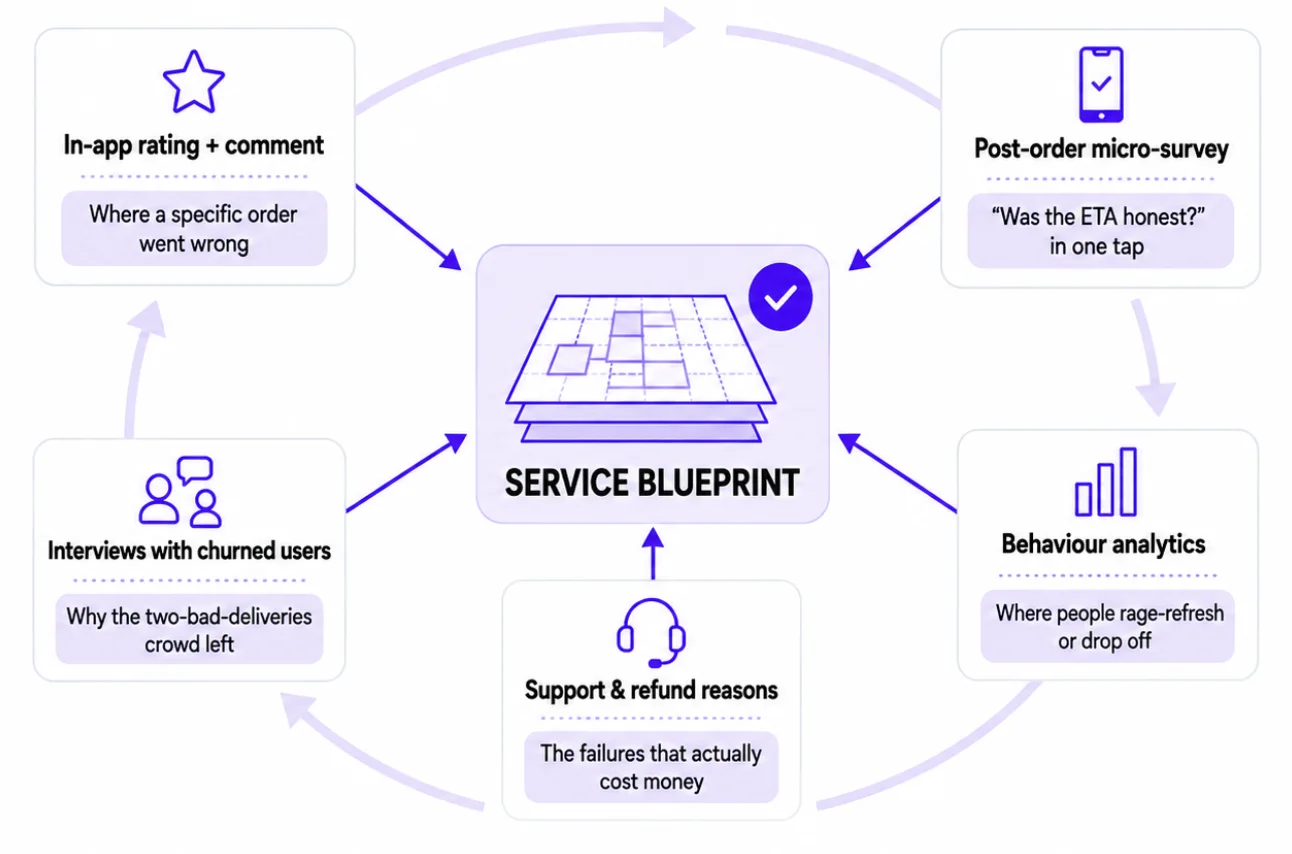
The loop keeps turning, too: every answer sends you back up the service design process to sharpen the service again.
Start with one journey
Service design lives in the system behind a product: the people, props, and processes that carry a user from first tap to final goodbye. It's as much operations and management as craft. Get the components, principles, and eight steps working together, and the payoff lands where the business feels it. Dutch railway NS reworked its youth service and, according to the consultancy Koos, nudged 71% of young people to ride more.
Don't try to fix it all at once. Map one journey end to end, then fix the moment that makes or breaks it.
If you want to build the craft behind that, Uxcel's Service Design course covers blueprints and touchpoints interactively, so you practice on real briefs instead of reading about them.