
.svg)


Every UX credential is one of two things: an exam-based certification that tests what you already know, or a certificate of completion that proves you finished a program. The difference matters more than any brand name, and it's the first thing to check before paying. The costs below run from a $300 exam to a $12,000 university certificate. This list covers both kinds, says plainly which is which, and puts the real price on one line for each.
If you want the exam route with the lowest barrier, the Uxcel Certified Product Designer credential tests role-level skill directly, and you can prepare with free course lessons before paying anything.
The shortlist by credential type
Exam-based certifications (you pass a test)
- Uxcel Certified Product Designer for proving skill without a program
- Nielsen Norman Group UX Certification for research-world recognition
- HFI Certified Usability Analyst for usability specialists
Certificate programs (you complete coursework)
- Google UX Design Professional Certificate for beginners on a budget
- DesignLab UX Academy for mentored career change
- Springboard UX Design Career Track for flexible pacing with a mentor
- Ironhack UX/UI Design Bootcamp for intensive cohort learning
- Bentley University UX Certificate for a university name
- The School of UX for short live training
- IxDF course certificates for stacking specialties
What a UX certification is actually worth
Four questions sort the strong credentials from the wallpaper:
- Exam or attendance? A credential you can fail carries more weight than one you collect by finishing. Neither is wrong, but employers read them differently.
- Who issues it? A recognized UX name or university outweighs a platform nobody in your target company has heard of.
- What does the credential itself cost? Some prices below buy just the exam; others buy months of training with a certificate at the end. Compare like with like. If coursework is what you actually need, start with the best UX design courses instead, since a course and a credential solve different problems.
- How long does it take? These run from a 2-hour exam to 36 weeks of part-time study.
Exam-based UX certifications
1. Uxcel Certified Product Designer: best for proving skill without a program

The Uxcel Certified Product Designer is a timed, exam-based certification: you pass a proctored assessment of role-level design skill, or you don't. That makes it the cheapest legitimate way to put a verifiable credential behind experience you already have. Nobody earns an exam-first credential by watching videos. Preparation runs through Uxcel's interactive courses. Every Level 1 lesson is free, so you can gauge your readiness before spending anything.
The honest limit: it's a newer credential than NN/g's, so some hiring managers will know it and some won't. The verification link on the certificate does the explaining for you.
Price: $300 for the exam.
2. Nielsen Norman Group UX Certification: best for research-world recognition

The NN/g UX Certification is the most recognized name-brand credential in UX. You take five full-day courses and pass an exam after each one, so the certificate genuinely certifies knowledge rather than attendance. The name opens doors in research-heavy organizations where NN/g's publications are already the house reference.
The trade-off is pure cost: this is exam-based rigor at program-level pricing.
Price: about $6,450 for the five courses and exams.
3. HFI Certified Usability Analyst: best for usability specialists
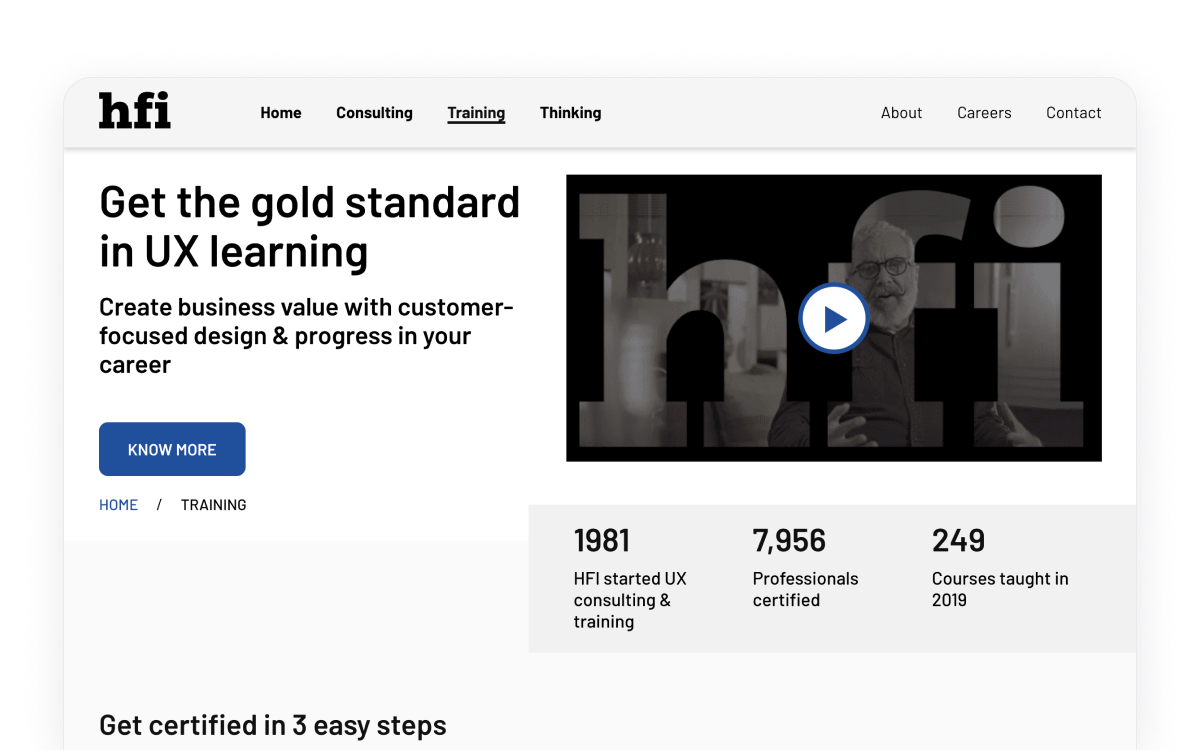
Human Factors International's CUA certification is the veteran credential for usability testing and evaluation, with the broader CXA tier above it for full UX scope. It's a genuine standalone exam: you can sit it on experience alone, and it includes two attempts. The four prep courses are optional and priced separately.
Price: $800 for the standalone exam with two attempts, dropping to $230 if you buy all four prep courses.
UX certificate programs
4. Google UX Design Professional Certificate: best for beginners on a budget

Google's certificate on Coursera is a completion credential: finish the seven-course sequence and it's yours, no final exam. What it lacks in rigor it repays in recognition and price, and the portfolio you build along the way is the part recruiters actually open.
If it's your finalist, the Google UX certification review covers its pacing and outcomes in depth.
Price: $49 a month on Coursera; most learners finish in 3 to 6 months.
5. DesignLab UX Academy: best for mentored career change
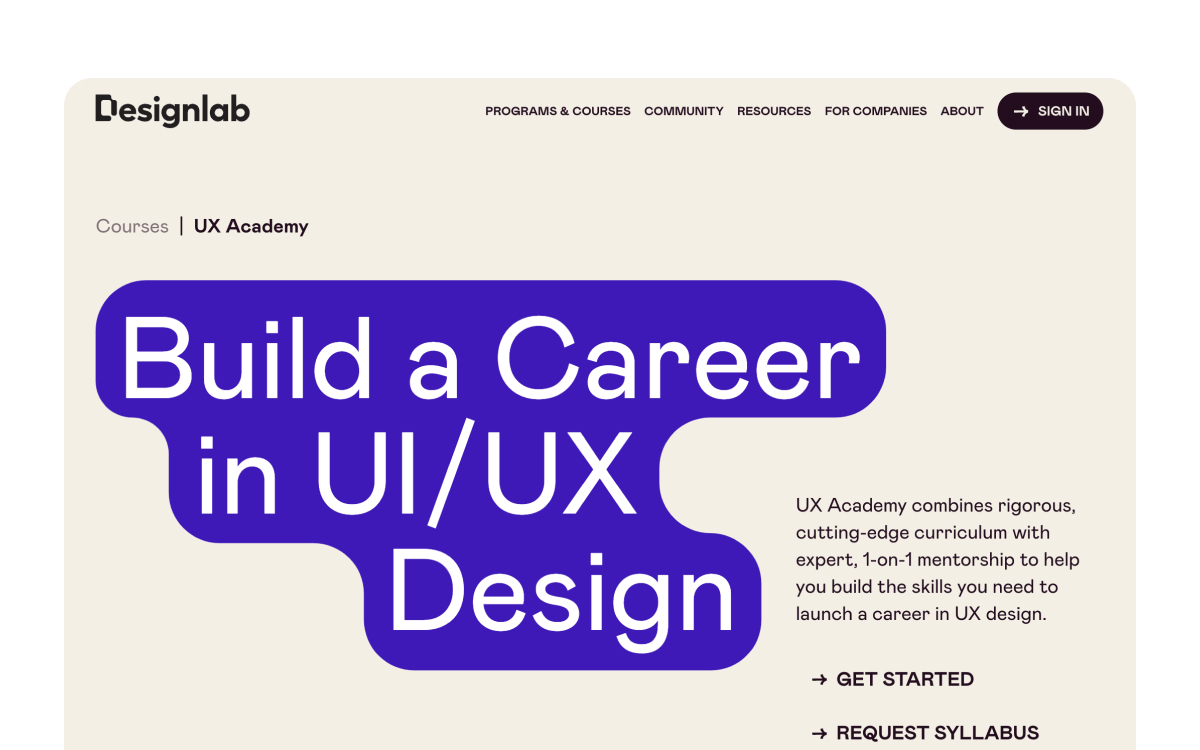
UX Academy is a full career-change program: 21 weeks full-time or 36 part-time, project-based throughout, with one-on-one mentorship and a portfolio capstone. The certificate at the end is a completion credential; the portfolio and the mentored critique habit are what actually move interviews.
Price: $7,999 to $8,499 upfront, more on monthly plans.
6. Springboard UX Design Career Track: best for flexible pacing with a mentor

Springboard's career track runs 6 to 9 months at your own pace, with weekly personal mentor sessions and three portfolio projects plus real client work. The credential is a certificate of completion; the mentor accountability is the real product.
Price: $8,690 upfront.
7. Ironhack UX/UI Design Bootcamp: best for intensive cohort learning
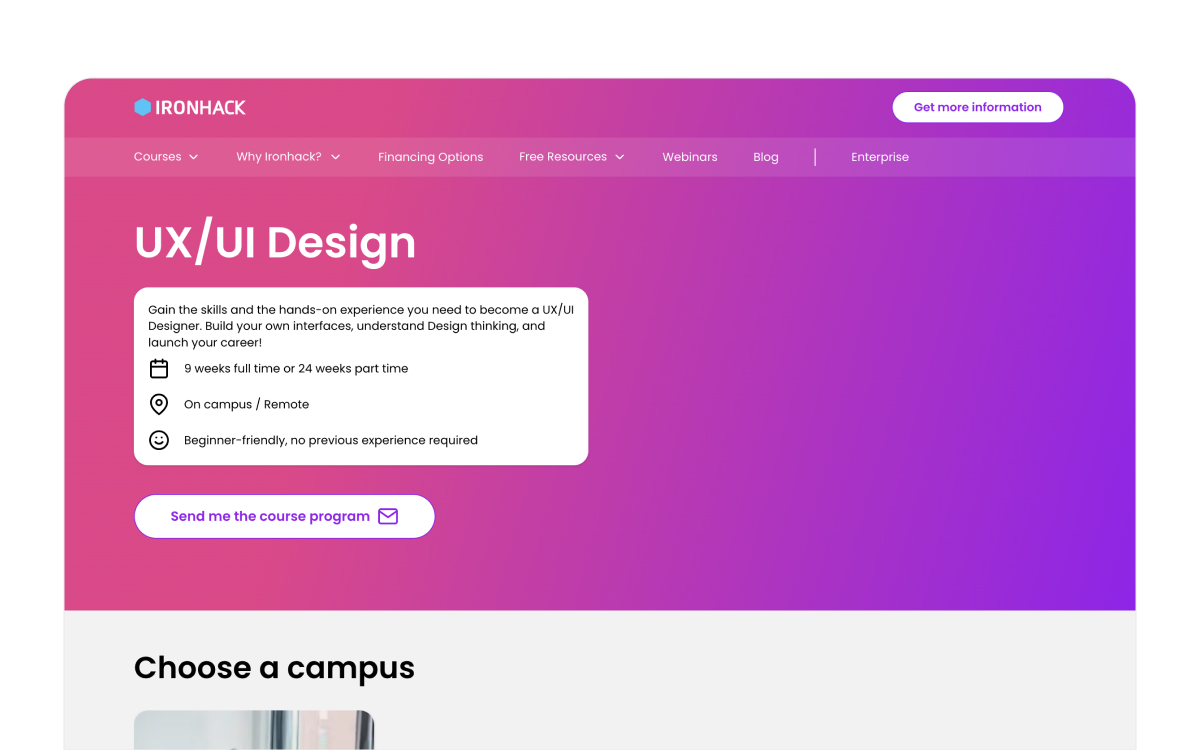
Ironhack's bootcamp compresses UX/UI training into 9 weeks full-time or 24 part-time, remote or on campus. Completion earns Ironhack's certificate. External credentials like CPUX-F are offered as optional add-ons, a useful sign that they know the difference between finishing and certifying.
Price: roughly $8,000 to $13,000 depending on format and campus.
8. Bentley University UX Certificate: best for a university name

Bentley's UX Certificate is eight two-day intensive courses, five core and three electives, issued by a university with one of the longest-running UX programs in the US. There's no exam; the value is the depth of instruction and a university name on the credential.
Price: $1,500 per course, $12,000 for the full certificate.
9. The School of UX: best for short live training

The School of UX runs compact certified courses, online or in-person in London, taught live in three-to-five-day formats. It's the quickest route on this list to structured instruction with a certificate attached, suited to working designers who want focused training rather than a career program.
Price: from £999 online, about $1,300; five-day in-person from £1,499.
10. Interaction Design Foundation course certificates: best for stacking specialties
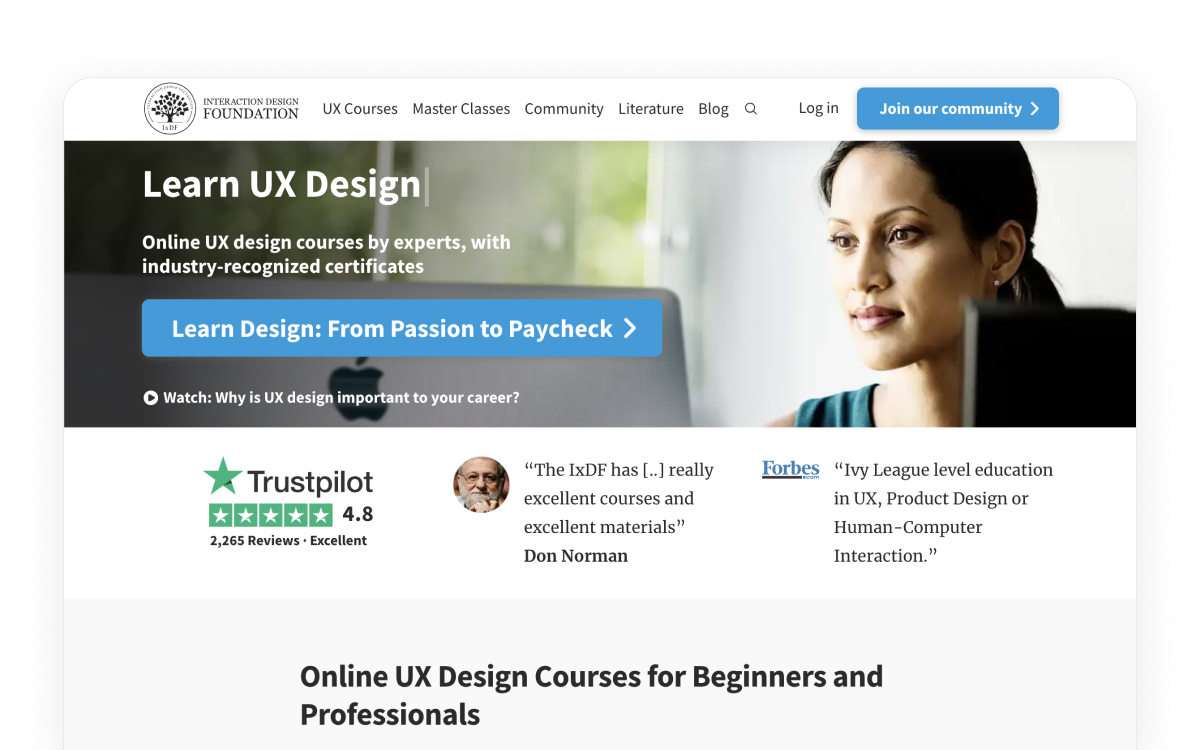
The Interaction Design Foundation issues a certificate per completed course rather than one big credential, so you accumulate exactly the specialties you need: agile UX, usability testing, design thinking, and dozens more. Courses are graded by experts, which puts it a notch above watch-and-finish certificates.
Price: $279 per course, or free with an IxDF membership that unlocks the whole catalog.
What a credential does in a hiring pipeline
A certification rarely gets you the job on its own, and anyone selling it that way is overpromising. What it does is narrower and still valuable. On a screening pass, a recognizable credential keeps a nontraditional resume in the pile: it tells a recruiter that someone external has vouched for a skill they can't assess themselves. Between two comparable portfolios, it tips the scale.
Two details decide how much of that value you capture. First, verifiability. A credential with a public verification link gets checked and believed; a PDF in a drawer convinces no one. Add yours to the licenses and certifications section of your LinkedIn profile, which is where recruiters actually look. Second, specificity: a credential that names the role or skill it certifies reads stronger than a generic design badge.
For design roles, the portfolio still decides the interview. The credential's job is making sure you get one.
How to choose
Proving skill you already have: take an exam-based route. Uxcel Certified Product Designer at $300 or, if budget allows and research credibility is the goal, NN/g.
Breaking into UX from zero: a certificate program earns you the skills and the portfolio together. Google for the price, DesignLab or Springboard for mentorship.
Deciding between a program here and full immersion: the best UX design bootcamps guide compares the intensive route in depth before you commit five figures.
Specializing while employed: HFI for usability depth, IxDF for stackable specialties, The School of UX for a short live format.
Whichever you pick, check the credential type twice: an exam you could fail says more about you than a program you merely finished.