


.svg)

A strong product case study depends not only on the quality of the solution but on how clearly it is communicated. When recommendations feel vague or overloaded, stakeholders struggle to understand what is being proposed and why it matters.
Clear communication starts with a well-structured final recommendation. It highlights the decision, the reasoning behind it, and the intended outcome without unnecessary detail. This helps stakeholders scan, follow, and respond without guessing what the core message is.
Storytelling brings structure to complexity. A clear narrative connects the problem, key insights, and solution into a logical flow that is easy to follow and remember. Instead of listing findings or features, the case study explains how thinking evolved and why the solution makes sense.
Visual structure supports this clarity. Simple diagrams, user flows, and lightweight wireframes help explain behavior and intent without turning the case study into a design or engineering artifact. When used carefully, visuals reinforce the story rather than distract from it.
Finally, language shapes perception. Product managers communicate decisions and outcomes, not visual details or implementation steps. Using PM-oriented language helps the solution sound deliberate, grounded, and ready for discussion.
Turning insights into a clear solution in a case study
Insights on their own do not yet form a solution. Case studies often break down at this point by listing research findings and then jumping straight to screens. The missing step is turning what was learned into a concrete decision about what should change and why.
A clear solution starts by synthesizing insights into a single direction. This means identifying which insight actually drives the decision and letting go of the rest. Not every finding deserves equal weight. Product communication becomes stronger when the solution clearly responds to the most meaningful problem rather than trying to address everything at once.
From a PM perspective, the solution should be expressed as an action the product will take. It describes what will be different for users and what the product will intentionally support or enable. This framing helps the audience understand that a choice was made, not just an idea explored.
When the solution is clearly stated, it becomes easier to support it with narrative and visuals later.[1]
Defining the core idea of the case study solution
Once a solution is identified, the next challenge is defining its core idea. This is the central message that holds the entire case study together. Without it, storytelling becomes a sequence of facts instead of a coherent explanation.
The core idea explains what changed and why that change matters. It connects the problem context to the solution outcome in a way that is easy to remember. Strong case studies rely on this idea to guide structure, wording, and visuals.
A clear core idea avoids technical detail and design language. It focuses on intent and impact rather than mechanics. This makes it easier for stakeholders to follow the reasoning even if they are not familiar with the product or domain.
When the core idea is well defined, every part of the case study reinforces it. Details that do not support the idea can be reduced or removed, which improves clarity without losing depth.[2]
Pro Tip! Test the core idea by sharing it with people in different roles. If they summarize it differently, tighten the wording.
Structuring the case study solution for fast stakeholder scanning
Stakeholders and employers rarely read a case study line by line. In reviews and job interviews, they scan first to understand what decision was made, why it matters, and whether the thinking is sound. A clear structure helps them grasp the solution quickly without searching for the point.
A strong structure brings the solution to the surface early and places supporting information where it is easy to find. The goal is not to simplify the work but to reduce effort for the reader. When the solution is clearly positioned, it signals confidence and ownership, which is especially important in interview settings.
One effective structure for a PM case study solution looks like this:
- A short statement of the chosen solution and the problem it addresses.
- The key insight that led to this decision.
- A brief explanation of how the solution works at a high level.
- The expected outcome or success signal.
This structure allows readers to understand the decision even if they stop after the first section.
Good structure controls attention. It helps stakeholders and employers focus on the decision before diving into details. When the structure is weak, even strong solutions can feel uncertain or hard to defend.
Pro Tip! Try reading only headings and first sentences. If the solution still makes sense, the structure is doing its job.
Building a clear story around the case study solution
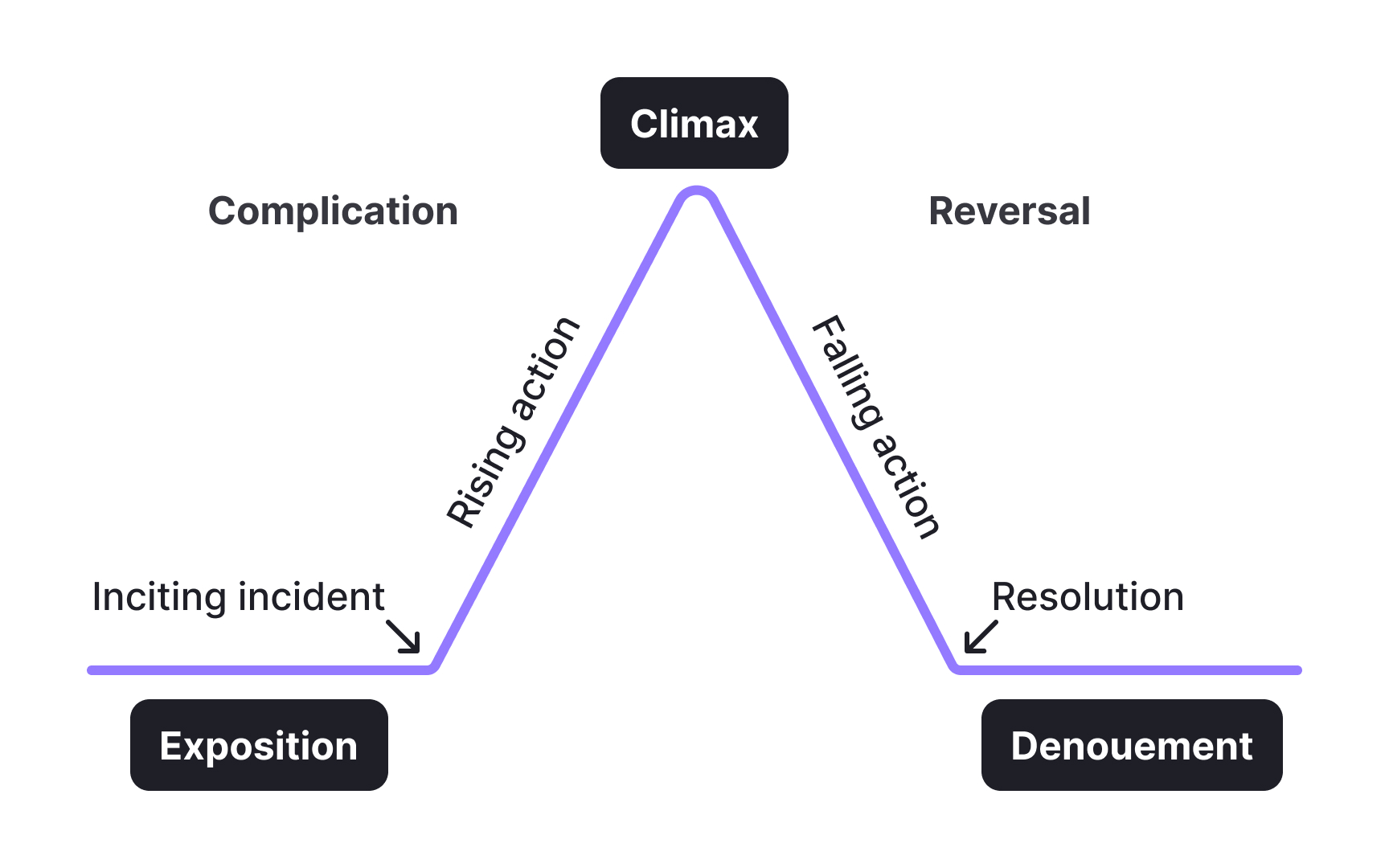
A solution is easier to follow when it is framed as a story with clear turning points. Story frameworks help explain not just what was decided, but how and why that decision emerged. The Freytag Pyramid is a framework that organizes stories into the following stages:
- Baseline. This describes the normal state before the problem became visible and sets the context for what users were used to.
- Change is the moment that exposes friction or makes the problem impossible to ignore.
- Climax. In product terms, this is where existing approaches clearly fail. Data, behavior, or constraints show that small fixes are no longer enough. This moment justifies a meaningful decision.
- Reversal. This is the key insight that reshapes understanding of the problem. It explains why priorities shift and why the solution takes its final form.
- Resolution marks the end. It’s where the solution is introduced as a direct response to the reversal and leads users into a better state.
Using this structure helps keep the solution grounded in reasoning. Each part exists to explain why the decision makes sense. It also prevents common case study issues like jumping too quickly to screens or overloading the narrative with detail.
Removing noise from the narrative of a case study solution
As case studies grow, they often accumulate details that weaken clarity instead of adding value. Extra research notes, edge cases, or alternative ideas can distract from the core logic of the solution. This creates noise and makes the decision harder to follow.
Removing noise means being selective about what the story includes. Every element should exist to support the solution and its reasoning. If a detail does not help explain why the solution makes sense, it likely belongs outside the main narrative.
From a PM perspective, clarity signals judgment. Choosing what to leave out is as important as choosing what to show. A focused narrative helps employers and stakeholders understand priorities and trust that trade-offs were considered, even if they are not fully documented.
Pro Tip! If a detail needs a long explanation to justify its presence, it probably does not belong in the main story.
Using user flows to explain the case study solution
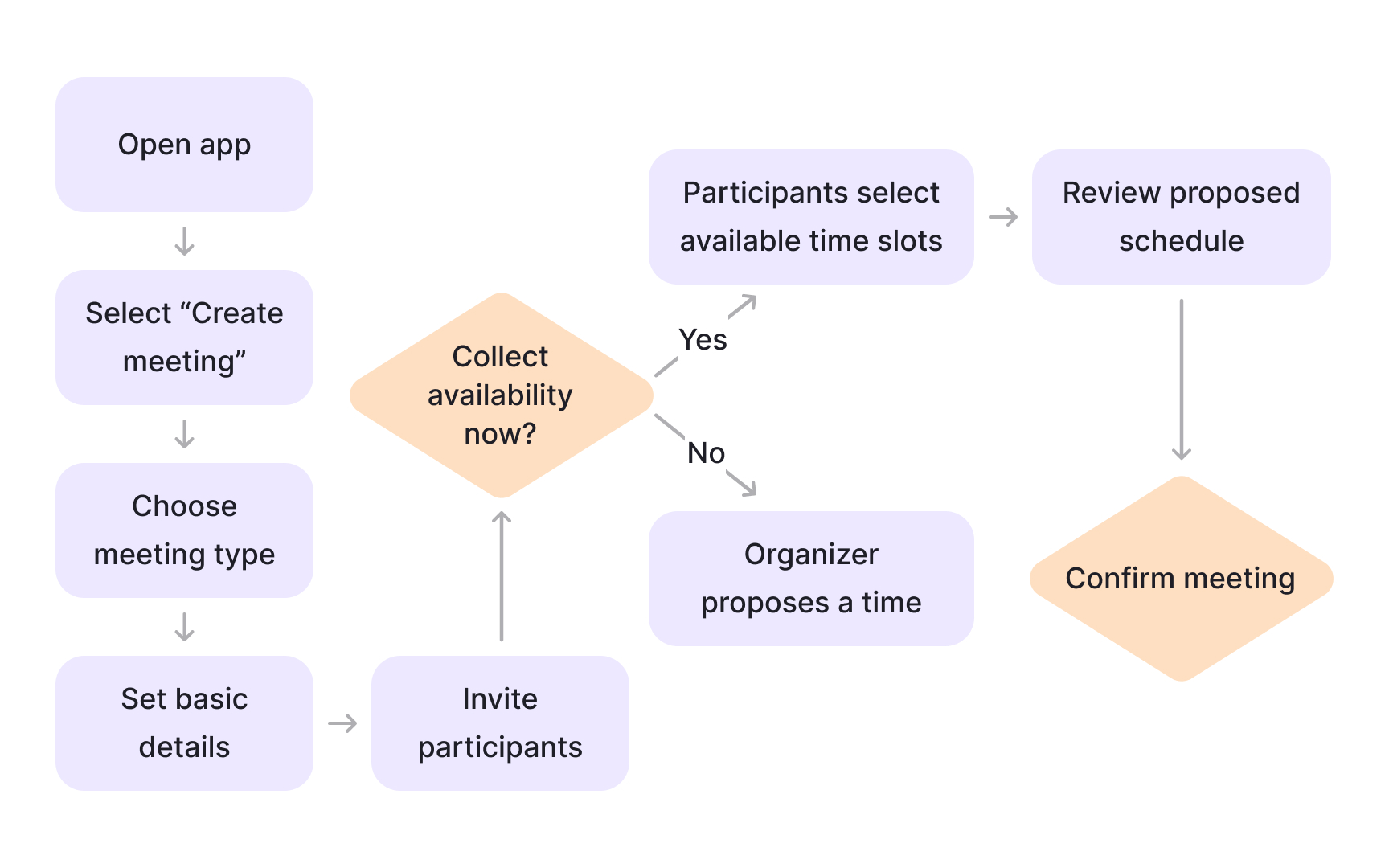
User flows help explain how a solution works without relying on detailed screens or UI polish. They focus on behavior, decisions, and paths rather than visual design. This makes them especially useful in PM case studies.
A good user flow shows how users move from a problem state to a desired outcome. It highlights key actions, decision points, and moments where friction is reduced. This helps the audience understand the logic of the solution at a glance.
In case studies, user flows should stay lightweight. The goal is not to document every possible path, but to clarify the main journey the solution supports. Overly complex flows often add confusion instead of insight.
When used well, user flows reinforce the solution story. They visually support the reasoning without turning the case study into a design specification.[3]
Pro Tip! If a flow needs heavy explanation, simplify it until the main path is obvious on its own.
Choosing the right wireframe fidelity for the case study solution
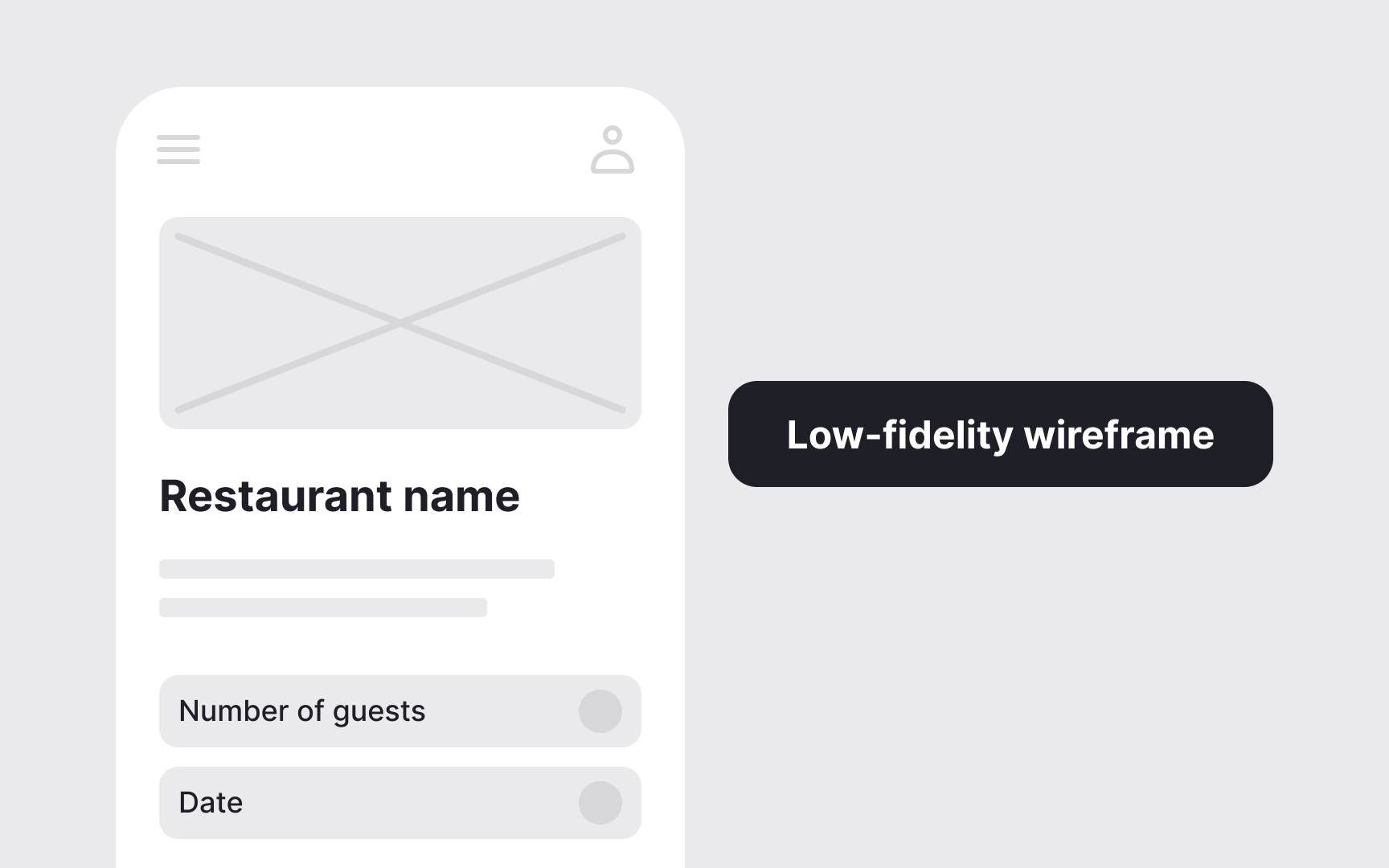

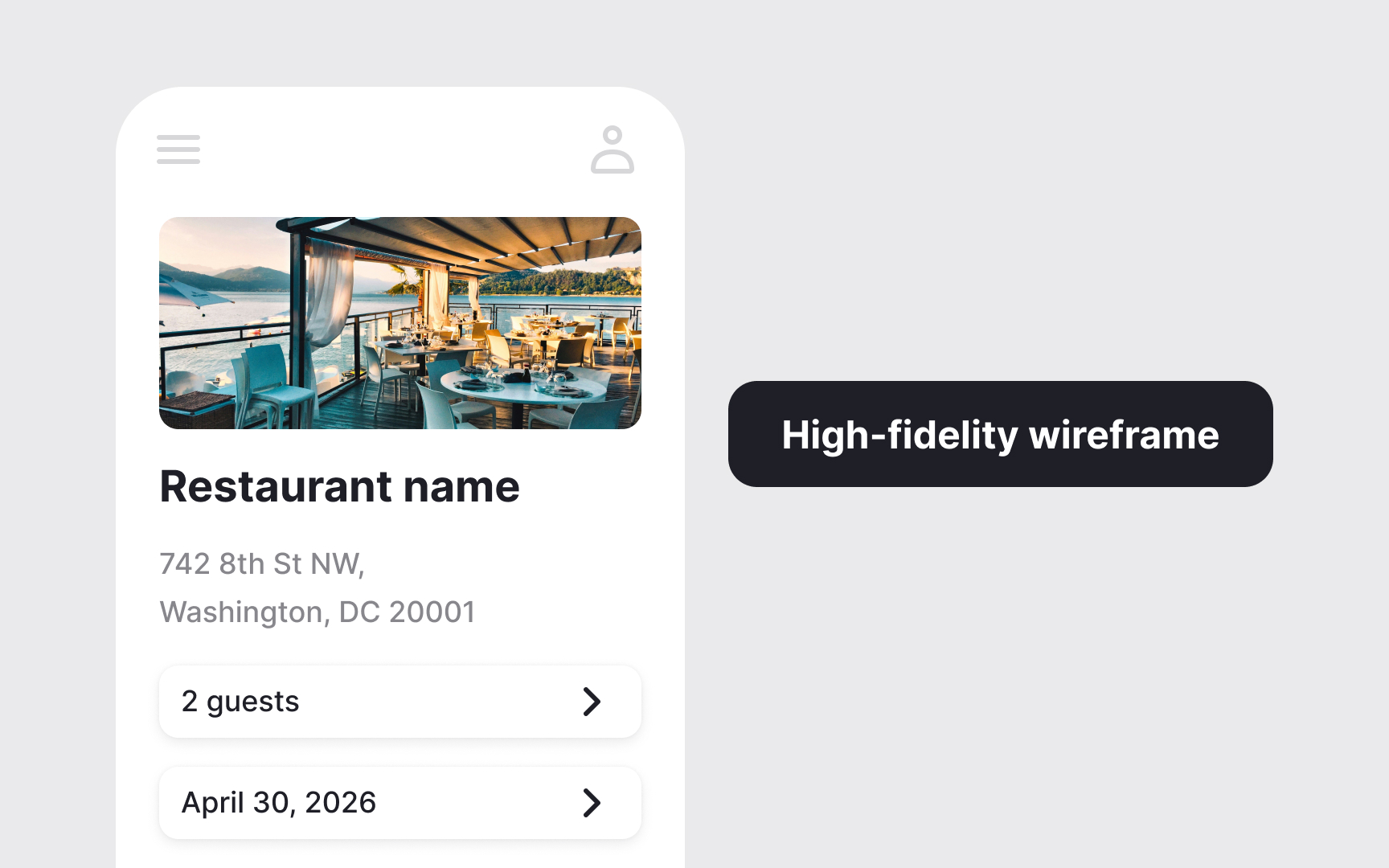

Wireframes help explain intent, not visual polish. In PM case studies, their role is to clarify how the solution works and what changes for users, not to showcase design quality. Choosing the right level of fidelity is key to keeping that focus.
Low-fidelity wireframes are often enough. They show structure, hierarchy, and flow without pulling attention toward colors, spacing, or UI details. This makes them effective for explaining logic and validating understanding with stakeholders and employers.
Higher-fidelity wireframes can be useful when the solution depends on layout or interaction patterns. But they should still remain clearly unfinished. When wireframes start to look final, audiences may judge aesthetics instead of reasoning, which shifts the conversation away from the product decision.
A good rule is to match fidelity to purpose. The wireframe should answer a question about the solution. If it does not, it likely adds noise rather than clarity.[4]
Pro Tip! If feedback focuses on colors or spacing, the wireframe fidelity is probably too high.
Rewriting designer language into solution-focused PM language in a case study
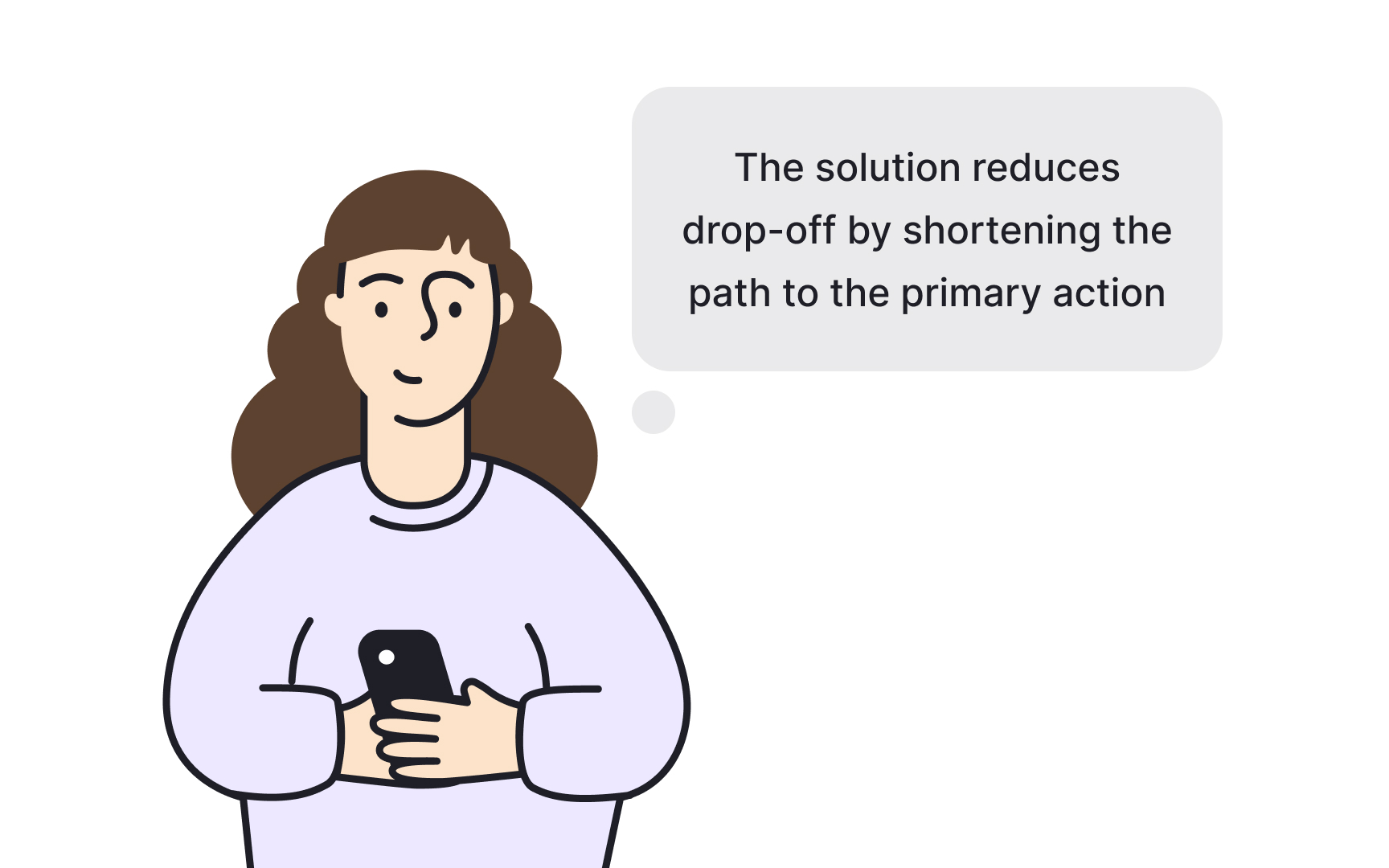

Case studies often describe solutions using design-oriented phrasing. This usually shifts attention toward UI changes instead of product decisions. As a result, the solution can sound exploratory or tentative, even when a clear choice was made.
Solution-focused PM language states the decision first and explains its purpose second. The wording treats the solution as an intentional action, not an experiment or attempt. Any uncertainty belongs to how results are monitored, not to whether the decision exists.
For example, a design-oriented phrasing might sound like: “We added a new filter component and reorganized the layout to reduce clutter.”
A solution-focused PM version would be: “The solution reduces choice overload by prioritizing the most commonly used filters.”
This shift in language helps employers and stakeholders focus on judgment and intent. It makes the solution sound deliberate, grounded, and ready to be discussed critically.
Pro Tip! State the decision as a fact first. Add uncertainty only when describing how its impact will be checked.