.svg)

Positioning is one of the most consequential decisions an early-stage company makes, and it rarely gets the deliberate attention it deserves. Most founders define their target market too broadly, borrow language from competitors, and describe their product as "high quality but affordable." The result is a message that means nothing to anyone and a business that competes badly with everyone.
Real positioning answers a precise question: compared to the alternatives my customer already knows, what does my product represent, and for whom? That answer shapes your pricing, your channel decisions, your messaging, and the customers you choose to turn away. Getting it right early creates a foundation that compounds. Getting it wrong creates friction that shows up everywhere and is hard to diagnose because it looks like an execution problem. The 4-question framework here grounds positioning in a specific persona with a specific problem.
The 3 strategic positions require you to make an actual choice, and the focus principle separates companies that dominate a niche from those that remain mediocre across several. It also addresses how to expand once you have earned the right to, covering geography, customer size, and product line as three distinct dimensions you should tackle one at a time.
How the persona-problem-promise-product framework works
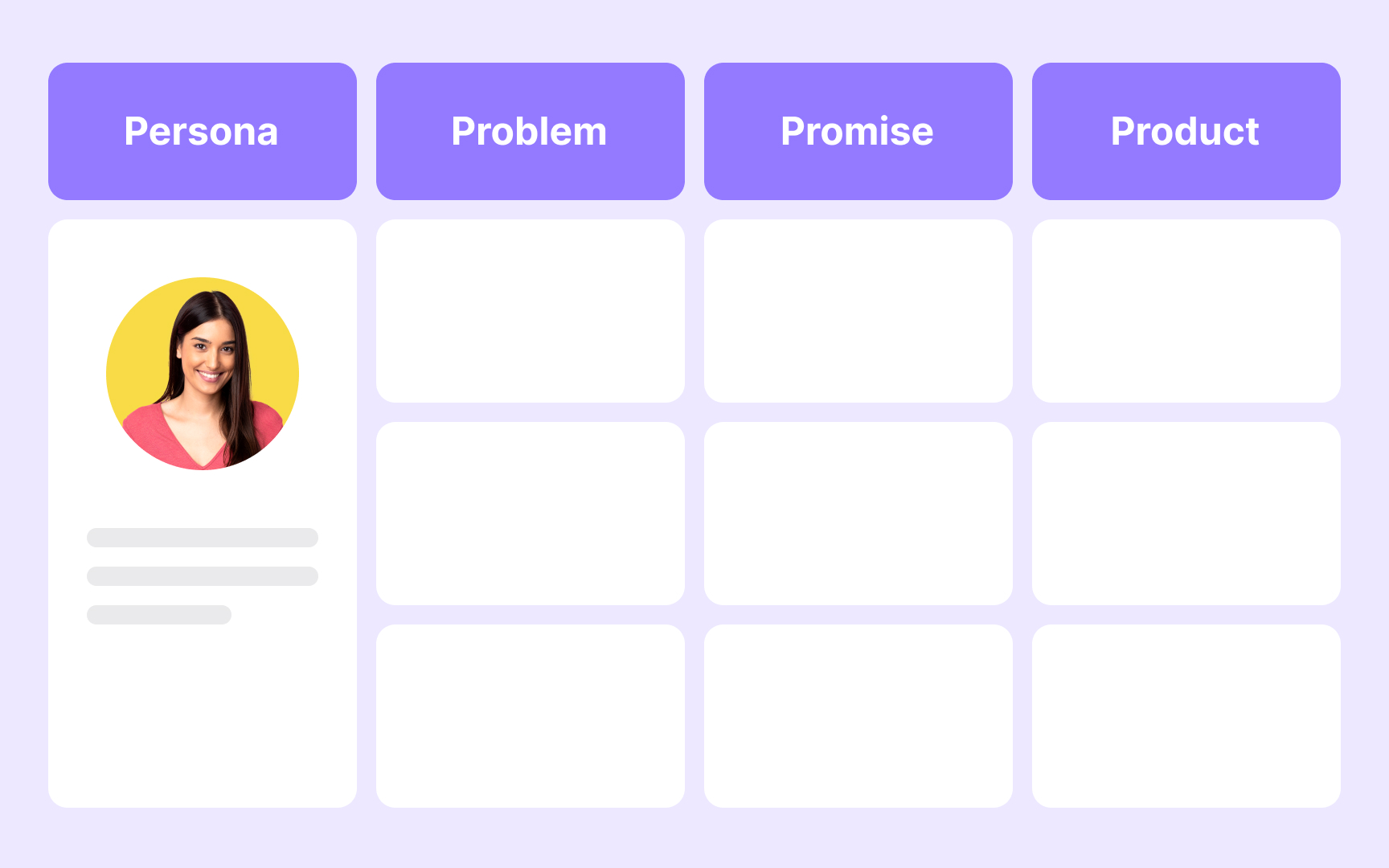
Before positioning your product, you need answers to 4 interconnected questions. Skipping any one produces messaging that sounds plausible but fails to convert:
- Persona: who specifically has the problem? Not the broadest addressable market, but the person who feels the pain most acutely has the authority to act and is reachable through your channels.
- Problem: what is urgent and expensive for them? Every customer has dozens of problems. Positioning around a minor inconvenience produces polite interest. Positioning around something that costs them money or customers every day produces urgency.
- Promise: what outcome do you deliver? Customers do not buy products. They buy the change that a product makes possible. The promise is the specific result they can expect, not a feature list.
- Product: what actually solves it? Only after the first 3 questions are answered does the product conversation become relevant. The product exists to deliver the promise to the persona for the problem. Starting with features and working backward is one of the most reliable ways to build positioning that nobody connects with.[1]
Pro Tip! If any section feels vague, that is where your positioning work is incomplete, not where your messaging needs improvement.
The 3 strategic market positions: cheapest, quality, or specialized
In any given market, there are 3 ways to position your product, and you must choose one. You cannot be everything to every buyer.
- The cheapest. You compete on price. Your business model runs on volume and efficiency, and it requires a cost structure that can genuinely sustain low prices. Competing on price without the underlying cost advantages is a fast path to financial pressure.
- The highest quality. You compete on excellence. Your customer pays more because they trust the outcome justifies the premium. This requires consistently delivering quality that is visible and credible before a purchase is made.
- The most specialized. You compete on fit. Your product is the obvious choice for a specific segment because you have built it specifically for their needs and solve problems that general-purpose tools do not. Specialization supports premium pricing because specificity creates value that broader alternatives cannot match.
Pick one. A product that claims to be both cheapest and highest quality creates cognitive dissonance. Customers doubt at least one of those claims, and their trust erodes before they have even evaluated your product.[2]
Pro Tip! If dropping your price would cost you customers, your position isn't price. That's the test.
Avoid mixed signals in product positioning
Positioning contradictions are common, and founders often cannot see them because the messaging feels consistent from their side. From the outside, the customer receives 2 signals that do not add up, and the result is confusion.
The most frequent contradiction is the quality-affordability trap. A company positions itself as a premium, enterprise-grade solution and then underprices to close deals faster. Procurement teams in large organizations are skeptical of cheap solutions, because a low price raises questions about reliability and long-term viability. The second common contradiction is the broad-and-specialized claim. A company says it is built specifically for independent insurance brokers and then adds case studies from retail, logistics, and healthcare. The target customer concludes the product is really for everyone, which means it is probably not optimized for them.
Positioning contradictions are almost always a symptom of saying yes to too many things. Every deal outside your target persona, every feature added for a one-off customer, and every price exception made to close faster contribute to the erosion of a clear position.[3]
Pro Tip! If your last 5 deals came from 3 different personas, your positioning has already drifted, whatever your website says.
Win a niche market before expanding your reach
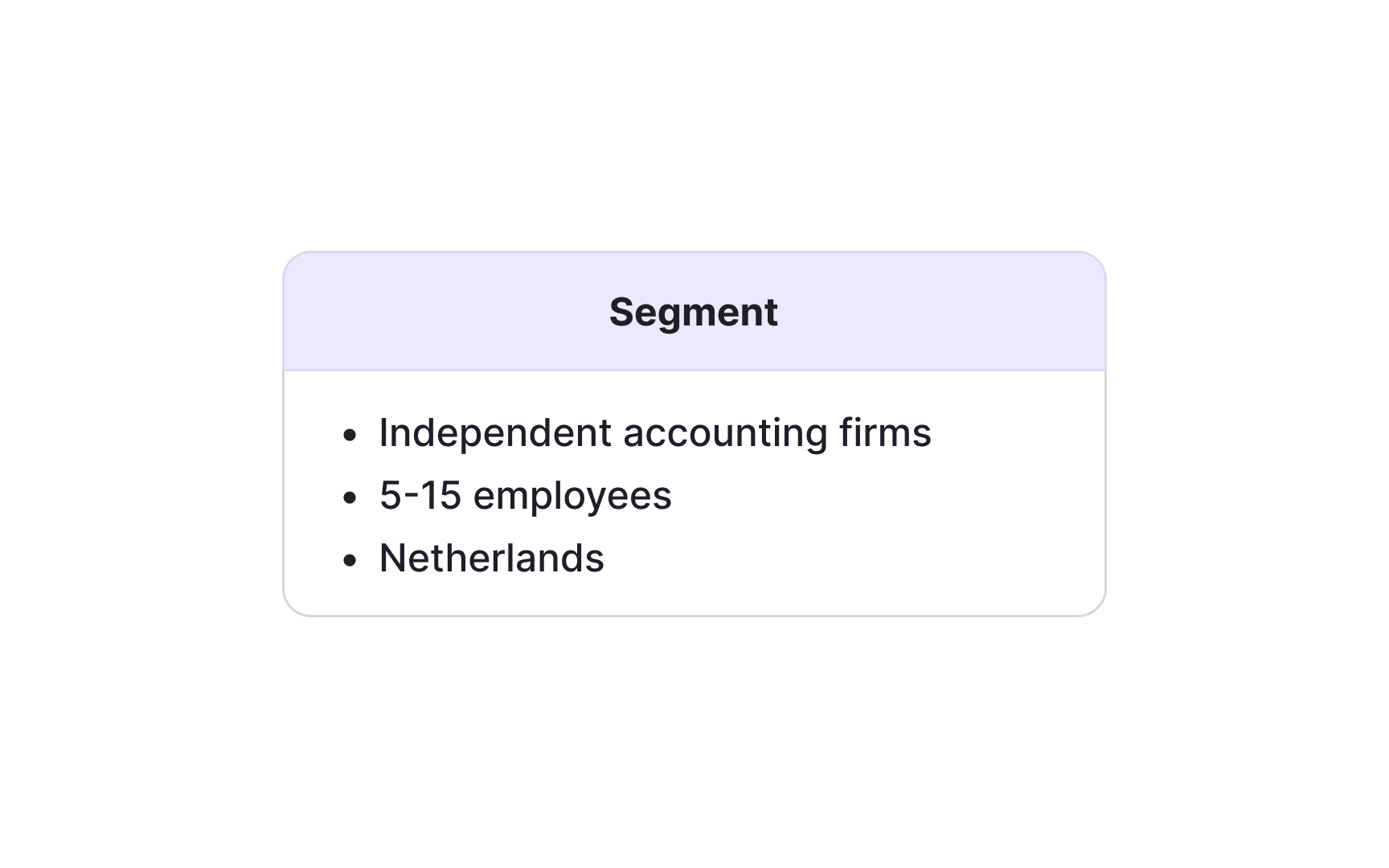

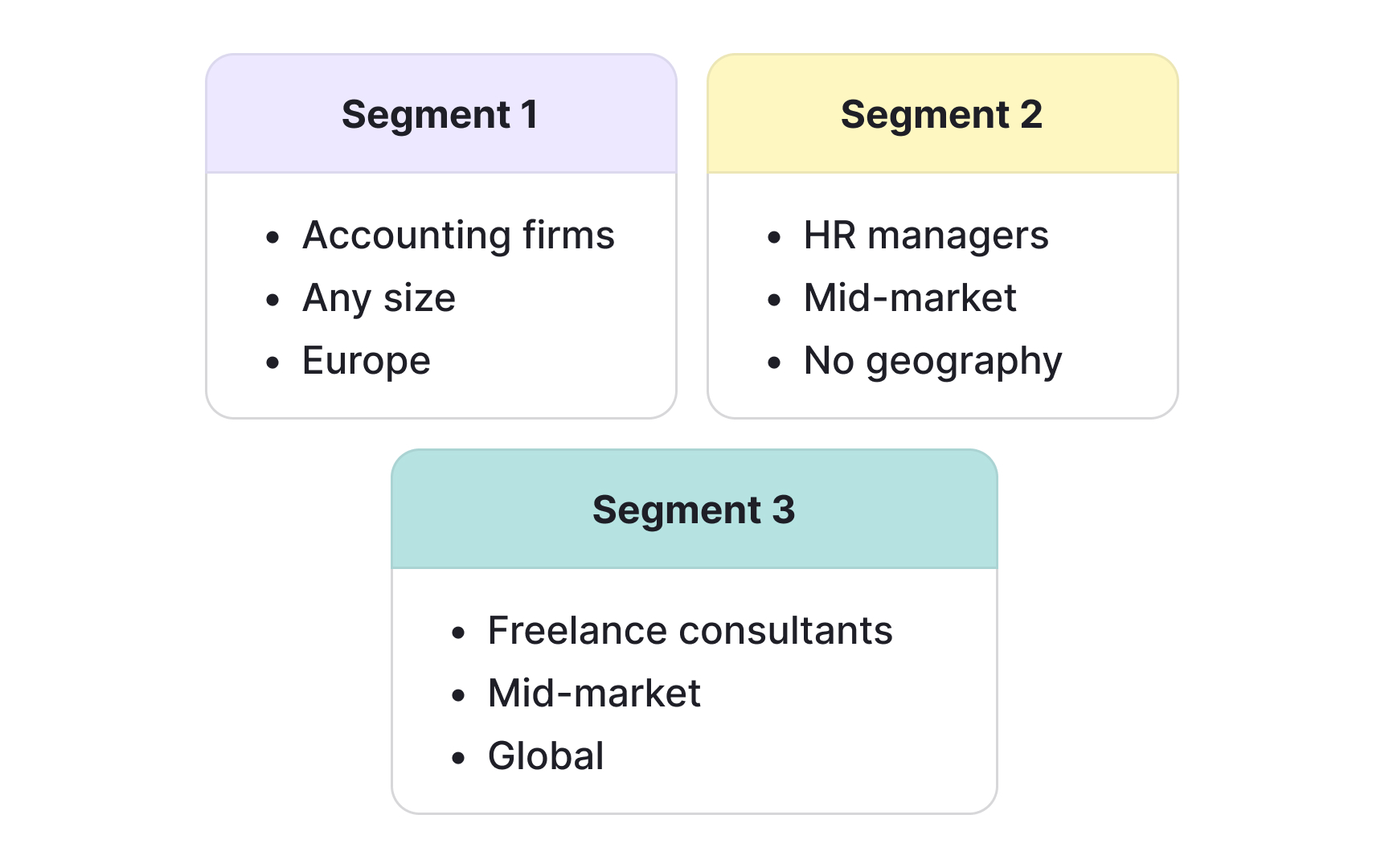

Every early-stage company faces the temptation to serve multiple segments, pursue multiple geographies, and build features for every use case a prospect mentions. This feels like prudent diversification. In practice, it is the most reliable path to mediocrity. Focus means choosing one primary product, one primary territory, and one primary customer segment, and being excellent within that scope before expanding. Your resources are finite, and the market rewards depth over breadth. A company trying to serve 5 segments simultaneously builds a product that compromises and partially satisfies all 5 but fully satisfies none.
Consider 2 companies entering the same market. The first targets any small business that might benefit from their software. The second targets independent accounting firms with 5 to 15 employees in the Dutch market, builds exactly what that segment needs, and becomes the default choice within that community. Focus also makes execution easier. Your messaging improves because you are speaking to one person with one problem. Channel choices become clearer, and pricing makes more sense because you understand what the solution is worth to that segment.[4]
Pro Tip! Niche dominance is not a ceiling. It is the entry point. You cannot skip it and build something durable.
Recognize the signs of losing market focus
Focus violations rarely happen as deliberate decisions. They accumulate through individually reasonable choices: a deal that does not fit the target persona but is too big to walk away from, a feature added because a single enterprise customer requested it, or a geographic expansion made because a partner in a new market expressed interest.
Each of these decisions feels justified in isolation. Together, they erode the focus that was making the original market work. By the time the problem becomes visible, the company is stretched across 3 segments, 2 geographies, and a product roadmap that satisfies no single customer fully.
The signals are recognizable. Sales cycles are getting longer because the product requires more explanation for each different type of prospect. Onboarding is becoming more complex. Referrals have slowed because existing customers are not sure who else to recommend the product to.
None of these symptoms points directly at the focus as the cause. The apparent problem looks like a sales, onboarding, or product quality issue. The underlying cause is that the company has stopped being for someone specific.
Pro Tip! Ask 3 recent customers to describe your product in one sentence. Diverging answers mean your positioning has already fragmented.
Expand your market along one dimension at a time
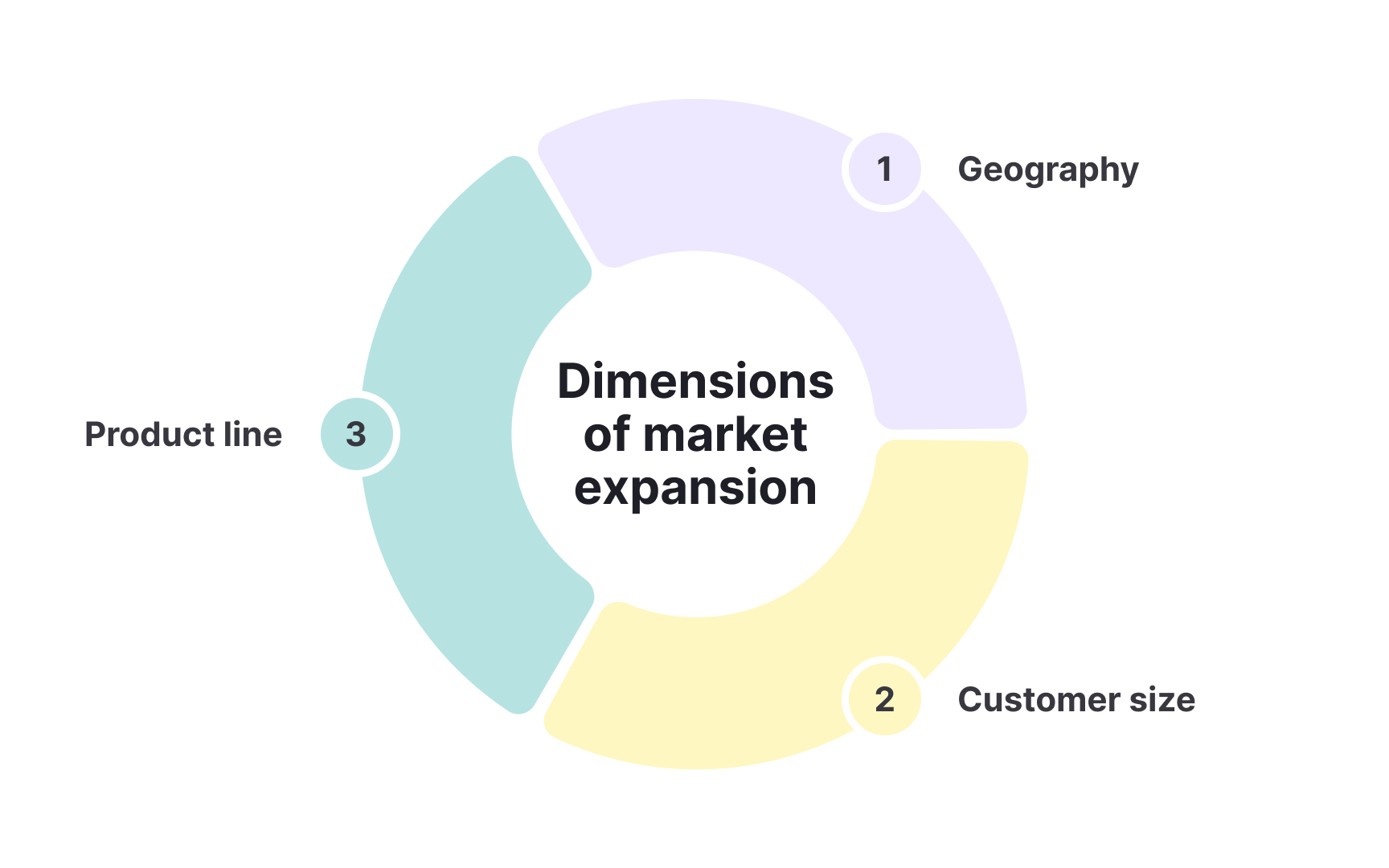
Once a company has earned dominance in its initial focus, expansion becomes possible. The question is not whether to expand, but in which direction. There are 3 dimensions available, and the discipline is to choose only one at a time:
- Geography. You replicate your proven success in a new market while keeping the product and customer segment the same. The risk is underestimating how much local context matters: language, regulatory requirements, and buying norms. A product that works for German accounting firms does not automatically translate to French ones.
- Customer size. You might move from small businesses to mid-market or enterprise customers, or the other way around. Moving upmarket requires longer sales cycles and more stakeholders. Moving downmarket requires a self-serve experience and economics that work at a much lower price point.
- Product line. You build a second product for the same customer base, or expand the existing product to address an adjacent problem. This is the most capital-intensive form of expansion because you are building something new while operating something existing.[5]
Pro Tip! Each expansion dimension requires different skills and a different business motion. Mixing them splits your attention and dilutes both.
Match your expansion direction to your company's strengths
Choosing the right expansion dimension is a question about what your company is actually good at right now, and what form of growth your current assets make possible.
A company that has dominated a niche through deep product expertise is probably best positioned to expand its product line to adjacent problems the same customer has. The team already understands the customer's world, and the risk of that expansion is known.
A company that has won through a strong local sales team and dense customer relationships is probably best positioned to expand geographically. The playbook for winning customers in one market can be adapted to a market with a similar structure. The risk is known because the sales motion is proven.
A company that has succeeded with a high-touch enterprise motion might consider moving downmarket through a self-serve product. This works when the core product has genuine value at a lower price point and when the team has the capacity to build a different acquisition experience.
This is the riskiest expansion because it requires running 2 distinct businesses with different economics.
The question is always the same: what does your current success tell you about what you can do well next?
Pro Tip! Expansion that requires capabilities you do not yet have is a bet on future competence, not present strength. That is a different risk.
Write a positioning statement that guides sales and product decisions
A positioning statement is not a tagline or a value proposition. It is a working document that makes explicit the choices underlying your go-to-market strategy. When everyone involved in selling, building, and supporting your product shares the same statement, decisions about which features to build and which deals to pursue become more coherent.
A complete statement answers the 4 questions in sequence. For example:
- Who specifically has the problem? Accounting firms with 5 to 15 employees in Germany (persona).
- What is it costing them? Hours spent on manual VAT reconciliation that creates compliance risk (problem).
- What outcome do they get? Reconciliation runs automatically, and discrepancies are flagged before they become filings (promise).
- How does the product deliver that? Through a DATEV integration that requires no IT involvement to deploy (product).
This statement is useful because it is specific enough to be tested. Do your actual customers match the persona? Is the problem you describe the one that motivates their purchase? Wherever there is a gap, there is work to do in the positioning or the product.
A good positioning statement also tells you what to say no to. If a prospect does not match the persona, it gives you a principled reason to decline. If a feature request does not serve the stated problem, it gives you a reason to defer.[6]
Pro Tip! If your sales team cannot use the positioning statement in a call, it is either too vague or not yet true.
Topics
References
- A framework for finding product-market fit | Todd Jackson (First Round Capital)
- How to determine market positioning for your startup | Stripe
- A Quickstart Guide to Positioning - April Dunford
- Crossing the Chasm - Wikipedia
- Ansoff Matrix | Corporate Finance Institute
- A Quickstart Guide to Positioning - April Dunford