



.svg)


Many design teams assume they understand users because they're users themselves. It's a natural assumption, but it's also dangerous. Your experience as a user is just one data point, and it's probably not representative of the people you're designing for. Real empathy requires dedicated research. It’s how you access insights that don't match your own experience. A designer in their twenties working in tech has different needs, habits, and frustrations than a parent juggling work and childcare, or someone with limited digital literacy, or a user with accessibility needs.
When teams skip this research, they build products based on assumptions. Those products might work fine for people like the designers, but they miss the mark for everyone else. The result? Designs that feel disconnected. Features that solve the wrong problems. Products that users tolerate instead of love. The most successful products come from teams that put in the work to truly understand the people they're designing for.
Define the problem
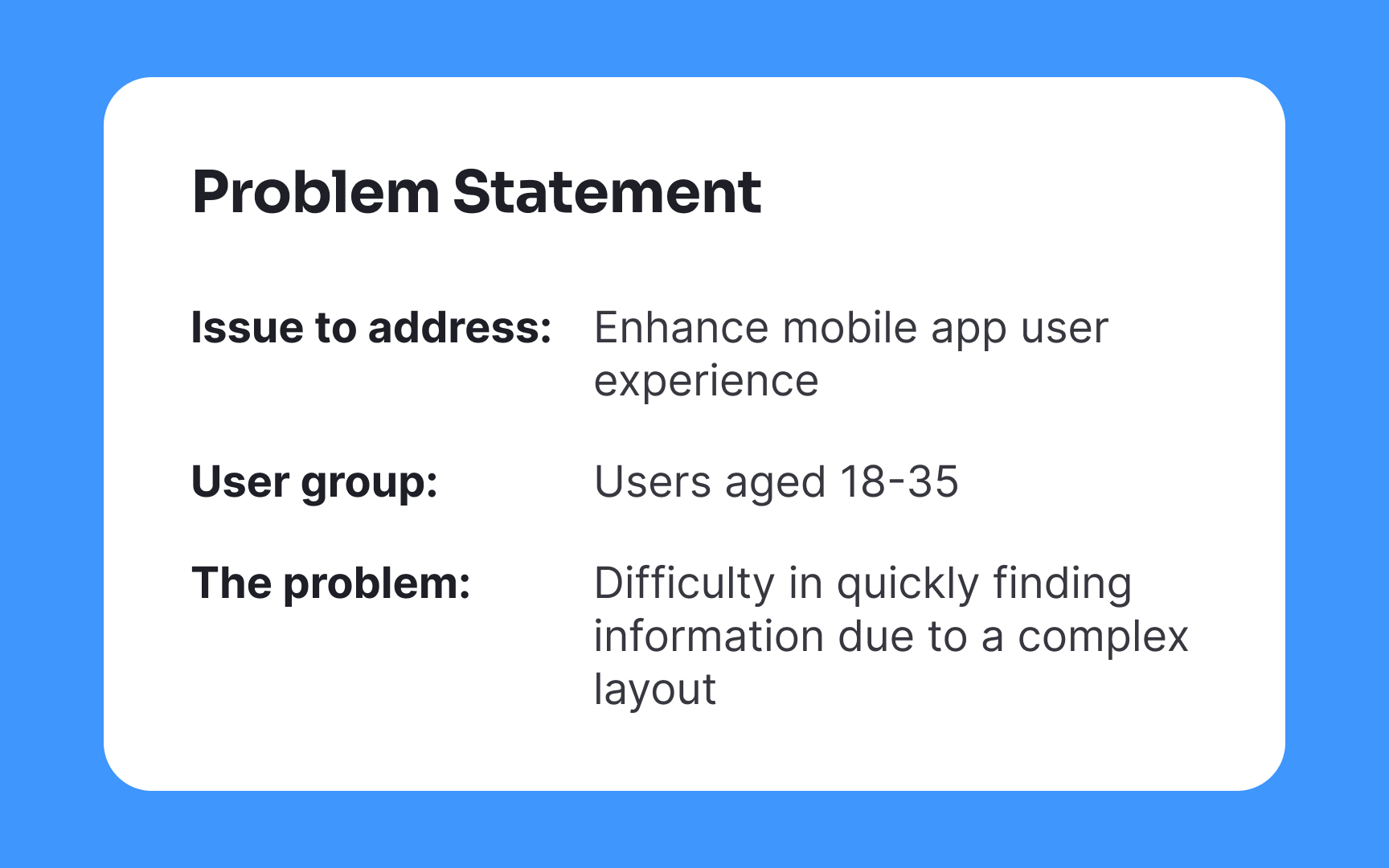

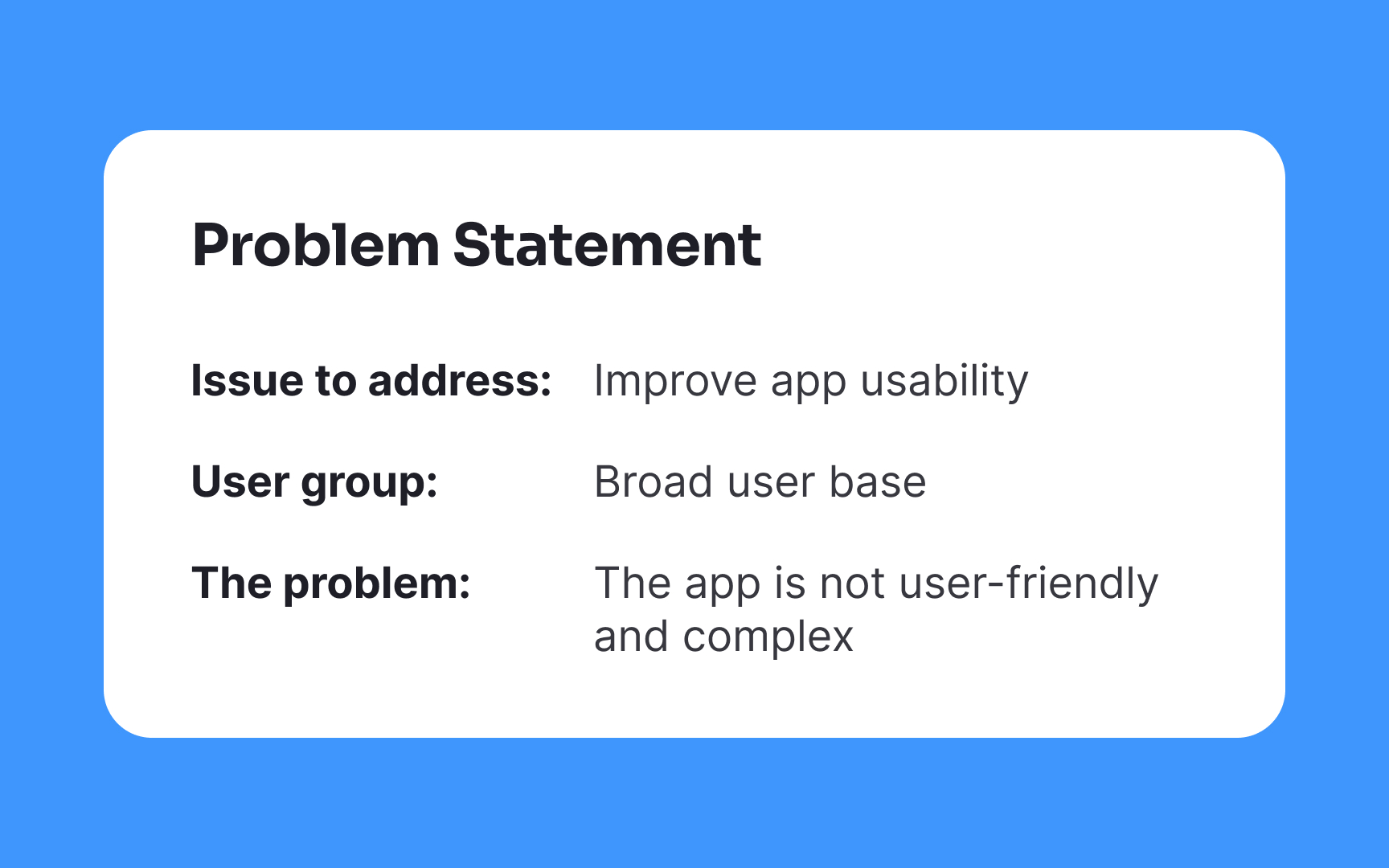

In an empathy-driven design approach, defining the problem is a dynamic process that evolves from initial hypotheses to detailed insights. Here’s a streamlined explanation:
- Initial hypothesis: The process often begins with a basic hypothesis about user needs and challenges, based on preliminary observations or assumptions.
- Gathering insights: This hypothesis is then tested and refined by gathering user feedback, even if the initial data is limited.
- Iterative refinement: As more comprehensive user research is conducted, the problem statement is continually refined. This iterative approach ensures that the problem definition stays aligned with evolving user insights.
- Problem statement: Generally, a problem statement is a clear, concise articulation of the issue the design aims to address. It identifies the user group affected, outlines the specific problem, and highlights its impact. Crafting an accurate problem statement is crucial, as it guides the entire design process, ensuring that solutions remain focused and user-centered.
Analyze user behaviors through user interviews

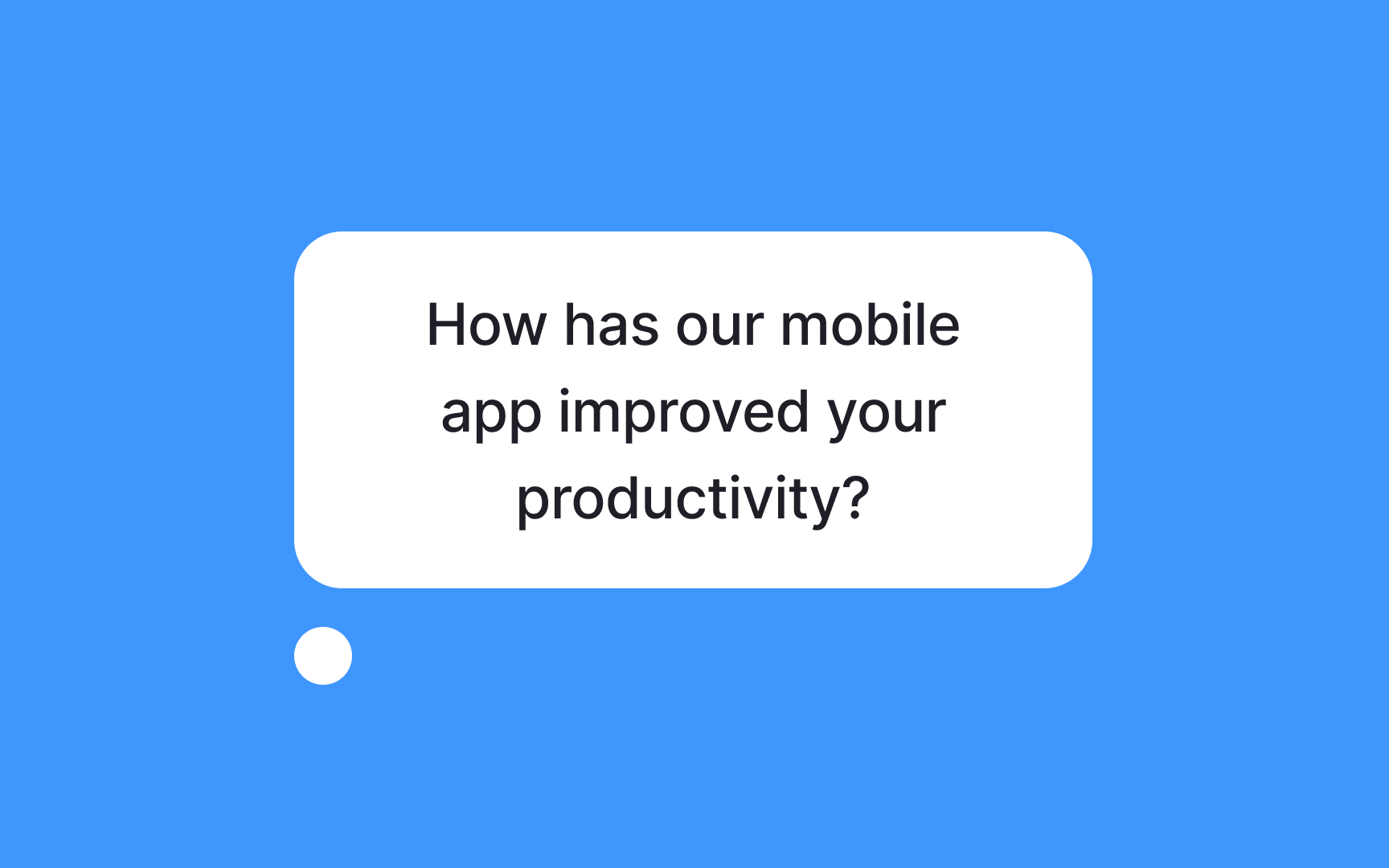
User interviews are a cornerstone in empathy-driven design, offering an in-depth understanding of user experiences. Here’s an effective approach:
- Open-ended questions: Craft questions that encourage detailed responses, focusing on "what," "how," and "why" rather than simple yes/no queries.
- Active listening: Prioritize listening over speaking. It'll help uncover subtle nuances that might not be immediately apparent.
- Creating a comfortable environment: Make interviewees feel relaxed and open to foster more honest and comprehensive responses.
- Observing non-verbal cues: Pay attention to body language and tone to get additional insights beyond spoken words.
- Avoiding leading questions: To ensure unbiased insights, questions should be framed neutrally without suggesting any specific answer.
- Adaptability: Be ready to explore new topics or interesting leads that emerge during the interview.
- Effective documentation: Take thorough notes and, with consent, record the interviews.[1]
Observe user behaviors in context
Diary studies are a method in which participants are asked to record their interactions with a product over a period. The method provides a longitudinal view of how the product fits into the user's daily life. Here are some key points for conducting effective diary studies:
- Choose the right duration: Plan a study period that's long enough to gather necessary data but not so lengthy that participants lose interest.
- Recruit committed participants: Since diary studies need active involvement over time, careful recruitment is essential. Clearly communicate expectations and verify participants' availability for the entire study. Use screening questions to assess their commitment level.
- Monitor data continuously: As diary entries come in, especially digitally, review them promptly. This allows for timely follow-up questions and additional detail requests, capturing fresh reflections from participants.
- Conduct a pilot study: Before the full study, run a pilot to test your research design and materials. This shorter version will help fine-tune your study.[2]
Use storytelling to connect with users
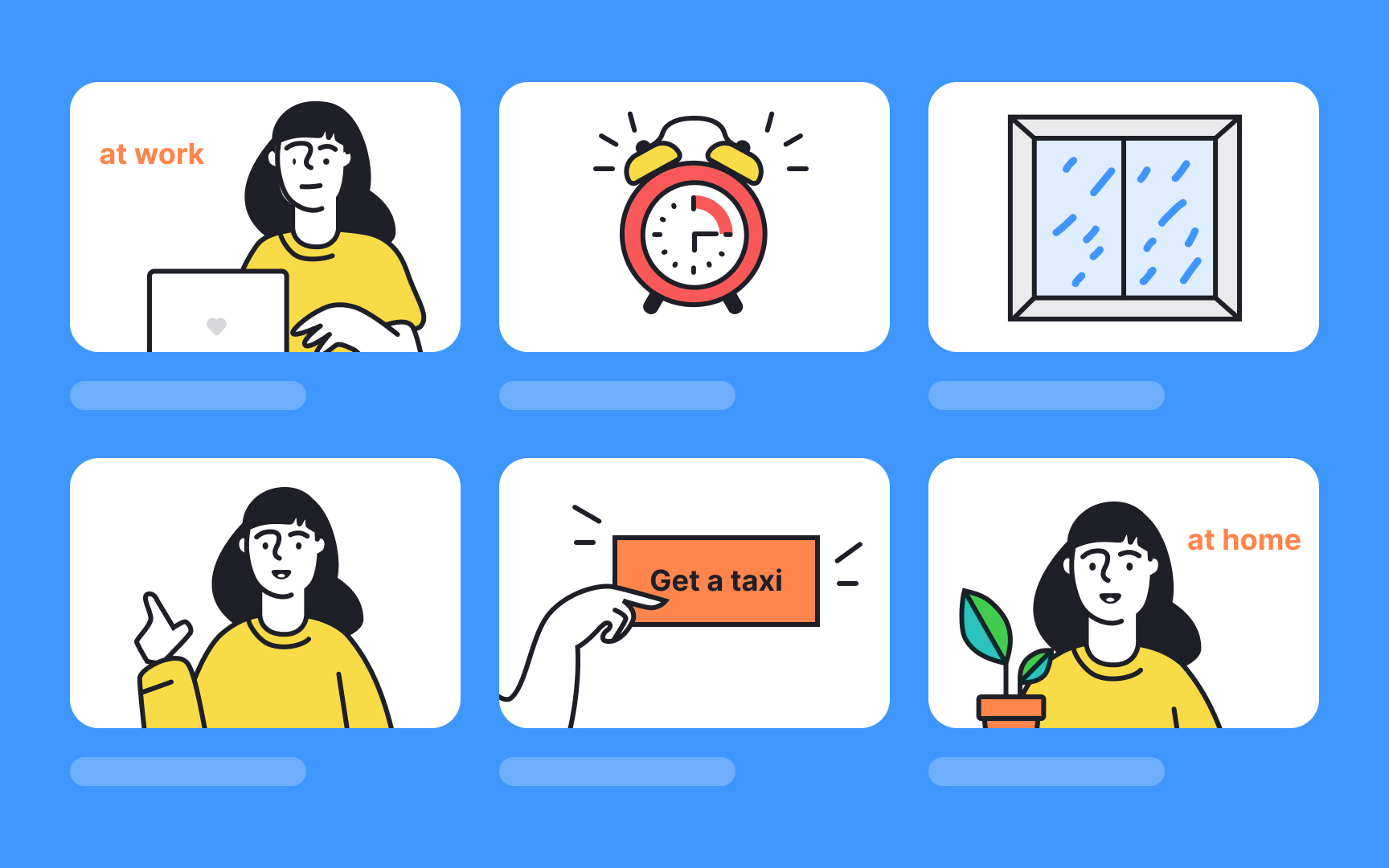
Using storytelling in UX design is an impactful way to forge deeper connections with users. Here's how to effectively integrate storytelling:
- Craft compelling narratives: Create narratives that go beyond product features and benefits. Engaging stories emotionally connect with users, making their experience more relatable and memorable. Use visual elements like storyboards or illustrations along with descriptive narratives to make the story more vivid and engaging.
- Co-create stories with users: Involve users in creating stories about their product experiences. This encourages users to share personal insights, adding authenticity and depth to the narrative.
- Play stories back to others: Share these user-generated stories with other users, using anonymized or generalized details to protect privacy. This helps in understanding how different users relate to the product and where their experiences may vary.
Utilize field studies

Field studies take place in users’ natural setting, not in a lab. This approach allows for observing how people interact with products in their actual environment, providing a genuine understanding of user behavior and needs.
Field studies are offering several benefits:
- Gathering task information: They allow designers to understand how and why people perform tasks in specific ways. This understanding helps in avoiding major mistakes when developing new products or services.
- Understanding user needs: Field studies provide insights into users' needs and uncover opportunities to address them.
- Creating detailed user artifacts: The data gathered is invaluable for developing journey maps, personas, use cases, and user stories, ensuring a comprehensive understanding of users.
- Testing in real conditions: Field studies with testing under realistic conditions uncover social problems and environmental factors, and reveal issues that might not emerge in lab environments.[3]
Build empathy maps
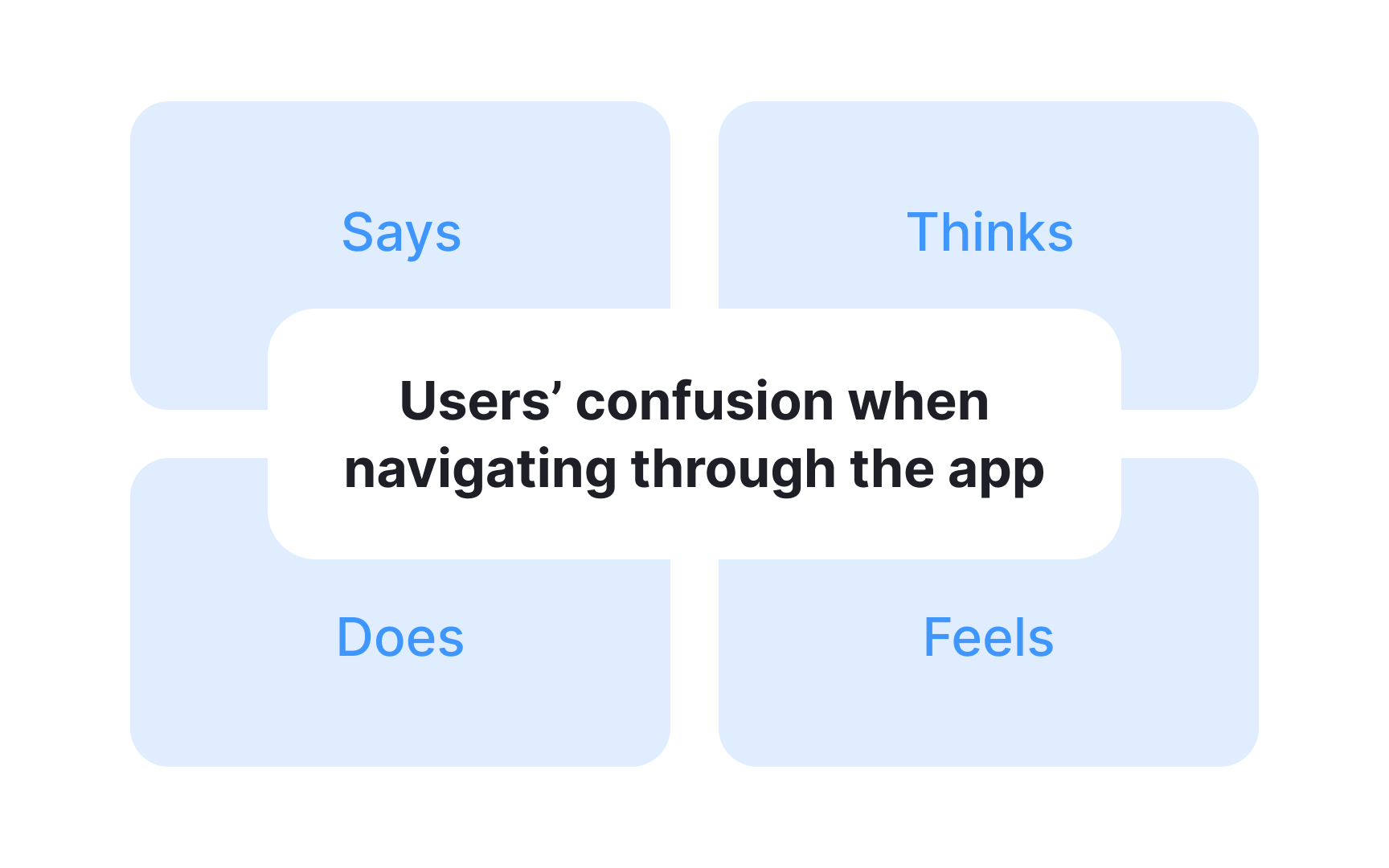
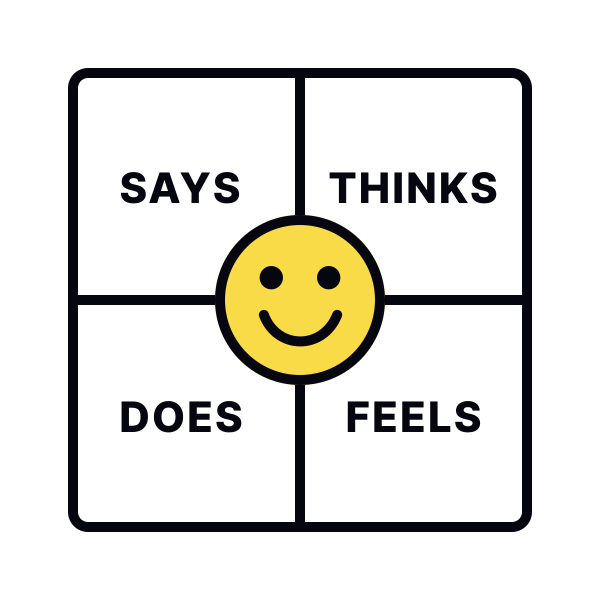
Empathy mapping helps close the gap between users and design teams. The classic format has 4 sections: what the user says, thinks, does, and feels. The map can focus on a user, a persona, or a problem, scenario, or situation. This gives teams a shared view and sets the stage for user-centered work.
Empathy maps can be based on various qualitative research methods or even sketched in the absence of research. Mapping allows teams to understand what aspects of their users they know and where they need more data.
Empathy maps can be individualized or aggregated, capturing singular user experiences or synthesizing themes across a user segment, often serving as a stepping stone in persona creation.[1]
Create personas

A persona is a detailed description of a typical or target user, based on user research. This detailed characterization helps the design team empathize with specific users, moving away from generic or undefined user models.
To make each persona actionable, consider these tips:
- Include essential details: Add details like name, age, photo, and a tagline. A photo, for instance, aids memorability.
- Contextualize interaction with the product: Describe how and why the persona uses your product, focusing on their goals and concerns.
- Use quotes for attitude: Incorporate quotes that reflect the persona's attitude towards tasks or your product.
- Avoid irrelevant details: Exclude unnecessary information like a persona's favorite food unless it's directly relevant to the product. For example, a persona's preference for detailed data might suggest a need for comprehensive product features.[4]
Gather feedback during testing phases

Incorporating user feedback during testing phases is crucial for an empathy-driven approach. Here's how to do it practically:
- Surveys and questionnaires: Cost-effective and wide-reaching, they gather specific feedback on usability and user experience.
- User interviews: Offer deep, qualitative insights through direct conversations with users.
- Usability testing: Observe real-time user interactions, either remotely or in-person.
- Guerilla testing: Quick and informal, this involves approaching people in public places to test your product, providing immediate feedback.
- Iterative process: Integrate the feedback into the design, then test again. Iterations ensure continuous improvement and alignment with user needs.
References
- User Interviews 101 | Nielsen Norman Group
- Diary Studies: Understanding Long-Term User Behavior and Experiences | Nielsen Norman Group
- Field Studies | Nielsen Norman Group
- Personas Make Users Memorable for Product Team Members | Nielsen Norman Group