



.svg)


Product discovery is about understanding how to serve users in ways that create value for your business. This involves balancing product outcomes (like improving user experience or adding new features) with business outcomes (such as increasing revenue or reducing costs). For example, launching a new app feature might make it easier for users to complete tasks (a product outcome), but it must also drive new customer acquisition and revenue growth (a business outcome). In this lesson, we’ll explore what product and business outcomes are, and how to find the optimal balance between them to ensure your efforts benefit both your users and your business.
Types of outcomes
When we talk about outcomes in product discovery, we're focusing on the behaviors that lead to results, not just the results themselves. We track 3 main types:
- Business outcomes (lagging indicators): These measure value to the company, like revenue, retention, or operational costs. They tell us if we succeeded, but they move too slowly to guide daily decisions. Business outcomes show overall company success, but we usually see them only after implementation.
- Product outcomes (leading indicators): These are specific changes in user behavior that predict business success. Unlike business goals, product outcomes are leading indicators you can influence directly. For example, instead of "increase revenue," a product outcome is "increase the number of successful file shares per user." These give the team real-time feedback to make decisions that directly improve the product and, ultimately, the business.
- Solution metrics (verification): These track if a specific feature is functioning as intended, like click-through rates, load times, or adoption curves. Solution metrics validate that the solution works, whereas product outcomes validate that the solution provides value.[1][2]
OKRs vs. outcomes
Companies use various frameworks to structure their goals, such as OKRs (Objectives and Key Results), KPIs (Key Performance Indicators), and North Star Metrics. While these vary in scope, they all serve the same purpose: they provide the structure for defining success.
However, a framework is only as good as what you put inside it. This is where outcomes come in.
- The frameworks (the plan): Tools like OKRs help teams organize their focus. They set the timeline and the hierarchy of goals.
- The outcomes (the measure of value): Within those frameworks, outcomes describe human behavior rather than technical output.
For example, you might use the OKR framework to set a goal. If you fill that framework with outputs, your goal is "launch the new help center." If you fill that framework with outcomes, your goal is "reduce support tickets by 15%."
The key distinction is that frameworks like OKRs and KPIs provide the format for tracking progress, while outcomes ensure that the content of those goals focuses on real-world impact. Outcomes validate that your product decisions actually moved the needle, rather than just shipping code.
Don’t mix outcome and output
Understanding the difference between outputs and outcomes is essential for measuring what actually matters.
- Outputs are what you create or produce, like a new checkout flow, a mobile app redesign, or a recommendation algorithm.
- Outcomes are the actual changes that happen because of what you built. For example, that new checkout flow might reduce cart abandonment by 15%, the redesign could increase daily active users, or the algorithm might boost purchase conversion rates.
A good outcome is specific, measurable, and connects directly to user or business value. It tells you not just what you shipped, but whether it worked.
The problem with focusing only on outputs is that you're just checking off tasks without knowing if they matter. You could release five new features this quarter (outputs), but see zero growth in user satisfaction or retention (outcomes). That's why successful teams define the outcomes they want first, then figure out which outputs might achieve them.
Tie outcomes to business goals
In high-performing product teams, outcomes aren't random metrics. They're the bridge between daily work and company success.
Outcomes must connect directly to the company's larger goals. For example, if the business goal is revenue (a lagging indicator), your team's focus shouldn't just be "shipping a new checkout page" (output). Instead, your product outcome should be "increase the conversion rate to paid accounts" (a leading indicator that predicts revenue).
This connection is your defense against the build trap, the common failure mode where teams measure success by how many features they ship rather than the value they create. By strictly defining outcomes that ladder up to business goals, you ensure you aren't just busy building features but are actively moving the business forward. Before prioritizing any task, the team must be able to answer: "Which business goal does this specific user behavior drive?"[1]
Set reachable goals
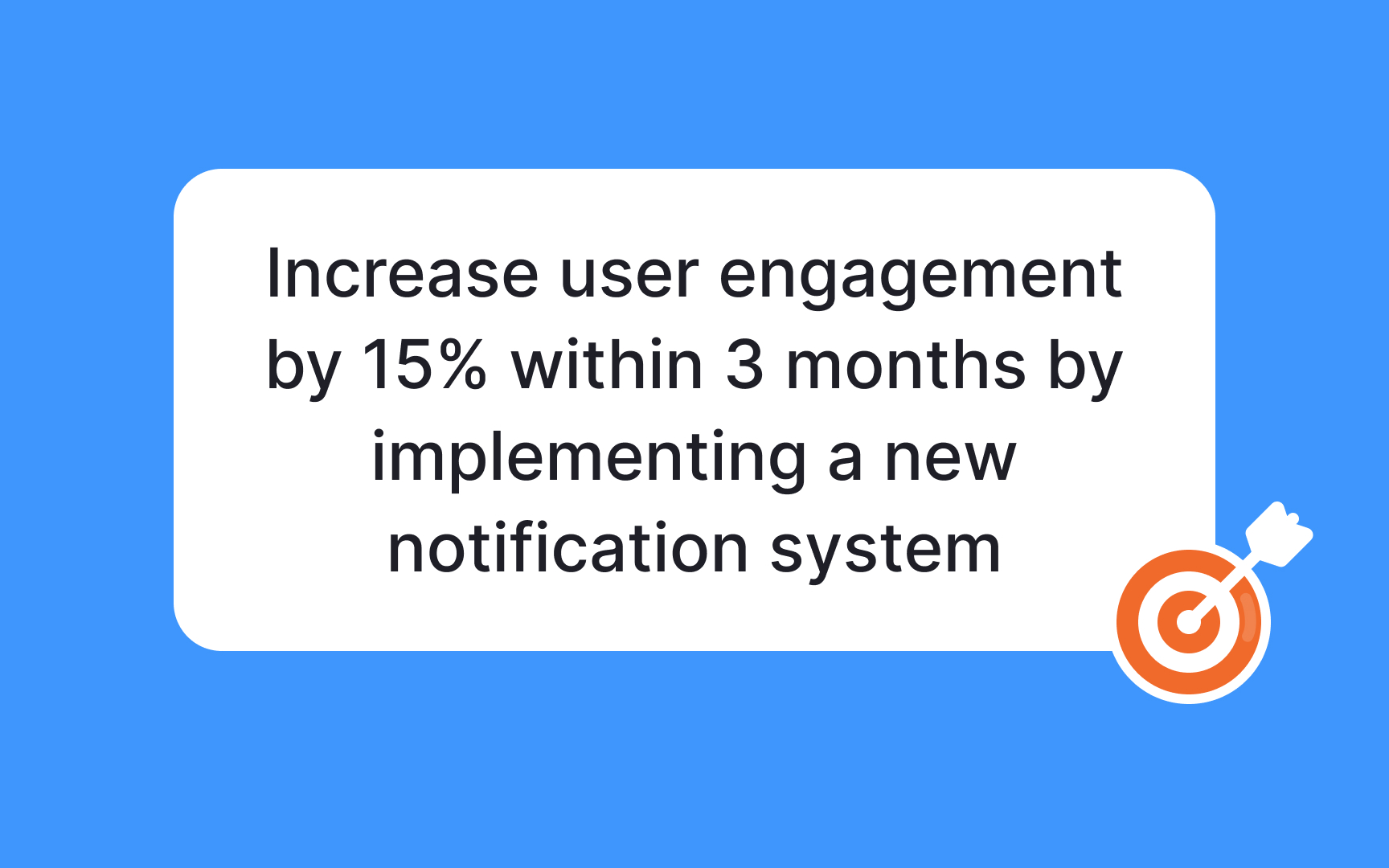

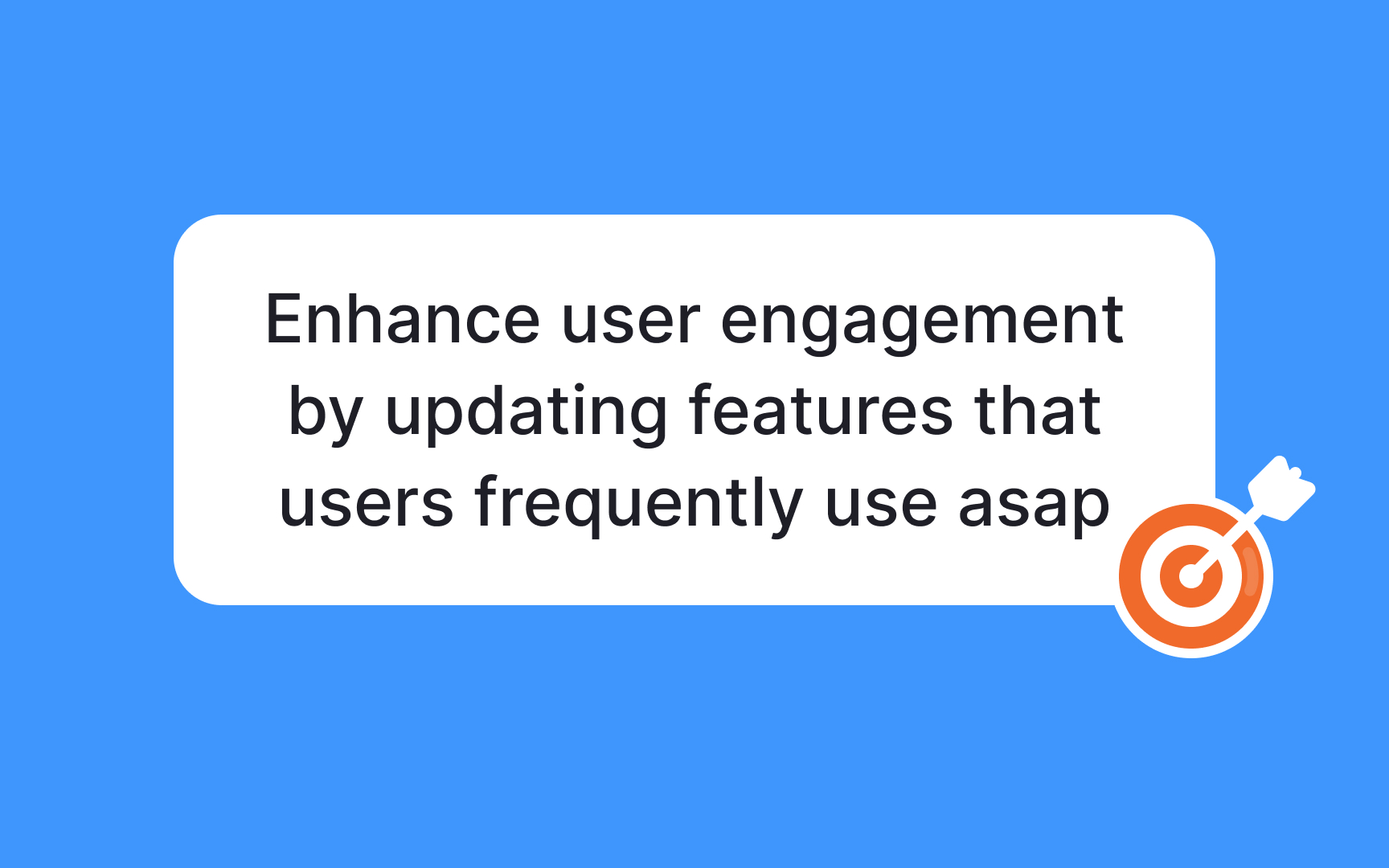

Setting reachable goals means defining objectives that align with both the product's potential and the company's broader goals, while still being achievable. For example, if your business goal is to increase revenue, a reachable product outcome might be, "Increase monthly recurring revenue by 20% over the next six months by launching a new premium feature that addresses the most common user pain points." This goal is specific, measurable, achievable, relevant to the business outcome, and time-bound (SMART).[2]
By setting reachable goals that connect product outcomes with business outcomes, you ensure that the product team’s efforts are directly contributing to the company’s success. It keeps everyone focused on what’s important, encourages steady progress, and builds confidence as these goals are achieved. This also helps maintain alignment between what the product team is working on and the broader business objectives.
Use the right success metrics

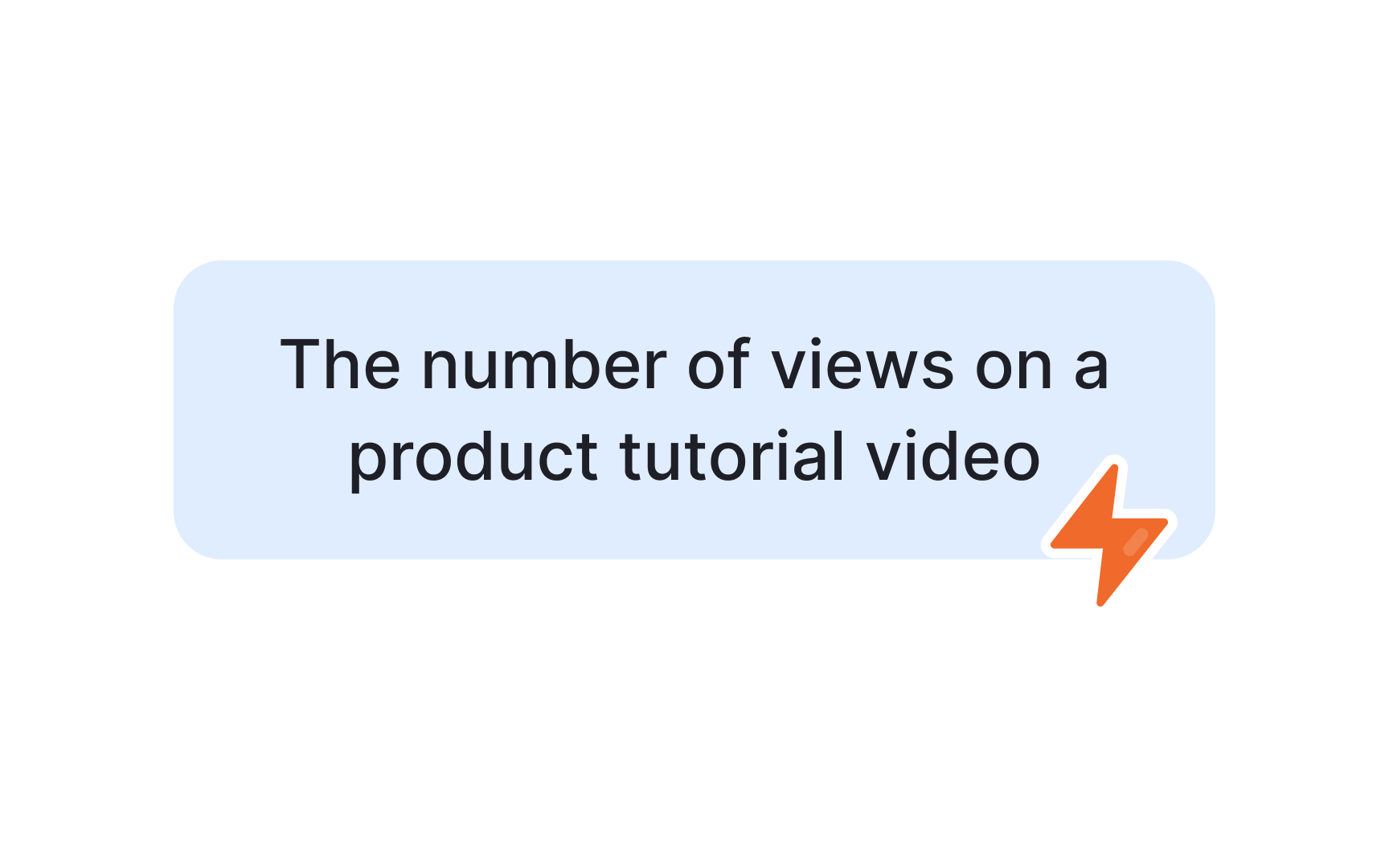
Choosing the right success metrics is essential because they reflect real progress, while vanity metrics can be misleading. A good success metric should show how a feature contributes to overall customer satisfaction and business goals.
To determine if a metric is valuable, ask: "Can we have a happy user who never does this particular action?" If yes, that metric might be a vanity metric.[3] For example, a high number of shares on a social media button might look impressive. But a better metric would be tracking how many users complete a purchase after using a recommendation engine, as this shows the feature’s real impact on revenue.
Focus on outcomes that span multiple features, such as overall conversion rates, which allow users to achieve their goals in their preferred way, ensuring the metrics reflect genuine value and success.
Keep the outcome within the team’s realm of influence
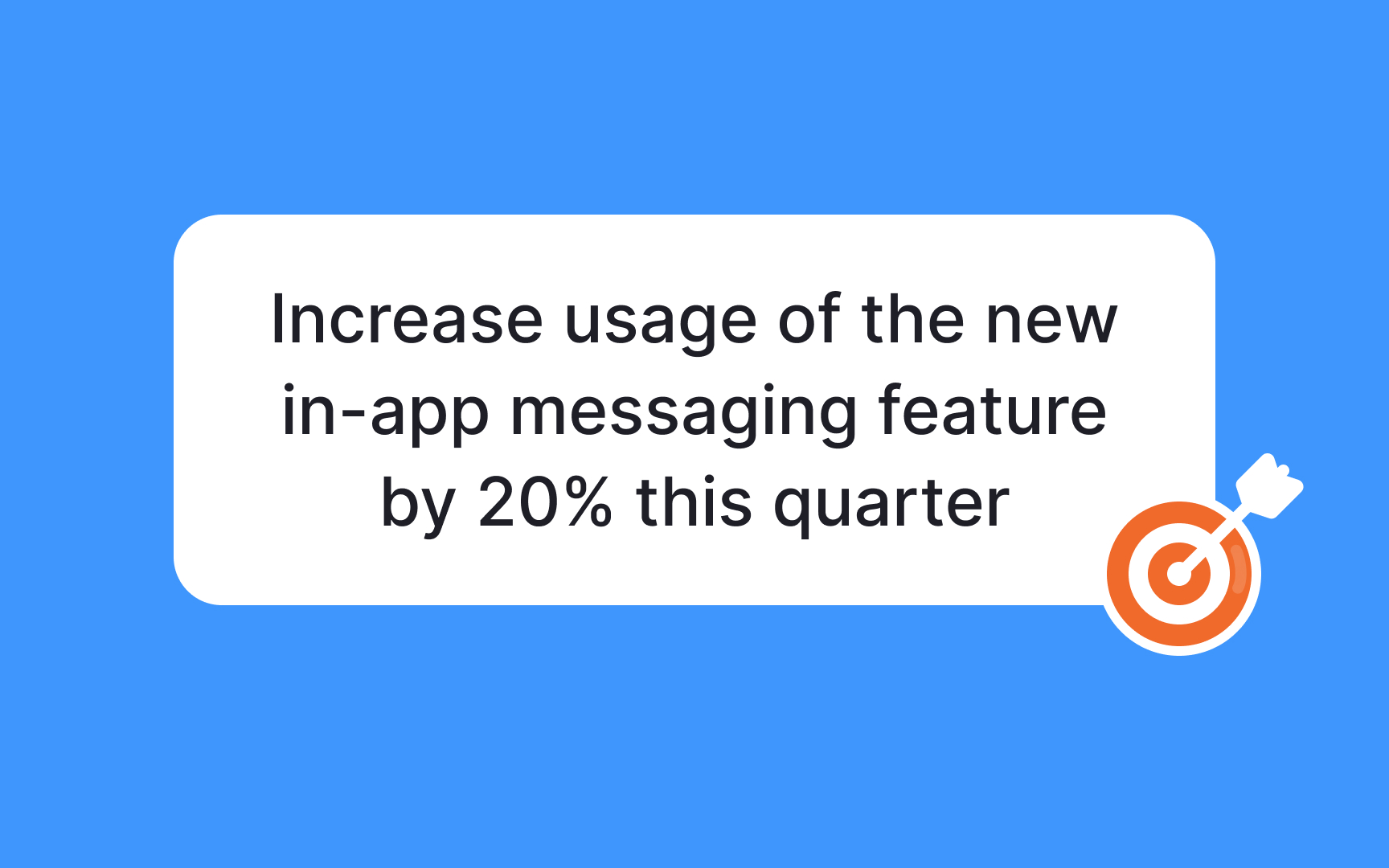
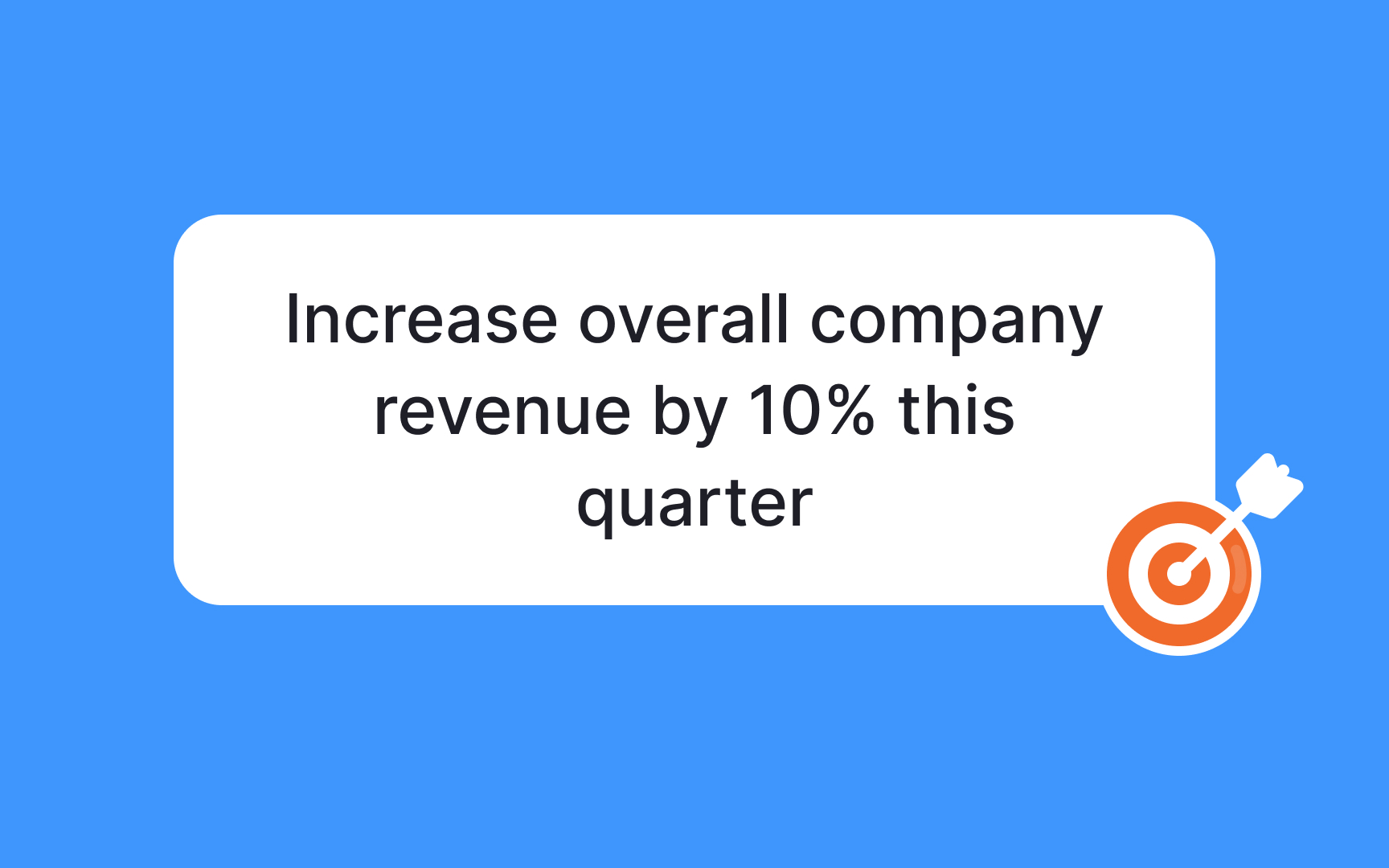
When setting outcomes for the product team, ensure these outcomes are within the team’s control. Problems arise when teams are given outcomes that require coordination with other departments, like marketing or customer support, or when the outcomes are tied to broader business goals that depend on multiple teams. This can lead to frustration, as the product team may feel powerless to make meaningful progress. For example, if a product team is tasked with increasing overall company revenue, this can be demoralizing because revenue is influenced by many factors outside the team’s control.
Instead, the goal should focus on something the team can directly influence, like improving user adoption of a specific feature. If the outcome truly requires multiple teams to achieve, make sure all relevant teams are aligned and working together toward the shared goal.
Measure the value, not actions
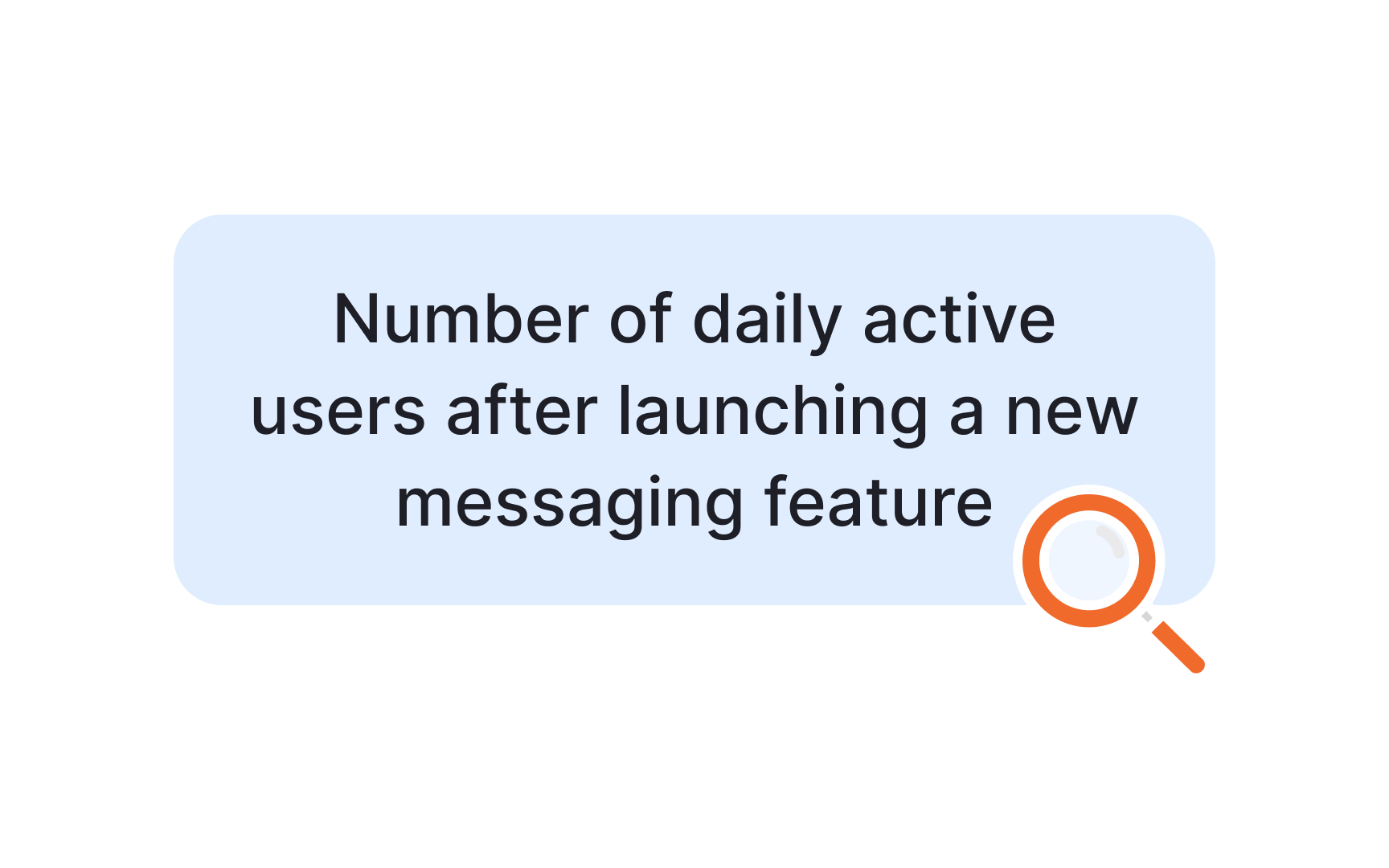
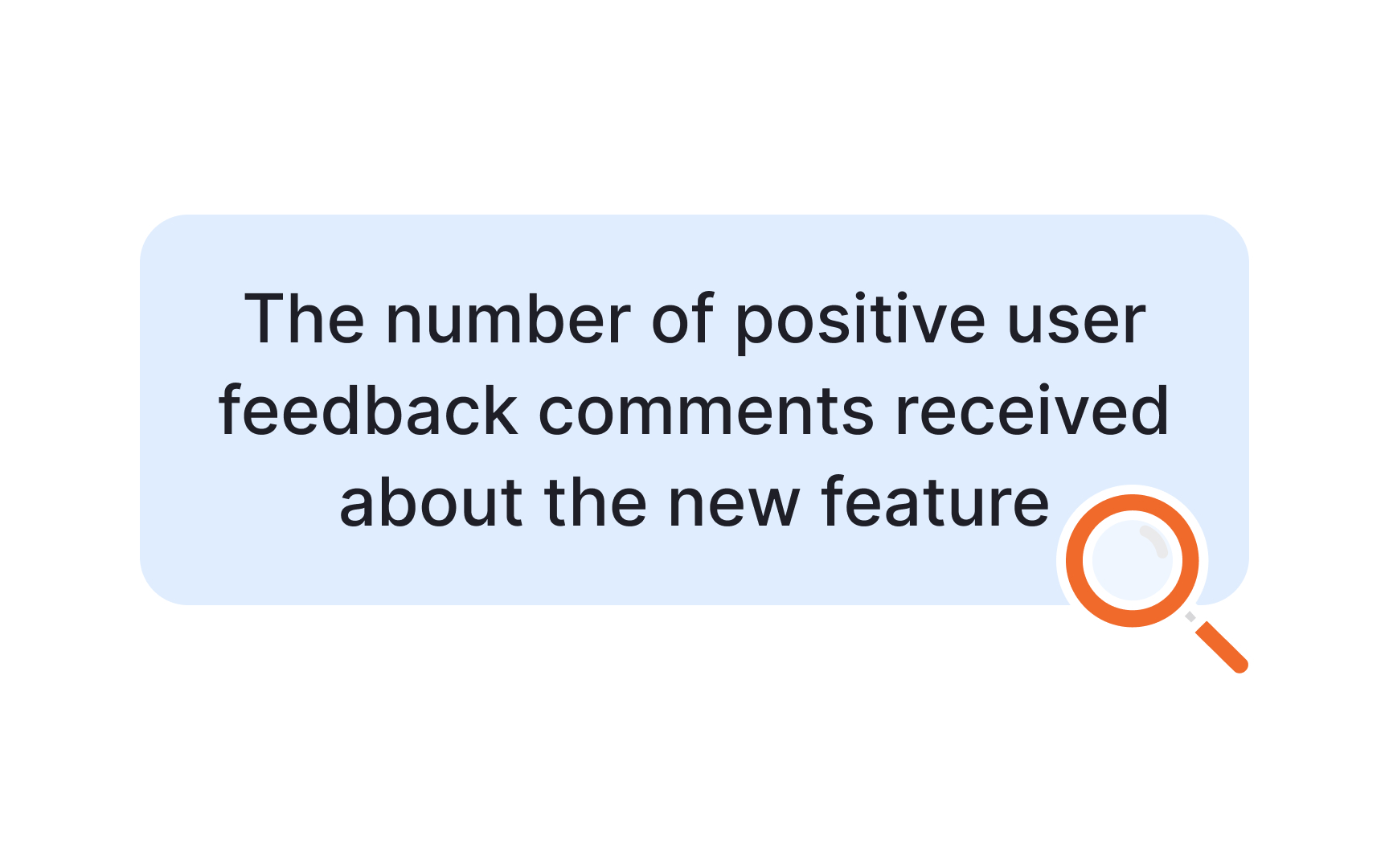
When measuring product outcomes, measure the value created for users, not just the actions taken. For example, instead of simply counting the number of features added (an action), focus on how a specific feature, like a personalized recommendation engine, increased user engagement by 25% or led to a 15% boost in repeat purchases (the value).
This helps avoid the trap of "busy work" where teams focus on completing tasks without considering whether those tasks are actually contributing to the desired outcomes. It keeps everyone focused on what really matters.
Compare sentiment metrics with behavior
Pairing a sentiment metric with a behavior metric helps you understand how user feelings impact their actions and vice versa. For example, if users report high satisfaction with a feature (sentiment), you should check if they use it more often (behavior). Likewise, if users frequently engage with a particular feature (behavior), it’s important to see if this leads to higher satisfaction (sentiment).
This two-way pairing is crucial because it reveals whether positive feelings drive the desired actions, like increased usage or loyalty, and whether certain behaviors lead to improved satisfaction. By analyzing both directions, you gain a clearer picture of how your product influences user experience and can make informed decisions to enhance both user engagement and satisfaction. This ensures that you’re not just focusing on one aspect, but understanding the full relationship between how users feel and how they interact with your product.
Encourage a learning mindset in the team
Encouraging a learning mindset in your product team is crucial for long-term success. When you focus too much on performance, team members may start competing or avoiding risks, which can hinder collaboration and creativity. A learning mindset, on the other hand, fosters curiosity, experimentation, and growth. It’s about seeing outcomes as opportunities to learn, not just as targets to hit.
To encourage this mindset, set goals that promote exploration and improvement rather than just meeting specific metrics. For example, instead of only aiming for a certain increase in user engagement, encourage the team to test different approaches and learn what works best. Celebrate both successes and the lessons learned from challenges, emphasizing that every experience contributes to the team’s growth.
Topics
References
- The Build Trap — Melissa Perri | Melissa Perri
- How to write SMART goals (with examples) | Work Life by Atlassian
- Defining Product Outcomes: The 8 Most Common Mistakes You Should Avoid - Product Talk | Product Talk