



.svg)


A research debrief is a structured conversation held immediately after a research session, while observations are still sharp and details have not yet faded. Running a debrief right after each session prevents insights from being lost, surfaces patterns that individual note-takers might have missed, and gives the team a shared understanding of what they just witnessed before interpretation begins.
Debriefs serve a different purpose than analysis. Analysis happens later, with full data in hand. Debriefs capture the immediate, unfiltered reactions of everyone who was in the room: the moderator, the note-taker, and any observers. Those raw impressions, gathered while memories are fresh, are often the clearest signal a team gets about what is working and what is not.
Running an effective debrief requires preparation and structure. Without a clear agenda and a moderator to keep the discussion grounded in observations rather than jumping to solutions, sessions drift into speculation and opinions. This lesson covers how to prepare for debriefs, how to moderate them productively, how to take useful notes, and how to adapt the format when the team cannot meet in real time.
Why teams run UX research debriefs
A debrief is a short meeting where your team or clients discuss and reflect on research that has just taken place. Sessions typically run 30 minutes to an hour and can range from a structured, moderated activity to an informal conversation over dinner. The format matters less than the timing: debriefs work best when they happen right after a session, while observations are still fresh.
What makes debriefs genuinely useful is what they do for the team. When a researcher, designer, and product manager sit together after a usability session, for example, each person brings a different lens to what they observed. A designer might notice a navigation struggle that the researcher cataloged as a minor hesitation. That exchange wouldn't happen in a report.
Debrief sessions help teams:
- Share reactions and surface observations before individual memory fades
- Process and align on what the findings actually mean for the project
- Separate issues that need immediate action from bigger strategic questions
- Give everyone a chance to flag concerns or suggest improvements to the study design
- Build a shared understanding that makes final synthesis faster and more focused[1]
Run a debrief right after each research session
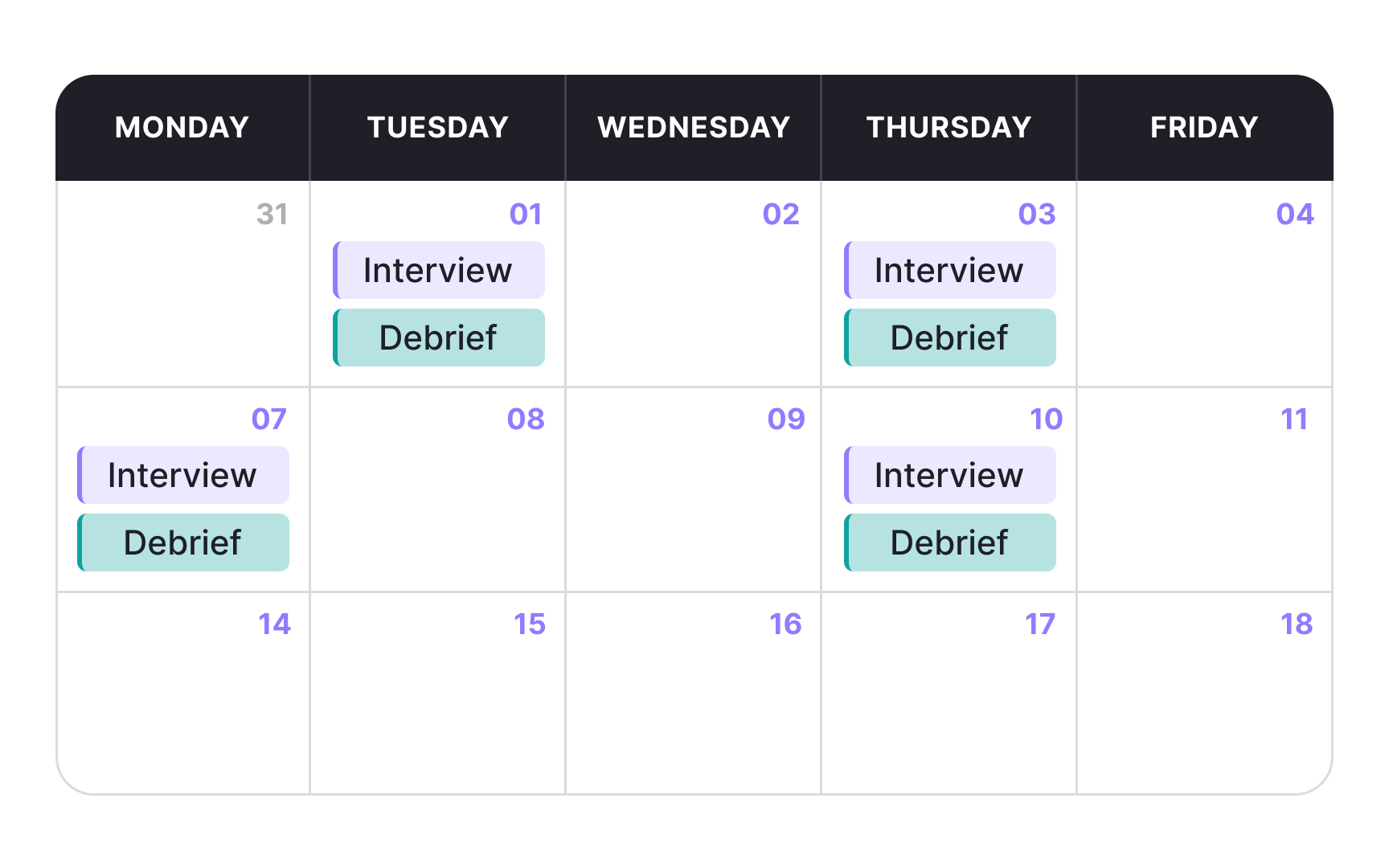
Memory fades fast. The observations that feel vivid right after a session start blurring within hours, and details that seemed impossible to forget have a way of disappearing by the next morning. This is why debriefs work best when they happen immediately after research, while everything is still fresh.
A practical way to make this happen is to build the debrief into the calendar invite from the start. If an interview runs 60 minutes, schedule a 90-minute block — the extra 15 minutes is your debrief. That way, there's no negotiating for time after the fact, and the conversation happens while observations are still sharp.
Debriefs also serve a bigger purpose in the research process. When you run short debrief sessions after each research session, the final synthesis meeting at the end of a study becomes much more manageable. Instead of trying to make sense of everything at once, your team arrives with a shared understanding already forming. The synthesis focuses on decisions, not on catching up.[2]
Pro Tip! Even a 15-minute debrief beats none at all. A quick conversation right after the session captures more than a detailed write-up done the following day.
Prepare for a research debrief session
Debrief prep rarely takes more than 15 minutes, but skipping it can cost you the whole conversation. Stakeholders have different schedules, and without a plan, the window closes fast. A little preparation before the session keeps the right people available and the conversation on track.
Who joins a debrief varies. Some team members will have watched the session live. Others may have been in back-to-back meetings. The debrief is a chance for everyone with a stake in the research to align on what happened, which means coordinating availability in advance matters as much as preparing the content.
Regardless of team size, a few things are worth doing before the session starts:
- Prepare a board. Set up a shared digital workspace or a physical whiteboard with prompts: what stood out, key quotes, surprises, and open questions.
- Brief your observers. A short note beforehand, something like "write down the exact words the participant used," gives people a concrete task and leads to richer notes.
- Block time in the invite. Include the debrief in the calendar invite upfront. When the time is already reserved, people are far more likely to stay.
The goal is to be ready the moment the participant leaves, while observations are still fresh.[3]
Pro Tip! The simpler your board, the better the conversation. A single prompt like "what surprised you?" often unlocks more useful discussion than a structured list of topics.
Moderate a research debrief session
As the debrief organizer, your job isn't to present findings. You are here to help the group make sense of the research together. The goal is to move the conversation from surface reactions ("the participant didn't like the button") to insights that actually inform decisions ("users are worried about losing their progress"). That shift rarely happens on its own. It needs someone steering it.
A few things help keep a debrief productive:
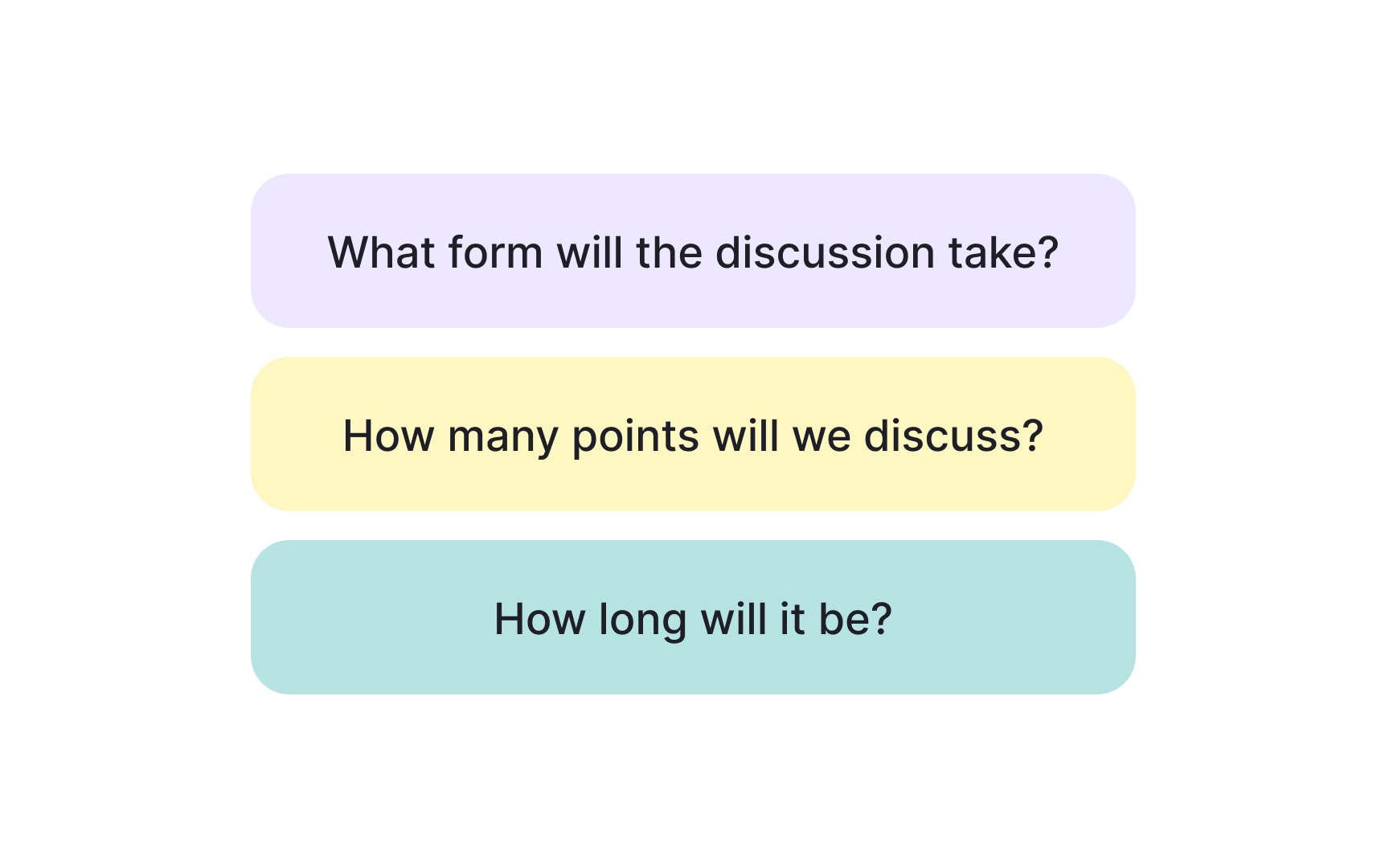
- Set ground rules. Explain the format upfront. Will it be a conversation, a whiteboard session, or something more structured? Will people work individually first, then share, or will it be an open discussion from the start? When people know what's expected, they contribute more confidently.
- Define your terms. Not everyone in the room shares the same vocabulary. If you're asking for "pain points," explain that you mean persistent problems that frequently get in users' way, for example. Clear language prevents people from talking past each other.
- Give time boundaries. Tell the group how long each section will run. 5 minutes to brainstorm, 5 minutes to discuss. Then hold to it. A strict timer keeps energy up and stops any one topic from swallowing the whole session.
Keep a research debrief focused on observations, not solutions
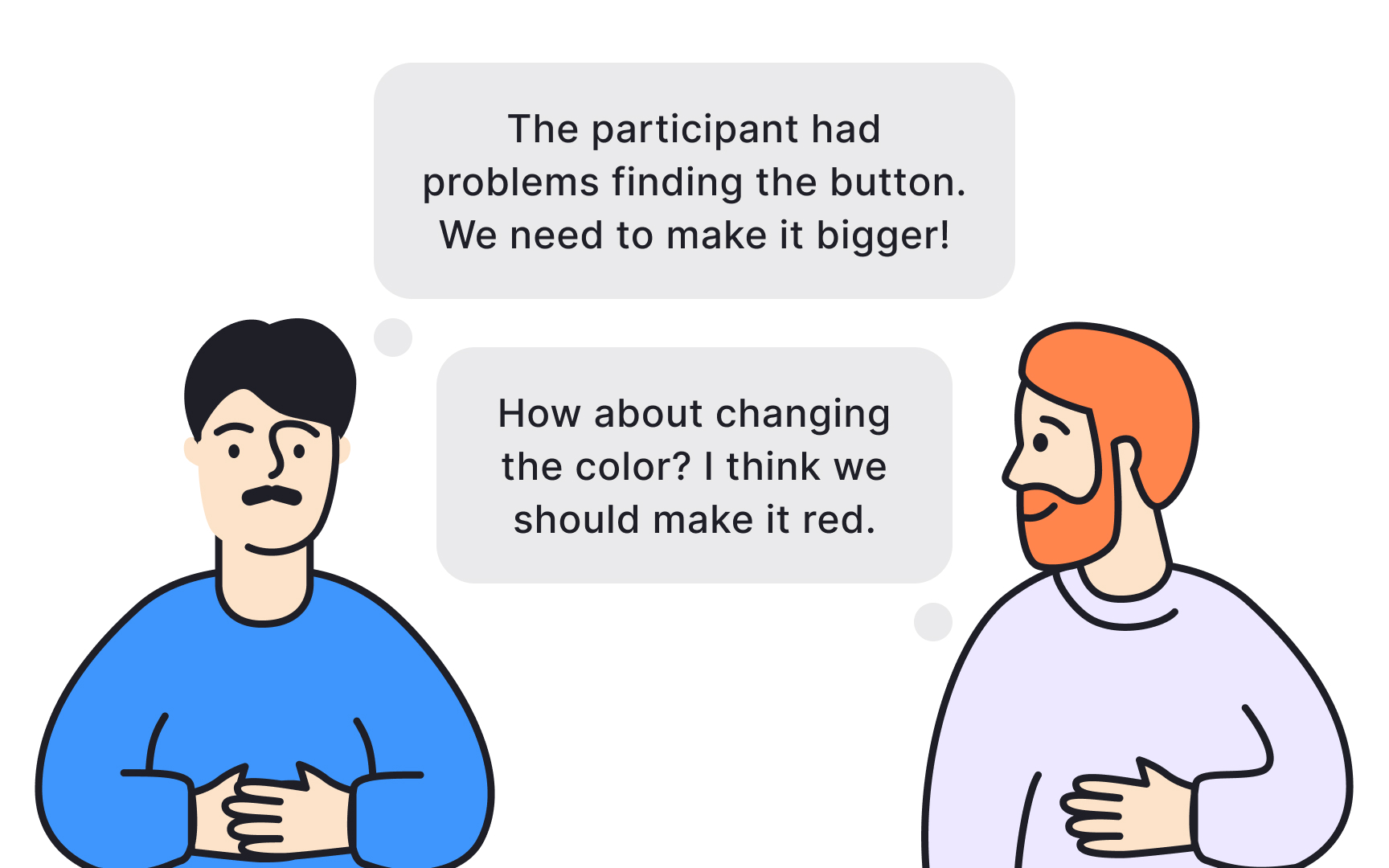
A debrief is not a design meeting. Its purpose is to surface all possible interpretations of what just happened, not to land on answers or debate the best fix for a problem. That comes later. Protecting this distinction is what keeps a debrief genuinely useful.
In practice, people naturally drift toward solutions. A designer notices a usability issue and immediately wants to discuss how to fix it. It feels productive, but it shortcuts the process. When the conversation jumps to solutions too early, half the observations never get shared.
As the moderator, your job is to keep the conversation moving through observations and interpretations first. A simple redirect works well: "That's a good idea, let's park it and come back to it" keeps the energy without losing momentum. A corner of the board reserved for ideas that come up early is a practical way to honor contributions without derailing the flow. People are more willing to move on when they know their idea hasn't been dismissed.
Pro Tip! If the people you're debriefing with keep jumping to solutions, it's often a sign the research goals weren't sharp enough going in. Use it as a cue to refine the focus for the next session.
Take notes during a debrief session
Notes do two things in a debrief. They let you refer back to ideas or issues that came up during the conversation, and they give you something concrete to share with team members or stakeholders who couldn't attend.
There are a few ways to handle note-taking depending on your setup. You can designate one person to capture everything while the rest of the group focuses on the discussion. Or you can give each participant a short list of questions to fill out during the session, which keeps everyone engaged and accountable.
Once the debrief wraps up, collect the notes and put together a brief summary to share with the wider team or project stakeholders. This keeps everyone aligned on what was learned and what happens next. If you used a whiteboard/digital board or sticky notes, take a photo or save the file before anyone leaves.
Use a board and sticky notes to structure a group debrief
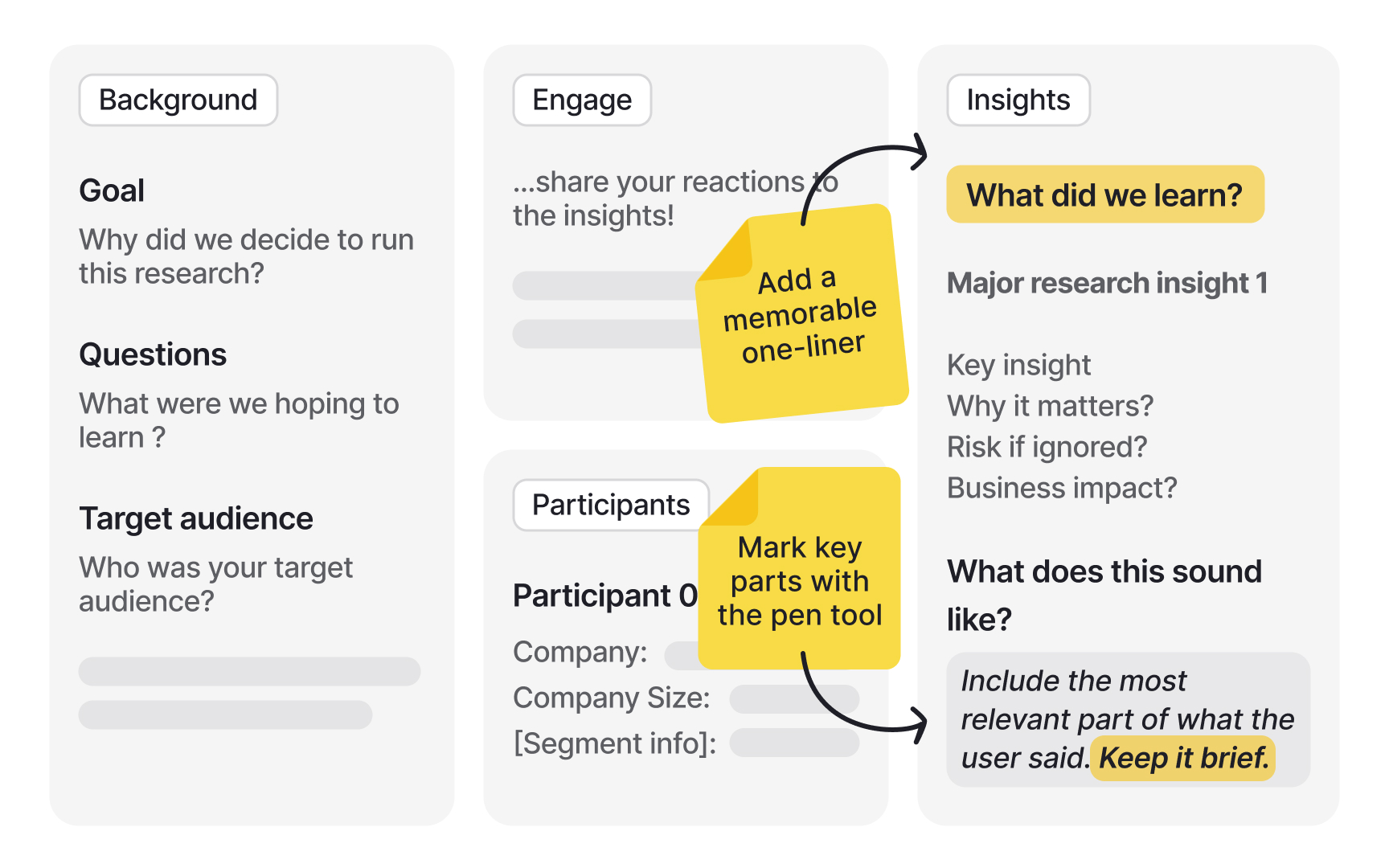
When several people observe a session together, as in usability testing or focus groups, a shared board and sticky notes can make the debrief more focused. Without a light structure, the first observation shared tends to pull everyone's attention, and other notes never make it into the conversation.
The board method solves this by separating the writing phase from the discussion phase. Everyone captures observations independently first, then shares them at the same time. This gives quieter contributors the same weight as more vocal ones before anyone has a chance to influence anyone else.
The method works the same way whether you're in person with a physical whiteboard and post-its, or remote with a tool like Miro or FigJam:
- Set up the board. Divide it into sections matching your session prompts, for example: key takeaways, surprises, needs, and open questions.
- Write silently. Go through each section one at a time. Everyone adds their observations independently, one idea per note, without talking.
- Post notes at the same time. Once everyone is done with a section, add notes to the board together, still without discussion.
- Then open the floor. Group similar ideas, spot patterns, and if useful, reshuffle notes by issue severity or ease of addressing.
For a two-person debrief, a shared board can also be a good idea to add notes and talk through them together.[4]
Pro Tip! Keep notes short and specific. One clear observation per note is more useful during grouping than a long sentence that covers several things at once.
Run an async debrief when the team can't meet live
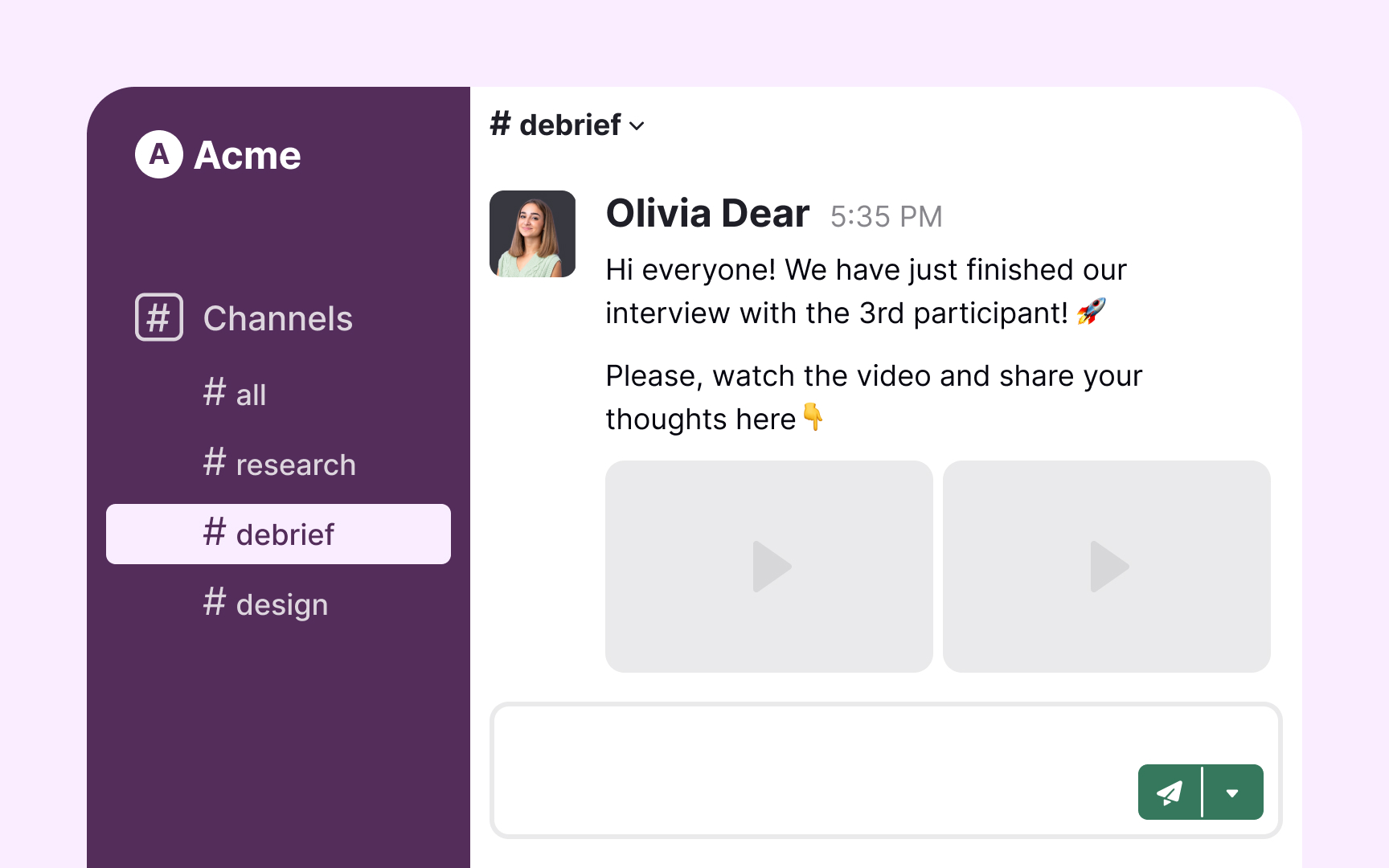
Remote teams don't always have the luxury of gathering at the same time. When schedules don't align, asynchronous debriefing lets the conversation start without everyone in the same virtual room.
Pick whatever platform your team already uses: a Slack channel, a shared doc, a project management tool. The format matters less than the habit. Post your initial analysis, share it with the team, and ask questions to get people thinking. Photos and images help too, especially for field research where context is hard to convey in words alone. Plan time between sessions to post updates, or set a once-a-day cadence if you're doing extended fieldwork.
A few things make async debriefs more useful:
- Lead with surprises. Instead of summarizing everything that happened, share the biggest contradictions or unexpected moments. This keeps the team focused on what actually needs discussion.
- Ask direct questions and tag people. Questions prompt responses. Tagging specific people makes it harder to scroll past without engaging.
- Follow up with a live conversation. Async sharing starts the discussion, but it doesn't replace a proper debrief. Schedule a meeting as soon as the team can get together.
Debrief test participants after a research session
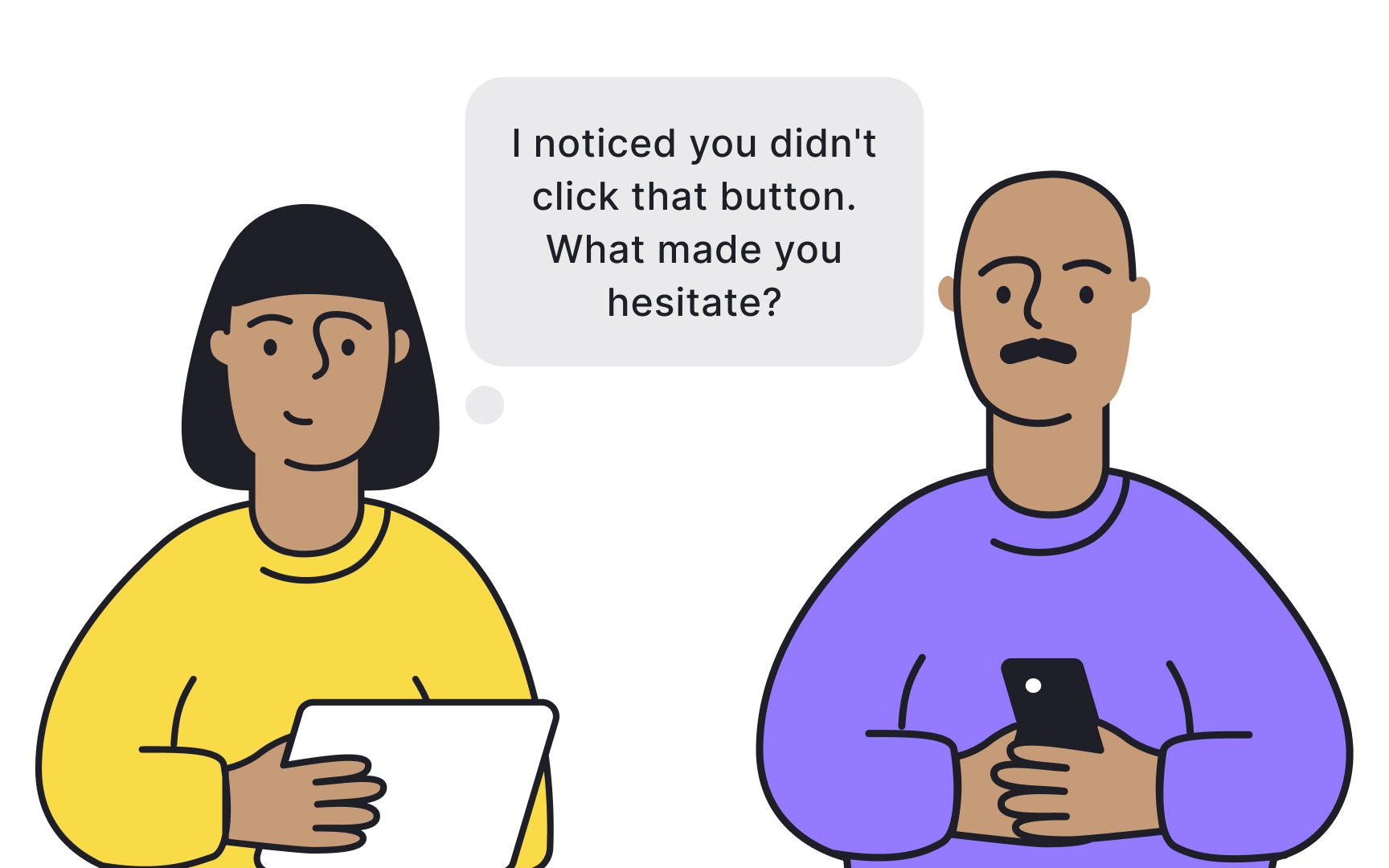
Most debriefs in UX research happen with team members and stakeholders. But there's value in debriefing the participants themselves, as researchers often do after psychological studies. The goal is to let participants know what was being tested and why.
In UX research, this kind of debrief builds empathy and helps participants better understand the product they just interacted with. More importantly, it can double as a mini user interview. During a usability test, researchers avoid influencing participants to keep their behavior natural. The debrief after the test removes that constraint, giving you a chance to ask about things you noticed but couldn't probe during the session.
For example, if a participant ignored a button entirely, you can ask them about it directly once the test is over. That one question can turn a puzzling observation into a clear insight.
Getting started is straightforward. After the test, ask participants if they have any questions, then briefly explain what you were working on and why. That opening often prompts them to share thoughts they held back during the session.[5]
Use AI to support research session debriefs
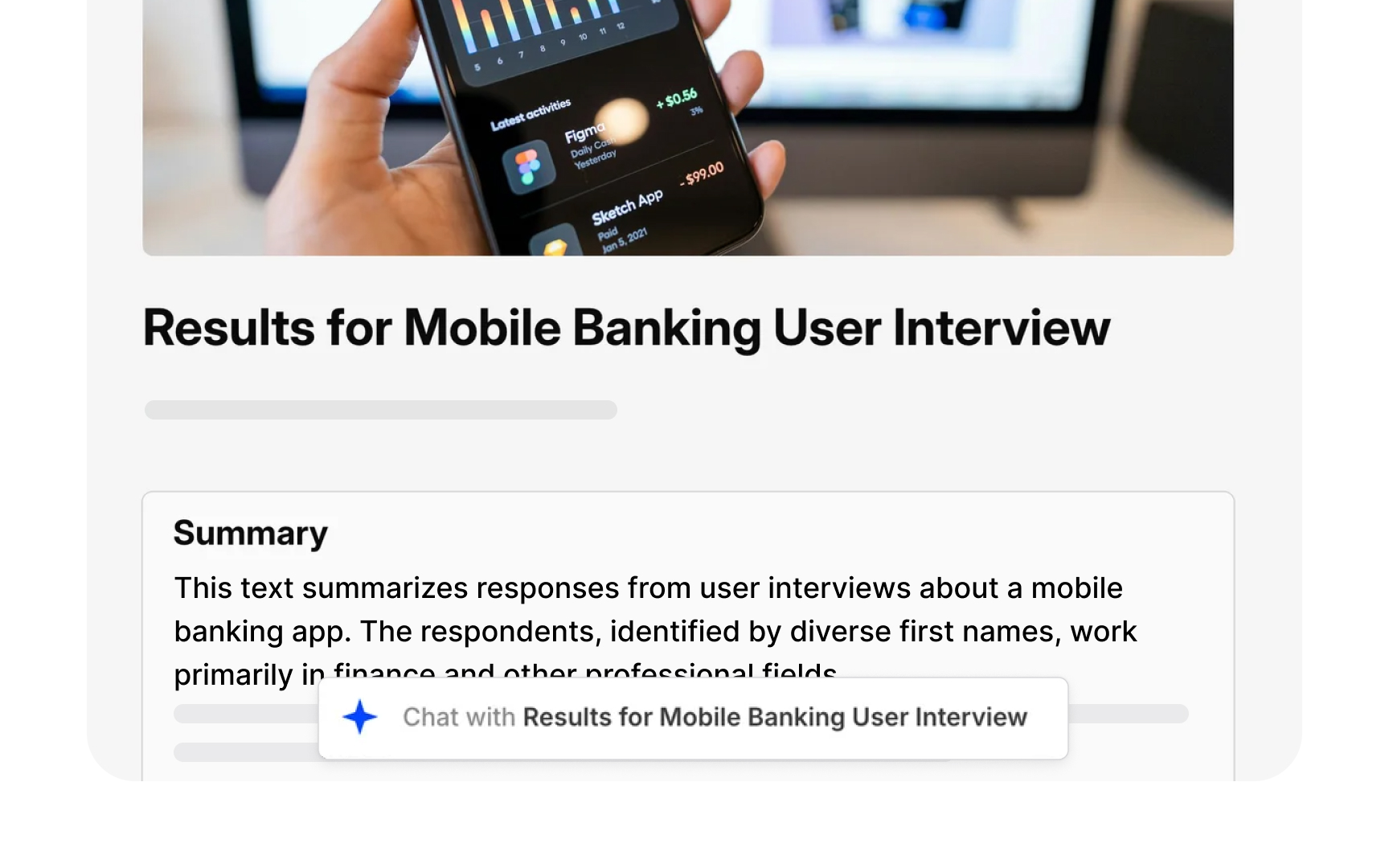
AI can make debriefs faster and more structured, but it works best as a starting point rather than a replacement for the conversation itself.
Here is how to use it effectively:
- Generate an AI summary immediately after the session. Tools like Looppanel and Dovetail produce a session breakdown within seconds of the recording ending, organized by discussion guide topic. Use this as the opening prompt for your debrief, not a substitute for it. The summary gives everyone a shared starting point and reduces the time spent reconstructing what happened.
- Ask AI to surface moments worth discussing. Some tools let you query the transcript directly. A prompt like "What moments in this session seemed most emotionally charged?" or "Were there any responses that contradicted what the participant said earlier?" can draw attention to things that did not make it into the summary.
- Add what AI missed. Summaries flatten nuance. Non-verbal cues, hesitations, the energy in the room — none of that appears in a transcript. The debrief is where your team captures the context that AI cannot. Assign someone to note these observations before the summary takes over the conversation.
- Use the debrief output to refine your guide. Patterns emerging after two or three sessions are a signal to adjust upcoming questions. AI can help you spot these early by comparing observations across sessions.[6]
Topics
References
- How To Debrief a Research Team After an Interview (With Template) | Indeed Career Guide
- How to Debrief Your Team After a Research Session | dscout.com
- Facebook Researcher Methods: talking about findings with your team | Medium
- An open letter to UX researchers: it’s time to start debriefing your participants | Medium
- The Ultimate Guide to Note-taking for Research: Templates & Methods