.svg)

Products go through structured development stages before reaching customers. Understanding these stages helps product managers plan timelines, allocate resources, and coordinate with teams effectively. The product development cycle encompasses ideation, design, prototyping, testing, and launch activities that transform concepts into market-ready solutions. Each stage serves specific purposes and requires different approaches. Testing phases like alpha and beta help teams catch issues before public release. These controlled testing environments allow internal teams and external users to validate functionality and provide feedback. Launch strategies determine how products enter the market, from limited releases to full availability. Product managers document changes through release notes and accelerate development through rapid prototyping techniques. These terms form the foundation of product development vocabulary. Knowing when products move from development to testing to launch helps teams coordinate effectively and communicate clearly with stakeholders.
Product development cycle
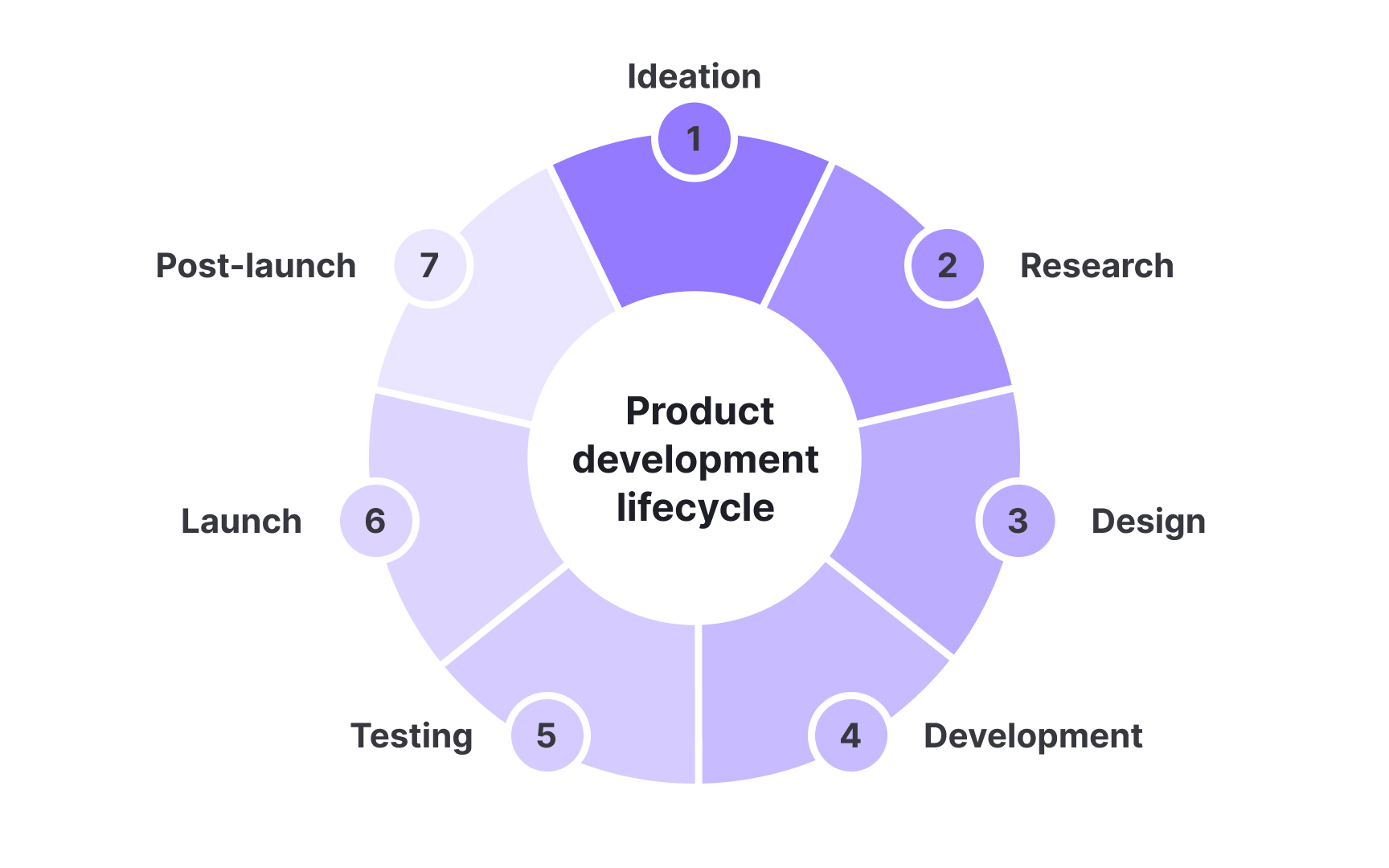
The product development cycle describes the complete process of bringing a product from initial idea to market release and beyond. This cycle consists of several distinct stages that guide teams through conceptualizing, building, and launching products. The cycle typically includes:
- Ideation and concept validation
- Design and prototyping
- Development and engineering
- Testing and quality assurance
- Market launch and distribution
- Post-launch monitoring and iteration
Launch marks the product's entry into the market, but the cycle continues beyond this point. Post-launch activities include monitoring performance, gathering user feedback, and planning updates. Many teams view this as a continuous cycle rather than a linear process, as learnings from one version inform the next iteration.
The cycle's structure helps teams organize work, coordinate across functions, and maintain focus on moving products forward systematically. Understanding this cycle enables better planning and resource allocation throughout product development.[1]
Product iteration
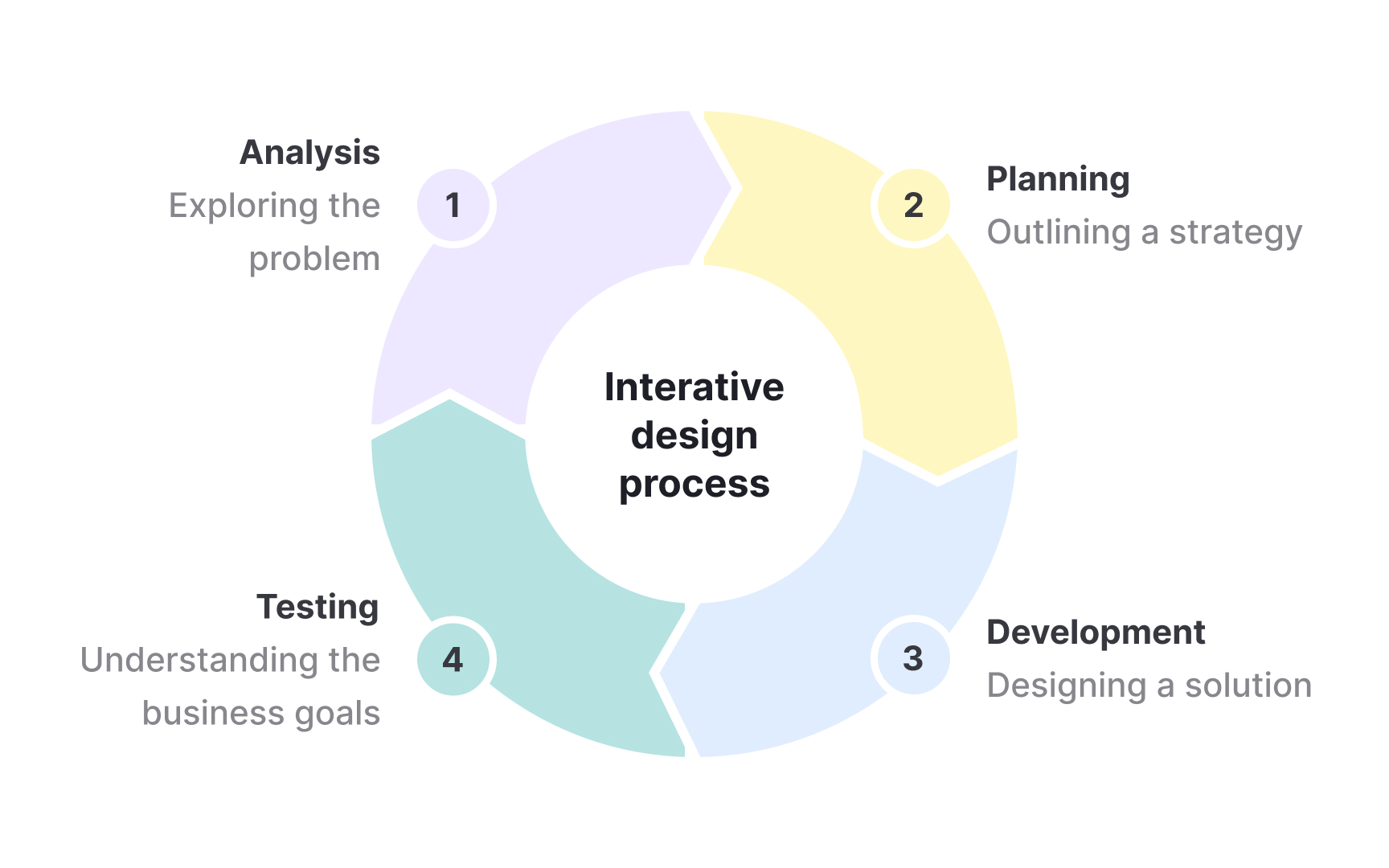
Product iteration is the practice of releasing successive versions of a product, with each version incorporating improvements based on user feedback and learning. Rather than waiting to build a perfect product, teams release working versions and refine them over time.
Iteration enables teams to respond to real user needs instead of assumptions. Each release cycle provides opportunities to gather data, test hypotheses, and adjust direction. Common iteration approaches include:
- Releasing minimum viable versions first
- Adding features incrementally based on feedback
- Fixing issues discovered in production use
- Adapting to changing market conditions
- Testing different solutions to the same problem
The iteration cycle typically involves releasing a version, collecting user feedback and usage data, analyzing what works and what doesn't, and then planning improvements for the next version. This cycle repeats continuously as long as the product remains active.
Iteration reduces risk by avoiding large investments in unvalidated ideas. Teams learn quickly what resonates with users and can pivot when needed. Successful products rarely emerge fully formed but evolve through multiple iterations toward product-market fit.[2]
Rapid prototyping
Rapid prototyping is the process of quickly creating and testing multiple iterations of a product concept within compressed timeframes. This approach emphasizes speed and iteration, allowing teams to validate ideas and gather feedback without investing heavily in full development.
The process involves creating early, testable versions of products that demonstrate key functionality or design concepts. These prototypes range from simple sketches and paper mockups to interactive digital prototypes, depending on what teams need to test. Benefits of rapid prototyping include:
- Faster feedback cycles from users and stakeholders
- Early identification of design flaws and issues
- Reduced development risk and costs
- User-centered design through continuous testing
- Accelerated time-to-market for validated concepts
Rapid prototyping uses short iteration cycles. Teams build a prototype, test it with users or stakeholders, gather feedback, and quickly refine the design based on learnings. This cycle may repeat multiple times, with each iteration bringing the design closer to the final product.
The approach reduces development risk by identifying problems early when they are cheaper to fix. Rather than relying on assumptions, teams gather real feedback from tangible prototypes.[3]
Alpha test
Alpha testing is the first phase of formal product testing conducted internally within the development organization. During this phase, internal teams, including developers and quality assurance engineers, test the software to identify bugs and issues before external release.
Alpha testing typically occurs in a controlled environment that mimics real-world usage conditions. Testing approaches include:
- White-box testing examining internal code and logic
- Black-box testing evaluating user-facing functionality
- Integration testing checking component interactions
- Performance testing under controlled conditions
The goal is to identify critical problems early when they are cheaper and easier to fix. Alpha testing focuses on core functionality, stability, and major bugs that would prevent the product from working properly. Teams document issues systematically and address them before moving to beta testing.
Alpha software may contain serious errors and missing features since it is still under development. This testing phase usually ends with a feature freeze, indicating no more features will be added. At this point, the product is considered feature-complete and ready for broader testing.[4]
Beta test
Beta testing is the next testing phase after alpha testing, where the product is tested by external users in real-world environments. This phase involves actual customers or selected users testing the product as they would use it in their daily activities.
Beta testing aims to validate the product with real users under realistic conditions. Testers use the product naturally, uncovering bugs, usability issues, and problems that internal testing might miss. Their diverse use cases and environments reveal how the product performs across different scenarios. Types of beta testing include:
- Closed beta with invitation-only selected users
- Open beta allowing anyone interested to participate
- Technical beta focusing on specific features
- Public beta building awareness before launch
Beta testers provide valuable insights about functionality, user experience, and overall satisfaction. Teams gather this feedback through surveys, usage analytics, and direct communication. Multiple rounds of beta testing may occur, with teams releasing updated versions based on commonalities in feedback.[5]
General availability (GA)
General availability, often abbreviated as GA, marks the stage when a product is fully released to the general public through standard sales channels. At this point, the product has completed all testing phases and is considered stable, fully functional, and ready for widespread use.
GA represents the culmination of the development process. The product has passed alpha testing, beta testing, and any release candidate phases. Key characteristics of GA include:
- All major bugs resolved and quality standards met
- Complete product documentation is available
- Full customer support infrastructure is ready
- Product backed by service level agreements
- Available through standard sales channels
Reaching GA is a significant milestone because it signals product readiness for production environments. Customers can confidently adopt the product knowing it is stable and supported. Companies can now generate revenue, scale to larger user bases, and fulfill market potential.[6]
Product launch
Product launch is the process of introducing a new product to the market and making it available to customers. This critical milestone involves coordinating marketing, sales, support, and distribution activities to ensure a successful market entry.
A launch requires extensive planning across multiple teams. Key activities include:
- Marketing develops messaging and awareness campaigns
- Sales prepares positioning and trains teams
- Support creates documentation and prepares resources
- Operations ensure distribution channels handle demand
- Engineering finalizes features and monitors stability
Launch strategies vary based on goals and product maturity. Soft launches release products to limited audiences for additional feedback before broader availability. Hard launches involve full-scale releases with extensive marketing to reach large audiences immediately. The chosen strategy affects timing, resources, and expectations.
Successful launches communicate value clearly, reach the right audience, and provide smooth customer experiences. Teams set specific goals like customer acquisition targets or revenue milestones to measure launch success.[7]
Release notes
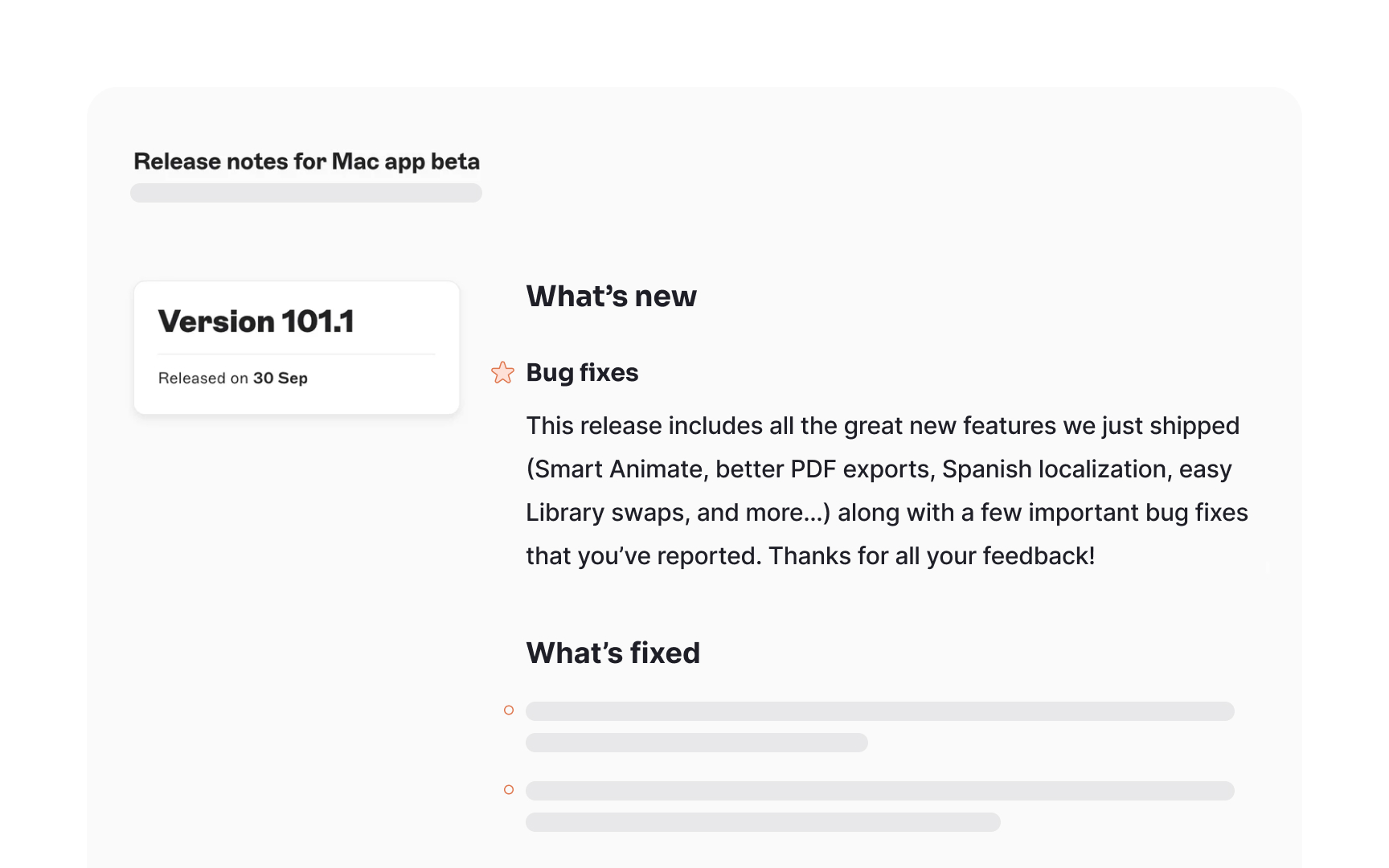
Release notes are technical documentation published alongside software updates that detail changes, new features, bug fixes, and improvements. These documents inform users about what has changed in the product since the previous version. Well-written release notes typically include:
- Version number and release date
- New features and functionality added
- Improvements to existing features
- Bug fixes and resolved issues
- Known issues and workarounds
- Required user actions or migrations
Distribution methods vary. Teams may share release notes through in-app notifications, email, dedicated documentation pages, or update prompts. The goal is to reach users where they naturally encounter the product and ensure they see important information.
Effective release notes are:
- Concise
- Written in plain language
- Focused on user benefits rather than technical implementation details
- Maintain consistent formatting across releases
- Clearly explain any actions users need to take[8]
Pro Tip! Release notes should be brief and user-focused, explaining benefits rather than technical details about how changes work.
Topics
References
- Product development | Atlassian
- Understanding the Iterative Process (with Examples) [2026] • Asana | Asana
- What is Rapid Prototyping? Methods, Tools and Examples | Formlabs
- Alpha vs Beta Testing: Key Differences, Examples, and When to Use Each
- Alpha and Beta Testing for Product Excellence | Ironclad
- General Availability (GA): Definition, Examples, and Applications | LaunchNotes
- How to Launch a SaaS Product: Step-by-Step Guide | Maxio
- How to write release notes (template +5 great examples)