



Two researchers can watch the same usability session and walk away with different findings. Neither is lying. Each one noticed what fit their expectations, remembered the first and last moments best, and filled the gaps with assumptions they didn't know they held.
These patterns are cognitive biases: systematic errors that come from the mental shortcuts everyone uses to judge quickly. They affect you when you plan a study, write questions, run sessions, and read the results. A single leading question can tilt a whole study, and a biased reading can turn one person's opinion into a headline finding. Participants bring biases too, such as saying what sounds good rather than what they really do. AI adds a new source in synthetic participants, which tend to agree with whatever the team hopes to hear.
Good intentions don't remove bias, because most of it works without anyone noticing. What helps is structure: assumptions written down before a study, notes taken the same way in every session, and a colleague with no stake in the design who checks the evidence before anyone draws a conclusion.
How bias enters UX research
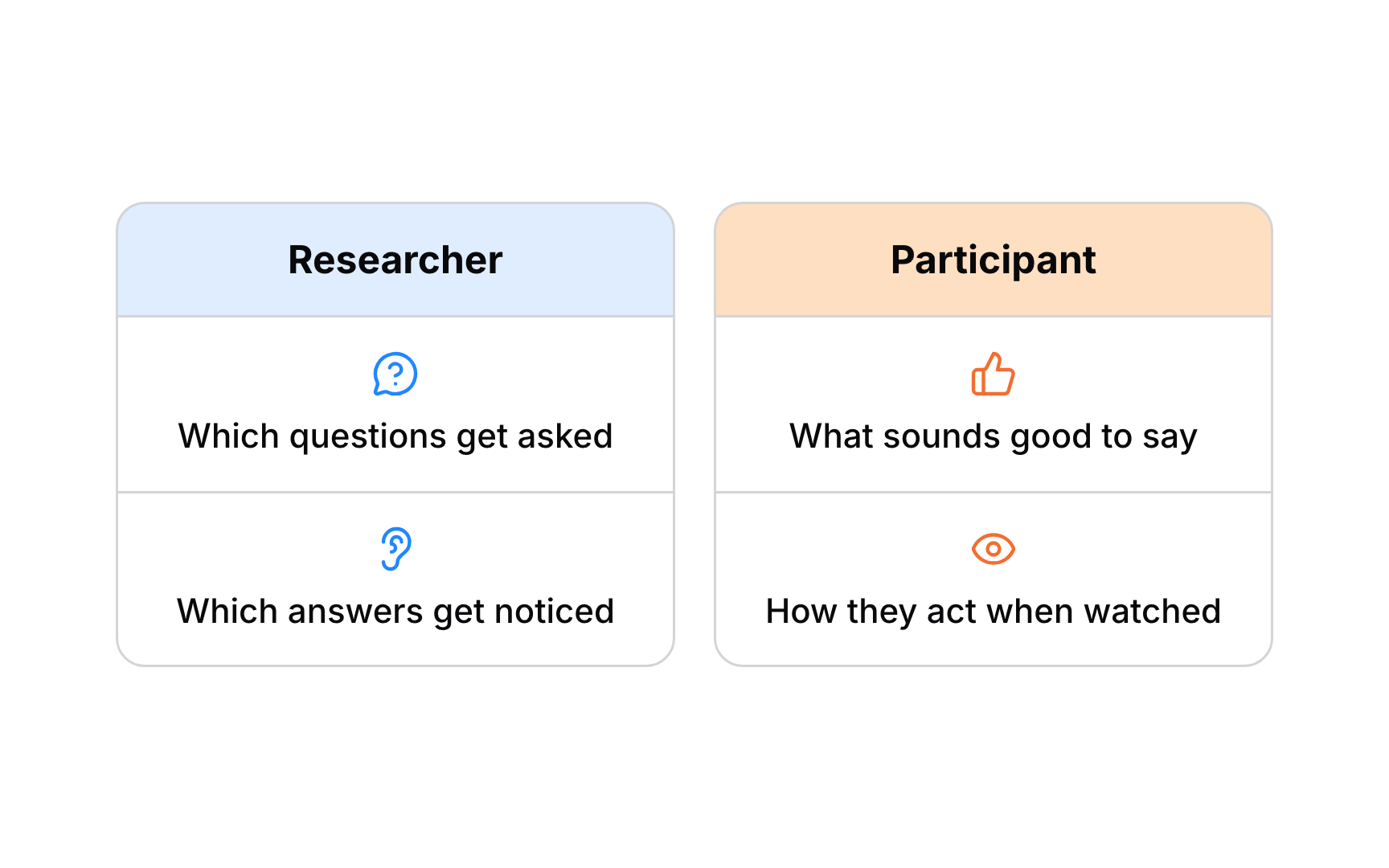
A cognitive bias is a systematic error in judgment. It comes from heuristics, the mental shortcuts people use to decide quickly. Psychologists Amos Tversky and Daniel Kahneman showed that these shortcuts usually work well but sometimes lead to serious, predictable mistakes. Most biases act without anyone noticing, so good intentions alone don't remove them.
In UX research, bias works on two sides. The researcher's biases shape which questions get asked, which answers get noticed, and how results get read. The participant's biases shape what they say and do, for example giving the answer that sounds best. Because the errors are systematic, more sessions don't cancel them out. They repeat them.
Confirmation bias in UX research
Confirmation bias is the habit of seeking and reading evidence in ways that support what you already believe. Psychologist Peter Wason first described it in 1960. The more invested a team is in a design, the stronger the pull to hear only the feedback that fits.[1]
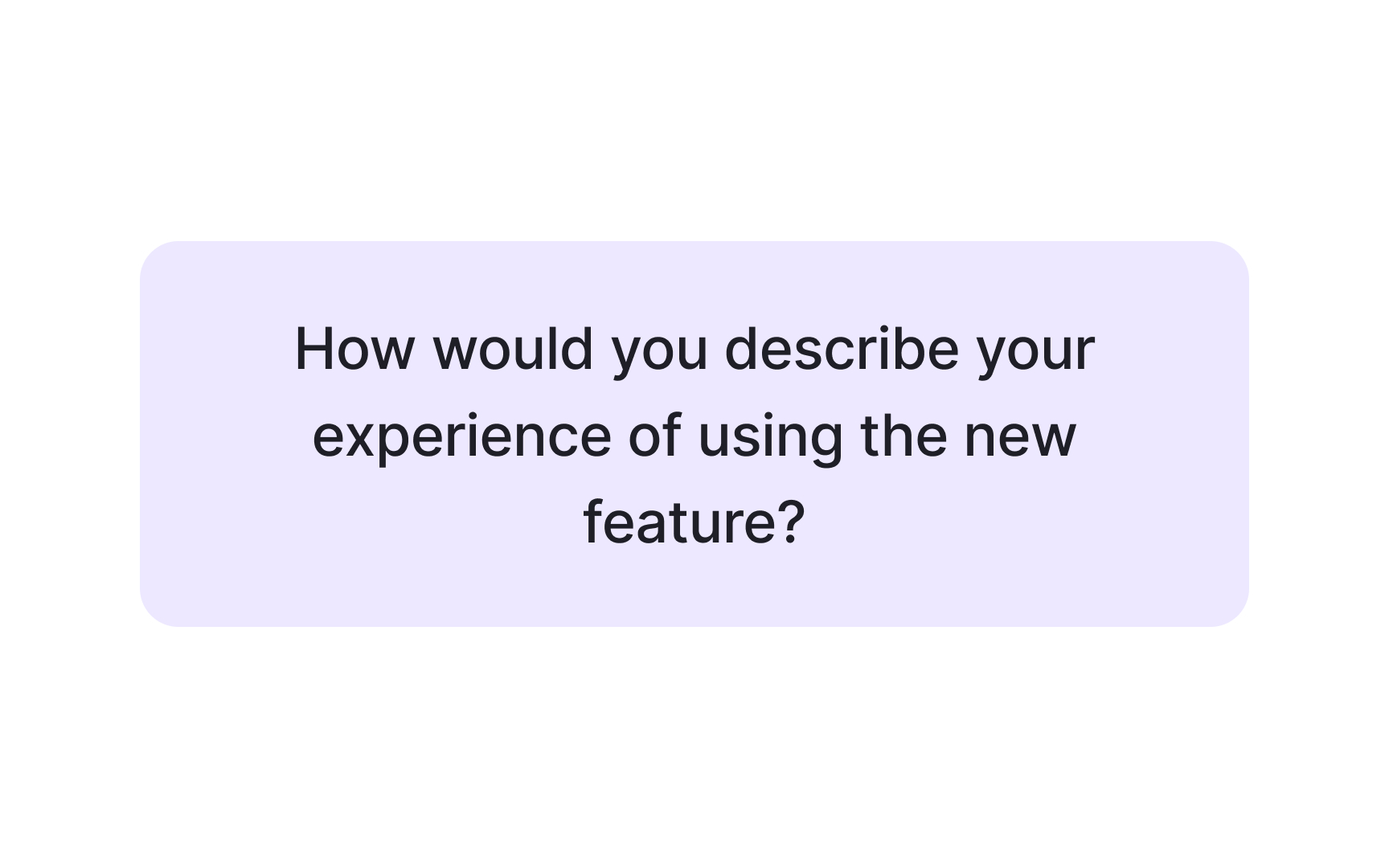
In sessions, it shows up in the questions. "Was it easy to use the new feature?" invites a yes. "How would you describe your experience of using the new feature?" leaves room for an answer nobody expected. When reading the results, look as hard for evidence against the team's idea as for evidence that supports it, and ask a colleague with no stake in the design to review the findings.
False consensus bias in UX research
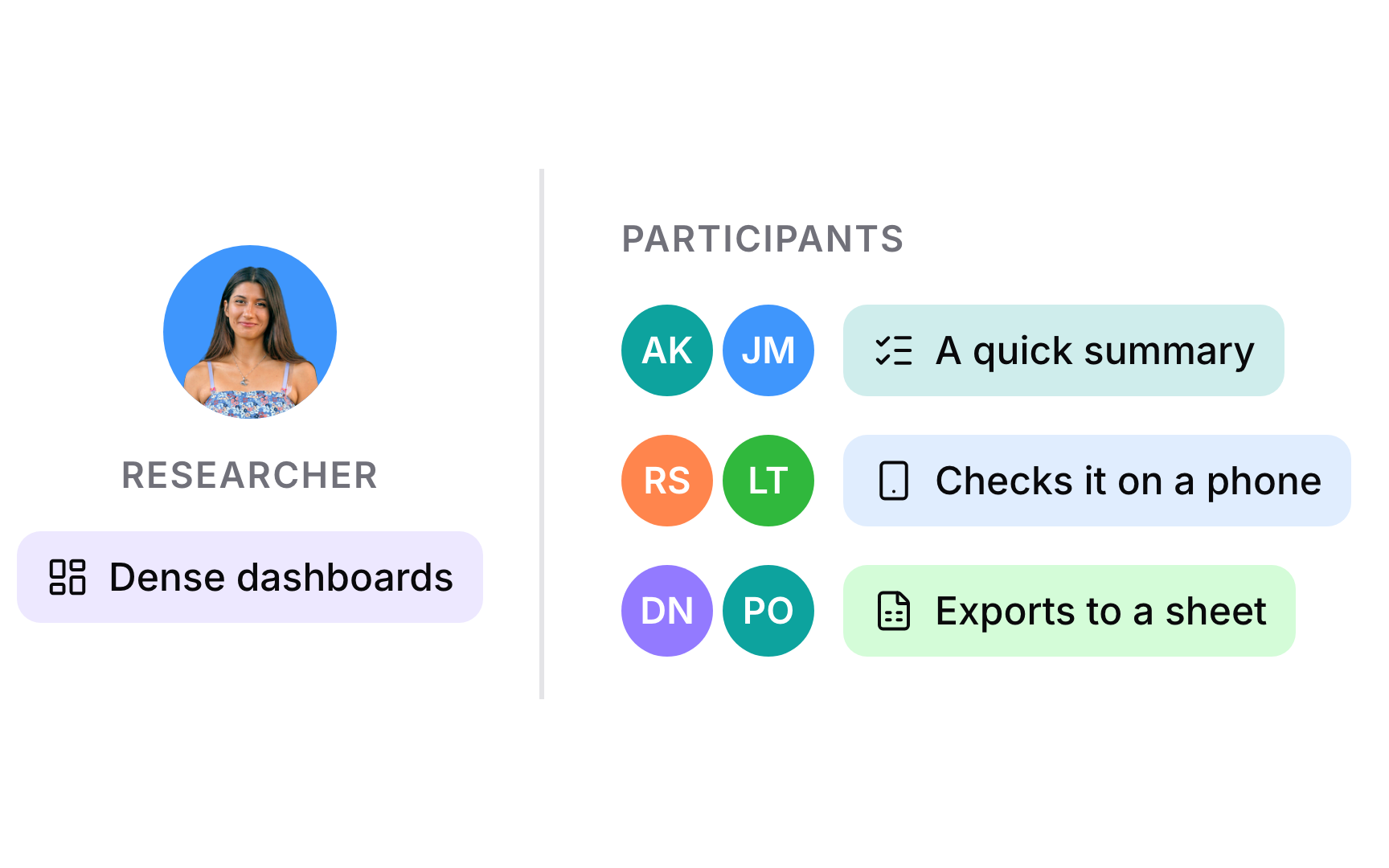
False consensus bias is the tendency to assume most people think and act the way you do. Psychologists Lee Ross, David Greene, and Pamela House named it in 1977. Under its influence, choices that differ from your own start to look rare, or even wrong.
Designers and researchers are especially exposed, because they know the product far better than its users do. A team that loves dense dashboards may assume everyone does and skip testing the layout. The counter is to treat each belief as a hypothesis: write it down before the study, then check it with people from the actual target audience, not with colleagues.
Implicit bias in UX research
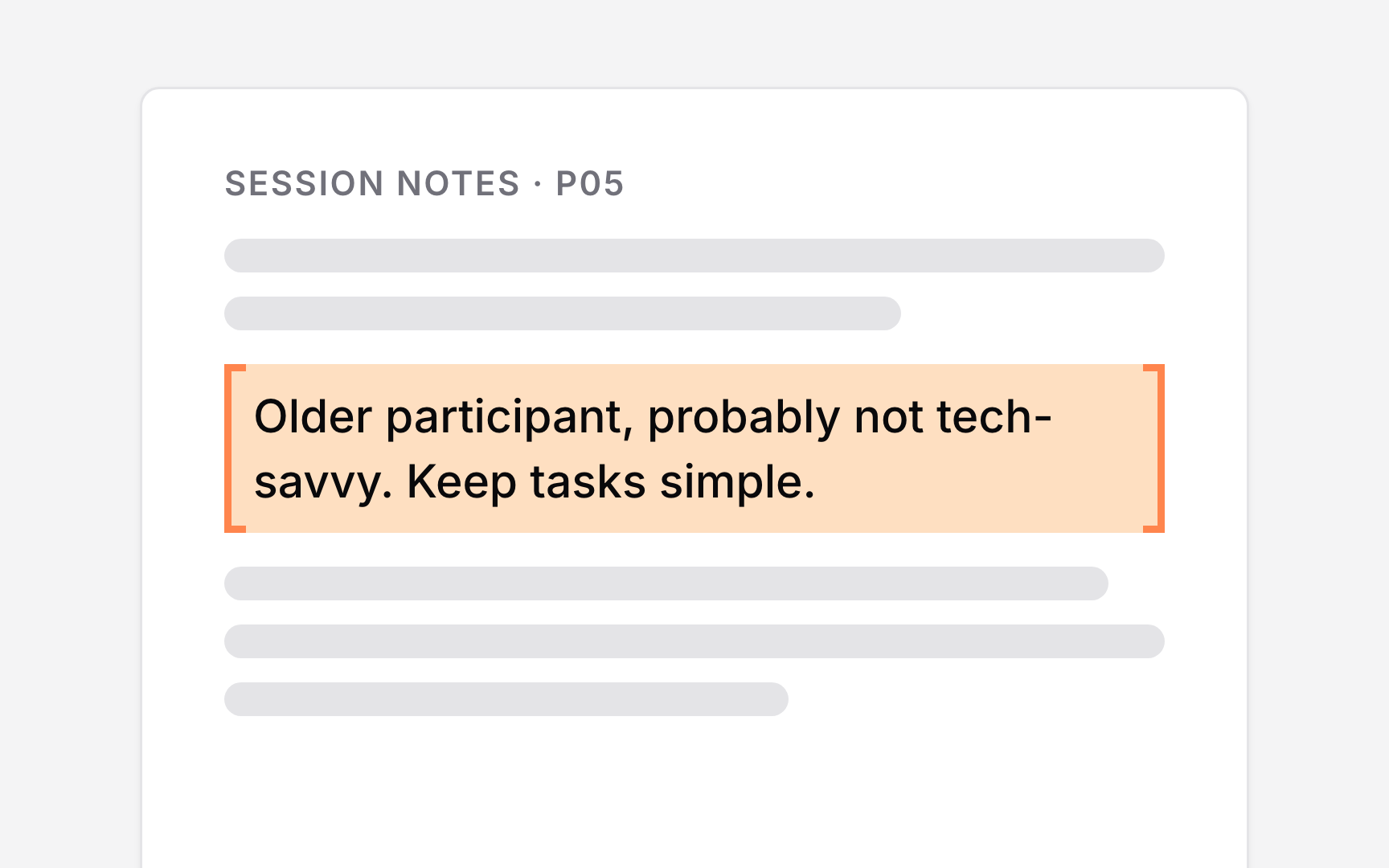
Implicit bias is an attitude or stereotype about a group that a person holds without being aware of it. Associations around age, gender, race, or income can shape behavior even in someone who sincerely rejects the stereotype.
In research, it shows up in small ways. A moderator speaks more slowly to an older participant, or simplifies tasks for someone they assume is less technical. It also shapes who gets studied. In the Gender Shades study, commercial face-analysis systems misclassified darker-skinned women up to 34.7% of the time and lighter-skinned men at most 0.8%, and the datasets used to test such systems were mostly lighter-skinned faces.[2]
Primacy and recency in research sessions

People remember the start and end of a sequence better than the middle. In research, this shows up twice. Primacy bias turns the first session of a study into the benchmark, so researchers listen for that participant's problems in every session after. Recency bias gives the last sessions, or the last minutes of a session, more weight than they deserve.
Participants are affected too. Looking back, people judge an experience mostly by its hardest moment and its ending, so one smooth final task can hide earlier struggles. Take notes the same way in every session, ask for ratings after each task rather than one score at the end, and review all sessions together before drawing conclusions.
Social desirability and the observer effect

Participants have biases too. Social desirability bias is the urge to answer in a way that looks good: people say they always read privacy policies, compare prices, or back up their files. The observer effect, also called the Hawthorne effect, means people behave differently when they know they're being watched. They try harder, read instructions they'd normally skip, and blame themselves for problems.
That's why watching behavior beats asking about it. Give people a real task instead of asking what they usually do, ask about specific recent events rather than habits, and remind participants that the product is being tested, not them.
Sunk cost fallacy in UX research
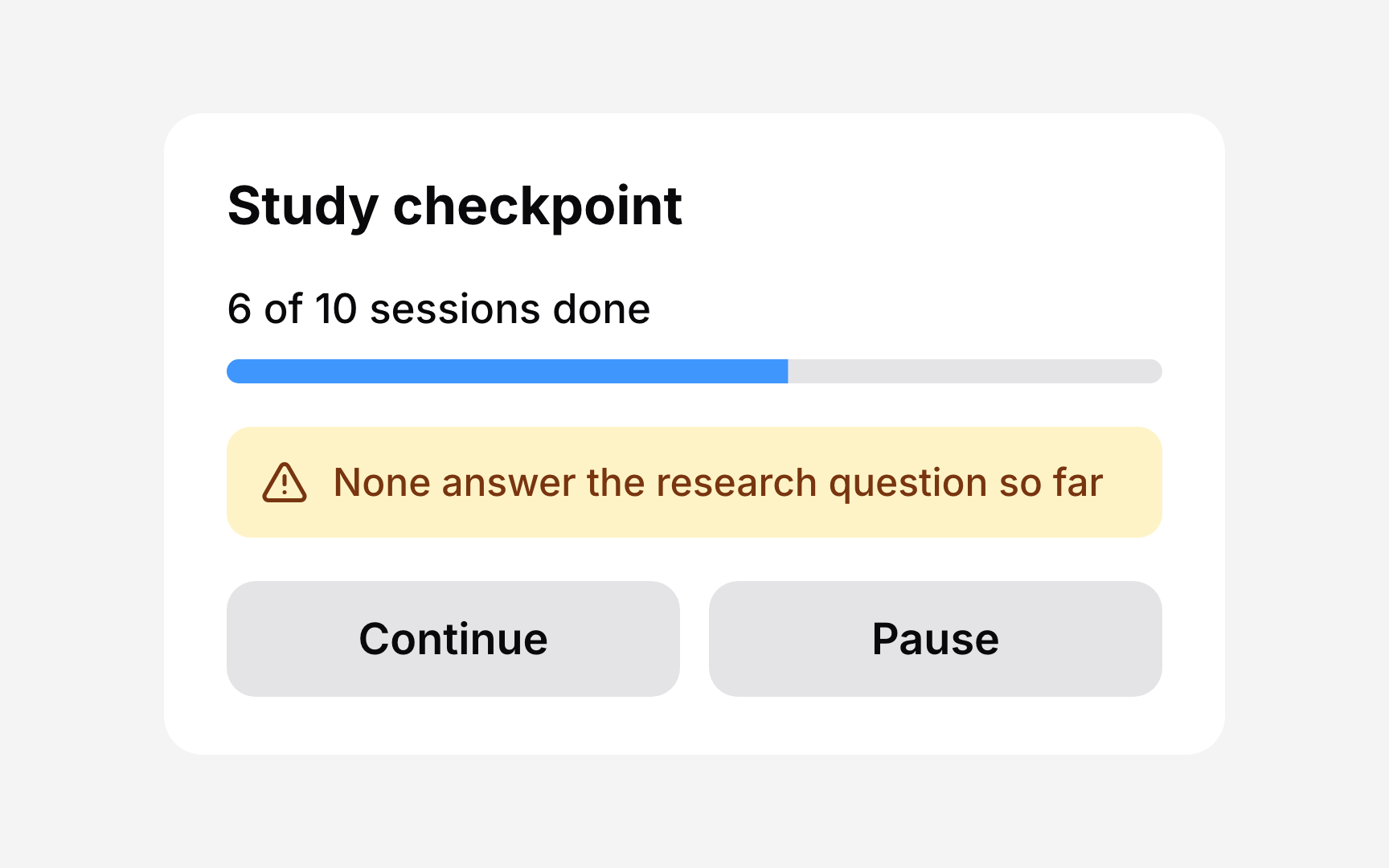
The sunk cost fallacy is the urge to keep going because of what's already been spent. In a 1985 study, Hal Arkes and Catherine Blumer found that people who had already invested in a project rated its chances of success higher, and that economics training didn't reduce the effect.[3]
In research, it looks like finishing a study after early sessions show the research question was wrong, or ordering more research in the hope it will justify a favorite concept. The fix is set before the study starts: clear goals and checkpoints where the team asks whether the study still answers the right question. A redirected study isn't a failure. It's the research doing its job.
Synthetic users and their built-in bias

Synthetic users are AI-generated profiles that try to mimic a user group. They're fast and cheap, and they can help with desk research or early hypotheses. As evidence of what people think or do, they fail in predictable ways.[4]
AI models tend to please, so synthetic participants give shallow, overly positive feedback and seem to care about everything. They can't produce behavioral data, because they never use the product. Their answers also cluster around the most common view. When NN/g compared 120 synthetic respondents with 604 real ones, the synthetic answers collapsed onto about a dozen labels, while the humans spread across more than 50.[5]
Topics
References
- Confirmation Bias in UX | Nielsen Norman Group
- Gender Shades: Intersectional Accuracy Disparities in Commercial Gender Classification | PMLR
- Redirecting
- Synthetic Users: If, When, and How to Use AI-Generated “Research” | Nielsen Norman Group
- Synthetic Users vs. Human Respondents: Same Conclusion, Less Variation | Nielsen Norman Group