.svg)

Knowing who you're building for changes everything. A designer crafting an experience for a machine operator handling repetitive, high-volume tasks will make completely different decisions than one building for a data analyst navigating complex, non-linear problems that demand focus. Without that clarity, teams optimize for the wrong things, and developers struggle to justify why a specific requirement needs to work a particular way.
User personas and user stories bring that clarity into the spec. Personas distill research into realistic profiles that capture motivations, behaviors, frustrations, and working context. User stories then translate those profiles into concrete, actionable statements: who needs something, what they need, and why it matters. Together, they frame requirements around real outcomes rather than assumed features, giving every team member a shared reference point when priorities are challenged.
Making users tangible
Personas help teams see users as real people rather than abstract data points. They are fictional yet realistic profiles that represent distinct user groups, synthesizing research findings like attitudes, behaviors, goals, and frustrations into one relatable character.
Referring to a persona by name makes a real difference. Saying "Maria doesn't have time to configure settings manually" is more actionable than "users prefer automation." It builds empathy naturally, makes it easier to step into someone else's shoes, and keeps product and design conversations grounded in human terms rather than statistics or market segments.
This shared reference point makes collaboration smoother and helps teams recall research insights throughout the specification process, not just at the start.[1]
Pro Tip! Treat personas as living references that help every design or feature discussion return to real user needs.
Turning research into personas
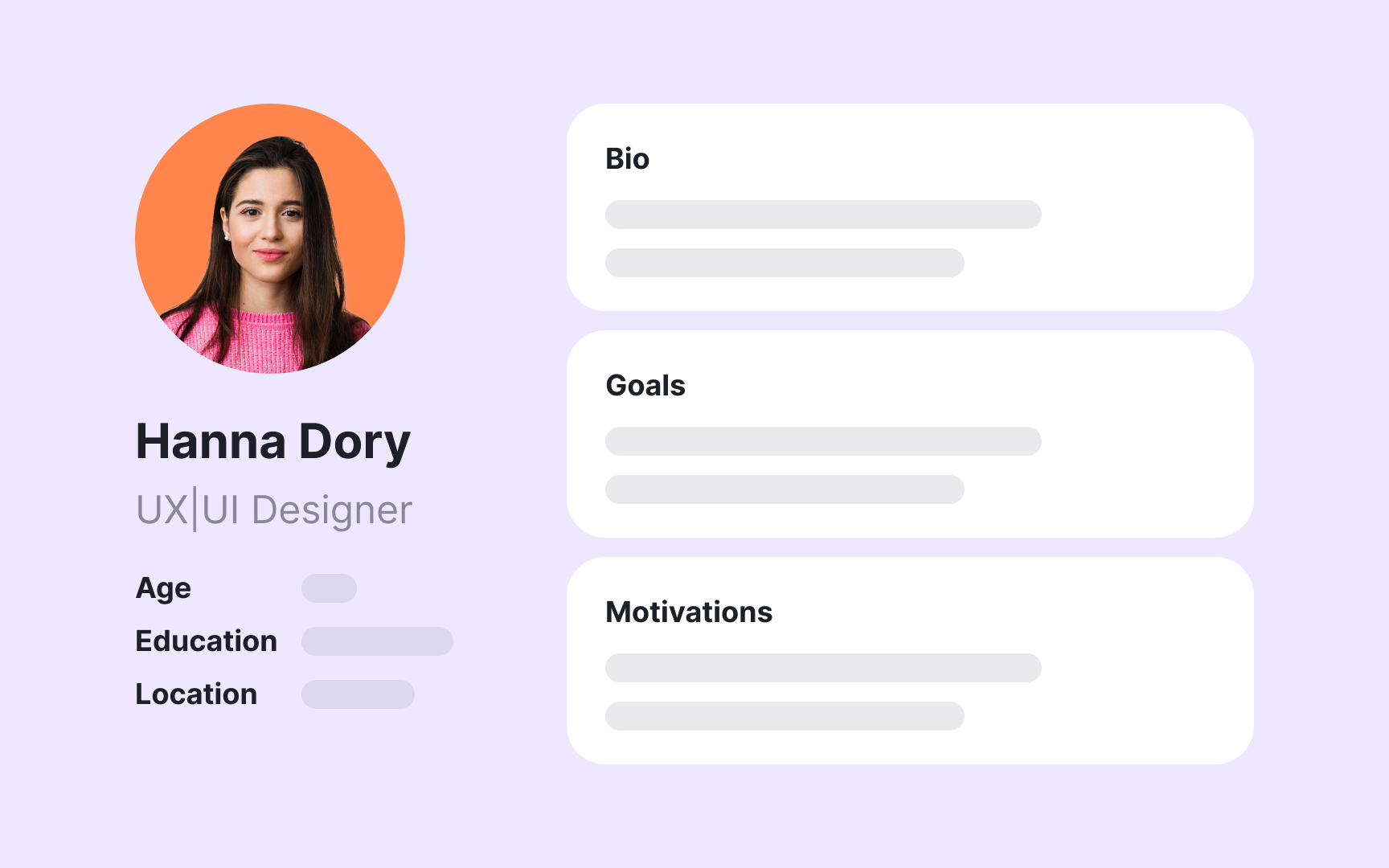
Creating personas starts with collecting data from real users through research methods such as field studies, interviews, and surveys. The goal is to find behavioral patterns and shared needs across user groups. Once these insights are collected, they are grouped into clusters that form the base for each persona. The next step is adding details that make each profile believable and useful, such as:
- Age
- Occupation
- Context of use
- Experience with the product
That said, demographics are easy to gather but rarely tell the full story. Two users with the same education level and job title can have completely different responsibilities and reasons for using a product. For SaaS and B2B products, especially, qualitative information tends to be far more useful. If richer data isn't available, run a few interviews. If that's not possible, use what you know from direct experience with similar users. Build from insight rather than convenience.
A strong persona balances facts with storytelling. It is grounded in evidence yet presented as a relatable human portrait that supports empathy and decision-making. Unnecessary or decorative details should be avoided to keep the persona focused on traits that influence product interaction.[2]
Pro Tip! Base personas on real data, not imagination. Every detail should help explain how users think, act, or decide.
Defining goals and frustrations
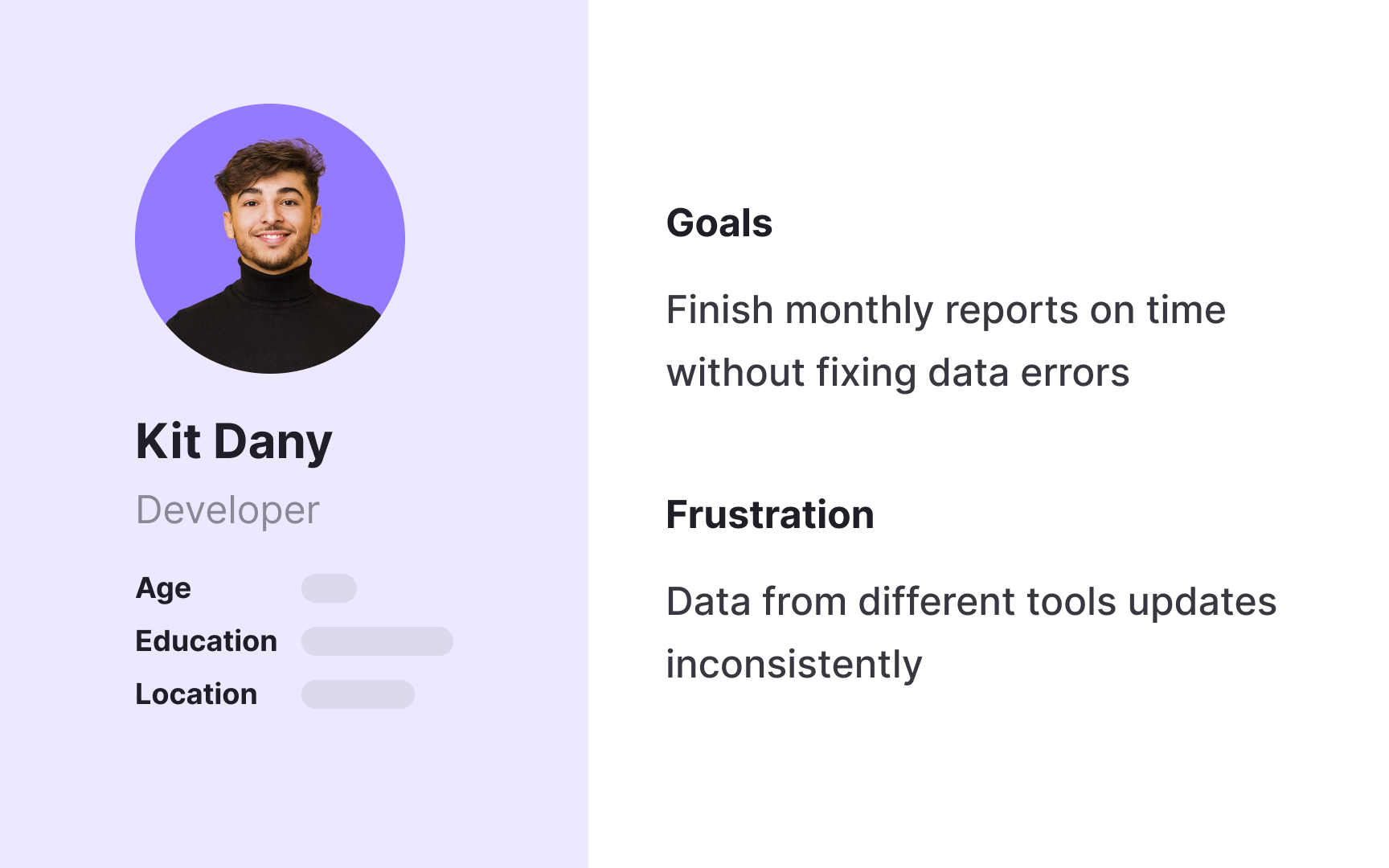

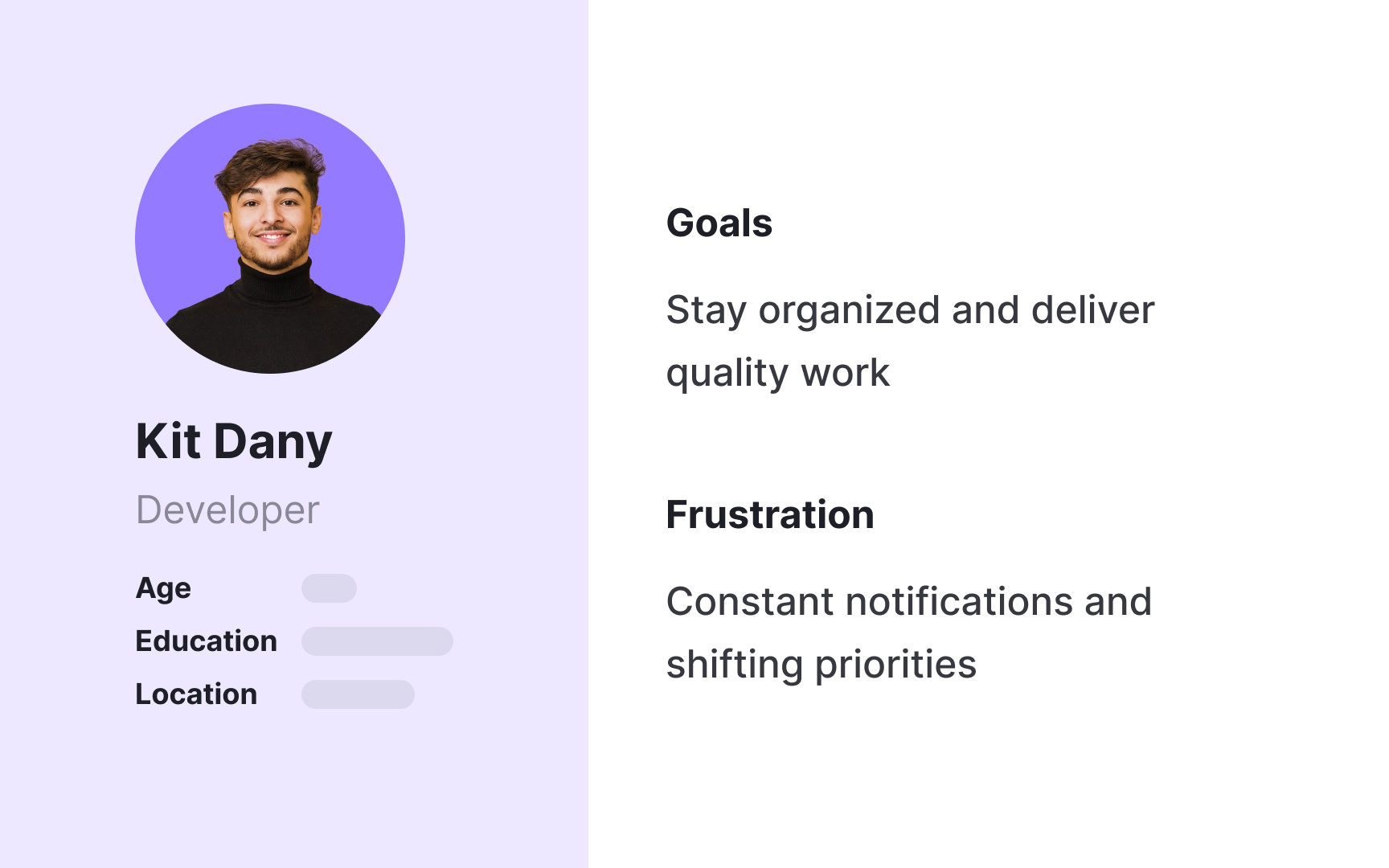

Understanding what drives or blocks users helps turn data into meaningful insights for personas. Goals describe what users aim to achieve when interacting with a product, such as completing a task faster, staying informed, or avoiding errors. Frustrations reveal the obstacles that make these goals hard to reach. They can stem from confusing interfaces, slow systems, unclear instructions, or emotional triggers like feeling rushed or unsupported. Together, goals and frustrations define the emotional and functional context of user behavior.
Recognizing both aspects helps teams see users as complete people, not just problem-solvers. For example, two users may share the same job title but differ in motivations or comfort with technology, leading to distinct frustrations and expectations. Effective personas connect these motivations and pain points to measurable outcomes. They clarify what success looks like for users and what stands in the way of achieving it. Mapping these patterns ensures that personas represent not just who users are, but why they act as they do, guiding product specifications toward real, validated problems worth solving.[3]
Pro Tip! Always define what success means for users. Their goals and frustrations are the most direct path to valuable product insights.
Understanding the user story formula
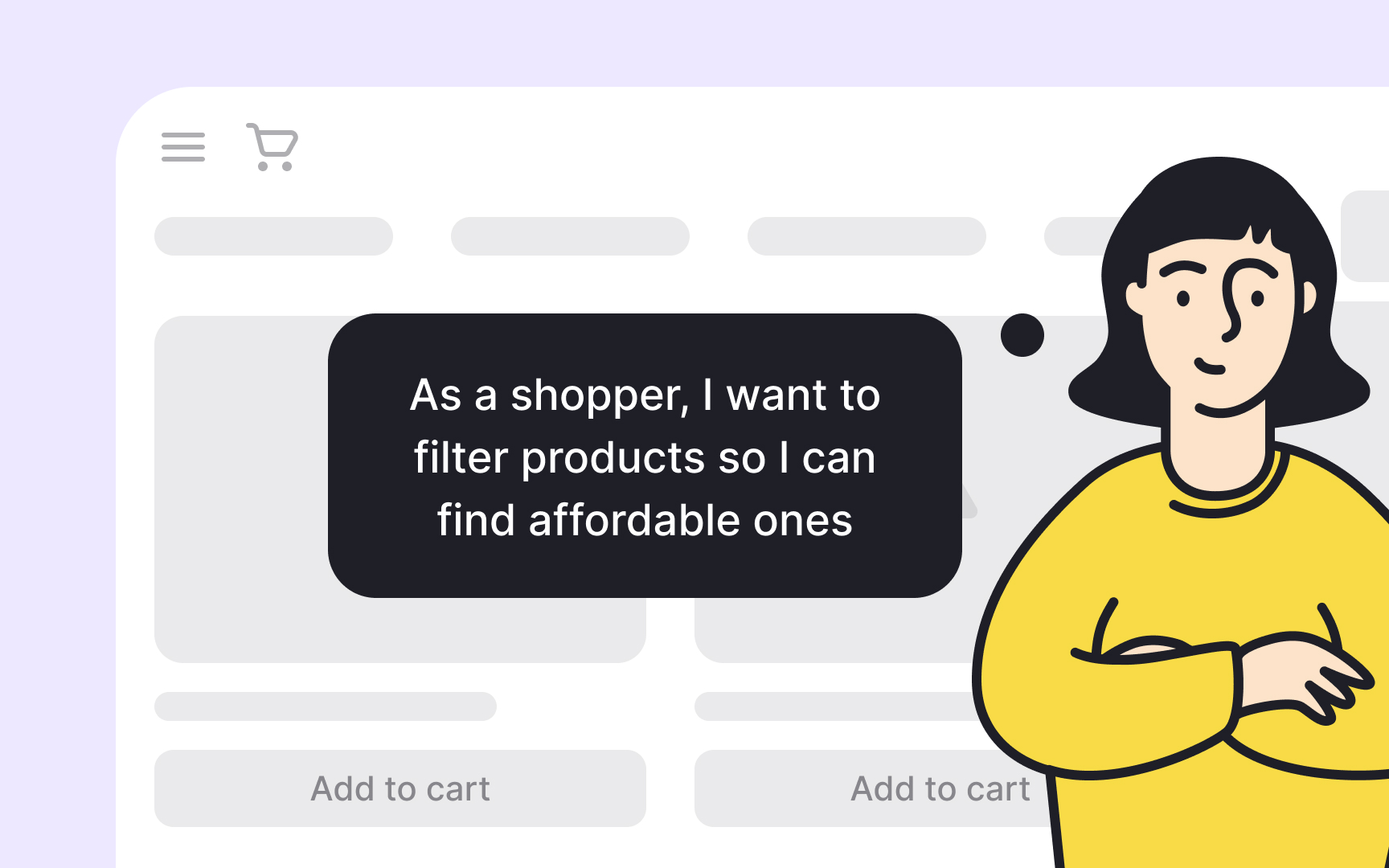
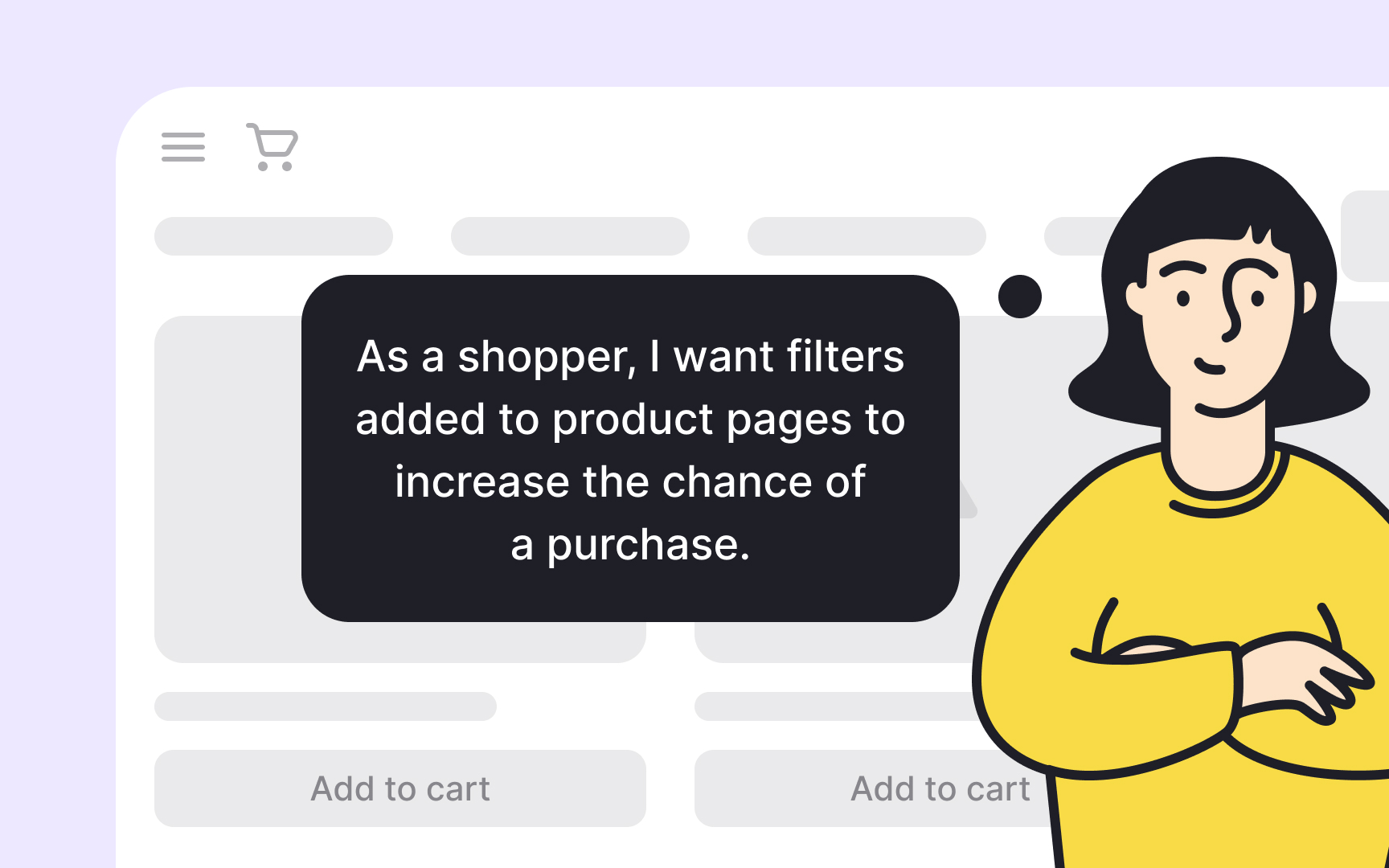
User stories give teams a simple way to describe what users need and why it matters. They are short, goal-focused statements written from the user's point of view, often using the format: "As a [persona], I want to [action], so that [benefit]." This formula helps teams express intent rather than features. For example, "As a shopper, I want to filter products by price so I can find affordable options faster." By focusing on motivation and value, this structure ensures that each story represents a specific user problem to solve, not a technical task to complete.
That said, the format is a starting point, not a rule. For complex products or functionalities, a single story in this structure may not capture enough context. Some features involve multiple user types, different actions, or layered benefits that don't fit neatly into one sentence. In those cases, writing without the framework is a valid choice. What matters is that designers, developers, and product managers can clearly understand who you are building for, what the problem is, and why solving it matters.
This clarity is what makes user stories vital in agile and product documentation. They provide shared understanding between product, design, and development teams about who the product serves and what outcome it should achieve. A well-formed user story acts as a small but complete unit of user value, ready to guide specifications and acceptance criteria.[4]
Pro Tip! Keep user stories short and focused on value, not on features. If it’s too technical, it’s no longer from the user’s voice.
From persona to story

Personas give context, and user stories turn that context into action. Once the main user types are defined, each persona can inspire specific stories that represent real product interactions. For instance, a persona like "Liam, a remote team manager" can be linked to stories such as "As Liam, I want to track my team's weekly goals so I can plan workload better." Connecting stories to personas ensures that the product backlog stays rooted in authentic needs rather than abstract requirements.
For complex products or early-stage ones where the problem space is still being defined, it helps to go deeper into user frustrations before writing stories. Understanding what is blocking users, slowing them down, or causing friction gives teams the details needed to write stories that reflect real problems rather than assumed ones. The user story itself doesn't need to capture every detail. Specifics like filter types, edge cases, or interaction rules belong in the acceptance criteria and specs that follow.
This process also encourages cross-functional collaboration. Designers and engineers can align on how each story supports a particular user's journey, while product managers can prioritize work based on impact. In this way, user stories become a natural continuation of persona work, bridging empathy from research with the structure needed for precise product specifications.[5]
Pro Tip! Always link stories to specific personas. It keeps product goals grounded in real people, not general assumptions.
Writing clear and testable stories
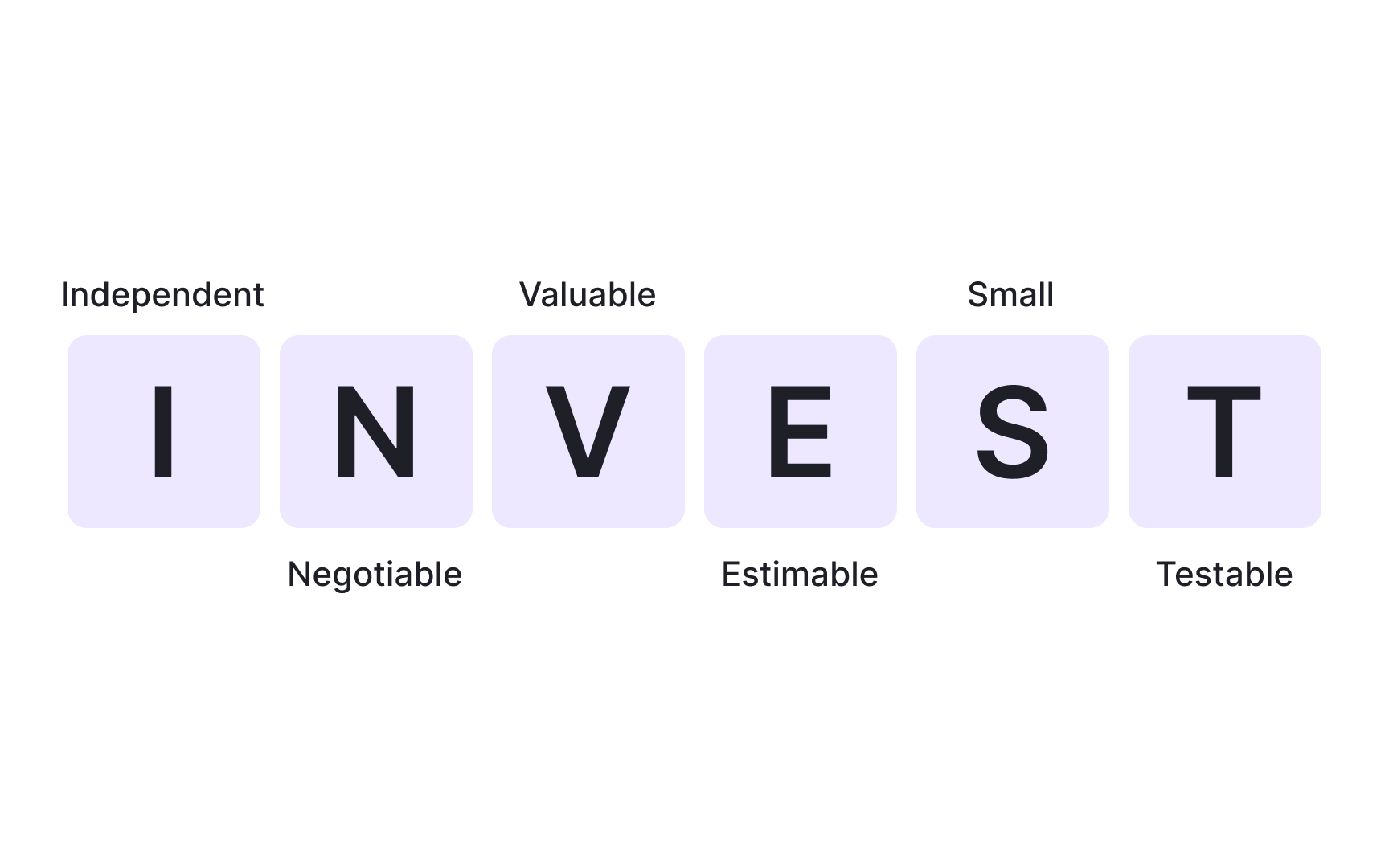
Strong user stories balance clarity, independence, and measurability. The INVEST framework helps ensure that quality: stories should be Independent, Negotiable, Valuable, Estimable, Small, and Testable. A story that meets these criteria is easier to plan, verify, and complete within a sprint.
For example, “As a traveler, I want to save my favorite destinations so I can quickly plan future trips” is a solid story. It’s independent of others, delivers clear user value, and can be tested once the ‘save’ function works as expected. By contrast, a vague story like “Add a save option” lacks context, motivation, and testability. Acceptance criteria, such as confirming that users can add, view, and remove destinations, help define when the story is done and ensure everyone shares the same understanding of success.
Well-structured stories like this reduce ambiguity across design and development, making the path from user intent to product behavior more traceable.
Mapping and organizing stories

A well-written product specification must reflect not only what users need but also how those needs unfold across their experience. Story mapping helps teams break down a product or functionality into manageable work by moving through four connected blocks:
- Problem to be solved: Who has the problem, what it is, and why it matters. For example, "Users find it difficult to locate a supermarket with the ingredients they need, making it time-consuming to buy what's missing for a recipe."
- Functionalities: What needs to happen to make the problem disappear. A single problem may require one functionality or several. For example, integrating with supermarkets to check available stock, matching missing ingredients to nearby locations, and surfacing options based on user preferences.
- User stories: The connector between the problem and the functionality. One effective approach is to organize the spec document by user story, so every requirement traces back to a real user need. This makes it easier for designers, developers, and product managers to understand why each piece of functionality belongs in the spec.
- Tasks: The specific actions that need to happen to deliver each user story. Breaking stories down into tasks helps engineers plan feasible milestones and helps product managers define scope and prioritize what belongs in the initial version of the spec and what can be deferred.
Story maps also serve as a communication tool. When teams collaborate around the map, they build a shared understanding of the product's intent and dependencies before anything is formally documented.[6]
Pro Tip! Map stories as a journey, not a checklist. It helps teams prioritize by user impact, not by convenience or technical order.
Spotting weak stories
Not every user story captures value clearly, and vague stories often create confusion during development. Common problems include:
- Missing context
- Overly technical phrasing
- Lack of measurable goals
A weak story might sound like "Add login feature" or "Improve dashboard performance." These describe tasks, not user value. In contrast, "As a returning user, I want to log in quickly so I can access my saved data" immediately clarifies who benefits and why it matters.
To strengthen weak stories, teams should revisit the "who–what–why" structure. Each story must name the user, define the goal, and explain the benefit. Reviewing stories together also helps catch gaps in reasoning or alignment with personas.
That said, not every feature needs a user story. If the development team can get all the context they need from the PRD or spec, a user story may add little value. The goal is not to create documentation for its own sake, but to create it because it genuinely helps the team build the right thing. When unclear stories slip into specifications, they distort priorities and create mismatched expectations across design and engineering. The question to ask is always whether the story adds clarity that isn't already captured elsewhere.
Aligning stories with product specs
User stories bring context to product specifications by connecting requirements to the people who will use the product. When each story is referenced within the document, it ensures that design, technical, and business decisions stay aligned with real user needs without losing focus on measurable outcomes.
In practice, integrating stories into specifications strengthens collaboration between roles. Designers can verify that user flows reflect the intended goals, engineers can implement with a clear sense of purpose, and QA teams can test against the same acceptance criteria that define success for users. This shared reference system creates consistency across all deliverables. It turns specifications into a single source of truth where empathy and evidence coexist, helping teams reason not only about what is being built, but also why it matters.
Pro Tip! Use user stories as anchors in specifications. They align design, engineering, and QA on both intent and quality.