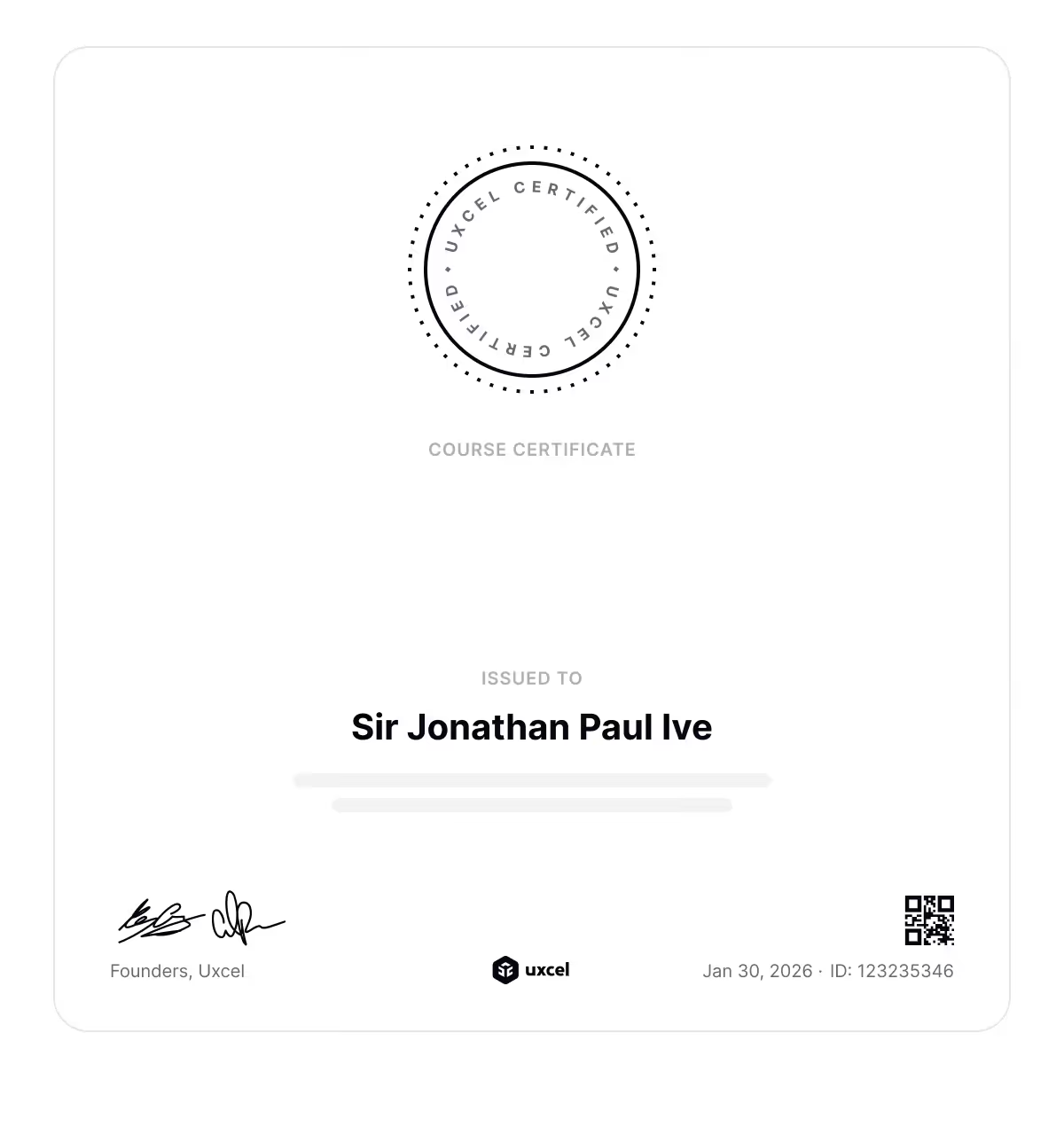
Earn a course certificate
Earn industry-recognized certificate that you can add to your portfolio, share with HR managers, add to LinkedIn, and use to grow your career.
Standalone page
- Showcases studied skills
- Never expires
Industry recognized
Learn how color shapes perception, emotion, and behavior, and how to apply that knowledge to design user experiences that truly resonate and gratify
39264
learners enrolled

UX Writer
at
Miro
4.7
2638
ratings
Beginner
Skill level
100% online
Learn at your own pace
Course certificate
Shareable & industry-recognized
Most designers make color decisions the same way: gut feeling, a palette generator, or prompting an AI tool that returns something plausible but hard to justify. The problem is that color is never neutral. Every hue communicates something before a user reads a single word, and when those signals are misaligned, the experience suffers in ways that are hard to diagnose.
This course builds the decision framework that intuition cannot replace. It starts with the biology of color perception: how the brain interprets hue before conscious thought kicks in, and why the same red that signals urgency in one context reads as passion in another. From there, it moves into traditional color meanings, the cultural differences that shift interpretation across regions and demographics, and the contextual variables that determine whether a color choice lands or backfires.
The second level examines how color combinations shape mood and the preconceptions users bring to certain pairings. Understanding color scheme personalities gives designers the vocabulary to make deliberate choices and to explain those choices clearly to clients and stakeholders, rather than defaulting to "it just felt right."
The final level is where theory becomes practice. It covers how brands use color as a strategic tool, how specific hues influence customer behavior and purchasing decisions, and how to test combinations against WCAG contrast standards for accessibility across light and dark mode interfaces. The course closes with a structured process for building a color palette from scratch, grounded in psychology and validated against real design criteria.
By the end, color decisions will feel less like guesswork and more like a repeatable, defensible system.
Certificate of completion
English language
Learn on iOS or Android
Online at your own pace
Last updated
April 10, 2026
Color psychology fundamentals
Understand how hues affect human perception, mood, and behavior across biological and cultural contexts.
Cross-cultural color interpretation
Recognise how color meanings shift across regions, demographics, and contexts to design for global audiences.
Color harmony and scheme selection
Identify color personalities, combination effects, and the right harmonies for specific design intentions.
Color palette creation and testing
Build accessible, brand-aligned color palettes from scratch and validate them against real design criteria.
UX/UI Designers
Understand how to use color to guide attention, improve usability, and defend design decisions under review.
Brand & Visual Designers
Use color to build brand recognition, signal personality, and influence how customers perceive and choose a product.
Product Designers
Build color systems that support user behavior, meet WCAG standards, and hold up across different interfaces.
13
lessons
3
tests
Certificate of completion
Level 1.
Color Theory Basics
Free
Level 2.
The Effects of Color
Level 3.
Working with Color
Earn industry-recognized certificate that you can add to your portfolio, share with HR managers, add to LinkedIn, and use to grow your career.
Standalone page
Industry recognized

Color Psychology for UX/UI Design

UX Writer
at
Miro
MY SUPERPOWER: MAKING COMPLICATED THINGS SUPER SIMPLE.
I’ve been working in the UX industry for nearly two decades and am the author of two books on web design: Color for Web Design and The Smashing Idea Book. Writing for the tech industry for almost twenty years has honed my ability to break down complex topics into clear, approachable, and empowering content that helps readers dive into subjects they may have once found intimidating. I love crafting educational experiences that spark those eureka moments, where readers suddenly “get it” and feel excited to learn more.
At my core, I’ve always been a storyteller. Whether it’s through fiction, marketing, instructional guides, or online courses, I thrive on experimenting with different formats and techniques to connect with people through the stories we tell. I’m passionate about lifelong learning and making information on virtually any topic accessible to the average person. I believe story is one of the most powerful tools we have to engage, educate, and inspire.
4.7
(
2638
)

Over 60 courses
Recognized certificates
Career paths & more