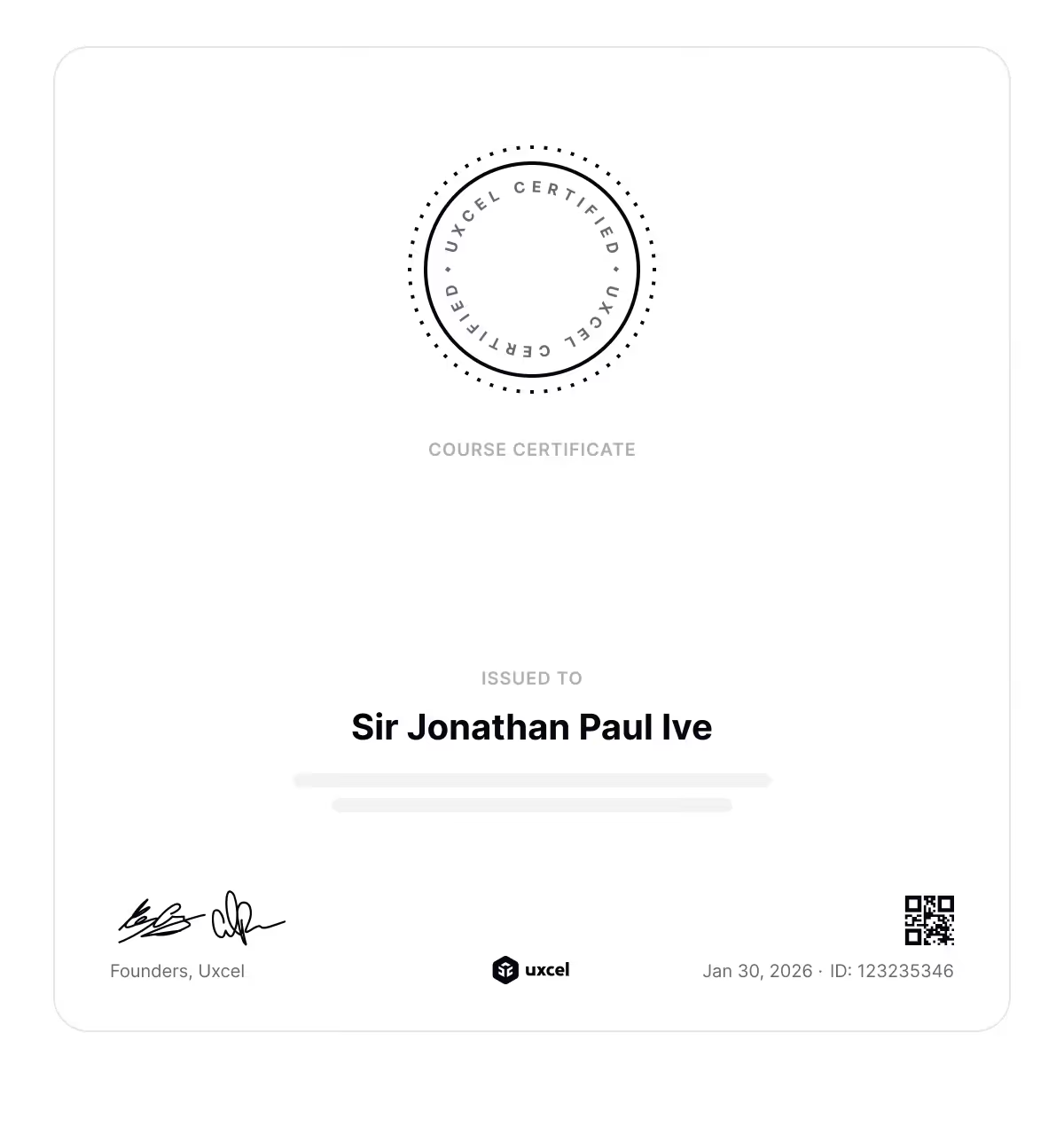
Earn a course certificate
Earn industry-recognized certificate that you can add to your portfolio, share with HR managers, add to LinkedIn, and use to grow your career.
Standalone page
- Showcases studied skills
- Never expires
Industry recognized
Learn how to design engaging products using proven game mechanics that motivate users and drive lasting behavioral change
3060
learners enrolled

Team Lead
at
Uxcel
4.6
146
ratings
Advanced
Skill level
100% online
Learn at your own pace
Course certificate
Shareable & industry-recognized
At first glance, gamification seems straightforward: add points, badges, and a leaderboard, then watch engagement climb. In practice, users see through shallow mechanics immediately. They ignore rewards that feel meaningless, or worse, they lose trust when an app feels designed to manipulate rather than help them. The difference between gamification that works and gamification that backfires comes down to psychology. This course teaches you to ground every design decision in how motivation works, not in what competitors are doing or what looks good in a product roadmap.
You will learn the difference between games and gamified features, and more importantly, when gamification enhances a product versus when it trivializes meaningful work. The content covers motivation frameworks that explain why intrinsic and extrinsic drivers require completely different design approaches. You will explore how to balance challenge and skill, so users stay engaged without rage-quitting from frustration or abandoning from boredom.
The course breaks down four types of fun and shows you how to match mechanics to what users genuinely enjoy. You will study flow states and the design conditions that create deep engagement without manipulative dependency. Practical frameworks like the MDA model and Octalysis give you planning tools you can apply immediately, while case studies from Duolingo, Fitbit, and LinkedIn demonstrate what works in production and why.
You will also learn to spot the patterns that erode trust: badge flooding that destroys motivation, surveillance mechanics that make users uncomfortable, and artificial objectives that serve your metrics instead of user goals. The bottom line is that gamification should empower users, not trick them. By the end, you will know how to design reward systems that users appreciate instead of resent.
Certificate of completion
English language
Learn on iOS or Android
Online at your own pace
Last updated
February 25, 2026
Strategic game mechanics
Learn when to use points, levels, and challenges to enhance products without creating addictive or manipulative patterns.
Intrinsic motivation design
Balance rewards and challenges to sustain long-term engagement by tapping into genuine interest rather than external tricks.
Flow state creation
Build experiences where users become fully immersed by matching difficulty with skill level at each stage of interaction.
Ethical engagement tactics
Design repeat usage patterns through psychology-based mechanics that users trust and appreciate over time.
UX Designers
Learn to design engagement features that feel rewarding instead of manipulative, using psychology-backed mechanics that users actually appreciate.
Product Managers
Discover how to make informed decisions about gamification features and avoid the costly mistake of implementing mechanics that backfire.
Product Designers
Build reward systems and challenges that enhance your product's value instead of cheapening it.
11
lessons
3
tests
Certificate of completion
Level 1.
Games vs. Gamification Basics
Level 2.
The Psychology Behind Gamification
Level 3.
Applying Gamification in UX
Earn industry-recognized certificate that you can add to your portfolio, share with HR managers, add to LinkedIn, and use to grow your career.
Standalone page
Industry recognized

Gamification in UX design

Team Lead
at
Uxcel
Currently the Edu Lead at Uxcel.
I develop and maintain Uxcel’s content strategy, making sure it aligns with our overall goals as an educational platform. I create high-quality content that follows our brand guidelines — this includes researching, writing, editing, and proofreading lessons, tutorials, blog posts, social media content, and other UX design materials.
I manage a team of content writers and designers, helping them meet deadlines, providing feedback, and supporting their skill development. I also work closely with developers and marketers to keep our content aligned with Uxcel’s broader strategy.
Staying up-to-date with industry trends, new technologies, and UX design best practices is a big part of what I do to keep our content fresh and relevant.
Dog lover, yoga enthusiast, and dancer.
4.6
(
146
)

Over 60 courses
Recognized certificates
Career paths & more